
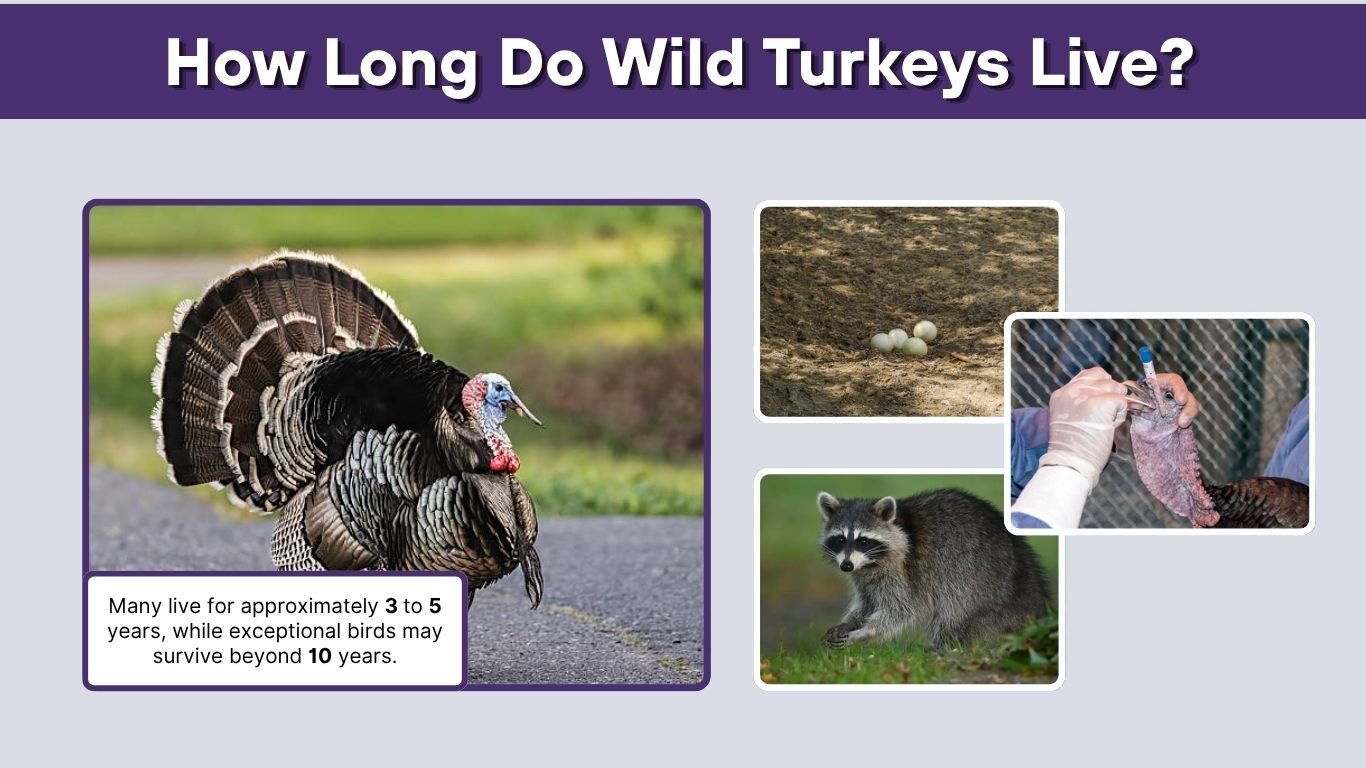
Wild turkeys generally live for three to five years in the wild, although many die before reaching adulthood. Turkeys that survive predators, severe weather, disease, hunting, and food shortages may live for 10 years or longer. Their potential lifespan is greater than their average lifespan because eggs, poults, and young birds face especially high mortality. Adult hens often experience additional risks while nesting on the ground, while males may face injuries from fighting and greater hunting pressure. In captivity, protected turkeys can live considerably longer because they receive dependable food, shelter, and protection from predators.
Wild Turkey Lifespan at a Glance
A wild turkey’s lifespan depends on its age, sex, habitat, food supply, local predators, weather, disease, and human activity. Most individuals do not reach old age, even though healthy adults are physically capable of surviving for many years.
Average Lifespan
The average wild turkey usually survives for approximately three to five years. This estimate includes birds that successfully pass the vulnerable egg and poult stages.
Some adult wild turkeys live for seven years or longer. Exceptional individuals may reach approximately 10–13 years under favorable natural conditions.
| Turkey category | Approximate lifespan |
| Wild turkey egg | About 28 days before hatching |
| Wild turkey poult | Highest mortality during first months |
| Average wild adult | Around 3–5 years |
| Long-lived wild individual | 10 years or more |
| Captive turkey | Often 10–15 years with proper care |
These figures are general estimates rather than fixed limits. Survival varies considerably among populations and environments.
Why the Average Is Relatively Short
Wild turkeys face danger throughout their lives. Many eggs are eaten before hatching, and poults can be killed by predators, cold rain, disease, or starvation.
Even after reaching adulthood, turkeys remain vulnerable to hunting, vehicle collisions, habitat loss, severe winters, drought, predators, and infections. These pressures reduce the average lifespan far below the species’ maximum biological potential.
How Long Do Turkeys Live in the Wild?
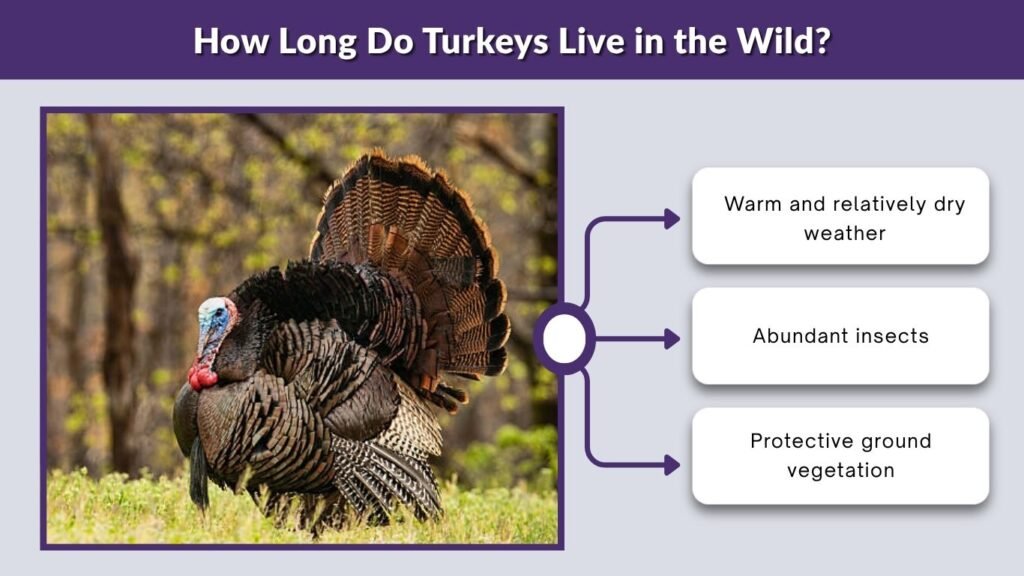
Turkeys living in natural habitats commonly survive for several years once they reach adulthood. However, their chances of reaching adulthood are relatively low.
The first few weeks after hatching are the most dangerous part of a turkey’s life. Poults cannot fly immediately and depend on their mother for warmth, protection, and guidance.
Survival of Young Turkeys
A young turkey is called a poult. Poults leave the nest shortly after hatching and begin following the hen in search of insects and shelter.
Their survival depends on:
- Warm and relatively dry weather
- Abundant insects
- Protective ground vegetation
- The hen’s health and experience
- Access to safe nighttime roosts
- Low predator pressure
Heavy rain and cold temperatures are especially dangerous because young poults cannot regulate their body temperature as effectively as adults.
Survival After Adulthood
Once a turkey can fly into trees and escape many ground predators, its survival chances improve. Adult turkeys are strong runners, powerful short-distance fliers, and highly alert.
However, they still face seasonal food shortages, disease, severe weather, hunting, and predators. A turkey surviving several breeding seasons has already overcome many natural risks.
How Long Do Male and Female Wild Turkeys Live?
Male and female wild turkeys have similar potential lifespans, but they face different risks that may affect how long they survive.
Male Wild Turkey Lifespan
An adult male is called a tom or gobbler. A juvenile male is known as a jake.
Males may experience injuries while fighting for social rank and access to hens. During spring, their loud gobbling and visible courtship displays can also reveal their location to predators and hunters.
Adult males are often targeted during regulated spring hunting seasons, which may reduce their average survival compared with hens in some populations.
Female Wild Turkey Lifespan
An adult female is called a hen. Hens face significant risks while nesting because they incubate their eggs alone on the ground for approximately 28 days.
A nesting hen may remain concealed for long periods, making her vulnerable to coyotes, bobcats, foxes, domestic dogs, and other predators. She also spends considerable energy producing eggs and raising poults.
Despite these challenges, experienced adult hens may survive for several years and produce multiple nests during their lives.
Wild Turkey Life Cycle
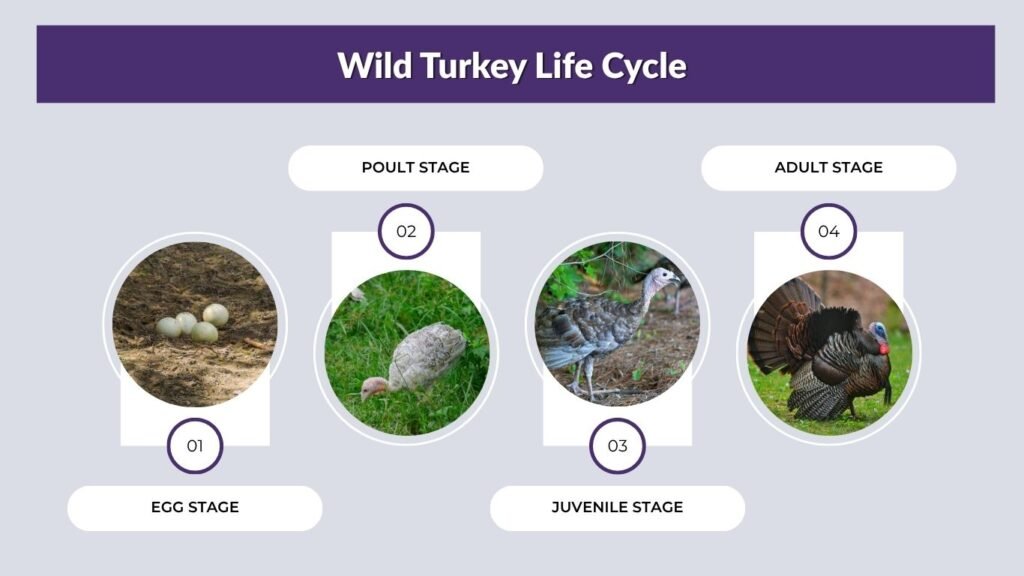
Wild turkeys pass through several recognizable life stages. Each stage presents different survival challenges.
Egg Stage
A hen usually creates a shallow ground nest beneath grass, shrubs, fallen branches, or other cover. She commonly lays approximately 8–15 eggs, depositing about one egg per day.
Incubation begins after most of the clutch has been laid and continues for roughly 28 days. Eggs may be eaten by raccoons, skunks, opossums, snakes, crows, and other animals.
Poult Stage
Poults hatch covered in down and leave the nest within approximately 24 hours. They can walk and feed themselves but remain dependent on the hen for protection and warmth.
During their early weeks, poults eat large quantities of insects because protein supports rapid growth. They usually begin making short flights at around two weeks old.
Once they can roost in trees, they gain better protection from ground predators.
Juvenile Stage
Young males are called jakes, while young females may be called jennies. Juveniles remain with the hen for several months before joining other groups or establishing their own seasonal movements.
Young birds continue learning where to find food, water, roosting trees, and shelter. Their ability to recognize threats improves with experience.
Adult Stage
Males and females generally become capable of reproduction within their first year. During spring, males gobble, strut, fan their tails, and compete for mating opportunities.
Hens mate, build nests, incubate eggs, and raise poults without assistance from the male. Adults repeat this cycle annually as long as they survive.
How Long Do Eastern Wild Turkeys Live?
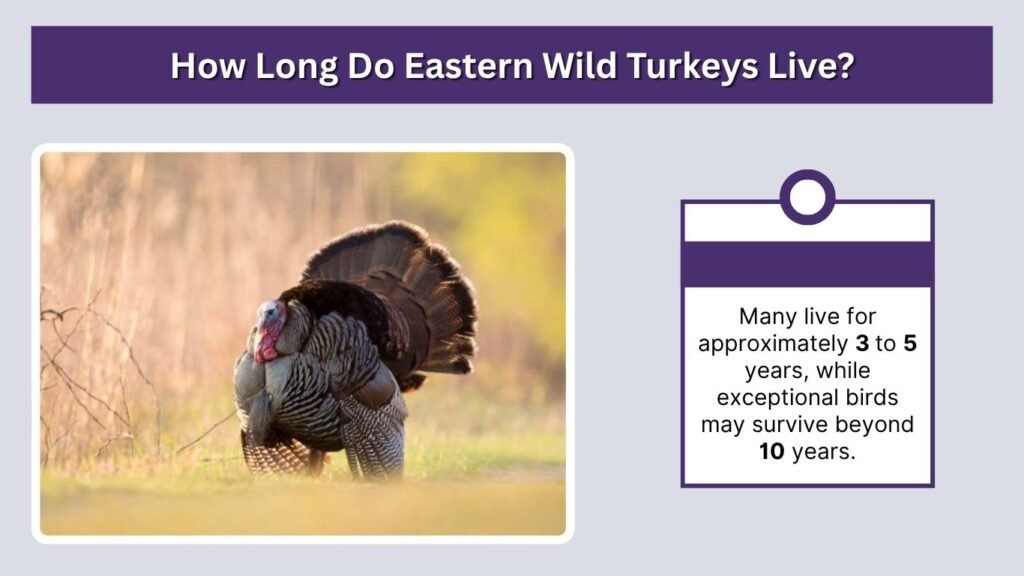
Eastern wild turkeys generally have the same lifespan range as other North American wild turkey subspecies. Many live for approximately three to five years, while exceptional birds may survive beyond 10 years.
Eastern turkeys inhabit forests, farms, wetlands, and woodland openings across much of the eastern United States. Their survival depends heavily on acorn production, nesting cover, winter conditions, predators, and hunting pressure.
A mature Eastern turkey living in productive habitat with abundant food and secure roost trees may survive for several breeding seasons.
Lifespan of Other Wild Turkey Subspecies
North America has several recognized wild turkey subspecies. Although their habitats differ, their average lifespans are broadly similar.
Rio Grande Wild Turkey
Rio Grande turkeys inhabit grasslands, river valleys, brush country, and open woodland across the central and western United States.
They may live for several years in the wild, but drought, poor nesting cover, extreme heat, predators, and hunting influence local survival rates.
Merriam’s Wild Turkey
Merriam’s turkeys live mainly in western mountain forests and pinyon-juniper habitat. Snow, wildfire, drought, and changing food supplies can affect their survival.
Individuals that locate dependable winter food and safe tree roosts may live for many years.
Osceola Wild Turkey
Osceola turkeys occur primarily on the Florida peninsula. Their warm environment can support year-round food, but they face threats from predators, flooding, habitat changes, hunting, and severe storms.
Gould’s Wild Turkey
Gould’s turkeys inhabit mountain regions of the southwestern United States and Mexico. Their lifespan is comparable to that of other wild turkey subspecies when suitable habitat and food are available.
How Long Do Wild Turkeys Live in Captivity?
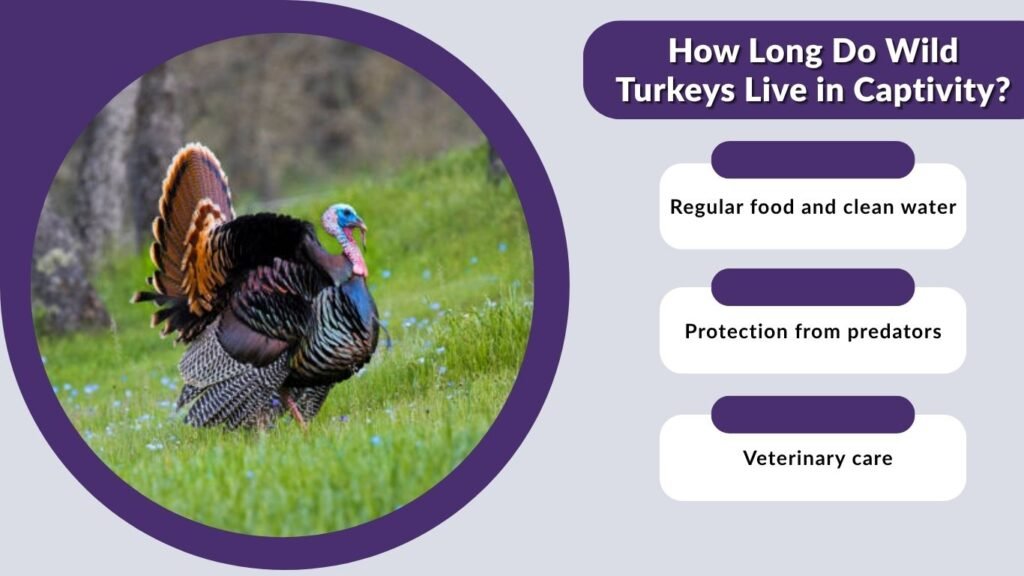
Wild turkeys kept legally in protected captive conditions may live for approximately 10–15 years, although individual survival varies.
Captive birds generally live longer because they receive:
- Regular food and clean water
- Protection from predators
- Veterinary care
- Shelter from severe weather
- Reduced competition
- Fewer vehicle and hunting risks
Captivity does not guarantee a long life. Poor nutrition, overcrowding, stress, parasites, injuries, and unsuitable housing can significantly shorten survival.
Wild turkeys are also regulated wildlife in many places and should not be captured or kept without the required authorization.
What Affects a Wild Turkey’s Lifespan?
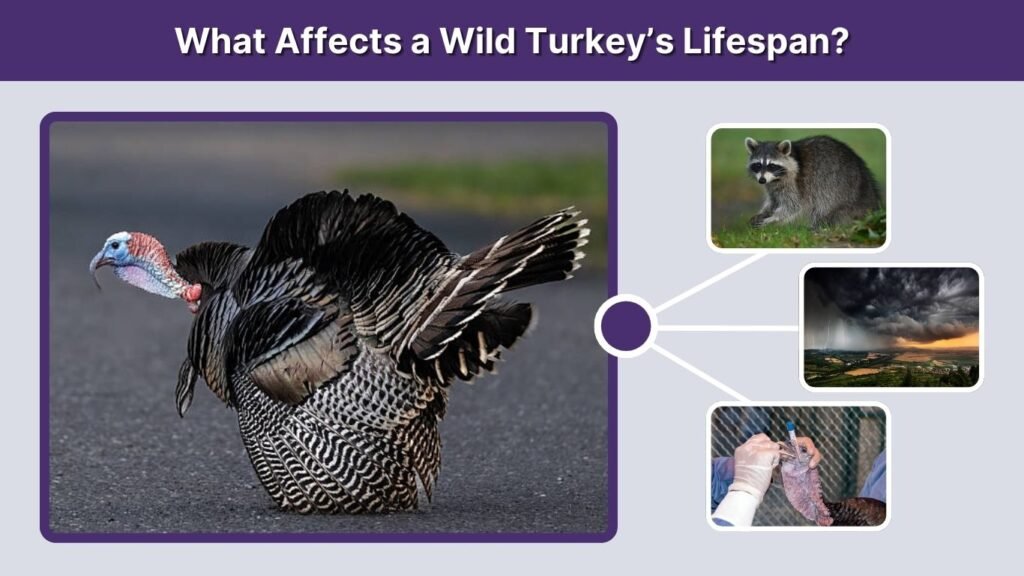
A turkey’s lifespan is determined by a combination of environmental and biological conditions.
Predators
Turkey eggs and poults face the greatest variety of predators. Raccoons, skunks, snakes, crows, foxes, bobcats, coyotes, hawks, and owls may prey on different life stages.
Adult turkeys are more difficult to catch but can still be killed by coyotes, bobcats, large birds of prey, and free-roaming domestic animals.
Weather
Cold spring rain can be deadly to poults. Severe winters may reduce food availability, while prolonged drought can limit insects, seeds, vegetation, and surface water.
Flooding may destroy ground nests, and hurricanes or strong storms can damage roost trees and habitat.
Food Availability
Wild turkeys eat acorns, seeds, nuts, berries, grasses, leaves, insects, spiders, and other foods. Poor mast production or habitat loss can reduce survival, particularly during winter.
Poults require abundant insects during their first weeks. Habitat with few insects may result in slow growth and lower survival.
Disease and Parasites
Turkeys may be affected by bacterial, viral, fungal, and parasitic diseases. Healthy birds can tolerate some parasites, but severe infections may weaken them or cause death.
Crowding around artificial feeding sites may increase contact between birds and raise the risk of disease transmission.
Hunting and Human Activity
Regulated hunting is an important source of mortality for adult wild turkeys, especially males. Wildlife agencies use season dates and bag limits to maintain sustainable populations.
Vehicles, fencing, habitat development, outdoor pets, and disturbance around nesting areas can also reduce survival.
How Can You Estimate a Wild Turkey’s Age?
A turkey’s exact age is difficult to determine by sight after it reaches adulthood. Hunters and wildlife biologists may examine several physical features to estimate age.
Signs Used to Estimate Age
For males, useful clues include:
- Beard length and condition
- Spur length and shape
- Body size
- Tail-fan shape
- Wing-feather pattern
- Head and neck development
A jake usually has a short beard, small rounded spur bumps, and an uneven fan with longer central feathers. Mature toms generally have longer, sharper spurs and a more even tail fan.
These features provide estimates rather than exact ages. Beards can break or wear down, while spur growth varies among individuals and habitats.
FAQs
Can a wild turkey live for 10 years?
Yes. A wild turkey can survive for 10 years or longer, although this is uncommon. Predators, weather, disease, hunting, and food shortages prevent most birds from reaching such an advanced age.
What is the oldest wild turkey?
Exceptional wild turkeys have been recorded at more than 10 years old. However, determining the oldest individual requires banding records because appearance alone cannot reveal a turkey’s exact age.
Why do many wild turkeys die young?
Eggs and poults are highly vulnerable to predators, cold rain, starvation, and disease. Young turkeys cannot initially fly into trees, making their first weeks especially dangerous.
Do domestic turkeys live longer than wild turkeys?
Heritage or non-commercial domestic turkeys may live longer when properly cared for. Commercial meat breeds often have shorter lives because rapid growth can cause health and mobility problems.
Do turkeys live longer in captivity?
They usually do. Captive turkeys can receive dependable food, shelter, veterinary care, and protection from predators. Under suitable conditions, some may live for 10–15 years.
