
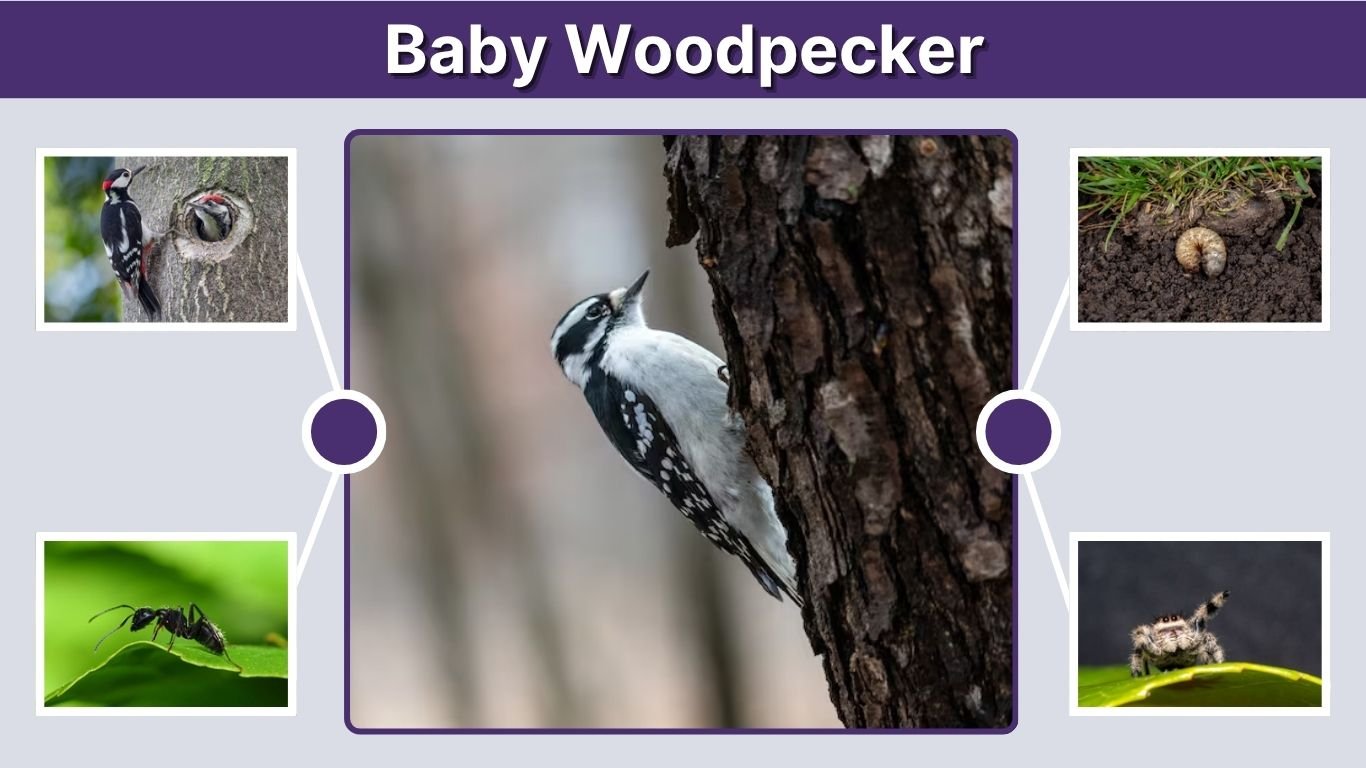
A baby woodpecker can look surprisingly different from the colorful adult birds seen climbing tree trunks. Young woodpeckers usually begin life nearly naked and helpless inside tree cavities before developing feathers, strong feet, and the characteristic bills of their species. As they grow, juveniles such as baby Downy, Red-bellied, Red-headed, and Pileated Woodpeckers gradually become easier to identify. Understanding what baby woodpeckers look like, what they eat, when they leave the nest, and what to do when one is found on the ground can help you respond appropriately.
What Does a Baby Woodpecker Look Like?
Baby woodpeckers change dramatically during their first few weeks. Newly hatched chicks look nothing like adult woodpeckers, while older fledglings can closely resemble their parents. Species also differ in coloration, size, and head markings. Looking at feather development, body size, bill shape, and nearby adult birds can help identify a young woodpecker correctly.
Baby Woodpecker Identification
Common characteristics of young woodpeckers include:
- A relatively large head compared with the body
- A developing straight, pointed bill
- Strong feet adapted for gripping wood
- Short tail feathers in very young birds
- Soft or incomplete plumage
- Pale edges around the mouth in nestlings
- Juvenile markings that may differ from adults
- Frequent begging calls when parents approach
Very young chicks may have closed eyes and exposed skin, while fledglings are mostly feathered and capable of climbing or making short flights.
Newborn Baby Woodpeckers
Newly hatched woodpeckers are altricial, meaning they hatch in an undeveloped condition and depend completely on their parents. They are usually blind, nearly featherless, and unable to regulate their body temperature effectively.
The parents keep the chicks warm and repeatedly bring food to the cavity. As the chicks develop, pin feathers appear and eventually open into normal feathers. Their eyes also open as they become stronger.
Baby Woodpecker Female vs Male
Determining whether a baby woodpecker is male or female can be difficult. Juvenile plumage may not display the same clear differences seen in adults.
In some species, young males and females begin developing different head patterns before leaving the nest. However, identification often becomes easier after juvenile feathers are replaced or adult markings become more distinct.
What Do Baby Woodpeckers Eat?
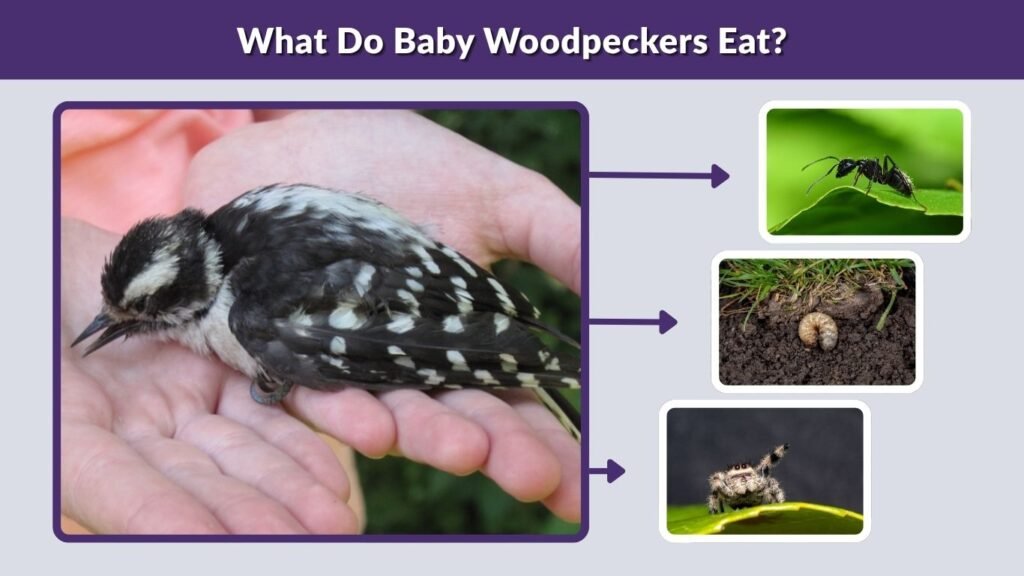
Baby woodpeckers require protein-rich food to support rapid growth. Their parents usually provide insects and other small invertebrates collected from bark, wood, leaves, and the ground. The exact diet varies by species and habitat. Adult woodpeckers may make hundreds of feeding trips while raising chicks, especially when nestlings are growing quickly.
Foods Parents Bring to Baby Woodpeckers
A baby woodpecker may receive:
- Ants
- Beetles
- Beetle larvae
- Caterpillars
- Spiders
- Grubs
- Other insect larvae
- Small arthropods
- Fruits or berries in some species
- Regurgitated or softened food
Insects provide the protein needed for feather development, muscle growth, and overall health.
How Do Parents Feed the Babies?
Adult woodpeckers collect food and return directly to the nesting cavity. Nestlings respond with loud begging calls and open mouths.
Depending on the food, parents may carry whole insects or partially prepared items. Both male and female woodpeckers commonly participate in feeding their offspring.
As fledglings become more independent, parents may continue feeding them outside the nest while teaching them how to search for bark and branches for natural food.
Should You Feed a Found Baby Woodpecker?
Avoid attempting to feed a wild baby woodpecker unless a licensed wildlife rehabilitator specifically instructs you to do so.
Incorrect foods can cause digestive problems, while liquids placed directly into a chick’s mouth may enter the respiratory system. If an apparently injured or genuinely orphaned bird needs help, contacting a licensed wildlife rehabilitator is safer than trying to raise or feed it yourself.
Baby Downy, Red-bellied and Hairy Woodpeckers
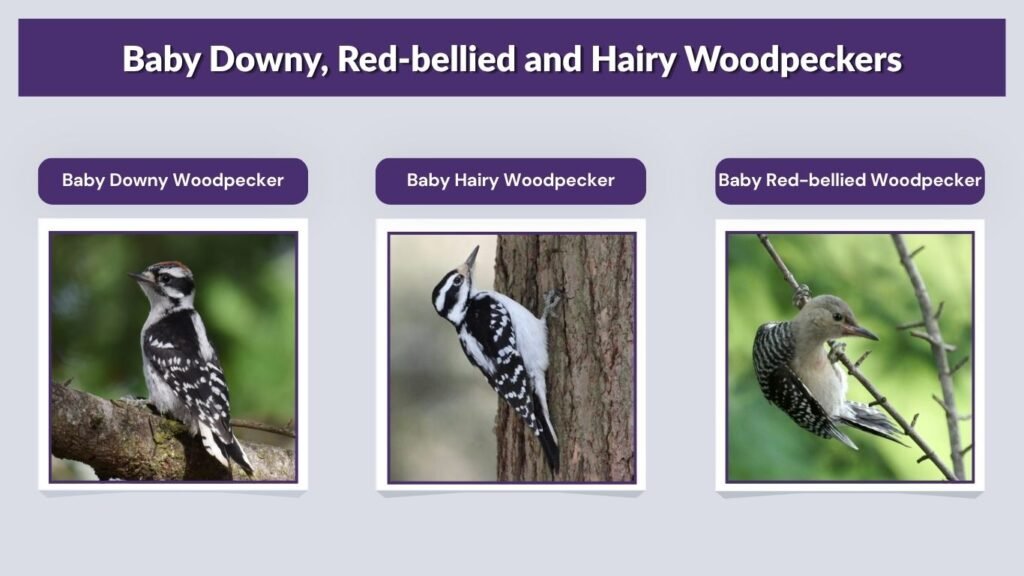
Young woodpeckers of different species can initially appear similar, particularly when they share black, white, and red markings. Size, bill length, facial patterns, and the appearance of nearby adults are useful clues. Downy, Hairy, and Red-bellied Woodpeckers are among the species whose juveniles people commonly encounter around wooded neighborhoods and backyards.
Baby Downy Woodpecker
A baby Downy Woodpecker develops the familiar black-and-white coloration of an adult but may show different head markings while young.
Juveniles sometimes display red coloration toward the crown rather than exactly where adult males display their red patch. Their bills are short compared with their head size, which helps distinguish them from larger Hairy Woodpeckers.
After leaving the nest, young Downy Woodpeckers may follow their parents through trees while repeatedly begging for food.
Baby Hairy Woodpecker
A baby Hairy Woodpecker resembles a juvenile Downy Woodpecker but is noticeably larger and has a substantially longer bill.
Young birds have black-and-white bodies and may display temporary juvenile markings on the head. They usually remain close to their parents after fledging while learning how to climb trunks and locate insects beneath bark.
Baby Red-bellied Woodpecker
Baby Red-bellied Woodpeckers are generally less colorful around the head than adults. Juveniles often have grayish or brownish heads before developing stronger red coloration.
Their backs show the black-and-white barred pattern characteristic of the species. As they mature, young males and females gradually develop the head patterns used to distinguish adult sexes.
Baby Pileated and Red-headed Woodpeckers
Large or brightly colored woodpecker species often attract attention when their juveniles begin appearing outside nesting cavities. Baby Pileated Woodpeckers already have recognizable crests before becoming fully independent, while young Red-headed Woodpeckers look surprisingly different from adults. Recognizing juvenile plumage helps prevent young birds from being mistaken for completely different species.
Baby Pileated Woodpecker
A baby Pileated Woodpecker develops into a large black bird with white facial markings and a prominent crest. Juveniles resemble their parents but may appear less polished, with shorter-looking crests and softer plumage.
Young Pileated Woodpeckers can be extremely vocal when begging. After leaving the nest, they may follow their parents through mature woodland.
Parents continue showing them where to find carpenter ants, beetle larvae, and other foods hidden within dead or decaying wood.
Baby Red-headed Woodpecker
A baby Red-headed Woodpecker can be confusing because juveniles do not immediately have the brilliant red head seen on adults.
Young birds typically have brownish-gray heads while retaining the species’ contrasting wing pattern. The iconic red coloration develops as the juvenile matures.
Young Red-headed Woodpeckers eat insects, fruits, seeds, and other foods brought to them by their parents before gradually learning to forage independently.
Baby Northern Flicker
Young Northern Flickers resemble adults but can appear duller and less sharply patterned. Their spotted underparts and overall brownish coloration make them quite different from the strongly black-and-white appearance of many other woodpeckers.
After fledging, juveniles often accompany their parents while learning to search lawns and open ground for ants.
Woodpecker Nesting and Baby Development
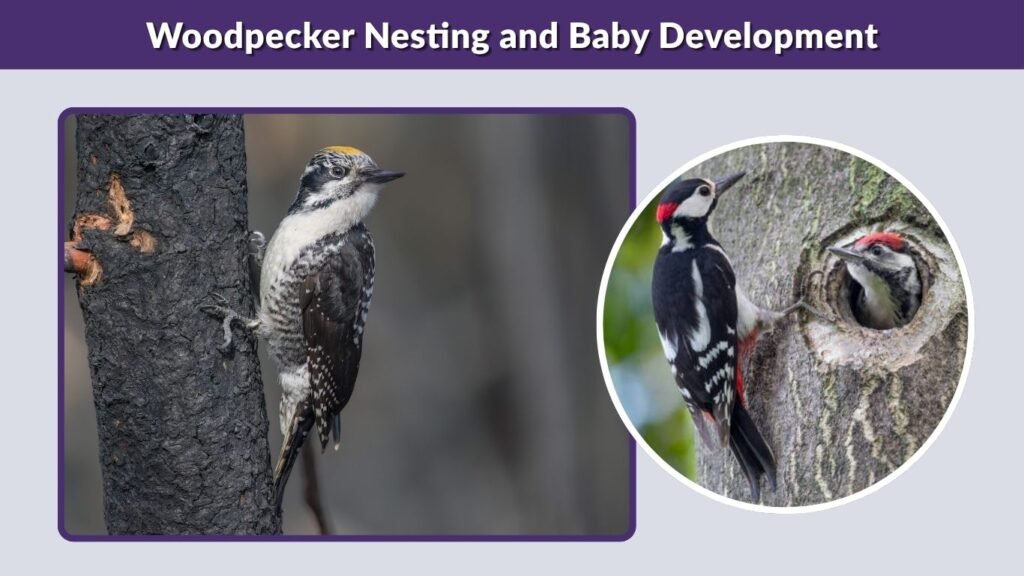
Woodpeckers are cavity-nesting birds. Instead of constructing an exposed nest from twigs, adults typically excavate a chamber inside dead wood or a softened section of a tree. The cavity provides protection from rain, wind, and many predators. Baby woodpeckers remain inside until their feathers and muscles have developed sufficiently for life outside.
How Many Babies Do Woodpeckers Have?
Clutch size depends on the species, but many woodpeckers lay roughly three to six eggs. Some species may produce slightly smaller or larger clutches.
Both parents may participate in incubation. Male woodpeckers often take a particularly active role, including incubating eggs during nighttime hours in many species.
Once the chicks hatch, the workload increases because rapidly growing nestlings require frequent feeding.
When Do Woodpeckers Have Babies?
Most North American woodpeckers breed during spring and early summer. Timing varies according to species, geographic location, weather, and food availability.
Before eggs are laid, adults spend time selecting or excavating a suitable nesting cavity. Incubation generally lasts only a couple of weeks, while chicks remain in the cavity for several additional weeks before fledging.
When Do Baby Woodpeckers Leave the Nest?
The exact fledging age varies by species. Many young woodpeckers leave their nest cavity approximately three to four weeks after hatching, although larger species may remain somewhat longer.
Leaving the nest does not mean parental care ends immediately. Fledglings may continue begging and receiving food while developing stronger flight and independent foraging skills.
What to Do If a Baby Woodpecker Falls Out of the Nest
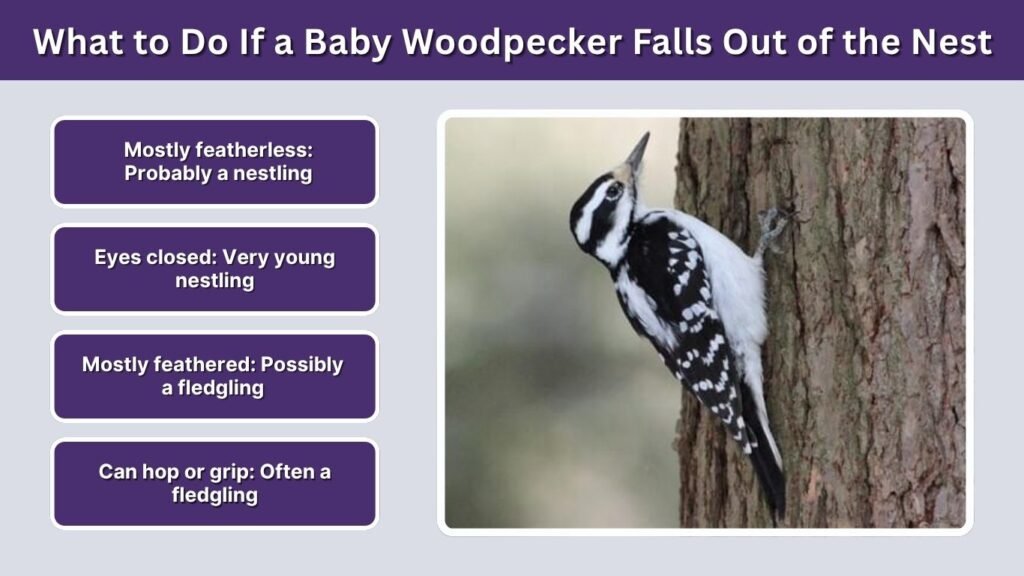
Finding a baby woodpecker on the ground does not always mean it has been abandoned. Fully feathered fledglings naturally spend time outside the nest while learning to fly. A featherless or poorly feathered nestling, however, usually still belongs inside its nesting cavity and may require assistance.
Check Whether It Is a Nestling or Fledgling
Before intervening, look for these clues:
- Mostly featherless: Probably a nestling
- Eyes closed: Very young nestling
- Mostly feathered: Possibly a fledgling
- Can hop or grip: Often a fledgling
- Parents calling nearby: Likely still receiving care
- Visible injury or bleeding: Professional help may be required
Healthy fledglings should usually remain near where they were found so their parents can continue caring for them.
If the Nestling Fell From the Cavity
If you can safely identify and access the original nest cavity, returning an uninjured nestling may sometimes be appropriate. Contrary to a common myth, parent birds generally do not abandon chicks simply because a human touched them.
If the nest cannot be located, the chick is injured, or you are uncertain what to do, contact a licensed wildlife rehabilitator.
Avoid keeping a wild woodpecker as a pet.
Do Woodpeckers Eat Baby Birds?
Most woodpeckers primarily consume insects, larvae, fruits, nuts, seeds, and tree sap. However, some woodpecker species are opportunistic and may occasionally eat eggs or nestlings belonging to other birds.
This behavior is not the main feeding strategy of most woodpeckers. Insects, particularly ants and beetle larvae, remain far more important to many species.
Woodpeckers themselves also face nest predators. Snakes, squirrels, raccoons, birds of prey, and other animals may threaten eggs or chicks, although nesting inside tree cavities offers considerable protection.
FAQs
Baby woodpeckers develop rapidly from helpless hatchlings into energetic climbing birds. Their appearance, food requirements, and behavior change considerably during this short period, which explains why young birds can sometimes be difficult to identify.
What is a baby woodpecker called?
A newly hatched woodpecker can be called a chick or nestling. Once it leaves the nest but is still dependent on its parents, it is called a fledgling.
What do baby woodpeckers look like?
Newly hatched woodpeckers are nearly naked and helpless. Older babies develop feathers, pointed bills, strong feet, and juvenile versions of their species’ adult markings.
What do baby woodpeckers eat?
Parents primarily feed them insects such as ants, beetles, larvae, caterpillars, spiders, and other small invertebrates. Some species also receive fruits and other foods.
How long do baby woodpeckers stay with their parents?
Most remain inside their nest cavity for several weeks. After fledging, young woodpeckers may continue following and receiving food from their parents until they become capable of feeding independently.
What should I do with an abandoned baby woodpecker?
First determine whether it is actually abandoned. A feathered fledgling may have parents nearby. If the bird is injured, very young, or genuinely orphaned, contact a licensed wildlife rehabilitator rather than attempting to raise it yourself.
