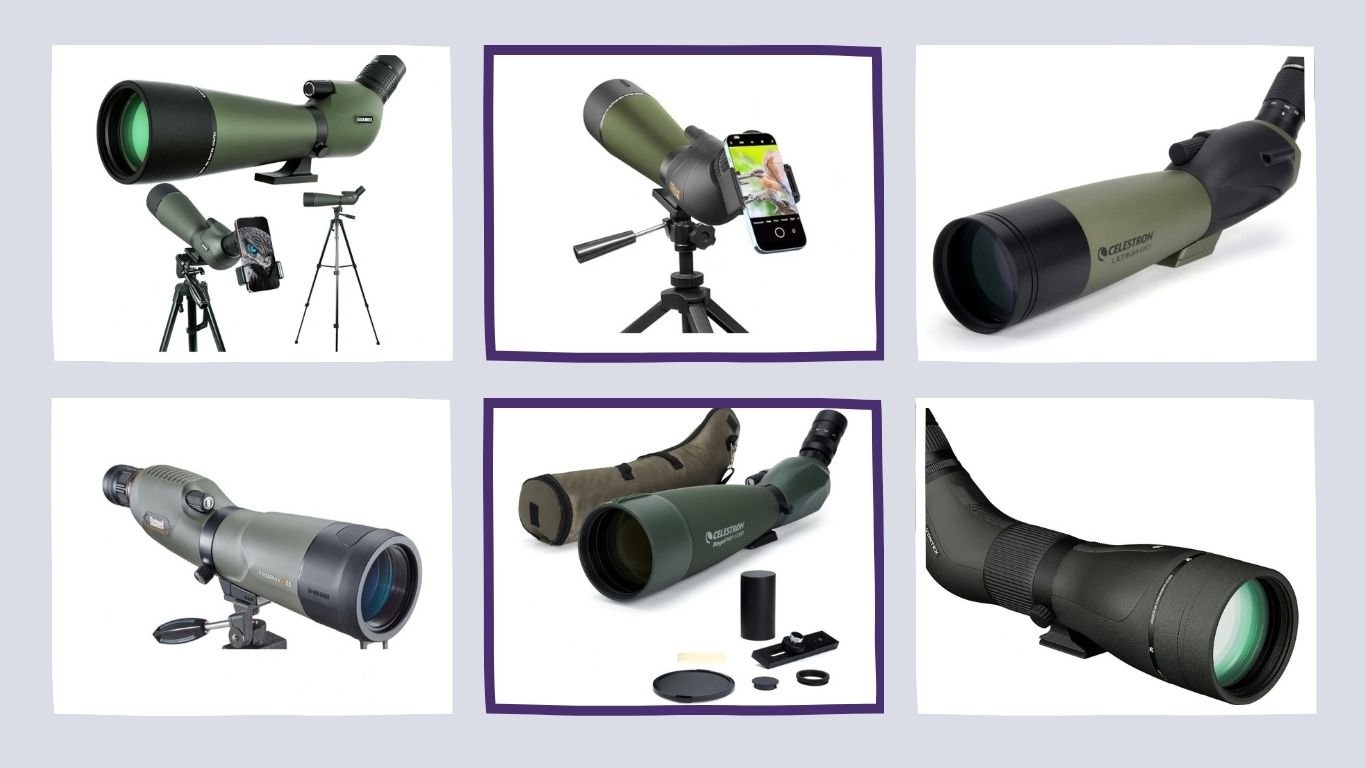
A good spotting scope can make bird watching far more rewarding by bringing distant details into sharp, steady view. Whether you are observing waterfowl across a lake, raptors on high branches, or small birds in open fields, the right scope can improve clarity, magnification, and viewing comfort. The best spotting scopes for bird watching combine quality optics, durable weather-resistant construction, smooth focusing, and practical magnification ranges. In this guide, we review 9 reliable options suited to backyard birders, wildlife enthusiasts, and serious long-distance observers.
1. Vortex Optics Crossfire HD 20-60×80 Spotting Scope
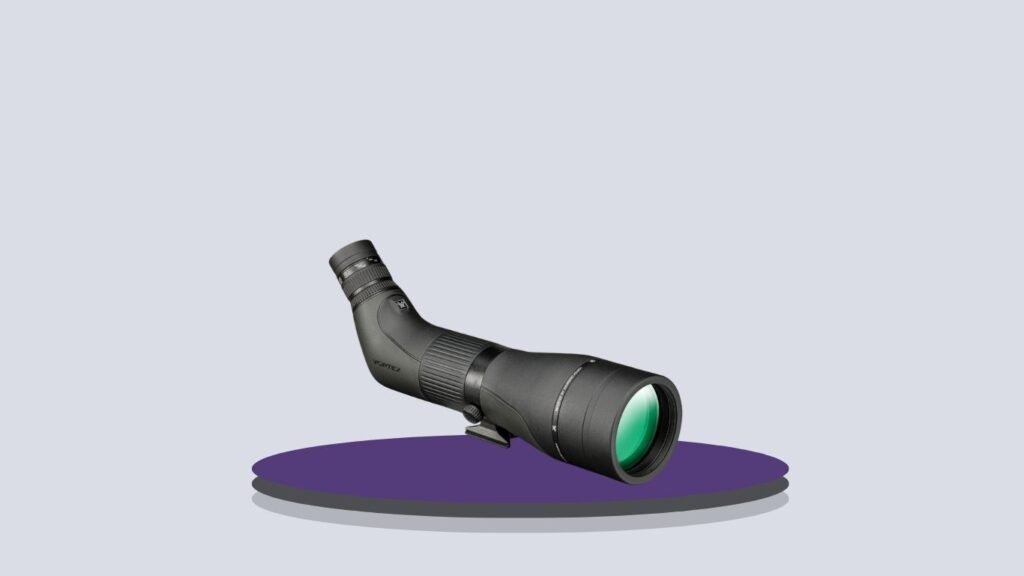
The Vortex Optics Crossfire HD 20-60×80 is a versatile spotting scope built for bird watchers who want strong magnification, a large objective lens, and dependable outdoor construction. Its 20-60x zoom range makes it suitable for scanning wetlands, open fields, shorelines, and distant treetops, while the 80mm objective helps gather plenty of light. For birders moving beyond binocular-range observation, it offers a useful combination of optical reach and practical field performance.
Key Features
- 20-60x variable magnification
- Large 80mm objective lens
- HD optical system for improved image quality
- Multi-coated optical surfaces
- Weather-resistant outdoor construction
- Protective rubber-armored body
- Tripod-compatible design for steadier viewing
- Suitable for birding, wildlife watching, and nature observation
Why It’s Best for Long-Distance Bird Watching
The Crossfire HD stands out when birds are too far away for comfortable binocular viewing. At lower magnification, the scope makes it easier to locate and follow birds across open habitats. Increasing the power then reveals finer details such as plumage patterns, body shape, and markings that can help with identification.
Its 80mm objective is another major advantage for birders observing during early mornings, cloudy conditions, or late afternoons when available light is reduced.
Optical Performance and Field Durability
Vortex’s HD optical system is designed to deliver clearer images with improved resolution and color fidelity. This is particularly useful when separating subtle feather colors or observing birds against complex backgrounds.
The rugged exterior is equally important for field use. Rubber armor provides additional grip and protection, while the weather-resistant construction makes the scope better suited to changing outdoor conditions. When mounted on a stable tripod, the 20-60x zoom becomes considerably easier to use for extended observation sessions.
Overall Verdict
The Vortex Optics Crossfire HD 20-60×80 is a strong all-around option for bird watchers who want more reach than conventional binoculars provide. Its wide magnification range, large objective lens, HD optics, and durable body make it particularly appealing for wetlands, coastal birding, open-country observation, and stationary viewing points. For birders seeking serious long-range capability without moving immediately into highly specialized premium optics, this model offers an impressive balance of clarity, versatility, and field-ready construction.
2. Celestron Ultima 80 20-60×80 Spotting Scope
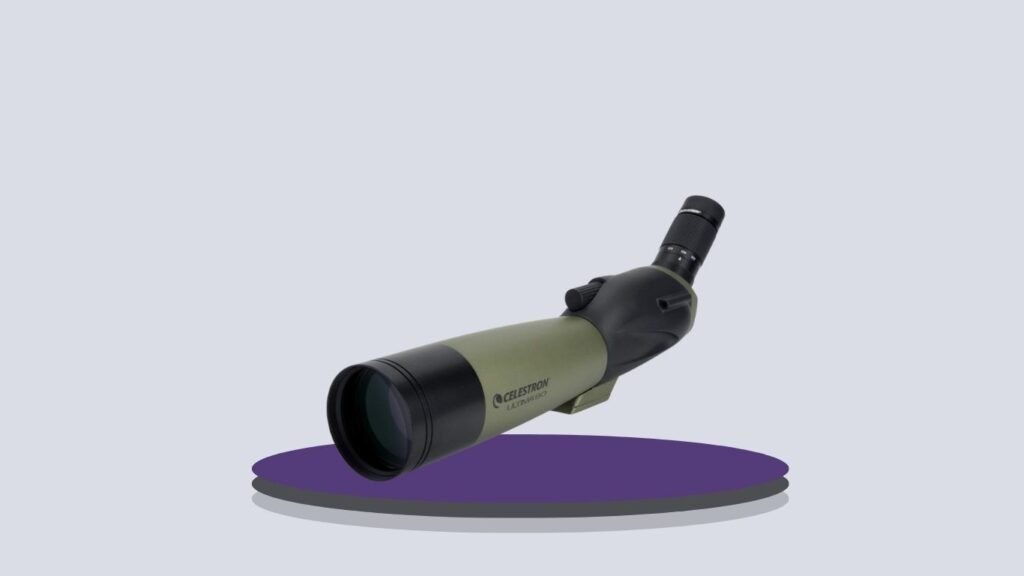
The Celestron Ultima 80 20-60×80 is a versatile spotting scope for bird watchers who want powerful magnification without moving into an overly complicated optical system. Its 80mm objective lens, 20-60x zoom range, multi-coated optics, and waterproof construction make it suitable for observing birds across wetlands, lakes, fields, and distant tree lines. The 45-degree viewing angle is also comfortable for longer stationary birding sessions.
Key Features
- 20-60x variable magnification
- Large 80mm objective lens
- Multi-coated optics
- 45-degree angled viewing design
- Waterproof construction
- Built-in sight tube for faster targeting
- 18mm eye relief
- Includes a soft carrying case
Why It’s Best for Comfortable Extended Viewing
The angled eyepiece is one of the strongest reasons bird watchers may appreciate this model. When observing a perched raptor, shorebirds, or waterfowl for extended periods, the 45-degree orientation can provide a more relaxed viewing position than repeatedly leaning into a straight scope.
Starting at 20x also gives enough field of view to locate a bird before increasing magnification for closer identification.
Optical Performance in the Field
The combination of an 80mm objective and multi-coated optics helps the Ultima gather useful light for detailed observation. Celestron lists a field of view of approximately 105 feet at 1,000 yards at 20x, narrowing as magnification increases.
A tripod will produce the most stable results, particularly toward 60x where small vibrations become much more noticeable.
Overall Verdict
The Celestron Ultima 80 is a well-rounded birding scope for users who value viewing comfort, strong magnification, and a large objective lens. Its waterproof body adds confidence for outdoor observation, while the angled design is especially appealing for long birding sessions. It fits nicely between basic beginner scopes and considerably more expensive premium optics.
3. Bushnell Trophy Xtreme 20-60×65 Spotting Scope
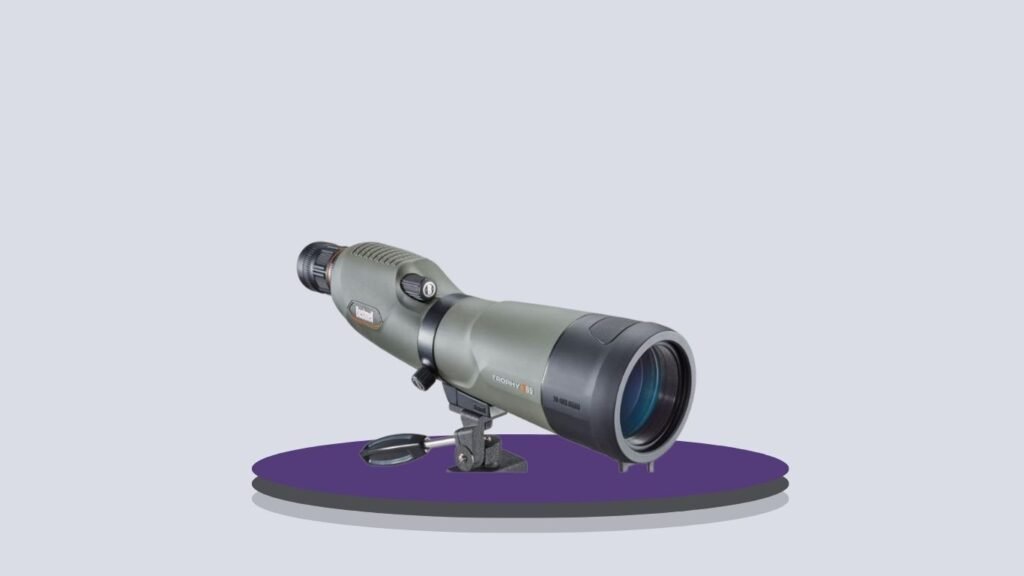
The Bushnell Trophy Xtreme 20-60×65 combines useful long-range magnification with a more portable 65mm objective lens. Bushnell equips it with fully multi-coated optics, BaK-4 prism glass, waterproof and fog-resistant construction, and a rugged armored exterior. For birders who frequently hike between viewing locations, its relatively compact format can be easier to carry than many larger 80mm or 85mm scopes.
Key Features
- 20-60x magnification range
- 65mm objective lens
- Fully multi-coated optics
- BaK-4 prism glass
- Waterproof and fog-resistant construction
- Rugged rubber-armored housing
- Twist-up eyecup
- Suitable for wildlife and long-distance observation
Why It’s Best for Mobile Bird Watchers
A large spotting scope can deliver excellent views but may become cumbersome when birding involves plenty of walking. The Trophy Xtreme’s 65mm configuration provides a useful compromise between light-gathering capability and field portability.
Its 20x low end works well for scanning open habitat, while the 60x maximum gives considerably more reach when studying distant birds.
Field Performance and Ruggedness
Bushnell specifies fully multi-coated optics to improve light transmission and an IPX7 water-resistance rating on the angled version. The armored exterior adds protection when the scope is carried through woodland, marsh edges, or other demanding environments.
A good tripod remains important at higher magnification, where image movement can otherwise make feather details difficult to evaluate.
Overall Verdict
The Bushnell Trophy Xtreme is a compelling option for bird watchers who prioritize portability without giving up a useful 20-60x zoom range. Its rugged housing, weather protection, and fully multi-coated optics make it particularly suitable for regular field use. Birders who frequently travel between observation points may find its 65mm format easier to manage than substantially larger scopes.
4. Gosky 20-60×80 Spotting Scope with Smartphone Adapter

The Gosky 20-60×80 Spotting Scope combines an 80mm objective lens with variable 20-60x magnification and a smartphone adapter, making it particularly attractive to bird watchers who enjoy recording what they observe. The model uses fully multi-coated optics and a BaK-4 Porro prism, while its nitrogen-filled waterproof and fog-resistant construction is designed for outdoor use.
Key Features
- 20-60x variable magnification
- 80mm objective lens
- BaK-4 Porro prism
- Fully multi-coated optics
- Smartphone adapter included
- Tripod-compatible construction
- Waterproof and fog-resistant body
- Rubber-armored exterior
Why It’s Best for Bird Watching and Digiscoping
The included smartphone adapter is the feature that separates this scope from many straightforward observation models. It allows a compatible phone to be positioned at the eyepiece so users can attempt photos or videos of distant birds.
This can be especially enjoyable when observing waterfowl, perched raptors, herons, or other birds that remain relatively stationary.
Optical Performance and Outdoor Usability
The 20-60x magnification range gives birders flexibility. Lower power makes locating a moving bird easier, while higher magnification can reveal additional plumage or structural details.
The 80mm objective provides a large light-gathering surface, and the listing specifies fully multi-coated optics with BaK-4 prism construction. A waterproof, nitrogen-filled body also improves suitability for changing outdoor conditions.
Overall Verdict
The Gosky 20-60×80 is particularly appealing for birders who want both long-distance observation and basic smartphone photography capability in one package. Its large objective, broad zoom range, outdoor-ready construction, and included phone adapter create a versatile setup for nature observation. It can be an especially practical choice for newer digiscoping users who want to experiment without assembling several separate accessories.
5. Gosky Flagship 25-75×80 Spotting Scope

The Gosky Flagship 25-75×80 steps up the magnification compared with many conventional 20-60x scopes. With an 80mm objective lens and zoom reaching 75x, it is designed for users who want additional reach when viewing very distant wildlife. Available product information also lists BaK-4 prism construction and fully multi-coated optics, along with accessories such as a tripod and smartphone adapter.
Key Features
- Powerful 25-75x magnification
- Large 80mm objective lens
- BaK-4 prism
- Fully multi-coated optical system
- Large eyepiece design
- Tripod included with the package
- Smartphone compatibility
- Suitable for birding and wildlife viewing
Why It’s Best for Extra-Long-Range Observation
The 75x upper magnification is the main attraction here. It gives bird watchers additional reach for observing distant shorebirds, waterfowl across large lakes, or raptors sitting far beyond normal binocular range.
The 25x starting magnification is stronger than the low end of many competing scopes, making this model particularly oriented toward distant subjects rather than close-range woodland birding.
Viewing Performance and Stability
Higher magnification can reveal more detail, but it also magnifies vibration and atmospheric distortion. For that reason, a stable tripod becomes particularly important when operating toward 75x.
The combination of an 80mm objective, BaK-4 prism, and fully multi-coated optics is designed to support bright, detailed views across the zoom range. For birders who enjoy recording sightings, smartphone compatibility adds another useful dimension.
Overall Verdict
The Gosky Flagship 25-75×80 is worth considering when magnification is a major priority. Its 75x maximum reaches beyond typical 60x scopes, while the 80mm objective and included accessories create a relatively complete observation setup. It is particularly suited to open-country, wetland, and shoreline birding where subjects may remain hundreds of yards away.
6. Vortex Optics Diamondback HD 20-60×85 Spotting Scope

The Vortex Optics Diamondback HD 20-60×85 is a more advanced birding option built around a large 85mm objective lens and Vortex’s HD optical system. The angled model offers 20-60x magnification along with generous eye relief, and Vortex lists wildlife observation among its recommended applications. Its combination of optical quality and rugged field construction makes it particularly attractive for enthusiasts who spend significant time observing at long distances.
Key Features
- 20-60x magnification range
- Large 85mm objective lens
- HD optical system
- Fully multi-coated lenses
- Angled viewing configuration
- Helical focus design
- Adjustable eyecup
- Arca-Swiss compatible mounting system
Why It’s Best for Serious Bird Observation
The 85mm objective gives the Diamondback HD strong light-gathering potential, which becomes valuable when observing early in the morning, late in the afternoon, or beneath overcast skies.
The 20-60x zoom also covers a useful range for birding. Lower magnification is effective for locating subjects, while 40-60x can bring distant field marks into clearer view when conditions are favorable.
HD Optics and Precision Focusing
Vortex’s HD optical system is intended to improve resolution, color fidelity, edge-to-edge sharpness, and control of chromatic aberration. Multiple anti-reflective coatings further support light transmission. The helical focus mechanism allows broad and fine adjustments as birds move between different distances.
A stable tripod helps take full advantage of this optical performance, particularly when using the higher end of the zoom range.
Overall Verdict
The Vortex Diamondback HD 20-60×85 is a strong fit for bird watchers ready to move toward more serious long-range optics. Its 85mm objective, HD optical system, precise focusing arrangement, and field-oriented construction make it particularly useful at wetlands, reservoirs, coastal locations, and established birding overlooks. For enthusiasts who expect to use a spotting scope frequently, the combination of image quality and durability gives this model considerable long-term appeal.
7. Celestron Regal M2 100ED Spotting Scope
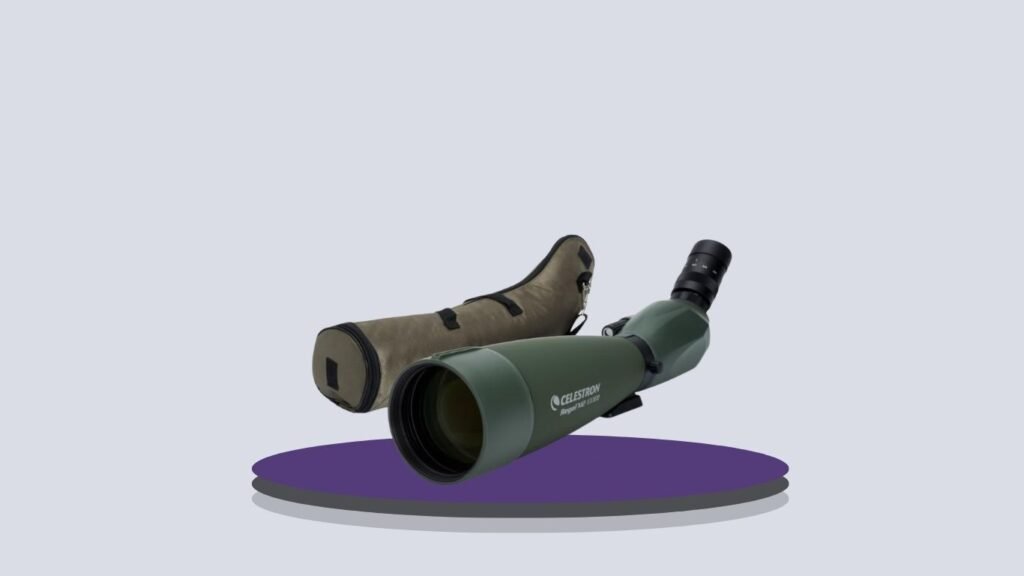
The Celestron Regal M2 100ED is a premium spotting scope designed for bird watchers who place a high priority on image quality, color accuracy, and long-distance detail. Its large 100mm objective lens gathers substantial light, while extra-low dispersion glass helps control color fringing around high-contrast subjects. For birders observing waterfowl, raptors, shorebirds, and other distant species, this scope offers the optical power needed for detailed identification.
Key Features
- Large 100mm objective lens
- Extra-low dispersion glass
- Fully multi-coated optics
- Angled viewing configuration
- Fine and coarse focusing controls
- Rotating tripod mount
- Weather-resistant construction
- Suitable for birding and wildlife observation
Why It’s Best for Premium Birding Optics
The 100mm objective is the standout feature. A larger front lens can collect more light, which is especially valuable during early-morning birding, cloudy weather, or late-afternoon observation.
ED glass is another important advantage because it helps reduce unwanted color fringing around branches, feathers, and bright backgrounds. This can make subtle markings easier to distinguish when identifying similar-looking species.
Optical Performance and Viewing Comfort
The Regal M2 is designed for users who spend considerable time behind a spotting scope. Its angled configuration can provide a more comfortable viewing posture, especially when several people of different heights are sharing the same setup.
Fine and coarse focusing controls also help users move quickly between subjects before making precise adjustments for feather detail. Because this is a large 100mm scope, a solid tripod is highly recommended for stable observation.
Overall Verdict
The Celestron Regal M2 100ED is particularly suitable for serious bird watchers who value brightness, sharpness, and accurate color reproduction. Its large objective lens and ED optical system make it well suited to distant birds and challenging lighting conditions. For dedicated birding from stationary locations, it offers the type of optical performance that can make detailed observation considerably more rewarding.
8. Athlon Optics Argos 20-60×85 Spotting Scope
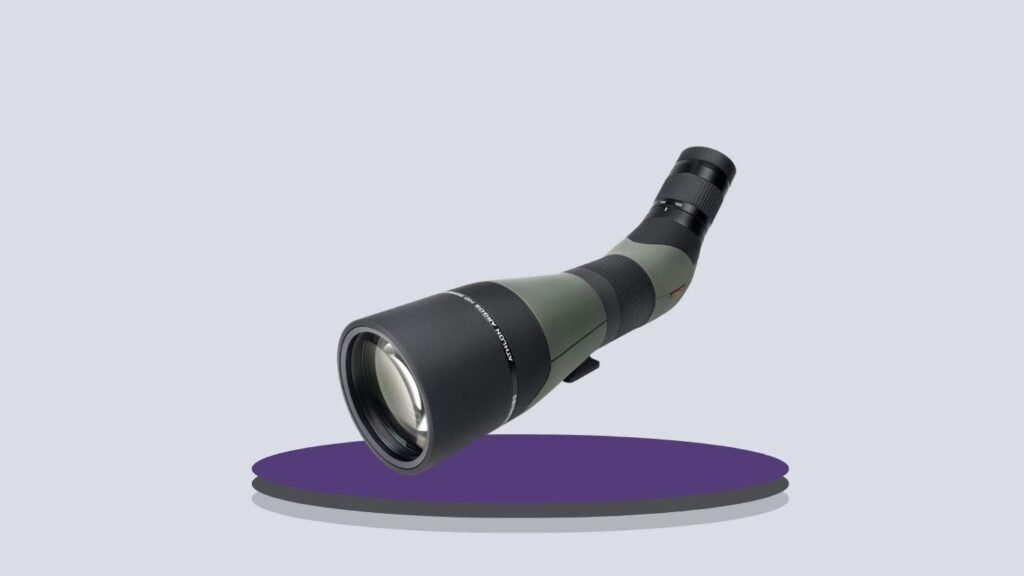
The Athlon Optics Argos 20-60×85 combines a large 85mm objective lens with a versatile magnification range suitable for many bird-watching environments. Its angled eyepiece configuration makes extended observation more comfortable, while the broad 20-60x zoom lets users scan at lower power and then increase magnification for closer inspection. It is especially useful around wetlands, lakes, open fields, and other habitats where birds may remain far from the observer.
Key Features
- 20-60x variable magnification
- Large 85mm objective lens
- Angled viewing design
- Multi-coated optical surfaces
- Tripod-ready construction
- Rugged outdoor body
- Adjustable focus controls
- Suitable for birding and wildlife viewing
Why It’s Best for Versatile Long-Range Birding
The 20-60x zoom range provides flexibility for different situations. At 20x, birders can scan larger areas and locate moving subjects more easily. Once a bird settles, magnification can be increased to examine plumage patterns, bill shape, leg color, or other identification features.
The 85mm objective also gives the scope useful light-gathering ability for overcast or lower-light conditions.
Field Performance and Durability
A spotting scope used for birding needs to handle repeated outdoor use, and the Argos is designed with field observation in mind. Its angled body helps make viewing more comfortable when the scope remains mounted on a tripod for long periods.
Higher magnification works best with a stable support because even small movements become noticeable around 60x. Atmospheric haze may also limit useful detail on particularly warm days, regardless of optical power.
Overall Verdict
The Athlon Optics Argos 20-60×85 is a strong choice for bird watchers who want a large objective lens and flexible zoom without moving immediately into the highest-priced optics. It is particularly well suited to stationary birding locations where long-distance viewing and comfortable extended observation are priorities.
9. 25-75×80 HD Spotting Scope with Tripod & Carrying Case
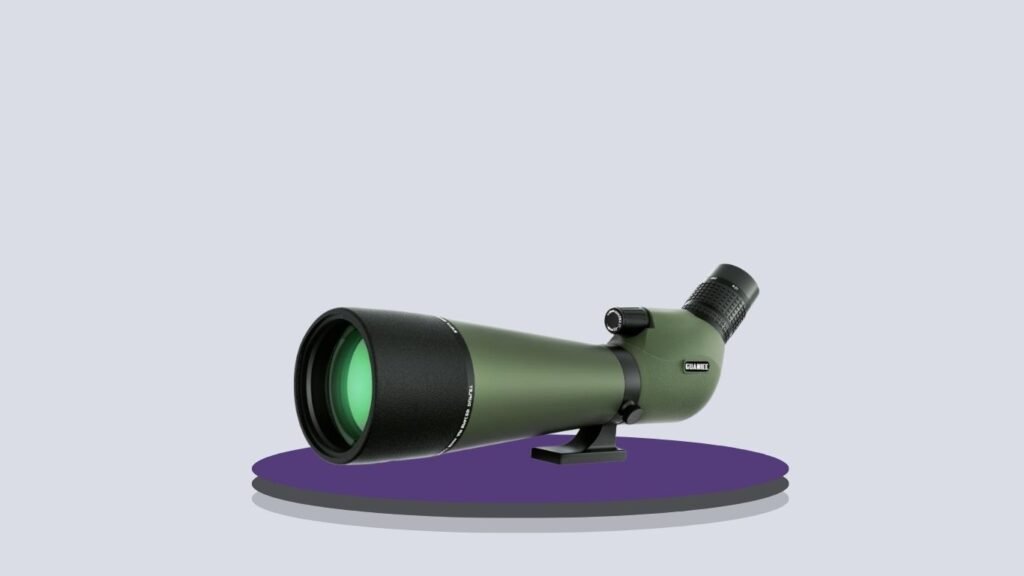
This 25-75×80 HD spotting scope offers an impressive magnification range for bird watchers who regularly observe wildlife across large open spaces. Its 80mm objective lens supports brighter viewing, while the 25-75x zoom provides more magnification than many standard 20-60x models. A package that includes supporting accessories such as a tripod and carrying case can also make it appealing to beginners building their first complete spotting-scope setup.
Key Features
- 25-75x variable magnification
- Large 80mm objective lens
- HD-style optical configuration
- Tripod included
- Carrying case included
- Suitable for long-distance bird observation
- Adjustable focusing system
- Useful for wildlife and nature viewing
Why It’s Best for High-Magnification Viewing
The 75x upper magnification is the main attraction. This extra reach can be useful when observing distant waterfowl, shorebirds, nesting raptors, or birds located across wide fields.
At lower power, users can locate the subject more easily before gradually zooming in. This approach is generally more practical than immediately attempting to find a bird at maximum magnification.
Viewing Performance and Included Accessories
The 80mm objective provides a useful balance between light gathering and overall size. A tripod is especially important with this type of scope because high magnification exaggerates even minor hand movement.
The included carrying case can make storage and transportation easier, while having a tripod in the package reduces the number of accessories a first-time spotting-scope user needs to source separately.
Overall Verdict
The 25-75×80 HD Spotting Scope is an appealing option for bird watchers who want substantial magnification and a more complete starter package. Its broad zoom range, large objective lens, tripod, and carrying case make it particularly suitable for open-country and wetland observation. For users who prioritize long-range reach and accessory value, it offers a practical way to expand beyond conventional binocular birding.
FAQs
1. What magnification is best for bird watching with a spotting scope?
A range of approximately 20-60x works well for most bird-watching situations. Lower magnification makes birds easier to locate and follow, while higher magnification helps reveal plumage details on distant subjects. Scopes reaching 75x can provide additional reach when atmospheric conditions and tripod stability are favorable.
2. Is an 80mm or 85mm spotting scope good for birding?
Yes. An 80mm or 85mm objective lens provides strong light-gathering ability, making these sizes particularly useful for wetlands, reservoirs, coastlines, and low-light observation. The trade-off is additional weight compared with smaller 60mm or 65mm scopes.
3. Are angled spotting scopes better for bird watching?
Angled scopes are popular for birding because they can provide a more comfortable viewing position during long sessions. They are also convenient when several people of different heights share one scope. Straight scopes, however, can sometimes make quickly locating moving birds easier.
4. Do I need a tripod for a bird-watching spotting scope?
Yes, a tripod is strongly recommended. Magnification above about 20x makes small movements much more noticeable, and a stable tripod provides a steadier image. Stability becomes particularly important at 40x, 60x, or 75x when trying to identify fine feather details.
5. Can I take bird photos through a spotting scope?
Yes. Many spotting scopes can be paired with smartphone or camera adapters for digiscoping. This allows users to photograph or record distant birds through the eyepiece. Results depend on the scope, adapter, phone or camera, lighting conditions, and how stable the complete setup is.