

Sunflower seeds are among the most popular foods for attracting wild birds because they are nutritious, energy-rich, and appealing to many backyard species. Cardinals, chickadees, finches, nuthatches, woodpeckers, and jays commonly enjoy black oil sunflower seeds, striped seeds, kernels, and sunflower hearts. Choosing the best sunflower seeds for birds depends on feeder type, bird species, cleanup preferences, and budget. Below, we review 9 top sunflower seed options that can help create a more active, colorful, and enjoyable backyard feeding station.
1. Audubon Park Sunflower Hearts Wild Bird Food
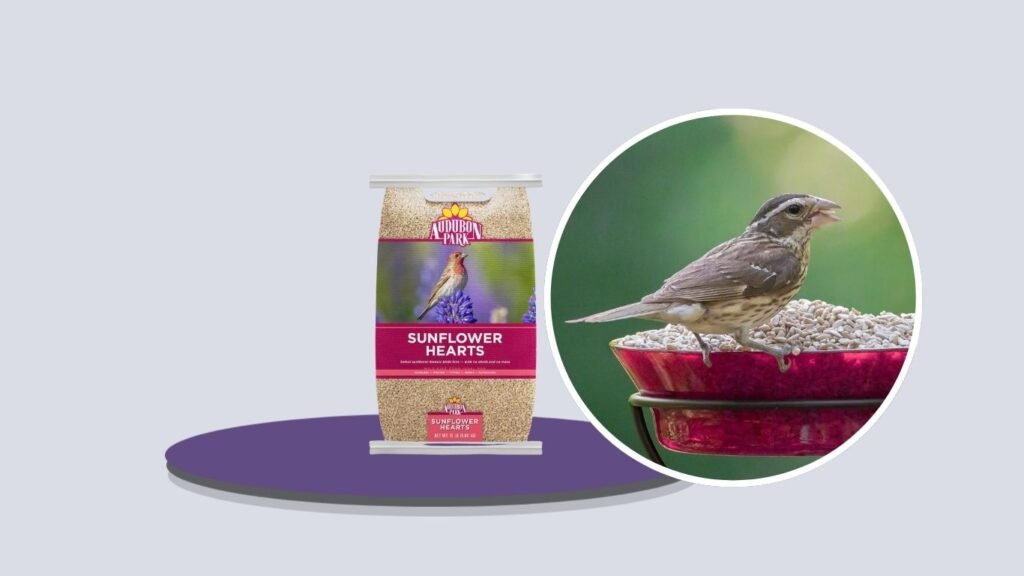
Audubon Park Sunflower Hearts is a clean, nutrient-dense choice for bird lovers who want to attract a wide range of backyard species without dealing with piles of discarded shells. The product contains 100% sunflower kernels, so birds can immediately access the edible portion. It works especially well around patios, decks, gardens, and other places where keeping the feeding area tidy matters.
Key Features
- Made with 100% sunflower kernels
- Shell-free formulation
- Rich in naturally occurring healthy fats
- Suitable for finches, chickadees, nuthatches, sparrows, and juncos
- Works in tube feeders
- Suitable for hopper and platform feeders
- Produces less shell waste beneath feeders
- Easy for smaller-billed birds to eat
Why It Is Best for Clean Backyard Feeding
The strongest advantage of Audubon Park Sunflower Hearts is efficiency. Whole sunflower seeds require birds to crack the shell and discard it, while these kernels are already ready to eat. That means a larger proportion of what you put into the feeder can actually be consumed.
This design is especially useful when feeders are positioned above lawns, balconies, decorative stone, flower beds, or outdoor living spaces where shell buildup can quickly become noticeable.
Feeding Performance and Bird Attraction
Sunflower kernels appeal to many common backyard birds because they provide concentrated food in an easy-to-handle form. Audubon Park specifically lists finches, nuthatches, sparrows, juncos, and chickadees among the species the food can attract.
The flexibility to use the kernels in tube, hopper, or platform feeders also makes this seed convenient for households with several feeding stations.
Because the protective shell has been removed, keeping the kernels dry and storing unused food in a sealed container will help preserve freshness.
Overall Verdict
Audubon Park Sunflower Hearts is particularly appealing for people who value low-mess feeding and broad bird attraction. Its single-ingredient formulation keeps things simple, while the shell-free design reduces wasted space in the bag and debris underneath the feeder.
For patios, balconies, landscaped yards, or busy feeders where cleanup matters, it offers a technically practical alternative to standard in-shell sunflower seed.
2. Trailmark Naturals Black Oil Sunflower Seeds
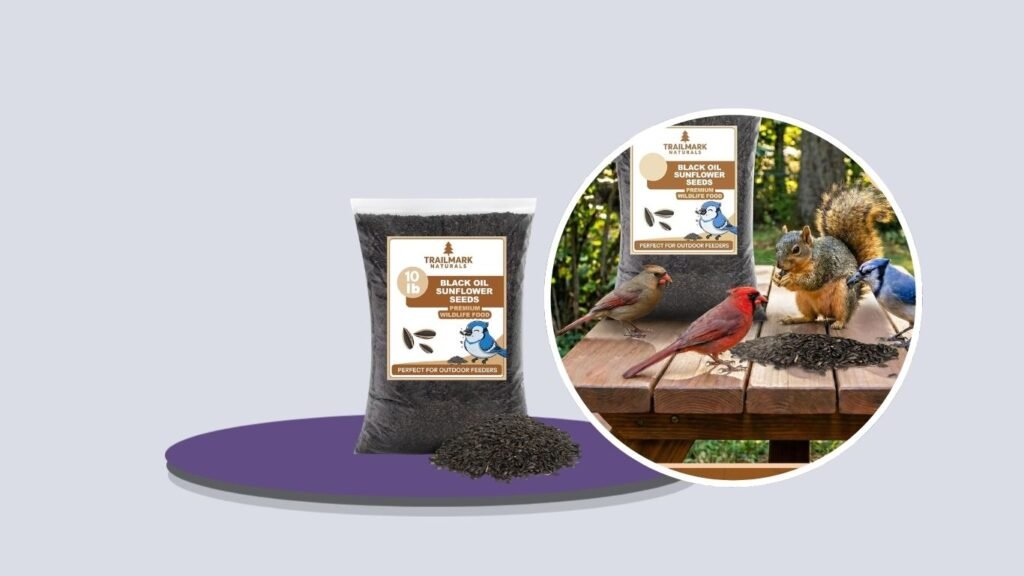
Trailmark Naturals Black Oil Sunflower Seeds provide a straightforward single-seed option for anyone trying to increase activity around an outdoor bird feeder. The company describes the seed as suitable for a broad variety of backyard birds and offers multiple package sizes ranging from smaller bags to bulk quantities. The seed can be used in tray, hopper, and tube feeders.
Key Features
- Black oil sunflower seed
- Designed for wild and backyard birds
- Suitable for tray feeders
- Works in hopper feeders
- Compatible with tube-style feeders
- Can also be scattered for outdoor wildlife
- Grown and packed in the USA
- Available in multiple bag sizes
- Bulk sizes available for frequent feeder refilling
Why It Is Best for Regular Feeder Refills
Trailmark Naturals stands out for people who rely heavily on sunflower seed and refill feeders frequently. The availability of several package sizes allows occasional bird feeders and high-volume users to choose an amount that better matches their routine.
Black oil sunflower seed is particularly useful as a general feeder staple because its relatively thin shell makes it easier for many birds to open than some larger sunflower varieties.
Feeding Performance and Versatility
The ability to use these seeds in tray, hopper, or tube feeders gives birders considerable flexibility. A tube feeder can accommodate smaller perching birds, while tray and hopper designs allow a wider range of visitors to access the seed.
Trailmark also states that the seeds can be scattered by hand, making them useful for more open feeding arrangements.
Since the hull remains intact, some shell debris should be expected beneath the feeder. Positioning the feeder over natural ground or adding a seed-catching tray can simplify maintenance.
Overall Verdict
Trailmark Naturals Black Oil Sunflower Seeds offer a practical balance of simplicity, feeder compatibility, and bulk availability. They are especially well suited to people who prefer one highly appealing seed rather than complicated mixes containing grains that birds may ignore.
For a year-round backyard feeding routine, the range of package sizes and compatibility with common feeder styles make this an easy product to integrate into an established setup.
3. Wagner’s Black Oil Sunflower Wild Bird Food
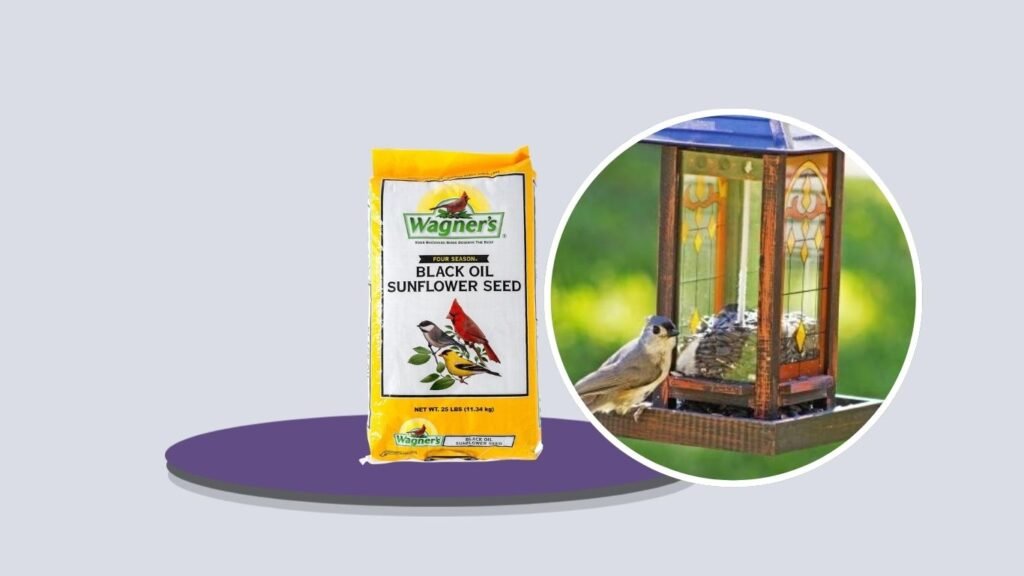
Wagner’s Black Oil Sunflower Wild Bird Food is a large-volume option built around one of the most commonly used seeds for backyard feeding. This version comes in a 25-pound bag and contains black oil sunflower seed rather than a mixed assortment of grains. The larger quantity is particularly convenient for households running several feeders or experiencing consistent daily bird traffic.
Key Features
- 100% black oil sunflower seed
- Large 25-pound bag
- Single-seed formulation
- Energy-rich sunflower kernels
- Thin shells compared with many striped sunflower seeds
- Suitable for numerous seed-eating birds
- Useful for high-traffic feeders
- Can be offered alone or blended with other bird foods
Why It Is Best for High-Volume Feeding
The 25-pound size is one of the biggest reasons to consider this product. Small bags can disappear quickly when cardinals, finches, chickadees, nuthatches, jays, and other regular visitors discover a reliable feeding station.
Keeping a larger supply reduces the need to repeatedly replace small packages and makes it easier to maintain several feeders simultaneously.
Feeding Performance and Seed Design
Black oil sunflower seed combines an energy-rich kernel with a relatively easy-to-open shell. This makes it accessible to a wide range of birds, from small chickadees and finches to larger cardinals and jays.
Unlike sunflower hearts, however, whole black oil sunflower seeds leave empty shells after birds eat the kernels. For feeders positioned above patios or decorative landscaping, a seed catcher can help control debris.
The intact shell also provides the kernel with natural protection during storage, provided the bag is kept dry and protected from pests.
Overall Verdict
Wagner’s Black Oil Sunflower Wild Bird Food is a strong practical option for people who already know sunflower seed performs well in their yard and want a larger supply.
Its single-seed formula eliminates unnecessary filler grains, while the 25-pound size is particularly convenient for frequent feeding. For maintaining active year-round feeders without constantly opening new small bags, this bulk-oriented format offers clear advantages.
4. Morning Song Sunflower Hearts & Chips
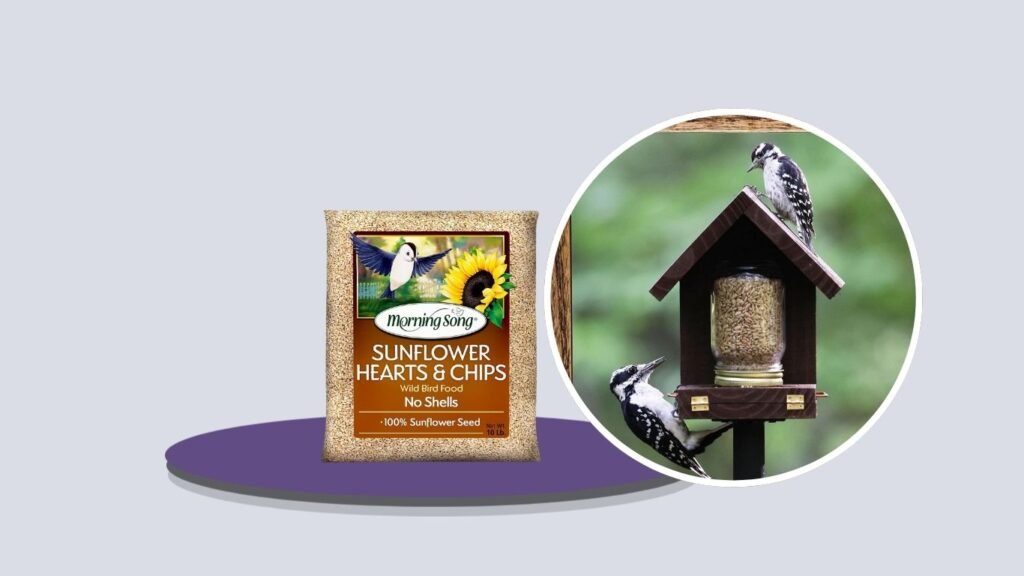
Morning Song Sunflower Hearts & Chips provides the attraction of sunflower seed without the shells that normally accumulate beneath feeders. The 5.5-pound formula consists of chipped sunflower seed and is designed for hopper, tube, and platform feeders. Because the kernels are already exposed and broken into manageable pieces, birds can access the food quickly and efficiently.
Key Features
- Made from chipped sunflower seed
- Shell-free design
- 5.5-pound package
- Naturally rich in fat and protein
- Suitable for hopper feeders
- Works in tube feeders
- Compatible with platform feeders
- Helps minimize shell debris
- Easy for a variety of bird sizes to handle
Why It Is Best for Less Mess Around Feeders
Whole sunflower seeds are excellent bird food, but shells can create significant cleanup after a busy day at the feeder. Morning Song solves that issue by removing the shells before the food reaches your backyard.
Almost everything poured into the feeder is edible. This makes the product especially convenient for balconies, decks, patios, paved walkways, and neatly maintained garden areas where shell buildup would otherwise become frustrating.
Feeding Performance and Nutritional Value
Morning Song describes the hearts and chips as naturally loaded with healthy fat and protein. These nutrients make sunflower kernels a concentrated food source for active wild birds.
The smaller chipped pieces also increase accessibility. Small-billed birds can handle the pieces without needing to crack a hard shell, while larger birds can consume them quickly.
Because exposed kernels are less protected from moisture than whole seeds, a covered feeder is particularly helpful during wet weather.
Overall Verdict
Morning Song Sunflower Hearts & Chips is an appealing choice for birders who want the popularity of sunflower seed with significantly less cleanup.
The chipped, shell-free format makes feeding easier for many birds and eliminates much of the waste associated with traditional sunflower shells. It is especially useful for feeders close to homes or landscaped spaces where cleanliness is just as important as attracting plenty of bird activity.
5. Happy Wings No Grow Black Oil Sunflower Seed
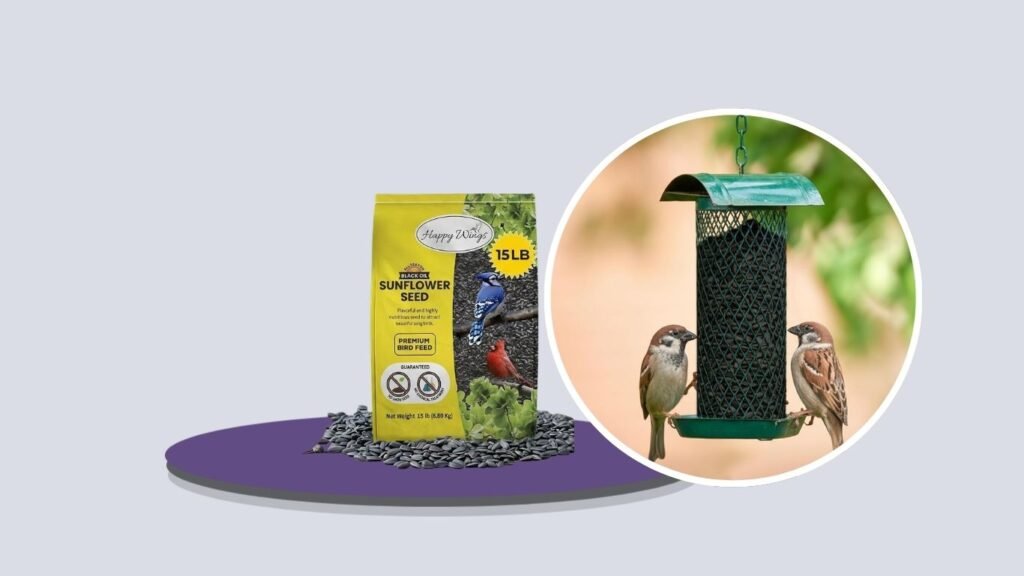
Happy Wings No Grow Black Oil Sunflower Seed combines the attraction of traditional black oil sunflower seed with a heat-treatment process designed to prevent unwanted sprouting. The 14-pound option provides an ample supply for regular backyard feeding while addressing one of the common complaints about fallen bird seed: volunteer plants growing beneath feeders.
Key Features
- Black oil sunflower seed
- Available in a 14-pound bag
- Heat-treated No Grow formulation
- Treatment does not rely on chemical sprout inhibitors
- Designed to reduce unwanted seed germination
- Contains approximately 14% protein and 20% fat according to the product listing
- Cleaned to reduce dust and debris
- Attracts cardinals, finches, chickadees, juncos, grosbeaks, titmice, and other birds
- Suitable for year-round feeding
Why It Is Best for Reducing Unwanted Sprouting
Fallen sunflower seeds can occasionally germinate in lawns, flower beds, or landscaping beneath feeders. Happy Wings addresses that issue by heat-treating the seed so it is far less likely to grow.
This feature can be particularly helpful for people with manicured yards, patios, HOA-managed properties, or feeding stations near ornamental gardens.
Nutrition and Backyard Feeding Performance
Black oil sunflower seed is naturally attractive to many common feeder birds because of its oil-rich kernel and relatively thin shell. Happy Wings states that its product provides 14% protein and 20% fat, supporting its role as an energy-dense bird food.
The manufacturer lists species including goldfinches, siskins, chickadees, grosbeaks, blue jays, cardinals, juncos, and redpolls among potential visitors.
The 14-pound package also strikes a useful balance: large enough for regular refilling without being as cumbersome as some 25- or 40-pound bulk bags.
Overall Verdict
Happy Wings No Grow Black Oil Sunflower Seed stands out because it addresses both bird attraction and yard maintenance. You still get the familiar advantages of black oil sunflower seed, but the heat-treated design helps reduce the chance of unwanted plants appearing below the feeder.
For homeowners who want active bird feeders while keeping lawns and landscaped areas more controlled, this added feature gives Happy Wings a meaningful practical advantage over ordinary untreated sunflower seed.
6. Lyric Sunflower Kernels
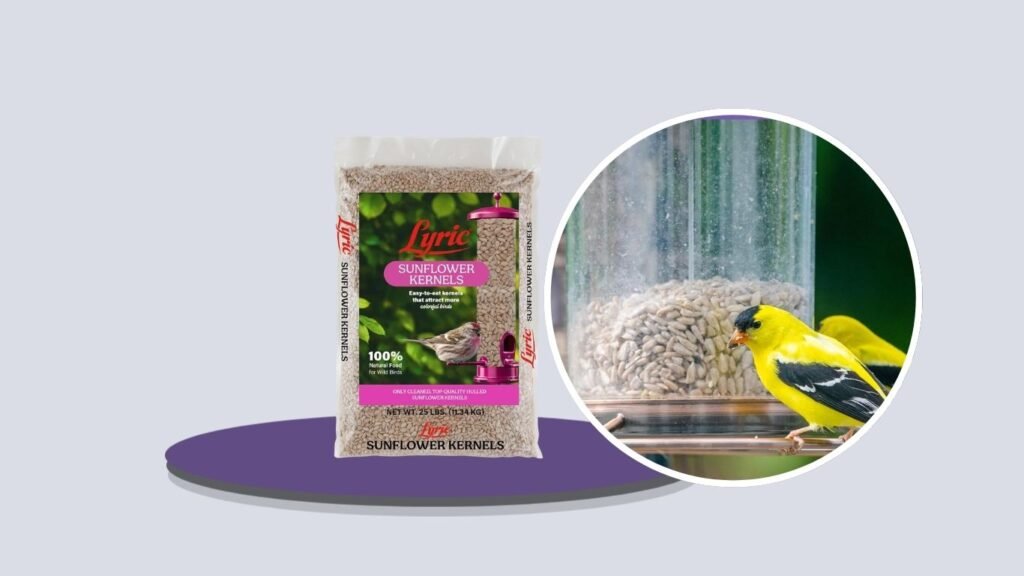
Lyric Sunflower Kernels offer a premium, shell-free feeding option designed for people who want high bird activity without the usual pile of sunflower hulls around the feeder. The product contains sunflower kernels only, giving birds direct access to the nutritious portion of the seed. Because the kernels are already shelled, they work particularly well around patios, decks, balconies, lawns, and landscaped feeding areas where cleanliness is important.
Key Features
- Made with sunflower kernels
- 100% edible bird food
- Shell-free, no-waste design
- Minimum 18% crude protein
- Minimum 25% crude fat
- Suitable for hopper, covered tray, and tube feeders
- Attracts cardinals, chickadees, finches, grosbeaks, nuthatches, woodpeckers, and more
- Helps reduce shell debris beneath feeders
- Requires protection from excessive moisture
Why It Is Best for No-Waste Feeding
The major advantage of Lyric Sunflower Kernels is that virtually everything placed inside the feeder is edible. With conventional sunflower seeds, part of the weight comes from shells that eventually end up underneath the feeder. Here, birds receive only the kernel.
That makes the product particularly useful for feeding stations close to houses or carefully maintained outdoor spaces. The absence of shells can also help reduce unwanted seed-related mess around patios and lawns.
Nutrition and Feeding Performance
Sunflower kernels provide substantial fat and protein, making them an energy-dense food for active backyard birds. Lyric lists 18% minimum crude protein and 25% minimum crude fat for the product.
Because the hard outer shell has already been removed, smaller birds can access the food without first cracking a seed. Cardinals, finches, chickadees, nuthatches, towhees, titmice, grosbeaks, and woodpeckers are among the birds Lyric identifies as attracted to the kernels.
The tradeoff is that exposed kernels need greater protection from rain and humidity.
Overall Verdict
Lyric Sunflower Kernels are particularly well suited to bird enthusiasts who want high-value food with minimal waste. The combination of shell-free convenience, concentrated nutrition, and broad songbird appeal gives them an advantage around heavily used backyard feeding stations.
For anyone who enjoys sunflower-feeding birds but dislikes cleaning up hulls, this product offers a technically efficient alternative to traditional whole sunflower seed.
7. Desert Valley Premium Striped Sunflower Seeds

Desert Valley Premium Striped Sunflower Seed is designed primarily for birds capable of handling larger, thicker sunflower shells. These striped seeds are larger than typical black oil sunflower seeds and come in resealable packaging. Their size and shell structure make them particularly appealing for larger songbirds such as cardinals, jays, grosbeaks, and woodpeckers.
Key Features
- Premium striped sunflower seed
- Larger than typical black oil sunflower seed
- Thicker outer shell
- Available in resealable bags
- Non-GMO according to the product listing
- Grown in the USA
- Contains naturally occurring protein, fat, and carbohydrates
- Suitable for cardinals, jays, grosbeaks, and woodpeckers
- Also usable by some chickadees, titmice, and nuthatches
Why It Is Best for Larger Backyard Birds
Striped sunflower seed provides a different feeding experience from black oil sunflower. Its larger size and stronger shell favor birds with more powerful bills.
Cardinals, blue jays, grosbeaks, and woodpeckers can crack these seeds effectively, making this product useful when the goal is to encourage larger, colorful visitors around a backyard feeder.
The tougher shell can also make the seed less accessible to some very small birds, which may be useful when trying to change the mix of species visiting a particular feeder.
Seed Quality and Feeding Performance
Desert Valley describes the seeds as hand-packed in small batches and offered in resealable bags intended to help preserve freshness. The product is available in multiple package sizes, allowing users to choose a quantity appropriate for their feeding frequency.
Because striped sunflower seeds remain inside their natural shells, they generally tolerate storage better than exposed kernels. They still need to be stored in a dry, sealed location to prevent moisture and pests.
Their larger size is best matched with feeders that provide adequate ports or open feeding surfaces.
Overall Verdict
Desert Valley Premium Striped Sunflower Seed stands out from the many black-oil options because it caters especially well to larger birds.
If cardinals, grosbeaks, jays, and woodpeckers are regular visitors, the larger kernel and stronger shell can make this seed a useful addition to the feeding station. It is particularly attractive for birders who want a single-seed food while focusing more heavily on substantial, strong-billed backyard species.
8. Cole’s Sunflower Meats Wild Bird Food
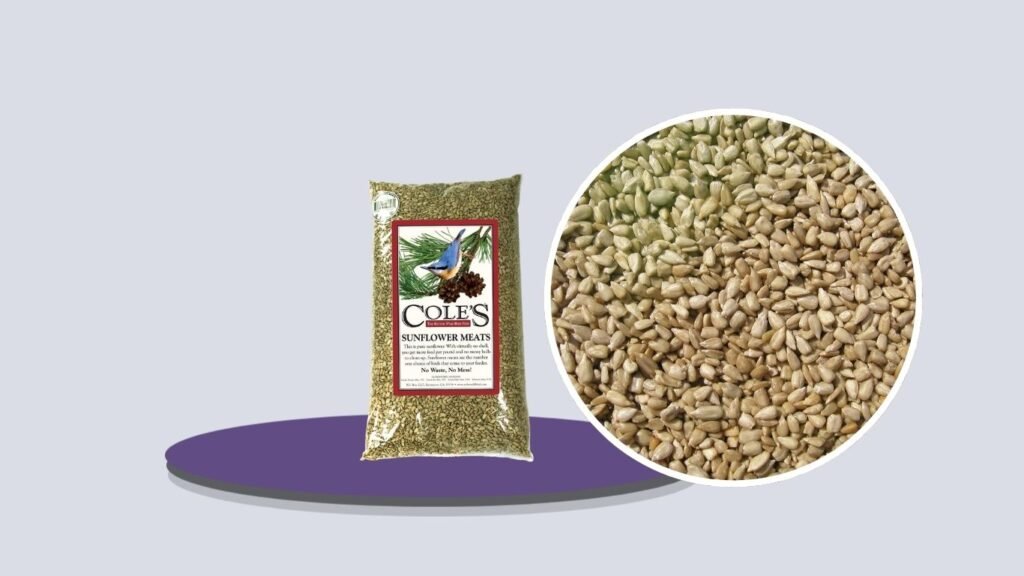
Cole’s Sunflower Meats removes almost all of the shell and provides birds with clean whole sunflower kernels. This straight-seed food is designed as a no-waste, low-mess alternative to whole sunflower seed. It is especially practical for decks, balconies, porches, and landscaped areas because birds consume the kernel instead of leaving piles of empty shells underneath the feeder.
Key Features
- Pure sunflower meats
- Whole sunflower kernels
- Almost no shell
- No-waste, low-mess feeding
- No added synthetic ingredients
- No artificial flavors
- Available in multiple package sizes
- Works in several feeder styles
- Attracts cardinals, chickadees, finches, bluebirds, woodpeckers, grosbeaks, nuthatches, and more
Why It Is Best for Decks and Balconies
Cole’s Sunflower Meats are particularly useful when feeder cleanup is a major concern. Traditional whole sunflower seeds create hulls that can cover hard surfaces quickly, especially at a busy feeder.
By removing almost all of the shell in advance, this product substantially reduces that problem. For apartment balconies, patios, decks, and porches, that convenience can be more important than choosing the least expensive seed per pound.
The compact kernels also provide more edible material within the same amount of feeder space.
Bird Attraction and Feeder Performance
Cole’s identifies a long list of sunflower-loving birds for this product, including cardinals, chickadees, finches, woodpeckers, bluebirds, wrens, buntings, grosbeaks, nuthatches, towhees, and doves.
The kernels can work in tube, mesh, bowl, platform, and similar feeders. Because the food is already shelled, birds can eat quickly without spending time opening the outer hull.
As with other sunflower meats, moisture control is important. A feeder with some weather protection can help keep exposed kernels fresher.
Overall Verdict
Cole’s Sunflower Meats is a technically strong option for anyone prioritizing clean feeding and maximum edible content.
Rather than paying for a substantial amount of shell material, you receive almost entirely usable sunflower food. Its broad species appeal and compatibility with different feeder styles make it especially useful for high-visibility feeding areas where both bird activity and cleanliness matter.
9. Freebird Premium Sunflower & Safflower Bird Seed
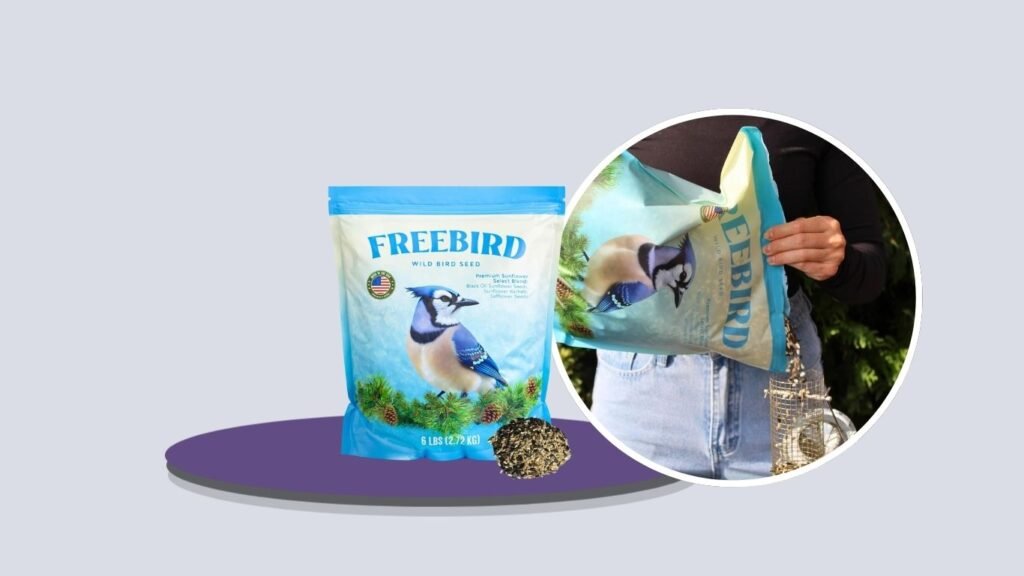
Freebird Premium Sunflower & Safflower Bird Seed differs from the other products in this roundup because it combines sunflower-based ingredients with safflower rather than relying exclusively on one type of sunflower seed. The 6-pound formula includes black oil sunflower seed, sunflower kernels, and safflower, creating a varied blend intended for cardinals and other backyard songbirds.
Key Features
- 6-pound wild bird food blend
- Contains black oil sunflower seed
- Includes sunflower kernels
- Contains safflower seed
- Millet-free formula according to the listing
- Designed for outdoor bird feeders
- Suitable for year-round feeding
- Intended to attract cardinals, finches, chickadees, grosbeaks, nuthatches, and other songbirds
- Combines whole seeds with ready-to-eat kernels
Why It Is Best for a More Varied Sunflower Blend
Single-seed products are excellent when birds strongly prefer one food, but a carefully selected blend can attract birds with slightly different preferences.
Freebird combines black oil sunflower with sunflower kernels and safflower. Whole black oil seeds provide a familiar feeder staple, while the kernels offer immediate access to sunflower meat. Safflower introduces another seed type that is commonly associated with strong-billed backyard birds such as cardinals.
This makes the formula more versatile than a bag containing only one sunflower variety.
Feeding Performance and Ingredient Balance
The combination of in-shell and shell-free sunflower provides two feeding formats in one mixture. Birds capable of cracking whole seeds can use the black oil sunflower, while smaller or less powerful feeders can readily consume exposed kernels.
The product listing identifies cardinals, blue jays, chickadees, finches, grosbeaks, juncos, nuthatches, titmice, and woodpeckers among the intended backyard visitors.
Because kernels are present, keeping the mix dry will help preserve freshness. A hopper or covered platform feeder can therefore be a practical match.
Overall Verdict
Freebird Premium Sunflower & Safflower Bird Seed is a useful alternative for people who want sunflowers to remain the main attraction while providing more variety than a straight-seed product.
Its mix of black oil sunflower, sunflower kernels, and safflower gives different bird species more feeding choices. For a general backyard station focused on colorful songbirds, that ingredient balance makes the formula particularly versatile.
FAQs
1. What type of sunflower seed is best for most wild birds?
Black oil sunflower seed is one of the most versatile choices because its relatively thin shell can be opened by many small and medium-sized birds. Cardinals, chickadees, finches, nuthatches, titmice, and numerous other feeder visitors commonly eat it. Sunflower kernels are another excellent option when reducing shell waste is important.
2. Are sunflower hearts better than whole sunflower seeds?
Neither is automatically better for every situation. Sunflower hearts and kernels are already shelled, so they produce much less mess and are easier for smaller birds to eat. Whole seeds generally keep longer because their shells protect the kernels from moisture and exposure. Shell-free kernels should therefore be kept especially dry.
3. What birds eat sunflower seeds?
Sunflower seeds can attract a wide variety of backyard birds, including cardinals, finches, chickadees, nuthatches, titmice, grosbeaks, jays, woodpeckers, buntings, and towhees. The exact visitors will depend on geographic location, feeder design, season, and whether black oil, striped, or shelled sunflower seed is offered.
4. What is the difference between black oil and striped sunflower seeds?
Black oil sunflower seeds generally have thinner shells, making them easier for many small birds to open. Striped sunflower seeds are larger and have thicker shells, so they are particularly suitable for strong-billed birds such as cardinals, grosbeaks, jays, and woodpeckers.
5. How should sunflower bird seed be stored?
Store sunflower seed in a cool, dry location inside a tightly sealed container. Keeping moisture out helps maintain freshness and reduces the risk of spoilage, while a secure container helps prevent access by insects and rodents. Shelled sunflower kernels deserve extra attention because removing their protective hull makes them more vulnerable to moisture and deterioration.