
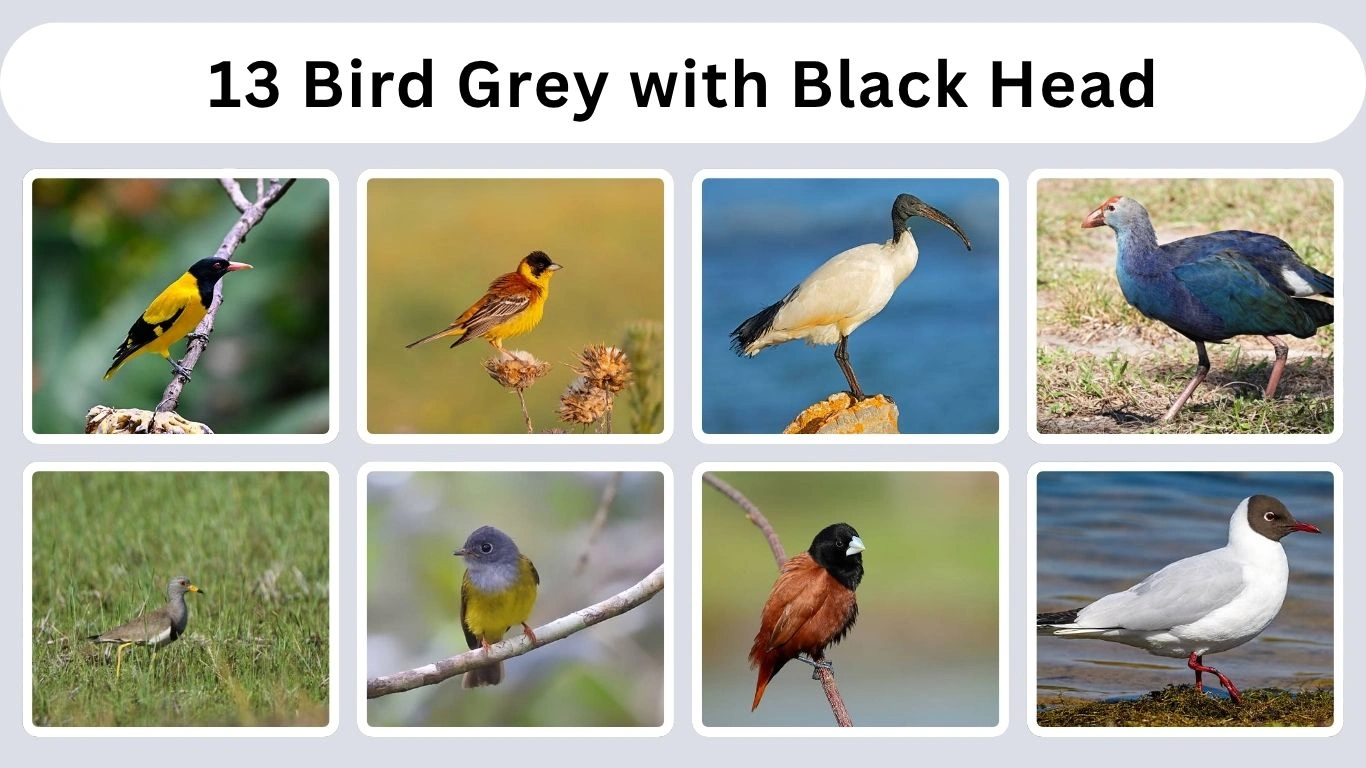
Birds with a grey body and black head are both visually striking and relatively common across different habitats. These color patterns appear in a wide range of species—from urban crows to wetland birds and forest dwellers. This guide presents 13 such birds with clear identification, habitat, behavior, and diet details, helping you recognize them easily in the wild, especially in regions like Bangladesh and surrounding areas.
1. House Crow
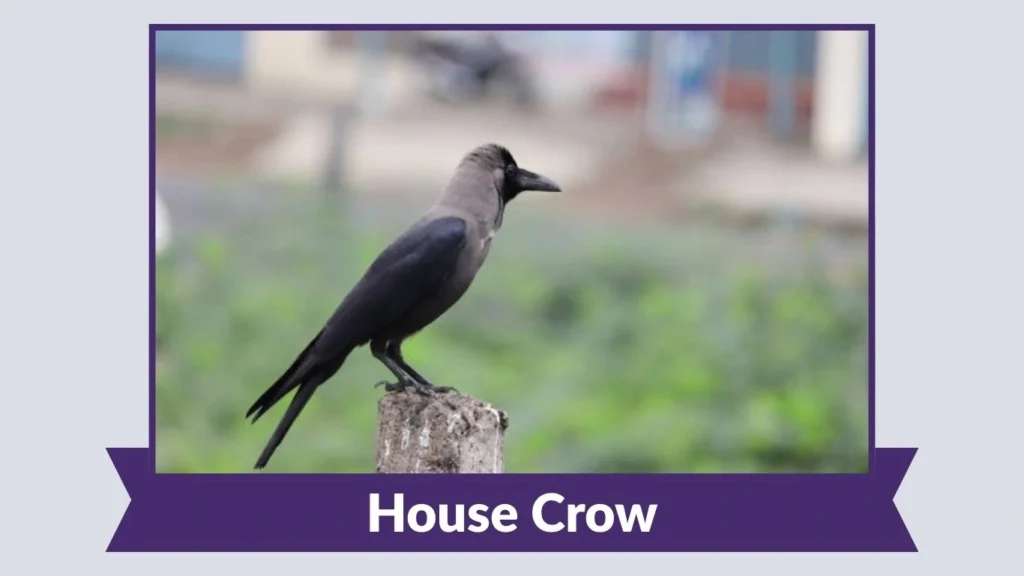
The House Crow (Corvus splendens) is one of the most familiar birds across South Asia, especially in Bangladesh. Known for its sharp intelligence and strong adaptability, this bird thrives in both urban and rural environments. Its distinctive grey body paired with a glossy black head makes it easy to recognize. The House Crow plays an important ecological role as a scavenger, helping keep environments clean, though it is sometimes considered a nuisance due to its bold and opportunistic behavior.
Identification
- Medium-sized bird, typically 40–42 cm in length
- Glossy black head, throat, wings, and upper breast
- Pale grey neck and underparts, creating a clear contrast
- Strong, slightly curved black beak
- Long, fan-shaped tail
- Dark brown to black eyes
- Males and females look similar
- Juveniles appear duller with less glossy plumage
Habitat
The House Crow is closely associated with human habitation and is rarely found far from people. It commonly inhabits cities, towns, villages, ports, and coastal regions. This bird prefers open areas with scattered trees, rooftops, and electric poles for perching and nesting. It is especially abundant near markets, garbage disposal areas, fishing harbors, and food stalls where waste is plentiful. Due to its adaptability, the House Crow has successfully expanded its range to many parts of the world through human activity. It avoids dense forests but thrives in modified landscapes where food sources are reliable.
Behavior
House Crows are highly social birds and are usually seen in pairs or large groups. They communicate with a variety of harsh “cawing” calls and are very alert to their surroundings. These birds are known for their intelligence, often displaying problem-solving skills and cooperative behavior. They can be aggressive, especially when competing for food or defending nests. House Crows are also known to mob predators and other birds. At dusk, they gather in large communal roosts, sometimes numbering in the hundreds or thousands, creating a noisy and active scene.
Diet
The House Crow is an omnivorous and opportunistic feeder. Its diet includes insects, small reptiles, eggs, nestlings, grains, fruits, and carrion. However, it heavily relies on human-generated waste such as leftover food, scraps, and garbage. This adaptability in diet allows it to survive in a wide range of environments. It is also known to steal food from other birds and animals. In coastal areas, it may feed on fish remains and marine waste. Its scavenging behavior plays a role in waste removal but also contributes to its reputation as a pest in some regions.
2. Hooded Crow
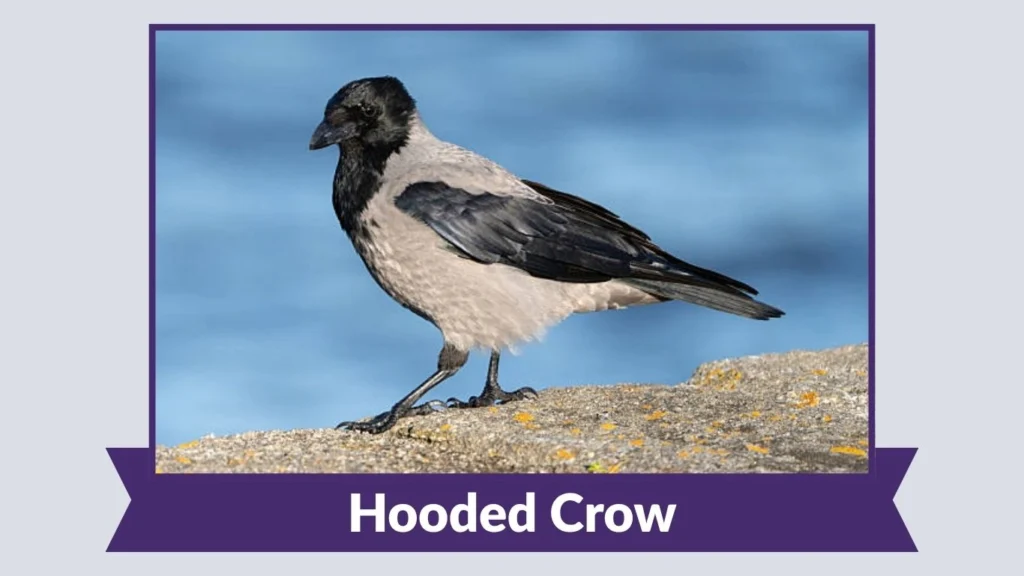
The Hooded Crow (Corvus cornix) is a striking member of the crow family, known for its contrasting grey body and black head, wings, and tail. Although more common in Europe, the Middle East, and parts of Central Asia, it shares many behavioral traits with other crows, including intelligence and adaptability. Its bold coloration makes it easy to distinguish from other crow species.
Identification
- Medium to large-sized crow, about 48–52 cm long
- Black head, throat, wings, and tail
- Pale grey body and back
- Strong black beak
- Black legs and feet
- Dark eyes
- Both sexes look similar
- Juveniles are duller with less contrast
Habitat
The Hooded Crow prefers open landscapes such as farmland, grasslands, wetlands, and coastal areas. It is also commonly found near human settlements, including towns and villages. Unlike dense forest species, it favors areas with scattered trees or open ground where it can easily forage. It is highly adaptable and can survive in both rural and urban environments. In colder regions, it may migrate short distances during winter, moving to areas with better food availability. Coastal habitats are particularly attractive due to abundant food sources like shellfish and carrion.
Behavior
This species is highly intelligent and resourceful, often observed using tools or solving problems to access food. Hooded Crows are usually seen alone, in pairs, or small groups, though larger gatherings may occur at feeding or roosting sites. They are territorial during the breeding season and can be aggressive in defending their nests. Their call is a harsh “caw,” similar to other crows. They are also known to mob predators and may cooperate with other crows when facing threats.
Diet
The Hooded Crow is an omnivore with a very diverse diet. It feeds on insects, small mammals, birds, eggs, fruits, seeds, and carrion. It is also known to scavenge human waste and steal food when the opportunity arises. In coastal areas, it may feed on shellfish, which it sometimes drops from a height to break open. Its flexible feeding habits allow it to thrive in a wide range of environments and seasons.
3. Black-headed Gull
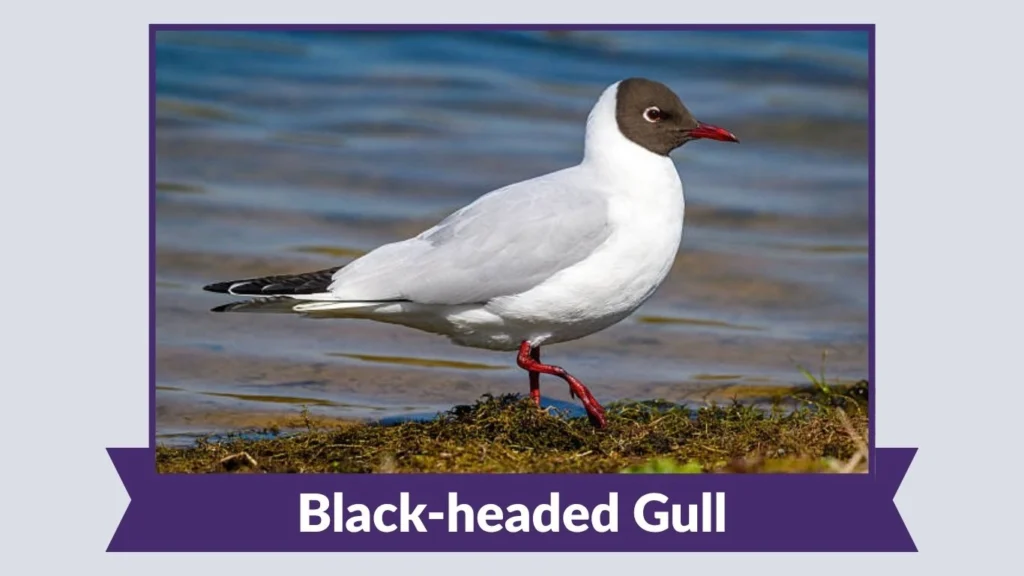
The Black-headed Gull (Chroicocephalus ridibundus) is a small to medium-sized gull commonly seen around wetlands, rivers, and coastal regions. Despite its name, the head is only dark brown (not black) during the breeding season and becomes mostly white in winter. This species is known for its graceful flight, loud calls, and adaptability to both natural and human-altered environments.
Identification
- Small to medium-sized gull, about 35–39 cm long
- Chocolate-brown head in breeding season (appears black from a distance)
- White head with dark ear spots in non-breeding season
- Pale grey wings and back
- White underparts
- Red bill and red legs
- Distinct white wing edges visible in flight
- Both sexes look similar
Habitat
The Black-headed Gull is commonly found in wetlands such as lakes, rivers, marshes, and coastal estuaries. It is also frequently seen in agricultural fields, urban parks, and near human settlements, especially where water bodies are present. During migration and winter, it often gathers in large flocks in coastal and inland waters. This species prefers open areas where it can easily spot food and predators. It has adapted well to human environments and can often be seen near garbage sites and fishing areas.
Behavior
This gull is highly social and is usually found in flocks, especially outside the breeding season. It has a distinctive, sharp call that is often heard in large colonies. Black-headed Gulls are agile fliers and often hover or glide while searching for food. They are known for their bold behavior and may follow boats or people for food. During breeding, they nest in colonies and become more territorial, often defending their nests aggressively.
Diet
The Black-headed Gull is an omnivorous feeder with a varied diet. It eats insects, small fish, worms, crustaceans, and plant material. It is also a frequent scavenger, feeding on human food waste and scraps. In agricultural areas, it may follow plows to catch exposed insects. Its flexible diet allows it to survive in diverse habitats, from natural wetlands to urban environments.
4. Black-headed Munia
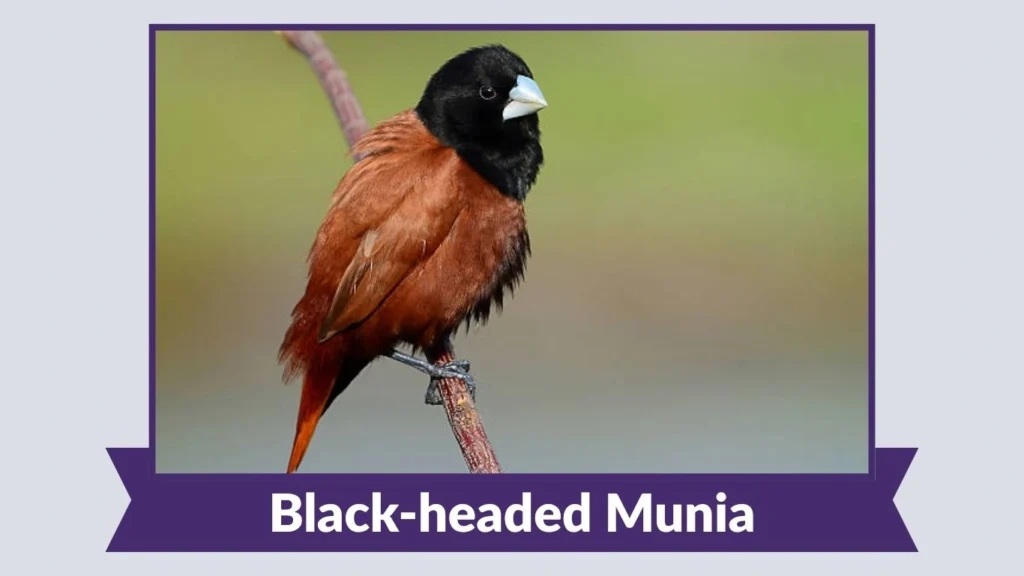
The Black-headed Munia (Lonchura malacca) is a small, attractive finch commonly found in South and Southeast Asia. It is easily recognized by its contrasting black head and rich chestnut-brown body. This social bird is often seen in flocks and is well adapted to grassland and wetland environments. Its gentle nature and soft calls make it a familiar sight in rural landscapes.
Identification
- Small bird, about 11–12 cm long
- Distinct black head and throat
- Rich chestnut-brown body and underparts
- Short, thick bluish-grey bill
- Dark eyes
- Short tail
- Both sexes look similar
- Juveniles are dull brown without the black head
Habitat
The Black-headed Munia prefers open habitats such as grasslands, wetlands, rice fields, and agricultural areas. It is commonly found near water bodies where tall grasses and reeds are abundant. This bird thrives in rural environments and is often seen in cultivated lands, especially where grain crops are grown. It avoids dense forests but adapts well to areas with scattered vegetation. In Bangladesh, it is a common resident species and can be found throughout the year.
Behavior
This species is highly social and usually seen in small to large flocks. It moves actively through grasses, often perching on stems while feeding. The Black-headed Munia has a soft, twittering call and is generally calm in behavior. During the breeding season, pairs build small, dome-shaped nests using grass. It is not aggressive and often mixes with other small bird species while feeding.
Diet
The Black-headed Munia mainly feeds on seeds, especially grass seeds and grains such as rice. It uses its strong, conical bill to crack seeds efficiently. During the breeding season, it may also consume small insects to provide extra protein. It often forages in fields and grasslands, sometimes causing minor damage to crops. Its diet is simple but well-suited to its habitat.
5. Grey-headed Canary Flycatcher
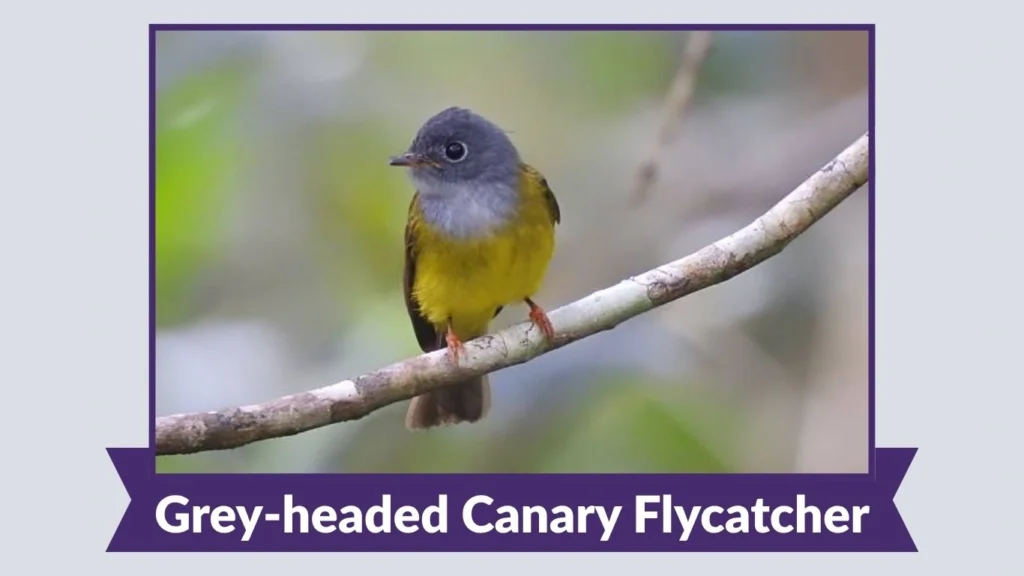
The Grey-headed Canary Flycatcher (Culicicapa ceylonensis) is a small, lively bird known for its bright yellow body and soft grey head. It is commonly found in forests and wooded areas across South and Southeast Asia. This species is admired for its active movements and cheerful appearance, often flitting through trees in search of insects.
Identification
- Small bird, about 10–11 cm long
- Soft grey head and nape
- Bright yellow underparts and belly
- Olive-green back and wings
- Short, slender black bill
- Dark eyes with a faint eye-ring
- Thin legs adapted for perching
- Both sexes look similar
Habitat
The Grey-headed Canary Flycatcher prefers forests, wooded gardens, and plantations. It is commonly found in evergreen and deciduous forests, as well as hilly and lowland regions. This bird often stays in the canopy or mid-level of trees, rarely coming down to the ground. It adapts well to semi-natural habitats such as parks and large gardens, especially where there is dense tree cover. In Bangladesh, it is mostly found in forested regions and areas with abundant greenery.
Behavior
This species is active and restless, constantly moving among branches while searching for food. It often joins mixed-species feeding flocks, which helps it stay safe from predators. The Grey-headed Canary Flycatcher catches insects in mid-air or picks them off leaves. It has a soft, high-pitched call that blends into forest sounds. During the breeding season, it builds a small, cup-shaped nest placed on tree branches, usually well hidden among leaves.
Diet
The Grey-headed Canary Flycatcher is primarily insectivorous. It feeds on small insects such as flies, mosquitoes, beetles, and caterpillars. It uses quick, agile movements to catch prey, often darting out from a perch to snatch insects in flight. Occasionally, it may consume tiny fruits or berries, but insects make up the majority of its diet. This feeding habit makes it beneficial for controlling insect populations in its habitat.
6. Grey-headed Woodpecker
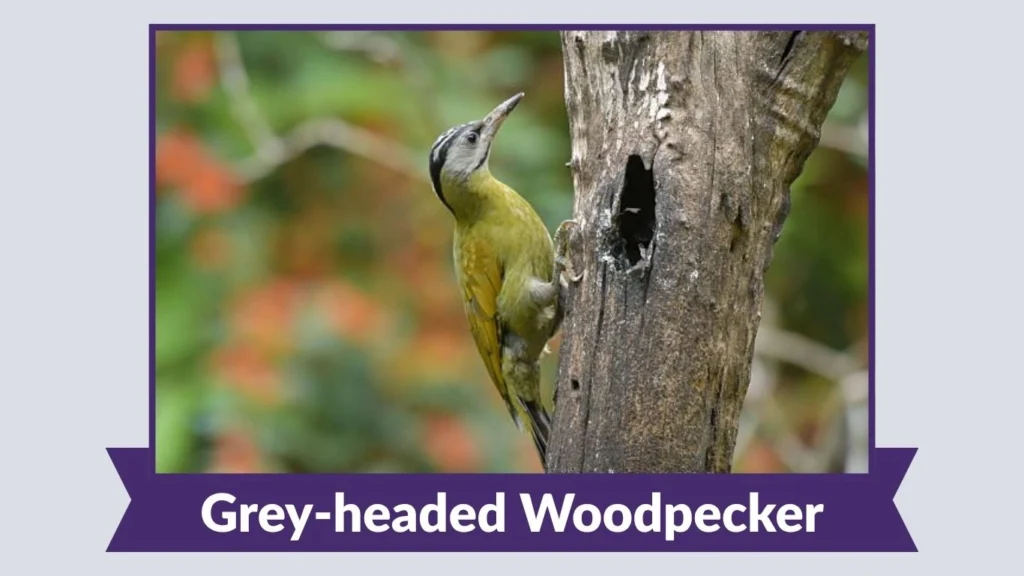
The Grey-headed Woodpecker (Picus canus) is a medium-sized woodpecker known for its subtle coloration and calm behavior. Unlike many brightly colored woodpeckers, it has a more muted appearance with a grey head and greenish body. It is typically found in forests and wooded areas, where it plays an important role in controlling insect populations.
Identification
- Medium-sized bird, about 25–28 cm long
- Pale grey head and face
- Greenish back and wings
- Light grey to whitish underparts
- Strong, pointed bill adapted for drilling wood
- Black eye stripe and moustache mark
- Males may have a small red patch on the forehead
- Both sexes similar, but females lack the red marking
Habitat
The Grey-headed Woodpecker prefers deciduous and mixed forests, woodland edges, and open wooded areas. It is often found in hilly regions but can also occur in lowland forests. This species favors areas with old trees, which provide nesting sites and abundant insects. It is less commonly seen in urban environments but may occasionally visit large parks or gardens with mature trees. The presence of dead or decaying wood is important for its feeding and nesting habits.
Behavior
This woodpecker is generally quieter and less conspicuous than many other species. It spends much of its time foraging on tree trunks, branches, and sometimes on the ground. Instead of constant drumming, it often probes bark or digs into wood to find insects. It has a soft, laughing call and may be seen alone or in pairs. During breeding, it excavates nest holes in tree trunks, which are later reused by other birds.
Diet
The Grey-headed Woodpecker feeds mainly on insects, especially ants, beetle larvae, and other wood-boring insects. It often forages on the ground for ants, which form a large part of its diet. Using its strong bill and long tongue, it extracts insects from bark and wood. Occasionally, it may eat fruits and seeds, but insects remain its primary food source, making it beneficial for forest health.
7. Grey-headed Swamphen
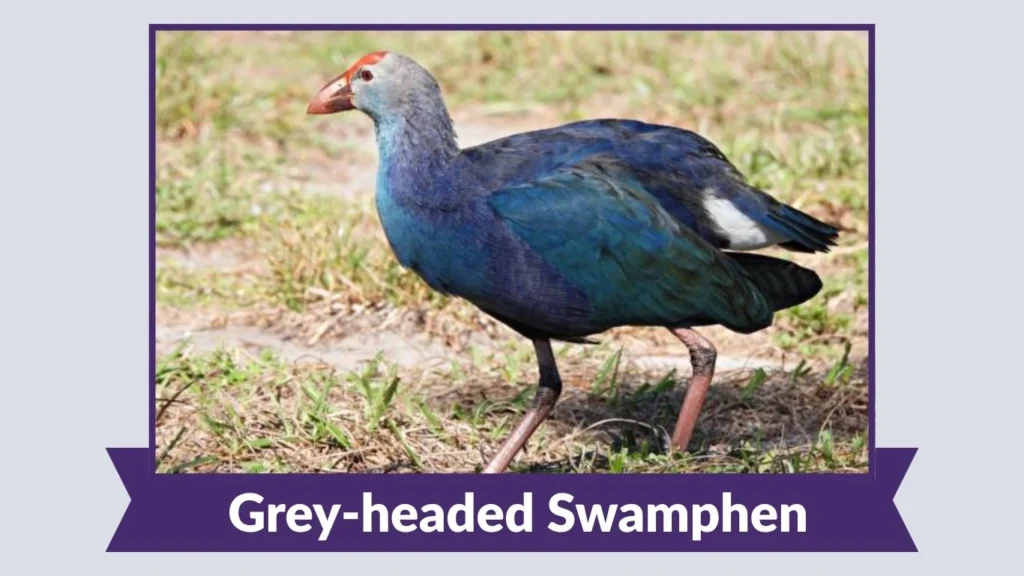
The Grey-headed Swamphen (Porphyrio poliocephalus) is a large, colorful waterbird commonly found in wetlands across South Asia. It is known for its striking combination of a grey head, deep blue body, and bright red bill and legs. Often seen walking gracefully among reeds and floating vegetation, this bird is both eye-catching and well adapted to aquatic environments.
Identification
- Large waterbird, about 45–50 cm long
- Grey head and neck
- Deep blue to purplish body
- Bright red bill and frontal shield
- Long, red legs with large toes
- Short tail, often flicked to reveal white undertail
- Strong body adapted for walking on vegetation
- Both sexes look similar
Habitat
The Grey-headed Swamphen is commonly found in freshwater wetlands such as marshes, swamps, lakes, ponds, and rice fields. It prefers areas with dense vegetation like reeds, water hyacinths, and tall grasses, which provide both food and shelter. This bird is well adapted to life around water and is rarely seen far from wetland habitats. In Bangladesh, it is a widespread resident species and can often be spotted in rural wetlands and agricultural areas with standing water.
Behavior
This species is usually seen in pairs or small groups and is quite active during the day. It walks slowly and confidently over floating plants, using its long toes to balance. The Grey-headed Swamphen is generally shy but can become bold in areas with little disturbance. It communicates with a variety of loud, harsh calls. During breeding, it builds nests among dense vegetation and may show territorial behavior to protect its nesting area.
Diet
The Grey-headed Swamphen is primarily herbivorous but also eats small animals. Its diet includes aquatic plants, grass shoots, seeds, and roots. It uses its strong bill to pull apart plant material and may hold food with one foot while eating. Occasionally, it feeds on insects, snails, and small fish. Its varied diet helps it survive in different wetland conditions.
8. Black-headed Ibis
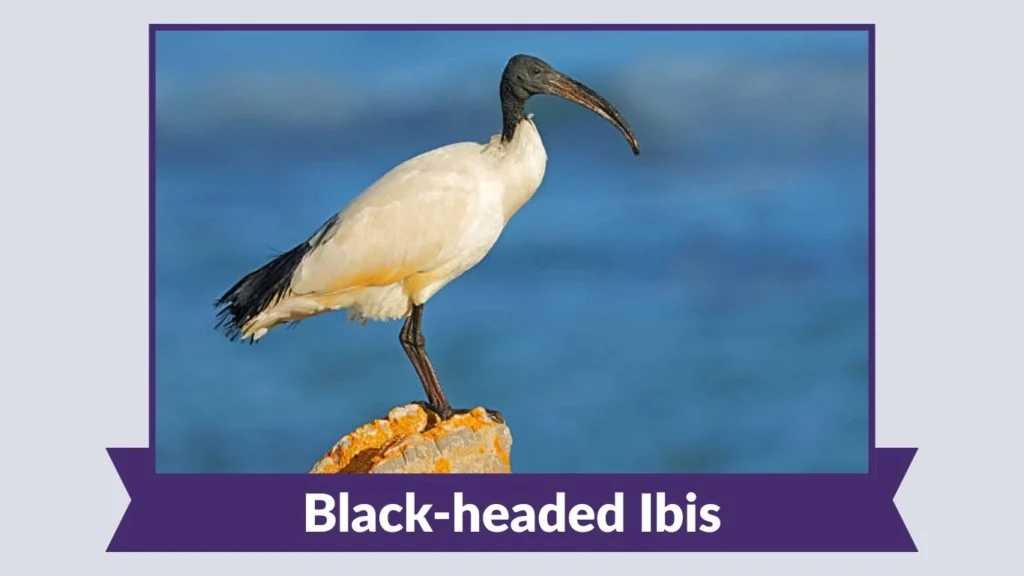
The Black-headed Ibis (Threskiornis melanocephalus) is a large wading bird commonly found in wetlands across South Asia. It is easily recognized by its white body contrasted with a bare black head and long curved bill. This elegant bird is often seen foraging in shallow water, playing an important role in wetland ecosystems.
Identification
- Large bird, about 65–75 cm long
- Bare black head and neck without feathers
- White body and wings
- Long, downward-curving black bill
- Long black legs
- Broad wings visible in flight
- Both sexes look similar
- Juveniles have some feathering on the head
Habitat
The Black-headed Ibis inhabits a variety of wetland environments including marshes, swamps, lakes, rivers, and flooded agricultural fields. It is also commonly seen in rice paddies and near village ponds. This species prefers shallow water where it can easily forage for food. It adapts well to human-altered landscapes and is often found near settlements. In Bangladesh, it is a resident bird and can be observed throughout the year in suitable wetland habitats.
Behavior
This ibis is usually seen alone, in pairs, or in small groups, though larger flocks may gather in feeding areas. It walks slowly through shallow water, probing the mud with its long bill to find food. The Black-headed Ibis is generally quiet but may produce low grunting sounds. During the breeding season, it nests in colonies, often alongside other waterbirds. It is a graceful flier, often seen gliding with steady wingbeats.
Diet
The Black-headed Ibis feeds mainly on small aquatic animals. Its diet includes fish, frogs, insects, crustaceans, and worms. It uses its long, curved bill to probe mud and water, detecting prey by touch. Occasionally, it may also eat plant material. This feeding behavior helps maintain the balance of wetland ecosystems by controlling populations of small aquatic organisms.
9. Grey-headed Fish Eagle
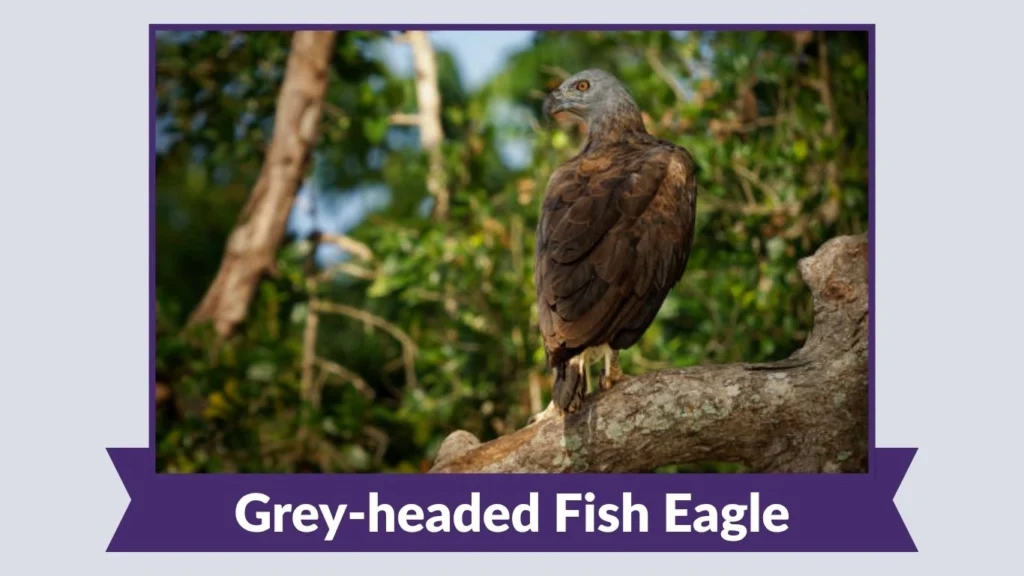
The Grey-headed Fish Eagle (Haliaeetus ichthyaetus) is a large and powerful bird of prey commonly found near rivers, lakes, and wetlands in South and Southeast Asia. It is known for its distinctive grey head, strong build, and keen hunting ability. This eagle is often seen perched near water, watching for fish, which form the main part of its diet.
Identification
- Large raptor, about 70–75 cm long
- Grey head and neck
- Brown upperparts and wings
- White belly and tail
- Strong, hooked grey-black bill
- Yellow legs and sharp talons
- Broad wings with slow, powerful flight
- Both sexes similar, females slightly larger
Habitat
The Grey-headed Fish Eagle is closely associated with water bodies such as rivers, lakes, reservoirs, and wetlands. It prefers areas with tall trees nearby for perching and nesting. This species is commonly found in lowland regions but may also occur in forested wetlands. In Bangladesh, it is seen around large rivers and marshy areas. It requires relatively undisturbed habitats with abundant fish supply, making it sensitive to environmental changes.
Behavior
This eagle is usually seen alone or in pairs and is less social than many other birds. It spends much of its time perched quietly, scanning the water for prey. When hunting, it swoops down swiftly to catch fish with its sharp talons. Its call is a loud, ringing whistle that can carry over long distances. During breeding, it builds large nests high in trees near water and becomes territorial.
Diet
The Grey-headed Fish Eagle primarily feeds on fish, which it catches from the surface of the water. It may also eat frogs, water snakes, and occasionally carrion. Its strong talons and sharp vision make it an efficient hunter. Sometimes, it scavenges or steals food from other birds. Its diet reflects its close dependence on aquatic ecosystems.
10. Black-headed Bunting
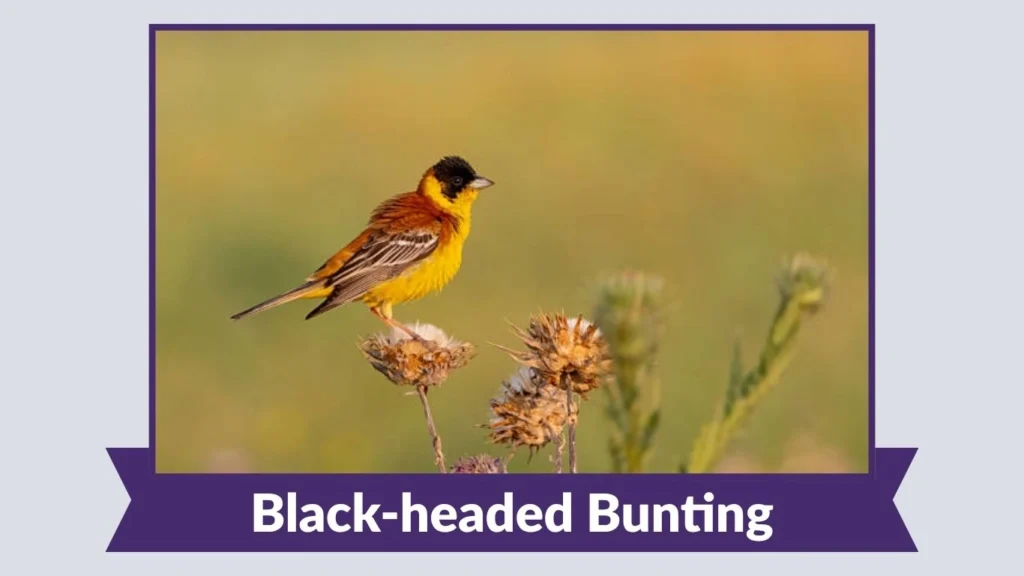
The Black-headed Bunting (Emberiza melanocephala) is a colorful and attractive songbird found in parts of Europe and Asia. It is especially known for the striking black head of the male during the breeding season, contrasted with its bright yellow body. This bird is often seen in open countryside and agricultural areas.
Identification
- Small to medium-sized bird, about 15–17 cm long
- Male has a black head and throat during breeding season
- Bright yellow underparts in males
- Brownish back with streaks
- Females are duller with brownish tones and no black head
- Short, conical bill adapted for seeds
- Pinkish legs
- Dark eyes
Habitat
The Black-headed Bunting prefers open habitats such as grasslands, farmland, scrublands, and fields with scattered bushes or trees. It is commonly found in agricultural areas where grains are grown. During migration and winter, it may move to warmer regions, including parts of South Asia. It avoids dense forests and prefers sunny, open landscapes where it can easily find food and nesting sites.
Behavior
This species is often seen perched on wires, bushes, or small trees while singing. Males are known for their pleasant, melodic songs, especially during the breeding season. Black-headed Buntings are usually seen alone or in small groups, though they may form larger flocks during migration. They are generally shy but can become more visible when feeding in open fields.
Diet
The Black-headed Bunting mainly feeds on seeds and grains, making it common in crop fields. It also consumes insects, especially during the breeding season when extra protein is needed. It forages on the ground or among low vegetation, using its strong bill to pick and crack seeds.
11. Grey-headed Bulbul
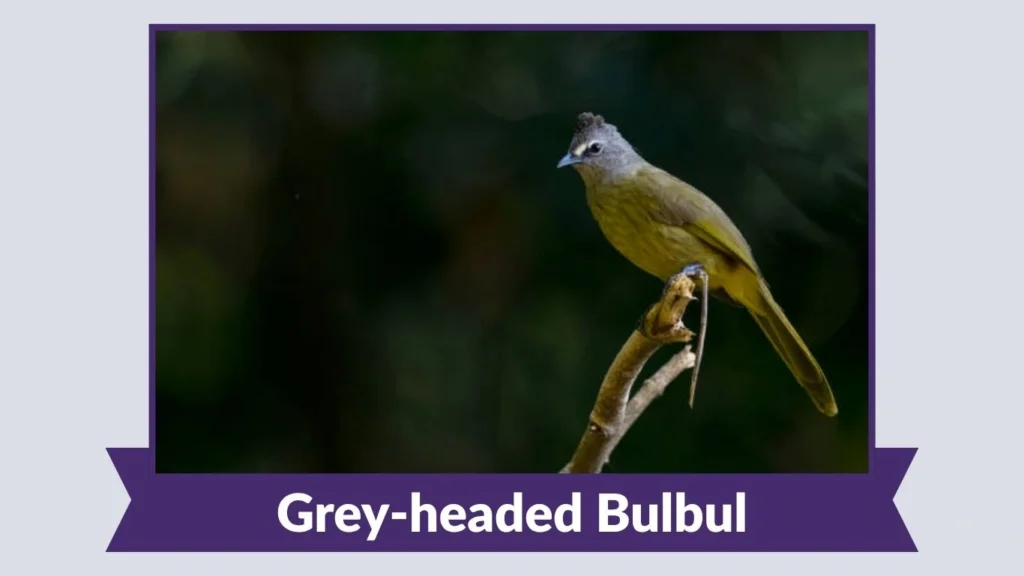
The Grey-headed Bulbul (Pycnonotus priocephalus) is a medium-sized songbird known for its soft coloration and pleasant calls. It has a distinctive grey head and a greenish-yellow body, making it stand out among other bulbuls. This species is mostly found in forested regions and is appreciated for its calm nature and musical voice.
Identification
- Medium-sized bird, about 18–20 cm long
- Soft grey head and face
- Olive-green to yellowish body
- Pale yellow underparts
- Slender, slightly curved black bill
- Dark eyes
- Medium-length tail
- Both sexes look similar
Habitat
The Grey-headed Bulbul prefers dense forests, especially evergreen and moist deciduous forests. It is commonly found in hilly and forested regions with thick vegetation. This bird tends to stay in the canopy or mid-level of trees and is rarely seen in open areas. It may also inhabit plantations and wooded gardens if sufficient tree cover is present. Its dependence on forest habitats makes it less common in urban environments.
Behavior
This bulbul is usually seen alone or in pairs and is less noisy compared to other bulbuls. It moves quietly through foliage, often remaining hidden among leaves. Its call is soft and melodious, blending into forest sounds. The Grey-headed Bulbul is not very aggressive and tends to avoid open exposure. During breeding, it builds a small cup-shaped nest on tree branches.
Diet
The Grey-headed Bulbul mainly feeds on fruits and berries. It also consumes insects, especially during the breeding season. It forages among tree branches, picking fruits or catching small insects. This bird plays an important role in seed dispersal within forest ecosystems.
12. Black-headed Oriole
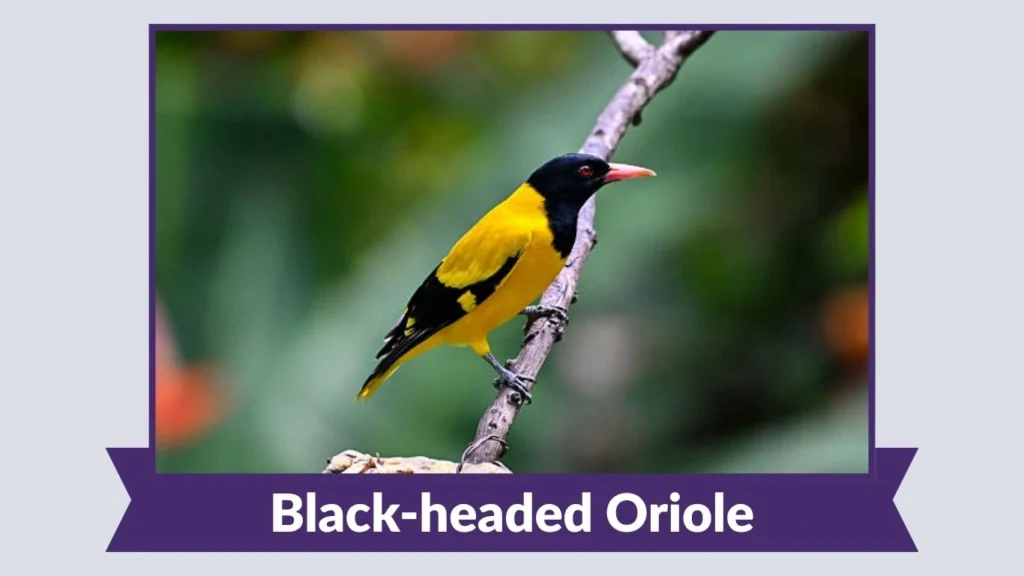
The Black-headed Oriole (Oriolus xanthornus) is a striking and brightly colored bird commonly found across South Asia. Its vivid yellow body combined with a contrasting black head makes it one of the most eye-catching birds in its range. Known for its rich, flute-like calls, this species is often heard before it is seen.
Identification
- Medium-sized bird, about 24–26 cm long
- Bright yellow body and underparts
- Distinct black head and throat
- Black wings with yellow patches
- Long, slightly curved pinkish bill
- Reddish eyes
- Medium-length tail
- Both sexes look similar
Habitat
The Black-headed Oriole is commonly found in open woodlands, gardens, orchards, and forest edges. It prefers areas with tall trees and plenty of foliage. This bird adapts well to human environments and is often seen in parks and village groves. It is widely distributed in Bangladesh and can be found in both rural and semi-urban areas. Dense forests are less preferred compared to more open, tree-rich habitats.
Behavior
This species is usually seen alone or in pairs and spends most of its time high in the tree canopy. It moves gracefully among branches and is often difficult to spot despite its bright color. The Black-headed Oriole is known for its beautiful, melodious whistles. It is generally shy and avoids human disturbance. During the breeding season, it builds a hanging nest suspended from tree branches.
Diet
The Black-headed Oriole feeds mainly on fruits such as berries and figs. It also consumes insects like caterpillars and beetles, especially during breeding. It forages among leaves and branches, carefully picking food. Its diet helps in seed dispersal and insect control, making it beneficial to the ecosystem.
13. Grey-headed Lapwing
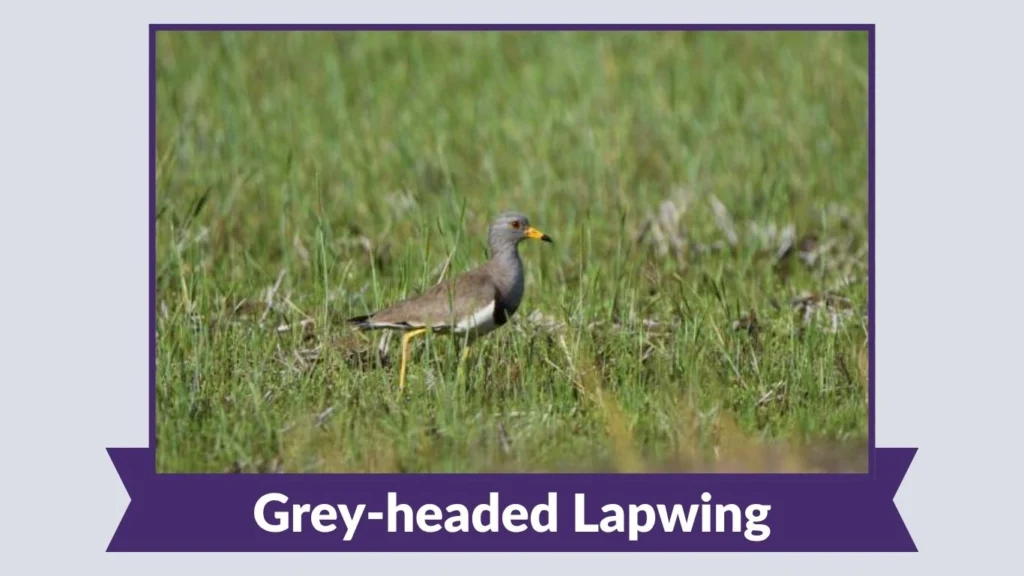
The Grey-headed Lapwing (Vanellus cinereus) is a medium-sized wading bird known for its elegant posture and distinctive grey head. It is commonly found in wetlands, riverbanks, and agricultural fields. This species is easily recognized by its long yellow legs and contrasting black breast, making it stand out in open landscapes.
Identification
- Medium-sized bird, about 34–37 cm long
- Pale grey head and neck
- Black breast and upper belly
- Brownish back and wings
- White underparts
- Long, bright yellow legs
- Short black bill with yellow base
- Both sexes look similar
Habitat
The Grey-headed Lapwing prefers open wetland habitats such as riverbanks, marshes, flooded fields, and agricultural land. It is often seen in rice fields and grassy areas near water. This species favors open spaces where it can easily detect predators. During migration, it may travel long distances and appear in suitable habitats across South Asia, including Bangladesh. It avoids dense forests and prefers flat, open terrain.
Behavior
This bird is usually seen alone, in pairs, or small groups. It walks slowly on the ground, often pausing to look around. The Grey-headed Lapwing is alert and cautious, quickly reacting to any disturbance. Its call is a sharp, repeated note, often heard in open fields. During breeding, it becomes territorial and may display defensive behavior to protect its nest.
Diet
The Grey-headed Lapwing mainly feeds on insects and small invertebrates. Its diet includes beetles, worms, larvae, and other small creatures found in soil or shallow water. It forages by walking and picking food from the ground. Occasionally, it may consume seeds or plant material. Its feeding habits help control insect populations in its habitat.
FAQs
What is a bird with a grey body and black head called?
Birds with a grey body and black head include several species such as the House Crow, Hooded Crow, and Black-headed Oriole. These color patterns are common in different bird families, so identification depends on size, habitat, and other physical features.
Are grey and black birds common in Bangladesh?
Yes, many grey and black birds are common in Bangladesh. Species like the House Crow and Black-headed Ibis are widely seen in urban and wetland areas. Their adaptability to different environments makes them easy to spot throughout the country.
How can I identify birds correctly?
You can identify birds by observing their size, color patterns, beak shape, habitat, and behavior. Paying attention to details like head color, wing markings, and calls also helps. Using field guides or apps can make identification easier.
Do these birds migrate or stay year-round?
Some of these birds are residents, like the House Crow, while others may be migratory, such as the Black-headed Gull. Migration depends on the species and availability of food and suitable habitat during different seasons.
Why do many birds have black heads?
Black head coloration can serve multiple purposes, including camouflage, heat absorption, and signaling during mating or social interactions. It may also help in species recognition among birds living in similar environments.