
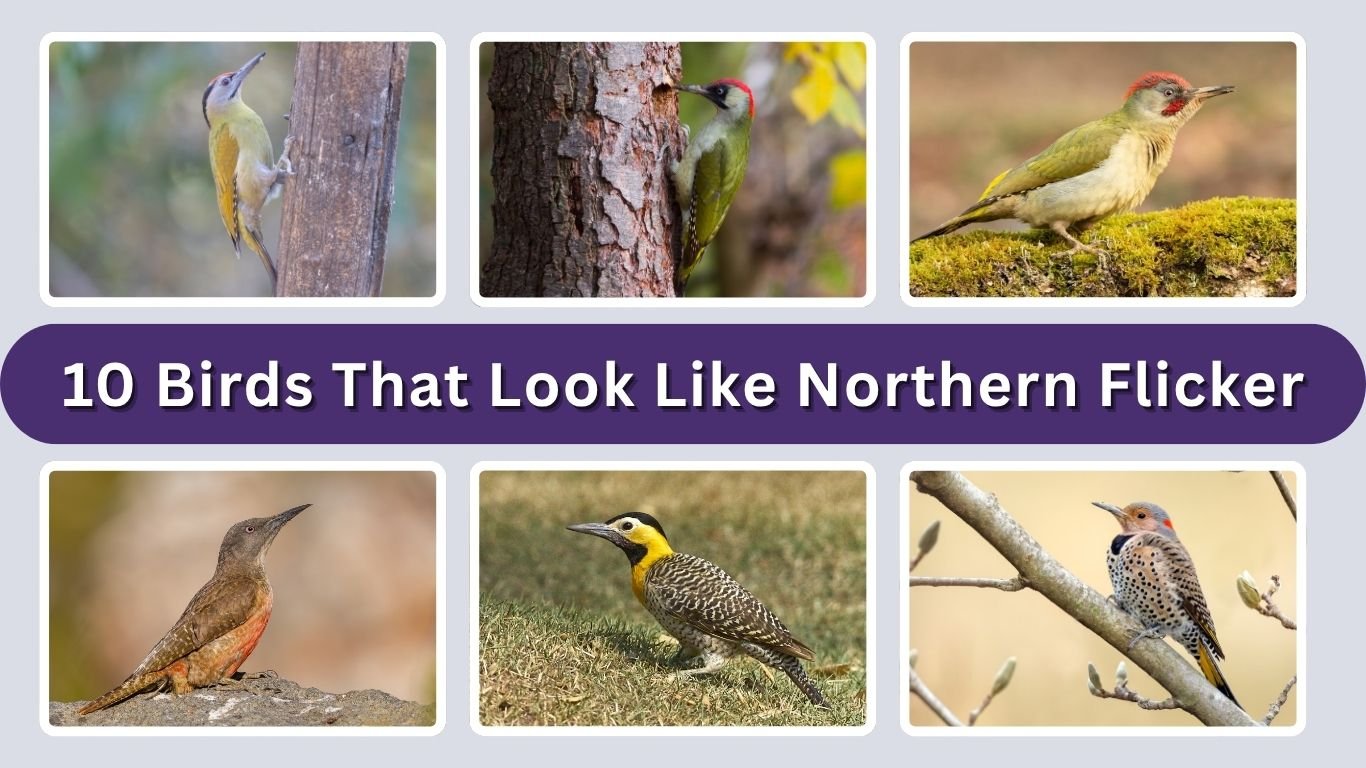
The Northern Flicker is a unique woodpecker known for its ground-feeding behavior, spotted body, and colorful wing linings. Around the world, several woodpecker species share similar traits such as body shape, feeding habits, or habitat preferences. Some closely resemble flickers in appearance, while others show behavioral similarities like foraging on the ground. This list highlights a wide range of birds that look or act like Northern Flickers, offering a global view of comparable species across different regions and environments.
1. Gilded Flicker
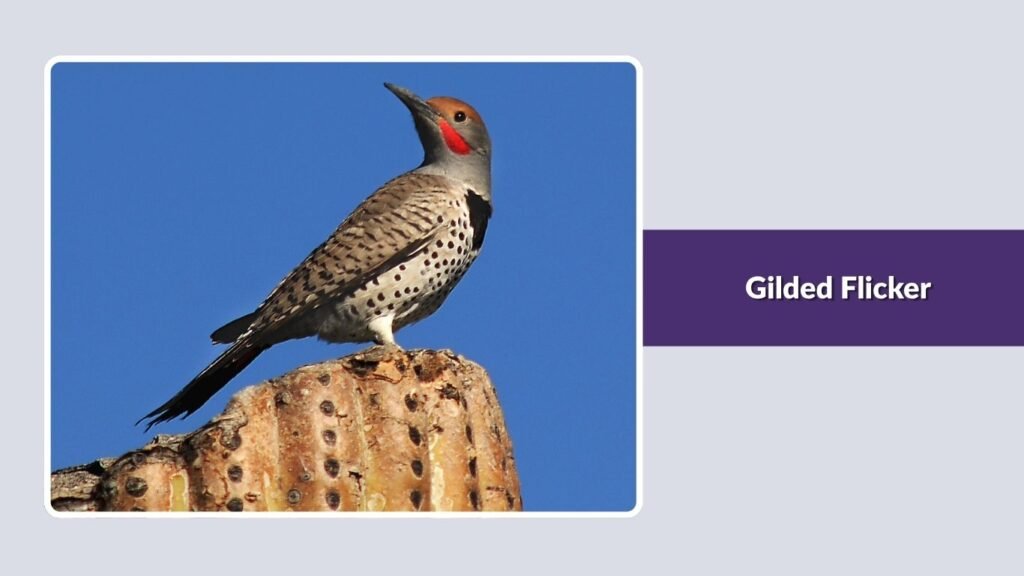
The Gilded Flicker is a distinctive desert woodpecker closely related to the Northern Flicker, sharing similar body shape and behavior but adapted to arid environments. It is especially known for its golden-yellow wing linings and preference for ground foraging. Common in the southwestern United States and parts of Mexico, this bird thrives among cacti and dry landscapes. Its subtle coloration blends well with desert surroundings, making it less conspicuous than other woodpeckers despite its size and active habits.
Identification
- Large woodpecker with a long, slightly curved bill
- Brownish-gray body with black barring across the back and wings
- Prominent black crescent-shaped patch on the upper chest
- Golden-yellow underwings and tail, visible during flight
- Pale gray face with a brownish crown
- Lacks the strong facial markings seen in some flickers
- Frequently observed on the ground rather than tree trunks
Habitat
The Gilded Flicker inhabits desert and semi-arid regions, particularly areas dominated by large cacti such as saguaros. It is most commonly found in the Sonoran Desert, where scattered shrubs, open terrain, and cactus stands provide ideal living conditions. Unlike many woodpeckers that rely heavily on forests, this species is well adapted to sparse vegetation and hot climates. It often nests in cavities it excavates in tall cacti, especially saguaros, which offer protection from predators and extreme temperatures. Water is scarce in these habitats, but the bird survives through moisture obtained from its diet.
Behavior
Gilded Flickers exhibit behavior similar to Northern Flickers but are even more ground-oriented. They spend much of their time walking or hopping on open ground in search of insects. Their flight pattern is undulating, characterized by alternating flaps and glides. They are generally solitary or seen in pairs, especially during the breeding season. Vocalizations include loud, repeated calls used for communication and territorial defense. Instead of frequent tree drumming, they may drum on cacti or other available surfaces. Their nesting behavior is unique due to their reliance on cactus cavities rather than traditional tree holes.
Diet
The diet of the Gilded Flicker mainly consists of ants, which make up a significant portion of its food intake. It uses its long, slightly barbed tongue to extract insects from soil and crevices. In addition to ants, it consumes beetles, larvae, and other small invertebrates found on or beneath the ground surface. Seasonal variation may lead it to eat fruits, seeds, and berries, particularly in desert environments where food availability fluctuates. This flexible diet allows the bird to survive in harsh conditions with limited resources, making it well adapted to desert ecosystems.
2. Red-shafted Flicker
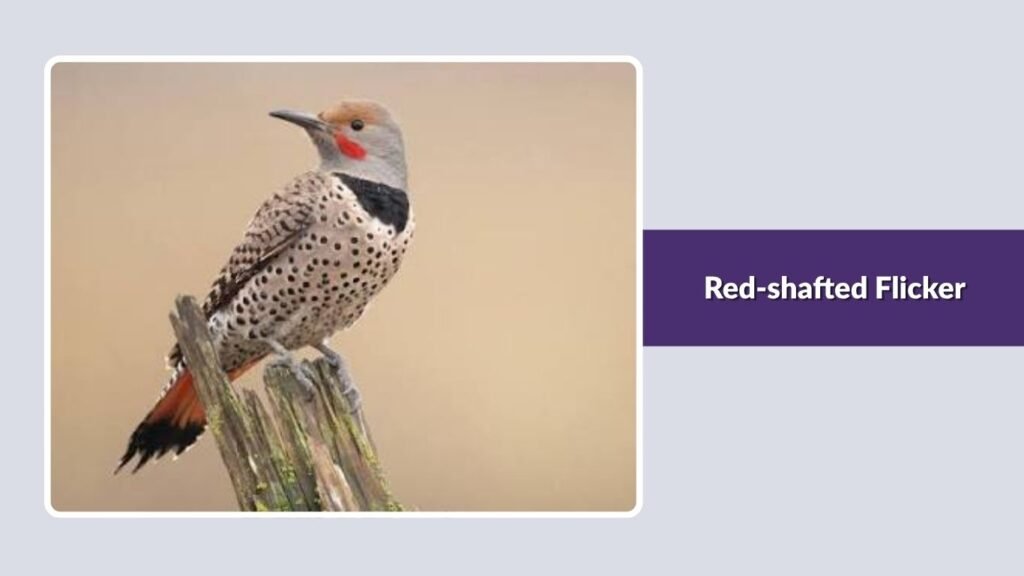
The Red-shafted Flicker is a western form of the Northern Flicker, widely distributed across North America. It closely resembles the Gilded Flicker but is more widespread and adaptable to various environments, including forests, grasslands, and suburban areas. This bird is named for the reddish-orange coloration on the undersides of its wings and tail, which becomes highly visible during flight. Known for its ground-feeding habits and loud calls, it is one of the most recognizable woodpeckers in its range.
Identification
- Large woodpecker with a slightly curved bill
- Brown body with black bars on the back and spots on the underparts
- Distinct black crescent on the chest
- Reddish-orange shafts on wings and tail (visible in flight)
- Gray face with a brown crown
- Males have a red mustache stripe; females lack this marking
- Often seen feeding on the ground
Habitat
Red-shafted Flickers inhabit a wide range of environments including open woodlands, forest edges, grasslands, and urban areas with scattered trees. They are commonly found in western North America but can overlap with Yellow-shafted Flickers in some regions. These birds prefer habitats where they can forage on the ground while still having access to trees for nesting. They typically nest in tree cavities, either excavated by themselves or reused from previous seasons. Their adaptability allows them to thrive in both natural and human-altered landscapes.
Behavior
These flickers are known for spending much of their time on the ground searching for food. Their flight is undulating and strong, often accompanied by flashes of red under the wings. They are vocal birds, producing loud, repeated calls and engaging in drumming for communication and territorial defense. During breeding season, pairs may be seen together, while outside of it they are usually solitary. They are less dependent on tree trunks compared to other woodpeckers, often preferring open areas for foraging.
Diet
The Red-shafted Flicker primarily feeds on ants, which form the majority of its diet. It probes the ground using its bill and long tongue to extract insects efficiently. In addition to ants, it eats beetles, flies, and other small invertebrates. Seasonal foods include fruits, berries, and seeds, especially in colder months when insect availability decreases. This varied diet helps the species survive across diverse habitats and changing environmental conditions.
3. Yellow-shafted Flicker
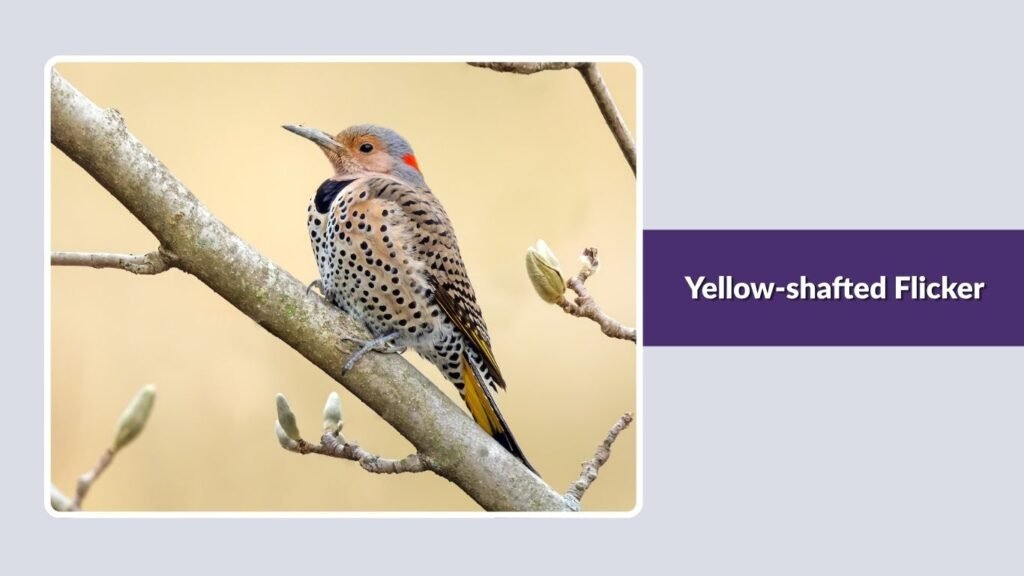
The Yellow-shafted Flicker is the eastern counterpart of the Northern Flicker, commonly found across eastern North America. It closely resembles the Red-shafted Flicker but differs mainly in coloration, especially the bright yellow underwings and tail. This bird is highly adaptable and often seen in woodlands, parks, and suburban areas. Like other flickers, it frequently feeds on the ground, making it somewhat unusual among woodpeckers. Its bold markings and loud calls make it easy to identify in its range.
Identification
- Large woodpecker with a slightly curved bill
- Brown body with black barring on the back
- Black crescent-shaped patch on the chest
- Yellow shafts on wings and tail, visible in flight
- Gray face with a brown crown
- Males have a black mustache stripe; females lack it
- Distinct white rump visible when flying
Habitat
Yellow-shafted Flickers inhabit open woodlands, forest edges, farmlands, and urban parks. They are widely distributed across eastern North America and are often seen in areas with scattered trees and open ground. These birds require trees for nesting but prefer open spaces nearby for foraging. They excavate their own nest cavities in dead or decaying trees, which also provide shelter and protection. Their ability to live near human settlements allows them to thrive in suburban environments as well.
Behavior
These flickers are frequently observed on the ground searching for food, a behavior uncommon among most woodpeckers. Their flight is characterized by a smooth, undulating pattern with flashes of yellow under the wings. They are vocal birds, producing loud calls and rhythmic drumming sounds. During breeding season, they form pairs and defend territories. Outside of breeding, they may be seen alone or loosely associated with other birds. Their behavior is active and often noticeable in open areas.
Diet
The Yellow-shafted Flicker primarily feeds on ants, which make up a large portion of its diet. It uses its long tongue to extract insects from soil and crevices. In addition to ants, it consumes beetles, caterpillars, and other small invertebrates. During colder months, it supplements its diet with fruits, berries, and seeds. This dietary flexibility allows it to survive in a wide range of environments and seasonal conditions.
4. Campo Flicker
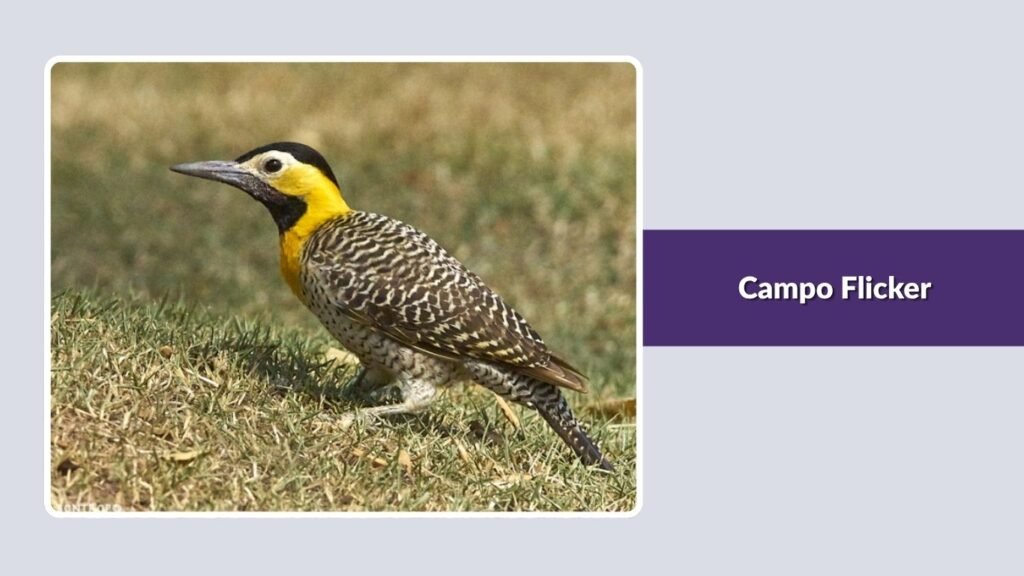
The Campo Flicker is a striking South American woodpecker found mainly in Brazil, Bolivia, Paraguay, and Argentina. It shares similarities with the Northern Flicker in body shape and ground-feeding behavior but stands out with its bold black-and-white patterning and contrasting colors. This species prefers open habitats rather than forests and is often seen walking on the ground in search of food. Its adaptability to grasslands and savannas makes it a distinctive flicker-like bird of the region.
Identification
- Medium to large woodpecker with a strong, straight bill
- Bold black-and-white barred back and wings
- Black chest band with lighter underparts
- White face with dark crown and nape
- Males often show red markings on the head
- Long tail and sturdy legs for ground movement
- Frequently seen foraging on open ground
Habitat
Campo Flickers inhabit open landscapes such as grasslands, savannas, scrublands, and agricultural areas. Unlike many woodpeckers that rely heavily on forests, this species thrives in areas with scattered trees or shrubs. It is commonly found in the cerrado and pampas regions of South America. These birds use trees, fence posts, or even termite mounds for nesting and perching. Their preference for open terrain allows them to easily access ground-dwelling insects, which form a major part of their diet.
Behavior
This species is highly terrestrial, spending much of its time walking or hopping on the ground in search of food. It is often seen alone or in pairs and may be less arboreal than typical woodpeckers. Campo Flickers are vocal and produce loud, sharp calls used for communication. Their flight is undulating, similar to other flickers. They may also drum on available surfaces, though less frequently than tree-dwelling woodpeckers. Their behavior reflects strong adaptation to open and dry environments.
Diet
Campo Flickers primarily feed on ants and termites, which they collect from the ground using their long tongues. They may also consume beetles, larvae, and other small invertebrates. Occasionally, they supplement their diet with fruits and seeds, especially when insect availability is low. Their feeding strategy is well suited to open habitats, where ground-dwelling insects are abundant. This diet supports their survival in a variety of seasonal conditions across their range.
5. Fernandina’s Flicker
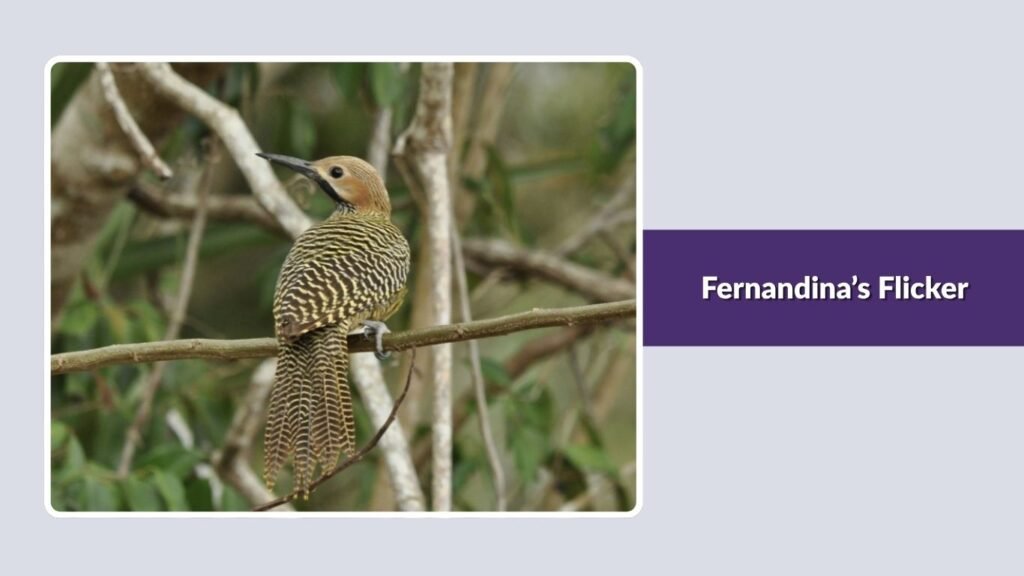
Fernandina’s Flicker is a rare and localized woodpecker endemic to Cuba, closely related to the Northern Flicker. It shares similar body structure and ground-foraging behavior but is distinguished by its unique coloration and restricted range. This species is considered one of the rarest flickers in the world, primarily due to habitat loss. It inhabits open woodlands and palm groves, where it feeds and nests. Its secretive nature and limited distribution make it difficult to observe in the wild.
Identification
- Medium to large woodpecker with a sturdy bill
- Dark upperparts with subtle barring
- Yellowish underwings and tail visible in flight
- Black crescent on the chest
- Pale face with darker crown
- Males may show faint facial markings
- Often seen foraging on the ground
Habitat
Fernandina’s Flicker is found in open forests, savannas, and palm groves across parts of Cuba. It prefers habitats with a mix of open ground and scattered trees, which allow for both foraging and nesting. Palm trees are particularly important, as they provide suitable nesting sites. Habitat loss due to agriculture and development has significantly reduced its range. As a result, the species is now limited to a few remaining suitable areas where natural vegetation still exists.
Behavior
This flicker behaves similarly to other ground-feeding woodpeckers, spending much of its time searching for food on the ground. It is usually seen alone or in pairs and tends to be quiet and elusive. Its flight is undulating, and it may perch on trees or palms when not feeding. Drumming behavior is less prominent, and vocalizations are not as loud as in other flickers. Its secretive habits contribute to the difficulty of studying this rare species.
Diet
The diet of Fernandina’s Flicker consists mainly of ants and other small insects collected from the ground. It uses its long tongue to extract prey from soil and crevices. In addition to insects, it may occasionally eat fruits and seeds, depending on availability. Its feeding habits are well adapted to open habitats where ground insects are abundant. Limited food resources in degraded habitats may also contribute to its declining population.
6. Andean Flicker
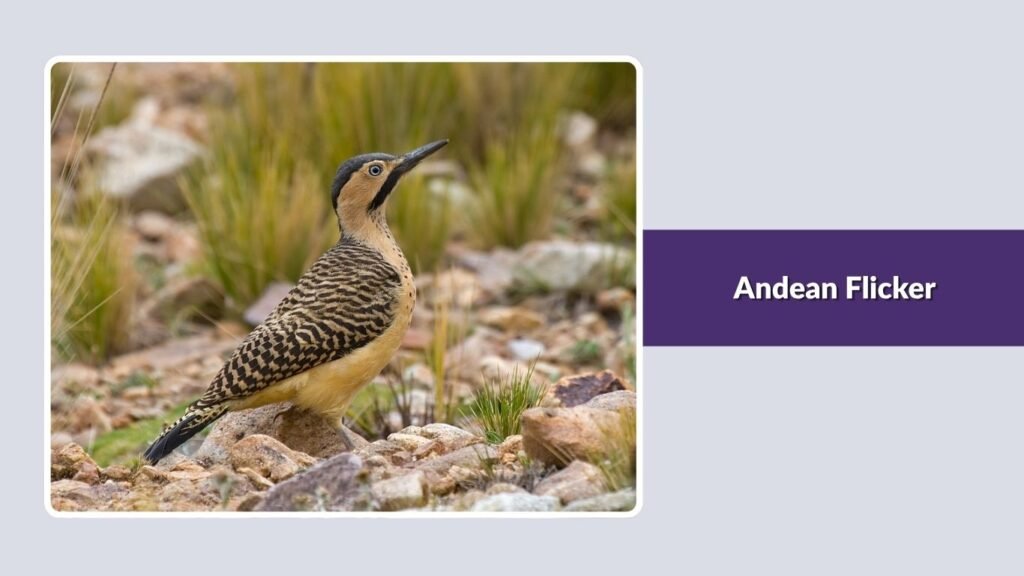
The Andean Flicker is a high-altitude woodpecker found along the Andes Mountains in South America. It resembles the Northern Flicker in body shape and ground-feeding habits but is adapted to cooler, open mountain environments. This species is notable for its preference for treeless areas, often living in grasslands and rocky slopes rather than forests. Its subdued coloration blends well with its surroundings, helping it remain inconspicuous despite being relatively large and active.
Identification
- Large, sturdy woodpecker with a slightly curved bill
- Brownish body with fine barring on the back
- Underparts marked with spots or streaks
- Pale face with darker crown
- Wings and tail show warm tones, visible in flight
- Lacks bright facial markings compared to other flickers
- Often seen walking on the ground
Habitat
The Andean Flicker inhabits high-altitude grasslands, mountain slopes, and open terrain across the Andes, often above the tree line. It thrives in cold, windy environments where few trees are present. Instead of nesting in trees, it may use earthen banks, cliffs, or ground burrows. These habitats provide access to abundant ground insects while offering natural shelter. Its ability to survive in such extreme elevations makes it unique among woodpeckers.
Behavior
This species is highly terrestrial and spends much of its time walking or hopping on the ground while foraging. It is usually seen alone or in pairs and is less dependent on trees than most woodpeckers. Its flight is undulating, similar to other flickers, but it often prefers to stay on the ground. It communicates with sharp calls and may drum occasionally on available surfaces. Its behavior reflects strong adaptation to open, high-altitude environments.
Diet
The Andean Flicker primarily feeds on ants and other ground-dwelling insects. It probes soil and crevices using its bill and long tongue to extract prey. In addition to ants, it consumes beetles, larvae, and other invertebrates found in its habitat. Occasionally, it may eat plant material such as seeds. Its diet is well suited to the sparse but specialized food resources available in high mountain ecosystems.
7. Ground Woodpecker
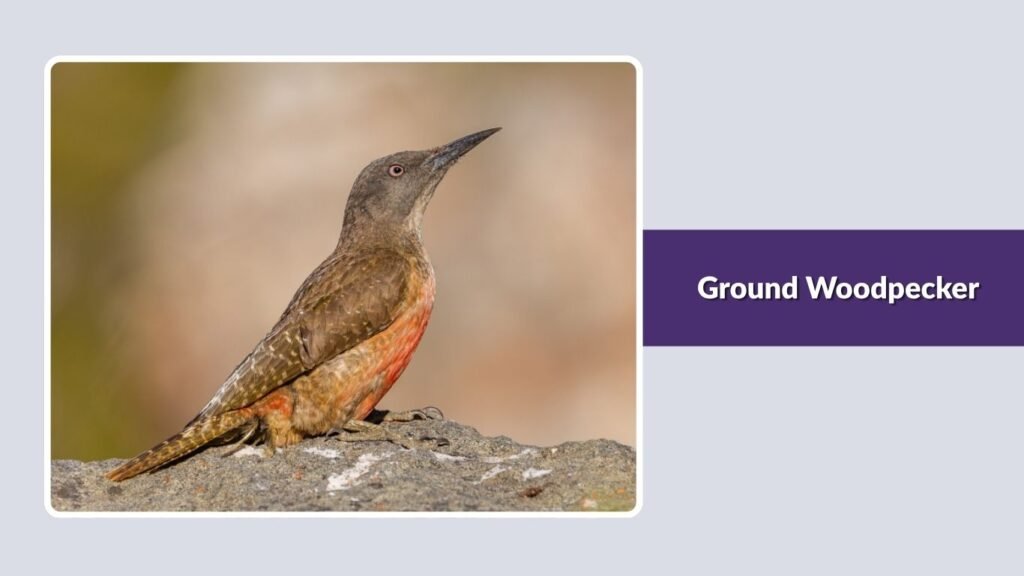
The Ground Woodpecker is a unique African species that strongly resembles flickers in both appearance and behavior. Found mainly in southern Africa, it is highly terrestrial and spends most of its time foraging on the ground. Unlike many woodpeckers, it prefers rocky hillsides and open terrain rather than forests. Its social behavior and group living also set it apart. With its spotted body and ground-feeding habits, it closely mirrors the lifestyle of the Northern Flicker.
Identification
- Medium-sized woodpecker with a strong, straight bill
- Brownish body covered in white spots
- Black head with a red face and throat
- White rump visible in flight
- Long tail used for support
- Sturdy legs adapted for walking on the ground
- Often seen in small groups
Habitat
Ground Woodpeckers inhabit rocky hillsides, cliffs, grasslands, and open scrub areas in southern Africa. They prefer environments with exposed rock surfaces, which they use for nesting and roosting. Unlike forest woodpeckers, they avoid dense tree cover and thrive in open landscapes. Their nests are often excavated in earthen banks or rock faces rather than tree trunks. These habitats provide both shelter and access to ground-dwelling insects, which are essential to their survival.
Behavior
This species is highly social and is often found in groups, unlike most woodpeckers. They spend much of their time on the ground, walking and probing for food. Their flight is undulating but usually short, as they prefer to remain terrestrial. They communicate with loud calls and engage in cooperative behaviors within their groups. Drumming is less common, and they may instead use vocal signals. Their group dynamics and ground-focused lifestyle make them quite distinctive.
Diet
Ground Woodpeckers primarily feed on ants and other insects found on the ground. They use their strong bills and long tongues to extract prey from soil and crevices. Their diet may also include beetles, larvae, and occasionally small fruits. Foraging in groups can help them locate food more efficiently. Their reliance on ground insects aligns closely with flicker-like feeding habits, allowing them to thrive in open and rocky environments.
8. Green Woodpecker
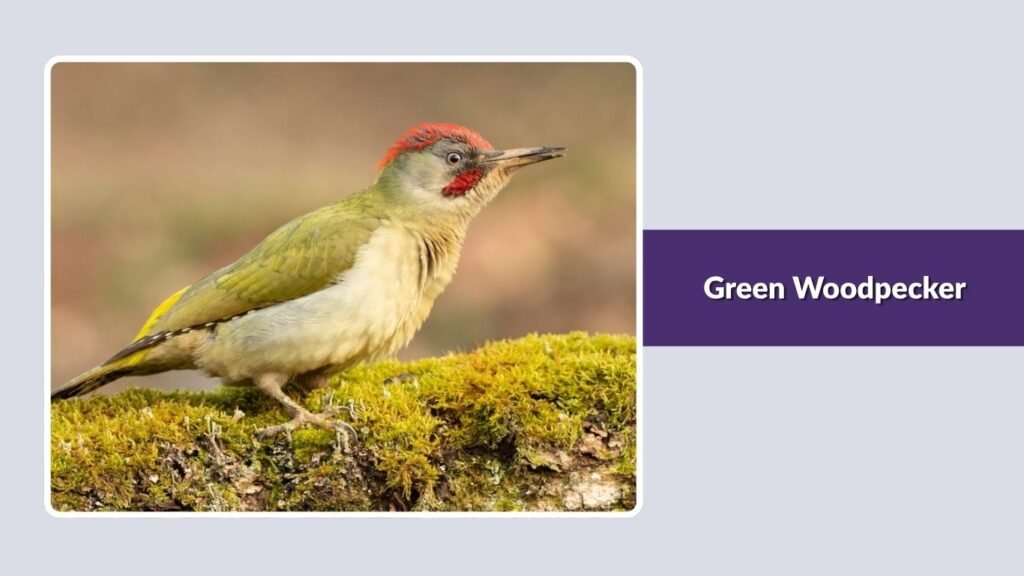
The Green Woodpecker is a European species that closely resembles the Northern Flicker in both appearance and feeding behavior. Known for its bright green plumage and ground-feeding habits, it is often seen searching for ants in open grassy areas. Unlike many woodpeckers, it rarely drums on trees and instead relies heavily on vocal calls. Its combination of terrestrial foraging and strong coloration makes it one of the most distinctive woodpeckers in its range.
Identification
- Medium to large woodpecker with a long bill
- Bright green upperparts with yellowish rump
- Pale underparts with faint markings
- Red crown; males also have a red-and-black mustache stripe
- Black mask around the eyes
- Long, slightly curved bill adapted for probing
- Often seen feeding on the ground
Habitat
Green Woodpeckers inhabit open woodlands, parks, orchards, and grasslands across Europe. They prefer areas with a mix of trees for nesting and open ground for feeding. Lawns, meadows, and forest edges are ideal environments, especially where ant populations are abundant. They nest in tree cavities, usually in older or decaying trees. Their adaptability allows them to live in both rural and suburban landscapes, as long as suitable feeding grounds are available nearby.
Behavior
This species is highly terrestrial compared to most woodpeckers, spending much of its time on the ground searching for food. It is usually solitary or found in pairs. Unlike typical woodpeckers, it drums less frequently and instead communicates through loud, laughing calls. Its flight is undulating but generally short-distance. It often moves by hopping along the ground rather than climbing tree trunks, reflecting its adaptation to ground-based feeding.
Diet
The Green Woodpecker primarily feeds on ants, which make up the majority of its diet. It uses its long tongue to extract ants and larvae from soil and nests. In addition to ants, it may consume other insects, small invertebrates, and occasionally fruits or seeds. Its strong preference for ants closely mirrors the feeding habits of flickers, making it one of the most similar species in behavior despite being in a different region.
9. European Green Woodpecker
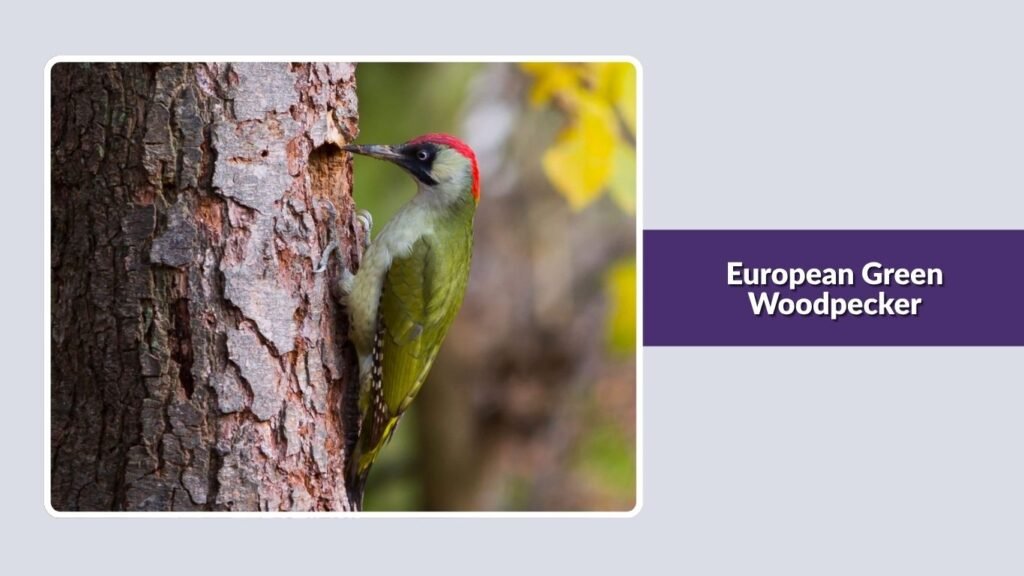
The European Green Woodpecker is often considered the same species group as the Green Woodpecker but is sometimes treated distinctly in regional contexts. It strongly resembles flickers due to its ground-feeding behavior and reliance on ants. Found widely across Europe, it is more often heard than seen, thanks to its loud, laughing call. Its bright green plumage and red crown make it visually striking, while its lifestyle closely parallels that of the Northern Flicker.
Identification
- Medium to large woodpecker with a long, pointed bill
- Bright green back with a yellowish rump
- Pale underside with light markings
- Red crown; males have a red-and-black mustache stripe
- Black mask around the eyes
- Strong legs suited for ground movement
- Frequently observed feeding on lawns or open ground
Habitat
This species inhabits open woodlands, forest edges, parks, gardens, and grasslands throughout Europe. It prefers habitats with scattered trees for nesting and open grassy areas rich in ants for feeding. It is commonly found in both rural and suburban environments. Nesting occurs in tree cavities, often in older or partially decayed trees. The combination of trees and open feeding grounds is essential for its survival and distribution.
Behavior
European Green Woodpeckers are primarily ground feeders and spend much of their time searching for ants. They are usually solitary but may be seen in pairs during breeding season. Unlike many woodpeckers, they rarely drum and instead use loud vocal calls for communication. Their flight is undulating but generally low and short. They often hop along the ground rather than climbing trees, reflecting their terrestrial habits.
Diet
Their diet consists mainly of ants and their larvae, which they extract using a long, sticky tongue. They may also consume other insects, worms, and occasionally fruits. This heavy reliance on ants makes them highly dependent on suitable feeding grounds such as lawns and meadows. Their feeding behavior closely matches that of flickers, making them one of the most similar species in ecological role.
10. Grey-headed Woodpecker
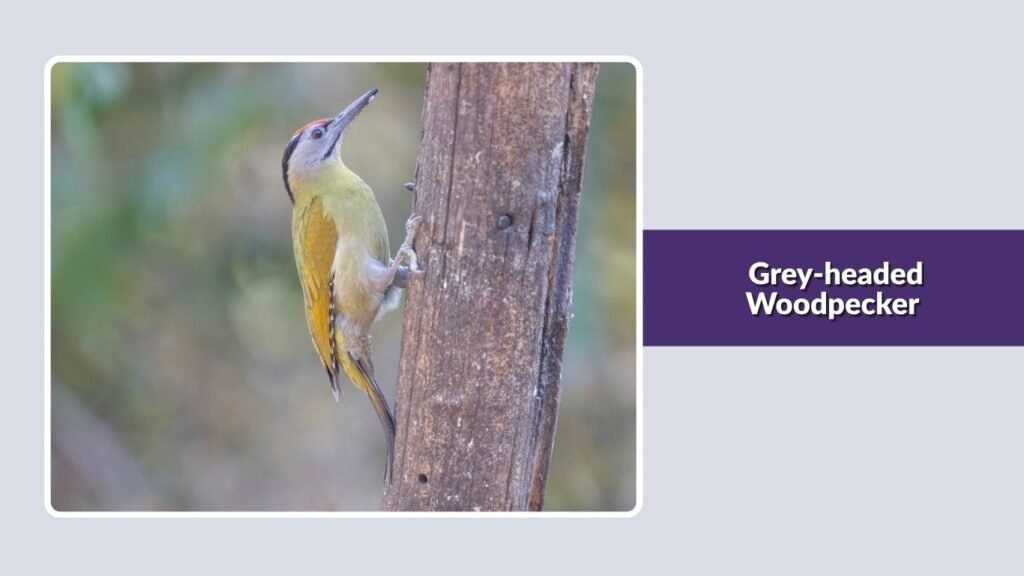
The Grey-headed Woodpecker is a Eurasian species that shares several similarities with the Northern Flicker, particularly in its ground-feeding habits and body structure. It is less brightly colored than some relatives but is well adapted to open woodland environments. Found across Europe and Asia, this bird often forages on the ground for ants and other insects. Its calm behavior and subtle plumage make it less conspicuous, yet it remains a close ecological counterpart to flickers.
Identification
- Medium-sized woodpecker with a slender, pointed bill
- Olive-green upperparts with a gray head and neck
- Pale underparts with slight greenish tones
- Males have a small red patch on the forehead; females lack it
- Dark eye line with subtle facial contrast
- Long tongue adapted for extracting insects
- Often seen on the ground or low tree trunks
Habitat
Grey-headed Woodpeckers inhabit open woodlands, forest edges, parks, and mixed forests across Europe and Asia. They prefer areas with a combination of trees for nesting and open ground for feeding. Old or decaying trees are important for nesting cavities. These birds are also found in mountainous regions and valleys where suitable habitat exists. Their adaptability allows them to live in both natural forests and semi-urban environments with sufficient green space.
Behavior
This species is quieter and less conspicuous than many woodpeckers. It spends a significant amount of time foraging on the ground, especially in search of ants. Usually solitary or seen in pairs, it communicates with soft calls rather than loud drumming. Its flight is undulating but generally low and short. It climbs trees when necessary but often prefers ground-based feeding, reflecting behavior similar to flickers.
Diet
The Grey-headed Woodpecker primarily feeds on ants, using its long, sticky tongue to extract them from soil and nests. It also consumes beetles, larvae, and other small invertebrates. Occasionally, it may eat fruits and seeds, particularly when insect availability is low. This varied diet supports its survival across a wide geographic range and changing seasonal conditions.anopy cover.
Behavior
This species is highly active and constantly moving along branches and shrubs in search of food. It is usually solitary or seen in pairs. Unlike flickers, it rarely feeds on the ground and instead focuses on low vegetation. Its flight is short and direct. It communicates through soft calls and light tapping rather than loud drumming. Its quick and agile movements make it somewhat difficult to observe closely.
