
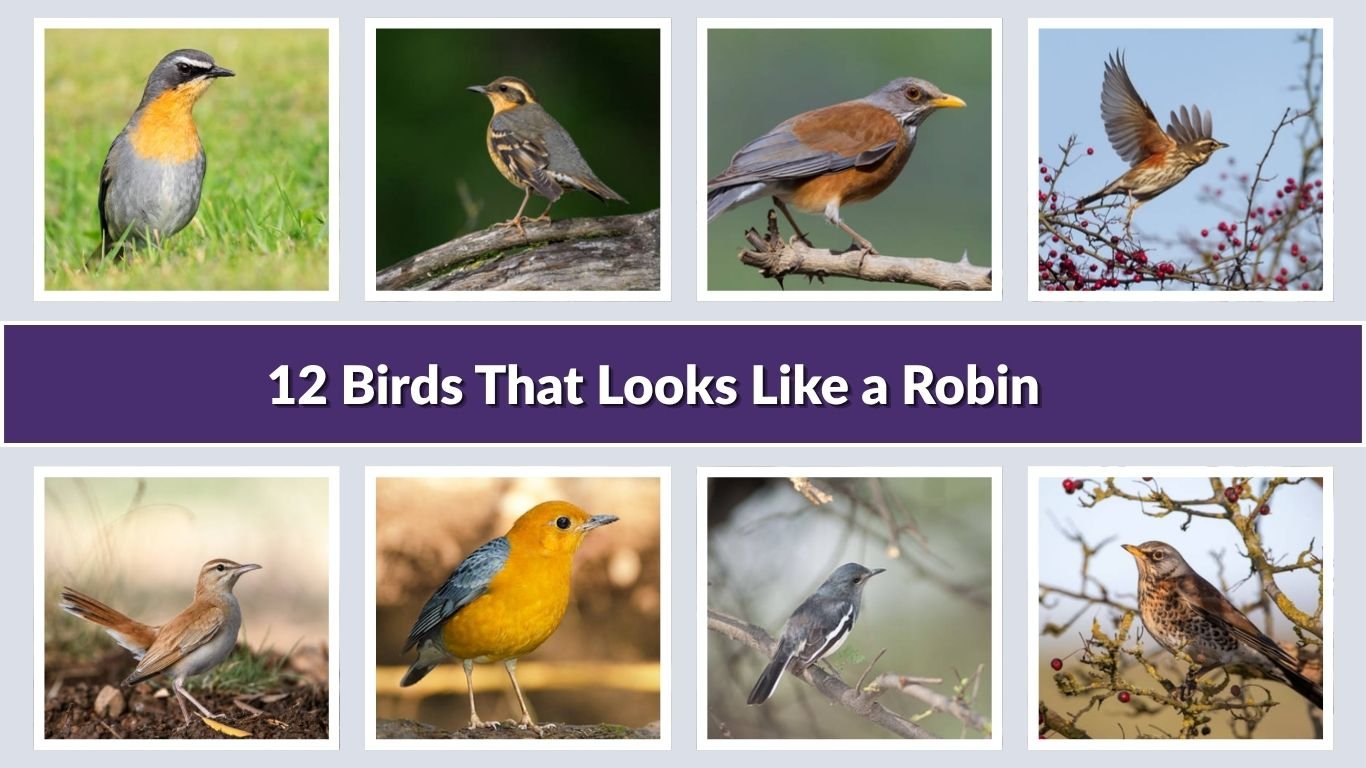
Robins are among the most recognizable birds in the world, known for their rounded bodies, upright posture, and often warm-colored chests. However, many other birds share a similar appearance, even if they belong to different species or regions. These robin-like birds can be found across continents, displaying comparable shapes, behaviors, and feeding habits. From thrushes to chats, their resemblance can sometimes make identification tricky. In this list, you’ll discover 12 fascinating birds that closely resemble robins in appearance and lifestyle.
1. American Robin
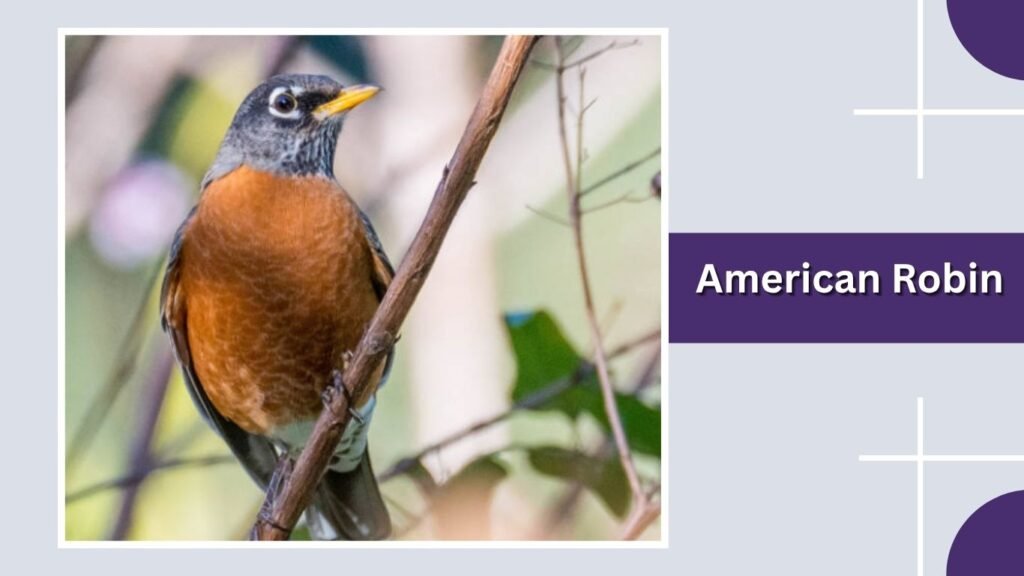
The American robin is one of the most recognizable birds in North America and is often associated with the arrival of spring. Its warm orange-red breast, clear whistling song, and active behavior make it a favorite among birdwatchers and casual observers alike. Despite its name, it is actually a type of thrush, but its classic look has made it the standard for what many people imagine a “robin” to be.
Identification
- Bright orange to reddish breast, which is its most distinctive feature
- Dark gray to black head, back, and wings
- White eye ring and white streaks on the throat
- Yellow beak, often brighter in males
- Medium-sized bird with a rounded body shape
- Long legs adapted for hopping and running on the ground
- Tail is darker and often held slightly raised
- Males tend to have more vivid colors than females
Habitat
American robins are highly adaptable and can thrive in a wide variety of habitats. They are commonly found in woodlands, gardens, parks, farmland, and suburban areas. They prefer environments with open ground for feeding and nearby trees or shrubs for nesting and shelter.
These birds are frequently seen on lawns, especially after rain, searching for worms. While many robins migrate south during colder months, some remain in northern areas if food sources like berries are available. Their ability to adjust to human environments has helped them remain widespread and abundant.
Comparison
The American robin is often used as the reference point for identifying other robin-like birds. Its combination of a bright breast, upright stance, and rounded body creates the classic robin appearance.
Compared to similar species, it is generally larger and more robust. While other birds may share reddish coloring or similar shapes, few match the American robin’s balance of size, color contrast, and behavior. This makes it one of the easiest birds to identify and a benchmark for comparison.
Diet
American robins have a varied and flexible diet, which helps them survive in different seasons. During spring and summer, they mainly feed on insects such as earthworms, beetles, and caterpillars. Their ability to locate worms by sight and sound is particularly impressive.
In fall and winter, their diet shifts more toward fruits and berries, including cherries, blueberries, and holly berries. They often feed in flocks during colder months when insects are scarce. This seasonal adaptability ensures they have access to food year-round.
2. European Robin
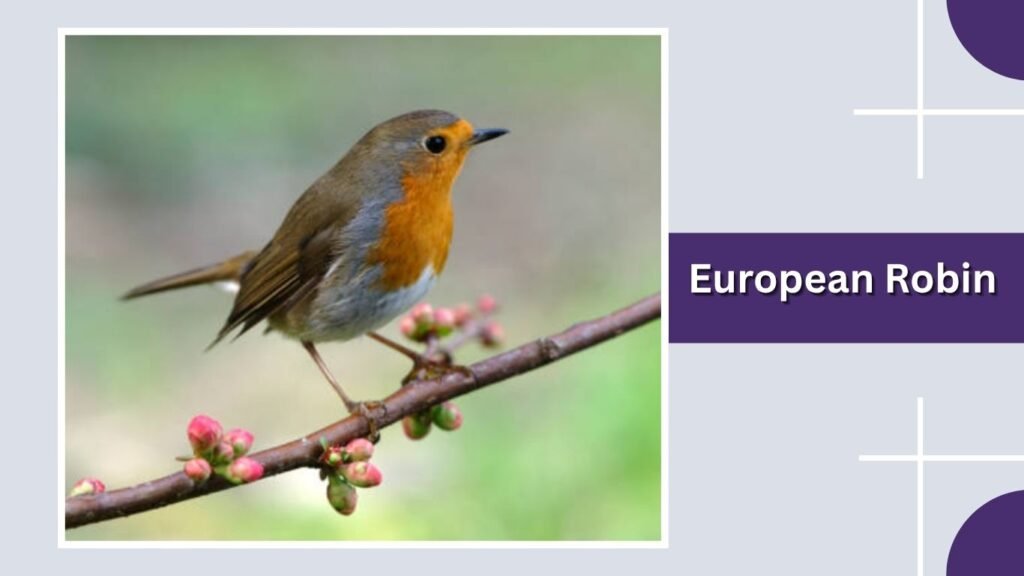
The European robin is a small, charming bird commonly found across Europe. Known for its bright orange-red face and chest, it has a friendly appearance and is often seen in gardens and woodlands. Unlike the American robin, it is much smaller and has a more delicate, rounded look.
Identification
- Bright orange-red face and breast extending up to the forehead
- Olive-brown back and wings
- Pale whitish to gray belly
- Small, compact body with a rounded shape
- Thin, pointed beak
- Dark, expressive eyes
- Short tail often flicked slightly upward
- Both males and females look similar in appearance
Habitat
European robins are widely distributed across Europe, western Asia, and parts of North Africa. They are commonly found in woodlands, gardens, parks, hedgerows, and even urban areas. These birds prefer areas with dense vegetation, which provides cover and nesting sites.
They are known for being quite territorial, especially during the breeding season. Unlike many birds, they are often active year-round and may remain in the same area rather than migrating long distances. In colder regions, some populations move slightly south during winter.
Comparison
The European robin differs from the American robin in both size and coloration. It is much smaller and has its orange-red color concentrated on the face and upper chest rather than the entire breast.
Its compact body and upright posture still give it the classic “robin-like” appearance. While the American robin is more robust and bold-looking, the European robin appears softer and more delicate, often giving it a more approachable and friendly look.
Diet
European robins are omnivores and have a diverse diet. They primarily feed on insects such as beetles, spiders, and worms, especially during warmer months. They are often seen hopping on the ground while searching for food.
In autumn and winter, they eat more fruits and berries, including seeds and small plant material. They are also known to visit bird feeders, where they may consume crumbs, mealworms, and other food provided by humans.
3. Varied Thrush
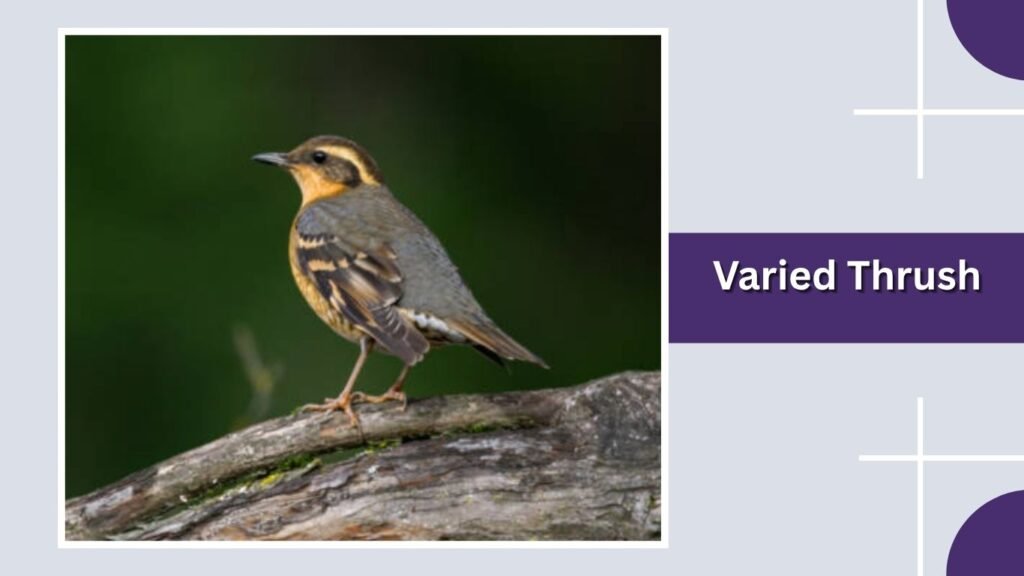
The varied thrush is a striking bird native to North America, especially the Pacific Northwest. With its bold orange and black coloring, it closely resembles the American robin but has a more dramatic and contrasting appearance. Its haunting, flute-like song also adds to its unique presence in forests.
Identification
- Bright orange breast crossed by a bold black band
- Black head, back, and wings in males (females are more brownish)
- Distinct black “necklace” across the chest
- Orange eyebrow stripe above the eye
- Medium-sized body similar to the American robin
- Strong, slightly curved beak
- Upright posture with a rounded shape
- Wings often show orange patches in flight
Habitat
Varied thrushes are mainly found in dense coniferous forests along the Pacific coast of North America, including regions from Alaska to California. They prefer moist, shaded environments with thick vegetation and plenty of cover.
During winter, some individuals move to lower elevations or more open areas such as parks and gardens. They are usually shy and prefer staying hidden among trees and undergrowth, making them less commonly seen than robins.
Comparison
The varied thrush is often compared to the American robin due to its similar size and orange breast. However, it stands out with its bold black chest band and darker overall coloration.
While the robin has a softer and more uniform look, the varied thrush appears more dramatic and high-contrast. Its behavior is also more secretive, whereas robins are more commonly seen in open spaces. Despite these differences, both share a similar body structure.
Diet
Varied thrushes have a mixed diet that changes with the seasons. They primarily feed on insects, spiders, and other invertebrates during the breeding season. They often forage on the forest floor, turning over leaves to find food.
In colder months, they rely more on fruits and berries such as elderberries and juniper berries. Occasionally, they may visit bird feeders, especially when natural food sources are limited.
4. Redwing
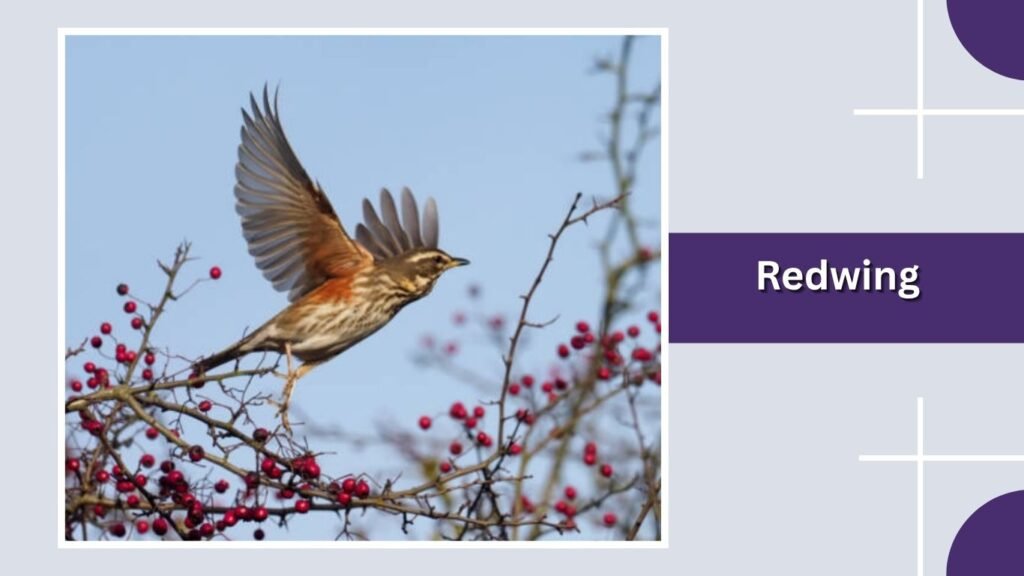
The redwing is a small thrush found across Europe and parts of Asia, closely related to the American robin. It has a similar body shape and feeding behavior, but its more subtle coloring and distinctive markings set it apart. It is especially known for its seasonal migrations and soft, high-pitched calls.
Identification
- Brown upperparts with a pale, streaked chest
- Distinct creamy-white stripe above the eye (supercilium)
- Reddish-orange patches on the sides under the wings
- Light belly with dark streaks across the chest
- Small to medium-sized body, slightly smaller than a robin
- Thin, pointed beak
- Upright posture typical of thrushes
- Tail relatively short and slightly darker than the back
Habitat
Redwings breed in northern Europe and Asia, particularly in forests, birch woodlands, and tundra edges. During winter, they migrate to western and southern Europe, where they can be found in fields, hedgerows, orchards, and gardens.
They prefer areas with trees or shrubs for shelter but often forage in open spaces. In colder months, they are commonly seen in flocks, sometimes mixed with other thrush species. Their adaptability allows them to survive in both rural and semi-urban environments.
Comparison
The redwing is often compared to the American robin due to its similar size and overall shape. However, it lacks the robin’s bold orange breast and instead has a more muted, streaked appearance.
Its reddish flank patches are the closest feature to a robin’s coloring, but they are less prominent. Compared to robins, redwings appear more delicate and patterned. Their behavior, especially ground foraging, is quite similar, reinforcing their resemblance.
Diet
Redwings are omnivorous and adjust their diet depending on the season. During spring and summer, they mainly feed on insects, worms, and other small invertebrates, which provide essential nutrients for breeding.
In autumn and winter, they switch to eating fruits and berries such as rowan, hawthorn, and holly. They often forage in groups, especially when feeding on berries, and may travel long distances to find food during colder months.
5. Fieldfare
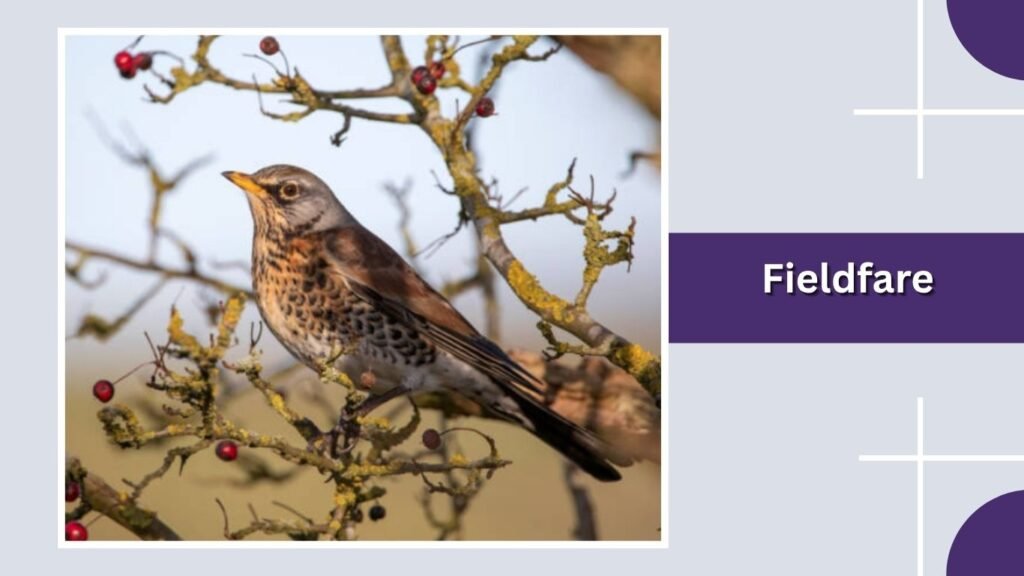
The fieldfare is a large thrush species found across Europe and Asia, often seen in flocks during the winter. With its upright stance and ground-feeding behavior, it shares a similar shape and lifestyle with robins, though its coloring is more varied and less bright.
Identification
- Gray head and rump contrasting with a brown back
- Speckled chest with dark spots on a pale background
- Yellowish beak with a darker tip
- Reddish-brown wings
- Medium to large size, slightly bigger than a robin
- Strong, upright posture
- Dark tail and wings
- Pale underparts with noticeable spotting
Habitat
Fieldfares breed in northern forests and open woodlands across Europe and Asia. During winter, they migrate to more temperate regions, including farmland, grasslands, orchards, and gardens.
They prefer open areas for feeding, especially where berries and insects are available. Unlike robins, fieldfares are highly social and are often seen in large flocks, particularly in colder months. They use trees and hedges for shelter and nesting during breeding season.
Comparison
The fieldfare resembles robin-like birds in shape and feeding behavior, especially its upright stance and habit of foraging on the ground. However, it lacks the bright red breast that defines robins.
Instead, it has a more patterned and muted appearance with speckled markings. Compared to the American robin, the fieldfare looks more varied in color and slightly larger. Its flocking behavior also sets it apart, as robins are often more solitary.
Diet
Fieldfares have a flexible diet that changes with the seasons. In spring and summer, they mainly eat insects, worms, and other invertebrates, which they find by probing the ground.
During autumn and winter, they rely heavily on berries such as rowan, hawthorn, and juniper. They often travel in groups to locate food and can quickly strip trees of their berries. This seasonal diet helps them survive harsh winter conditions.
6. Rufous-backed Robin
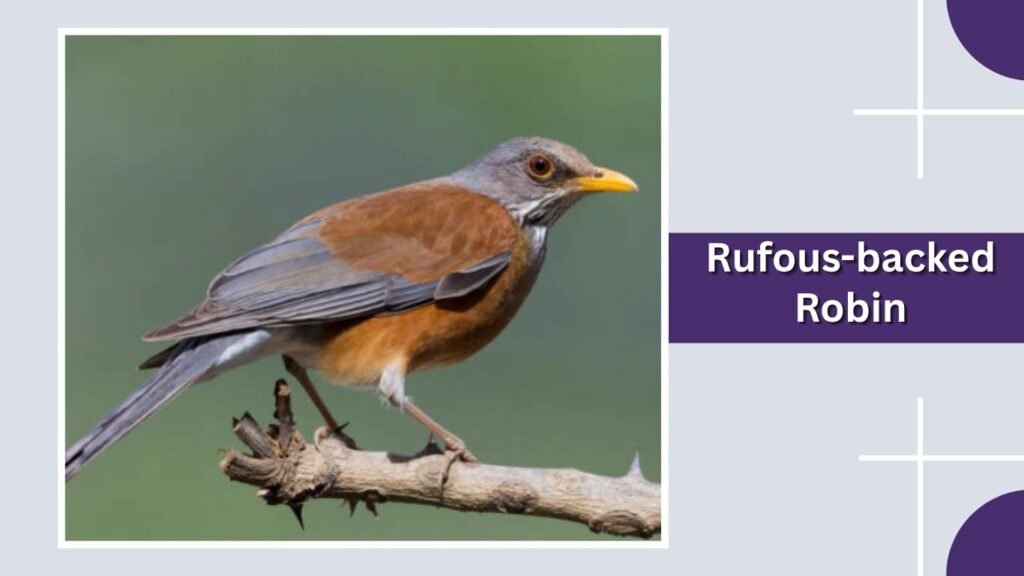
The rufous-backed robin is a thrush species found mainly in Mexico and parts of the southwestern United States. It closely resembles the American robin in shape and behavior but has a warmer, more reddish tone on its back, giving it a slightly different yet familiar appearance.
Identification
- Orange to reddish breast similar to the American robin
- Distinct rufous (reddish-brown) back and wings
- Grayish head with subtle contrast
- White markings around the eye and throat
- Medium-sized body with a rounded shape
- Yellow to orange beak
- Upright posture and long legs
- Tail slightly darker and often held straight
Habitat
Rufous-backed robins are typically found in open woodlands, forest edges, gardens, and scrubby areas in Mexico and occasionally in the southwestern United States. They prefer habitats with scattered trees and open ground, which allows them to forage easily.
They are often seen in areas with human presence, such as parks and farms, where food sources are abundant. Unlike some migratory thrushes, they tend to stay within their range year-round, especially in warmer climates.
Comparison
This bird is very similar to the American robin in both size and structure. The main difference lies in its richer, reddish back, which gives it a slightly more colorful appearance.
While the American robin has a darker gray back, the rufous-backed robin appears warmer in tone. Behaviorally, both species are quite similar, especially in how they forage on the ground and maintain an upright stance.
Diet
Rufous-backed robins are omnivores with a diet similar to other thrushes. They primarily feed on insects such as beetles, worms, and caterpillars, especially during the breeding season.
They also eat fruits and berries, particularly when insects are less available. Their ability to switch between food sources allows them to adapt well to different environments and seasonal changes.
7. White-throated Robin
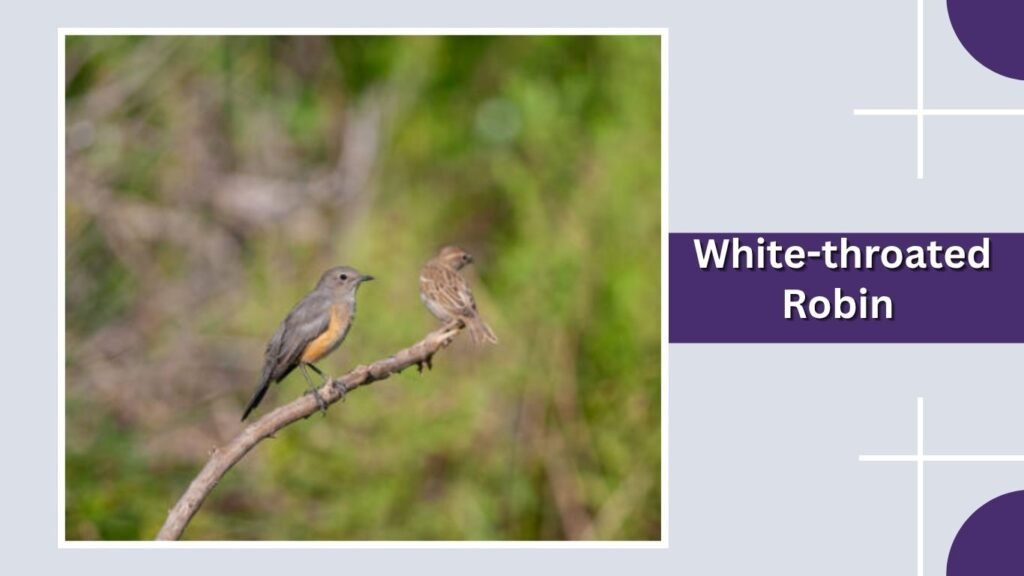
The white-throated robin is a striking bird found in parts of the Middle East and Central Asia. While it differs in some coloration, its upright posture and body shape give it a clear resemblance to robin-like birds. Its contrasting colors make it especially noticeable in its natural habitat.
Identification
- Bright orange breast similar to classic robins
- Distinct white throat contrasting with darker upper parts
- Dark gray to black head and back
- Bold color contrast between chest, throat, and body
- Medium-sized body with a rounded shape
- Slender, pointed beak
- Long legs suited for ground movement
- Upright posture typical of thrush-like birds
Habitat
White-throated robins are commonly found in rocky hillsides, scrublands, and mountainous regions across countries like Iran, Turkey, and parts of Central Asia. They prefer dry, open landscapes with scattered vegetation.
During migration, they may move to lower elevations or warmer regions. They are often seen on the ground or perched on rocks, where they can easily spot insects and other prey. Their habitat is generally less forested compared to many other robin-like birds.
Comparison
The white-throated robin shares the classic robin body shape, including its upright stance and rounded build. However, its bold color contrast—especially the white throat—makes it stand out from typical robins.
Compared to the American robin, it appears more sharply patterned and slightly slimmer. Despite these differences, its posture and feeding behavior still strongly resemble other robin-like species.
Diet
White-throated robins are mainly insectivorous, feeding on beetles, ants, and other small invertebrates. They actively forage on the ground, often hopping and pausing to spot prey.
They may also consume small fruits and seeds when insects are less available. This flexible diet helps them survive in the dry and seasonal environments where they live.
8. Indian Robin
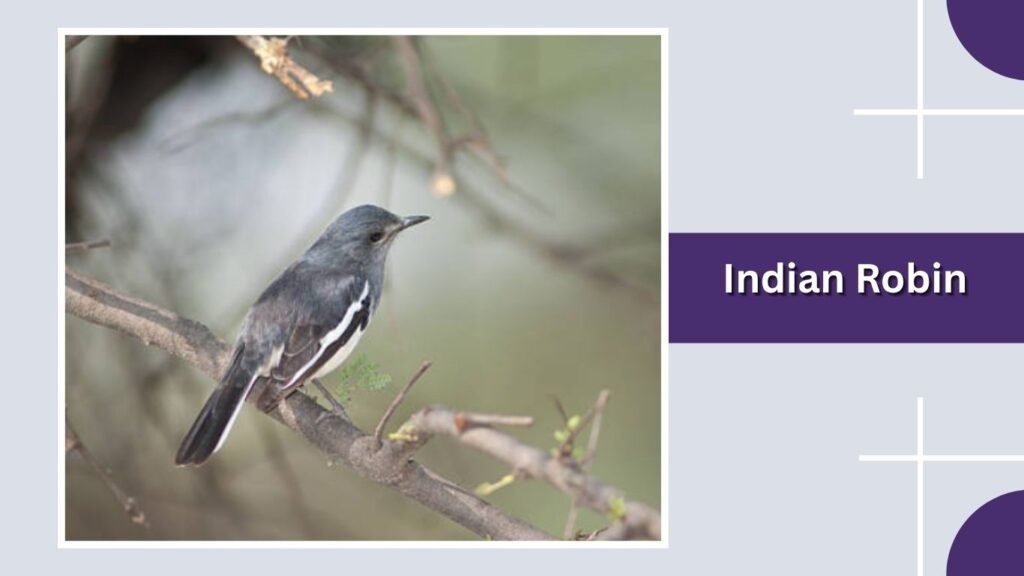
The Indian robin is a small, active bird found across the Indian subcontinent. Although it differs in color from the classic red-breasted robin, its upright posture, ground-feeding behavior, and body shape make it clearly “robin-like.”
Identification
- Dark black or deep brown body in males
- Prominent white patch on the shoulder
- Reddish-orange undertail area
- Slender body with a slightly elongated shape
- Thin, pointed beak
- Long tail often held upright
- Females are more grayish-brown and less glossy
- Alert posture with frequent tail flicking
Habitat
Indian robins are commonly found in open habitats such as scrublands, grasslands, farmland, gardens, and urban areas. They prefer dry regions with scattered bushes, rocks, or low vegetation.
They are highly adaptable and are often seen near human settlements. These birds usually stay close to the ground, perching on rocks, walls, or low branches. They are non-migratory and remain in their range throughout the year.
Comparison
While the Indian robin lacks the bright orange chest of the American robin, it shares a similar body posture and behavior. Its upright stance and habit of hopping on the ground make it resemble other robin-like birds.
Compared to classic robins, it appears slimmer and darker. The reddish undertail is its closest feature to the robin’s warm coloring, though it is less visible unless the bird is moving or flicking its tail.
Diet
Indian robins are mainly insectivorous, feeding on ants, beetles, termites, and other small insects. They actively forage on the ground, often darting quickly to catch prey.
They may also consume small seeds and plant material when insects are scarce. Their diet helps control insect populations, making them beneficial in agricultural and urban environments.
9. Clay-colored Thrush
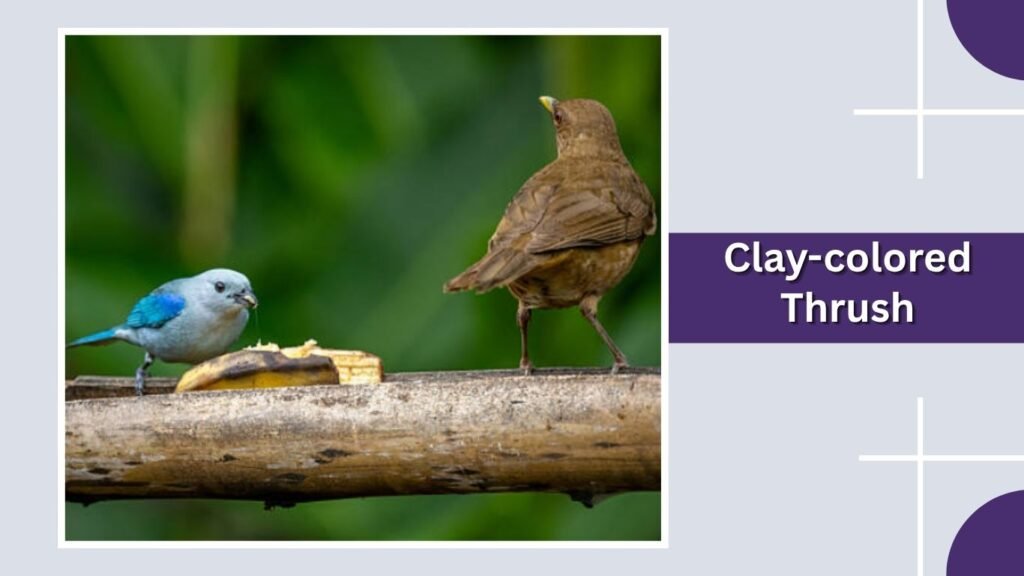
The clay-colored thrush is a common bird in Central America and parts of South America, and it is the national bird of Costa Rica. Although it lacks the bright red chest of the American robin, its size, shape, and behavior make it strongly resemble a robin-like bird.
Identification
- Plain brown or clay-colored body throughout
- Slightly lighter underparts with minimal markings
- Medium-sized bird with a rounded body
- Long legs adapted for ground movement
- Yellowish to orange beak
- Dark eyes with a calm expression
- Tail of moderate length, often held straight
- Overall simple and uniform appearance
Habitat
Clay-colored thrushes are found in a wide range of habitats, including forests, gardens, farms, and urban areas. They are especially common in Central America, where they thrive in both natural and human-modified environments.
They prefer areas with trees for nesting and open ground for feeding. These birds are often seen in backyards and parks, making them one of the most familiar species in their range. They are generally non-migratory and remain in the same region year-round.
Comparison
The clay-colored thrush is similar in size and posture to the American robin, which is why it is often compared to it. However, it lacks the robin’s bright orange breast and instead has a plain, earthy coloration.
Despite this, its upright stance, rounded body, and ground-foraging behavior make it clearly robin-like. It appears more subtle and less colorful but still fits the general “robin” shape and lifestyle.
Diet
Clay-colored thrushes are omnivores and have a varied diet. They feed on insects such as beetles, ants, and worms, especially during the breeding season.
They also eat fruits and berries, which become more important when insects are less available. Their flexible diet allows them to adapt easily to different environments, including urban areas where natural food sources may vary.
10. Orange-headed Thrush
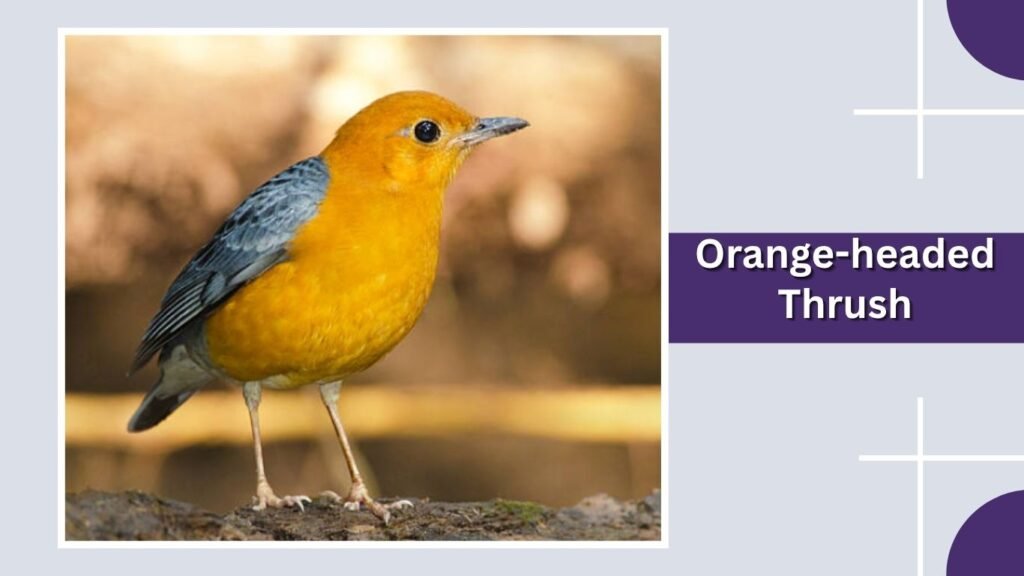
The orange-headed thrush is a colorful bird found in South and Southeast Asia. With its bright orange head and underparts, along with a rounded body and upright stance, it shares a strong resemblance to robin-like birds, especially in shape and behavior.
Identification
- Bright orange head, chest, and belly
- Olive-brown to grayish back and wings
- Medium-sized body with a rounded shape
- Slender, slightly curved beak
- Dark eyes that stand out against the orange face
- Long legs suited for ground foraging
- Tail of moderate length, often held straight
- Overall soft but vibrant color contrast
Habitat
Orange-headed thrushes are commonly found in forests, wooded areas, gardens, and plantations across countries like India, Thailand, Malaysia, and Indonesia. They prefer shaded environments with leaf litter, where they can easily search for food.
These birds are usually solitary and tend to stay hidden in dense vegetation. They are more often heard than seen, as they quietly move along the forest floor. Some populations migrate short distances depending on seasonal changes.
Comparison
The orange-headed thrush closely resembles robin-like birds due to its orange underparts and upright posture. However, its orange coloration is more extensive, covering the head and belly rather than just the chest.
Compared to the American robin, it appears more vividly colored and slightly slimmer. Its behavior, especially ground foraging and still posture, strongly matches that of robins, reinforcing its similarity.
Diet
Orange-headed thrushes are omnivores, feeding mainly on insects, worms, and other small invertebrates. They forage by flipping leaves and probing the ground in search of hidden prey.
They also consume fruits and berries, especially when insect availability is low. This varied diet helps them survive in forest environments where food sources can change with the seasons.
11. Rufous-tailed Robin
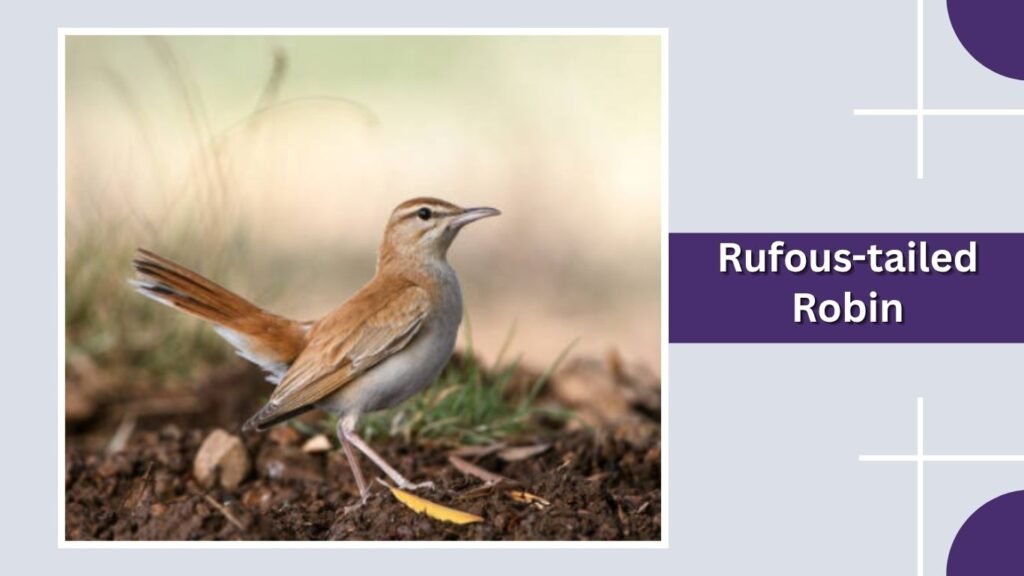
The rufous-tailed robin is a small, shy bird found in parts of Asia, particularly in forested and mountainous regions. Although less colorful than classic robins, its body shape, posture, and behavior give it a clear robin-like appearance.
Identification
- Brown upperparts with a warm rufous (reddish) tail
- Pale underparts with a slightly buff or whitish tone
- Slender body compared to larger robins
- Thin, pointed beak suited for catching insects
- Long tail with noticeable reddish coloring
- Dark eyes giving a gentle expression
- Upright stance when perched or standing
- Subtle, soft coloration overall
Habitat
Rufous-tailed robins are typically found in forests, wooded hillsides, and mountainous areas across parts of East and Southeast Asia. They prefer dense vegetation where they can remain hidden from predators.
They are often seen near the forest floor, hopping among leaf litter or low branches. During migration, some populations move to lower elevations or warmer regions. Their secretive nature makes them harder to spot compared to more common robin-like birds.
Comparison
This bird resembles other robins mainly through its upright posture and ground-foraging behavior. However, it lacks the bright orange chest that defines many robin species.
Compared to the American robin, it is smaller and more delicately built. Its rufous tail provides a subtle hint of warm color, but overall, it appears more muted. Despite this, its behavior and shape strongly align with robin-like birds.
Diet
Rufous-tailed robins are primarily insectivorous. They feed on small insects such as beetles, ants, and larvae, which they find on the ground or among leaves.
They may also eat small fruits and berries when available. Their diet changes with the seasons, allowing them to adapt to different environments and food availability.
12. Cape Robin-Chat
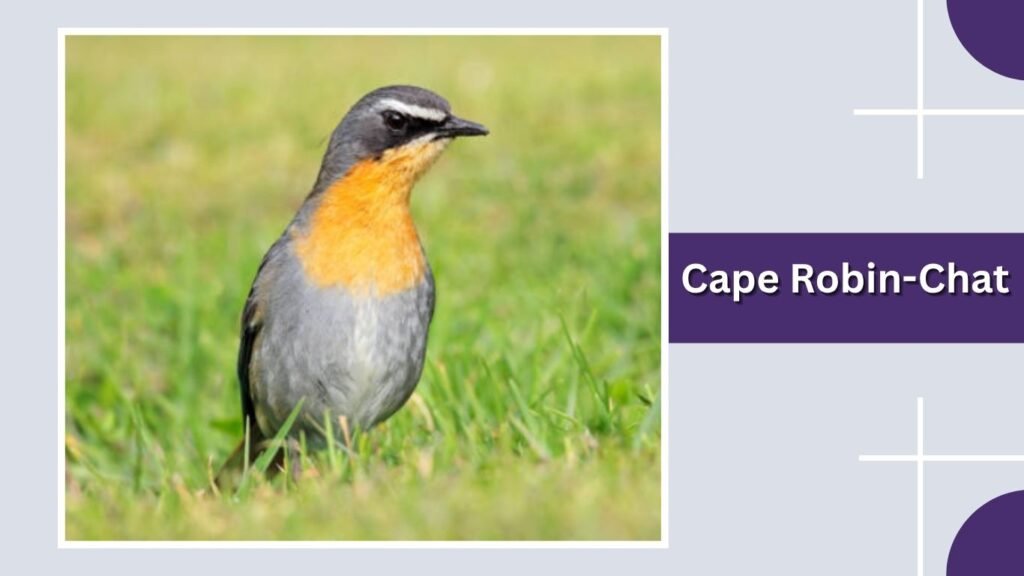
The Cape robin-chat is a small, friendly bird found in southern Africa. With its warm orange chest, upright posture, and active ground behavior, it strongly resembles classic robin species, making it one of the closest “robin-like” birds outside Europe and North America.
Identification
- Bright orange to reddish chest and face
- Grayish-brown back and wings
- Pale belly contrasting with the chest
- Medium-small body with a rounded shape
- Thin, pointed beak
- Long legs adapted for ground movement
- Dark, expressive eyes
- Tail often slightly raised while moving
Habitat
Cape robin-chats are commonly found in gardens, parks, woodlands, and scrublands across South Africa and nearby regions. They are highly adaptable and often live close to human settlements.
They prefer areas with dense shrubs or low vegetation for nesting and protection. These birds are usually seen alone or in pairs, hopping on the ground or perching on low branches. They are mostly non-migratory and remain in their territory year-round.
Comparison
The Cape robin-chat closely resembles the European robin in both size and coloration. Its orange chest and upright posture give it a classic robin-like appearance.
Compared to the American robin, it is smaller and more delicate. Its softer color contrast and compact size make it appear more similar to Old World robins. Despite slight differences, its behavior and shape strongly match typical robin traits.
Diet
Cape robin-chats are omnivores and primarily feed on insects such as beetles, ants, and worms. They actively forage on the ground, often flicking leaves aside to uncover prey.
They also eat fruits and berries, especially when insects are less available. Their varied diet allows them to thrive in both natural and urban environments.
FAQs
What makes a bird look like a robin?
A bird is usually considered “robin-like” if it has a rounded body, upright posture, and often a warm-colored chest (like orange or red). Ground-feeding behavior and thrush-like body structure also contribute to this resemblance, even if the bird belongs to a different species.
Are all robin-like birds actually robins?
No, not all robin-like birds are true robins. Many belong to the thrush family, while others are from different groups but share similar physical features. The name “robin” is often used based on appearance rather than strict scientific classification.
Where are robin-like birds commonly found?
Robin-like birds are found all over the world, including North America, Europe, Asia, and Africa. They live in a variety of habitats such as forests, gardens, parks, grasslands, and urban areas, depending on the species.
Do robin-like birds migrate?
Some robin-like birds migrate seasonally, especially those living in colder regions. For example, American robins often move south in winter. However, others like the Indian robin or Cape robin-chat are mostly non-migratory and stay in one region year-round.
What do robin-like birds usually eat?
Most robin-like birds are omnivores. They commonly eat insects such as worms, beetles, and caterpillars, especially during breeding seasons. They also consume fruits and berries, particularly in colder months when insects are less available.
