
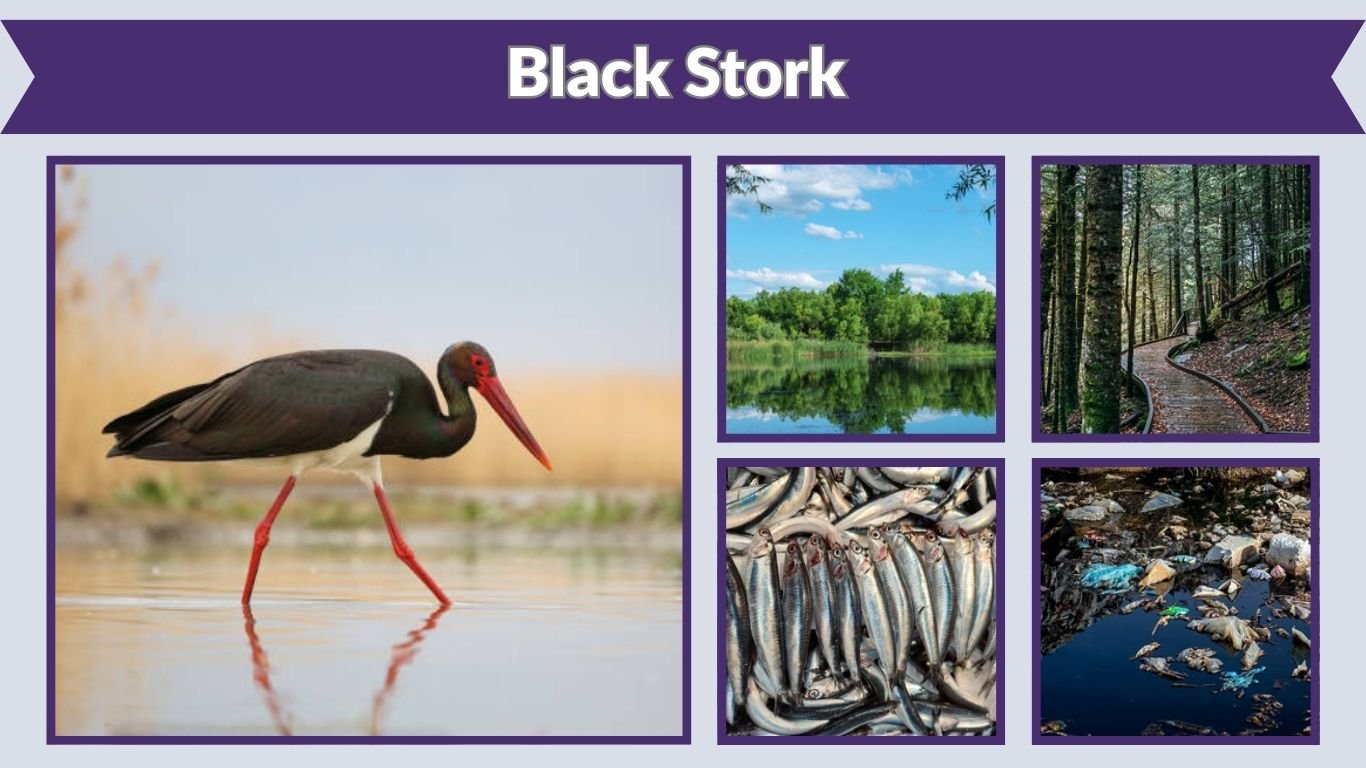
The Black Stork (Ciconia nigra) is one of the most fascinating yet lesser-known large birds in the world. Unlike its more familiar relative, the White Stork, this species prefers solitude and remote natural habitats. With its glossy dark feathers, striking red legs, and quiet behavior, the Black Stork stands out as a symbol of untouched wilderness. Found across parts of Europe, Asia, and Africa, it plays an important role in maintaining ecological balance. Understanding its lifestyle, habitat, and behavior helps highlight why protecting this bird is essential.
What Is a Black Stork?
The Black Stork is a large wading bird belonging to the stork family. It is known for its elegant appearance and shy nature, often avoiding human settlements and thriving in secluded environments.
Physical Characteristics
- Glossy black feathers with green and purple sheen
- White underparts that contrast with the dark body
- Bright red beak and long red legs
Size and Wingspan
- Height typically ranges between 95–100 cm
- Wingspan can reach up to 155–165 cm
- Strong, broad wings designed for long-distance flight
Black Stork Habitat and Distribution
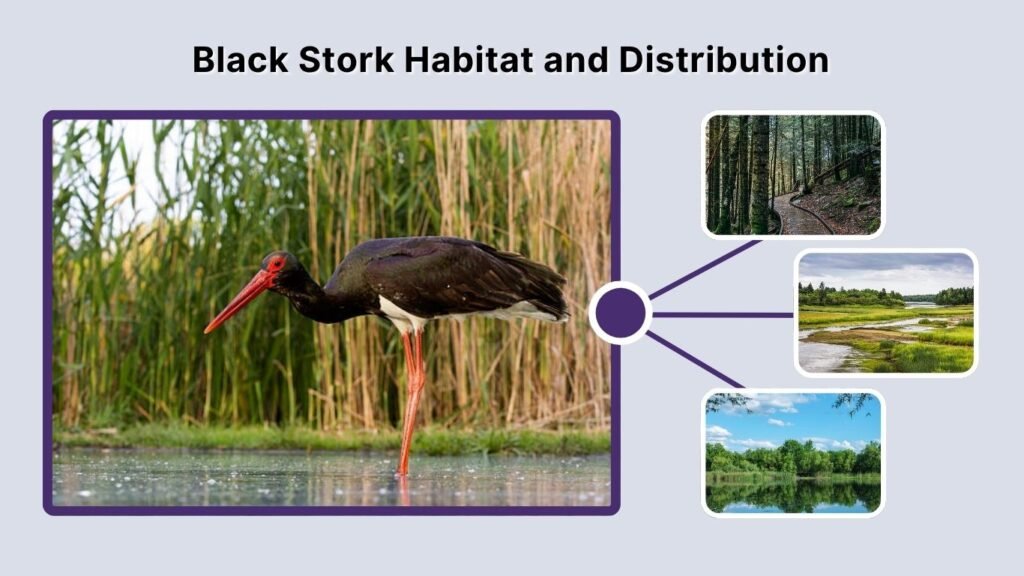
The Black Stork prefers quiet, undisturbed environments where it can hunt and nest without interference. These birds are usually found near freshwater sources that provide a steady supply of food. Their distribution spans across multiple continents, but they remain relatively rare due to their secretive nature.
Preferred Habitats
Black Storks are commonly found in areas that offer both shelter and food. They rely heavily on natural landscapes that remain largely untouched by human activity.
- Dense forests with tall trees for nesting
- Wetlands, marshes, and riverbanks
- Remote areas far from urban development
Geographic Range
This species has a wide but scattered range, making sightings uncommon in many regions.
- Europe (especially eastern and southern parts)
- Central and East Asia
- Sub-Saharan Africa during migration
Black Stork Diet and Feeding Behavior
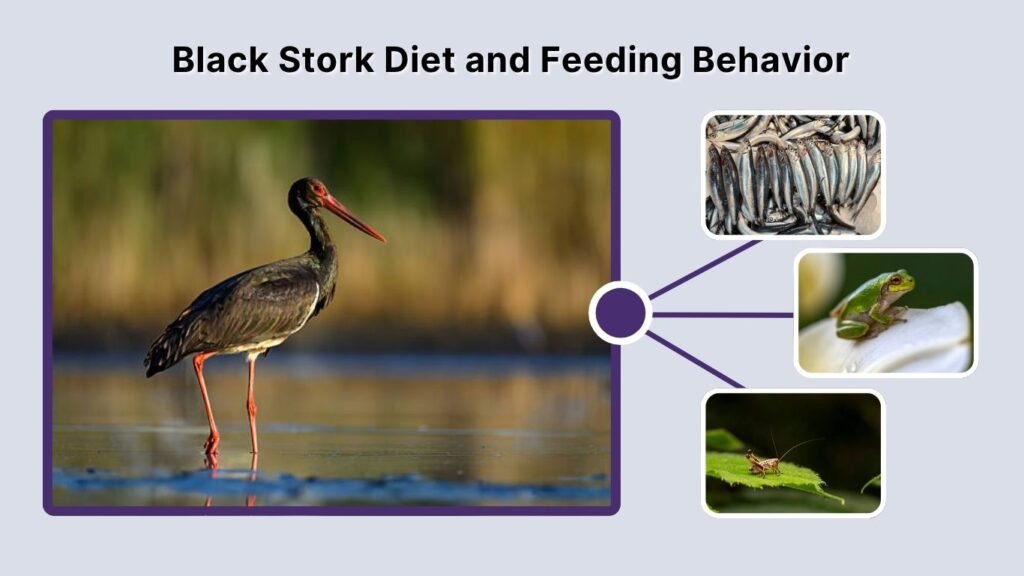
The Black Stork is a skilled hunter that feeds primarily in shallow waters. Its diet consists of various small animals that are abundant in wetlands and river ecosystems. Unlike many other birds, it hunts patiently, using slow and deliberate movements to catch prey.
What Do Black Storks Eat?
- Fish, which make up a large portion of their diet
- Amphibians such as frogs
- Insects and small reptiles
Hunting Techniques
Black Storks typically forage alone, carefully scanning the water before striking. They move quietly to avoid disturbing their prey and use their sharp beaks to capture food quickly. This method allows them to thrive in calm, undisturbed environments where competition is minimal.
Black Stork Behavior and Lifestyle
The Black Stork is known for its reserved and solitary lifestyle. Unlike many social bird species, it tends to avoid large groups and prefers to live either alone or in pairs. This behavior helps reduce competition for food and nesting sites.
Social Behavior
Black Storks rarely gather in flocks except during migration. Their preference for isolation makes them difficult to observe in the wild. They are also highly sensitive to human presence, often abandoning areas that become too disturbed.
Flight and Movement
These birds are strong fliers and are capable of covering long distances during migration. They rely on thermal air currents to glide efficiently, conserving energy as they travel between breeding and wintering grounds.
Black Stork Breeding and Reproduction
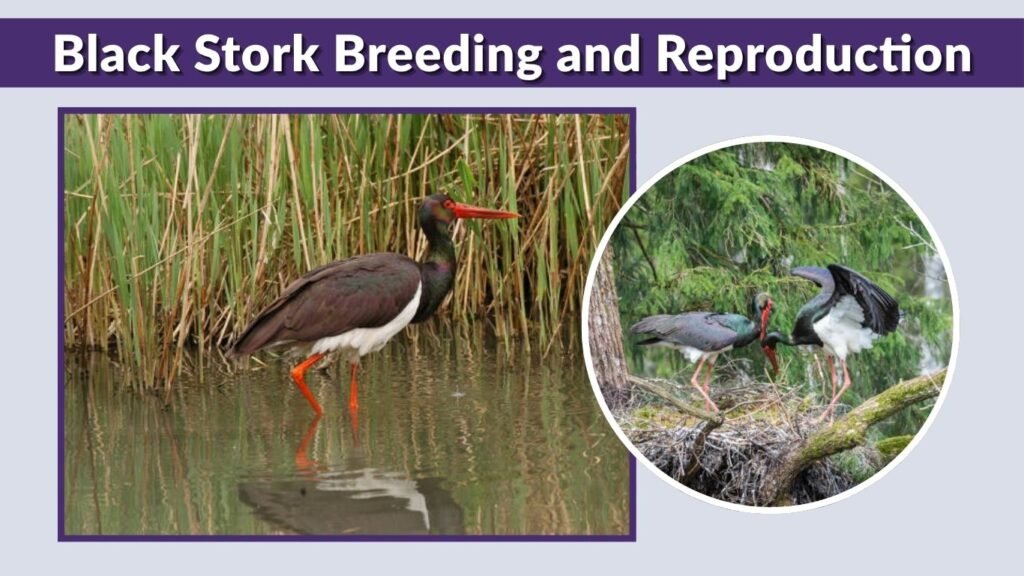
The breeding cycle of the Black Stork is closely tied to seasonal changes and habitat conditions. These birds prefer secluded nesting sites, often returning to the same location year after year. Their reproductive behavior reflects their need for safety and minimal disturbance.
Nesting Habits
- Nests are built on tall trees or rocky cliffs
- Large nests made from sticks and reused annually
- Located far from human activity
Mating and Eggs
- Breeding season usually begins in spring
- Females lay 3 to 5 eggs per cycle
- Both parents share incubation duties
Chick Development
- Incubation lasts about 30–35 days
- Chicks are dependent on parents for food
- Young birds learn to fly after several weeks
Black Stork vs White Stork
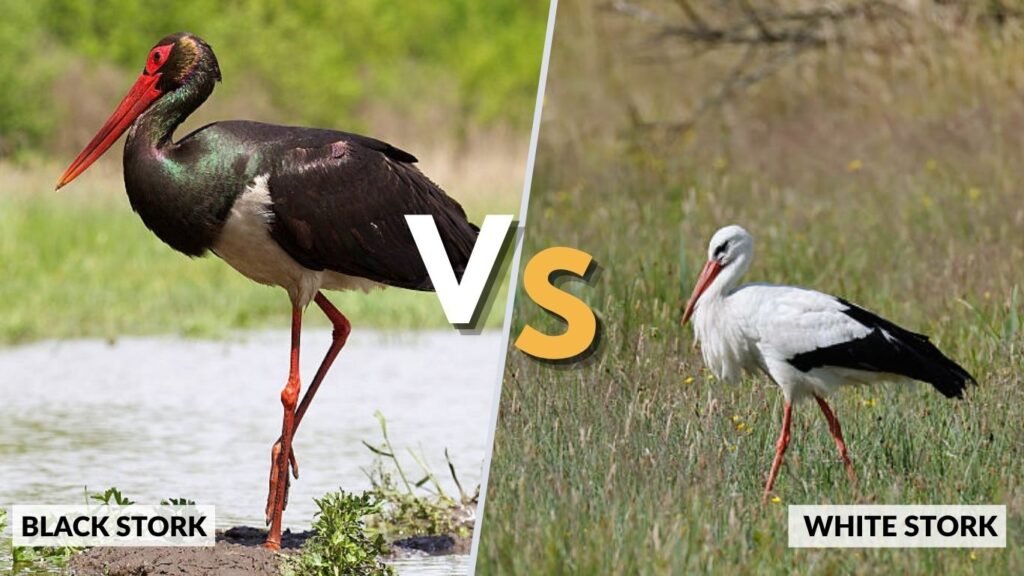
Although they belong to the same family, the Black Stork and White Stork differ significantly in appearance, behavior, and habitat. These differences often help bird watchers and researchers identify them in the wild.
Key Differences
- Black Stork has dark glossy feathers; White Stork is mostly white
- Black Stork prefers forests; White Stork lives near humans
- Black Stork is solitary; White Stork is more social
Black Stork Conservation Status and Threats
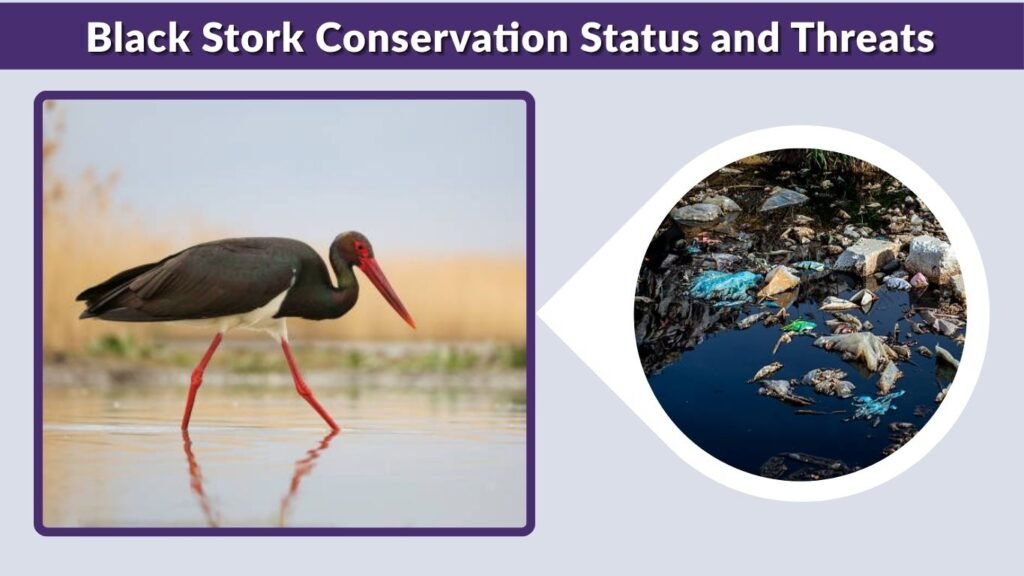
The Black Stork is not globally endangered, but its population is declining in several regions due to environmental pressures. Conservation efforts are essential to ensure its survival.
Major Threats
- Habitat loss due to deforestation
- Pollution affecting water quality
- Human disturbance near nesting areas
Conservation Efforts
- Establishment of protected wildlife reserves
- Monitoring migration and breeding patterns
- Promoting awareness about habitat protection
Interesting Black Stork Facts
The Black Stork is full of unique traits that make it an intriguing species for bird enthusiasts and researchers alike. Its secretive behavior and wide migration routes add to its mystery.
- Can migrate thousands of kilometers between seasons
- Rarely seen compared to other stork species
- Has a lifespan of around 15–20 years in the wild
- Known for silent behavior with minimal vocalization
Importance in Ecosystem
The Black Stork plays a vital role in maintaining ecological balance, especially in wetland and forest environments. As a predator of small aquatic animals, it helps regulate populations and contributes to a stable food chain. Its presence also indicates a healthy ecosystem, as it thrives only in clean, undisturbed habitats.
FAQs
What is the scientific name of the Black Stork?
The scientific name of the Black Stork is Ciconia nigra. It belongs to the stork family and is recognized for its dark plumage and contrasting white underparts, making it visually distinct from other stork species.
Where do Black Storks migrate?
Black Storks migrate from Europe and Asia to warmer regions in Africa during winter. They travel long distances using thermal air currents, returning to their breeding grounds when conditions become favorable again.
What do Black Storks eat in the wild?
Black Storks mainly feed on fish, amphibians, and insects found in shallow water. Their slow and careful hunting style allows them to catch prey efficiently without disturbing their surroundings.
Are Black Storks endangered?
Black Storks are not globally endangered, but they are considered rare in many regions. Habitat destruction and human disturbance have caused population declines in certain areas.
Why are Black Storks rarely seen?
Black Storks are rarely seen because they prefer isolated habitats and avoid human activity. Their solitary nature and tendency to nest in remote forests make sightings uncommon.
