
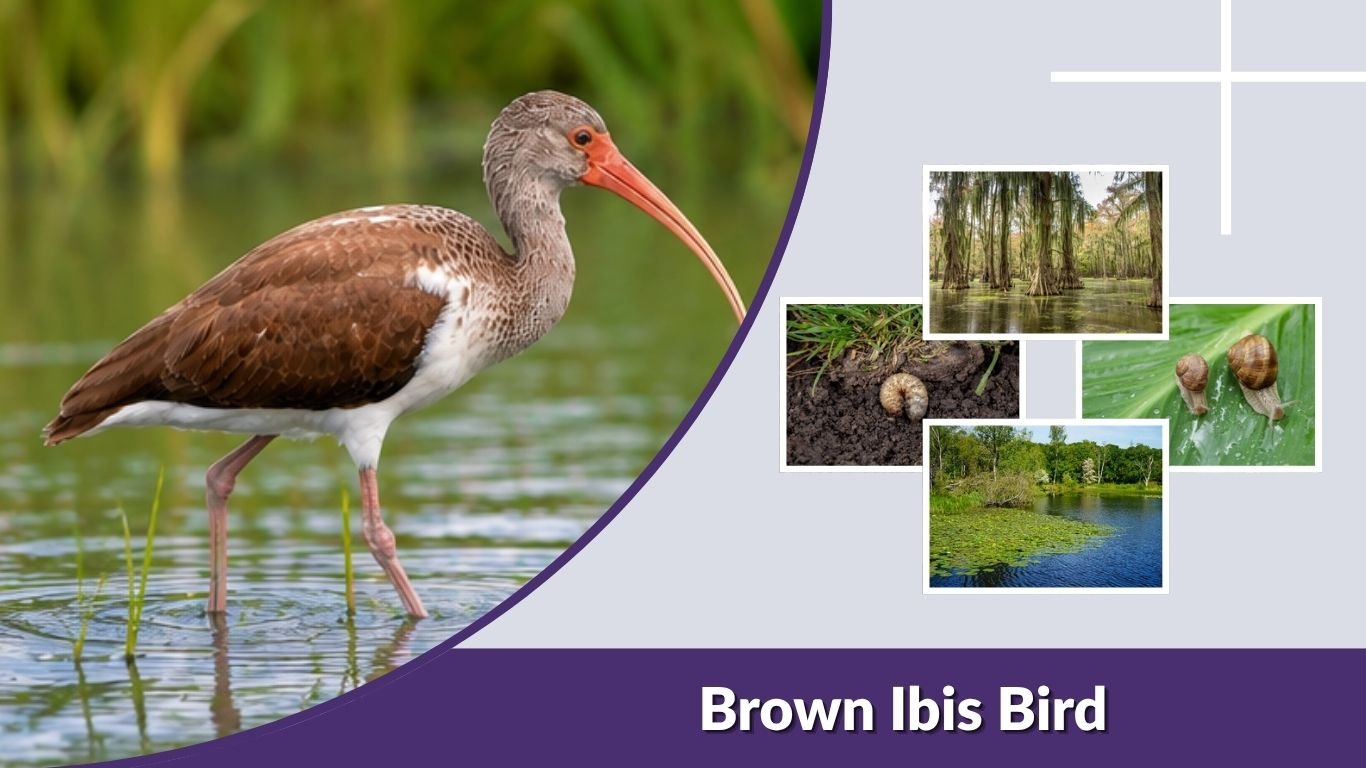
A brown ibis is a long-legged wading bird with a curved bill and brown or dark-colored plumage. However, “brown ibis” is not usually the official name of a single species. In Florida and much of the southeastern United States, a brown ibis is often a juvenile White Ibis that has not yet developed its adult white feathers. Dark Glossy Ibises can also appear brown, especially from a distance. Understanding age, feather color, bill color, and habitat can help you identify which ibis you are seeing.
What Is a Brown Ibis?
The term “brown ibis” is commonly used when someone encounters an ibis-shaped bird that has brown feathers instead of the bright white plumage they expected. In many cases, particularly in Florida, the bird is simply a young American White Ibis (Eudocimus albus).
Young White Ibises naturally start life with brown plumage before gradually becoming white.
Brown Ibis Identification
A brown juvenile White Ibis commonly shows:
- Brown feathers across the back and wings
- White or pale underparts
- Brown-streaked neck
- Long downward-curving bill
- Orange-pink or pinkish bill
- Long pinkish to orange legs
- Long neck
- Typical ibis-shaped body
As the bird matures, white feathers begin replacing the brown ones.
Is There a Species Called the Brown Ibis?
There is no widely recognized North American ibis species officially named simply the “Brown Ibis.”
The name is usually an informal description. The two most likely birds behind the identification are a juvenile White Ibis or an adult or immature Glossy Ibis.
Location and plumage details can help separate them.
Why Are Some Ibises Brown?
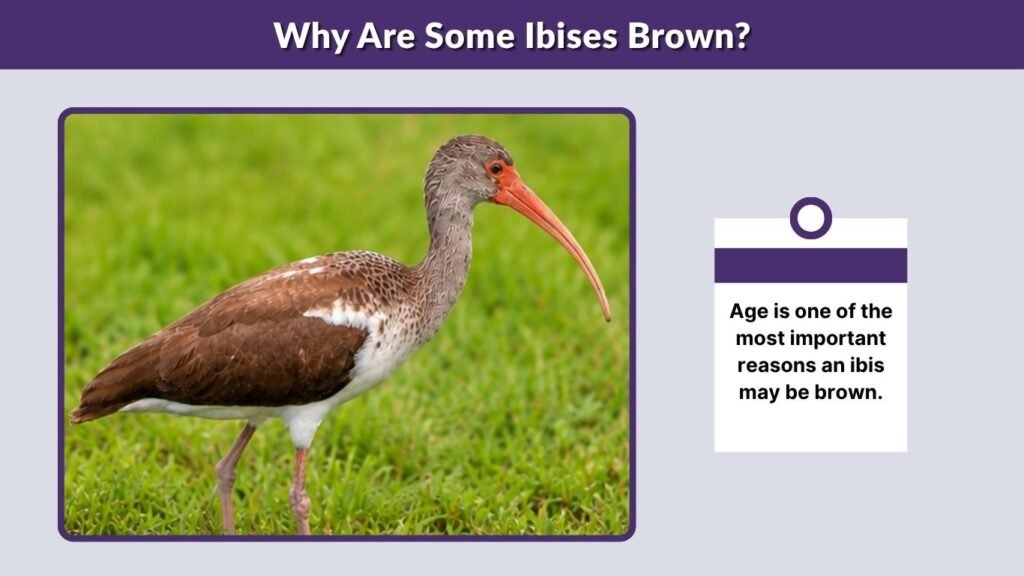
Age is one of the most important reasons an ibis may be brown. American White Ibises do not hatch with the brilliant white plumage associated with adults.
Juveniles are largely brown above and lighter underneath. During their first immature stages, their feathers gradually change as they molt.
Are Young White Ibises Brown?
Yes. Young White Ibises are brown.
Juveniles typically have brown upperparts, a streaked brown neck, lighter underparts, and an orange-pink bill. As they get older, increasing numbers of white feathers appear throughout the body.
This transformation can make immature birds look brown and white at the same time.
Why Does a Brown Ibis Turn White?
The change is part of normal maturation.
Young birds replace juvenile feathers through molting. Over time, brown feathers are replaced by the white feathers characteristic of mature American White Ibises.
During this transition, an immature bird can look patchy, with irregular areas of brown and white plumage.
What Is a Brown and White Ibis?
A bird covered with a mixture of brown and white feathers is often an immature White Ibis.
It has started developing adult plumage but has not completed the transition.
Seeing adults, brown juveniles, and mottled brown-and-white immature birds feeding together is therefore completely normal.
Brown Ibis in Florida
Florida is one of the most common places where people report seeing brown ibis birds. American White Ibises are widespread in the state and frequently visit wetlands, parks, lawns, golf courses, ponds, and residential neighborhoods.
Young birds regularly remain alongside adults, making the difference in plumage especially noticeable.
How to Identify a Brown Ibis in Florida
Look for these features:
- Brown upperparts
- Whitish belly
- Long curved pinkish bill
- Long pink or orange legs
- Brown-streaked neck
- White Ibises feeding nearby
If those characteristics match, the bird is probably a juvenile American White Ibis.
White Ibises commonly use Florida’s wetlands as well as lawns and parks.
What Is the Brown Bird Among White Ibises?
If you see one brown bird walking among a flock of adult White Ibises, there is a good chance it is a juvenile of the same species.
Young White Ibises often associate with adults while learning where and how to forage.
Their different color does not mean they necessarily belong to another ibis species.
Brown Ibis vs White Ibis
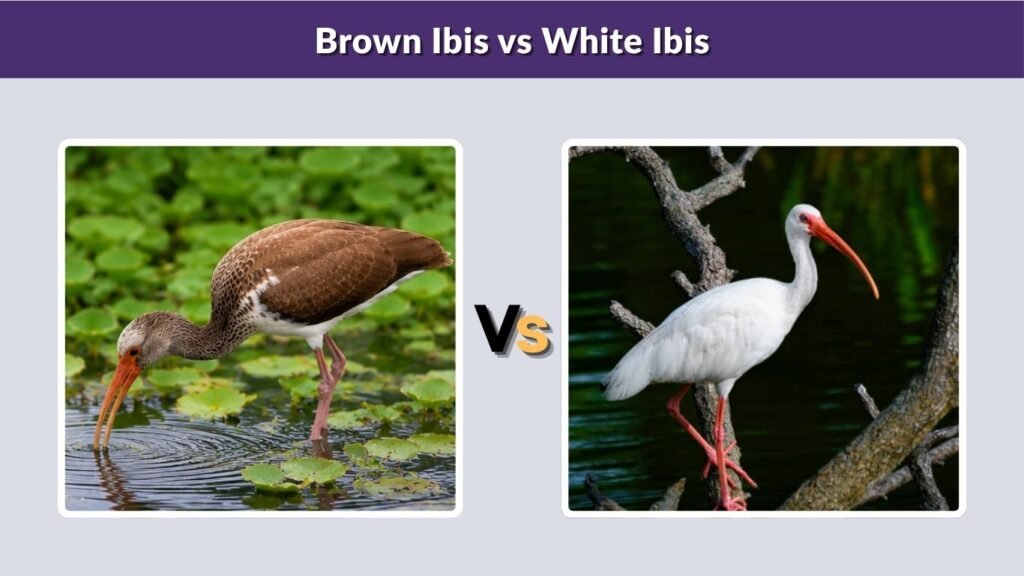
Brown juvenile and adult White Ibises can look remarkably different even though they belong to the same species.
Knowing the age-related differences prevents a great deal of identification confusion.
Brown Juvenile White Ibis
A juvenile typically has:
- Brown back and wings
- Pale or white underside
- Streaked brown neck
- Pinkish-orange bill
- Duller legs
Adult White Ibis
An adult typically has:
- Bright white body
- Black wing tips
- Reddish-pink curved bill
- Reddish-pink legs
- Reddish facial skin
Adult White Ibises are nearly completely white except for the black tips of their wings, which are particularly noticeable during flight.
When Does the Plumage Change?
The transition happens gradually rather than overnight.
An immature bird passes through a mottled stage in which both white and brown feathers are visible. This means identifying exact age from color alone can be difficult.
The important point is that brown coloration is normal in young White Ibises.
Brown Ibis vs Glossy Ibis
Not every brown or dark ibis is a juvenile White Ibis.
The Glossy Ibis (Plegadis falcinellus) is naturally dark-colored even as an adult. At a distance, especially in poor lighting, it can appear dark brown or almost black.
How to Tell Them Apart
A juvenile White Ibis generally has:
- Brown upperparts
- Noticeably pale or white underparts
- Pinkish-orange bill
- Pinkish or orange legs
A Glossy Ibis generally has:
- Dark chestnut or mahogany body
- Green, bronze, or purple iridescence
- Dark grayish curved bill
- Overall darker appearance
Glossy Ibises often show their beautiful metallic coloration most clearly when sunlight reaches their feathers.
Can a Glossy Ibis Look Brown?
Yes.
Glossy Ibis plumage contains rich chestnut and brown tones. Under dull light, the green and purple iridescence may be difficult to see, leaving the bird looking predominantly dark brown.
This is one reason photographs taken in good lighting can be helpful for identification.
What Do Brown Ibises Eat?
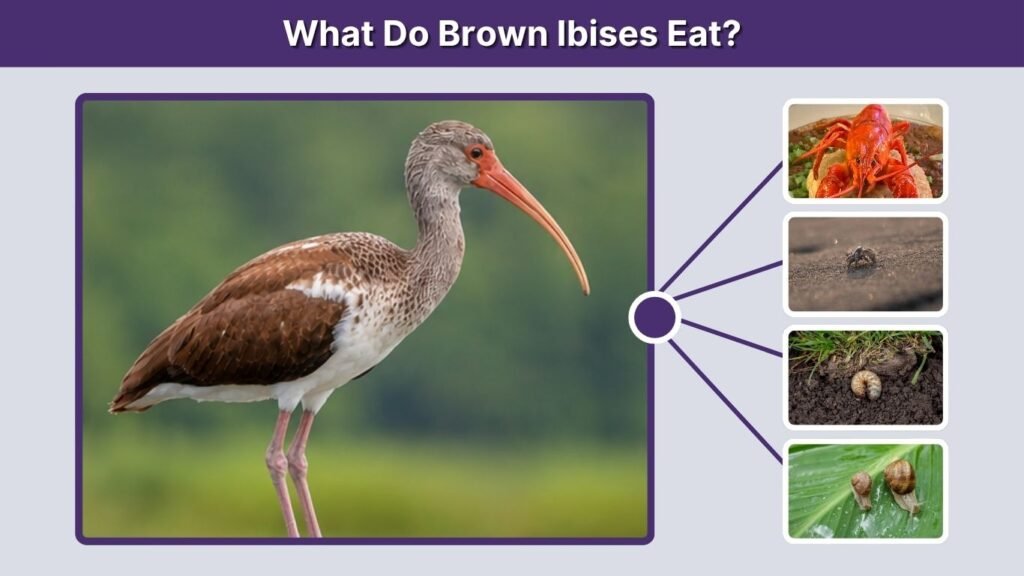
If the brown bird is a juvenile White Ibis, its diet is essentially the same general type of diet consumed by adults.
White Ibises are opportunistic feeders that search wet soil and shallow water for small animals.
Common Foods
Their diet can include:
- Crayfish
- Small crabs
- Aquatic insects
- Insect larvae
- Worms
- Snails
- Small fish
- Frogs
- Other small aquatic animals
Insects and crustaceans form an important part of the White Ibis diet.
How Does a Brown Ibis Find Food?
Ibises have long, curved bills specially suited to probing.
A bird walks through shallow water, mud, grass, or wet soil and repeatedly inserts its bill into the substrate.
Rather than depending entirely on sight, it can detect prey with its sensitive bill and quickly grab hidden animals.
Young ibises develop and practice these feeding behaviors as they become independent.
Brown Ibis Habitat

A juvenile White Ibis generally uses the same habitats as adults.
These birds thrive wherever shallow water and soft ground provide enough insects, crustaceans, and other small prey.
Common Habitats
Brown juvenile White Ibises may occur around:
- Freshwater marshes
- Mangrove swamps
- Coastal estuaries
- Mudflats
- Flooded pastures
- Ponds
- Swamps
- Wet lawns
- Parks
- Golf courses
White Ibises are strongly associated with wetland environments but can also forage in developed areas, particularly in southern Florida.
Why Do Brown Ibises Visit Lawns?
Wet lawns can contain worms, insects, and other small animals.
After rainfall, ibis flocks may move across grassy areas while probing the soil for food.
Urban and suburban landscapes can therefore provide temporary feeding grounds even though wetlands remain important natural habitat.
Baby and Juvenile Brown Ibis
Young ibises go through several stages before looking like familiar adults.
Newly hatched chicks depend completely on their parents. After leaving the nest and developing juvenile plumage, young White Ibises have a distinctly brown appearance.
What Does a Juvenile White Ibis Look Like?
The juvenile is brown above, lighter underneath, and usually has brown streaking around the neck.
Its curved bill already gives it the characteristic ibis shape even though the coloration is very different from an adult.
Why Do Juvenile Ibises Stay With Adults?
Young birds benefit from staying around experienced birds because productive feeding areas can be easier to locate in groups.
Ibises are naturally social and commonly feed in flocks.
A group can therefore contain birds representing several different stages of plumage development.
Brown Ibis Behavior
Brown juvenile ibises behave much like adult White Ibises.
They spend large amounts of time walking slowly through shallow water or grassy areas looking for prey.
Common Behaviors
You may see them:
- Probing mud with their bills
- Walking through shallow water
- Feeding beside adult ibises
- Gathering in flocks
- Flying between wetlands
- Resting or roosting in groups
When flying, White Ibises extend their necks forward and trail their legs behind their bodies.
Are Brown Ibises Dangerous?
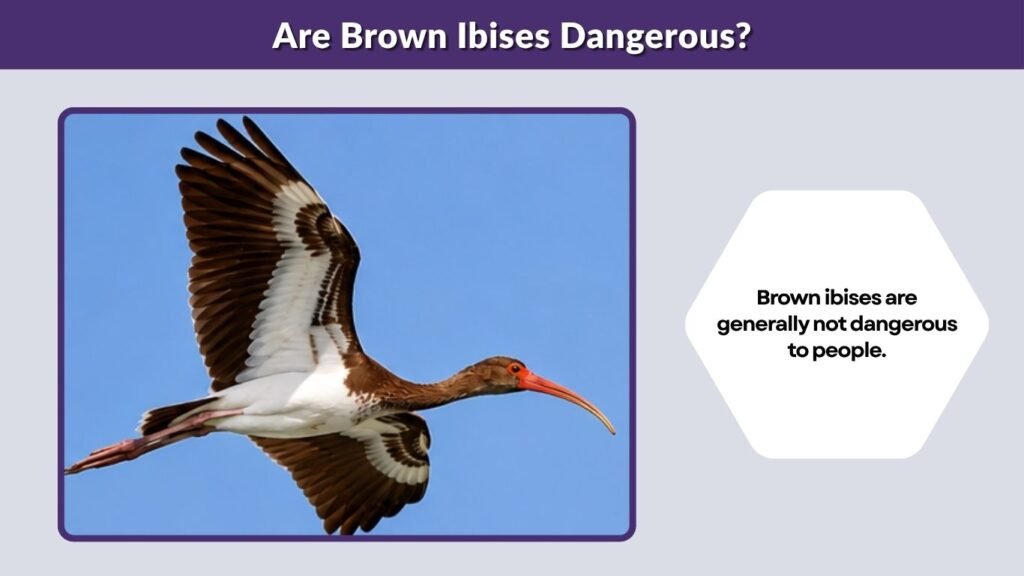
Brown ibises are generally not dangerous to people.
Juvenile White Ibises usually focus on feeding and staying with their flock rather than confronting humans.
They should still be treated as wild animals. Avoid attempting to catch, touch, or corner one.
Feeding wild ibises is also best avoided because repeated access to human food can change their natural behavior and encourage unusually close interactions with people.
Interesting Brown Ibis Facts
- “Brown ibis” is usually an informal identification rather than an official species name.
- A brown ibis in Florida is frequently a juvenile White Ibis.
- Juvenile White Ibises become progressively whiter as they mature.
- Brown-and-white individuals are often immature birds in transitional plumage.
- Adult White Ibises have black wing tips despite their mostly white bodies.
- Glossy Ibises can also appear brown in poor lighting.
- Ibises use long curved bills to probe mud for hidden prey.
- Juveniles commonly feed alongside adults.
- Wetlands are among their most important habitats.
- Florida provides excellent habitat for American White Ibises.
FAQs
What Kind of Ibis Is Brown?
In Florida and the southeastern United States, a brown ibis is commonly a juvenile American White Ibis. Glossy Ibises can also appear dark brown.
Why Are Some White Ibises Brown?
Young White Ibises naturally have brown juvenile plumage. Their feathers gradually become white as they mature.
What Is a Brown and White Ibis?
A brown-and-white ibis is often an immature White Ibis undergoing the transition from juvenile brown plumage to adult white plumage.
What Do Brown Ibises Eat?
Juvenile White Ibises eat insects, crustaceans, worms, snails, small fish, frogs, and other small animals found in shallow water and wet soil.
Are Brown Ibises Common in Florida?
Yes. Because White Ibises are widespread in Florida, brown juveniles and brown-and-white immature birds can frequently be seen alongside white adults.
