
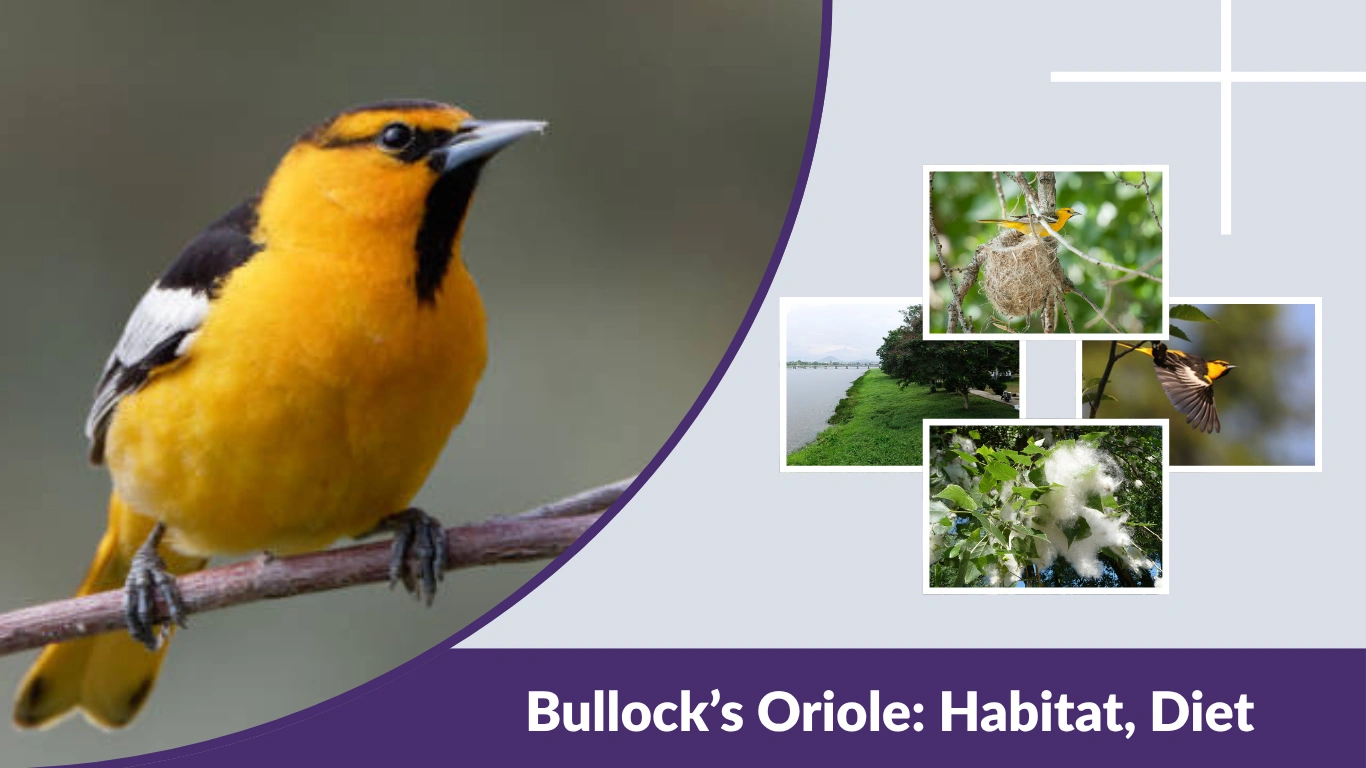
Bullock’s Oriole (Icterus bullockii) is a vibrant and eye-catching songbird commonly found in western North America. Named after English naturalist William Bullock, this species is admired for its bright orange plumage and distinctive markings. It thrives in open woodlands, riverbanks, and suburban areas, making it relatively easy to spot during the breeding season. With its melodious song and unique nesting behavior, Bullock’s Oriole is a favorite among birdwatchers and nature enthusiasts.
Bullock’s Oriole Identification
Physical Appearance
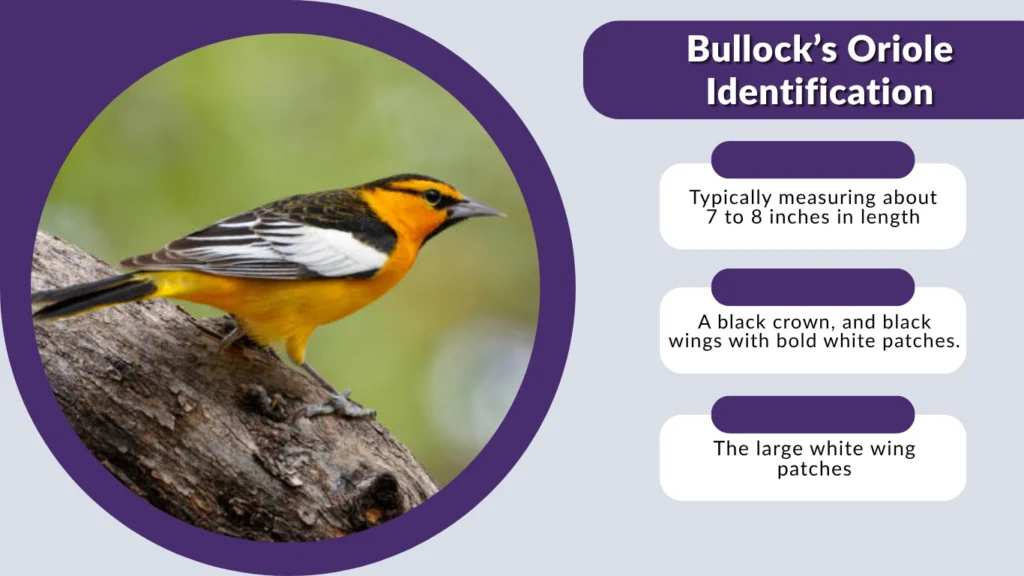
Bullock’s Oriole is a medium-sized songbird, typically measuring about 7 to 8 inches in length with a wingspan of around 9 to 12 inches. Adult males are striking, featuring bright orange underparts, a black crown, and black wings with bold white patches. Their face is orange with a distinctive black line running through the eye. Females and juveniles are more subdued, displaying grayish-yellow or pale orange tones with less contrast.
Key Identification Features
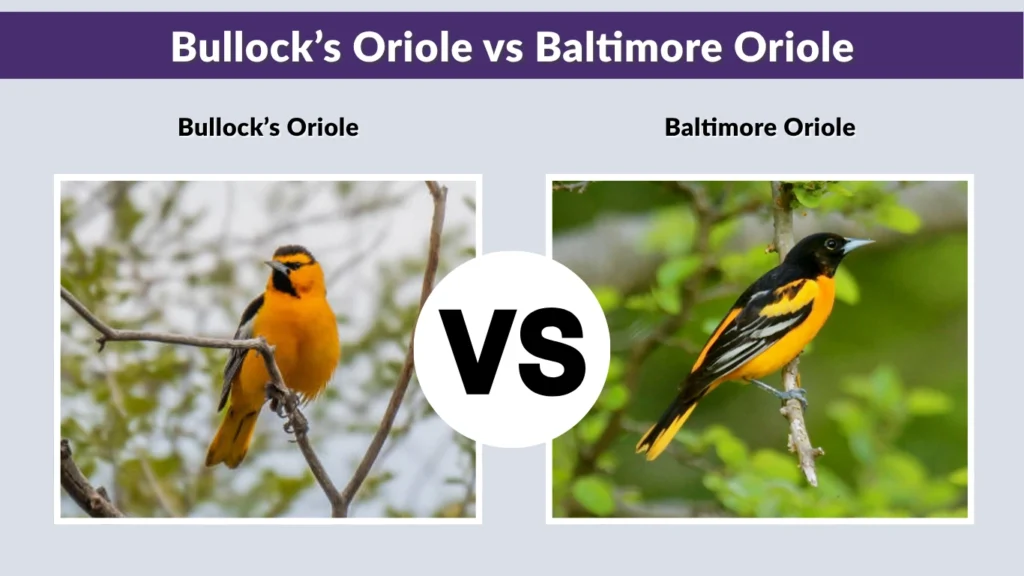
One of the most recognizable features of Bullock’s Oriole is the black eye-line that runs across its orange face. This distinguishes it from the Baltimore Oriole, which has a fully black head. The large white wing patches are also a key identification marker. Additionally, the bird’s slender body and pointed bill make it well adapted for feeding on a variety of foods.
Songs and Calls
Bullock’s Orioles produce a rich, whistling song that is often described as musical and fluid. Their song can vary but typically includes a mix of clear whistles and chattering notes. They also make sharp, scolding calls, especially when defending their territory. Listening for these sounds can be helpful in locating them among tree canopies.
Bullock’s Oriole vs Baltimore Oriole
Color Differences
Bullock’s Oriole differs from the Baltimore Oriole in its facial pattern. While both birds display orange and black coloration, the Bullock’s Oriole has an orange face with a black eye-line, whereas the Baltimore Oriole has a completely black head. This difference is one of the easiest ways to tell them apart.
Geographic Range
Another major difference lies in their geographic distribution. Bullock’s Orioles are found in western North America, while Baltimore Orioles are primarily located in the eastern and central regions. In some areas of the central United States, the ranges of these two species overlap.
Hybrid Zones
In regions where their ranges meet, Bullock’s Orioles and Baltimore Orioles can interbreed, producing hybrid offspring. These hybrids may display a mix of characteristics from both species, making identification more challenging for birdwatchers.
Bullock’s Oriole Habitat and Distribution
Preferred Habitat
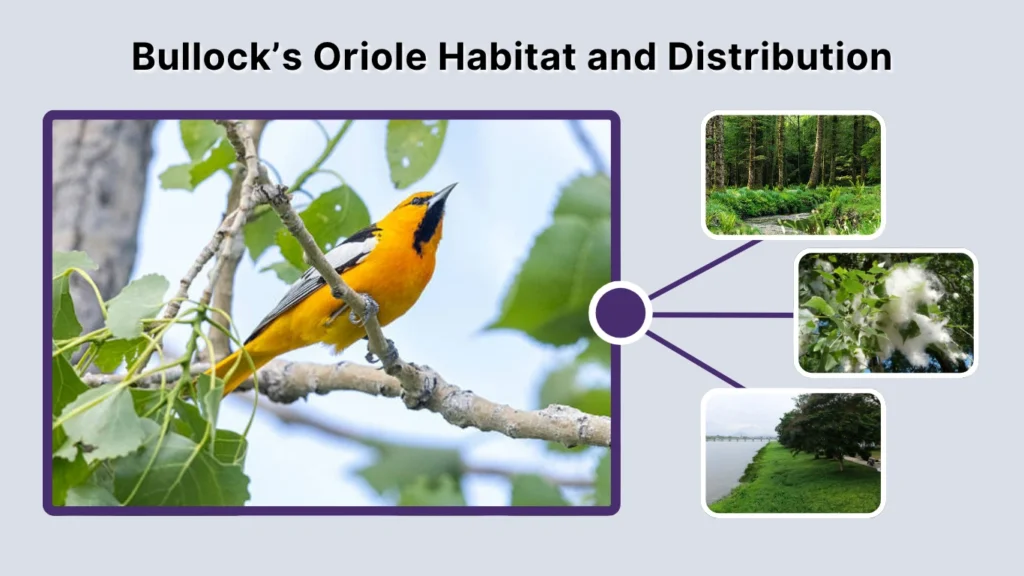
Bullock’s Orioles prefer open woodlands, especially areas with tall deciduous trees such as cottonwoods. They are commonly found along riverbanks, in parks, and in suburban neighborhoods with suitable vegetation. Access to water and abundant food sources is an important factor in their habitat selection.
Geographic Range
This species is widely distributed across the western United States and parts of southern Canada during the breeding season. In winter, Bullock’s Orioles migrate to Mexico, where they find warmer climates and plentiful food.
Seasonal Distribution
Bullock’s Orioles are migratory birds. They arrive in their breeding areas during spring, typically between April and May. By late summer or early fall, they begin migrating southward to their wintering grounds. These seasonal movements are influenced by food availability and climate conditions.
Bullock’s Oriole Diet and Feeding Behavior
Natural Diet
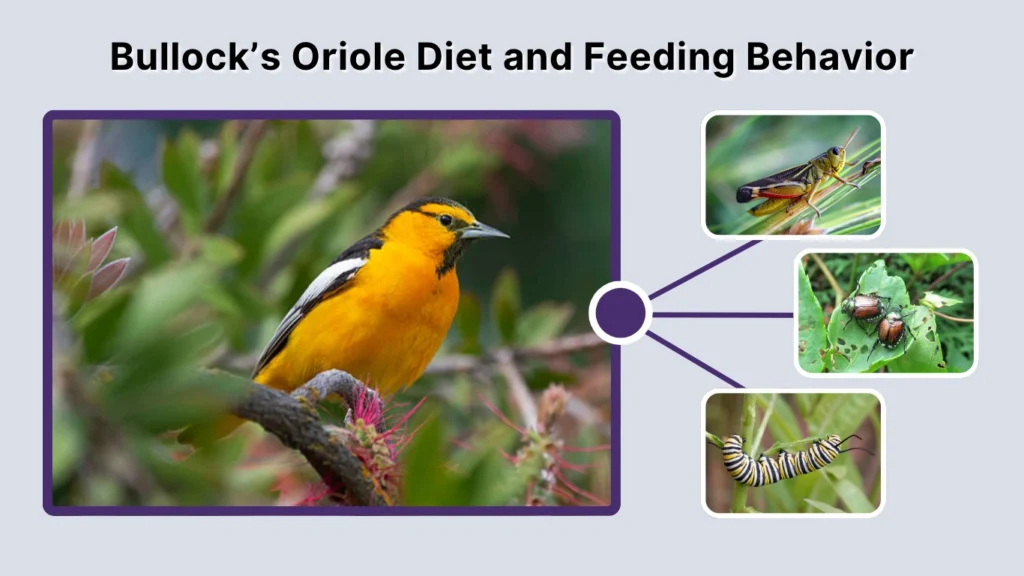
Bullock’s Orioles have a diverse diet that includes insects, fruits, and nectar. During the breeding season, they rely heavily on insects such as caterpillars, beetles, and grasshoppers, which provide the protein needed for raising their young. They also consume fruits and berries, as well as nectar from flowers.
Feeding Habits
These birds are active foragers, often seen moving through tree branches in search of food. They may hang upside down or cling to leaves while searching for insects. Their feeding behavior is agile and energetic, allowing them to access food in hard-to-reach places.
How to Attract Bullock’s Orioles
Attracting Bullock’s Orioles to your backyard is possible with the right approach. Offering orange halves, grape jelly, and nectar feeders can draw them in. Planting native trees and flowering plants also helps create a suitable environment. Providing fresh water through birdbaths can further increase the chances of attracting these colorful birds.
Bullock’s Oriole Nesting and Reproduction
Nest Structure
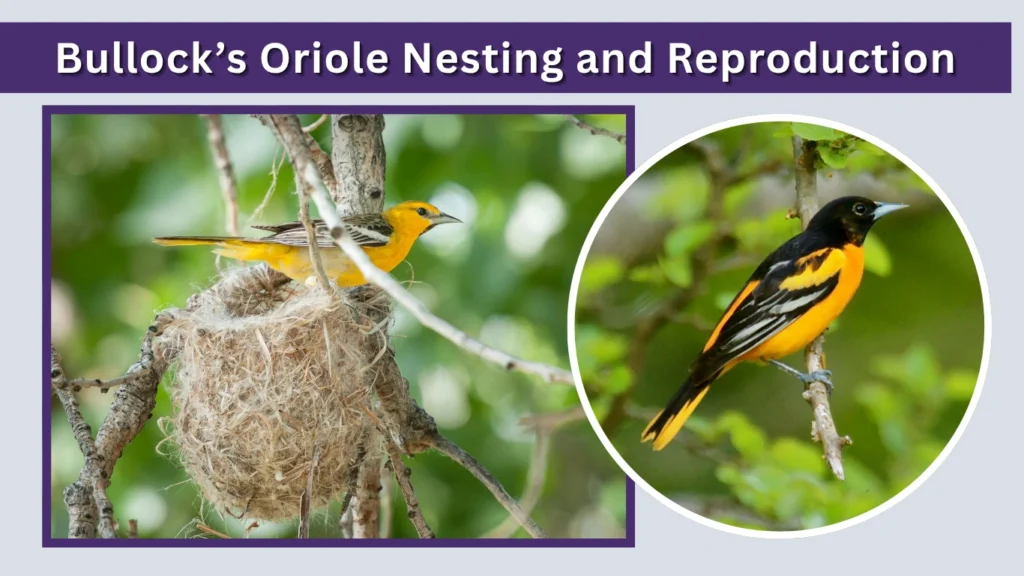
Bullock’s Oriole is well known for its intricate hanging nest, which resembles a woven pouch suspended from the outer branches of trees. The nest is carefully constructed using grasses, plant fibers, bark strips, and sometimes even human-made materials like string. This flexible yet sturdy structure helps protect the eggs from predators and environmental conditions.
Nest Placement
The nest is usually placed high in deciduous trees such as cottonwoods, willows, or shade trees. It is often attached to the ends of slender branches, which makes it difficult for predators to reach. This strategic placement also allows the nest to sway in the wind, reducing the risk of disturbance.
Breeding Season and Care
The breeding season typically occurs from late spring to early summer. The female lays around 3 to 6 eggs, which are pale with dark markings. She is primarily responsible for incubation, which lasts about two weeks. After hatching, both parents take part in feeding the chicks, providing insects and other nutritious food. The young birds grow quickly and leave the nest within a few weeks.
Bullock’s Oriole Migration Patterns
Migration Timing
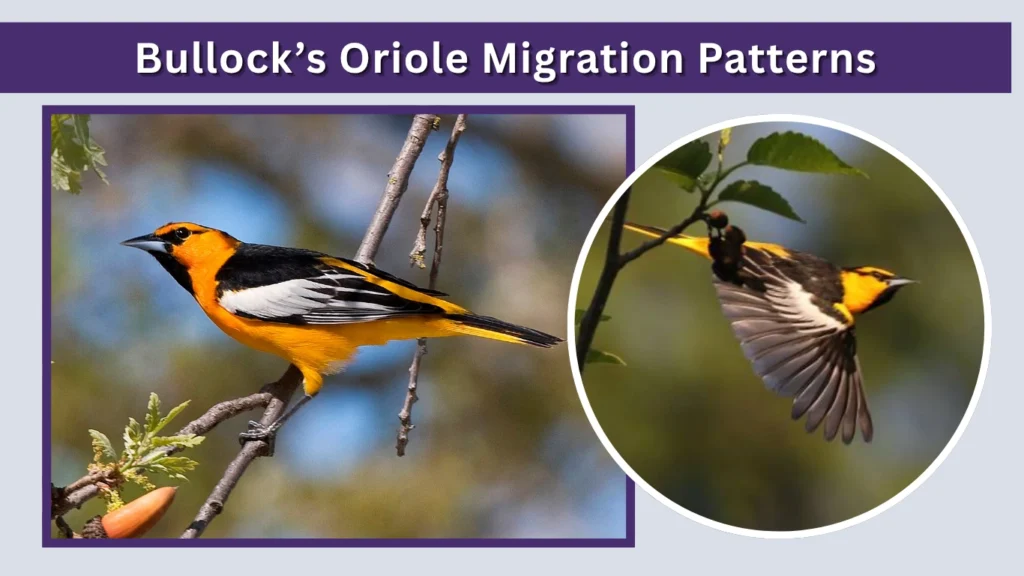
Bullock’s Orioles are long-distance migrants. They usually arrive in their breeding grounds during spring, from April to May. After the breeding season, they begin their southward migration in late summer or early fall, typically between August and September.
Migration Routes
These birds migrate between western North America and Mexico. Their migration routes often follow river valleys, forests, and areas rich in food resources. During migration, they rely on fruits and nectar to fuel their journey.
Migration Behavior
Bullock’s Orioles are strong fliers and capable of traveling long distances. They often stop along the way to rest and feed, using stopover habitats that provide essential resources. Their migration patterns are influenced by seasonal changes and food availability.
Behavior and Interesting Facts
Unique Behaviors
Bullock’s Orioles are active and social birds, often seen moving energetically through tree branches. They are known for their agility and ability to forage in various positions, including hanging upside down. During the breeding season, males can be territorial and may defend their nesting areas aggressively.
Fun Facts
Bullock’s Oriole is named after William Bullock, an English naturalist and collector. One interesting fact about this species is its ability to hybridize with the Baltimore Oriole in overlapping regions, creating birds with mixed features. Additionally, their woven nests are considered among the most impressive structures built by North American songbirds.
Conservation Status
Population Trends
Bullock’s Orioles are generally considered a species of low conservation concern, with stable populations across much of their range. However, monitoring continues to ensure that their numbers remain healthy.
Threats
Like many bird species, Bullock’s Orioles face threats from habitat loss due to urban development and deforestation. Climate change can also impact their migration patterns and food availability. The use of pesticides reduces insect populations, which are essential for feeding young birds.
Conservation Efforts
Efforts to protect Bullock’s Orioles focus on preserving natural habitats and encouraging bird-friendly practices. Planting native trees, reducing pesticide use, and maintaining green spaces can support their populations. Public awareness and conservation programs also play a key role in protecting this species.
Birdwatching Tips
Best Time to Spot Bullock’s Orioles
The best time to observe Bullock’s Orioles is during spring and early summer, when they are actively breeding and singing. Early morning is ideal, as they are most active during this time.
Where to Look
Look for Bullock’s Orioles in open woodlands, riverbanks, parks, and suburban areas with tall trees. They are especially common in regions with cottonwood trees and access to water.
Observation Tips
To spot these birds, listen for their melodic song and watch for movement high in the trees. Using binoculars can help you see their distinctive markings more clearly. Patience and quiet observation are key to successfully watching them.
FAQs
What do Bullock’s Orioles eat?
They eat a variety of foods, including insects, fruits, and nectar. Insects are especially important during the breeding season.
Where do Bullock’s Orioles live?
They are found mainly in western North America during the breeding season and migrate to Mexico for the winter.
Are Bullock’s Orioles migratory?
Yes, they are migratory birds that travel long distances between breeding and wintering areas.
How can I attract them?
You can attract them by offering orange slices, grape jelly, nectar feeders, and planting native trees and shrubs.
Conclusion
Bullock’s Oriole is a vibrant and fascinating bird that stands out for its striking appearance, musical song, and impressive nesting skills. From its distinctive identification features to its long migratory journeys, this species offers a rewarding experience for birdwatchers. Understanding its habitat, diet, and behavior not only enhances appreciation but also highlights the importance of conservation. By creating bird-friendly environments and protecting natural habitats, we can help ensure that Bullock’s Orioles continue to thrive in the wild.
