
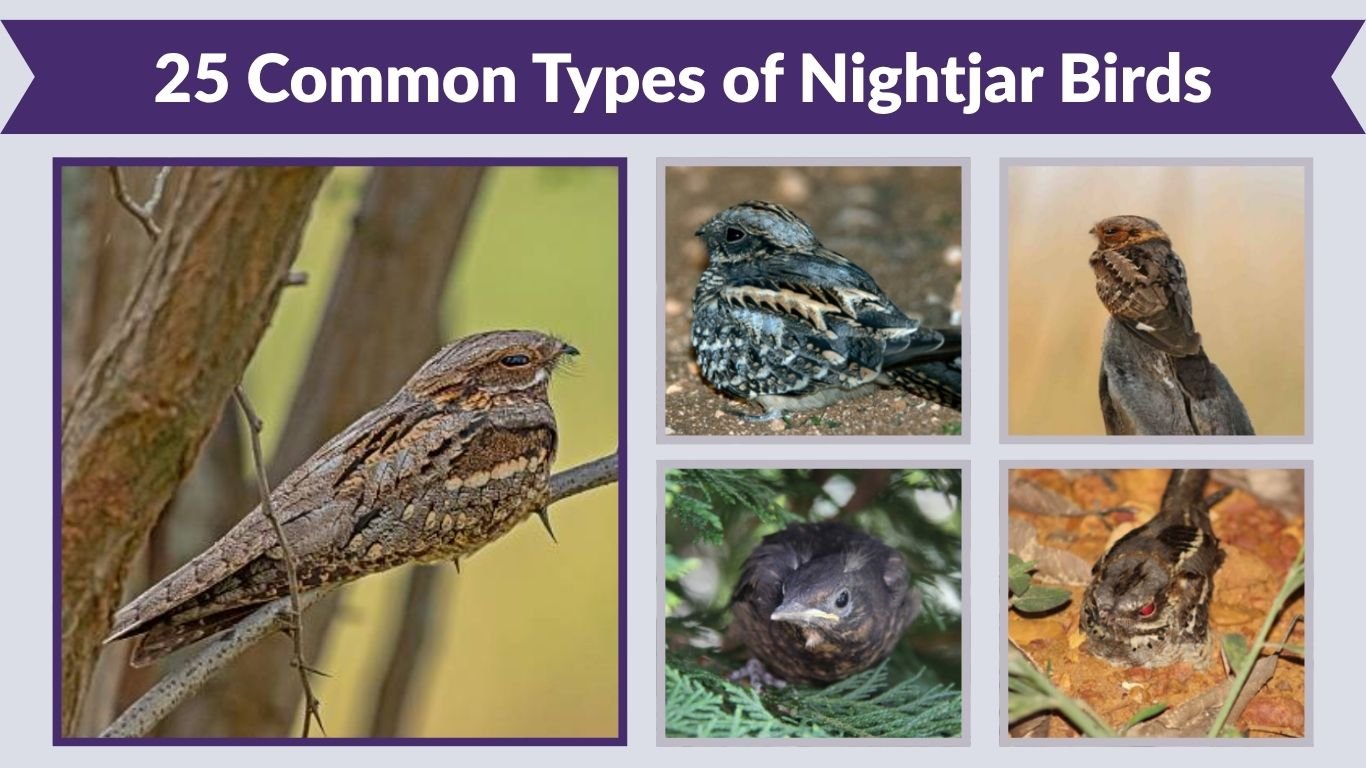
Nightjars are fascinating nocturnal birds known for their excellent camouflage, silent flight, and wide mouths adapted for catching insects. Found across forests, deserts, grasslands, and even urban areas, these birds are most active during dusk and night. Their cryptic plumage allows them to blend perfectly into their surroundings, making them difficult to spot during the day.
This guide covers 25 common types of nightjar birds, helping you identify each species based on size, habitat, behavior, and diet. From the widely seen Common Nighthawk to the uniquely adorned Pennant-winged Nightjar, this collection offers a clear and simple way to understand these mysterious nighttime birds.
1. Common Nighthawk
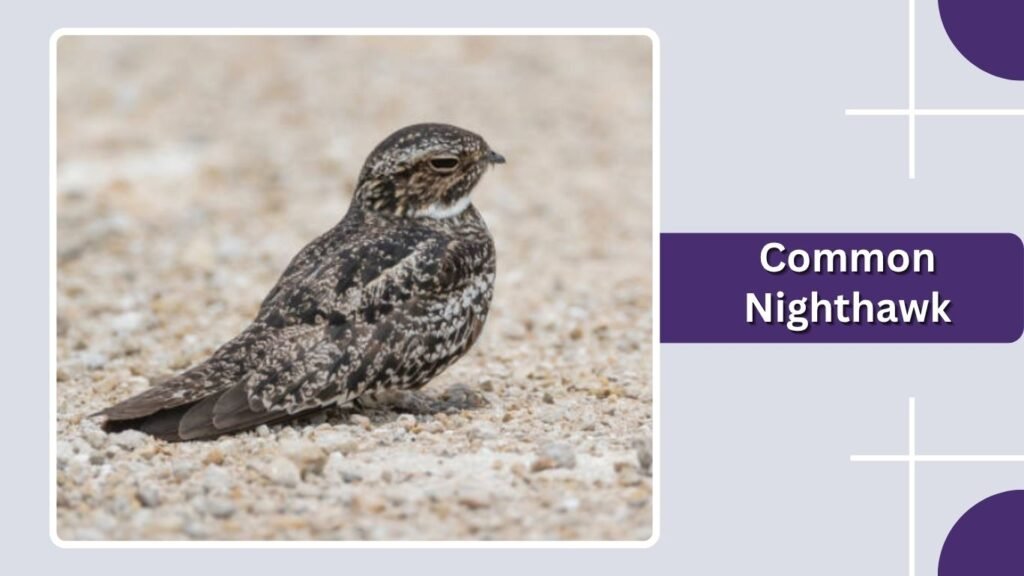
The Common Nighthawk is a widespread nightjar species found across North and South America. Despite its name, it is not a true hawk but belongs to the nightjar family, known for crepuscular (dawn and dusk) activity. It is often seen flying high in the sky during evening hours, especially in urban areas.
Identification
- Medium-sized bird with a wingspan of about 55–65 cm
- Mottled gray, brown, and black plumage for camouflage
- Long, pointed wings with a distinct white bar across each wing
- Small bill but large mouth adapted for catching insects
- Short legs and a slightly forked tail
- Erratic, bat-like flight pattern
Habitat
Common Nighthawks inhabit a wide range of environments, including open woodlands, grasslands, deserts, and urban areas. They are often seen nesting on flat gravel rooftops in cities or on bare ground in natural habitats.
Behavior
These birds are most active during dawn and dusk. They are aerial feeders, catching insects while flying. Their flight is agile and irregular, often accompanied by a booming sound produced during courtship dives. They are usually solitary or seen in small groups.
Diet
Their diet mainly consists of flying insects such as moths, beetles, and mosquitoes. They catch prey in mid-air using their wide mouths, making them highly effective insect hunters.
2. Lesser Nighthawk
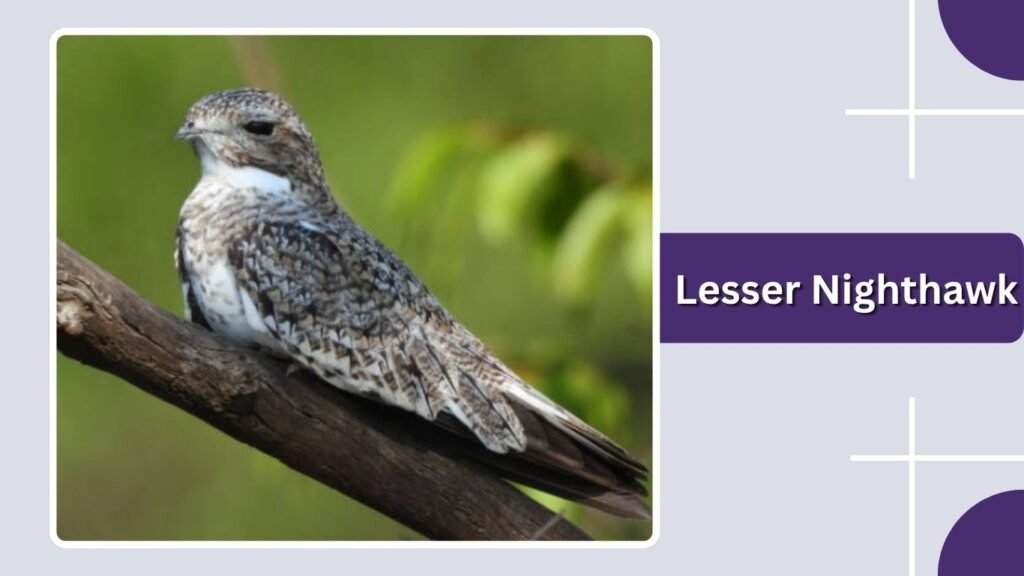
The Lesser Nighthawk is a smaller relative of the Common Nighthawk, commonly found in warmer regions of North and South America. It is especially associated with arid and semi-arid environments, where it thrives in open landscapes. Like other nightjars, it is most active during low-light conditions and is well adapted for aerial insect hunting.
Identification
- Small to medium-sized bird with a wingspan of about 50–60 cm
- Mottled gray, brown, and black plumage for excellent camouflage
- Long, narrow wings with white patches (less bold than Common Nighthawk)
- Short bill with a wide gape
- Slightly rounded tail with subtle markings
- Slimmer and more delicate appearance
Habitat
Lesser Nighthawks prefer dry, open habitats such as deserts, scrublands, grasslands, and savannas. They are also commonly found in urban areas, especially in the southwestern United States and Central America, where they nest on flat rooftops or bare ground. Their range extends into South America during non-breeding seasons.
Behavior
These birds are primarily active at dusk and dawn but may also forage during the night under moonlight. Their flight is smooth and less erratic compared to the Common Nighthawk. They often fly low over open ground or water while hunting. Lesser Nighthawks are generally quiet but may produce soft calls during breeding. They are solitary or found in small groups.
Diet
Their diet mainly consists of flying insects such as moths, beetles, ants, and flies. They catch prey in mid-air using their wide mouths. Their feeding activity is often concentrated around light sources or over water, where insects gather. Their efficient hunting style makes them important for controlling insect populations.
3. Common Pauraque
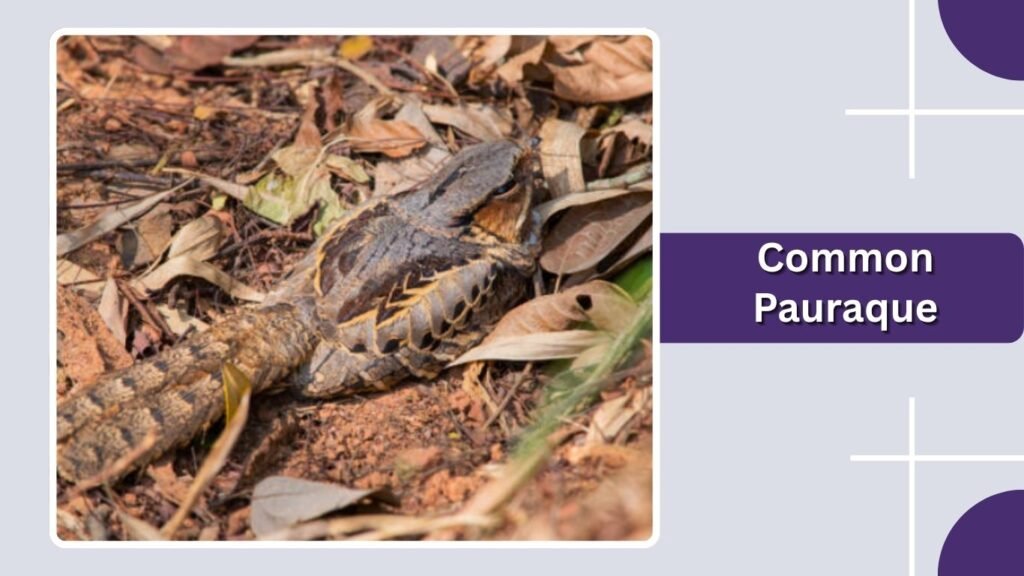
The Common Pauraque is a distinctive nightjar found in Central and South America, as well as parts of southern North America. It is known for its ground-dwelling habits and its loud, repetitive calls that are often heard at night. This species blends well into its surroundings, making it difficult to spot during the day.
Identification
- Medium-sized nightjar with a wingspan of about 50–60 cm
- Mottled brown, gray, and black plumage
- Short bill with a wide mouth
- Long tail with white tips on outer feathers (more visible in males)
- Large dark eyes adapted for night vision
- Compact body with a slightly rounded shape
Habitat
Common Pauraques are found in a variety of habitats, including forests, savannas, grasslands, and open woodlands. They prefer areas with some vegetation cover and are often seen along forest edges, trails, and roads. They are also known to inhabit rural and suburban areas.
Behavior
These birds are mostly nocturnal and spend the day resting on the ground, relying on camouflage to avoid detection. At night, they become active and may be seen perched on roads or low branches. Their call, which sounds like “pauraque,” is often repeated many times and is a key identifying feature. They are usually solitary but may be found in pairs.
Diet
The Common Pauraque feeds mainly on insects such as moths, beetles, and grasshoppers. It often catches prey from the ground or in short flights rather than long aerial chases. Its feeding behavior is less aerial compared to some other nightjars, making it unique within the group.
4. Chuck-will’s-widow
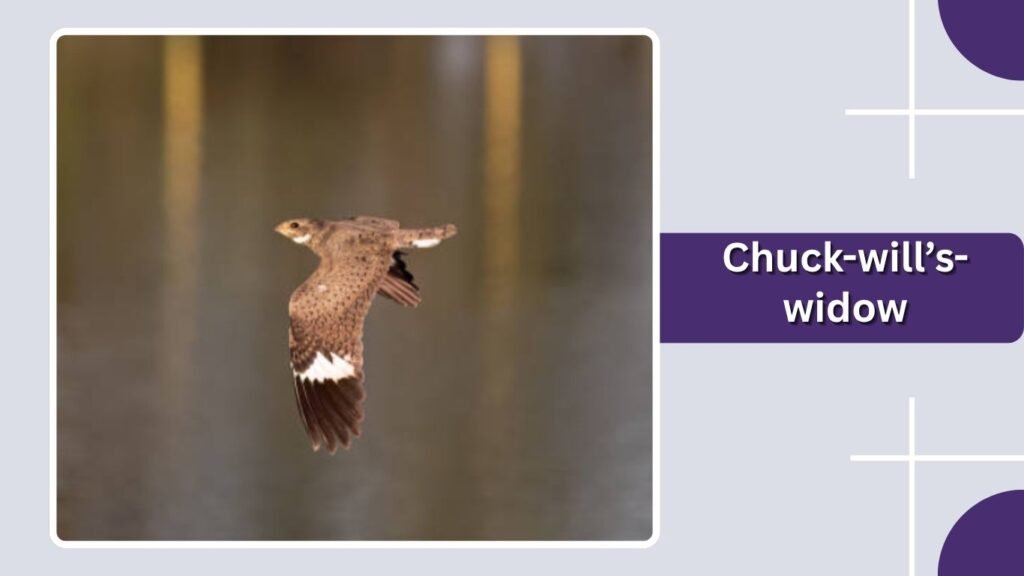
Chuck-will’s-widow is a large and secretive nightjar found mainly in the southeastern United States. It is named after its distinctive call, which sounds like it is saying its name repeatedly at night. This bird is well camouflaged and spends most of the day resting quietly on the ground or on tree branches.
Identification
- Large nightjar with a wingspan of about 55–70 cm
- Mottled brown, gray, and black plumage
- Broad head with a very wide mouth
- Long tail with pale tips (more visible in males)
- Large dark eyes adapted for night vision
- Heavier and bulkier than similar species
Habitat
Chuck-will’s-widow prefers open woodlands, pine forests, and scrubby areas. It is often found near forest edges, clearings, and sandy soils where it can blend in easily. During the breeding season, it stays in warm regions of North America and migrates south in winter.
Behavior
This species is nocturnal and becomes active after sunset. It is often heard rather than seen, with its repetitive “chuck-will’s-widow” call echoing through the night. It usually perches low or rests on the ground. Its flight is quiet and smooth as it hunts.
Diet
Its diet mainly consists of large flying insects such as moths and beetles. It catches prey in flight using its wide mouth and may also take insects from the ground or low vegetation.
5. Eastern Whip-poor-will
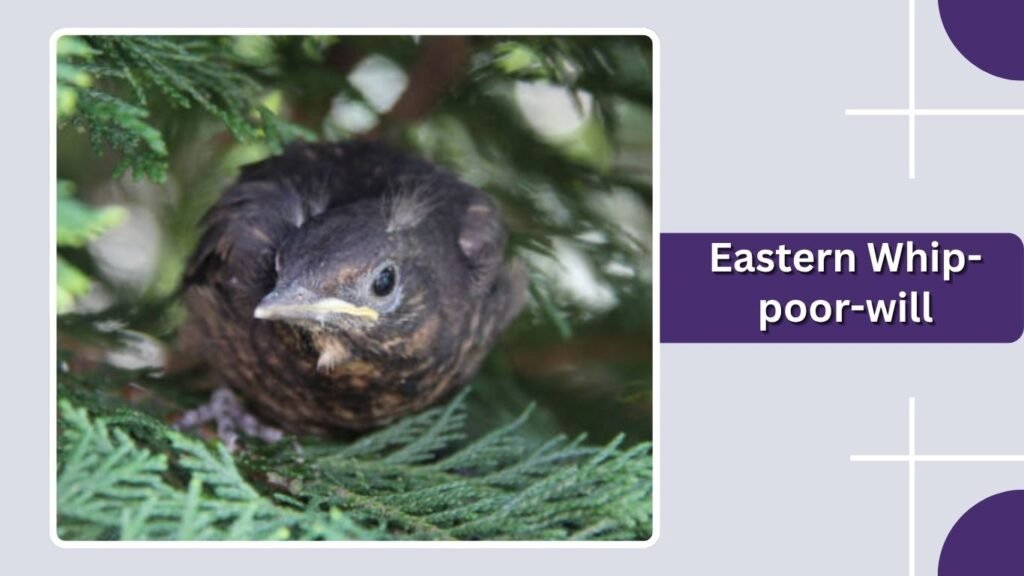
The Eastern Whip-poor-will is a well-known nightjar famous for its repetitive and haunting nighttime call. Found in eastern North America, this bird is more often heard than seen due to its excellent camouflage and nocturnal habits.
Identification
- Medium-sized nightjar with a wingspan of about 45–55 cm
- Mottled gray and brown plumage
- Short bill with a wide gape
- Long tail with white tips (prominent in males)
- Large dark eyes
- Slender body with pointed wings
Habitat
Eastern Whip-poor-wills prefer open forests, woodlands, and forest edges. They are commonly found in areas with a mix of trees and open ground. During winter, they migrate to Central America and the Caribbean.
Behavior
These birds are strictly nocturnal and are best known for their continuous “whip-poor-will” call during the night. They rest on the ground during the day, relying on camouflage. Their flight is silent and graceful, and they are often active during dusk and dawn.
Diet
Their diet mainly includes moths, beetles, and other flying insects. They catch prey in flight or pick insects from the ground. Their wide mouth allows them to efficiently capture insects in low-light conditions.
6. Mexican Whip-poor-will
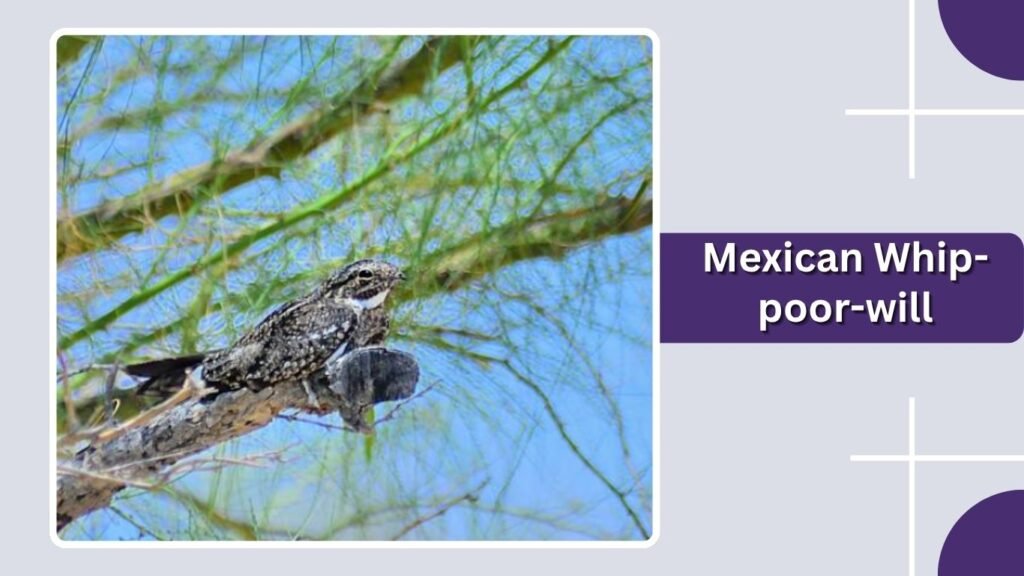
The Mexican Whip-poor-will is a closely related species to the Eastern Whip-poor-will, found in southwestern North America and parts of Mexico. It is known for its rhythmic nighttime calls and secretive lifestyle, often remaining hidden during daylight hours.
Identification
- Medium-sized nightjar with a wingspan of about 45–55 cm
- Mottled gray, brown, and black plumage
- Short bill with a wide mouth
- Long tail with white tips (more visible in males)
- Large dark eyes for night vision
- Slim body with pointed wings
Habitat
Mexican Whip-poor-wills prefer dry woodlands, desert scrub, and open forest areas. They are commonly found in mountainous regions and semi-arid landscapes. During the non-breeding season, they may move to lower elevations.
Behavior
These birds are nocturnal and are most active at dusk and during the night. Their repeated “whip-poor-will” call is a key identifying feature. They usually rest on the ground during the day, blending in with leaf litter. Their flight is silent and agile.
Diet
Their diet mainly consists of flying insects such as moths and beetles. They catch prey in mid-air using their wide gape and may also pick insects from the ground.
7. European Nightjar
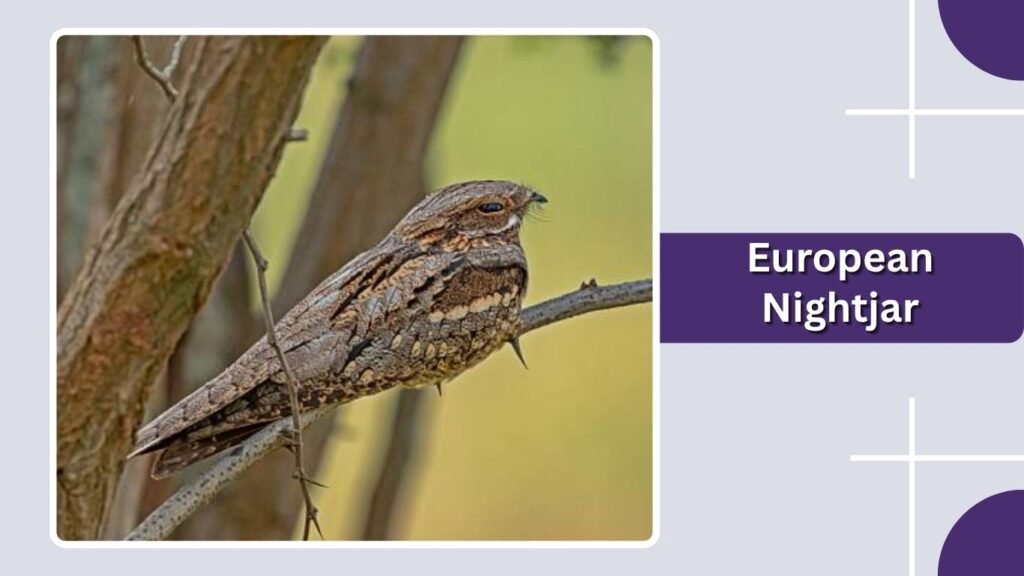
The European Nightjar is a widespread species found across Europe, Asia, and parts of Africa. It is known for its churring call and its ability to blend perfectly into its surroundings. This bird is most active during twilight hours and is rarely seen during the day.
Identification
- Medium-sized nightjar with a wingspan of about 55–65 cm
- Mottled gray, brown, and black plumage
- Long wings and tail
- Small bill with a wide mouth
- White patches on wings and tail (more visible in males)
- Large dark eyes
Habitat
European Nightjars inhabit open woodlands, heathlands, grasslands, and forest clearings. They prefer dry, sandy soils with sparse vegetation. During winter, they migrate to sub-Saharan Africa.
Behavior
These birds are crepuscular, active mainly at dusk and dawn. Their continuous “churring” sound is often heard on summer evenings. They rest on the ground or along branches during the day, relying on camouflage. Their flight is silent and moth-like.
Diet
European Nightjars feed primarily on flying insects such as moths, beetles, and flies. They catch prey in flight and often forage in open areas where insects are abundant.
8. Egyptian Nightjar
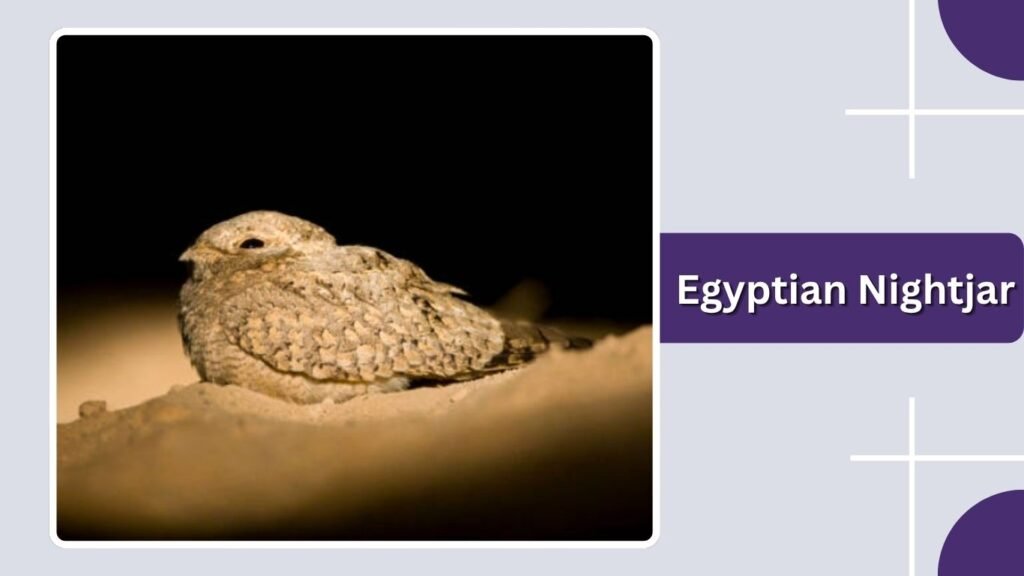
The Egyptian Nightjar is a desert-adapted species found in North Africa and the Middle East. It is well suited to life in arid environments and is known for its pale coloration, which helps it blend into sandy landscapes. This bird is rarely seen during the day due to its excellent camouflage.
Identification
- Medium-sized nightjar with a wingspan of about 55–65 cm
- Pale sandy or buff-colored plumage
- Subtle markings for camouflage in desert habitats
- Small bill with a wide gape
- Long wings and tail
- Large dark eyes
Habitat
Egyptian Nightjars inhabit deserts, semi-deserts, and dry open areas. They are often found near oases, dry riverbeds, and sparse vegetation. They prefer flat, sandy ground where they can rest and remain hidden during the day.
Behavior
These birds are nocturnal and become active after sunset. They are usually silent compared to other nightjars. During the day, they rest on the ground, relying on camouflage to avoid predators. Their flight is low and quiet as they hunt.
Diet
Their diet mainly consists of flying insects such as moths and beetles. They catch prey in flight or near the ground, often feeding in open desert areas where insects gather.
9. Red-necked Nightjar
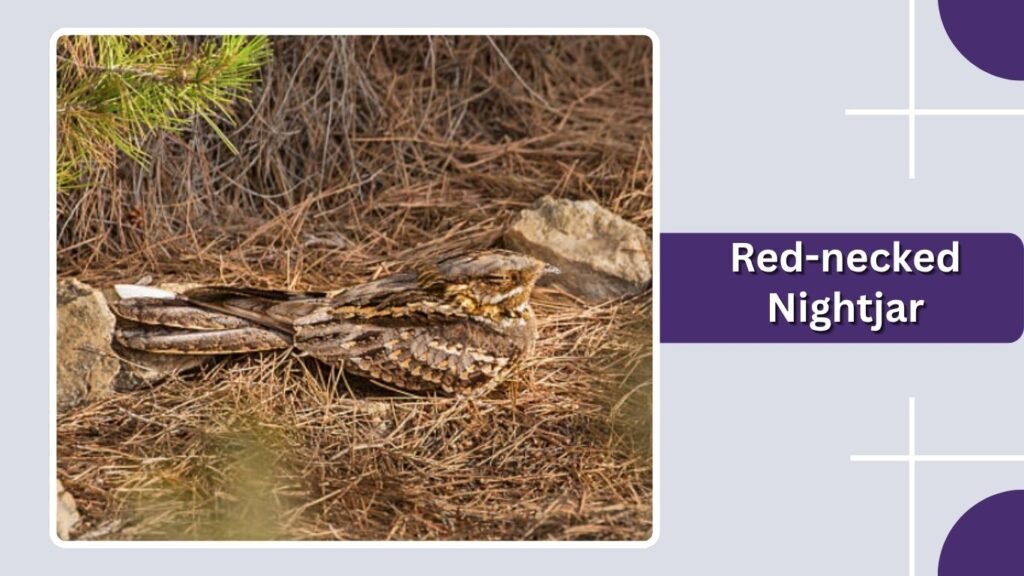
The Red-necked Nightjar is a striking species found in southern Europe and North Africa. It is known for its rich coloration and distinctive markings, especially the reddish tones around the neck area.
Identification
- Medium to large nightjar with a wingspan of about 60–70 cm
- Mottled gray, brown, and reddish plumage
- Distinct rufous (reddish) collar on the neck
- White patches on wings and tail (more visible in males)
- Short bill with a wide mouth
- Large dark eyes
Habitat
Red-necked Nightjars prefer open woodlands, scrublands, and rocky areas. They are often found in warm, dry regions with scattered vegetation. During winter, they migrate to parts of Africa.
Behavior
These birds are mostly nocturnal but may also be active at dusk. They are often seen resting on roads or open ground during the day. Their flight is silent and smooth, and they may be attracted to lights where insects gather.
Diet
Their diet mainly includes moths, beetles, and other flying insects. They catch prey in flight or near the ground, using their wide gape to capture insects efficiently.
10. Grey Nightjar
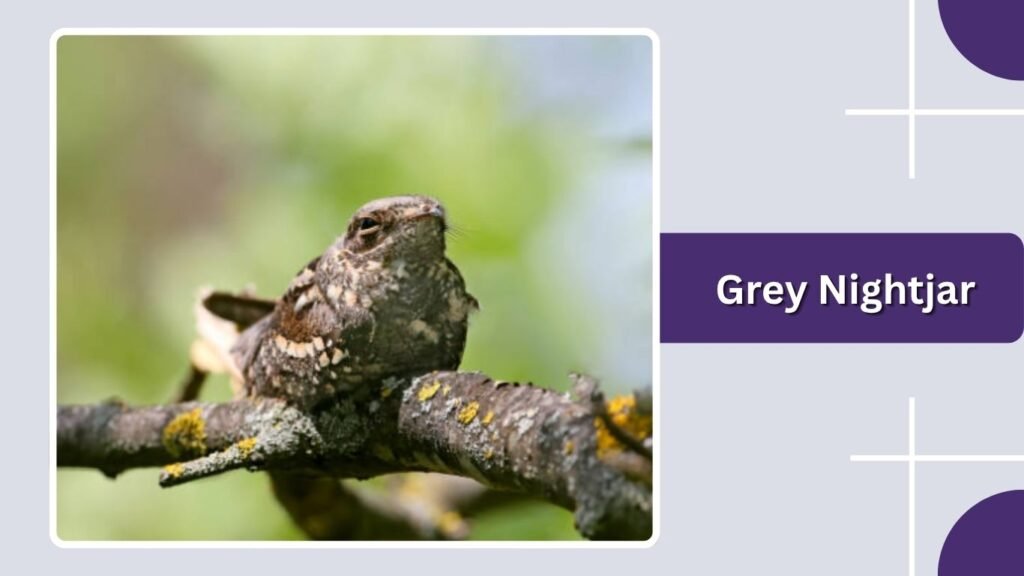
The Grey Nightjar is a small and well-camouflaged species found across South and Southeast Asia. It is commonly seen in open landscapes and urban areas, where it blends seamlessly with its surroundings. This bird is known for its quiet nature and subtle presence, often going unnoticed during the day.
Identification
- Small nightjar with a wingspan of about 45–55 cm
- Soft gray plumage with fine mottled patterns
- Short bill with a wide mouth
- Long, narrow wings
- Slightly rounded tail with faint markings
- Large dark eyes adapted for low-light vision
Habitat
Grey Nightjars inhabit a wide variety of environments, including open woodlands, grasslands, agricultural areas, and even city parks. They are often found resting on the ground, rooftops, or tree branches. Their adaptability allows them to thrive in both natural and human-modified landscapes.
Behavior
These birds are mainly crepuscular and nocturnal, becoming active at dusk and dawn. During the day, they remain motionless, relying on their excellent camouflage. Their flight is soft and silent, often low to the ground. Grey Nightjars are generally solitary and are more often heard than seen, producing soft, repetitive calls.
Diet
Their diet consists mainly of flying insects such as moths, beetles, and flies. They catch prey in mid-air using their wide gape. They may also feed around streetlights or other illuminated areas where insects gather, making them effective natural pest controllers.
11. Jungle Nightjar
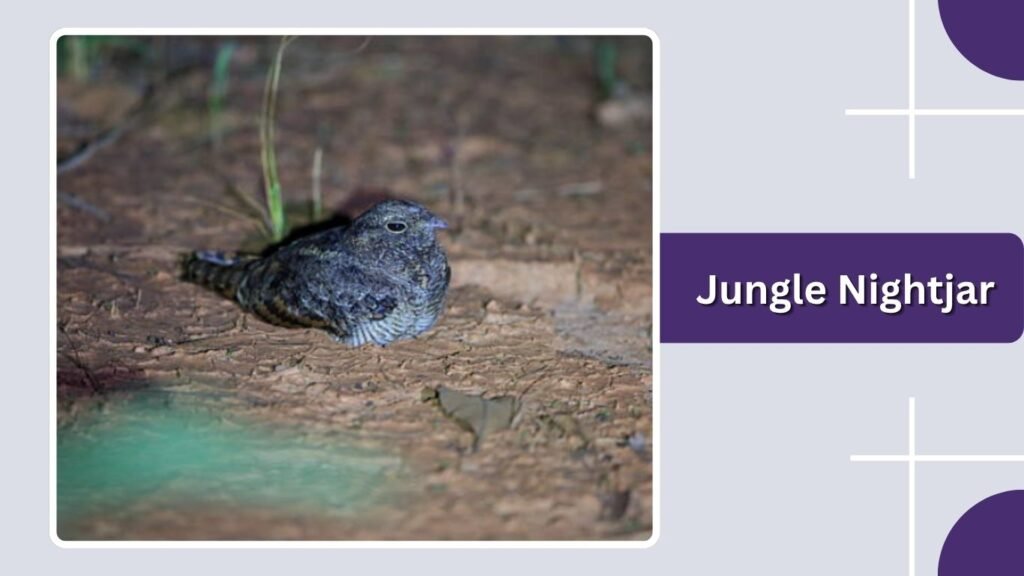
The Jungle Nightjar is a medium-sized species widely distributed across South and Southeast Asia. It is well known for its adaptability to forest edges, plantations, and even urban environments. This bird is often heard at night through its distinctive calls, especially in warmer regions.
Identification
- Medium-sized nightjar with a wingspan of about 55–65 cm
- Mottled brown, gray, and black plumage
- Short bill with a wide gape
- Long wings and tail
- White spots or patches on wings (more visible in males)
- Large dark eyes
Habitat
Jungle Nightjars are found in forests, woodland edges, plantations, and open country. They are also common in urban and suburban areas, especially where there are trees and open spaces. They prefer areas with a mix of vegetation and open ground for feeding.
Behavior
These birds are primarily nocturnal and are often active at dusk and during the night. They rest on the ground or low branches during the day, relying on camouflage. Their calls are loud and repetitive, often heard in the evening. Their flight is silent and smooth, similar to other nightjars.
Diet
Jungle Nightjars feed mainly on insects such as moths, beetles, and grasshoppers. They catch prey in flight or pick insects from the ground. Their wide mouth allows them to capture insects efficiently, even in low-light conditions.
12. Large-tailed Nightjar
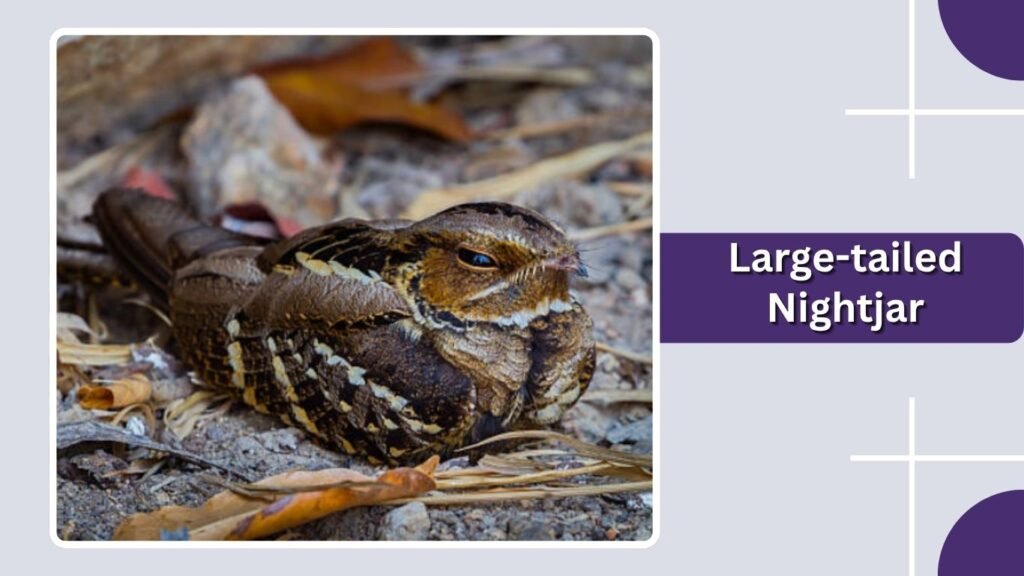
The Large-tailed Nightjar is a widespread and adaptable species found across South and Southeast Asia. It is one of the most commonly seen nightjars in its range, often spotted resting on roads, rooftops, or open ground. Its name comes from its relatively long tail, which helps distinguish it from similar species.
Identification
- Medium-sized nightjar with a wingspan of about 55–65 cm
- Mottled brown, gray, and black plumage
- Long tail with faint barring
- Short bill with a wide gape
- Long wings with subtle white markings (more visible in males)
- Large dark eyes
Habitat
Large-tailed Nightjars are highly adaptable and found in forests, plantations, grasslands, and urban areas. They are especially common in open spaces with scattered trees and are often seen near human settlements.
Behavior
These birds are mostly nocturnal and become active at dusk. During the day, they rest on the ground or flat surfaces, relying on camouflage. They are often seen sitting on roads at night, taking advantage of insects attracted to light. Their flight is silent and low.
Diet
Their diet mainly consists of flying insects such as moths, beetles, and grasshoppers. They catch prey in flight or from the ground, using their wide mouth to capture insects efficiently.
13. Indian Nightjar
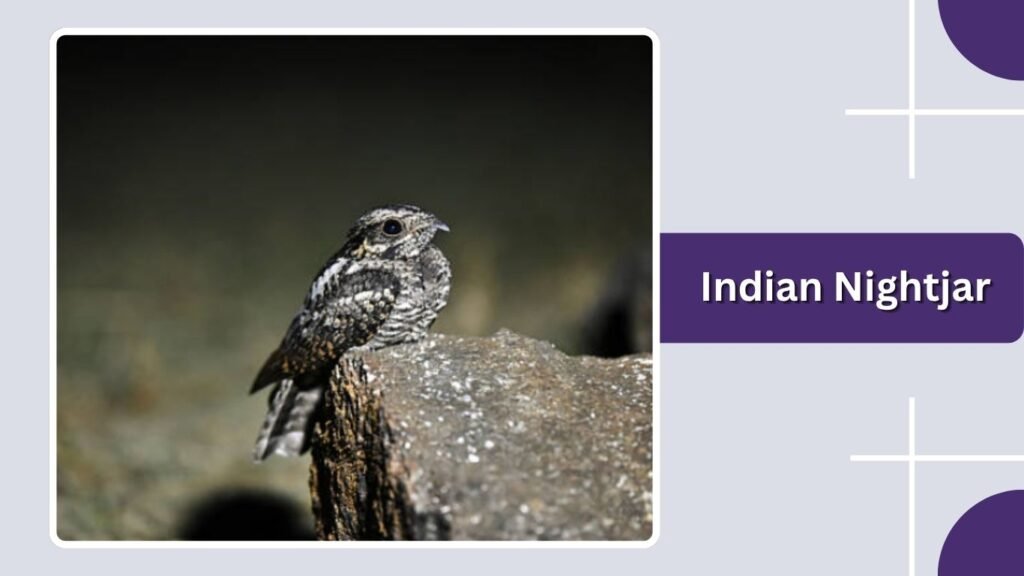
The Indian Nightjar is a small and elusive species found across the Indian subcontinent. It is well known for its repetitive, rhythmic calls that are often heard at night. Despite being common in some areas, it is rarely seen due to its excellent camouflage.
Identification
- Small nightjar with a wingspan of about 40–50 cm
- Mottled gray, brown, and black plumage
- Short bill with a wide gape
- Long wings and relatively short tail
- White patches on wings (more visible in males)
- Large dark eyes
Habitat
Indian Nightjars are found in open woodlands, scrublands, grasslands, and agricultural areas. They prefer dry habitats with sparse vegetation and are often seen resting on the ground or low branches.
Behavior
These birds are nocturnal and are most active at night. Their repetitive calls are a key identifying feature. During the day, they remain still and hidden, blending into their surroundings. Their flight is quiet and smooth as they hunt insects.
Diet
Their diet mainly includes moths, beetles, and other flying insects. They catch prey in flight or pick insects from the ground. Their feeding behavior is closely tied to areas where insects are abundant.
14. Sykes’s Nightjar
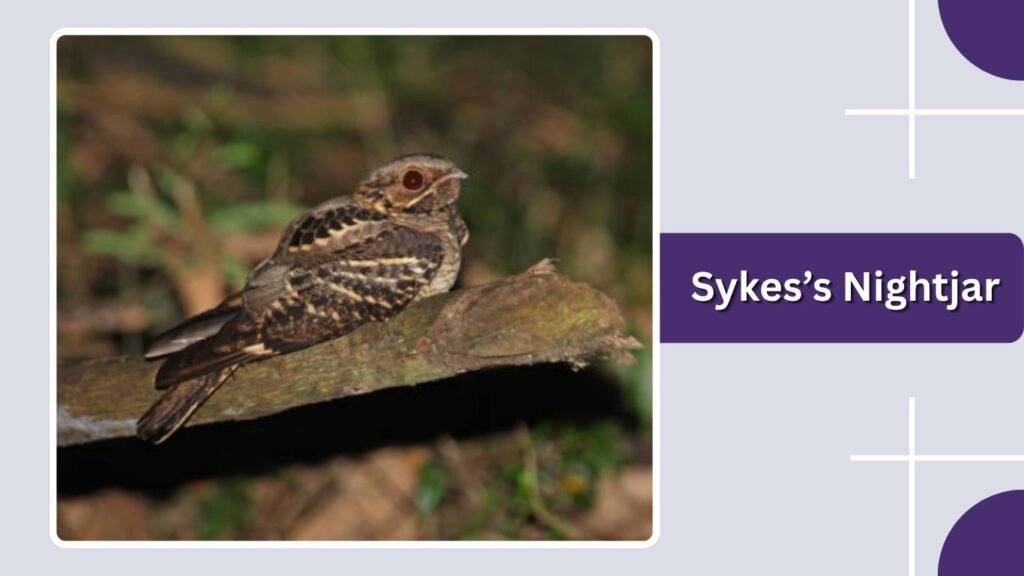
Sykes’s Nightjar is a desert-adapted species found in parts of South Asia and the Middle East. It is well suited to dry, open landscapes and is often difficult to spot due to its excellent camouflage and quiet behavior.
Identification
- Medium-sized nightjar with a wingspan of about 50–60 cm
- Pale sandy-brown plumage adapted to desert environments
- Subtle mottled patterns for camouflage
- Short bill with a wide gape
- Long wings and tail
- Large dark eyes
Habitat
Sykes’s Nightjars are typically found in arid and semi-arid regions, including deserts, scrublands, and dry plains. They prefer open ground with sparse vegetation and are often associated with sandy or rocky terrain.
Behavior
These birds are mostly nocturnal and are active after sunset. During the day, they rest on the ground, blending perfectly with their surroundings. Their flight is low and silent, and they are generally quiet compared to other nightjars.
Diet
Their diet mainly consists of flying insects such as moths and beetles. They catch prey in flight or near the ground, often feeding in open desert areas where insects are available.
15. Savanna Nightjar
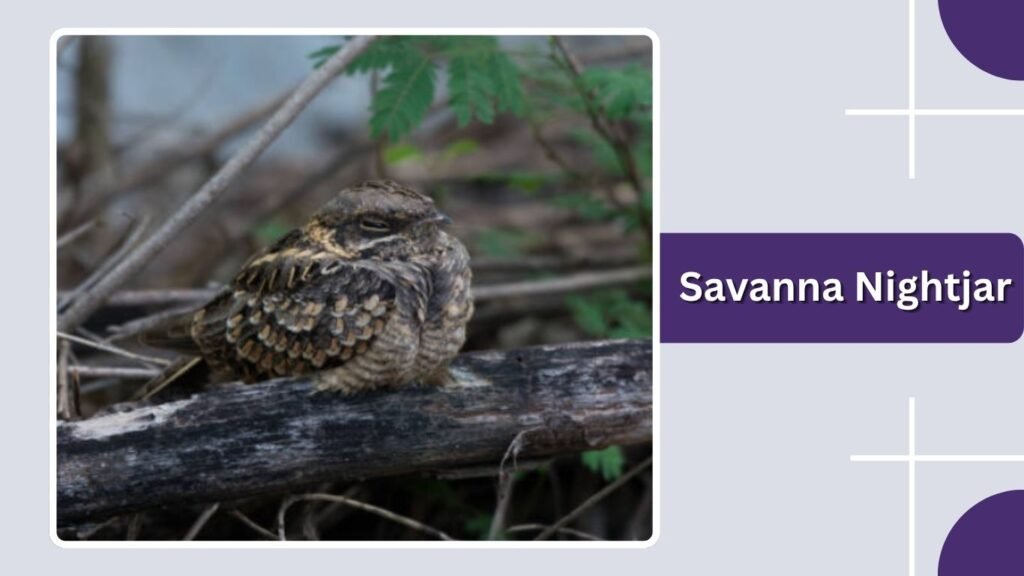
The Savanna Nightjar is a widely distributed species found across Asia, especially in open landscapes and urban environments. It is one of the most adaptable nightjars and is commonly seen in cities, fields, and grasslands.
Identification
- Medium-sized nightjar with a wingspan of about 55–65 cm
- Mottled gray, brown, and black plumage
- Short bill with a wide mouth
- Long wings and tail
- Subtle white markings on wings (more visible in males)
- Large dark eyes
Habitat
Savanna Nightjars inhabit open areas such as grasslands, farmlands, scrublands, and urban spaces. They are often seen resting on rooftops, roads, or open ground. Their adaptability allows them to thrive in both natural and human-dominated environments.
Behavior
These birds are nocturnal and become active at dusk. They are often seen flying around streetlights where insects gather. Their flight is smooth and silent, and they are frequently heard calling at night. They are usually solitary or found in pairs.
Diet
Their diet mainly consists of insects such as moths, beetles, and flies. They catch prey in flight and often take advantage of artificial lights that attract insects, making them effective insect hunters.
16. Fiery-necked Nightjar
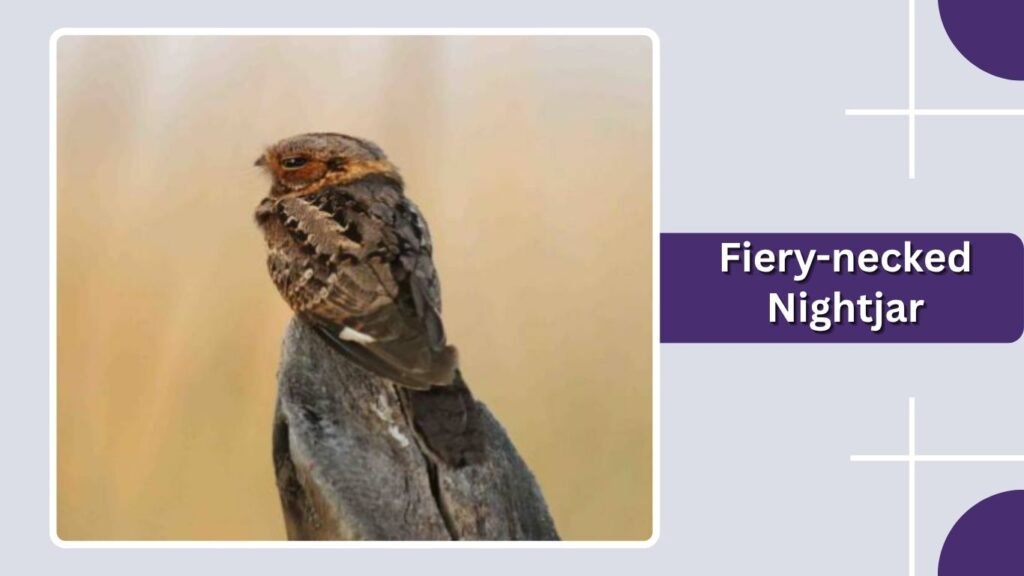
The Fiery-necked Nightjar is a striking species found across sub-Saharan Africa, known for its distinctive reddish collar on the back of its neck. It is one of the most commonly heard nightjars in its range, with a loud and repetitive call that echoes through the night.
Identification
- Medium-sized nightjar with a wingspan of about 55–65 cm
- Mottled gray, brown, and black plumage
- Distinct reddish (fiery) collar on the nape
- Short bill with a wide gape
- Long wings and tail
- Large dark eyes
Habitat
Fiery-necked Nightjars inhabit a variety of environments, including woodlands, savannas, scrublands, and forest edges. They are also found in gardens and rural areas where there is sufficient cover and insect availability.
Behavior
These birds are nocturnal and are best known for their loud, repetitive calls heard during the night. During the day, they rest on the ground or low branches, relying on camouflage. Their flight is smooth and silent, and they are often active at dusk.
Diet
Their diet mainly consists of flying insects such as moths, beetles, and flies. They catch prey in flight and may also feed near lights where insects gather.
17. Rufous-cheeked Nightjar
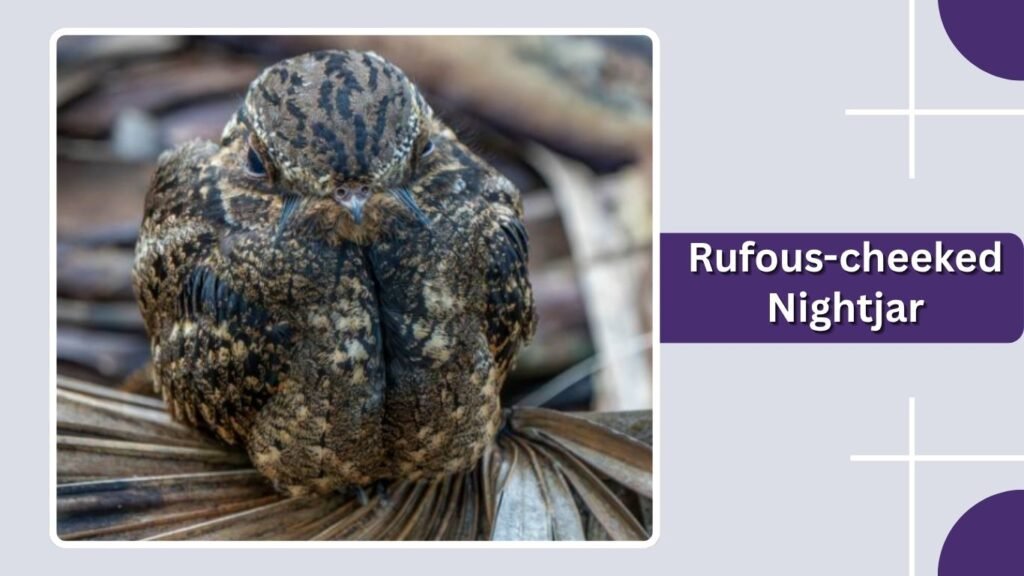
The Rufous-cheeked Nightjar is a small African species known for its warm-toned plumage and distinctive facial markings. It is commonly found in dry, open habitats and is well adapted to life in semi-arid environments.
Identification
- Small to medium nightjar with a wingspan of about 45–55 cm
- Mottled gray and brown plumage
- Distinct rufous (reddish) patch on the cheek
- Short bill with a wide gape
- Long wings and relatively short tail
- Large dark eyes
Habitat
Rufous-cheeked Nightjars are found in savannas, scrublands, and dry open areas across Africa. They prefer regions with sparse vegetation and open ground where they can easily rest and hunt.
Behavior
These birds are mostly nocturnal and are active after sunset. During the day, they rest on the ground, blending into their surroundings. They are generally solitary and have a soft, repetitive call that can be heard at night.
Diet
Their diet mainly includes insects such as moths, beetles, and grasshoppers. They catch prey in flight or from the ground, using their wide mouth to capture insects efficiently.
18. Freckled Nightjar
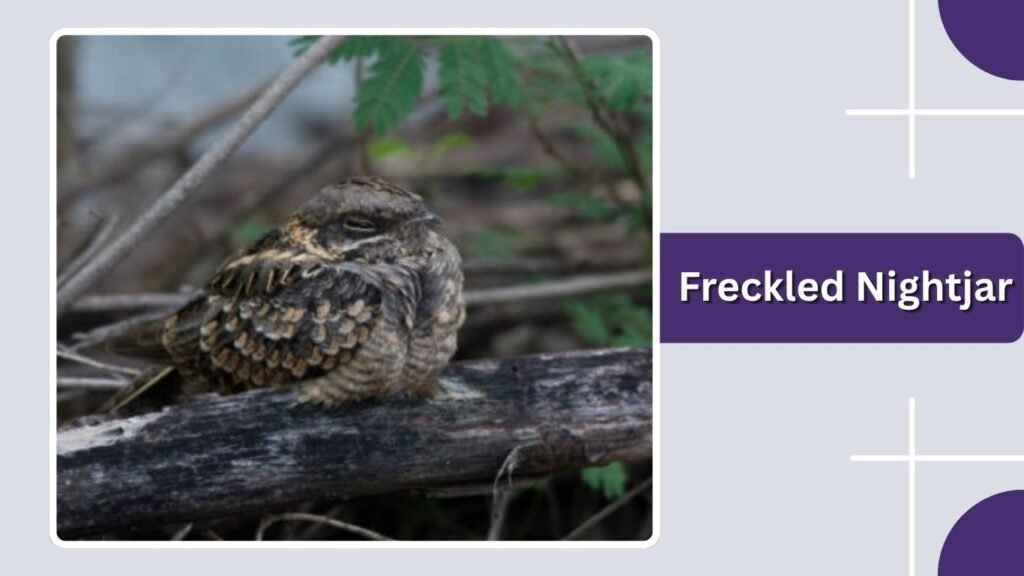
The Freckled Nightjar is a unique and well-camouflaged species found in rocky regions of Africa. It is specially adapted to blend into stone-covered landscapes, making it extremely difficult to spot during the day. Its appearance and behavior are closely tied to rugged, dry habitats.
Identification
- Medium-sized nightjar with a wingspan of about 50–60 cm
- Gray, brown, and black plumage with a heavily “freckled” pattern
- Short bill with a wide gape
- Large dark eyes
- Rounded wings and short tail
- Overall stony, rock-like appearance
Habitat
Freckled Nightjars prefer rocky hillsides, cliffs, and stony outcrops in dry regions. They are commonly found in areas with scattered rocks and minimal vegetation. These habitats provide excellent camouflage and protection from predators.
Behavior
These birds are mostly nocturnal and become active after sunset. During the day, they rest motionless on rocks, blending perfectly with their surroundings. Their flight is low and quiet, and they are often heard before they are seen. They are generally solitary and territorial.
Diet
Their diet mainly consists of insects such as moths, beetles, and termites. They catch prey in flight or near the ground, often foraging in open rocky areas where insects are active.
19. Long-tailed Nightjar
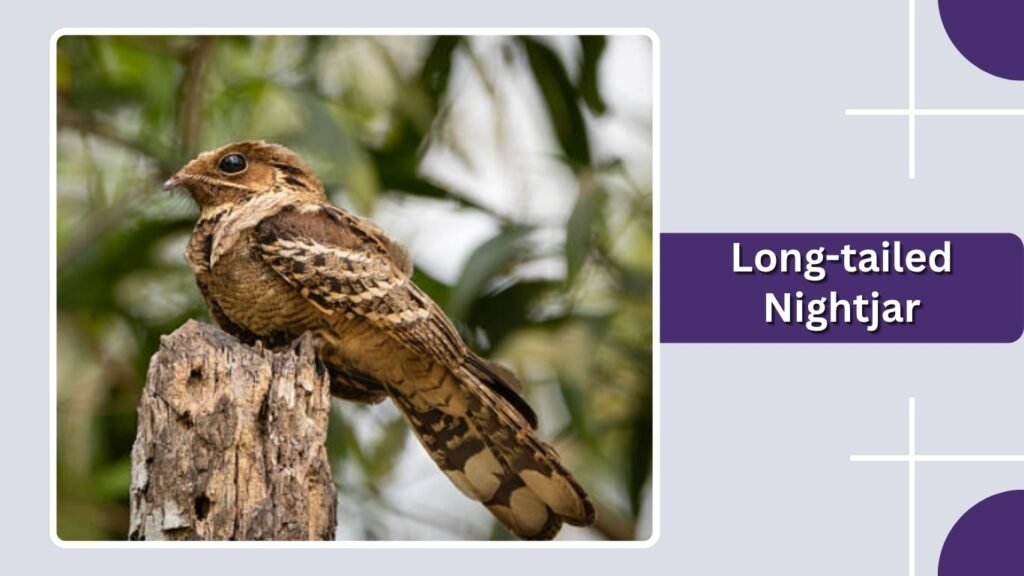
The Long-tailed Nightjar is a striking African species known for its unusually long tail feathers, especially in males. It is commonly found in savannas and open woodlands and is often heard at night through its soft calls.
Identification
- Medium-sized nightjar with a wingspan of about 55–65 cm
- Mottled brown and gray plumage
- Very long tail feathers (especially in males)
- Short bill with a wide gape
- Long wings and slender body
- Large dark eyes
Habitat
Long-tailed Nightjars inhabit open savannas, grasslands, and woodland edges across Africa. They prefer areas with scattered trees and open ground for feeding. They are often found near water sources where insects are abundant.
Behavior
These birds are nocturnal and are active mainly at dusk and during the night. During the day, they rest on the ground or low branches, relying on camouflage. Their flight is graceful and silent, and males may display their long tails during courtship.
Diet
Their diet mainly consists of flying insects such as moths, beetles, and flies. They catch prey in mid-air or pick insects from the ground. Their feeding activity is often concentrated in areas with high insect density.
20. White-throated Nightjar
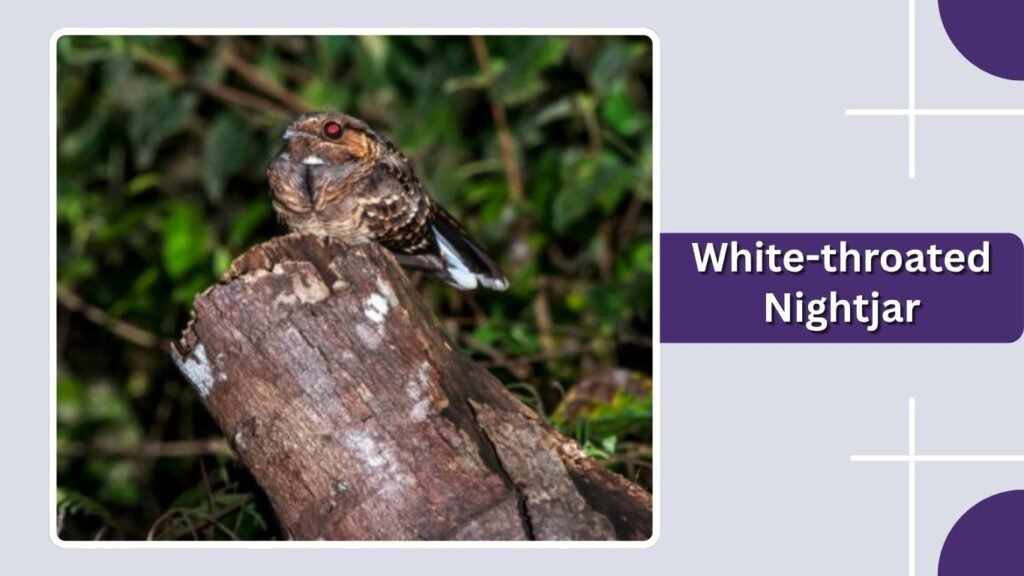
The White-throated Nightjar is a medium-sized species found across parts of Africa, known for its distinctive throat marking and well-camouflaged plumage. Like many nightjars, it is more often heard than seen, especially during quiet nights in open landscapes.
Identification
- Medium-sized nightjar with a wingspan of about 50–60 cm
- Mottled gray, brown, and black plumage
- Distinct white patch on the throat
- Short bill with a wide gape
- Long wings and tail
- Large dark eyes
Habitat
White-throated Nightjars are typically found in savannas, scrublands, and open woodlands. They prefer dry habitats with sparse vegetation and open ground, which helps them blend in during the day.
Behavior
These birds are nocturnal and become active after sunset. During the day, they rest on the ground or low branches, relying on camouflage. Their calls are soft but repetitive, often heard during the night. They are usually solitary.
Diet
Their diet mainly consists of flying insects such as moths and beetles. They catch prey in flight or near the ground, using their wide mouth to capture insects efficiently.
21. Standard-winged Nightjar
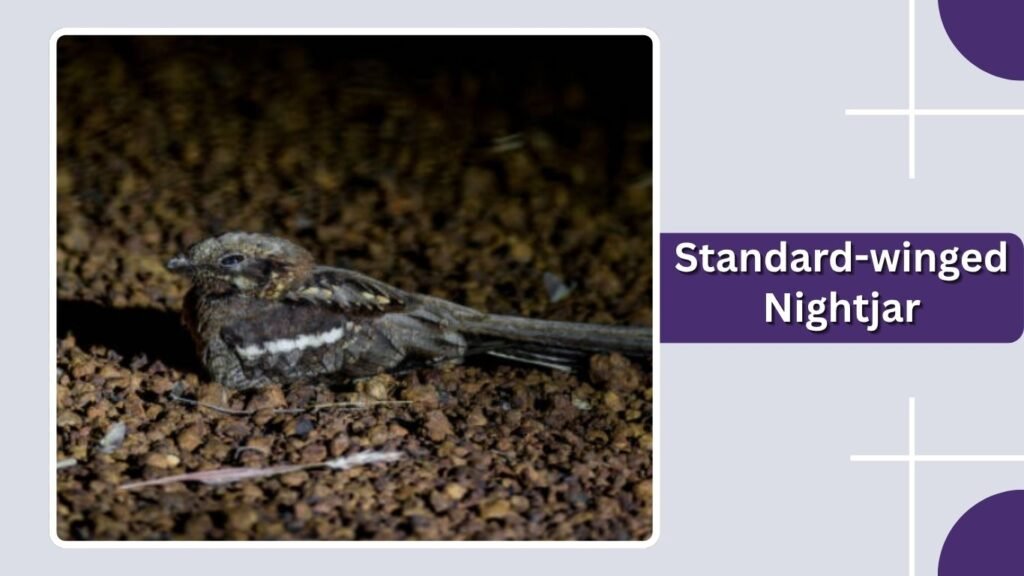
The Standard-winged Nightjar is one of the most extraordinary nightjar species, famous for the male’s long wing feathers during the breeding season. These feathers extend like banners and are used in display flights.
Identification
- Medium-sized nightjar with a wingspan of about 55–65 cm
- Mottled brown and gray plumage
- Males have extremely long wing “standards” (decorative feathers)
- Short bill with a wide gape
- Long wings and tail
- Large dark eyes
Habitat
Standard-winged Nightjars are found in savannas and grasslands across Africa. They prefer open areas where they can perform display flights and hunt insects.
Behavior
These birds are nocturnal and become active at dusk. Males perform spectacular display flights using their long wing feathers to attract mates. During the day, they rest on the ground, blending into their surroundings. They are generally solitary outside the breeding season.
Diet
Their diet mainly includes flying insects such as moths and beetles. They catch prey in flight, often feeding in open areas where insects are abundant.
22. Lyre-tailed Nightjar
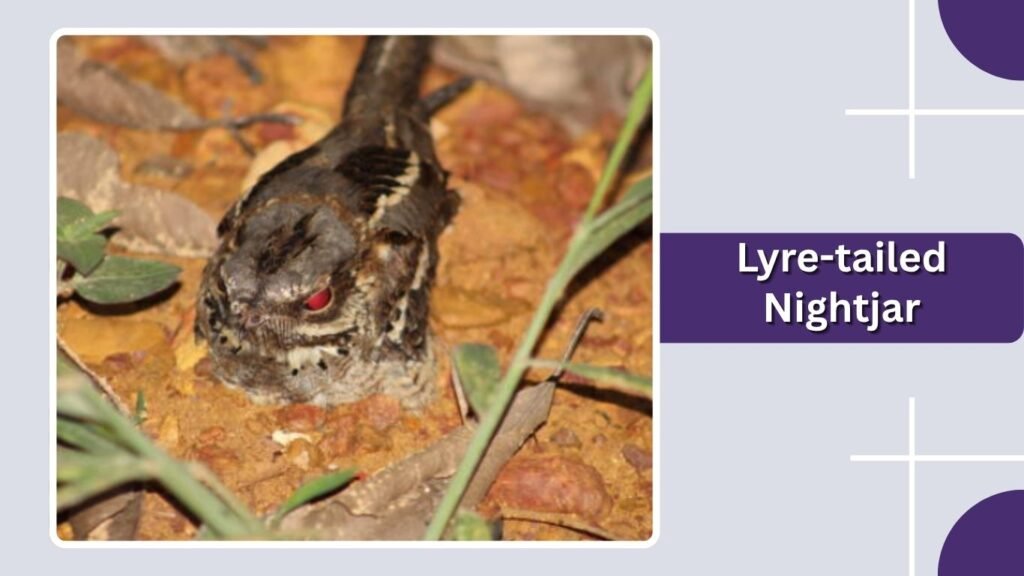
The Lyre-tailed Nightjar is a spectacular African species known for the male’s extremely long, lyre-shaped tail feathers during the breeding season. It is one of the most visually striking nightjars and is often found in forested regions where it performs impressive display flights.
Identification
- Medium-sized nightjar with a wingspan of about 50–60 cm
- Mottled brown and gray plumage
- Males have very long, lyre-shaped tail feathers
- Short bill with a wide gape
- Long wings and slender body
- Large dark eyes
Habitat
Lyre-tailed Nightjars inhabit forests, woodland edges, and clearings across parts of Africa. They prefer areas with dense vegetation for resting and open spaces for feeding and display.
Behavior
These birds are nocturnal and are most active at dusk and night. Males perform dramatic flight displays using their long tail feathers to attract females. During the day, they rest on the ground or branches, relying on camouflage. They are usually solitary.
Diet
Their diet mainly consists of flying insects such as moths and beetles. They catch prey in flight, often in open spaces near forest edges where insects are abundant.
23. Pennant-winged Nightjar
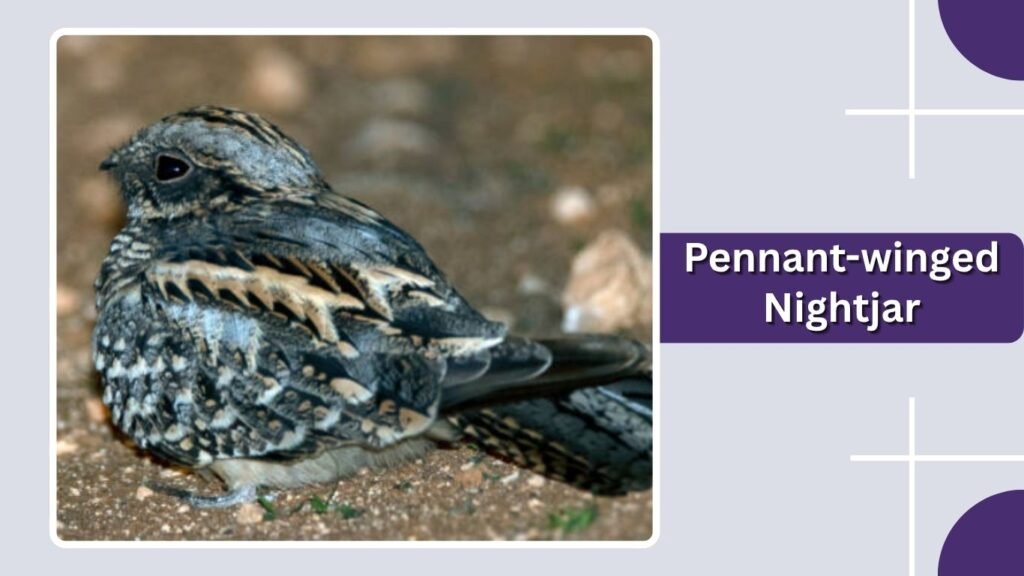
The Pennant-winged Nightjar is another extraordinary African species, famous for the male’s long wing feathers that resemble flowing ribbons during the breeding season. These “pennants” make it one of the most unique birds in the nightjar family.
Identification
- Medium-sized nightjar with a wingspan of about 50–60 cm
- Mottled brown and gray plumage
- Males have extremely long wing feathers (pennants)
- Short bill with a wide gape
- Long wings and tail
- Large dark eyes
Habitat
Pennant-winged Nightjars are found in savannas, grasslands, and open woodlands across Africa. They prefer open areas where they can perform their aerial displays and hunt insects.
Behavior
These birds are nocturnal and become active at dusk. Males perform striking aerial displays using their long wing feathers to attract mates. During the day, they rest on the ground, blending into their surroundings. They are generally solitary outside the breeding season.
Diet
Their diet mainly includes flying insects such as moths, beetles, and flies. They catch prey in mid-air and often feed in areas where insects are plentiful.
24. Spot-tailed Nightjar
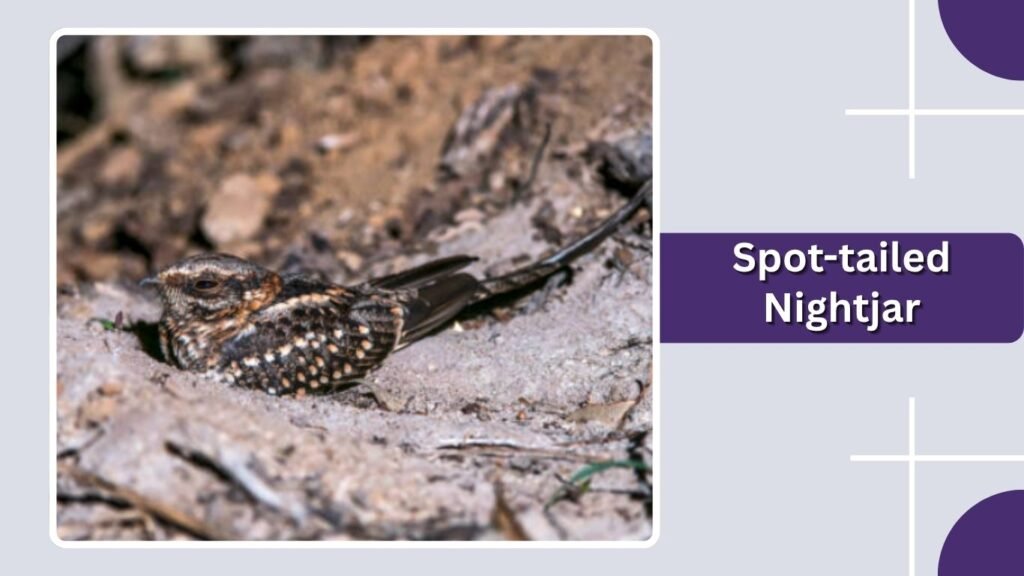
The Spot-tailed Nightjar is a medium-sized species found in South America, particularly in open and semi-open habitats. It is known for its subtle markings and excellent camouflage, which help it blend into grassy and sandy environments.
Identification
- Medium-sized nightjar with a wingspan of about 55–65 cm
- Mottled brown, gray, and black plumage
- Distinct spotted pattern on the tail
- Short bill with a wide gape
- Long wings and tail
- Large dark eyes
Habitat
Spot-tailed Nightjars inhabit grasslands, savannas, and open scrub areas. They prefer dry or semi-dry regions with sparse vegetation, where they can rest on the ground and remain hidden during the day.
Behavior
These birds are mostly nocturnal and become active at dusk. During the day, they remain motionless on the ground, relying on camouflage. Their flight is quiet and smooth, and they are usually solitary or found in pairs.
Diet
Their diet mainly consists of insects such as moths, beetles, and grasshoppers. They catch prey in flight or near the ground, using their wide mouth to capture insects efficiently.
25. Band-winged Nightjar
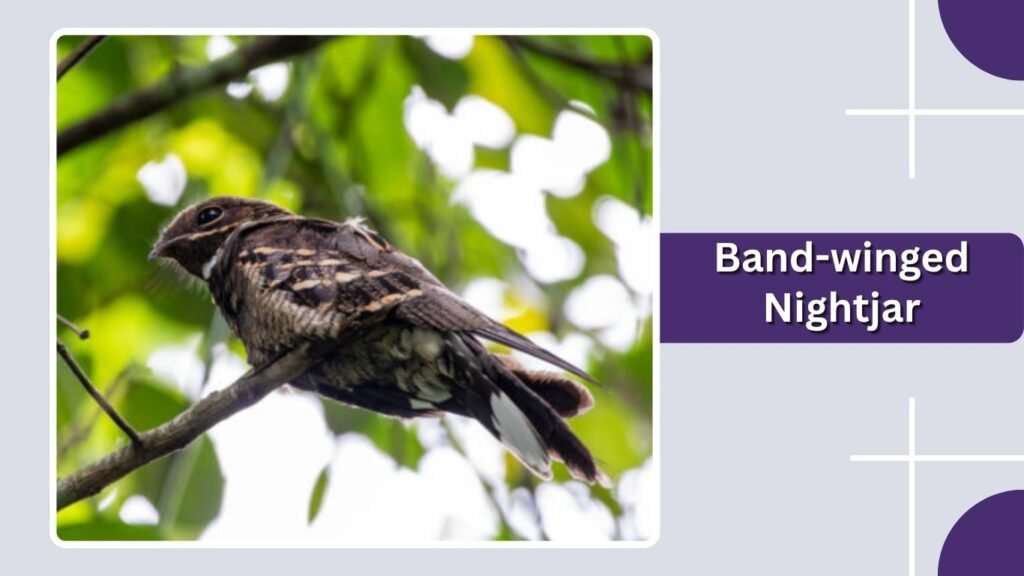
The Band-winged Nightjar is a distinctive species found in South America, especially in mountainous and forested regions. It is recognized by the bold bands on its wings, which are visible during flight.
Identification
- Medium-sized nightjar with a wingspan of about 55–65 cm
- Mottled brown and gray plumage
- Distinct white or pale bands across the wings
- Short bill with a wide gape
- Long wings and tail
- Large dark eyes
Habitat
Band-winged Nightjars are typically found in montane forests, woodland edges, and open areas in higher elevations. They prefer habitats with a mix of trees and open spaces for feeding.
Behavior
These birds are nocturnal and active during dusk and night. They rest on the ground or branches during the day, blending into their surroundings. Their flight is silent and graceful, often low over the ground.
Diet
Their diet mainly includes flying insects such as moths and beetles. They catch prey in mid-air or near the ground, often feeding in areas where insects are abundant.
