
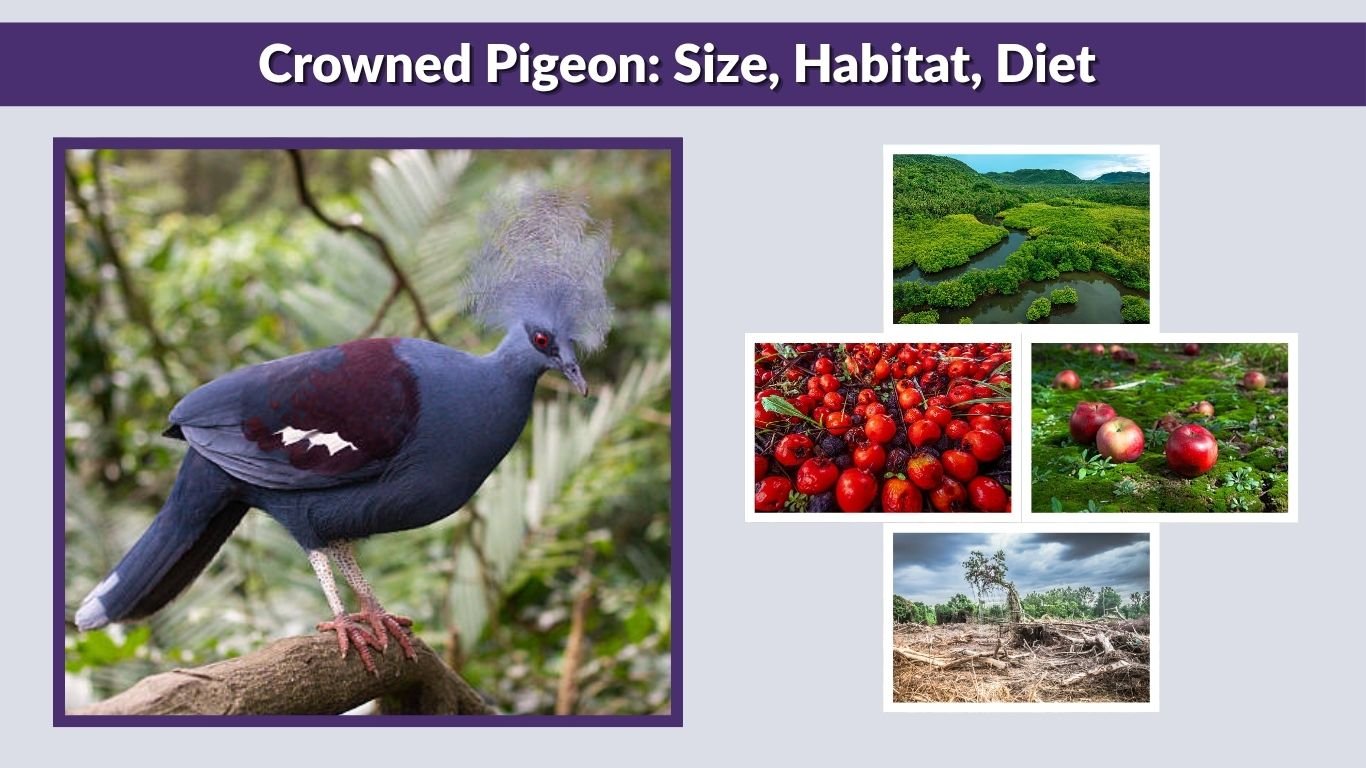
The crowned pigeon is one of the most fascinating and visually striking birds in the world. Native to the tropical forests of New Guinea, this bird stands out due to its large size, elegant posture, and unique crown-like crest. Unlike common pigeons found in cities, crowned pigeons live on the forest floor and display calm, graceful behavior. Their beauty and rarity have made them popular in wildlife discussions, zoos, and conservation efforts worldwide.
What Is a Crowned Pigeon?
Crowned pigeons belong to the genus Goura and are considered the largest members of the pigeon and dove family. These birds are known for their distinctive fan-shaped crest, which gives them a royal appearance and inspires their name.
They differ significantly from typical pigeons in both size and behavior. While most pigeons are urban and fast-moving, crowned pigeons are slow, ground-dwelling birds that prefer quiet forest environments. Their gentle nature and striking looks make them a unique subject for bird enthusiasts and researchers.
Key Characteristics
- Belong to the Goura genus
- Largest pigeon species in the world
- Recognizable by their lace-like crest
- Calm and ground-oriented behavior
Types of Crowned Pigeons
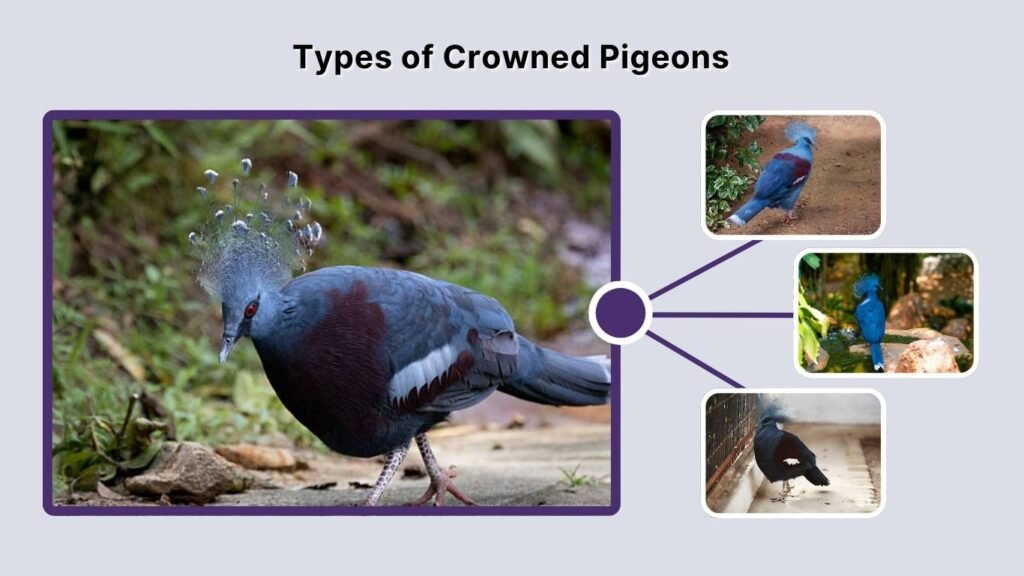
Western Crowned Pigeon
This species has a soft blue-gray body and a delicate crest. It is commonly found in the northwestern regions of New Guinea and is known for its subtle yet elegant appearance.
Southern Crowned Pigeon
The southern species features a slightly darker tone and a noticeable maroon patch on the chest. It tends to inhabit southern lowland forests and is less commonly seen than others.
Victoria Crowned Pigeon
The most popular and widely recognized species, the Victoria crowned pigeon has a vibrant blue body and a striking crest with white tips. It is often displayed in zoos due to its beauty.
Crowned Pigeon Physical Appearance and Unique Features
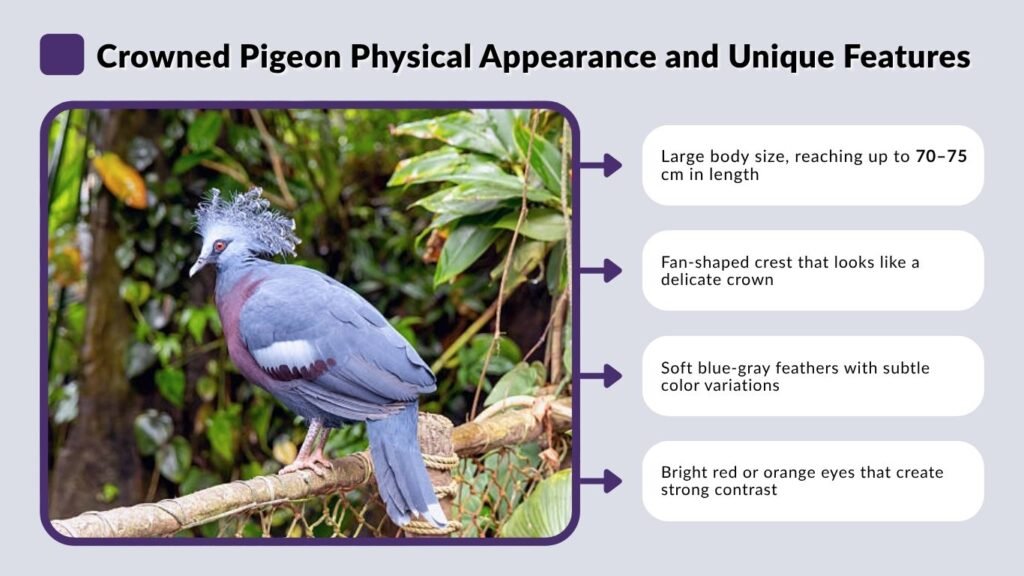
Crowned pigeons are known for their striking beauty and impressive size, making them stand out among all pigeon species. Their elegant posture, soft coloration, and distinctive crest give them a royal and exotic appearance. These birds are not only the largest pigeons in the world but also among the most visually captivating.
- Large body size, reaching up to 70–75 cm in length
- Fan-shaped crest that looks like a delicate crown
- Soft blue-gray feathers with subtle color variations
- Bright red or orange eyes that create strong contrast
- Strong legs adapted for walking on the forest floor
Crowned Pigeon Natural Habitat and Distribution
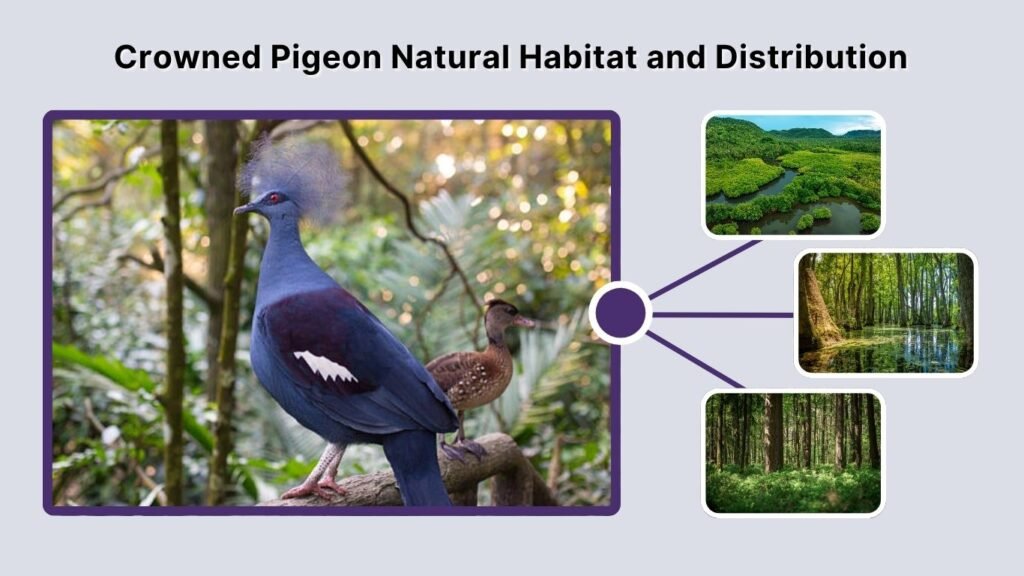
Crowned pigeons are native to New Guinea and nearby islands, where they thrive in dense tropical environments. These birds prefer lowland rainforests, swamp forests, and areas with thick vegetation. Such habitats provide both food and protection from predators.
Unlike many birds that spend most of their time in trees, crowned pigeons are primarily ground dwellers. They walk slowly across the forest floor in search of food, using their strong legs and keen eyesight. However, they still rely on trees for safety, often flying up to branches to rest or sleep during the night.
Their limited flying ability is balanced by their adaptability to dense forest conditions. The quiet and shaded environment suits their calm nature, allowing them to move undisturbed while foraging.
Crowned Pigeon Behavior and Temperament
Social Structure
- Usually seen in pairs or small groups
- Form strong bonds with mates
- Maintain peaceful group interactions
Movement and Activity
- Prefer walking over flying
- Move slowly and gracefully
- Fly short distances only when needed
Interaction with Humans
- Generally calm and non-aggressive
- Can adapt to human presence in captivity
- Often appear curious but cautious
Crowned Pigeon Diet and Feeding Habits
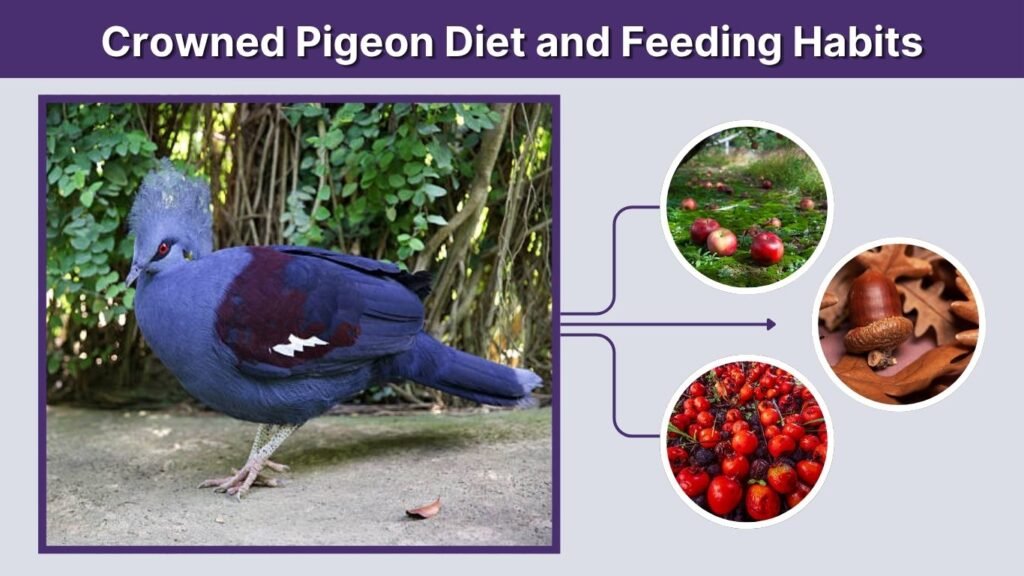
Crowned pigeons have a simple yet varied diet that supports their large size and energy needs. In the wild, they primarily feed on fallen fruits, seeds, and berries found on the forest floor. Occasionally, they may consume small insects, which provide additional protein.
Their feeding behavior is slow and deliberate. They walk along the ground, carefully picking food using their strong beaks. This method allows them to efficiently gather nutrients without expending too much energy. In captivity, their diet is usually supplemented with grains and specially prepared food mixes to ensure proper nutrition.
Crowned Pigeon Reproduction and Life Cycle
Courtship and Mating
Crowned pigeons have a gentle and elegant courtship process. Males attract females by displaying their impressive crest, bowing their heads, and producing soft, rhythmic calls. These displays are slow and deliberate, reinforcing their calm nature. Once a pair bonds, they tend to remain together, showing strong monogamous behavior throughout their lives.
Nesting and Egg Care
After mating, crowned pigeons build simple nests using sticks and leaves, usually in low trees or dense shrubs. The female typically lays a single egg, which both parents take turns incubating. This shared responsibility increases the chances of survival, as the egg is constantly protected and kept warm.
Chick Development
When the chick hatches, it is cared for by both parents. They feed it with a nutrient-rich substance known as “crop milk,” similar to other pigeon species. As the chick grows, it gradually transitions to solid food and begins exploring its surroundings under close parental supervision.
Crowned Pigeon Conservation Status and Threats
Current Status
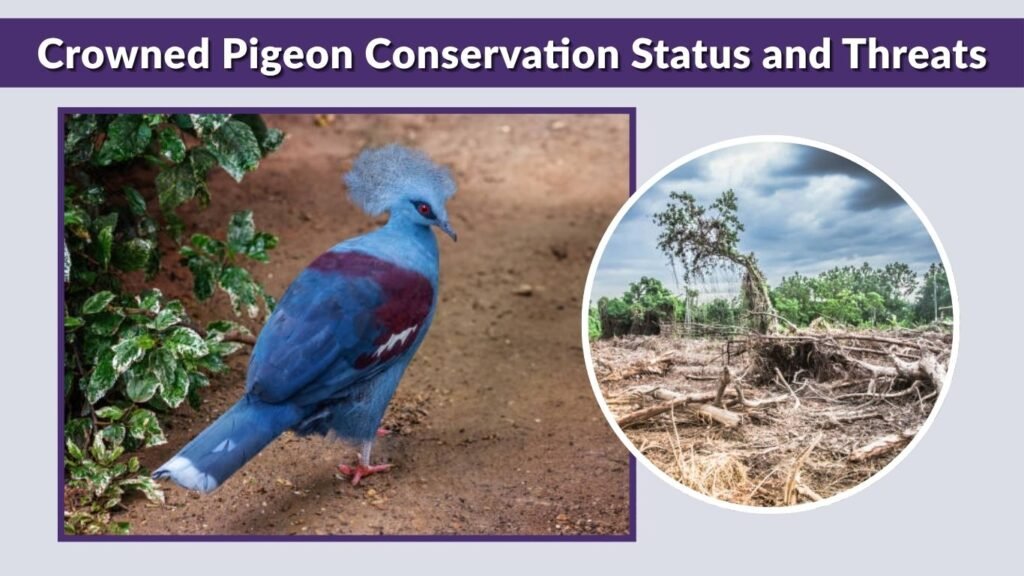
Crowned pigeons face increasing pressure in the wild, and some species are currently classified as vulnerable. Their populations are declining due to environmental and human-related factors, making conservation efforts more important than ever.
Major Threats
- Deforestation destroying natural habitats
- Hunting for meat and ornamental feathers
- Illegal wildlife trade
- Limited breeding success in disturbed environments
Conservation Efforts
- Establishment of protected forest areas
- Wildlife protection laws and enforcement
- Breeding programs in zoos and conservation centers
- Community awareness and education initiatives
Crowned Pigeons in Captivity
Crowned pigeons are admired worldwide and are commonly seen in well-maintained zoos and aviaries. Due to their size and specific environmental needs, they require spacious enclosures that mimic their natural habitat. Warm temperatures, high humidity, and a quiet environment are essential for their well-being. While they can adapt to captivity, improper care can lead to stress and health issues. For this reason, they are rarely suitable as pets and are best cared for by experienced handlers and institutions.
Interesting Facts About Crowned Pigeons
Unique Characteristics
- Largest pigeon species in the world
- Possess a lace-like crest that resembles a crown
- Known for their deep, booming calls
Behavior Highlights
- Prefer walking over flying
- Display calm and non-aggressive nature
- Form strong pair bonds
Conclusion
Crowned pigeons are truly remarkable birds that stand apart due to their size, beauty, and gentle behavior. Native to the rich forests of New Guinea, they play an important role in their ecosystem while also capturing the attention of bird enthusiasts around the world. However, their survival is increasingly threatened by human activities such as deforestation and hunting. Protecting these birds requires continued conservation efforts, habitat preservation, and global awareness to ensure they remain a part of our natural world for generations to come.
FAQs
What do crowned pigeons eat?
Crowned pigeons mainly feed on fallen fruits, seeds, and small insects found on the forest floor. Their diet may vary depending on availability, but they rely heavily on natural plant materials. In captivity, they are given a balanced mix of fruits, grains, and protein sources to maintain their health.
How long do crowned pigeons live?
Crowned pigeons can live for around 15 to 25 years, especially in captivity where they receive proper care and protection. In the wild, their lifespan may be shorter due to predators, habitat loss, and environmental challenges.
Why are crowned pigeons called that?
They are called crowned pigeons because of their distinctive fan-shaped crest, which resembles a royal crown. This crest is one of their most recognizable features and is often used during courtship displays and communication.
Are crowned pigeons friendly?
Yes, crowned pigeons are generally calm and gentle birds. They are not aggressive and can become accustomed to human presence, especially in controlled environments like zoos. However, they still require respectful handling and proper care.
Can crowned pigeons fly long distances?
Crowned pigeons are capable of flight, but they do not typically fly long distances. They prefer to stay on the ground, walking gracefully as they search for food. Flight is mainly used to escape danger or reach low tree branches for resting.
