
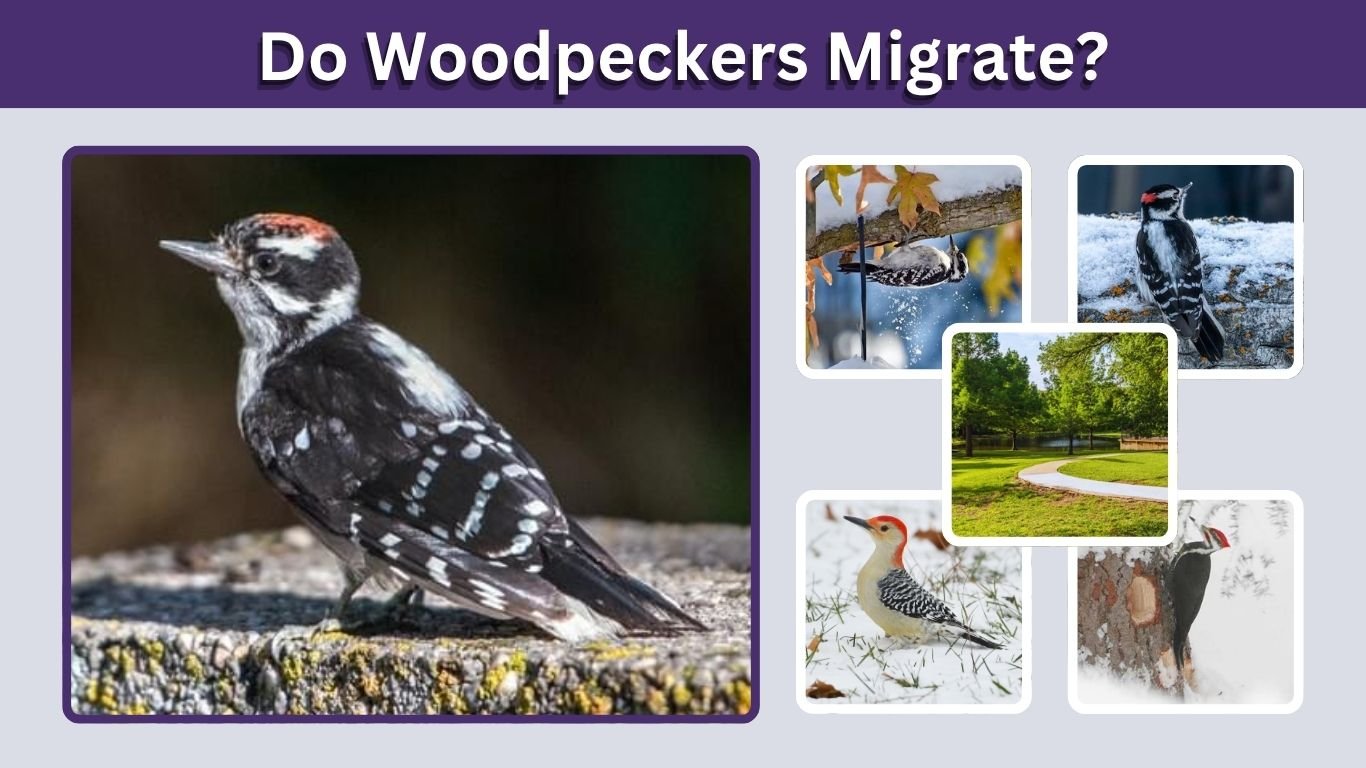
Do woodpeckers migrate when winter arrives? The answer depends on the species. Many familiar woodpeckers remain in the same general area throughout the year, while others migrate short or moderate distances in response to cold weather and changing food supplies. Downy, Hairy, Pileated, and Red-bellied Woodpeckers are mostly year-round residents across much of their ranges. Red-headed Woodpeckers and some northern species are more likely to move south. Understanding these seasonal patterns can explain why certain woodpeckers suddenly appear—or disappear—from your backyard.
Do Woodpeckers Migrate?
Woodpeckers do not all follow the same migration strategy. Many species are permanent residents that remain near established territories throughout winter. Others migrate regularly, while some make irregular movements depending on food availability, snow, temperature, and geographic location.
A woodpecker living in Canada or the northern United States may behave differently from the same species farther south.
Why Some Woodpeckers Stay Year-Round
Resident woodpeckers are well adapted to finding food during cold weather. Their strong bills allow them to reach insects hidden beneath bark and inside dead wood even when insects are no longer active outside.
Winter diets may include:
- Beetle larvae
- Ants hidden inside trees
- Seeds
- Nuts
- Berries
- Fruits
- Tree sap
- Suet from feeders
Because these foods remain available during winter, many woodpeckers have little reason to make long-distance migrations.
Why Other Woodpeckers Migrate
Some species depend more heavily on seasonal foods such as flying insects, fruits, acorns, or other resources that become harder to find in northern areas.
These birds may move south during fall and return north in spring. Migration can also reduce exposure to severe winter weather and deep snow.
The distance traveled differs considerably between species and even between individual populations.
Do Woodpeckers Migrate South for the Winter?
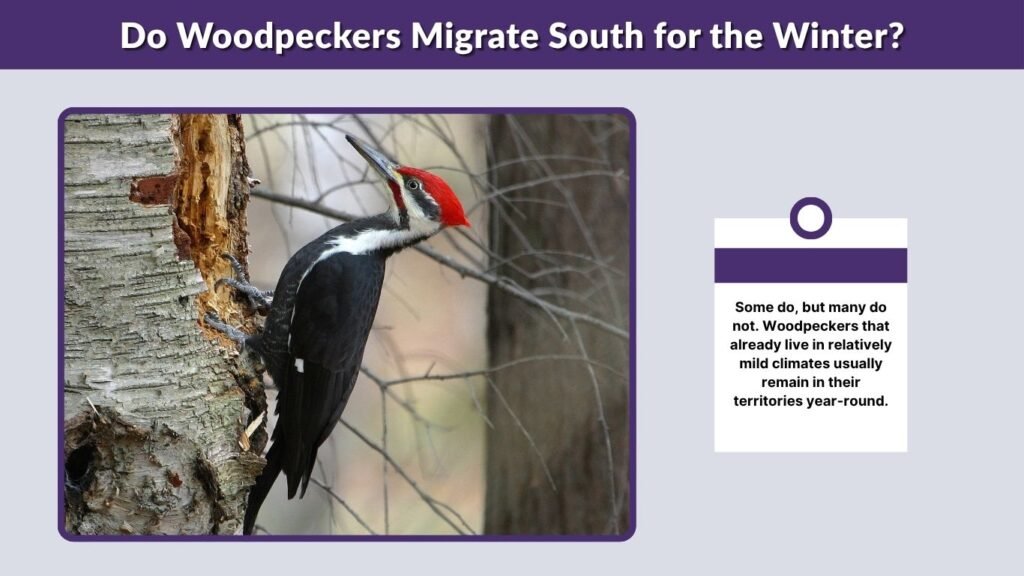
Some do, but many do not. Woodpeckers that already live in relatively mild climates usually remain in their territories year-round. Northern populations are more likely to move when temperatures fall and food becomes limited.
Migration among woodpeckers is therefore often partial rather than universal.
When Do Woodpeckers Migrate South?
Fall migration usually occurs as temperatures decline and natural food availability changes. Depending on species and latitude, movement may begin in late summer and continue through fall.
Birds that migrate north again typically move during spring as breeding territories and food sources become available.
Weather can influence exact timing from one year to another.
Where Do Woodpeckers Migrate in Winter?
Woodpeckers that migrate generally move toward regions with milder winter conditions rather than traveling to tropical destinations like many songbirds.
Northern birds may move into the central or southern United States, while birds from Canada can move into northern U.S. states.
Some species make much shorter movements and simply shift to areas where food is more plentiful.
Do Woodpeckers Hibernate or Migrate?
Woodpeckers do not hibernate.
Birds remain active throughout winter and must continue feeding every day. Resident woodpeckers cope with cold temperatures by finding energy-rich foods, sheltering in cavities, fluffing their feathers for insulation, and reducing unnecessary energy expenditure.
Roosting cavities can provide valuable protection from freezing temperatures and strong winter winds.
Do Pileated Woodpeckers Migrate?
Pileated Woodpeckers are among the largest woodpeckers in North America and are generally considered year-round residents throughout most of their established range. They do not normally make long-distance seasonal migrations. Their ability to find carpenter ants and other insects inside dead wood allows them to remain in northern forests through winter.
Do Pileated Woodpeckers Migrate in Winter?
Most Pileated Woodpeckers stay within their home range throughout winter rather than migrating south.
They may move locally when searching for better feeding sites. A bird could therefore appear farther from its usual nesting area without actually participating in true seasonal migration.
Large forests with dead trees, fallen logs, and mature timber provide the food and shelter they need during cold months.
Do Pileated Woodpeckers Migrate South?
Generally, no. Established adults tend to remain near their territories.
Young Pileated Woodpeckers disperse after becoming independent and may travel while searching for suitable territories of their own. This juvenile dispersal can sometimes be mistaken for migration.
Do Red-headed Woodpeckers Migrate?
Red-headed Woodpeckers have one of the more variable migration patterns among common North American woodpeckers. Some populations remain year-round, while others migrate south during winter.
Food availability plays a particularly important role in determining whether these birds stay or move.
Do Red-headed Woodpeckers Migrate in Winter?
Red-headed Woodpeckers living in northern portions of their range are more likely to migrate during fall.
Southern populations may remain year-round when sufficient food is available. Even northern birds sometimes stay if abundant acorns, nuts, or other stored foods provide enough winter energy.
Their seasonal distribution can therefore vary noticeably between years.
Where Do Red-headed Woodpeckers Migrate To?
Migrating Red-headed Woodpeckers generally move from northern breeding areas toward warmer parts of the central and southern United States.
They return north during spring to establish breeding territories.
Unlike species with extremely predictable migration routes, Red-headed Woodpecker movements can fluctuate according to annual food crops.
Do Downy Woodpeckers Migrate?
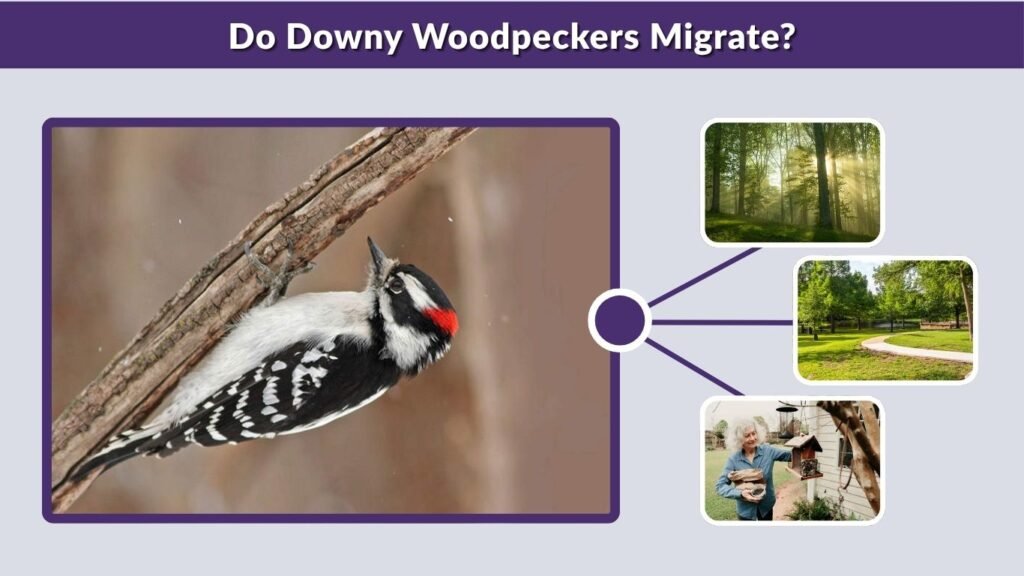
Downy Woodpeckers are small, hardy birds commonly seen around forests, parks, and backyard feeders. Most do not undertake regular long-distance migrations. They remain year-round throughout much of the United States and southern Canada.
However, some northern individuals may make short seasonal movements.
Do Downy Woodpeckers Migrate in Winter?
Most Downy Woodpeckers remain close to their normal home range during winter.
They survive cold weather by searching tree bark and small branches for insects. They also eat seeds and regularly visit backyard feeders.
Suet can be particularly attractive because its high fat content provides substantial energy during freezing weather.
Do Downy Woodpeckers Migrate South?
Large-scale southern migration is unusual.
Some Downy Woodpeckers from far northern regions may move modest distances, but the species is generally considered a permanent resident across most of its range.
Their small size might suggest vulnerability to winter weather, yet Downy Woodpeckers are remarkably well adapted to cold climates.
Do Red-bellied Woodpeckers Migrate?
Red-bellied Woodpeckers are primarily year-round residents. They commonly remain within the same general region through summer and winter.
The species has expanded northward over time and can now survive winters in areas where it was once much less common.
Red-bellied Woodpeckers in Winter
Rather than migrating, these birds adjust their winter diet.
When insects become scarce, they rely more heavily on fruits, nuts, seeds, and stored foods. They readily visit feeders offering suet, peanuts, and sunflower seeds.
Their habit of caching food in tree crevices can provide an important winter reserve.
Do Red-bellied Woodpeckers Move Locally?
Yes. Even resident birds may travel beyond their normal feeding locations when local resources become scarce.
These local movements should not necessarily be interpreted as migration because the birds usually remain within the broader region.
Do Hairy Woodpeckers Migrate?
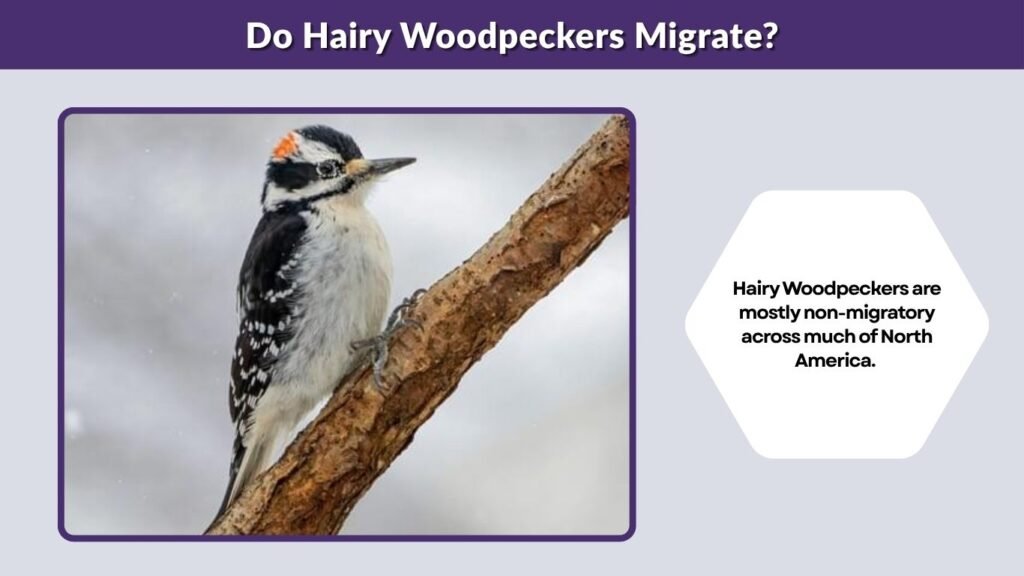
Hairy Woodpeckers are mostly non-migratory across much of North America. Like Downy Woodpeckers, they remain active during winter and continue searching tree trunks for insects.
Their larger bodies may also help them tolerate cold conditions.
Hairy Woodpeckers During Winter
Hairy Woodpeckers depend heavily on beetles, larvae, and insects hidden beneath bark.
They may also eat seeds and visit suet feeders. Mature woodland with dead or dying trees can provide valuable winter feeding habitat.
Northern birds sometimes make limited movements, but widespread seasonal migration is not typical.
Do Acorn and Great Spotted Woodpeckers Migrate?
Woodpecker migration patterns occur worldwide, not only among North American species. Acorn Woodpeckers of western North America and Great Spotted Woodpeckers of Europe and Asia provide good examples of species that are largely resident but may still move under certain circumstances.
Do Acorn Woodpeckers Migrate?
Acorn Woodpeckers generally do not migrate.
They famously store thousands of acorns in specially maintained “granary” trees. These food stores help groups remain within established territories throughout the year.
Individuals can disperse while searching for new territories, but this is different from regular seasonal migration.
Do Great Spotted Woodpeckers Migrate?
Great Spotted Woodpeckers are mostly resident across much of Europe.
However, birds from northern and eastern populations can sometimes move considerable distances when food becomes scarce. In some years, larger numbers may appear outside their normal locations.
Such irregular movements are often driven by shortages of seeds and other forest foods rather than by a strict yearly migration schedule.
Do Green Woodpeckers Migrate?
European Green Woodpeckers are largely sedentary. They usually remain in their territories throughout the year.
Their diet relies heavily on ants, which they locate on the ground and inside nests. Local movements may occur during harsh winter weather, but long-distance migration is uncommon.
Do Woodpeckers Migrate in Ohio, Michigan and Minnesota?
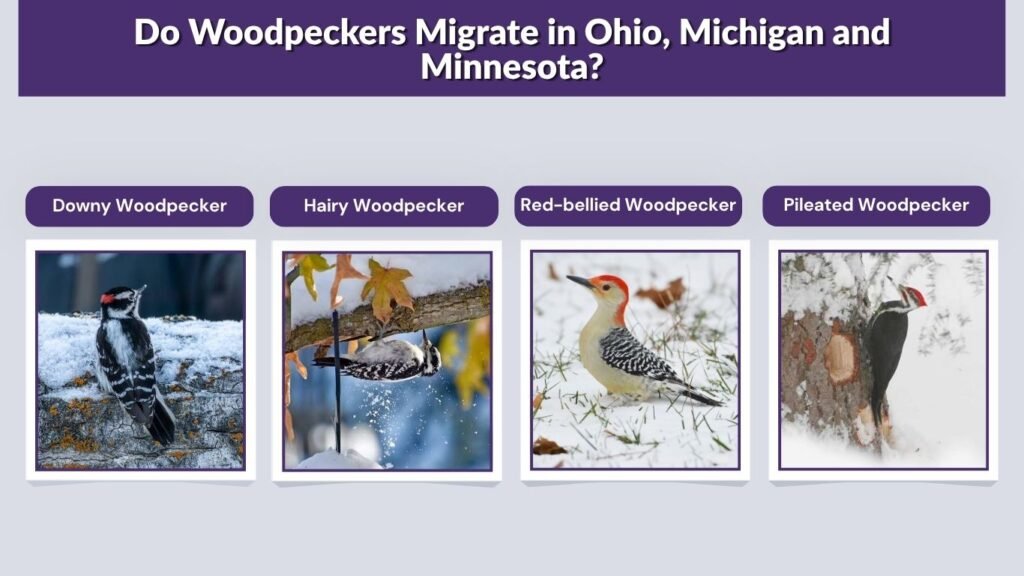
Location strongly influences what people observe. Northern states experience colder winters, but several familiar woodpecker species remain year-round because forests and backyard feeding stations provide dependable food.
Some seasonal species, however, become less common as winter approaches.
Woodpeckers in Ohio During Winter
Ohio has several year-round woodpeckers, including:
- Downy Woodpecker
- Hairy Woodpecker
- Red-bellied Woodpecker
- Pileated Woodpecker
- Northern Flicker in many areas
Yellow-bellied Sapsuckers are more strongly associated with seasonal movement, while Red-headed Woodpeckers may migrate or remain depending on location and food supply.
Woodpeckers in Michigan and Minnesota
Downy, Hairy, and Pileated Woodpeckers can remain through harsh northern winters.
Some Red-headed Woodpeckers and Northern Flickers are more likely to move south, while other individuals may stay when food conditions remain favorable.
Winter bird feeders can make resident woodpeckers especially visible around homes.
How Do Woodpeckers Survive Winter Without Migrating?
Woodpeckers have several adaptations that allow them to survive temperatures that would seem challenging for small birds. They change their diets, use sheltered cavities, and exploit foods inaccessible to many other species.
Winter Survival Strategies
Woodpeckers survive winter by:
- Excavating insects from beneath bark
- Eating high-energy nuts and seeds
- Visiting suet feeders
- Storing food
- Roosting inside tree cavities
- Fluffing feathers for insulation
- Seeking sheltered woodland
- Reducing unnecessary movement during severe weather
Dead and decaying trees are particularly valuable because they contain insect larvae throughout winter and provide potential roosting cavities.
FAQs
Migration among woodpeckers varies considerably by species and geographic population. Most familiar backyard woodpeckers are resident birds, but seasonal movements become more common among species living in northern climates or relying heavily on changing food resources.
Do all woodpeckers migrate?
No. Many species, including Downy, Hairy, Pileated, and Red-bellied Woodpeckers, are largely year-round residents.
Do woodpeckers migrate in winter?
Some species and northern populations migrate during winter, while many others remain in their territories and change their feeding habits.
Do woodpeckers fly south for winter?
Some do. Red-headed Woodpeckers and Northern Flickers are more likely to move south than residspecies such as Pileated and Downy Woodpeckers.
Do woodpeckers hibernate?
No. Woodpeckers remain active throughout winter. They feed daily and shelter in tree cavities during severe weather or at night.
When do woodpeckers return north?
Migratory populations generally move north during spring as temperatures rise, insects become abundant, and breeding territories become suitable again.
