
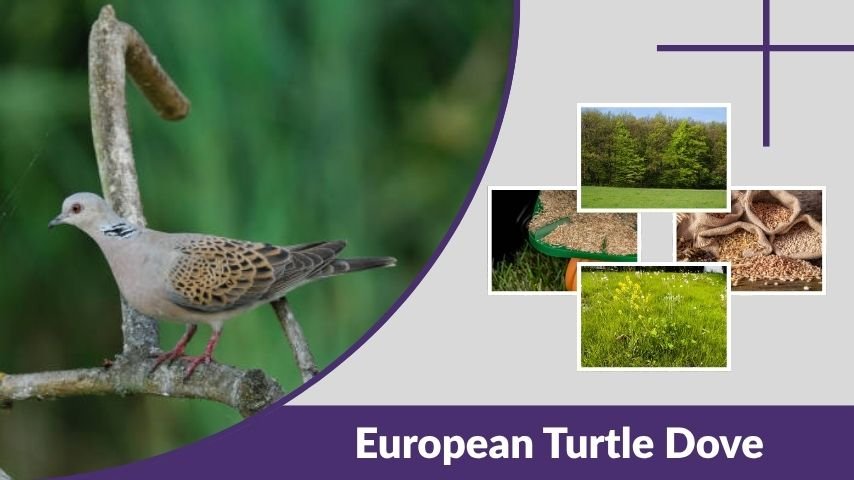
The European Turtle Dove is one of Europe’s most recognizable migratory birds, admired for its gentle appearance and soft purring song. Once widespread across farmland and woodland edges, the species has suffered a major population decline over recent decades. Conservation groups now consider the bird a high-priority species because of habitat destruction, food shortages, hunting pressure, and climate-related challenges. Understanding why the European turtle dove is endangered helps explain the broader environmental problems affecting migratory birds throughout Europe and parts of Africa.
European Turtle Dove Identification
The European turtle dove is smaller and slimmer than many common pigeons. It has a warm reddish-brown body, patterned wings, and a distinctive black-and-white striped patch on the side of the neck. During flight, the bird shows dark tail feathers with bright white edges that make identification easier from a distance.
The species is known for its graceful flight and soft vocalizations. Birdwatchers often recognize the dove by its gentle “turrr-turrr” call heard during the breeding season. Males and females look similar, although males may appear slightly brighter in color.
Key Identification Features
- Black-and-white striped neck patch
- Orange-brown plumage with scaled wings
- Long pointed tail with white edges
- Slim body and fast direct flight
- Soft repetitive purring song
Juvenile Turtle Dove Appearance
Young European turtle doves appear duller than adults and lack the strong neck markings seen in mature birds. Their feathers are generally browner and less vibrant, helping them remain camouflaged while nesting.
European Turtle Dove Habitat
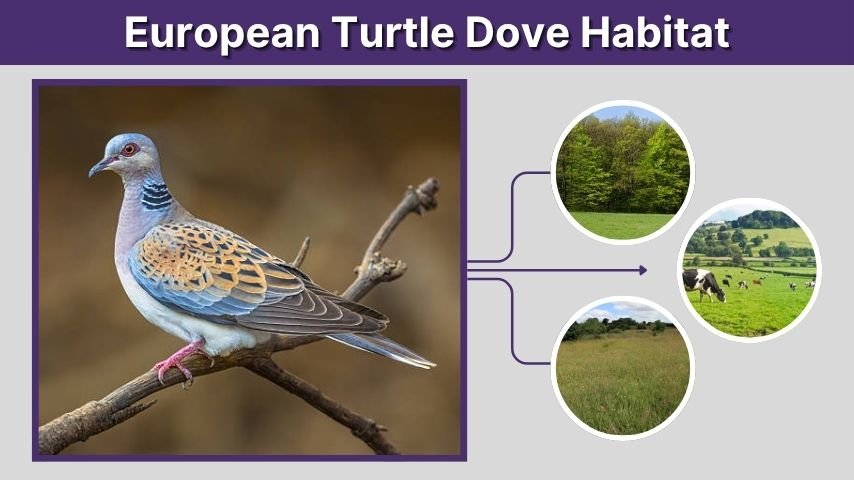
European turtle doves prefer open countryside with a combination of trees, hedgerows, and feeding areas. They are strongly associated with traditional farmland landscapes where wild seed plants grow naturally. The species depends on quiet nesting locations close to reliable food sources.
Historically, turtle doves were common across much of southern and central Europe. Breeding populations were especially widespread in countries such as Spain, France, Italy, and the United Kingdom. During winter, the birds migrate to sub-Saharan Africa where warmer conditions and seasonal food supplies support survival.
Modern agricultural expansion has changed many of these habitats. Intensive farming methods have removed hedgerows, reduced wild plants, and limited safe nesting areas. As a result, many turtle dove populations have disappeared from regions where they were once abundant.
Preferred Habitat Types
- Woodland edges
- Farmland with hedgerows
- Open scrubland
- River valleys and orchards
- Seed-rich grassland areas
Why Habitat Matters
Habitat quality directly affects breeding success, feeding opportunities, and protection from predators. Turtle doves require a balanced landscape that includes both dense vegetation for nesting and open ground for feeding. When these features disappear, survival rates decline quickly.
Why the European Turtle Dove Is Endangered
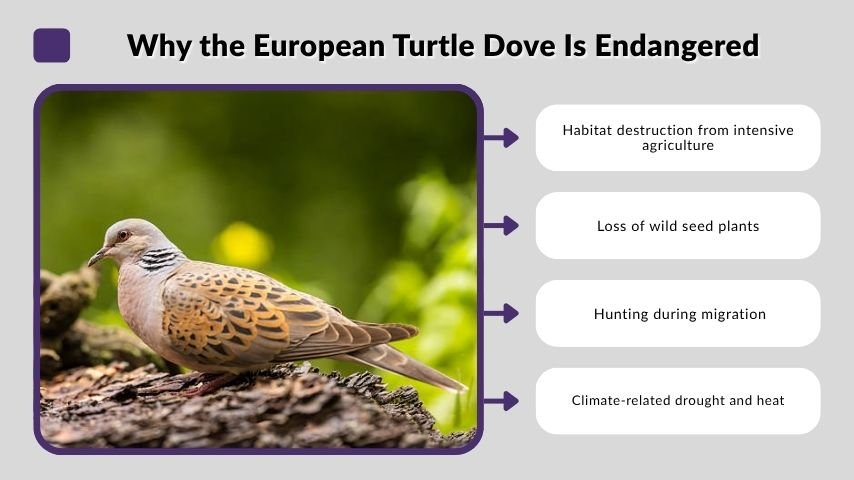
The decline of the European turtle dove is linked to several environmental pressures occurring across its breeding and migration range. Scientists believe habitat loss is the most important cause of population reduction. Modern farming practices have dramatically reduced the number of wildflowers and seed-producing plants available to the birds.
Food shortages have become especially serious during the breeding season. Turtle doves feed mainly on seeds gathered from open ground, but herbicide use has removed many natural food plants from agricultural landscapes. Birds now travel farther to find food, increasing stress and reducing breeding success.
Hunting also remains a major issue in parts of southern Europe. Although protections have improved in some countries, turtle doves are still hunted during migration periods. Because the species already has declining populations, even moderate hunting pressure can have significant impacts.
Climate change creates additional risks by increasing drought conditions and altering migration timing. Dry conditions reduce food and water availability in both breeding and wintering areas. Some birds arrive too early or too late during migration, which can affect nesting opportunities and survival.
Main Causes of Decline
- Habitat destruction from intensive agriculture
- Loss of wild seed plants
- Hunting during migration
- Climate-related drought and heat
- Reduced breeding success and nest survival
Impact on European Populations
In several European countries, turtle dove numbers have fallen dramatically over the past few decades. The species has become especially rare in parts of western Europe, including the UK, where conservation organizations now classify it as a priority bird species.
European Turtle Dove Migration
The European turtle dove is one of Europe’s few long-distance migratory dove species. Each year, the birds travel thousands of kilometers between breeding grounds in Europe and wintering areas in sub-Saharan Africa. This journey exposes them to many dangers, including hunting, habitat loss, storms, and food shortages along migration routes.
Migration usually begins in late summer and early autumn after the breeding season ends. Turtle doves cross the Mediterranean Sea and continue south through North Africa before reaching winter habitats. In spring, surviving birds return to Europe to breed again.
Because the species depends on multiple habitats across different continents, environmental problems in one region can affect the entire population. Scientists consider migration-related mortality one of the key reasons the species continues to decline despite conservation efforts in Europe.
Migration Challenges
- Illegal and legal hunting pressure
- Loss of resting and feeding areas
- Extreme weather events during travel
- Exhaustion from long-distance migration
- Reduced food availability along routes
European Turtle Dove Migration Route
The main migration route stretches from western and southern Europe through the Mediterranean region into sub-Saharan Africa. Countries around the Mediterranean are particularly important because migrating birds stop there to rest and feed before continuing their journey.
European Turtle Dove Diet and Feeding Behavior
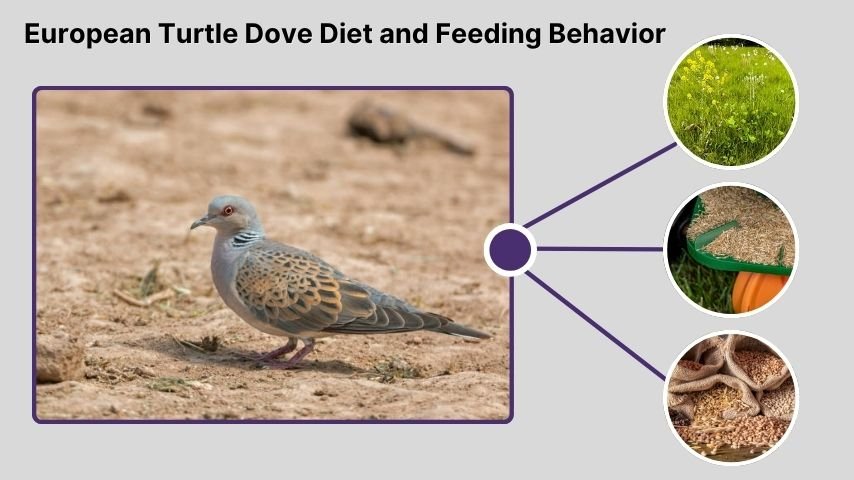
The European turtle dove has a highly specialized diet compared with many other dove species. It feeds mostly on wild seeds collected from open ground. Natural weed seeds from grasslands and traditional farmland once provided enough food to support large breeding populations.
Changes in farming practices have reduced seed availability across Europe. Herbicides eliminate many wild plants before they can produce seeds, leaving turtle doves with fewer feeding opportunities. Food shortages are especially harmful during breeding season because adult birds must gather enough nutrition for themselves and their chicks.
Turtle doves spend much of their time feeding on the ground in quiet open areas. They usually avoid heavily disturbed environments and depend on safe feeding locations near nesting habitats.
Common Food Sources
- Wildflower seeds
- Grass seeds
- Cereal grains
- Small agricultural seeds
- Plant shoots and herbs
Why Food Shortages Matter
Poor nutrition weakens adult birds and lowers breeding success. Chicks raised in areas with limited food are less likely to survive, which contributes directly to population decline across Europe.
Conservation and Population Recovery
Conservation groups and governments across Europe have introduced several programs aimed at protecting the European turtle dove. Many of these efforts focus on restoring farmland habitats and increasing natural food availability. Scientists believe recovery is possible if suitable habitats are rebuilt and migration pressures are reduced.
Habitat restoration projects encourage farmers to plant wildflower margins and maintain hedgerows that provide nesting sites and seed-rich feeding areas. These conservation measures not only benefit turtle doves but also support many other declining farmland birds.
Some European countries have also introduced hunting restrictions to reduce pressure on migrating populations. Temporary hunting bans and tighter regulations have helped improve survival rates in certain regions. Researchers continue to monitor turtle dove populations through bird surveys and satellite tracking programs.
Although the species remains vulnerable, some conservation projects are beginning to show positive results. Areas with strong habitat management have reported improved breeding activity and slightly more stable local populations.
Important Conservation Actions
- Restoring hedgerows and woodland edges
- Planting seed-rich wildflower habitats
- Reducing unsustainable hunting
- Monitoring migration and breeding populations
- Supporting wildlife-friendly farming practices
Can European Turtle Dove Populations Recover?
Experts believe recovery is possible if long-term conservation continues across Europe and Africa. Protecting migration routes, restoring food supplies, and improving breeding habitats are considered the most important steps for future population growth.
FAQs
Why is the European turtle dove endangered?
The European turtle dove is endangered mainly because of habitat loss, reduced food availability, hunting pressure, and climate change. Modern farming practices have removed many seed-producing plants and hedgerows that the species relies on for feeding and nesting.
What does a European turtle dove look like?
The European Turtle Dove is a small, slim dove with reddish-brown feathers, patterned wings, and a black-and-white striped patch on the neck. It also has a long dark tail with white outer edges visible during flight.
Where do European turtle doves migrate?
European turtle doves migrate from breeding grounds in Europe to wintering areas in sub-Saharan Africa. Their migration route usually crosses the Mediterranean region and North Africa.
What do European turtle doves eat?
European turtle doves mainly eat wild seeds, grass seeds, cereal grains, and small agricultural seeds. They feed mostly on the ground in open countryside and farmland habitats.
Can European turtle dove populations recover?
Yes, conservation experts believe populations can recover if habitat restoration, hunting controls, and wildlife-friendly farming practices continue across Europe and Africa. Some conservation projects have already shown early signs of improvement in local populations.
