
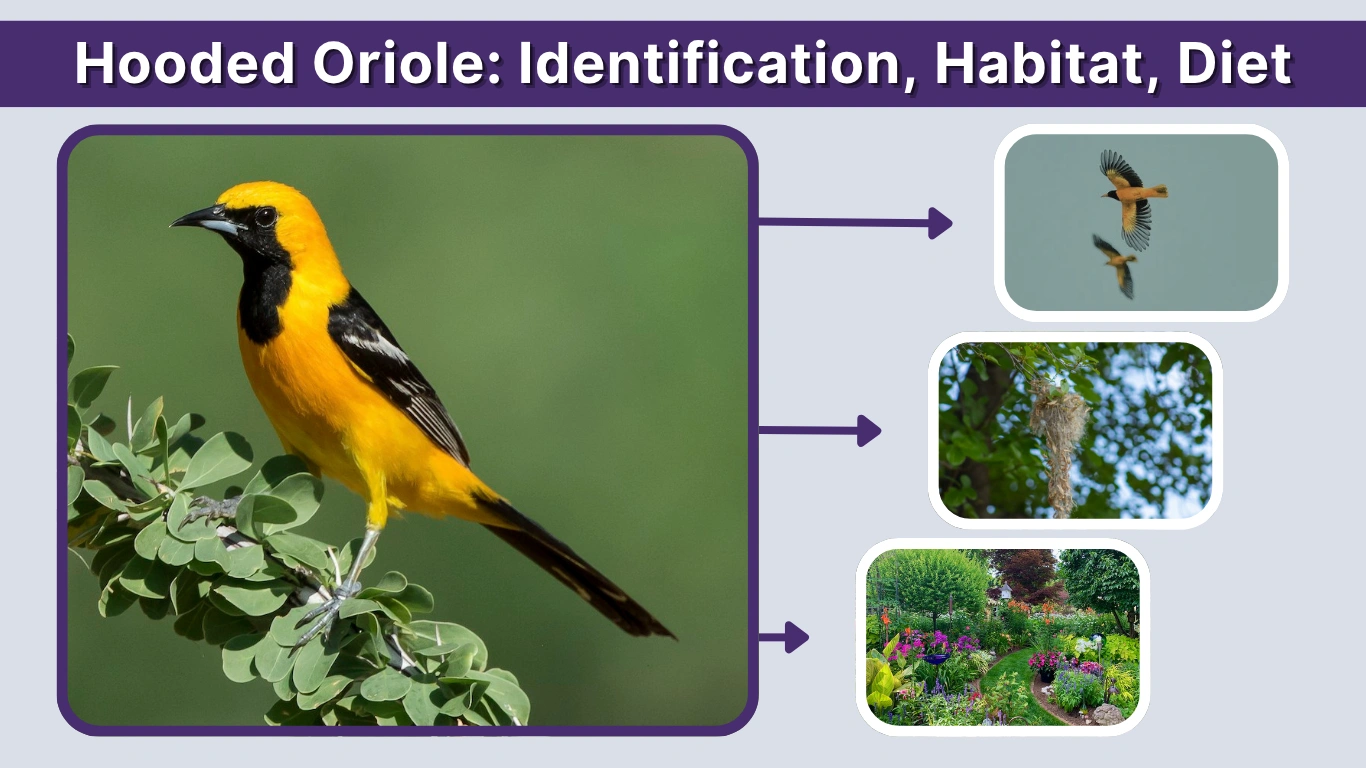
The Hooded Oriole (Icterus cucullatus) is a striking songbird known for its bright orange-yellow body and distinctive black “hood” covering its face and throat. Native to the southwestern United States and parts of Mexico, this elegant bird is commonly found in warm, open habitats. Its vibrant colors, soft musical calls, and unique nesting habits make it a favorite among birdwatchers. Unlike some other orioles, the Hooded Oriole is well adapted to urban environments, often visiting gardens and feeders.
Hooded Oriole Identification
Physical Appearance
The Hooded Oriole is a medium-sized songbird, typically measuring about 7 to 8 inches in length with a wingspan of around 9 to 11 inches. Adult males are easily recognized by their bright orange to yellow body combined with a bold black face and throat, forming the “hood” that gives the species its name. Females, on the other hand, are more subdued in color, displaying olive-yellow tones with grayish wings and no black hood.
Key Identification Features
One of the most distinctive features of the Hooded Oriole is its slightly curved, slender bill, which is well adapted for feeding on nectar, insects, and fruits. The male’s black hood sharply contrasts with its vibrant body, making it stand out even from a distance. Compared to other orioles, it has a sleeker and more delicate appearance. Its long tail and graceful posture add to its elegant look.
Songs and Calls
Hooded Orioles produce a series of soft, whistling notes that are less loud but very pleasant to hear. Their song often consists of smooth, flowing whistles mixed with chatter. While not as bold as the Baltimore Oriole’s song, it is still distinctive enough for experienced birdwatchers to recognize. These birds also use short calls to communicate, especially during the breeding season.
Hooded Oriole vs Other Orioles
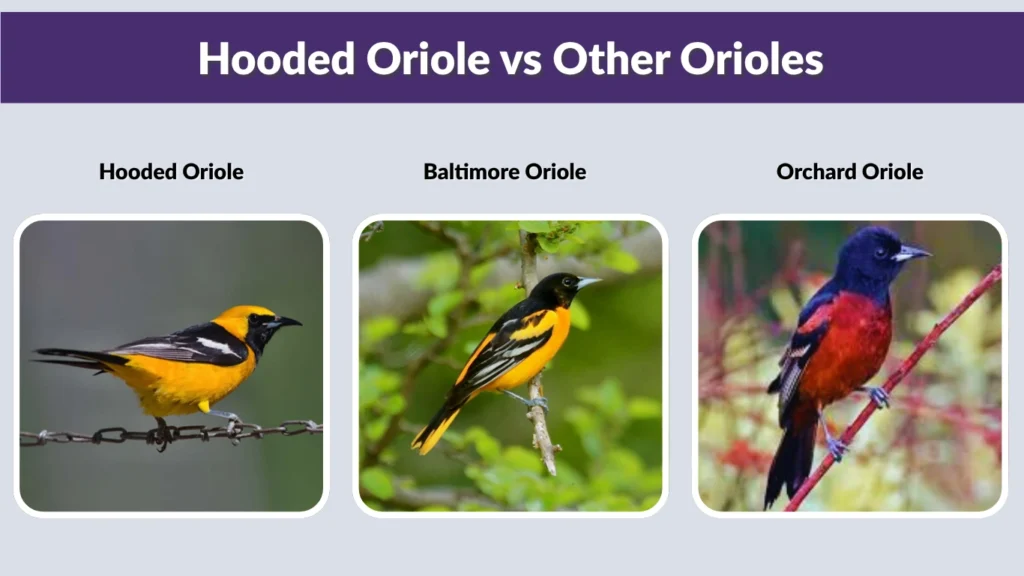
Hooded Oriole vs Baltimore Oriole
The Hooded Oriole differs significantly from the Baltimore Oriole in both color and range. While the Baltimore Oriole is bright orange and black, the Hooded Oriole has a more yellow-orange body with a distinct black hood. Additionally, Baltimore Orioles are found mostly in eastern North America, whereas Hooded Orioles are common in the southwestern regions.
Hooded Oriole vs Orchard Oriole
Compared to the Orchard Oriole, the Hooded Oriole is slightly larger and more brightly colored. Orchard Orioles display chestnut and black tones, while Hooded Orioles are more yellow-orange. Habitat preferences also differ, with Orchard Orioles favoring open woodlands and farmland, and Hooded Orioles thriving in warmer, drier environments.
Key Identification Tips
To correctly identify a Hooded Oriole, look for the black hood combined with a bright yellow-orange body. Location is also an important clue, as this species is typically found in the southwestern United States and Mexico. Observing its slender bill and preference for palm trees can further confirm identification.
Hooded Oriole Habitat and Distribution
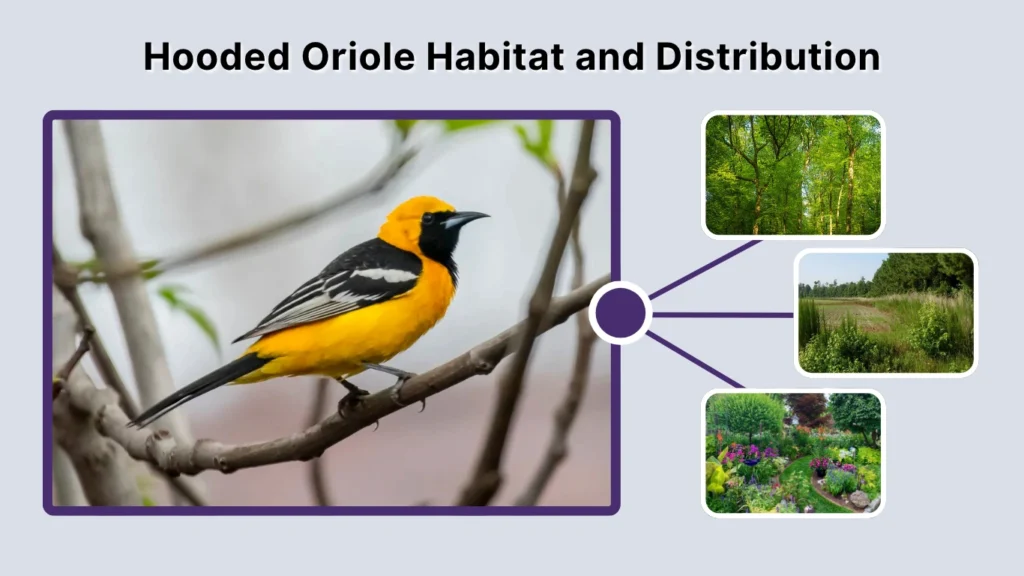
Preferred Habitat
Hooded Orioles prefer warm, open environments such as deserts, open woodlands, and suburban areas. They are especially associated with palm trees, which provide excellent nesting sites. Gardens, parks, and urban landscapes with suitable vegetation also attract these birds.
Geographic Range
This species is primarily found in the southwestern United States, including California, Arizona, Nevada, and Texas. It is also widespread in Mexico, where some populations remain year-round. The availability of warm climates and food sources plays a key role in determining their distribution.
Seasonal Distribution
Hooded Orioles show partial migration patterns. Birds in the northern parts of their range migrate southward during the colder months, while populations in Mexico may remain in the same area throughout the year. In spring, they return to breeding areas in the United States.
Hooded Oriole Diet and Feeding Behavior
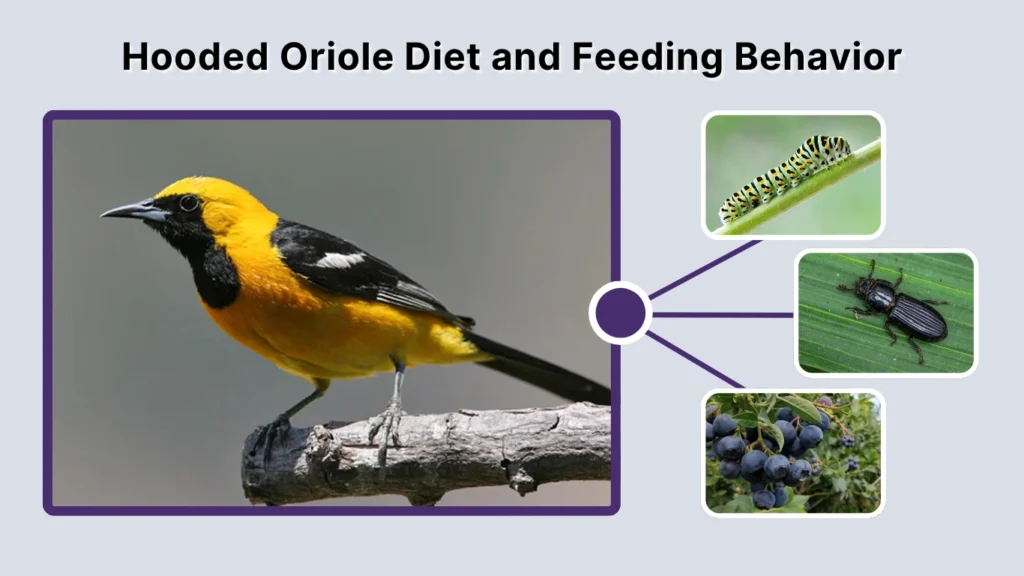
Natural Diet
The Hooded Oriole has a varied diet consisting of insects, fruits, and nectar. During the breeding season, insects such as caterpillars, beetles, and ants provide essential protein. They also consume fruits like berries and figs, along with nectar from flowers.
Feeding Habits
These birds are active feeders and are often seen foraging among tree branches or visiting flowering plants. Their curved bill allows them to extract nectar efficiently, making them important pollinators. They may also hang from branches while searching for insects or feeding on fruit.
How to Attract Hooded Orioles
Hooded Orioles are relatively easy to attract to backyards. Providing nectar feeders, orange halves, and grape jelly can encourage them to visit. Planting flowering plants and maintaining palm trees or similar vegetation can also create a suitable habitat. Clean water sources, such as birdbaths, further increase the chances of attracting them.
Hooded Oriole Nesting and Reproduction
Nest Structure
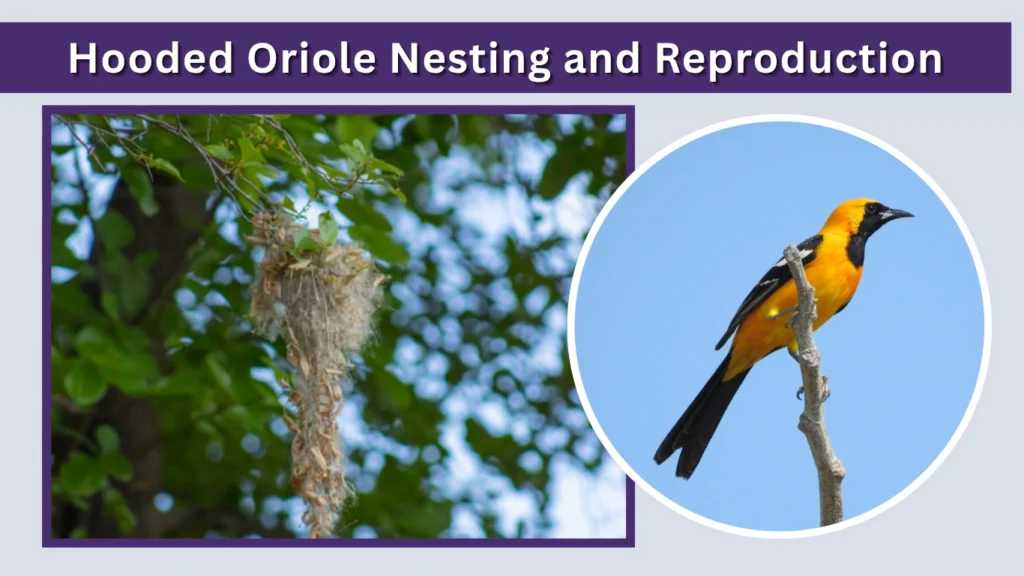
The Hooded Oriole is famous for its unique and carefully crafted hanging nest. Unlike many birds that build nests in tree branches, this species often weaves its nest directly into palm fronds. The nest is a deep, pouch-like structure made from plant fibers, grasses, and sometimes even human-made materials such as thread or string. This design provides both flexibility and protection, helping shield the eggs from predators and harsh weather.
Unique Nesting Behavior
One of the most fascinating aspects of the Hooded Oriole is its preference for nesting in palm trees. The female skillfully sews the nest into the underside of large palm leaves, using fibers to create a secure attachment. This clever placement not only hides the nest but also keeps it shaded from the intense sun common in its habitat. This behavior highlights the bird’s remarkable adaptability to its environment.
Breeding Season and Care
The breeding season typically occurs from late spring to early summer. During this time, the female lays around 3 to 5 eggs, which are pale in color with small markings. She is primarily responsible for incubation, which lasts about two weeks. After hatching, both parents work together to feed the chicks, bringing them insects and other nutritious food. The young birds grow quickly and leave the nest within a few weeks.
Hooded Oriole Migration Patterns
Migration Timing
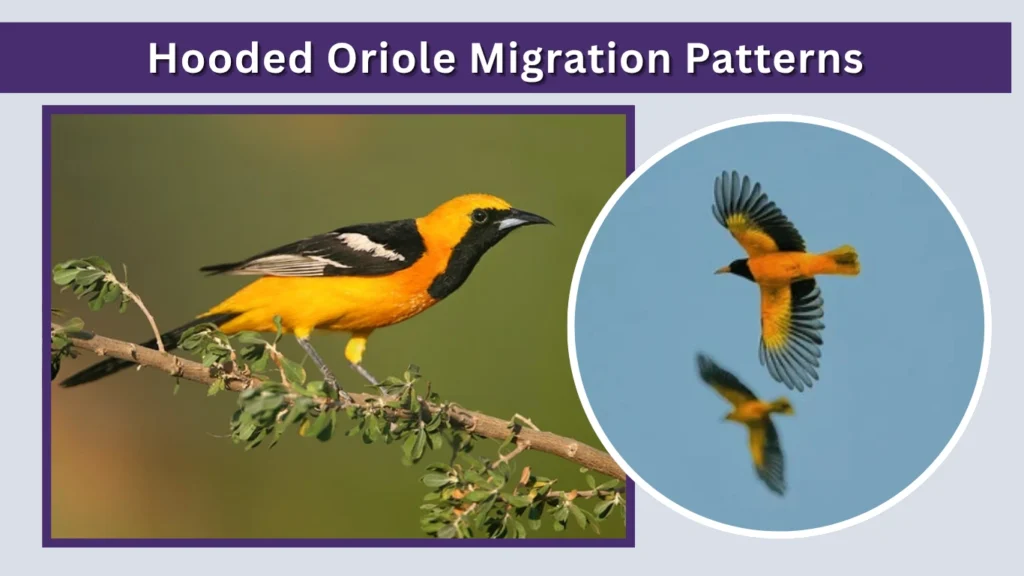
Hooded Orioles show varying migration patterns depending on their location. Birds in the northern part of their range usually arrive in breeding areas during spring, around March to May. They begin migrating south again in late summer or early fall as temperatures drop.
Migration Routes
These birds typically migrate between the southwestern United States and Mexico. Their routes often follow areas with abundant food sources, such as flowering plants and fruit-bearing trees. Some populations, especially those in Mexico, remain resident year-round and do not migrate at all.
Migration Behavior
Unlike long-distance migrants such as the Baltimore Oriole, the Hooded Oriole is considered a partial migrant. This means that not all individuals travel long distances. Their migration is influenced by climate conditions and food availability, allowing them to adapt to changing environments more easily.
Hooded Oriole Behavior and Interesting Facts
Unique Behaviors
Hooded Orioles are active and agile birds, often seen moving quickly among branches in search of food. They are particularly known for their adaptability, thriving in both natural and urban environments. Their frequent visits to nectar feeders and flowering plants make them a common sight in gardens within their range.
Fun Facts
The name “Hooded Oriole” comes from the male’s distinctive black hood that contrasts sharply with its bright body. This species is one of the most colorful birds found in desert regions. Interestingly, their nesting behavior in palm trees has allowed them to expand their range as palm trees have been planted in urban areas. They are also important pollinators due to their nectar-feeding habits.
Hooded Oriole Conservation Status
Population Trends
The Hooded Oriole is generally considered a species of low conservation concern, with stable populations across much of its range. In some areas, its numbers have even increased due to the expansion of urban environments that include ornamental palm trees.
Threats
Despite stable populations, Hooded Orioles still face challenges such as habitat loss and climate change. Extreme heat, drought conditions, and changes in vegetation can impact their food supply and nesting sites. The use of pesticides also reduces insect populations, which are essential for feeding young birds.
Conservation Efforts
Conservation efforts focus on maintaining suitable habitats and promoting bird-friendly practices. Planting native vegetation, reducing pesticide use, and preserving green spaces can help support healthy populations. Providing feeders and water sources in urban areas also benefits these birds.
Birdwatching Tips
Best Time to Spot Hooded Orioles
The best time to observe Hooded Orioles is during spring and early summer when they are most active and vocal. Early morning is particularly ideal, as the birds are busy feeding and singing.
Where to Look
Look for Hooded Orioles in areas with palm trees, open woodlands, gardens, and desert landscapes. Urban parks and residential neighborhoods with suitable vegetation can also be excellent places to spot them.
Observation Tips
To find a Hooded Oriole, listen for its soft, whistling song and watch for movement among tree branches. Using binoculars can help you see details such as the black hood and bright body color. Being patient and quiet will increase your chances of observing this beautiful bird up close.
FAQs
What do Hooded Orioles eat?
Hooded Orioles eat a mix of insects, fruits, and nectar. Insects are especially important during the breeding season, while nectar and fruits provide energy throughout the year.
Where do Hooded Orioles live?
They are mainly found in the southwestern United States and Mexico, preferring warm climates and open habitats with palm trees.
Are Hooded Orioles migratory?
Some Hooded Orioles migrate, while others remain in the same area year-round. Migration depends on location and environmental conditions.
How can I attract them?
You can attract Hooded Orioles by offering nectar feeders, oranges, and grape jelly, as well as planting flowering plants and providing water sources.
Conclusion
The Hooded Oriole is a vibrant and adaptable bird that stands out for its striking appearance and unique nesting habits. From its preference for palm trees to its nectar-feeding behavior, this species offers a fascinating glimpse into the diversity of bird life in warm regions. Understanding its habitat, diet, and behavior not only enhances birdwatching experiences but also emphasizes the importance of conservation. By creating bird-friendly environments and protecting natural habitats, we can help ensure that the Hooded Oriole continues to thrive in the wild.
