
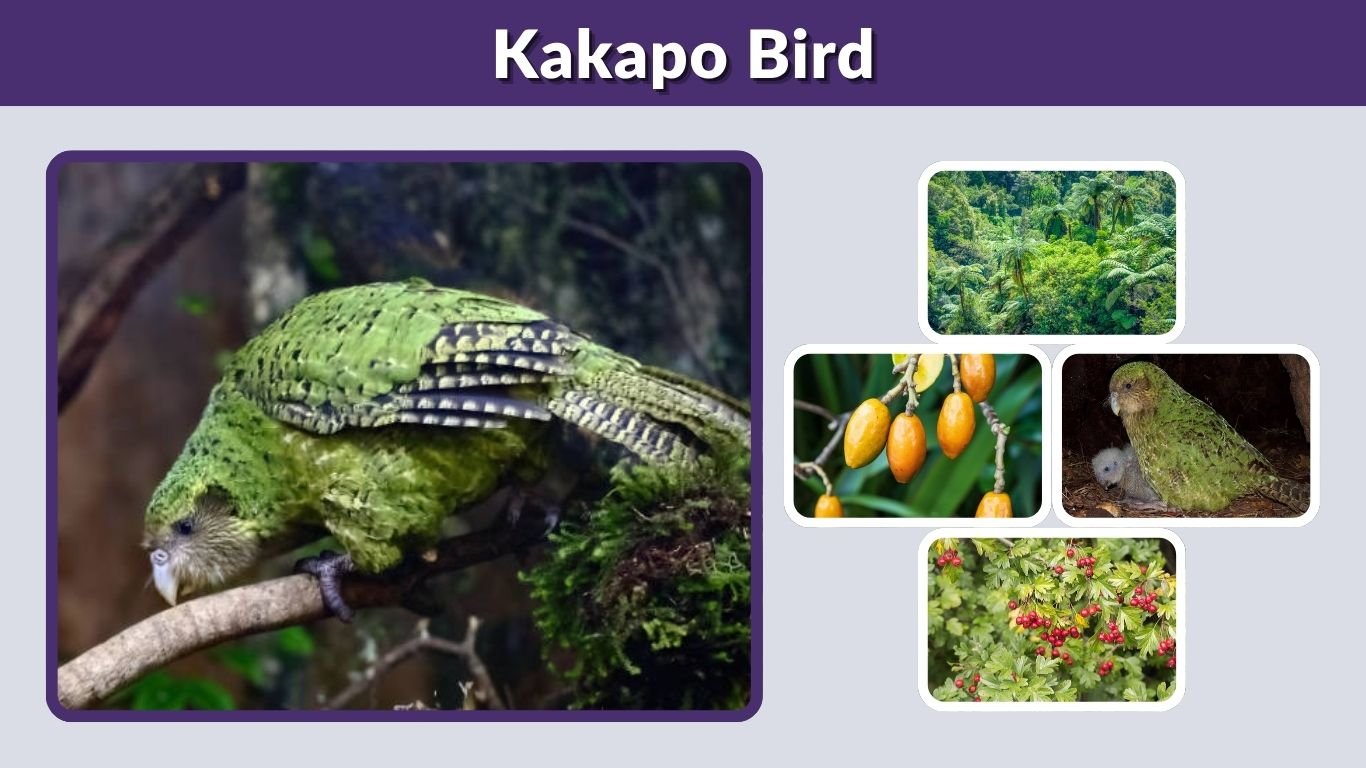
The kakapo bird is one of New Zealand’s most unusual native animals. Also called the owl parrot, this large green parrot is nocturnal, flightless, long-lived, and found nowhere else naturally. Its unusual appearance, booming mating calls, plant-based diet, and remarkable conservation story have made it famous worldwide. Once pushed dangerously close to extinction, the kakapo is gradually recovering through intensive protection. This guide explores kakapo facts, habitat, diet, size, lifespan, behavior, breeding, population, and the reasons this rare parrot remains endangered.
What Is a Kakapo Bird?
The kākāpō (Strigops habroptilus) is an endemic New Zealand parrot unlike any other living parrot. It has a rounded, owl-like face, soft moss-green plumage, powerful legs, and wings that no longer provide sustained flight. Kakapo are active mainly at night and spend much of their time walking across the forest floor or climbing vegetation.
Kakapo Identification
Several characteristics make a kakapo relatively easy to recognize:
- Large, rounded body with green and yellow-mottled feathers
- Broad, owl-like facial appearance
- Strong legs and large climbing feet
- Short wings compared with its heavy body
- Pale, curved parrot-like bill
- Whisker-like facial feathers
- Upright but often waddling walking style
Male kakapo can weigh as much as about 4 kg, making the species the world’s heaviest living parrot.
Kakapo Pronunciation and Scientific Name
The scientific name of the kakapo is Strigops habroptilus. Its Māori name is properly written kākāpō, with macrons indicating long vowel sounds. The name is commonly translated as “night parrot,” which suits its strongly nocturnal lifestyle.
Where Do Kakapo Live?
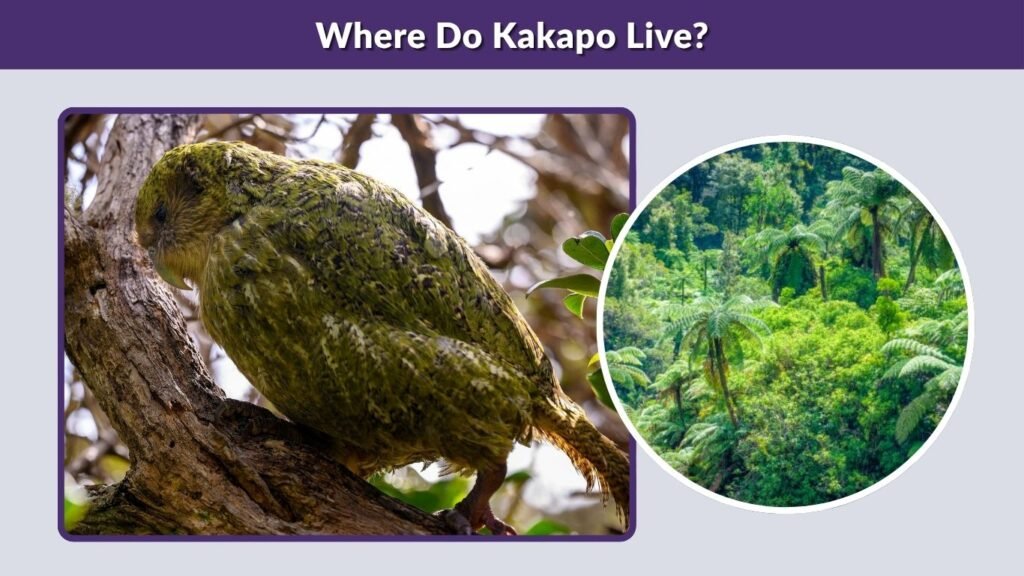
Historically, kakapo occurred across much of New Zealand and occupied many different environments. Human settlement, habitat changes, hunting, and introduced mammalian predators eventually eliminated them from most of their former range. Today, surviving birds are intensively managed in protected locations where threats from introduced predators can be controlled.
Modern Kakapo Habitat
Today, kakapo live in protected offshore islands and a fenced mainland sanctuary in New Zealand. Important breeding populations occur on Whenua Hou/Codfish Island, Pukenui/Anchor Island, and Te Kāhaku/Chalky Island.
Suitable kakapo habitat provides:
- Native forest and dense vegetation
- Trees and plants that supply seasonal food
- Safe nesting locations
- Areas largely free from introduced predators
- Enough territory for feeding and breeding
Life on the Forest Floor
Although kakapo cannot fly normally, they are surprisingly capable travelers. Their powerful legs allow them to walk several kilometres, while strong feet and claws enable them to climb tall trees. DOC reports that kakapo can climb rimu trees around 20 metres high.
Their wings still serve useful purposes. Kakapo use them for balance and to control falls, while lighter females may glide a few metres across small gaps.
What Do Kakapo Eat?
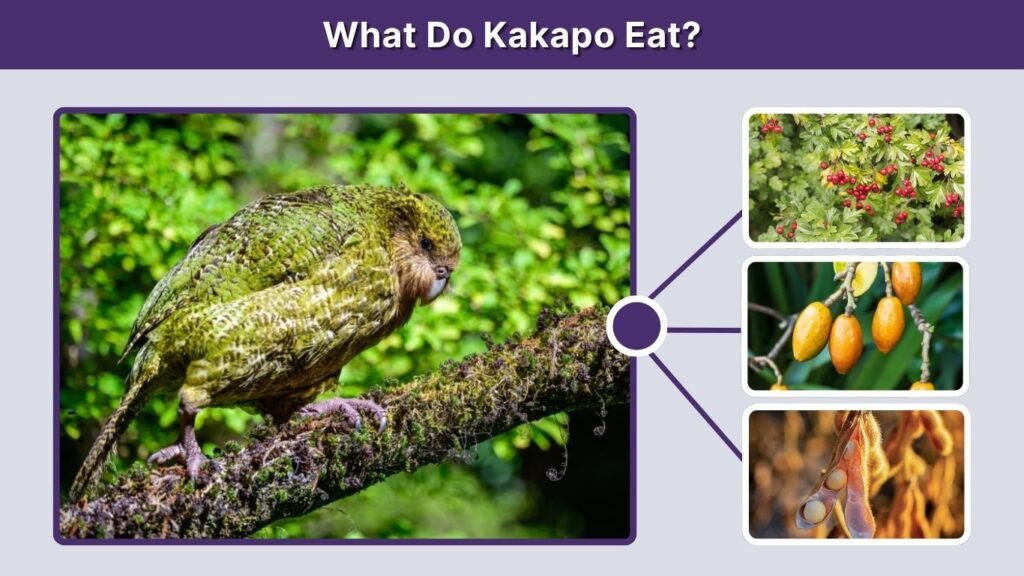
Kakapo are herbivorous parrots, meaning their natural diet consists of plant material. They forage mainly at night and may climb high into trees to reach seasonal foods. Their diet changes according to what is available, and the abundance of certain foods—especially rimu fruit—has an important connection with breeding.
Kakapo Diet
Natural foods eaten by kakapo include:
- Native fruits and berries
- Rimu fruit
- Leaves and foliage
- Plant shoots
- Seeds
- Vines
- Roots and underground tubers
- Other available plant material
Kakapo have a distinctive feeding technique. They may hold tough foliage with their feet, pass it through the bill, crush it, extract nutrients, and leave behind fibrous material.
Why Rimu Fruit Matters
Rimu fruit has an especially important role in kakapo reproduction. The birds usually breed during years when rimu trees produce exceptionally large fruit crops, known as mast years.
Because major mast events do not happen annually, kakapo reproduction is naturally irregular. Conservation teams may provide supplementary food during breeding periods to help females maintain body condition and successfully raise chicks.
Can Kakapo Fly?
Kakapo are flightless. Their ancestors evolved for a long period in New Zealand without land-based mammalian predators, and over evolutionary time the birds became heavier and lost the ability to sustain powered flight. Their inability to fly is one of the features that makes the species so distinctive—and vulnerable.
How Kakapo Move
Even without normal flight, kakapo are highly mobile. They can:
- Walk considerable distances
- Run surprisingly quickly when necessary
- Climb trees using their powerful feet and bill
- Use their wings for balance
- Control or soften descents from vegetation
- Occasionally glide short distances
Their green, mottled plumage also provides effective camouflage among vegetation.
Nocturnal Behavior
Kakapo generally shelter during the day and become active after dark. They forage, travel through their territories, and communicate at night.
When threatened, a kakapo may freeze and rely on camouflage. This strategy was effective against native predators that hunted primarily by sight, but it offers much less protection against introduced mammals such as cats and stoats that can locate prey by smell.
Kakapo Lifespan and Breeding
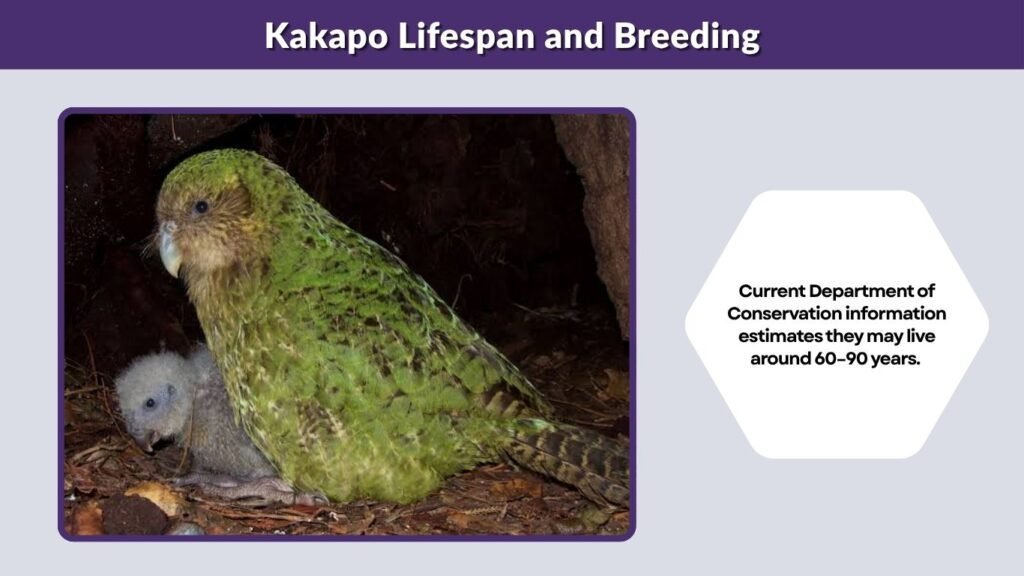
Kakapo mature slowly and are exceptionally long-lived birds. Current Department of Conservation information estimates they may live around 60–90 years. Their slow reproduction, irregular breeding opportunities, and late maturity make population recovery considerably more difficult than it is for birds that reproduce every year.
Kakapo Breeding Behavior
Kakapo have an extraordinary reproductive system:
- They usually breed only during major rimu fruiting events
- Breeding may occur only every two to four years
- Males establish special display areas called bowls
- Males produce deep booming calls to attract females
- Females select mates and raise chicks without male assistance
- Females may lay several eggs during productive seasons
Kakapo are the world’s only known parrot species to use a lek breeding system.
Kakapo Sounds
During breeding seasons, male kakapo make extremely low “booming” calls that can travel considerable distances. They also produce higher-frequency “ching” sounds.
These unusual calls allow males to advertise themselves to females across forested landscapes and are among the kakapo’s most recognizable behaviors.
Why Are Kakapo Endangered?
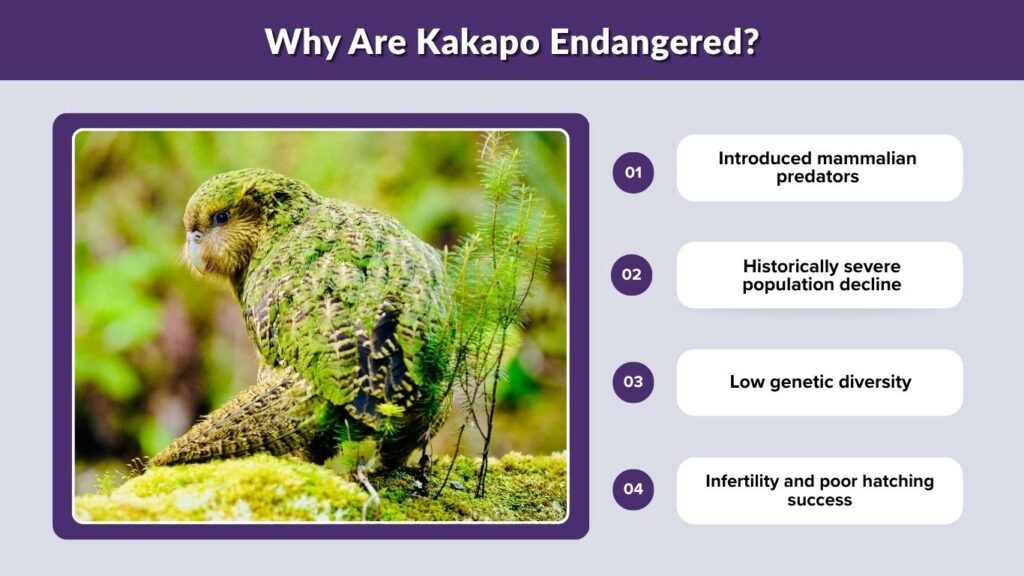
Kakapo evolved without mammalian predators such as cats, stoats, and rats. Once these animals were introduced to New Zealand, kakapo became exceptionally vulnerable because they nest on the ground, cannot fly away, and may freeze rather than flee when threatened.
Major Threats to Kakapo
Important challenges include:
- Introduced mammalian predators
- Historically severe population decline
- Low genetic diversity
- Infertility and poor hatching success
- Disease
- Limited predator-free habitat
- Naturally slow and irregular reproduction
These factors mean the species requires intensive management even as its numbers increase. DOC currently classifies kakapo as Threatened – Nationally Critical in New Zealand.
How Many Kakapo Are Left?
As of September 2026, the official kakapo population stands at 325 birds, a recovery-era record. Ninety chicks from the 2026 breeding season were added to the official population after reaching the required developmental milestone. The recovery programme began in 1995 with just 51 known birds.
Conservation work includes predator-free habitat management, individual radio transmitters, nest monitoring, supplementary feeding, veterinary treatment, genetic management, and carefully managed breeding.
Interesting Kakapo Facts
The combination of unusual biology and an extraordinary conservation history makes the kakapo one of the world’s most distinctive parrots.
Quick Kakapo Facts
- Scientific name: Strigops habroptilus
- Native range: New Zealand
- Activity: Primarily nocturnal
- Flight: Flightless
- Diet: Herbivorous
- Maximum male weight: Around 4 kg
- Estimated lifespan: About 60–90 years
- Breeding system: Lek breeding
- Current population: 325 as of September 2026
- NZ conservation status: Threatened – Nationally Critical
Kakapo are also notable for their individual personalities. Conservation workers closely monitor birds, and some—such as Sirocco—have become well-known ambassadors for kakapo conservation.
FAQs
Understanding a few common questions helps explain why this flightless parrot attracts so much conservation attention. Its restricted distribution, unusual behavior, small population, and specialized breeding cycle distinguish it sharply from familiar parrots. The answers below cover some of the questions people most often ask about kakapo biology and survival.
1. Is the Kakapo Extinct?
No. The kakapo is still alive, although its population remains small and carefully managed. As of September 2026, the official population is 325 birds.
2. Can a Kakapo Fly?
No. Kakapo cannot perform sustained flight. They use their wings mainly for balance and controlled descents, although some lighter birds can glide across short gaps.
3. Where Do Kakapo Live?
Kakapo live only in protected locations in New Zealand, primarily predator-managed offshore islands and a fenced mainland sanctuary.
4. What Does a Kakapo Eat?
Kakapo eat plant material, including fruit, foliage, vines, shoots, and tubers. Rimu fruit is especially important because large fruiting events are closely connected with breeding.
5. Why Is the Kakapo So Rare?
Kakapo declined because of hunting, habitat changes, and especially introduced mammalian predators. Their flightlessness, ground-nesting behavior, low genetic diversity, and infrequent breeding make natural recovery slow, so intensive conservation remains essential.
