
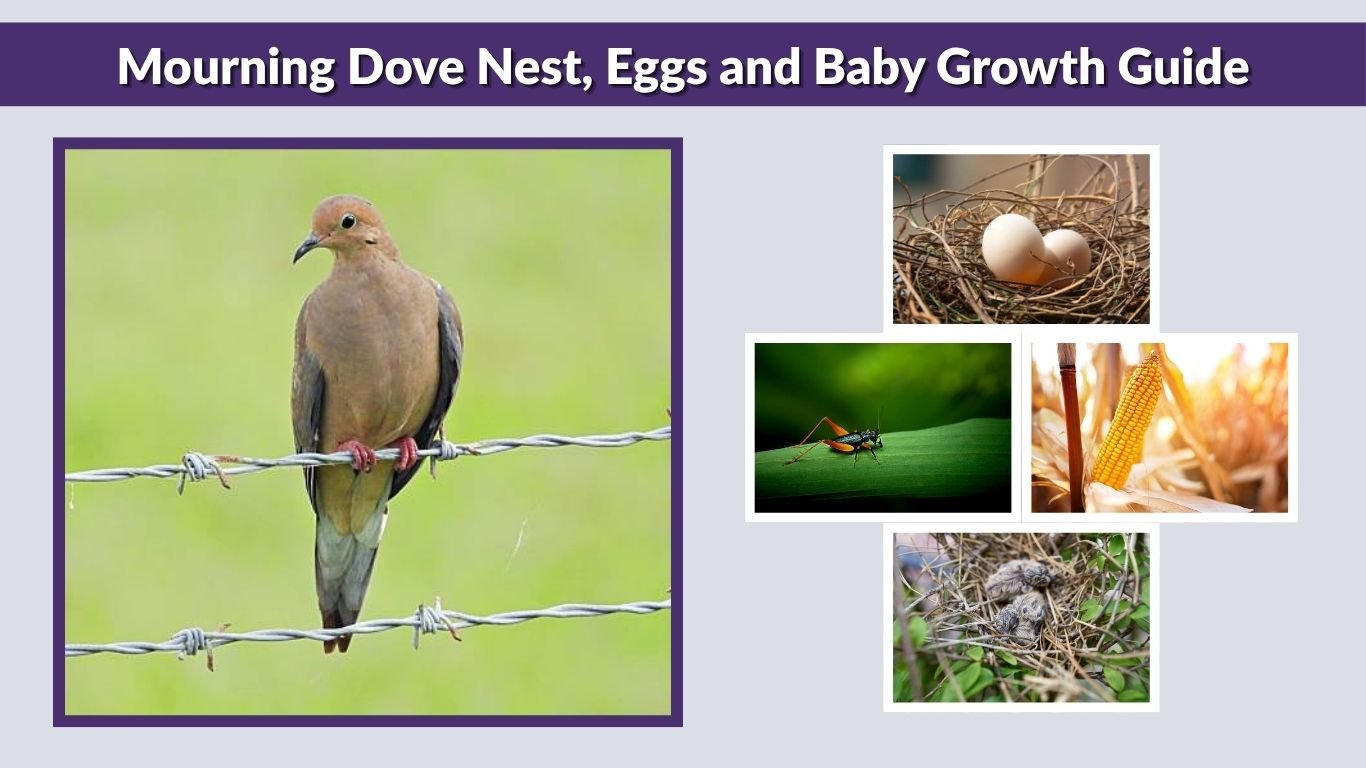
Mourning doves are among the most familiar and peaceful birds found across many regions, often seen resting on wires or feeding quietly on the ground. Their soft cooing and gentle behavior make them easy to recognize and appreciate. Many people become curious when they notice a nest nearby, especially wanting to understand more about their eggs and baby development. Learning about how mourning doves build nests, lay eggs, and raise their young provides valuable insight into their life cycle and helps people protect these delicate birds in natural and urban environments.
Mourning Dove Nest
Mourning doves are known for building very simple nests compared to many other bird species. Despite their fragile appearance, these nests are functional and serve their purpose during the breeding season. They are often built quickly, allowing the birds to focus more on reproduction and care of their young.
Nest Location
- Found in trees, shrubs, or thick bushes
- Often built on window ledges, beams, or hanging planters
- Common in both urban and rural environments
- Usually placed a few feet above the ground for safety
Nest Structure
- Made from thin twigs, grass, and small stems
- Loosely arranged and somewhat fragile
- Light can sometimes pass through the nest
- Built quickly, often within a couple of days
Nesting Season
- Typically from spring to early fall
- May raise multiple broods in one season
- Nesting frequency depends on climate and food availability
Mourning Dove Eggs
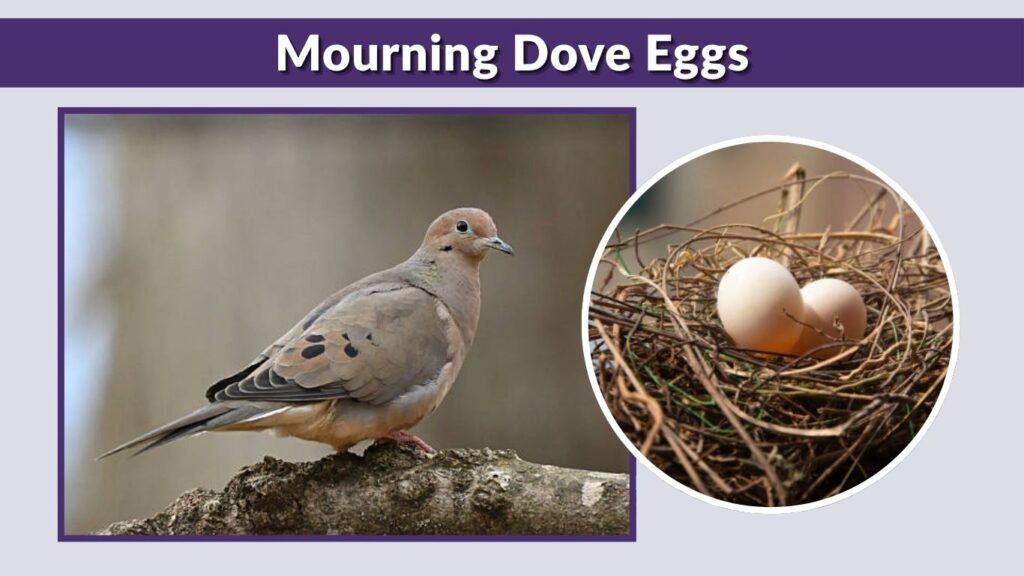
Mourning dove eggs are simple in appearance but play a crucial role in the continuation of the species. The breeding process is efficient, allowing these birds to reproduce several times within a single year.
Egg Appearance
- Smooth and plain white in color
- Oval-shaped with a slightly glossy surface
- Small to medium in size compared to other birds
Clutch Size
- Usually 2 eggs per nesting cycle
- Rarely more than two eggs at a time
- Multiple clutches possible in one season
Incubation Process
Both parents share responsibility for incubating the eggs, which helps ensure consistent warmth and protection. The male typically takes the daytime shift, while the female incubates at night. This teamwork allows the eggs to develop properly and hatch successfully within about two weeks.
Mourning Dove Babies
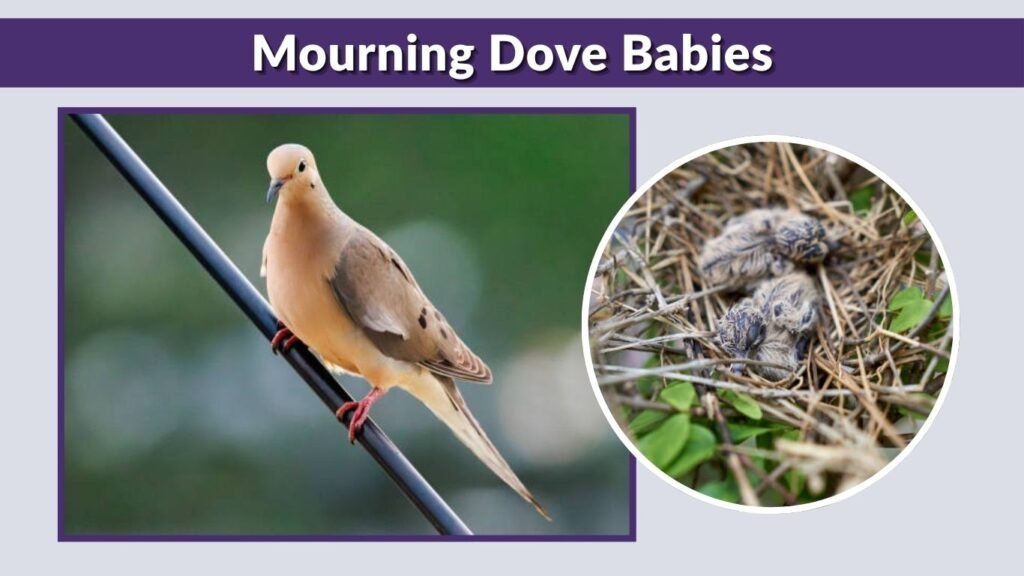
Baby mourning doves grow rapidly after hatching, but they rely heavily on their parents during the early stages of life. Their development process is fascinating and happens in a relatively short time.
Hatchling Stage
- Born with closed eyes and very little feathering
- Dark skin covered with sparse, soft down
- Completely dependent on parents for warmth and food
Growth and Development
- Eyes open within a few days
- Feathers begin to grow within the first week
- Transition to fledgling stage in about 12–15 days
Parental Care
- Parents feed chicks with nutrient-rich crop milk
- Both male and female are involved in feeding
- Parents protect and warm the chicks constantly
Mourning Dove Nesting Behavior
Mourning doves display calm and coordinated behavior during their nesting period. They form strong pair bonds and often remain with the same partner throughout the breeding season. The male usually selects the nesting site and gathers materials, while the female carefully constructs the nest.
Their behavior during this time is focused and efficient. They take turns incubating eggs and feeding their young, ensuring that the chicks receive constant care. These birds are generally quiet and avoid drawing attention to their nests, which helps protect them from predators. Even though their nests appear fragile, their consistent care and teamwork increase the chances of successful breeding.
Mourning Dove Diet and Nutrition During Breeding
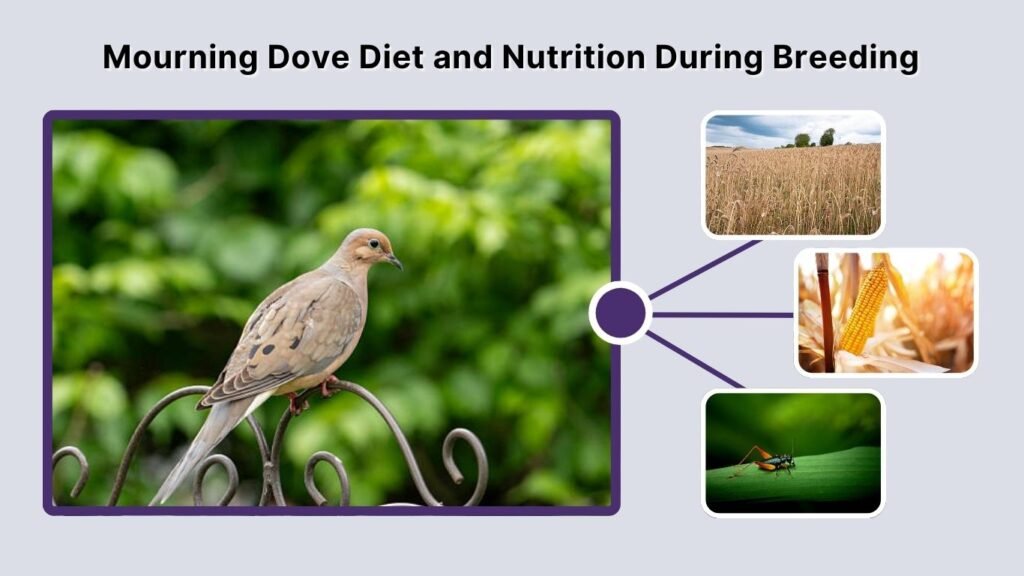
Proper nutrition plays a vital role in the successful breeding of mourning doves. During the nesting period, both parents require a steady supply of food to maintain their energy and to support egg production and chick development. Their diet directly affects the health of both eggs and babies.
Common Foods
- Seeds from grasses, weeds, and cultivated crops
- Grains such as corn, wheat, and millet
- Occasionally small insects for added nutrients
Importance of Nutrition
- Supports strong egg formation
- Helps produce crop milk for feeding chicks
- Maintains energy for constant parental care
Lifespan and Survival Rate
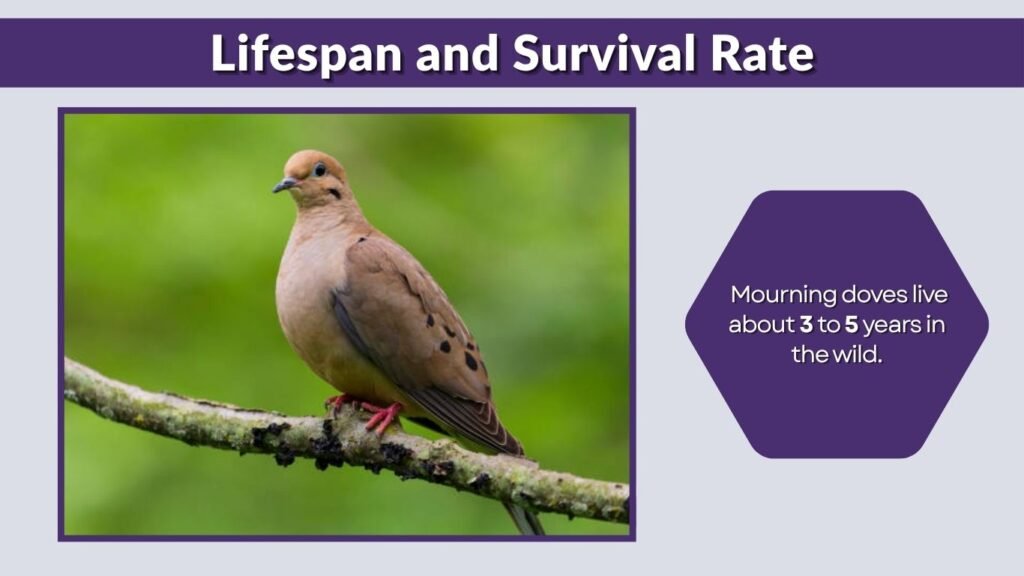
Mourning doves have a relatively short lifespan in the wild, largely due to natural threats and environmental challenges. While they reproduce frequently, not all chicks survive to adulthood, making their breeding strategy important for population stability.
On average, mourning doves live about 3 to 5 years in the wild, although some individuals may live longer under safe conditions. Young chicks are especially vulnerable during the early stages of life. Weather conditions, predators, and human disturbances can all impact survival rates. Despite these challenges, their ability to produce multiple broods each season helps maintain their population.
How to Identify a Mourning Dove Nest
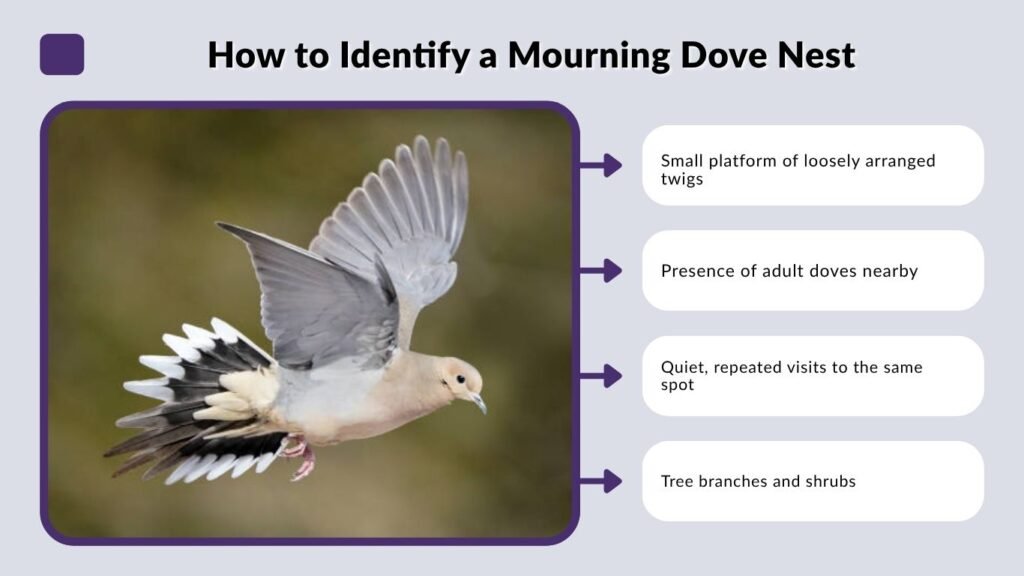
Recognizing a mourning dove nest can be helpful, especially for those who want to observe birds without disturbing them. Their nests are simple and often blend into their surroundings, making them easy to overlook.
Signs to Look For
- Small platform of loosely arranged twigs
- Presence of adult doves nearby
- Quiet, repeated visits to the same spot
Common Nesting Spots
- Tree branches and shrubs
- Building ledges and balconies
- Hanging pots or garden structures
How to Protect Mourning Dove Nests
Protecting mourning dove nests is important to ensure the safety of eggs and chicks. Since their nests are fragile and exposed, even small disturbances can cause problems.
Do’s
- Keep a safe distance from the nest
- Observe quietly without sudden movements
- Allow parents to care for their young
Don’ts
- Do not touch or move the nest
- Avoid handling eggs or chicks
- Keep pets away from nesting areas
FAQs
How long do mourning dove eggs take to hatch?
Mourning dove eggs usually take about 14 days to hatch. Both parents take turns incubating the eggs to keep them warm and protected. This shared responsibility ensures proper development and increases the chances of successful hatching.
How many eggs do mourning doves lay?
Mourning doves typically lay two eggs per clutch. They may produce several clutches during a single breeding season, especially if conditions are favorable. This helps maintain their population despite natural risks.
What do baby mourning doves eat?
Baby mourning doves are fed crop milk produced by both parents. This nutrient-rich substance helps them grow quickly during the early stages. As they develop, their diet gradually shifts to seeds and grains.
Do mourning doves reuse their nests?
Yes, mourning doves may reuse their nests, especially within the same breeding season. However, since their nests are fragile, they often repair or rebuild them before using them again.
What should I do if I find a dove nest?
If you find a mourning dove nest, it is best to leave it undisturbed. Observe from a distance and avoid touching the nest, eggs, or chicks. Keeping pets away and minimizing disturbance will help the birds raise their young safely.