
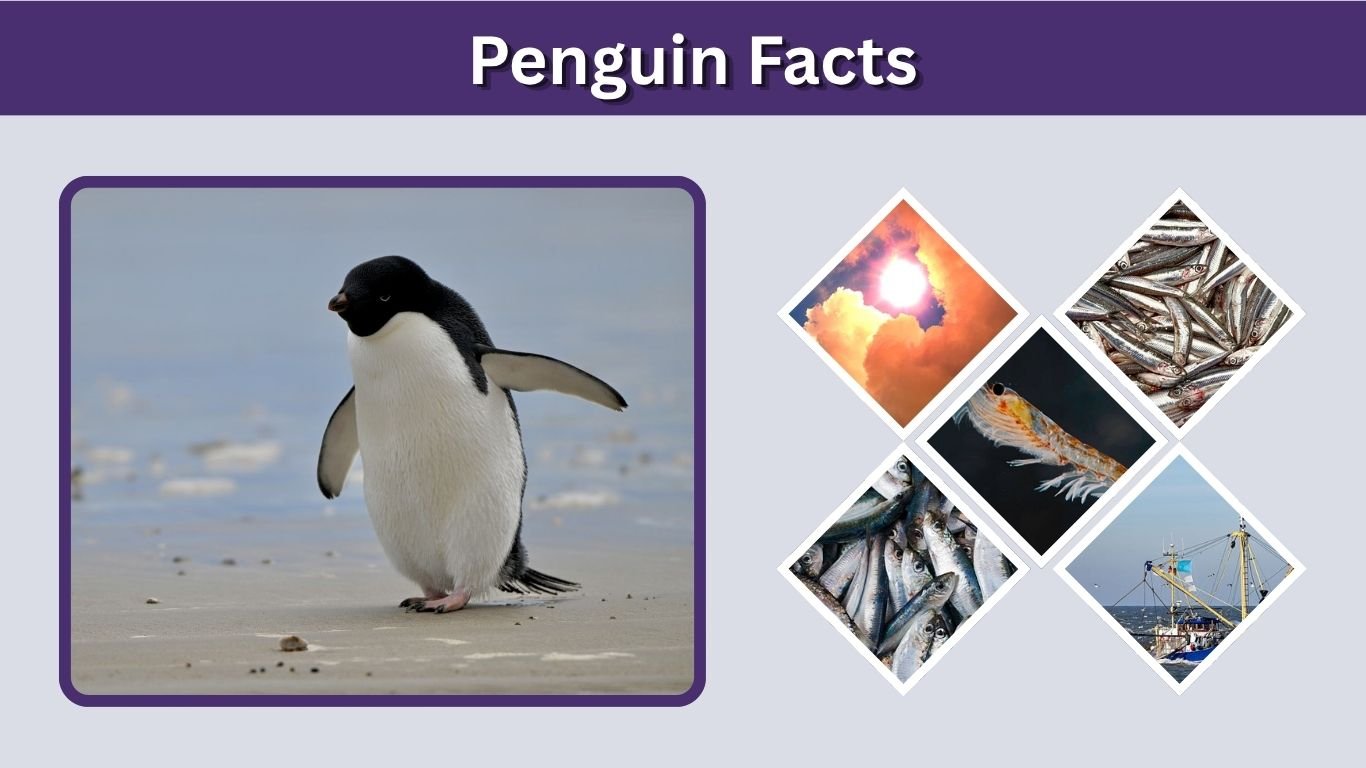
Penguins are distinctive flightless seabirds known for their upright posture, powerful swimming ability, and black-and-white plumage. Although many people associate them exclusively with Antarctica, different penguin species live across the Southern Hemisphere, from icy Antarctic coasts to temperate Australia, Africa, South America, and the Galápagos Islands. Penguins spend much of their lives at sea, where they hunt fish, krill, squid, and other marine prey. This guide explores penguin types, habitat, diet, size, behavior, reproduction, adaptations, and other fascinating facts.
What Is a Penguin?
Penguins are flightless seabirds belonging to the family Spheniscidae. Depending on the taxonomic treatment used, roughly 17–19 living species are recognized. Instead of wings suited for aerial flight, penguins have stiff flippers that propel their streamlined bodies through water. Their feet, feathers, body shape, and insulating layers are highly adapted to marine life.
Key Penguin Characteristics
- Belong to the bird family Spheniscidae
- Cannot fly through the air
- Use stiff flippers for underwater propulsion
- Have streamlined bodies suited to swimming
- Usually have dark backs and pale undersides
- Possess dense, water-resistant feathers
- Spend much of their lives at sea
- Return to land or ice to rest, molt, and breed
Why Can’t Penguins Fly?
Penguins evolved for efficient swimming rather than aerial flight. Their wings became short, stiff flippers capable of generating powerful underwater strokes.
Their solid bones and streamlined bodies also help them dive rather than remain lightweight for flying. Underwater, the movement can resemble a bird flying through the air. Some penguins can travel through the water at impressive speeds while chasing prey. WWF reports that some species can reach about 15 mph in the water.
Penguin Species and Types
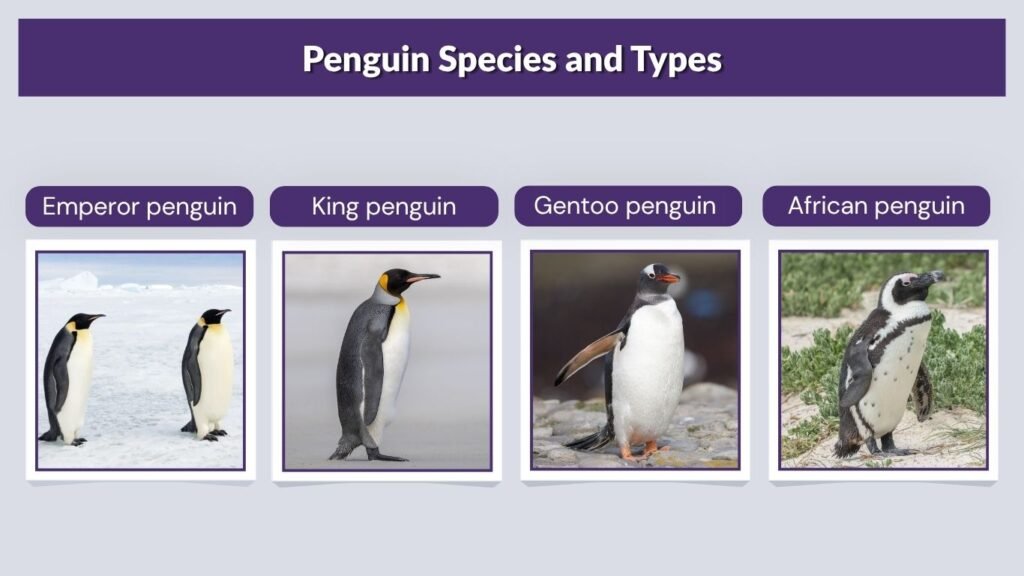
Penguins vary greatly in appearance, size, habitat, and behavior. Some species have classic black-and-white plumage, while others show yellow crests, orange neck patches, blue-gray feathers, or distinctive facial markings. The emperor is the largest living species, while the little penguin of Australia and New Zealand is the smallest.
Well-Known Types of Penguins
- Emperor penguin — largest living penguin
- King penguin — second-largest species
- Adélie penguin — Antarctic species with white eye rings
- Chinstrap penguin — recognizable black chin marking
- Gentoo penguin — orange-red bill and white eye markings
- African penguin — native to southern Africa
- Galápagos penguin — northernmost penguin species
- Little penguin — world’s smallest penguin
- Macaroni penguin — prominent yellow crest
- Rockhopper penguin — known for hopping across rocky terrain
Largest and Smallest Penguins
The emperor penguin is the largest species, growing to around 1.3 meters, or approximately 4.25 feet, tall. Its substantial body and insulating feathers help it survive Antarctic conditions.
At the opposite extreme, the little penguin reaches only about 30 centimeters, or 11.8 inches, and weighs slightly more than 1 kilogram. It occurs mainly around southern Australia and New Zealand and is also called the little blue or fairy penguin.
Where Do Penguins Live?
Penguins are overwhelmingly Southern Hemisphere birds, but their habitats extend far beyond Antarctica. They occupy oceanic islands, rocky coastlines, beaches, temperate shores, and polar environments. Their distribution depends strongly on access to productive marine feeding areas. Some species live in very cold environments, whereas others cope with surprisingly warm coastal climates.
Penguin Habitats and Range
Penguins can be found in:
- Antarctica and nearby islands
- Sub-Antarctic islands
- Southern Australia
- New Zealand
- Southern Africa
- Coastal South America
- The Galápagos Islands
- Rocky coastlines and beaches
- Sea-ice environments
- Temperate coastal habitats
Do All Penguins Live in Antarctica?
No. Only some species are closely associated with Antarctica. Adélie and emperor penguins are famous Antarctic birds, but African penguins live along southern African coasts, little penguins occur around Australia and New Zealand, and Galápagos penguins live in the tropical Galápagos Islands.
The Galápagos penguin is especially unusual because it is the only penguin species that can occur north of the equator. Cold, nutrient-rich ocean currents allow it to survive in this comparatively warm region.
What Do Penguins Eat?
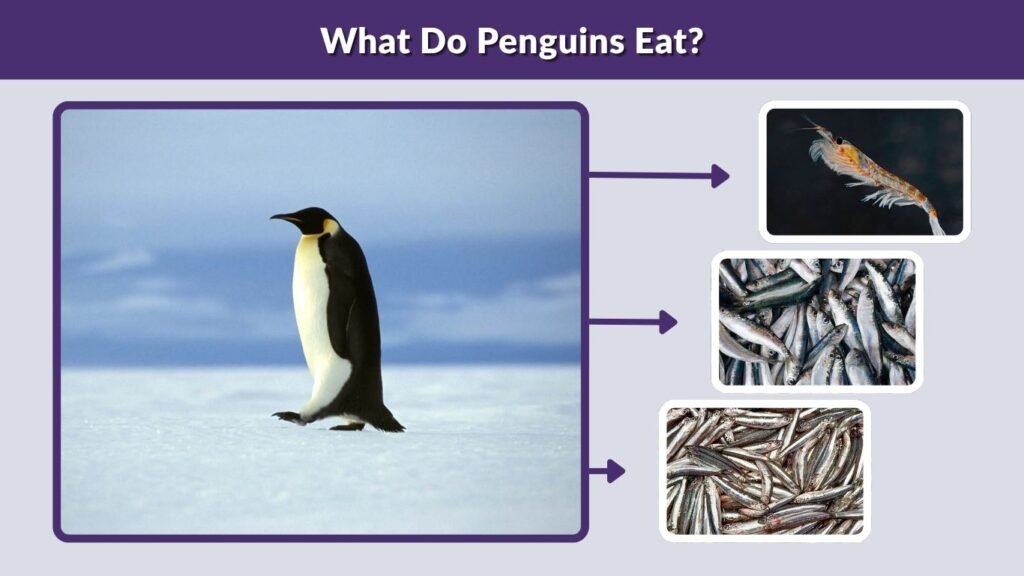
Penguins are carnivorous marine birds. Their exact diet varies according to species, location, season, and available prey. Because they hunt at sea, their food consists almost entirely of marine animals. Penguins may make repeated shallow dives or descend hundreds of meters depending on their species and the location of their prey.
Common Foods Penguins Eat
- Krill
- Small fish
- Sardines
- Anchovies
- Squid
- Other cephalopods
- Shrimp
- Small crustaceans
Emperor penguins commonly eat fish, krill, and squid, while African penguins rely heavily on small schooling fish such as sardines and anchovies.
How Penguins Hunt Underwater
Penguins pursue prey using powerful flipper strokes and streamlined bodies. Their feet mainly assist with steering, while the flippers generate propulsion.
Species differ greatly in diving ability. King penguins, for example, can dive hundreds of meters while searching for fish and cephalopods.
Their dark backs and light bellies also provide countershading, helping them blend into the ocean when viewed from above or below.
Penguin Life Cycle and Reproduction
Penguin reproduction differs among species, but breeding generally takes place on land, rocky islands, beaches, or sea ice. Many species form crowded colonies where thousands of birds may gather. Parents commonly share incubation and chick-feeding responsibilities, although the details vary considerably between species and environments.
Penguin Life Cycle
- Adults gather at breeding locations.
- Pairs court and establish breeding territories or nest sites.
- Females lay one or more eggs depending on species.
- Parents incubate the eggs.
- Chicks hatch covered in insulating down.
- Parents bring food back from the ocean.
- Young birds develop waterproof juvenile plumage.
- Juveniles eventually begin feeding independently at sea.
Penguin Chicks and Parenting
Penguin parenting can be remarkably demanding. Emperor penguins incubate their single egg on their feet rather than building a traditional nest, while gentoo penguins construct pebble nests and usually share incubation and chick-feeding duties.
In several colonial species, older chicks gather together in groups called crèches while parents forage at sea. King penguins are among the species known for this behavior.
How Penguins Survive Their Environment
Penguins possess specialized adaptations for life both underwater and on land. Cold-climate species rely heavily on insulation, but even penguins living in warmer regions must maintain waterproof plumage and regulate body temperature. Penguins also molt periodically, replacing their old feathers before returning to normal feeding activities at sea.
Swimming, Feathers, and Cold Adaptations
Penguins have tightly packed feathers that help insulate their bodies and keep water away from the skin. Their streamlined shape reduces resistance while swimming, and strong flippers allow rapid underwater movement.
Emperor penguins take cold adaptation even further. They gather into large huddles during extreme Antarctic conditions, helping conserve warmth while exposed to severe winter weather.
Social Behavior
Many penguins are highly social, especially during breeding. Colonies may range from relatively small groups to enormous gatherings containing thousands of birds.
Communication through calls helps individuals recognize mates or chicks in crowded colonies. Adélie penguins, for example, use distinctive vocalizations to recognize partners and offspring.
Threats Facing Penguins
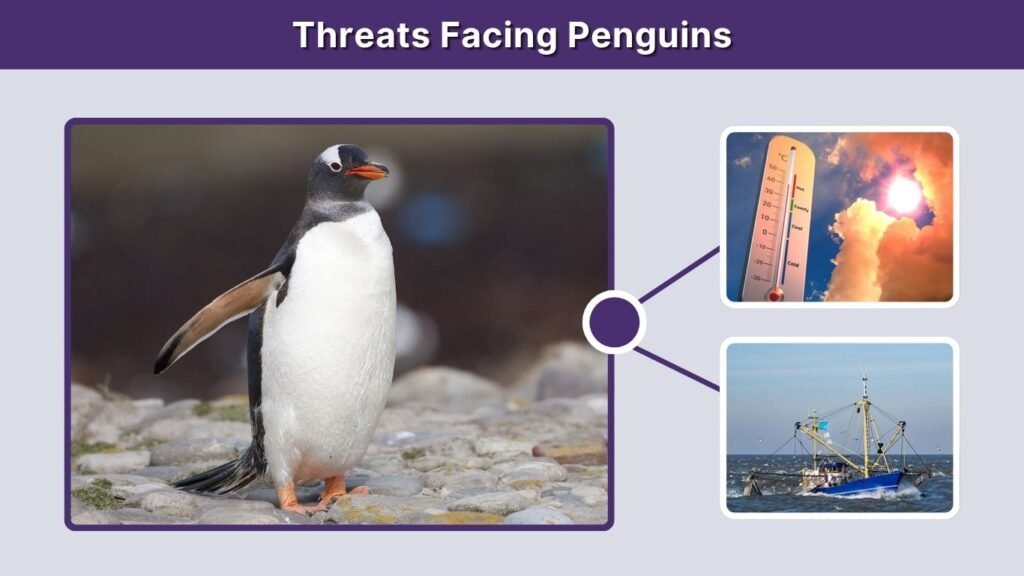
Penguin species do not all face the same level of risk, but several human-driven and environmental pressures affect populations. Because penguins depend on healthy marine ecosystems for food and safe breeding areas, changes in ocean conditions can influence breeding success, survival, and prey availability.
Conservation Challenges
Important threats include climate change, changing sea-ice conditions, overfishing, competition for prey, accidental capture in fishing gear, pollution, oil spills, coastal development, introduced predators, disease, and disturbance around breeding colonies.
Impacts vary by species. Antarctic penguins dependent on sea ice face different pressures from African, Galápagos, or little penguins living in warmer coastal ecosystems. Protecting feeding areas and breeding colonies therefore requires species-specific conservation strategies.
FAQs
Penguins inspire many questions because their lifestyles differ so dramatically from those of most familiar birds. Their flightlessness, marine hunting behavior, unusual breeding strategies, broad geographic range, and extreme adaptations make them particularly distinctive seabirds.
1. Can Penguins Fly?
Penguins cannot fly through the air. Their wings evolved into stiff flippers that provide powerful propulsion underwater, making them highly effective swimmers instead.
2. How Many Penguin Species Are There?
Classification varies, but major conservation references generally recognize about 17–19 living penguin species. Differences result from how closely related populations are classified.
3. What Is the Biggest Penguin?
The emperor penguin is the world’s largest living penguin. Adults can reach approximately 1.3 meters, or 4.25 feet, in height.
4. What Is the Smallest Penguin?
The little penguin is the smallest species, typically standing around 30 centimeters tall. It occurs mainly around southern Australia and New Zealand.
5. Do Penguins Have Teeth?
No. Penguins do not have true teeth. Instead, their mouths contain backward-pointing structures that help grip slippery fish and other prey. Emperor penguins also have rough, spiny tongues that help prevent captured prey from escaping.