
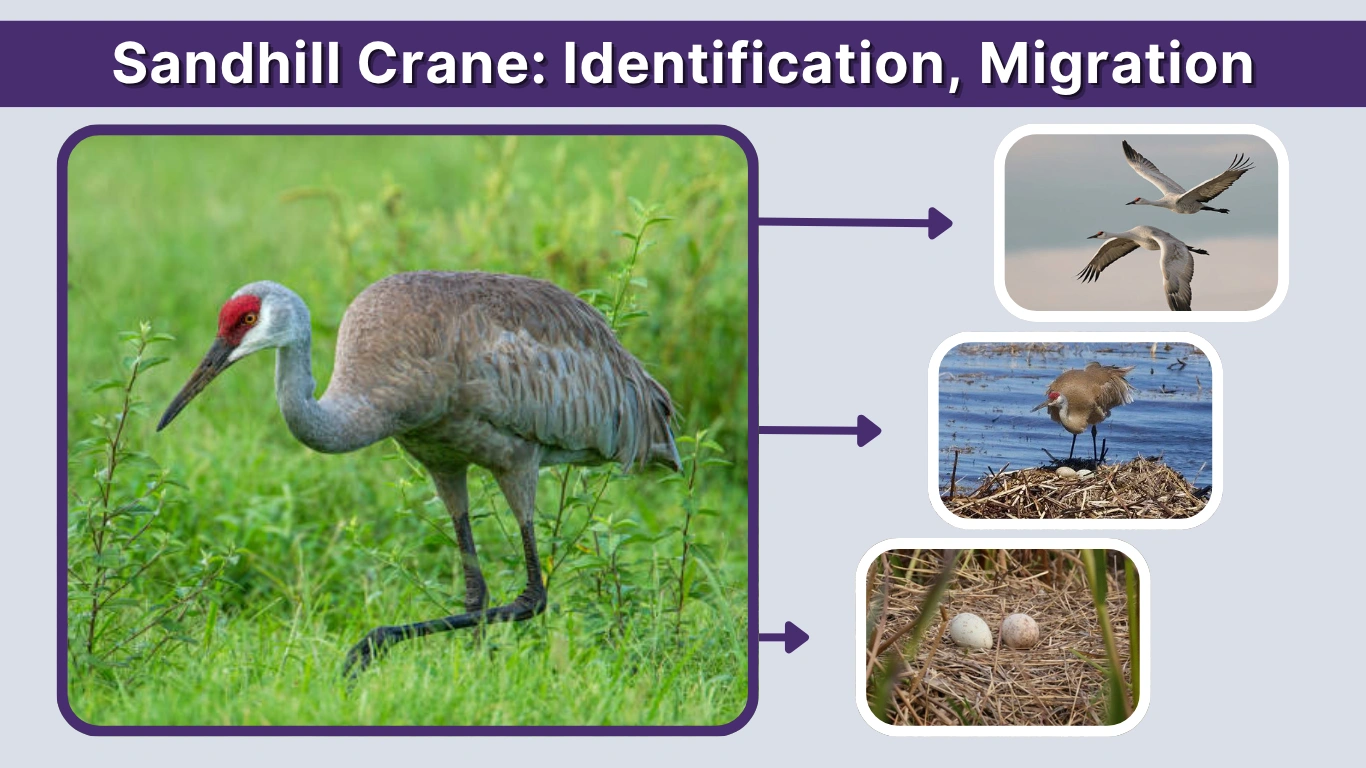
The sandhill crane is a large, elegant bird known for its long legs, striking calls, and incredible migration journeys. Found mainly in North America, it is one of the oldest living bird species, with a history dating back millions of years. Birdwatchers admire its graceful movements and unique behaviors, especially its famous dancing displays. This guide explores sandhill crane identification, habitat, migration patterns, and key facts to help you better understand this remarkable bird.
What is a Sandhill Crane?
The sandhill crane (Antigone canadensis) is a tall, gray bird belonging to the crane family, Gruidae. It is widely distributed across North America, with some populations found in parts of Asia and Cuba.
These birds are known for their loud, rolling calls and strong social bonds. They often travel in pairs or groups and are commonly seen in open landscapes near water.
Physical Overview
Sandhill cranes are large birds, standing about 80–120 cm tall with a wingspan of up to 2 meters. Their bodies are covered in gray feathers, which sometimes appear brownish due to staining from mud.
One of their most distinctive features is the red patch of bare skin on top of their head. They also have long, straight bills and extended necks, giving them a tall and elegant appearance.
Sandhill Crane Identification Guide
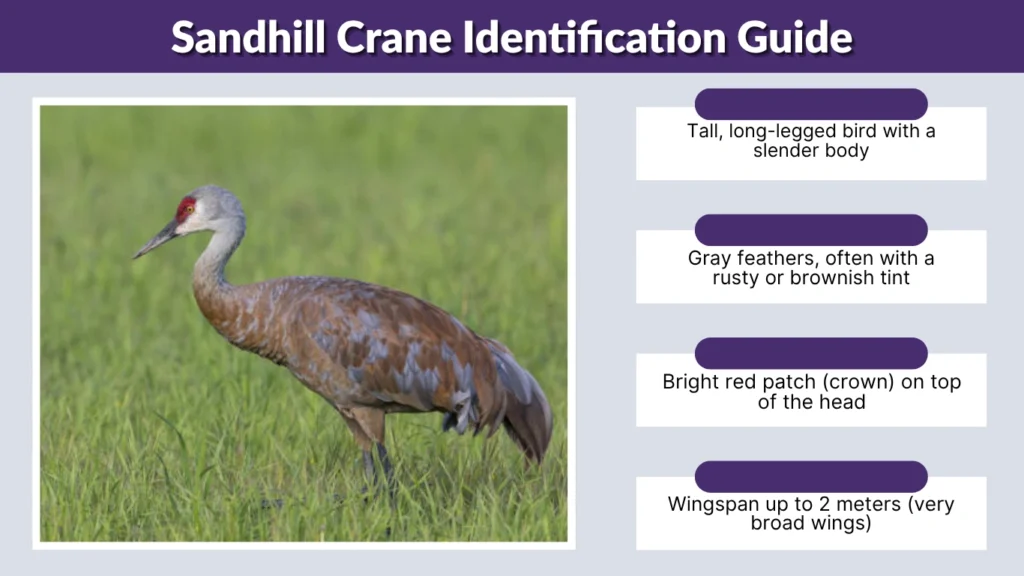
The sandhill crane is a large, distinctive bird that is relatively easy to identify once you know its key features. Its tall stature, gray plumage, and loud calls make it stand out in open landscapes and wetlands. However, it is sometimes confused with similar birds like herons, so focusing on a few clear traits can help with quick identification.
Key Identification Features (Quick List)
- Tall, long-legged bird with a slender body
- Gray feathers, often with a rusty or brownish tint
- Bright red patch (crown) on top of the head
- Long, straight, pointed bill
- Wingspan up to 2 meters (very broad wings)
Behavior Clues
- Loud, rolling, trumpet-like calls
- Walks slowly and gracefully in open areas
- Often seen in pairs or large flocks
- Performs jumping and dancing displays
Flight Identification
- Flies with neck fully extended (straight)
- Long legs trail behind the body
- Slow, steady wingbeats
- Often forms V-shaped flocks during migration
Where You’ll Spot Them
- Wetlands, marshes, and shallow water areas
- Grasslands and open fields
- Agricultural lands during migration or winter
These simple features make it easier to quickly recognize a sandhill crane, even from a distance or in flight.
Sandhill Crane vs Blue Heron
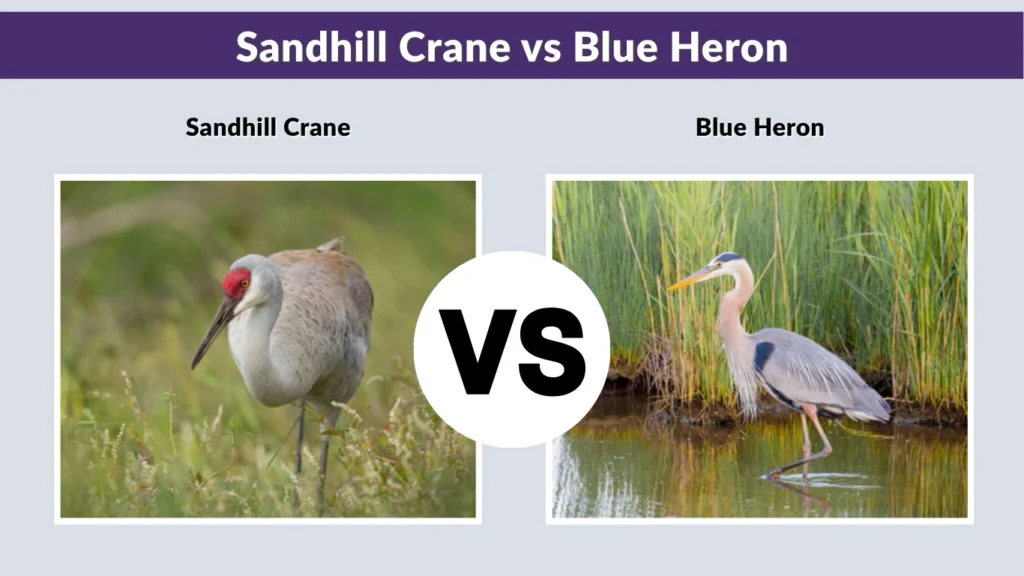
Sandhill cranes are often confused with great blue herons because both are large, gray birds found near water. However, there are clear differences between them.
Main Differences
The most important difference is in flight posture. Sandhill cranes fly with their necks straight, while blue herons fly with their necks folded back.
Cranes also have a more upright posture when standing, while herons often appear hunched. Additionally, cranes have a red crown, which herons lack.
Easy Identification Tips
To quickly tell them apart, observe how the bird flies. A straight neck indicates a crane, while a curved neck suggests a heron.
You can also watch their behavior. Sandhill cranes are more social and often seen in groups, whereas herons are usually solitary hunters.
Sandhill Crane Habitat
Sandhill cranes prefer open landscapes where they have clear visibility and access to food.
Preferred Habitats
They are commonly found in wetlands, marshes, grasslands, and shallow water areas. These environments provide both food and safe nesting sites.
During the breeding season, they favor remote wetlands, while in winter they may move to open fields and agricultural areas.
Geographic Distribution
Sandhill cranes are widely distributed across North America. Large populations breed in Canada and Alaska, then migrate south to the United States and Mexico.
Some non-migratory populations live year-round in parts of Florida, Cuba, and Mississippi.
Sandhill Crane Migration
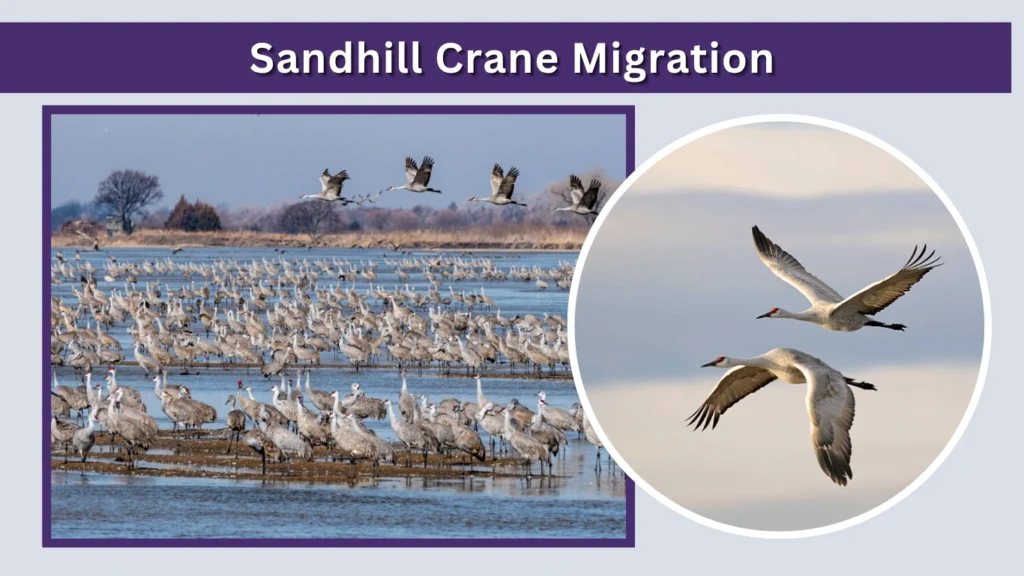
Migration is one of the most fascinating aspects of sandhill crane behavior. These birds travel long distances between their breeding and wintering grounds.
Migration Routes
Sandhill cranes typically breed in northern regions such as Canada and Alaska. As winter approaches, they migrate south to warmer areas in the southern United States and Mexico.
One of the most famous migration stopovers is along the Platte River in Nebraska, where thousands of cranes gather each year.
Seasonal Movement
Migration usually occurs twice a year—once in the fall and once in the spring. During these journeys, cranes travel in large flocks, often forming V-shaped patterns in the sky.
These migrations are essential for survival, allowing the birds to find suitable climates and abundant food sources throughout the year.
Sandhill Crane Diet
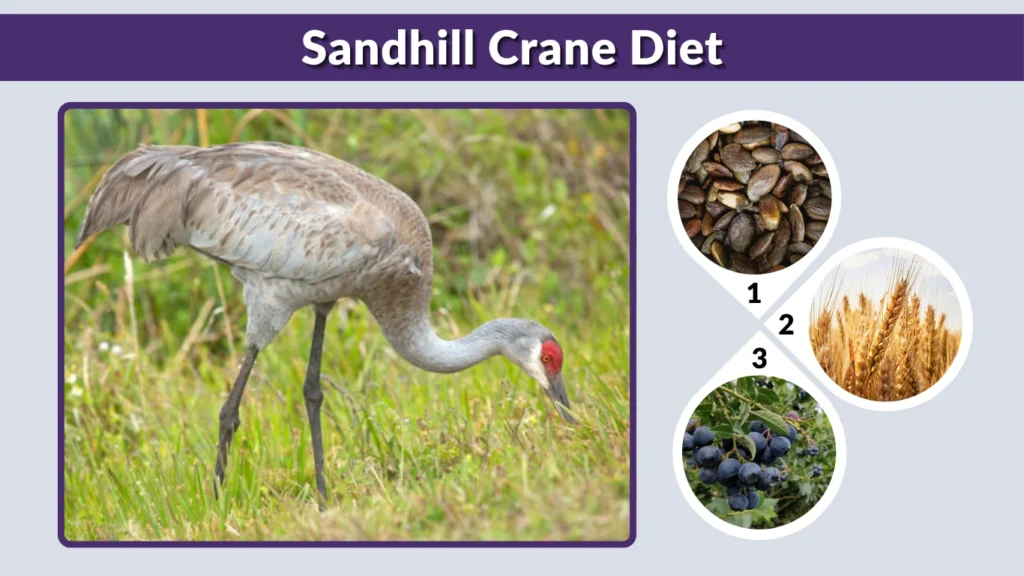
Sandhill cranes are omnivorous birds with a varied diet that changes depending on the season and location.
What Do They Eat?
Their diet includes seeds, grains, berries, and plant roots. They also eat insects, small mammals, amphibians, and other small animals when available.
This flexible diet helps them adapt to different environments.
Feeding Behavior
Sandhill cranes forage by walking slowly and pecking at the ground. They may search for food in both wetlands and agricultural fields.
They are known to feed in groups, especially during migration and winter, where food is more concentrated.
Sandhill Crane Nest and Eggs
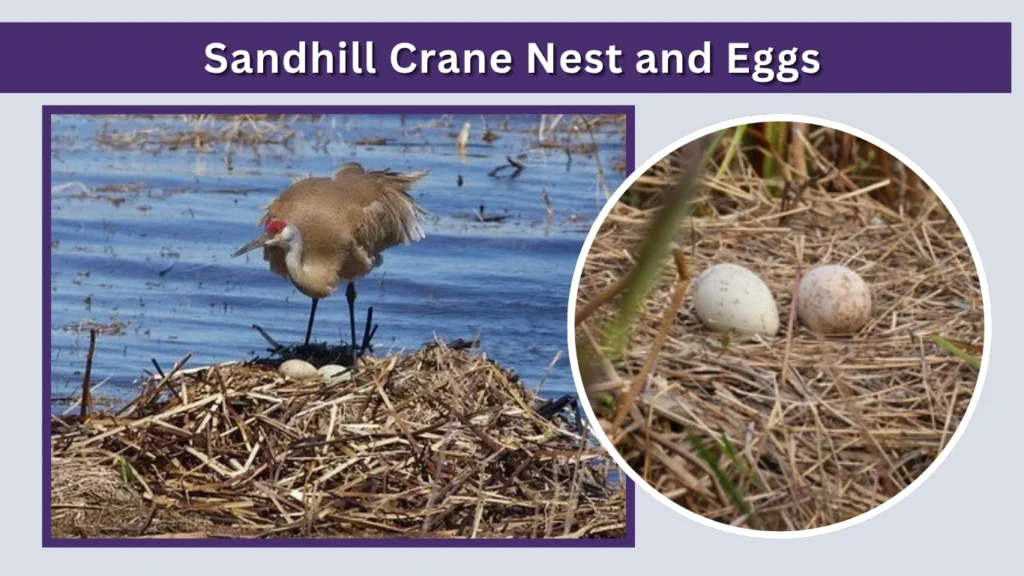
Reproduction in sandhill cranes is closely tied to wetland environments, where they can safely raise their young. These birds form long-term pair bonds, often staying with the same mate for life.
Nesting Behavior
Sandhill cranes build their nests in shallow wetlands, marshes, or grassy areas near water. The nest is usually a mound made of vegetation such as grasses, reeds, and small plants.
Both male and female participate in building the nest and defending their territory. They are highly protective during the breeding season and may become aggressive if threatened.
Egg Details
A typical clutch contains 1 to 2 eggs. The eggs are oval-shaped and usually light brown or olive in color with darker markings.
Both parents share incubation duties, which last about 29 to 32 days. This teamwork helps ensure the eggs are kept warm and protected at all times.
Sandhill Crane Baby (Chicks)
Sandhill crane chicks, often called “colts,” are born ready to move and follow their parents shortly after hatching.
Appearance
Newly hatched chicks are covered in soft, brownish down feathers that help them blend into their surroundings. They are much smaller than adults but have long legs even at an early stage.
Growth and Care
Both parents take care of the chicks, guiding them to food and protecting them from predators. The chicks begin feeding themselves within a day or two but still rely on parental guidance.
They grow quickly and are able to fly after about 9 to 10 weeks, although they often stay with their parents for several months.
Sandhill Crane Lifespan
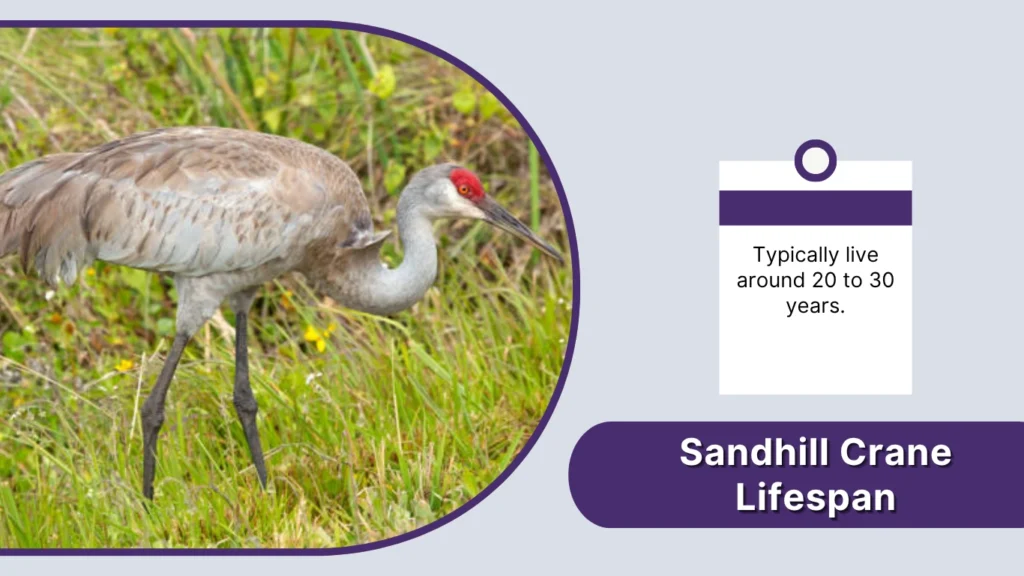
Sandhill cranes are relatively long-lived birds compared to many other species.
Average Lifespan
In the wild, sandhill cranes typically live around 20 to 30 years. Some individuals have been recorded living even longer, especially in protected environments.
In captivity, their lifespan can extend beyond 30 years due to reduced threats.
Survival Factors
Their lifespan is influenced by several factors, including predation, habitat conditions, and food availability.
Young chicks are especially vulnerable to predators such as foxes, raccoons, and birds of prey. Human-related threats like habitat loss and collisions with power lines can also impact survival.
Sandhill Crane Hunting
Sandhill cranes have a complex relationship with humans, including regulated hunting in certain regions.
Where Hunting is Allowed
In parts of North America, controlled hunting of sandhill cranes is permitted. This is typically managed through licensing and seasonal restrictions.
These regulations ensure that hunting does not negatively impact overall populations.
Conservation Balance
Wildlife agencies carefully monitor crane populations to maintain a balance between conservation and hunting activities.
In many areas, hunting is used as a management tool to control population sizes while still protecting the species.
Interesting Sandhill Crane Facts
Sandhill cranes are fascinating birds with many unique behaviors and characteristics.
Unique Behaviors
One of the most well-known behaviors of sandhill cranes is their “dancing.” They jump, flap their wings, and toss objects into the air as part of courtship displays.
They are also known for forming strong lifelong pair bonds, which is relatively rare among birds.
Cultural Importance
Sandhill cranes hold cultural significance in many regions. In some cultures, they are seen as symbols of longevity and loyalty.
They also play an important ecological role by helping control insect populations and dispersing seeds.
Conservation Status
Sandhill cranes are currently considered a species of least concern, but conservation efforts are still important to maintain their populations.
Threats
The main threats to sandhill cranes include habitat loss, especially the destruction of wetlands. Climate change and environmental pollution can also affect their habitats and food sources.
Human-made hazards such as power lines and urban development pose additional risks.
Protection Efforts
Conservation programs focus on protecting wetlands and maintaining migration routes. Many important habitats are now designated as protected areas.
Public awareness and responsible wildlife management have helped ensure that sandhill crane populations remain stable.
Conclusion
The sandhill crane is a remarkable bird known for its size, beauty, and incredible migration journeys. From its distinctive calls to its graceful movements and strong family bonds, it stands out as one of nature’s most fascinating species. By understanding its habitat, life cycle, and challenges, we can better appreciate the importance of conserving wetlands and protecting these majestic birds for future generations.
FAQs
Where do sandhill cranes migrate?
They migrate from northern breeding areas like Canada and Alaska to southern regions of the United States and Mexico.
What do sandhill cranes eat?
They eat a mix of plants, grains, insects, and small animals.
How long do sandhill cranes live?
They typically live 20 to 30 years in the wild.
What is the difference between a sandhill crane and a blue heron?
Cranes fly with their necks straight, while herons fly with their necks folded back.
Are sandhill cranes hunted legally?
Yes, in some regions under strict regulations to ensure population control and conservation.
