
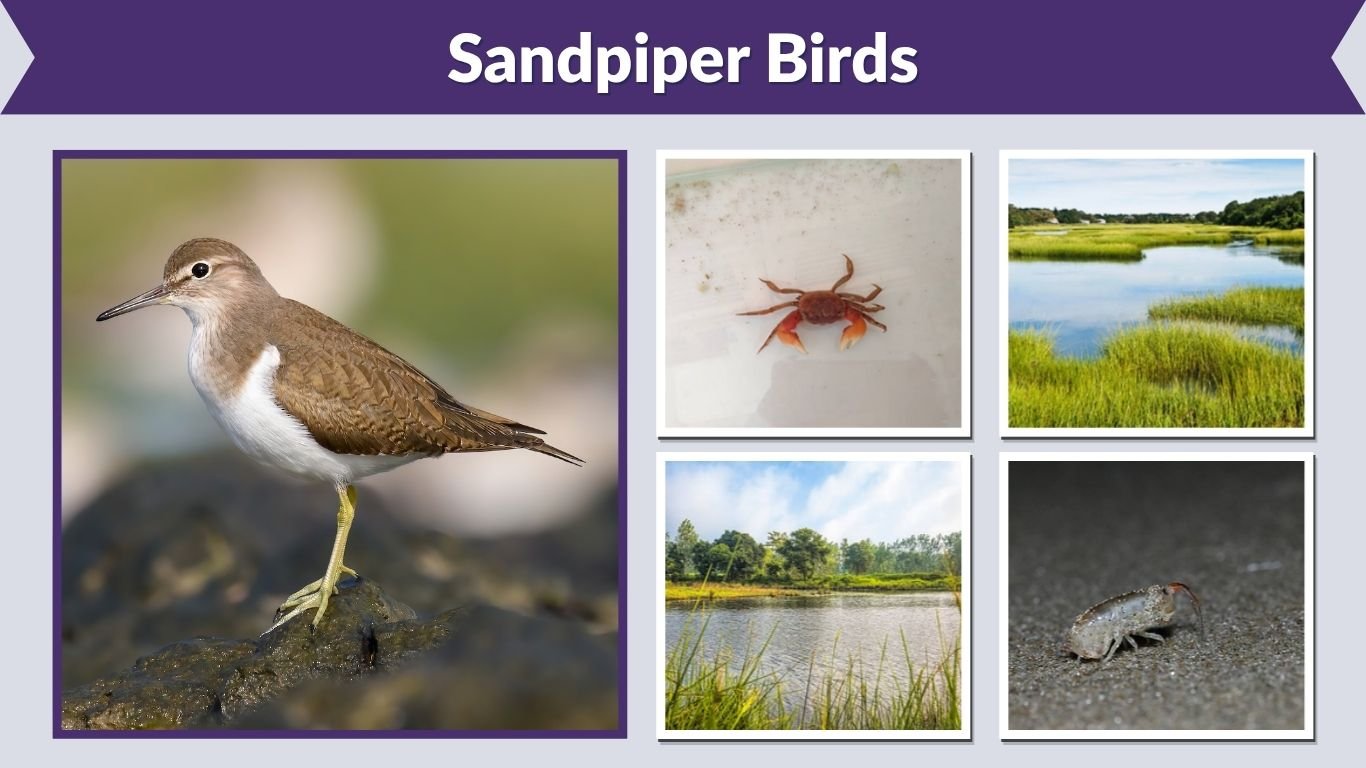
Sandpiper birds are fascinating shorebirds commonly seen running along beaches, mudflats, wetlands, and shallow water searching for food. Although many sandpipers look similar at first glance, differences in body size, bill shape, leg color, plumage, and feeding behavior can help identify them. Some species remain close to ocean beaches, while others prefer freshwater wetlands or even grasslands. This guide explains what sandpiper birds eat, where they live, how to identify them, common types, Florida populations, swimming behavior, and birds similar to sandpipers.
What Are Sandpiper Birds?
Sandpipers are shorebirds belonging to the family Scolopacidae, a diverse family that also includes birds such as curlews, godwits, dowitchers, turnstones, and phalaropes. They occur across much of the world and occupy habitats ranging from sandy beaches and tidal flats to marshes, riverbanks, tundra, and grasslands. Many species are highly migratory.
Sandpiper Bird Identification
Although identification varies by species, several characteristics are useful when looking at sandpiper birds:
- Slender or moderately long bills used for picking or probing
- Relatively long legs suited to walking through shallow water
- Brown, gray, buff, white, or mottled plumage
- Narrow and usually pointed wings
- Quick walking or running movements
- Frequent feeding along mud, sand, or shallow water
- Compact to medium-sized shorebird body shape
Bill length and shape are especially useful identification clues. Some species have short straight bills, while others have bills that curve upward or downward.
How Big Are Sandpipers?
Sandpipers vary considerably in size. The Least Sandpiper is among the smallest, measuring roughly 5–6 inches long, while other members of the sandpiper family can be substantially larger.
This size variation is one reason the term “sandpiper” can describe birds that look surprisingly different from one another.
Sandpiper Habitat and Behavior
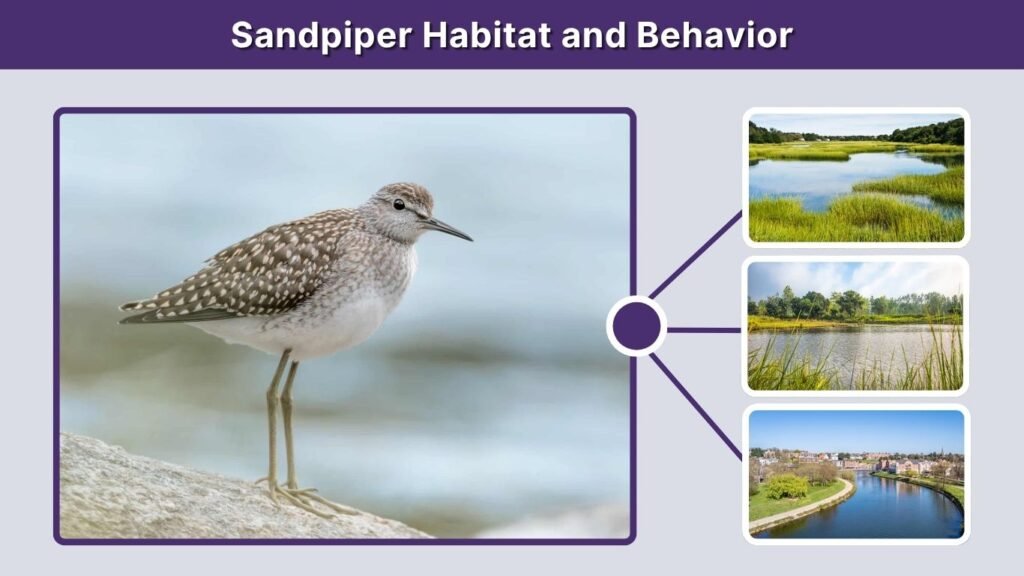
Sandpiper birds are strongly associated with water, but they do not all live directly beside the ocean. Depending on the species and season, they may occur around beaches, tidal mudflats, estuaries, marshes, ponds, rivers, flooded fields, and rocky coastlines. Some, including the Upland Sandpiper, spend much of their time in grasslands rather than along shorelines.
Sandpiper Birds on the Beach
Small sandpipers running beside waves are among the most recognizable beach birds. Sanderlings are particularly famous for chasing receding waves and quickly retreating when the next wave arrives. During migration and winter, they can be found on coastal beaches across large portions of the world.
These movements are mainly related to feeding. As waves retreat, small marine organisms become temporarily exposed in wet sand, giving the birds a brief opportunity to capture them.
Do All Sandpipers Bob Up and Down?
No. Bobbing or teetering is especially noticeable in species such as the Spotted Sandpiper. Its repeated tail and body movements can provide an important field-identification clue.
Other sandpipers rely more heavily on rapid running, slow probing, pecking, or deliberate walking. Watching behavior can therefore be just as helpful as examining plumage.
Can Sandpiper Birds Swim?
Many sandpipers are primarily walkers and waders rather than regular swimming birds. However, some members of the sandpiper family are capable swimmers, and phalaropes are particularly adapted to feeding while swimming.
Typical beach sandpipers are much more likely to run through very shallow water or along wet sand than spend long periods floating like ducks.
What Do Sandpiper Birds Eat?
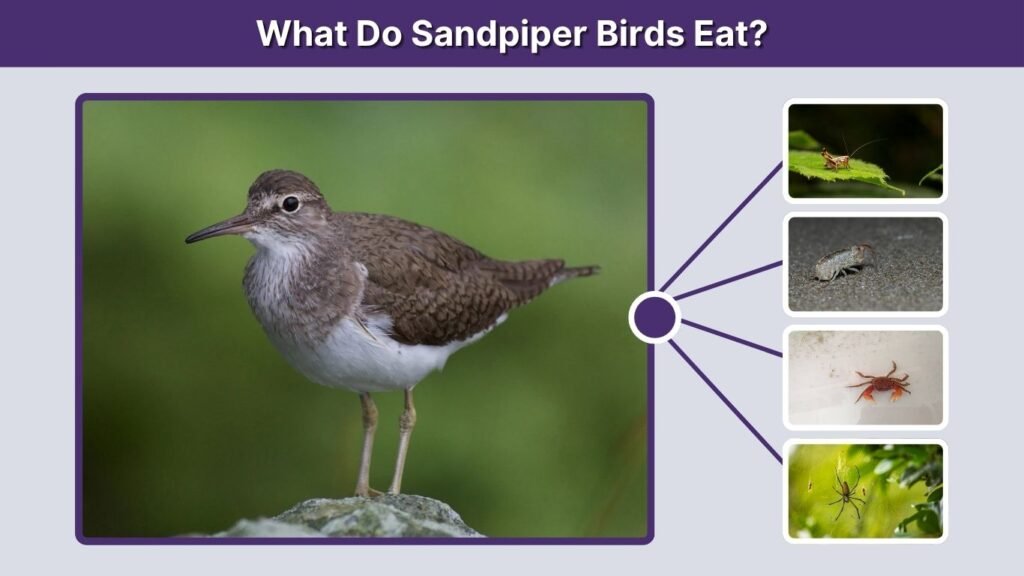
Most sandpipers eat small invertebrates, although their exact diets vary with habitat, species, season, and available food. Their slender bills allow them to pick prey from surfaces or probe into mud and sand. Some species use both vision and touch, enabling them to locate organisms hidden beneath the surface.
Common Sandpiper Foods
Depending on the species, sandpiper diets may include:
- Insects and insect larvae
- Marine worms
- Small crustaceans
- Amphipods
- Mollusks and snails
- Small crabs
- Spiders
- Aquatic invertebrates
- Small fish
- Seeds and other plant material
Western Sandpipers, for example, consume insects, crustaceans, mollusks, marine worms, and even nutrient-rich biofilm from intertidal areas.
How Sandpipers Find Their Food
Sandpiper feeding techniques differ considerably. Some rapidly peck at exposed prey, whereas others repeatedly insert their bills into mud or sand. Pectoral Sandpipers use sight and touch when searching wetlands, while Solitary Sandpipers often capture visible prey along muddy shores and shallow water.
Bill length can influence how deeply a bird reaches into sediment, allowing different sandpiper species to exploit slightly different food sources in the same feeding area.
Types of Sandpiper Birds and Similar Species
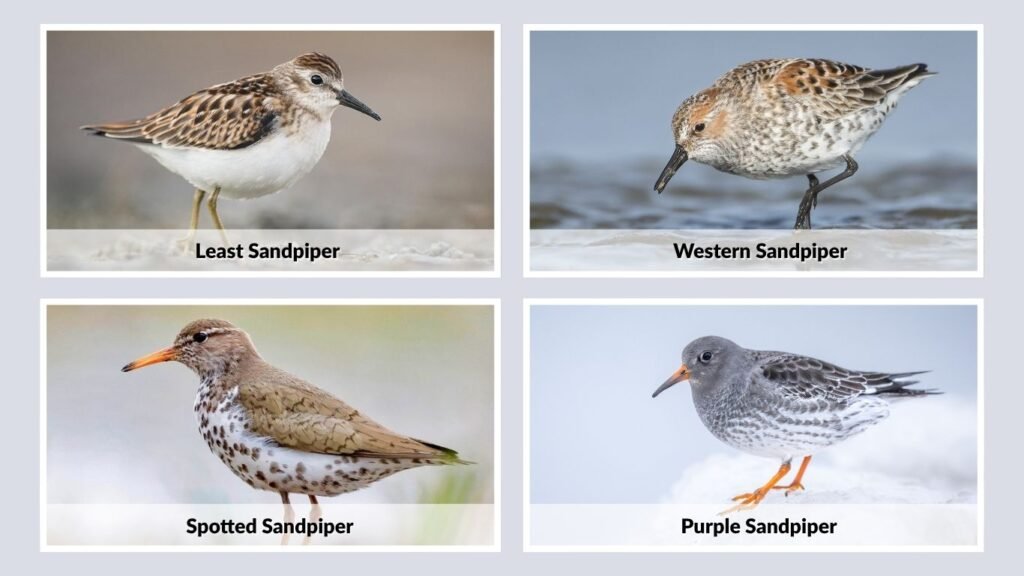
The sandpiper family contains a surprisingly broad range of shorebirds. For beginners, small species can be difficult to distinguish because seasonal plumage changes can make normally distinctive markings less obvious. Size, bill proportions, leg color, habitat, movement, and feeding style should therefore be considered together rather than relying on a single characteristic.
Common Types of Sandpipers
Some well-known sandpiper birds include:
- Least Sandpiper – Tiny species with yellowish or greenish legs
- Semipalmated Sandpiper – Small gray-brown shorebird with a short bill
- Western Sandpiper – Small migrant with a slightly drooping bill
- Spotted Sandpiper – Known for bobbing behavior and breeding-season spots
- Solitary Sandpiper – Often found around freshwater habitats
- Pectoral Sandpiper – Medium-sized migrant with a streaked breast
- Purple Sandpiper – Associated with wave-washed rocky coastlines
- Upland Sandpiper – A grassland species rather than a typical beach bird
- Curlew Sandpiper – Long-billed species with distinctive breeding plumage
- Stilt Sandpiper – Long-legged sandpiper often associated with wetlands
Birds Similar to Sandpipers
Several shorebirds can easily be confused with sandpipers:
- Plovers – Usually have shorter bills and often run, stop, and visually capture prey.
- Yellowlegs – Long-legged shorebirds with conspicuous yellow legs.
- Dowitchers – Longer-billed birds that often feed with rapid probing movements.
- Avocets – Taller birds with distinctively upturned bills.
- Oystercatchers – Larger shorebirds with heavy, brightly colored bills.
- Stilts – Extremely long-legged waders with slender bills.
Plovers are particularly useful to distinguish: compared with many sandpipers, they tend to have shorter bills and a more stop-and-run feeding style.
Small Sandpiper Birds
Birders often call the smallest Calidris sandpipers “peeps.” Least, Semipalmated, and Western Sandpipers can appear remarkably similar from a distance.
Checking leg color, bill length, bill curvature, body size, plumage tone, location, and season provides a much more reliable identification than size alone.
Sandpiper Birds in Florida and Coastal Regions
Coastal regions offer excellent opportunities to observe sandpipers, particularly during migration and winter. Florida’s Atlantic and Gulf coasts provide beaches, tidal flats, lagoons, marshes, and estuaries suitable for many shorebirds. California and other Pacific Coast areas also support numerous resident and migratory species at beaches, bays, wetlands, and rocky shorelines.
Sandpiper Birds in Florida
Florida birders may encounter Sanderlings, Least Sandpipers, Semipalmated Sandpipers, Western Sandpipers, Dunlins, and several related shorebirds. Audubon Florida specifically notes smaller species such as Semipalmated, Western, and Least Sandpipers among birds that may require close field-guide comparison.
Sanderlings are especially noticeable on sandy beaches because of their rapid wave-chasing behavior.
Beach visitors should give feeding and resting shorebirds plenty of space, particularly around protected nesting areas where disturbance can cause birds to leave nests or expend valuable energy.
Sandpiper Birds in California
California’s Pacific coastline is another productive region for sandpiper watching. Sandy beaches, estuaries, tidal mudflats, salt marshes, and rocky shores attract different species throughout the year.
Migration can produce especially diverse gatherings because birds moving between northern breeding territories and southern wintering grounds depend on productive coastal stopover locations.
Identifying Sandpipers From Pictures
When studying pictures of sandpiper birds, begin with overall size and body proportions. Next examine the bill, legs, breast markings, back pattern, and wing markings.
Season matters because breeding plumage may be considerably brighter than winter plumage. Comparing several photographs of the same species is often more useful than relying on one image.
FAQs
Sandpipers generate many questions because dozens of similar-looking species can occur in the same general habitats. Their appearance also changes with age and season. Understanding a few basic facts about feeding, habitat, movement, and identification makes recognizing these energetic shorebirds considerably easier.
1. What do sandpiper birds eat?
Sandpipers primarily eat insects, worms, crustaceans, mollusks, and other small invertebrates. Some species also consume small fish, seeds, algae, or other plant material depending on habitat and season.
2. Where do sandpiper birds live?
Sandpipers occur on beaches, mudflats, estuaries, marshes, rivers, lakeshores, tundra, rocky coasts, and sometimes grasslands. Habitat preferences vary significantly among species.
3. Why do sandpipers run along the beach?
They follow receding waves because newly exposed wet sand contains small organisms they can quickly capture before another wave arrives.
4. What is the smallest sandpiper bird?
The Least Sandpiper is the smallest sandpiper in North America, measuring about 5–6 inches long.
5. Are sandpipers migratory birds?
Many sandpipers are long-distance migrants. They travel between northern breeding areas and warmer wintering regions, relying on wetlands, mudflats, beaches, and other productive stopover habitats along their routes.
