
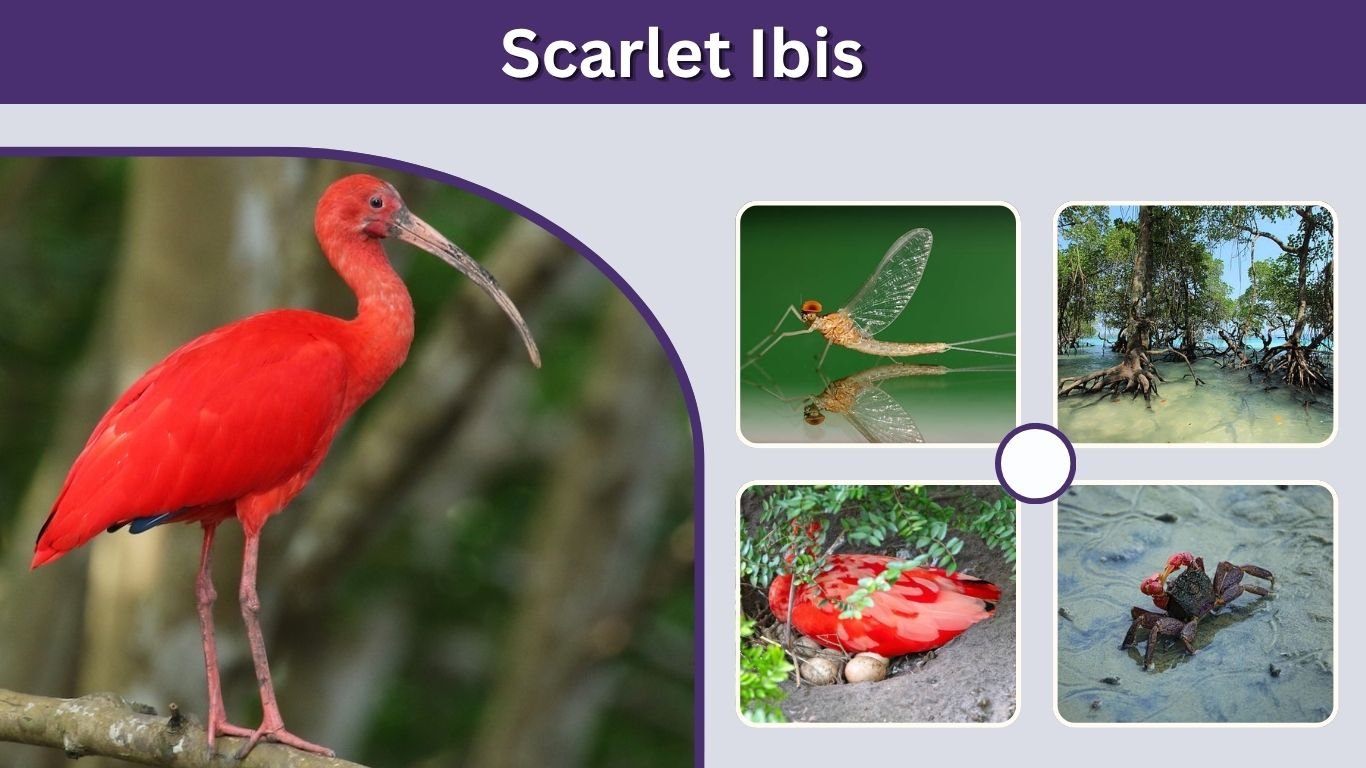
The Scarlet Ibis (Eudocimus ruber) is a spectacular tropical wading bird famous for its brilliant scarlet-red plumage, long curved bill, and slender pink legs. Native mainly to northern South America and Trinidad and Tobago, these highly social birds gather around marshes, mangroves, mudflats, and shallow coastal waters. Their intense coloration is closely connected to pigments obtained from their food. From unusual feeding techniques to large communal roosts, the Scarlet Ibis has many fascinating characteristics that make it one of the world’s most recognizable ibises.
Scarlet Ibis Identification
Adult Scarlet Ibises are difficult to mistake for most other wading birds because almost their entire body becomes a vivid scarlet or reddish-orange. Juveniles look dramatically different, starting with dull grayish-brown feathers before developing their characteristic coloration. Both males and females have similar plumage, although males tend to be larger and have longer bills.
Key Identification Features
- Scientific name: Eudocimus ruber
- Adult color: Brilliant scarlet to reddish-orange
- Wing tips: Contrasting black flight feathers
- Bill: Long, narrow, and curved downward
- Legs: Long and pink to reddish
- Neck: Long and slender
- Juveniles: Grayish-brown with pale underparts
- Flight posture: Neck extended forward rather than folded backward
The curved bill is particularly useful for distinguishing a Scarlet Ibis from similarly colored birds such as flamingos and Roseate Spoonbills.
Scarlet Ibis Size and Appearance
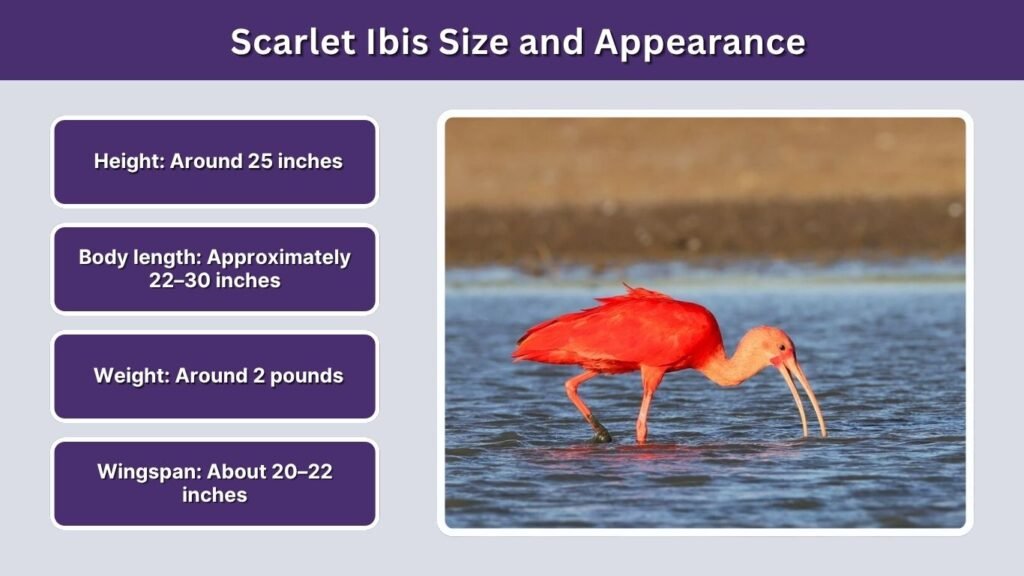
Scarlet Ibises are medium-sized wading birds. Their long necks, legs, and bills make them appear taller and more delicate than their body weight suggests. Despite their striking appearance on the ground, they are also graceful fliers and commonly travel in groups between feeding grounds and communal roosting locations.
How Big Is a Scarlet Ibis?
Typical measurements include:
- Height: Around 25 inches
- Body length: Approximately 22–30 inches
- Weight: Around 2 pounds
- Wingspan: About 20–22 inches
- Build: Slender with long legs and neck
The Smithsonian’s National Zoo reports adults at about 25 inches tall and roughly 2 pounds in weight. Size varies somewhat between individuals, and males are generally larger than females.
Why Are Scarlet Ibises Red?
Scarlet Ibises do not hatch with their famous red coloration. Young birds are mainly dull brownish-gray, and their feathers gradually become more colorful as they mature.
Carotenoid pigments obtained through the diet contribute to the intense coloration. Foods such as crustaceans provide pigments that are incorporated into growing feathers. This relationship between diet and plumage helps explain why captive birds require an appropriate diet to maintain vibrant coloration.
Where Do Scarlet Ibises Live?
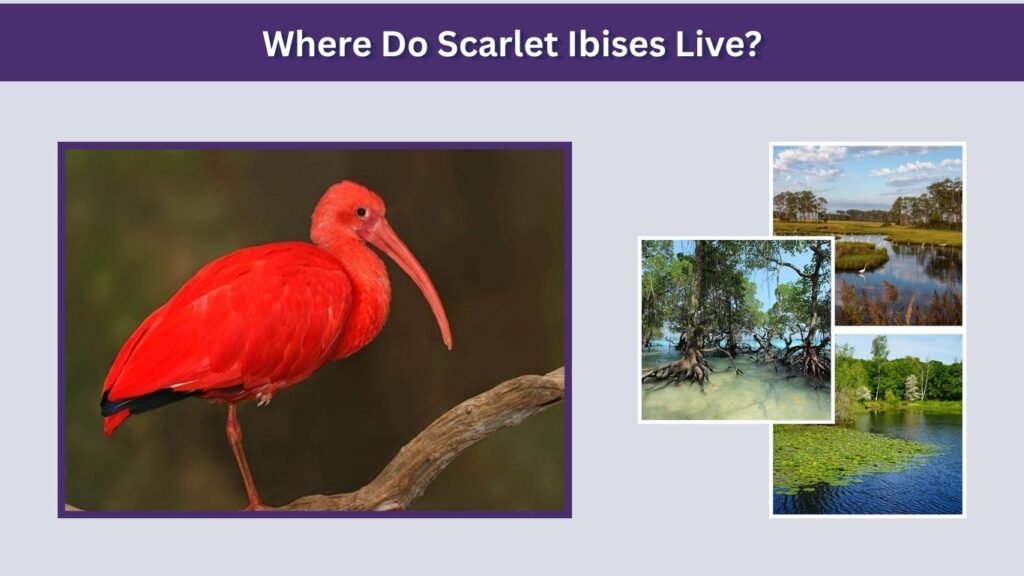
The natural range of the Scarlet Ibis is centered on tropical northern South America and nearby Caribbean areas. Populations move between coastal feeding habitats and inland wetlands as environmental conditions change. The species particularly favors environments where shallow water and soft mud provide abundant opportunities for probing for insects, crustaceans, and other prey.
Scarlet Ibis Habitat and Range
Scarlet Ibises can inhabit:
- Mangrove forests
- Coastal wetlands
- Freshwater marshes
- Brackish marshes
- Mudflats
- Shallow bays
- Estuaries
- River-mouth wetlands
- Tropical wetland environments
Their range includes areas of Venezuela, Brazil, Colombia, Guyana, Suriname, French Guiana, and Trinidad and Tobago. They may occasionally occur elsewhere in Central America, the Caribbean, and southern Florida.
One particularly famous habitat is Trinidad’s Caroni Swamp, which the government of Trinidad and Tobago identifies as a major habitat for the species. The Scarlet Ibis is also recognized as Trinidad’s national bird.
What Do Scarlet Ibis Birds Eat?
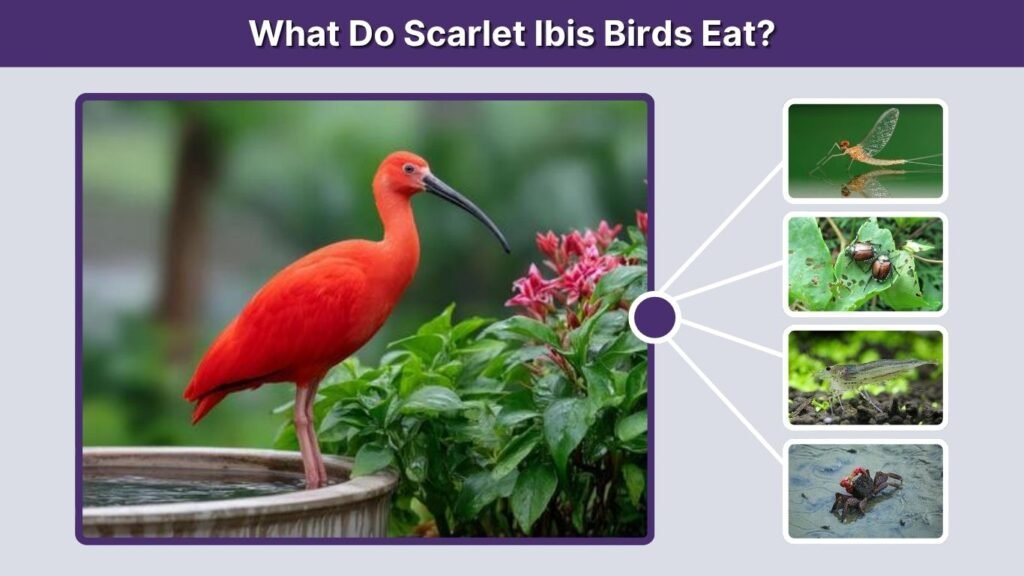
Scarlet Ibises are primarily carnivorous wading birds. Their long, curved bills allow them to probe soft mud and shallow water in search of relatively small prey. They often forage together, walking through wetlands and repeatedly inserting their bills into mud rather than relying entirely on sight to locate food.
Common Scarlet Ibis Foods
Their diet can include:
- Aquatic insects
- Beetles
- Shrimp
- Small crabs
- Crayfish
- Other crustaceans
- Mollusks
- Small fish
- Small reptiles
- Other small aquatic animals
Research on Scarlet Ibis feeding has shown that insects can make up an important portion of their natural diet, alongside crustaceans and other aquatic prey.
How Do Scarlet Ibises Find Food?
A Scarlet Ibis typically walks slowly through shallow water or soft mud while probing below the surface with its curved bill.
The bill helps the bird locate prey hidden where visibility is poor. Flocks may spread across productive feeding areas together. Scarlet Ibises are highly social, so feeding in groups is a normal part of their daily behavior.
Scarlet Ibis Behavior
Scarlet Ibises are highly social birds that commonly feed, travel, nest, and roost in groups. Large gatherings provide opportunities for locating productive feeding grounds while also offering safety through numbers. Mixed feeding flocks may contain other wetland birds, including herons, spoonbills, storks, ducks, and related ibis species.
Social and Flight Behavior
Scarlet Ibises can form flocks ranging from relatively small groups to very large communal gatherings. They often return to trees near wetlands to roost together after feeding.
In flight, their necks are stretched forward and their legs trail behind the body. This posture is different from that of herons, which characteristically retract their necks during flight.
Scarlet Ibises are generally not especially vocal. They can produce grunts, honks, and squealing sounds, but visual displays and group behavior are prominent parts of their social lives.
Scarlet Ibis Breeding and Nesting
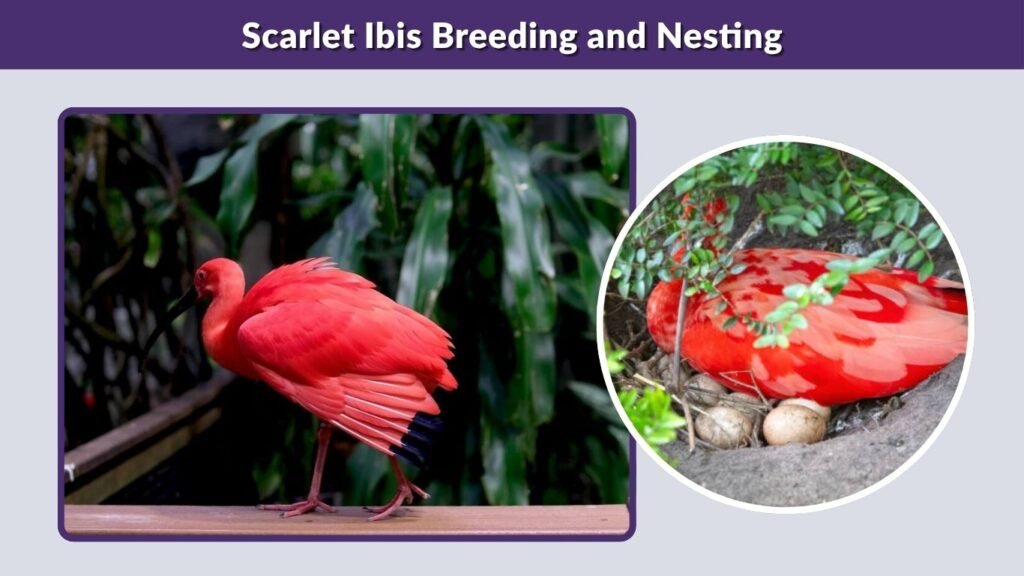
Breeding Scarlet Ibises form colonies rather than isolated pairs. Wetland trees and mangroves provide elevated nesting locations close to rich feeding grounds. Colonial nesting can bring many pairs together within the same small area, creating impressive concentrations of brightly colored adults during the breeding season.
Nest, Eggs, and Chicks
Nests are relatively simple platforms constructed from sticks and other plant material. They are commonly positioned in trees or shrubs above wetlands, where elevation can provide additional protection for eggs and chicks.
Both members of a pair participate in raising their young. Chicks lack the brilliant scarlet coloration of adults and initially appear much duller. Their red plumage develops progressively as they mature and consume a diet containing the pigments necessary for coloration.
The colonial lifestyle means multiple nests may occur close together, and parents must care for their young while surrounded by many other breeding birds.
Scarlet Ibis Lifespan and Conservation
Scarlet Ibises can live for many years when conditions are favorable. Their survival depends heavily on healthy wetlands because the birds require shallow feeding areas, safe communal roosts, and suitable nesting vegetation. Protecting mangroves, marshes, estuaries, and other wetland environments therefore benefits both Scarlet Ibises and numerous other wildlife species.
Lifespan and Conservation Facts
- Wild lifespan: Up to approximately 16 years
- Under human care: Up to about 20 years
- Conservation status: Currently assessed as Least Concern globally
- Major habitat need: Healthy wetlands and mangrove systems
- National significance: One of the national birds of Trinidad and Tobago
Although the species remains widespread overall, protecting major feeding and nesting areas is important for maintaining healthy local populations.
FAQs
The Scarlet Ibis attracts attention because few wetland birds possess such intense natural coloration. Questions frequently focus on where the bird lives, why it is red, whether it is related to flamingos, and how long it survives. Understanding these characteristics makes this remarkable tropical ibis much easier to recognize.
1. Is the Scarlet Ibis a Flamingo?
No. The Scarlet Ibis belongs to the ibis and spoonbill family, while flamingos belong to a different bird family. Both are long-legged wading birds, but Scarlet Ibises have narrow, downward-curving bills rather than the specialized thick bills of flamingos.
2. Where Does the Scarlet Ibis Live?
Scarlet Ibises live mainly in northern South America and Trinidad and Tobago. They favor mangroves, marshes, mudflats, estuaries, and other shallow-water habitats.
3. Why Is the Scarlet Ibis Red?
Its red plumage is influenced by carotenoid pigments obtained through its diet, particularly from foods such as crustaceans. Juvenile Scarlet Ibises begin life with duller brownish-gray plumage.
4. What Does a Scarlet Ibis Eat?
Scarlet Ibises eat aquatic insects, crustaceans, small fish, mollusks, and other small aquatic animals. They use their long curved bills to probe shallow water and soft mud for prey.
5. How Long Does a Scarlet Ibis Live?
According to the Smithsonian’s National Zoo, Scarlet Ibises can live for up to about 16 years in the wild and around 20 years under human care.
