
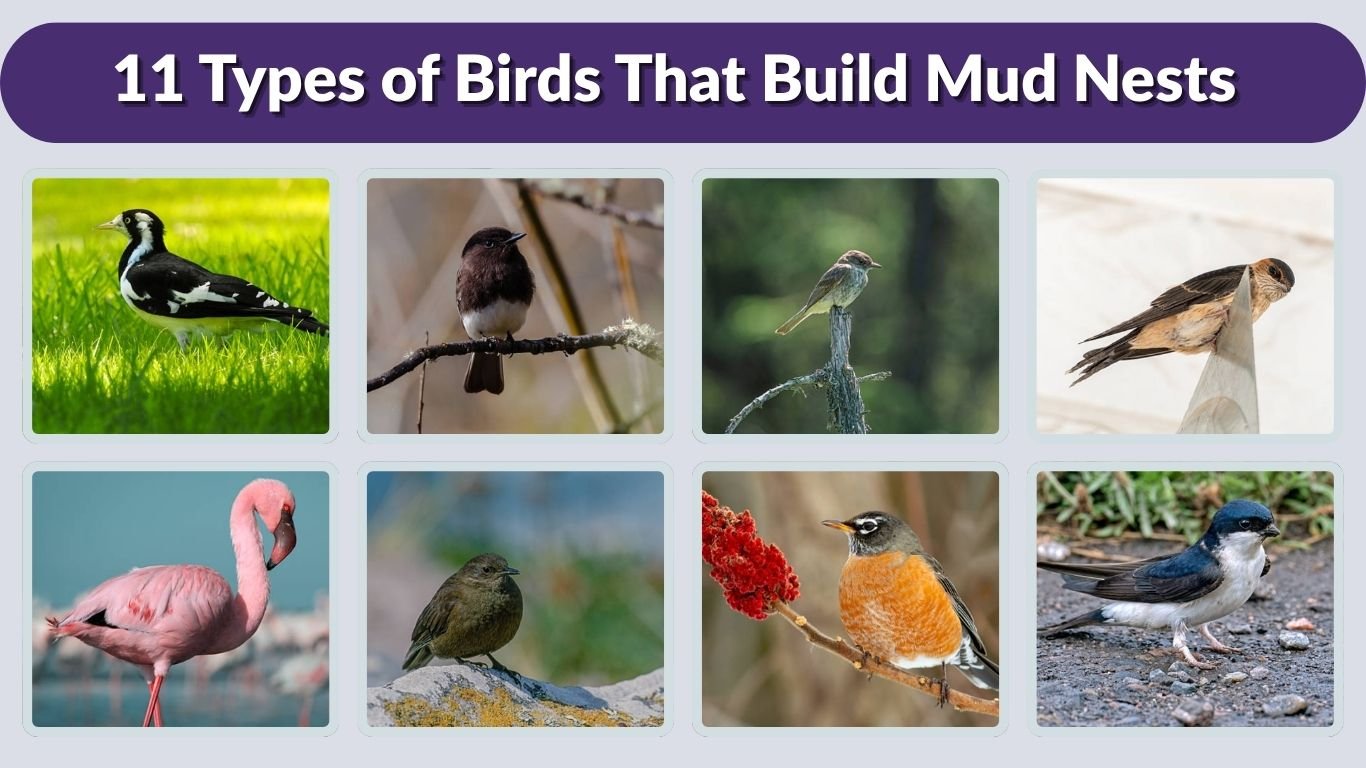
Mud-nesting birds are fascinating for their unique construction skills, using wet soil to create strong and durable nests. These birds can be found in a variety of habitats, from urban areas to wetlands and forests. Their nests range from simple cups to complex enclosed structures and even large mud mounds. Mud helps protect eggs from weather and predators while providing stability. Learning about these birds offers insight into their behavior, adaptability, and survival strategies in different environments.
1. Barn Swallow
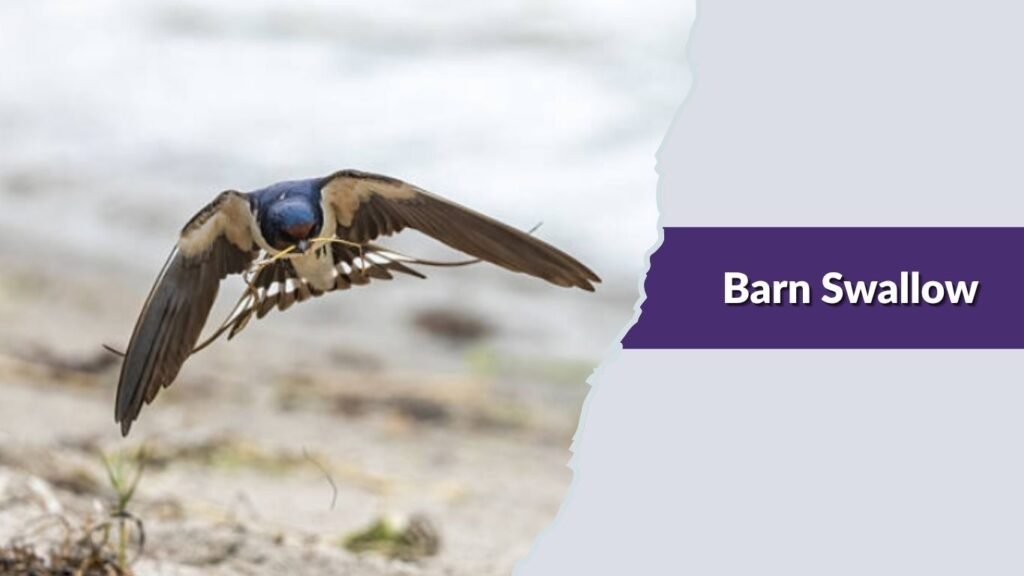
The Barn Swallow is one of the most well-known mud-nesting birds, recognized for its graceful flight and long tail streamers. It commonly builds cup-shaped nests using mud, often attached to buildings or sheltered structures. This bird is widely distributed and closely associated with human habitats.
Identification
- Small, slender bird with long pointed wings
- Deeply forked tail with long streamers
- Glossy blue-black upperparts
- Reddish-brown throat and forehead
- Pale underparts
- Short, flat bill adapted for catching insects
- Overall appearance is sleek and agile
Habitat
Barn Swallows are commonly found in open areas such as farmland, fields, and near water sources. They prefer places with nearby structures like barns, bridges, and houses where they can attach their mud nests. These birds rely on access to mud and open flying space for feeding.
Behaviors
Barn Swallows are highly active and spend much of their time in the air catching insects. They are social birds and often nest in loose colonies. Their flight is fast and acrobatic, and they frequently return to the same nesting sites each year. They are also known for their cheerful, twittering calls.
Diet and Lifespan
Barn Swallows mainly feed on flying insects such as flies, mosquitoes, and beetles. They catch prey mid-air with precision. Their diet makes them beneficial for controlling insect populations. In the wild, they typically live around 4 to 8 years, depending on environmental conditions.
2. Cliff Swallow
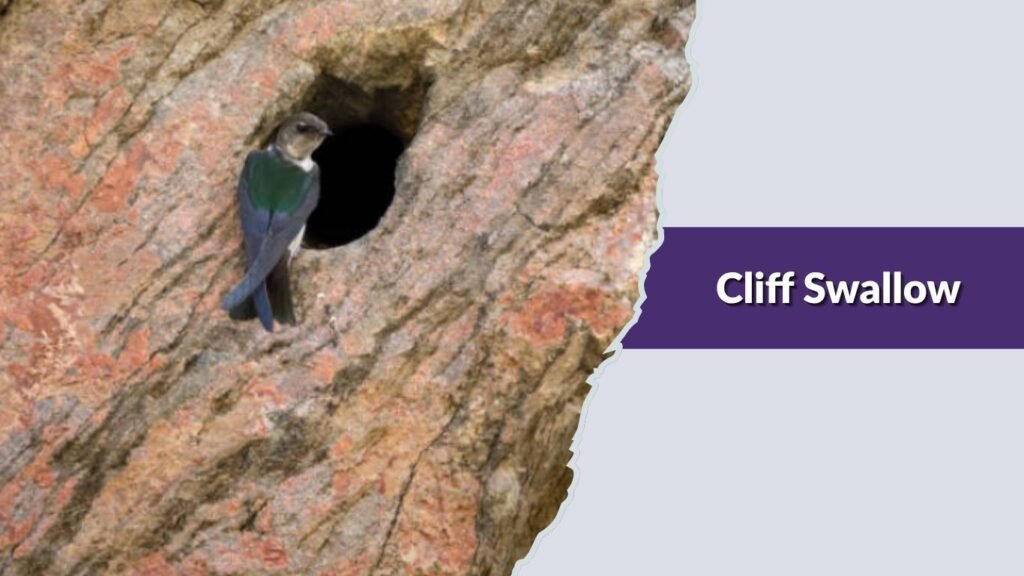
The Cliff Swallow is a well-known mud-nesting bird famous for building gourd-shaped nests in large colonies. These nests are made from pellets of mud and are often attached to cliffs, bridges, and buildings. Their social nature and unique nest structures make them easy to recognize.
Identification
- Small bird with a compact body
- Square or slightly rounded tail (not deeply forked)
- Dark blue upperparts
- Pale or buff-colored forehead patch
- Light throat and underparts
- Short, thick bill
- Overall appearance is stocky compared to Barn Swallow
Habitat
Cliff Swallows prefer open habitats near water, such as rivers, lakes, and farmlands. They need access to mud for building nests and vertical surfaces like cliffs, bridges, or buildings for attachment. Large colonies are often found under overhangs where nests are protected from weather.
Behaviors
These birds are highly social and nest in large groups, sometimes with hundreds of nests clustered together. They are active fliers, often seen catching insects in mid-air. Cliff Swallows communicate with constant chirping and are very active around nesting sites, especially during breeding season.
Diet and Lifespan
Cliff Swallows mainly feed on flying insects, including flies, bees, and beetles. They forage in groups and often follow insect swarms. Their feeding helps control insect populations. In the wild, they typically live around 5 to 7 years, depending on environmental conditions.
3. House Martin
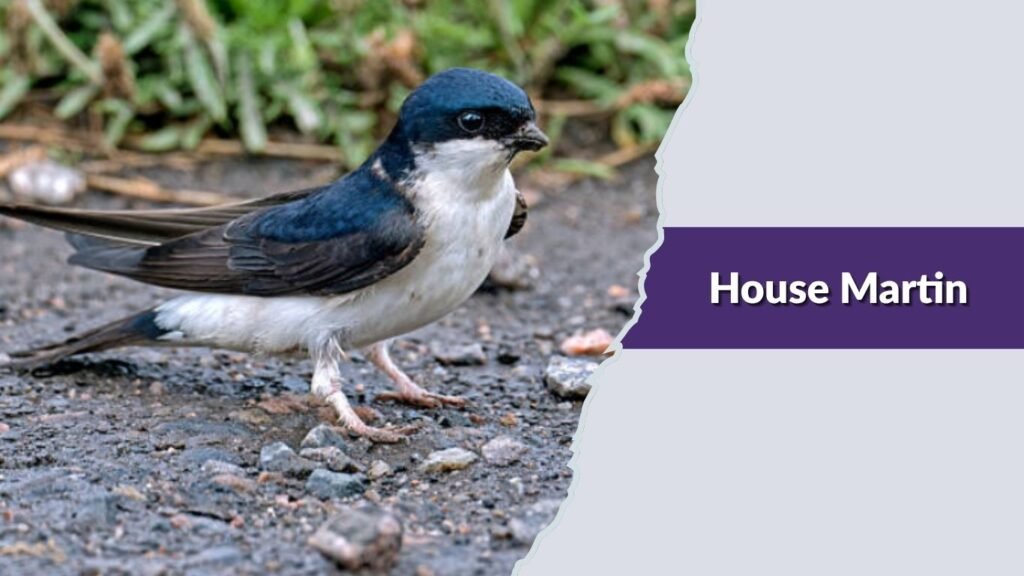
The House Martin is a small mud-nesting bird commonly found near human settlements. It builds neat, enclosed mud nests under eaves and roof edges. Known for its graceful flight and social behavior, it is often seen flying in groups during the breeding season.
Identification
- Small bird with a compact body
- Glossy blue-black upperparts
- Bright white underparts
- Distinct white rump visible in flight
- Short, slightly forked tail
- Small, pointed bill
- Overall appearance is clean and sharply contrasted
Habitat
House Martins prefer open areas such as towns, villages, farmland, and near water. They are strongly associated with buildings, especially those with overhangs where they can attach their mud nests. Access to mud and open airspace for feeding is essential for their survival.
Behaviors
These birds are highly social and often nest in colonies. They spend most of their time in the air, catching insects while flying. House Martins are active during the day and are frequently seen circling buildings. They return to the same nesting sites each year and communicate with soft, twittering calls.
Diet and Lifespan
House Martins mainly feed on flying insects such as flies and aphids. They catch their food in mid-air with agility. Their feeding habits help control insect populations. In the wild, they typically live around 2 to 5 years, depending on environmental conditions.
4. Red-rumped Swallow
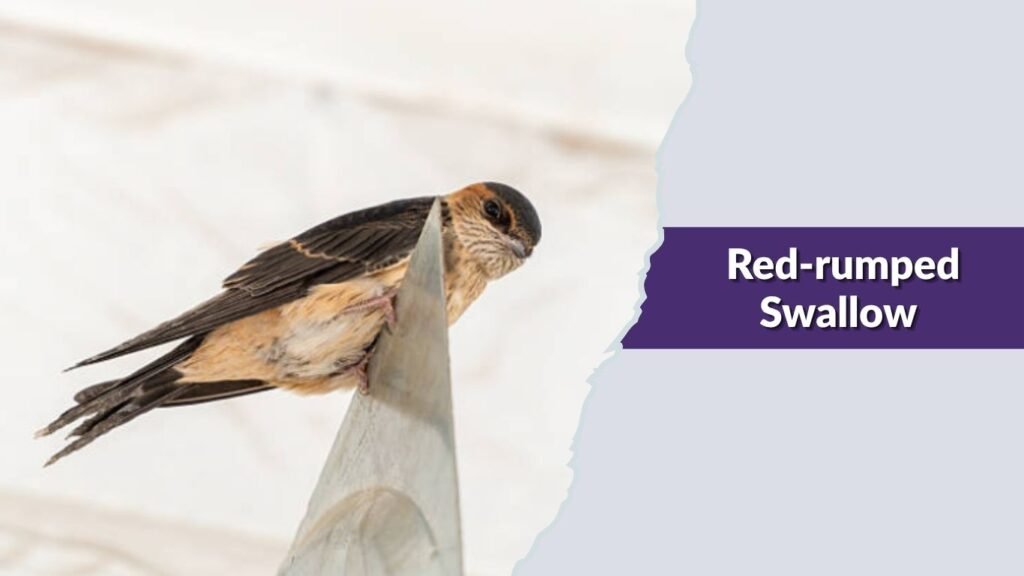
The Red-rumped Swallow is a graceful mud-nesting bird known for its elegant flight and distinctive nest design. It builds enclosed mud nests with a tunnel-like entrance, usually attached to cliffs or buildings. Though less common than other swallows, it is a fascinating species to observe.
Identification
- Small, slender bird with long pointed wings
- Blue-black upperparts
- Pale underparts with fine streaking
- Reddish rump (key feature)
- Short, slightly forked tail
- Dark head with a lighter throat
- Overall appearance is slim and smooth in flight
Habitat
Red-rumped Swallows prefer open countryside, cliffs, valleys, and areas near human structures such as bridges or buildings. They require access to mud for nest building and vertical surfaces for attaching their nests. They are often found in warmer regions with open landscapes.
Behaviors
These birds are agile fliers, spending most of their time in the air catching insects. They are usually seen in pairs or small groups rather than large colonies. During breeding season, they build unique mud nests with a narrow entrance tube, offering extra protection for their eggs.
Diet and Lifespan
Red-rumped Swallows feed mainly on flying insects, including flies and beetles. They catch prey while flying, often gliding smoothly through the air. Their diet helps reduce insect populations. In the wild, they typically live around 4 to 6 years, depending on environmental conditions.
5. American Robin
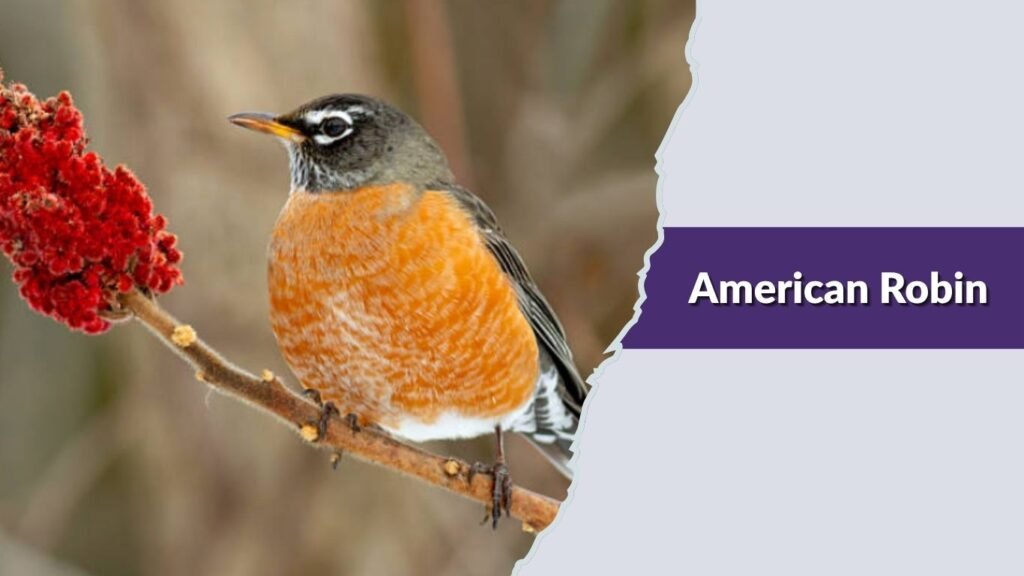
The American Robin is a familiar bird known for its reddish-orange chest and its use of mud in nest building. Unlike swallows, it creates an open cup nest reinforced with mud, usually placed on tree branches or ledges. It is widely found and easily recognized across its range.
Identification
- Medium-sized bird with a round body
- Reddish-orange chest and belly
- Grayish-brown back and wings
- Dark head with a faint white eye ring
- Yellow beak
- Long legs adapted for ground movement
- Overall appearance is soft and well-balanced
Habitat
American Robins are commonly found in gardens, parks, woodlands, and suburban areas. They prefer places with trees or shrubs for nesting and open ground for feeding. Their nests are often built on branches, window ledges, or other stable surfaces, using mud to strengthen the structure.
Behaviors
These birds are active during the day and are often seen hopping on lawns in search of food. They are usually seen alone or in pairs, but may form larger groups outside the breeding season. Their song is clear and melodious, especially in the early morning.
Diet and Lifespan
American Robins feed on insects, worms, and fruits. They are often seen pulling earthworms from the ground. In colder months, they rely more on berries. Their varied diet helps them adapt to different environments. In the wild, they typically live around 2 to 6 years.
6. Black Phoebe
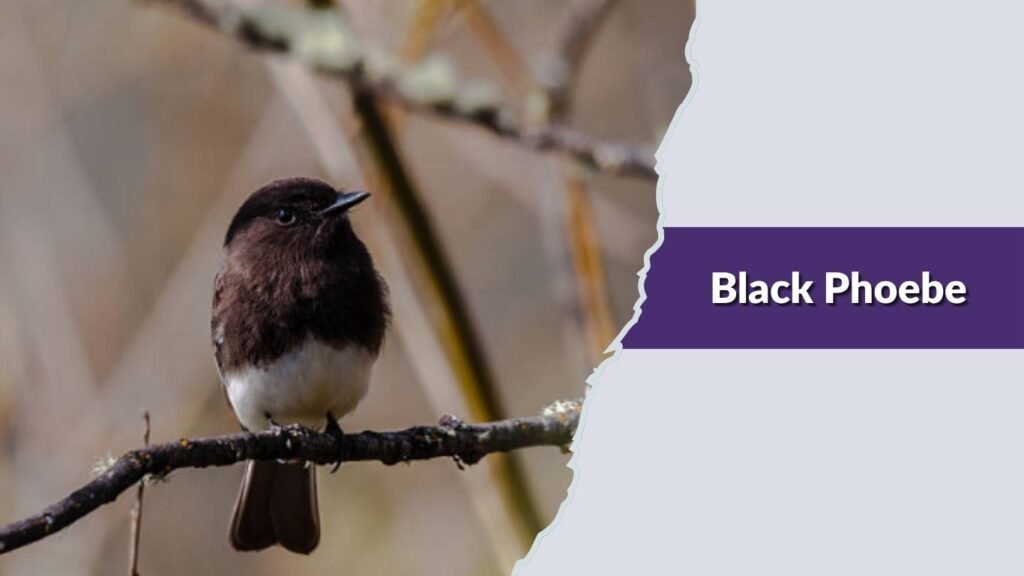
The Black Phoebe is a small flycatcher known for incorporating mud into its nest construction. It typically builds a cup-shaped nest reinforced with mud and attached to vertical surfaces like walls, bridges, or cliffs. Its simple coloring and steady behavior make it easy to recognize.
Identification
- Small bird with a slim, upright posture
- Mostly black or dark gray upperparts
- Clean white belly and underparts
- Short, straight bill
- Tail is medium length and often flicked
- Wings are dark with no bold markings
- Overall appearance is simple and contrasting
Habitat
Black Phoebes are commonly found near water sources such as streams, ponds, and rivers. They prefer open areas with nearby vertical surfaces for nesting. Their mud nests are often attached under bridges, building ledges, or rock overhangs, where they are protected from weather.
Behaviors
These birds are often seen perched low, watching for insects. They make short flights to catch prey and return to the same perch. Black Phoebes are usually solitary or found in pairs. They are known for frequently wagging their tails and giving soft calls.
Diet and Lifespan
Black Phoebes mainly feed on flying insects, which they catch in short aerial flights. They often hunt close to water where insects are abundant. Their feeding helps control insect populations. In the wild, they typically live around 4 to 6 years, depending on environmental conditions.
7. Eastern Phoebe

The Eastern Phoebe is a small, mud-nesting bird known for its simple appearance and repeated tail-wagging behavior. It builds an open cup nest using mud and plant materials, usually attached to sheltered structures like bridges, barns, or ledges. It is one of the earliest birds to return in spring.
Identification
- Small bird with a slender, upright posture
- Gray-brown upperparts with a slightly darker head
- Pale or whitish underparts
- Thin, dark bill
- Tail is medium length and often flicked up and down
- Wings are plain with no bold markings
- Overall appearance is soft and understated
Habitat
Eastern Phoebes prefer open woodlands, farmland, and areas near water. They are often found around human structures such as bridges, buildings, and barns where they can safely attach their mud-based nests. They need nearby open space for feeding and perching.
Behaviors
These birds are often seen perched quietly before making quick flights to catch insects. They frequently wag their tails and return to the same perch after feeding. Eastern Phoebes are usually solitary or in pairs and are known for their simple “fee-bee” call.
Diet and Lifespan
Eastern Phoebes mainly feed on flying insects such as flies, beetles, and wasps. They catch prey in short aerial flights. Their diet helps reduce insect populations. In the wild, they typically live around 3 to 5 years, depending on environmental conditions.
8. Ovenbird
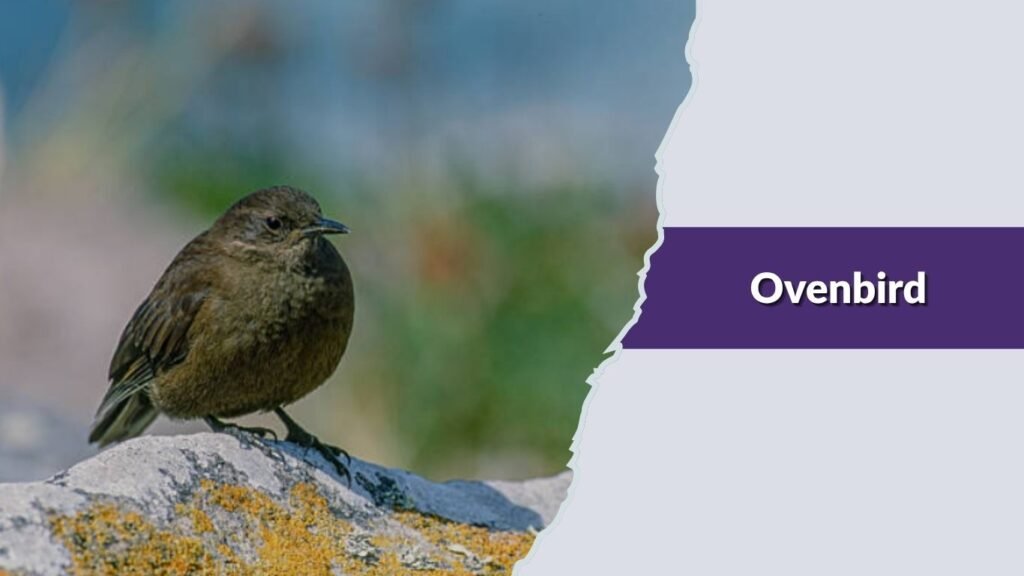
The Ovenbird is a small ground-dwelling bird known for its unique mud-assisted nest that resembles a small oven or dome. Unlike most mud nesters, it builds its nest on the ground using leaves, grasses, and mud for structure and strength.
Identification
- Small bird with an olive-brown back
- White underparts with bold black streaks
- Distinct orange crown stripe bordered by black
- Thin, pointed bill
- Pinkish legs
- Short tail
- Overall appearance is well-camouflaged for forest floors
Habitat
Ovenbirds are typically found in mature forests with dense leaf litter. They prefer shaded woodland areas where they can remain hidden. Their nests are built on the ground, carefully concealed among leaves and vegetation, using mud to help bind the structure.
Behaviors
These birds are usually solitary and spend most of their time walking on the forest floor. They are more often heard than seen, with a loud, repetitive song. Ovenbirds rely heavily on camouflage and remain still when threatened. They are active during the day and forage quietly.
Diet and Lifespan
Ovenbirds mainly feed on insects, spiders, and other small invertebrates found in leaf litter. They forage by walking and searching the ground. Their diet helps maintain forest ecosystems. In the wild, they typically live around 4 to 6 years, depending on environmental conditions.
9. Flamingo
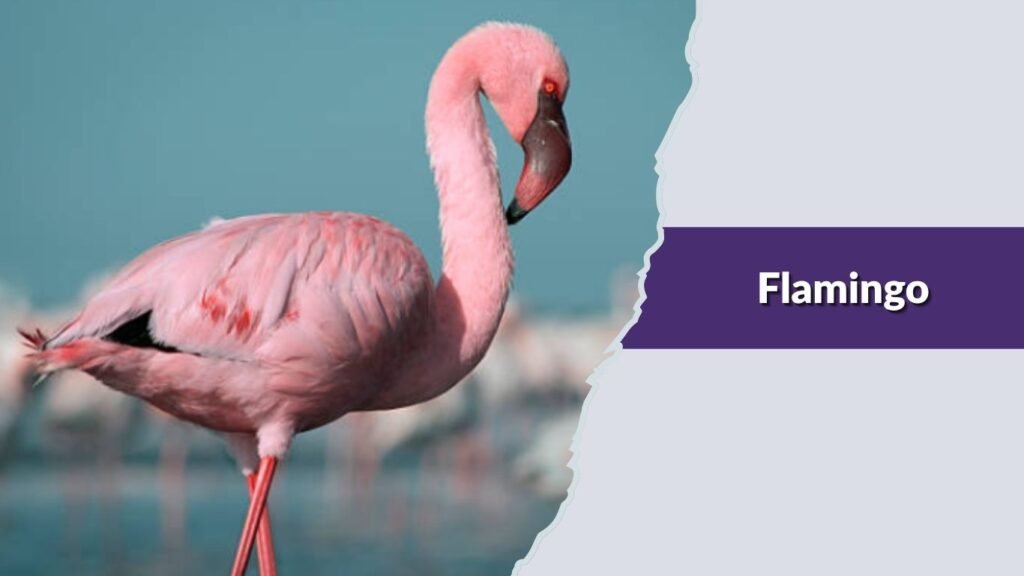
The Flamingo is a well-known bird that builds large mud mound nests in shallow water. These nests help keep eggs safe from flooding and heat. Flamingos are famous for their long legs, curved necks, and striking pink color.
Identification
- Tall bird with very long legs and neck
- Pink or reddish plumage (varies by species)
- Long, downward-curved bill
- Black wing tips visible in flight
- Thin legs with webbed feet
- Small head compared to body size
- Overall appearance is elegant and distinctive
Habitat
Flamingos are found in shallow lakes, lagoons, and wetlands, often in warm regions. They prefer salty or alkaline water bodies. Their mud nests are built in colonies, rising above the water surface to protect eggs from flooding and extreme temperatures.
Behaviors
Flamingos are highly social and live in large colonies. They perform synchronized group movements and displays. They spend much of their time wading and feeding in water. During nesting, they carefully build and maintain their mud mounds.
Diet and Lifespan
Flamingos feed on algae, small crustaceans, and plankton, which give them their pink color. They filter food using their specialized bills. In the wild, flamingos can live around 20 to 30 years, depending on species and conditions.
10. Magpie-Lark
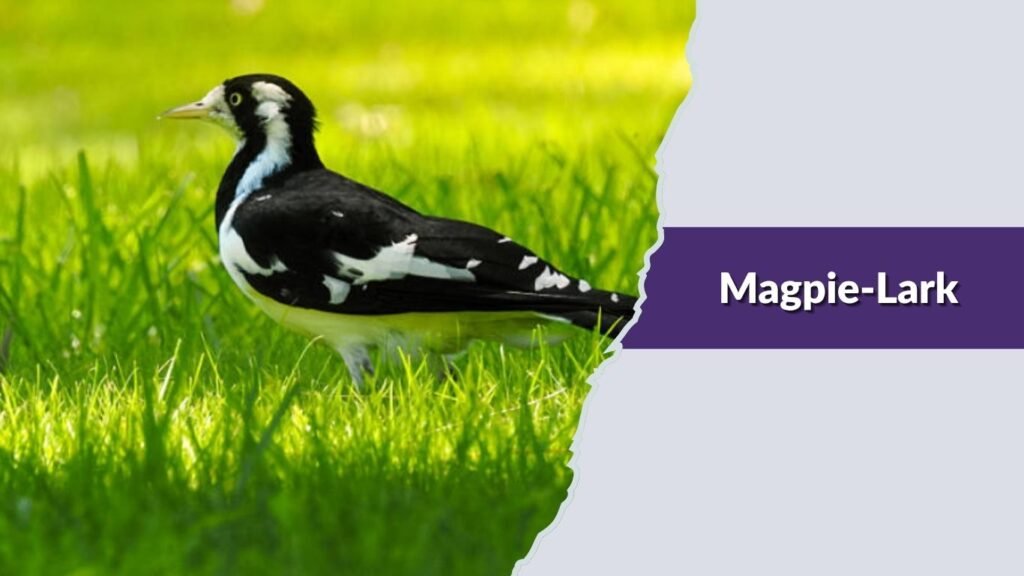
The Magpie-Lark is a distinctive mud-nesting bird known for building sturdy bowl-shaped nests using mud. These nests are often placed on tree branches, poles, or man-made structures. Its bold black-and-white coloring and loud calls make it easy to notice.
Identification
- Medium-sized bird with a slender body
- Black and white plumage with strong contrast
- White face and underparts
- Black back, wings, and chest
- Long legs and a straight bill
- Tail is medium length
- Overall appearance is clean and sharply patterned
Habitat
Magpie-Larks are commonly found in open areas such as grasslands, farmlands, wetlands, and urban spaces. They prefer habitats with access to water and mud for nest building. Their nests are often placed in exposed locations like branches, fences, or utility poles.
Behaviors
These birds are often seen in pairs and are known for their loud, musical calls. They are active during the day and spend time foraging on the ground. Magpie-Larks are territorial and may defend their nesting sites aggressively during breeding season.
Diet and Lifespan
Magpie-Larks mainly feed on insects and small invertebrates. They forage on the ground, picking prey from soil and grass. Their diet helps control insect populations. In the wild, they typically live around 5 to 10 years, depending on environmental conditions.
11. White-winged Chough
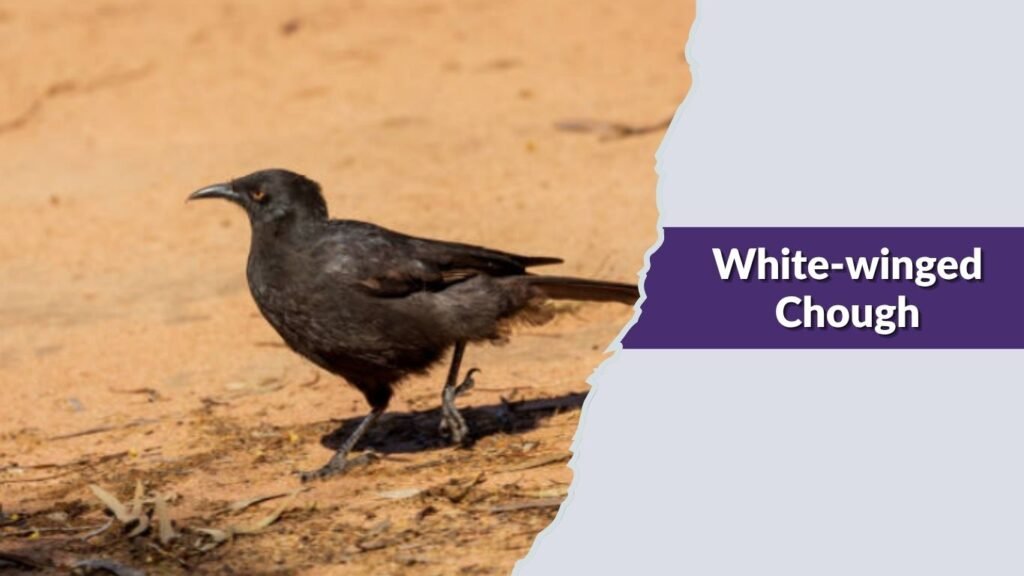
The White-winged Chough is a social bird known for building large mud nests, often placed in tree hollows or crevices. These nests are made from mud and plant material, forming a sturdy structure. It is commonly found in groups and is recognized for its glossy black feathers and bright eyes.
Identification
- Medium-sized bird with glossy black plumage
- Bright red eyes (very distinctive)
- Long, curved bill
- White wing patches visible in flight
- Long legs suited for walking
- Tail is medium length
- Overall appearance is sleek and striking
Habitat
White-winged Choughs are typically found in open woodlands, forests, and dry scrub areas. They prefer habitats with access to mud and suitable nesting cavities like tree hollows. These birds are often seen in regions with scattered trees and open ground for foraging.
Behaviors
These birds are highly social and usually move in family groups. They spend much of their time on the ground, foraging together. White-winged Choughs communicate with a variety of calls and are known for cooperative breeding, where group members help raise young.
Diet and Lifespan
White-winged Choughs mainly feed on insects and small invertebrates, which they find by digging in soil and leaf litter. Their group foraging behavior increases feeding efficiency. In the wild, they can live around 10 to 15 years, depending on environmental conditions.
FAQs
What birds build mud nests?
Many birds use mud to build nests, including swallows, martins, phoebes, and flamingos. Some create cup-shaped nests, while others build enclosed or mound-like structures. Mud helps strengthen nests and protect eggs from weather and predators.
Why do birds use mud for nesting?
Mud acts as a natural cement that holds nesting materials together. It provides strength, insulation, and durability, helping nests stay intact in wind and rain. It also helps maintain a stable temperature for eggs.
Where do mud-nesting birds usually build their nests?
Mud-nesting birds often build nests on walls, cliffs, bridges, tree branches, or near water sources. Some species, like flamingos, build nests directly on the ground or in shallow water using mud mounds.
Are mud nests strong and long-lasting?
Yes, mud nests are very strong when dry. They can last for multiple seasons if not damaged. Some birds even reuse and repair old nests instead of building new ones each year.
How can I attract mud-nesting birds?
You can attract them by providing a water source and a small muddy area. Leaving open spaces and having sheltered structures like eaves or ledges can also encourage birds like swallows and martins to build nests nearby.