
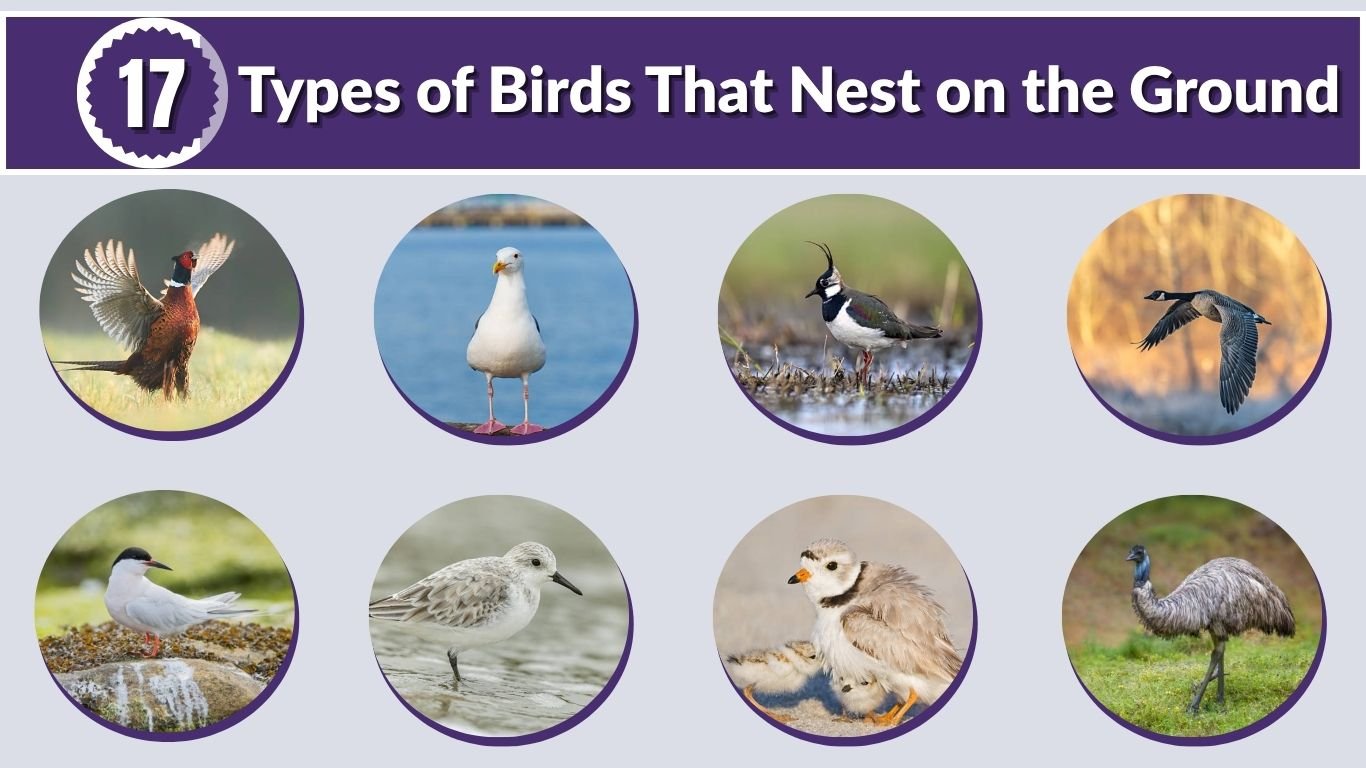
Ground-nesting birds are fascinating species that build their nests directly on the ground instead of trees or cliffs. These birds are commonly found in open habitats like grasslands, wetlands, beaches, and farmlands. They rely on camouflage, alert behavior, and clever defense tactics to protect their eggs from predators. From small shorebirds to large flightless species, ground nesters show a wide range of adaptations. Learning about them can help you better understand their survival strategies and habitats.
1. Killdeer
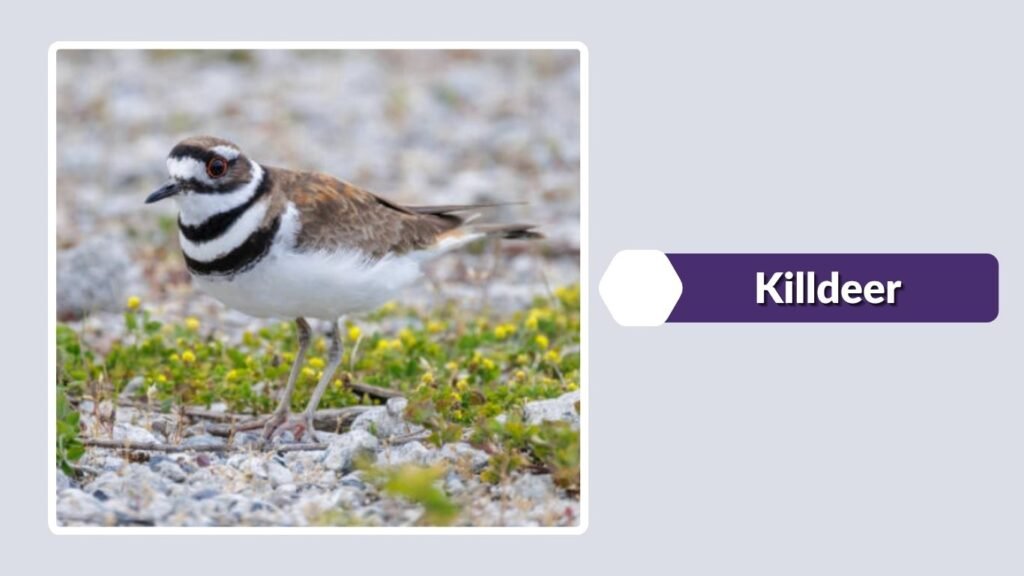
The Killdeer is a well-known ground-nesting bird recognized for its loud, piercing calls and clever defensive behavior. It is commonly found in open landscapes and is especially notable for nesting directly on bare ground. Its ability to blend in with its surroundings helps protect its eggs from predators.
Identification
- Medium-sized bird with long legs and a slim body
- Brown upperparts and white underparts
- Two bold black bands across the chest
- Distinct black and white facial markings
- Reddish-orange rump visible during flight
- Short, straight, dark beak
- Large, dark eyes that give an alert appearance
Habitat
Killdeer prefer open habitats with minimal vegetation, such as grasslands, fields, shorelines, gravel roads, and even parking lots. They often choose nesting sites on bare ground or gravel surfaces, where their eggs are well camouflaged. These environments allow them to detect predators from a distance and respond quickly. They are highly adaptable and can live near human activity as long as suitable open ground is available.
Behaviors
Killdeer are famous for their “broken-wing” act, where they pretend to be injured to distract predators away from their nests. They are very vocal and will call loudly when threatened. These birds are active during the day and are often seen running in short bursts, stopping suddenly to scan for food. Their alert and energetic behavior makes them easy to notice.
Diet and Lifespan
Killdeer mainly eat insects, worms, and other small invertebrates. They forage on the ground using a run-and-stop technique to catch prey. This feeding behavior helps control insect populations in their habitat. In the wild, Killdeer typically live around 3 to 6 years, depending on environmental conditions and predator presence.
2. American Woodcock
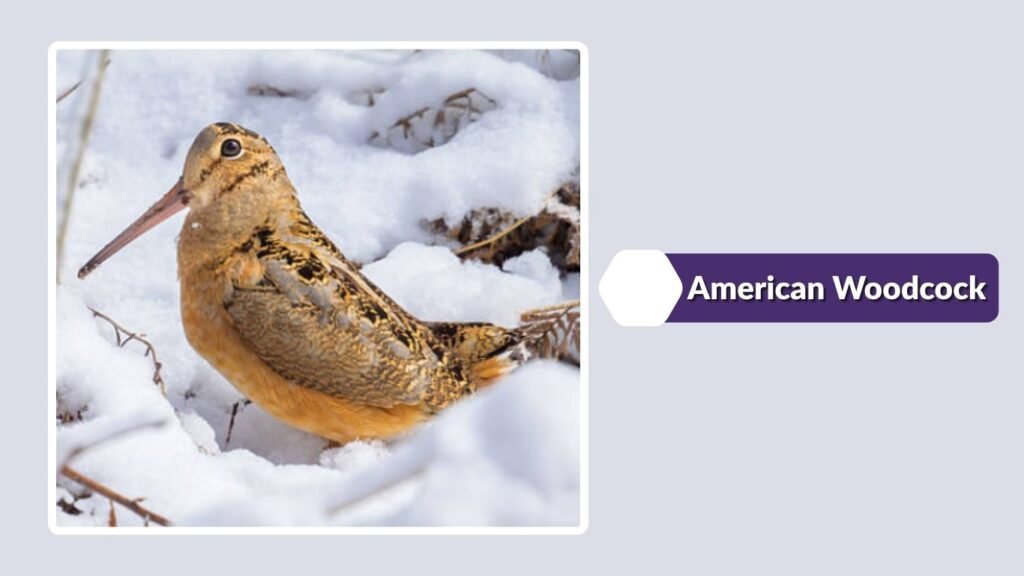
The American Woodcock is a unique ground-nesting bird known for its long bill and excellent camouflage. Often found in moist, wooded areas, it is more commonly heard than seen. Its secretive nature and unusual courtship display make it a fascinating species among ground nesters.
Identification
- Small, chunky bird with a round body
- Mottled brown, gray, and black plumage for camouflage
- Very long, straight bill used for probing soil
- Large eyes set high and far back on the head
- Short legs and a very short tail
- Rounded wings adapted for quick flight
- Overall appearance blends perfectly with leaf litter
Habitat
American Woodcocks prefer moist woodlands, forest edges, and overgrown fields. They are often found in areas with soft soil, which makes it easier for them to find food. They rely on dense vegetation for cover and typically nest on the ground among fallen leaves, where their eggs are well hidden.
Behaviors
These birds are mostly active at dawn and dusk. Males perform a unique courtship display, flying in spirals while making distinctive sounds. On the ground, they move slowly and rely on camouflage to avoid detection. They are generally solitary and secretive, making them difficult to observe closely.
Diet and Lifespan
American Woodcocks mainly feed on earthworms, which they extract from the soil using their long bill. They also eat insects and other small invertebrates. Their feeding habits depend on moist ground conditions. In the wild, they typically live around 1 to 3 years, though some may live longer.
3. Common Nighthawk
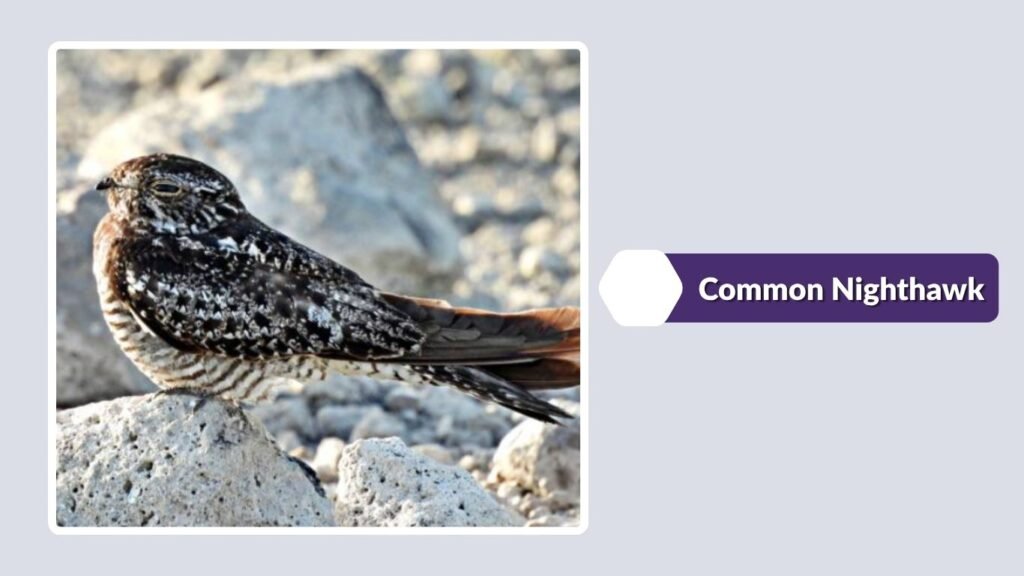
The Common Nighthawk is a ground-nesting bird known for its aerial feeding habits and excellent camouflage. Despite its name, it is not a hawk but belongs to the nightjar family. It is often seen flying at dusk, catching insects in the air with swift, graceful movements.
Identification
- Medium-sized bird with long, pointed wings
- Mottled gray, brown, and black plumage for camouflage
- White bar across each wing, visible in flight
- Short, slightly forked tail
- Small bill but wide mouth adapted for catching insects
- Large dark eyes
- Overall appearance is slender with a flat posture when resting
Habitat
Common Nighthawks prefer open habitats such as grasslands, fields, and sandy areas. They are also known to nest on flat gravel rooftops in urban areas. Their nests are simple and placed directly on the ground or flat surfaces, relying on camouflage rather than structure for protection.
Behaviors
These birds are most active during dawn and dusk. They are skilled fliers and spend much of their time in the air catching insects. Males perform display dives, producing a booming sound with their wings. On the ground, they remain still and rely on their camouflage to avoid detection.
Diet and Lifespan
Common Nighthawks mainly feed on flying insects such as moths, beetles, and mosquitoes. They catch prey mid-air using their wide mouths. Their feeding helps control insect populations. In the wild, they typically live around 4 to 6 years, depending on environmental conditions.
4. Horned Lark
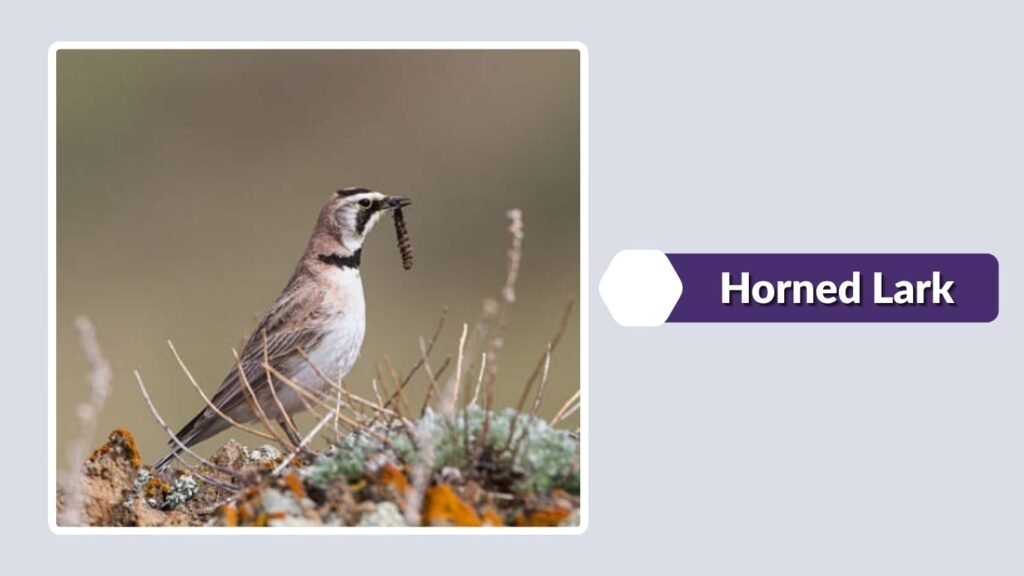
The Horned Lark is a small ground-nesting bird commonly found in open landscapes. It is one of the few larks in North America and is known for its subtle coloration and distinctive “horn-like” feather tufts. Its ability to blend into dry, open habitats makes it well adapted to life on the ground.
Identification
- Small bird with a slender body and short bill
- Pale brown and sandy-colored upperparts
- White underparts with a dark chest band
- Black facial mask with yellow or pale face
- Small black feather tufts on the head (“horns”)
- Short tail with white edges visible in flight
- Overall appearance is light and well-camouflaged
Habitat
Horned Larks prefer open, barren habitats such as grasslands, deserts, shorelines, and agricultural fields. They favor areas with very little vegetation, where they can easily spot predators. Their nests are built directly on the ground, often in shallow depressions lined with grass and small materials for protection.
Behaviors
These birds are often seen running or walking on the ground rather than hopping. They are active during the day and may sing while flying in short display flights. Horned Larks are generally found in pairs or small groups and rely heavily on camouflage to avoid predators. They are alert and quick to take flight when disturbed.
Diet and Lifespan
Horned Larks mainly feed on seeds and grains, especially in winter. During the breeding season, they also consume insects for added protein. They forage on the ground, picking food from the surface. In the wild, they typically live around 3 to 5 years, depending on environmental conditions.
5. Meadowlark
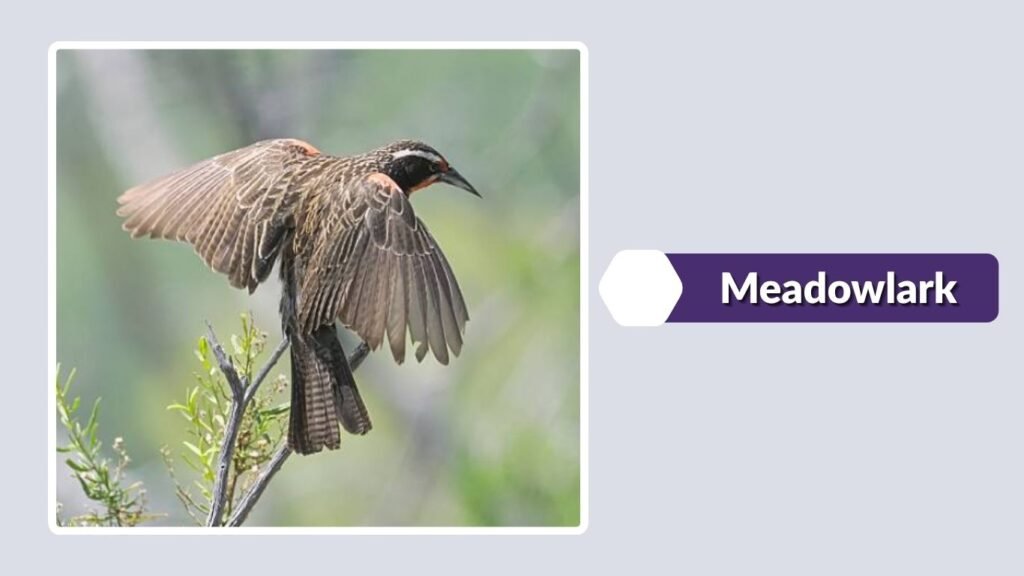
The Meadowlark is a well-known ground-nesting bird found in open grasslands. Recognized for its bright yellow chest and beautiful song, it is often heard before it is seen. Its strong connection to wide, open habitats makes it a classic species of prairies and fields.
Identification
- Medium-sized bird with a sturdy body
- Bright yellow underparts with a bold black “V” on the chest
- Brown, streaked upperparts for camouflage
- Long, pointed bill
- Short tail with white outer feathers visible in flight
- Head has light and dark stripes
- Overall appearance is a mix of bright and earthy tones
Habitat
Meadowlarks prefer open grasslands, pastures, and agricultural fields. They avoid heavily wooded areas and thrive in wide, open spaces with low vegetation. Their nests are built directly on the ground, often hidden within grass clumps to protect them from predators and weather.
Behaviors
These birds are often seen perched on fences or posts, singing loudly to mark their territory. They are active during the day and spend much of their time foraging on the ground. Meadowlarks are usually solitary or seen in pairs, but they may form small flocks outside the breeding season.
Diet and Lifespan
Meadowlarks feed on insects, seeds, and grains. Insects are especially important during the breeding season, while seeds make up a larger part of their diet in winter. Their feeding helps control pests in grassland areas. In the wild, they typically live around 4 to 6 years.
6. Northern Bobwhite
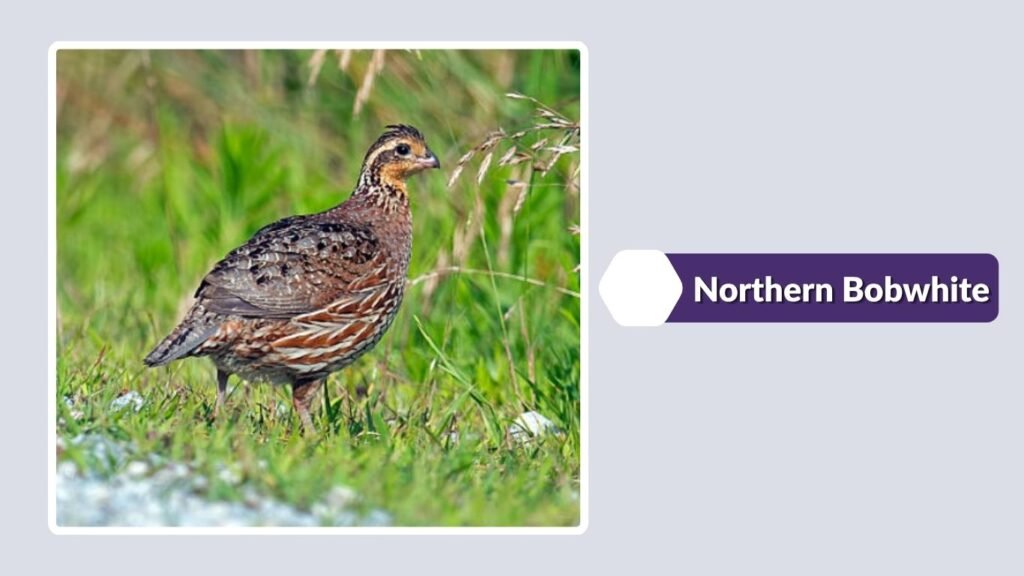
The Northern Bobwhite is a small, ground-dwelling bird well known for its distinctive call and strong association with grassland habitats. It is a type of quail and spends most of its life on the ground, including nesting. Its excellent camouflage helps it stay hidden from predators.
Identification
- Small, round-bodied bird with a short tail
- Mottled brown, buff, and gray plumage for camouflage
- Males have a bold white throat and eyebrow stripe
- Females have a buff-colored throat and eyebrow
- Short, curved bill
- Rounded wings
- Overall compact and low-to-the-ground appearance
Habitat
Northern Bobwhites are commonly found in grasslands, fields, open woodlands, and farmland. They prefer areas with a mix of grasses, shrubs, and open ground. Their nests are built directly on the ground, often in shallow depressions lined with grass and hidden under vegetation.
Behaviors
These birds are usually seen in small groups called coveys, especially outside the breeding season. They are more likely to run than fly when threatened, relying on quick bursts of movement to escape danger. Their clear, whistling call—often heard as “bob-white”—is a familiar sound in suitable habitats.
Diet and Lifespan
Northern Bobwhites feed on seeds, grains, and insects. Insects are especially important for young birds. They forage on the ground, picking food from soil and vegetation. In the wild, they typically live around 2 to 4 years, though many face high predation rates.
7. Wild Turkey
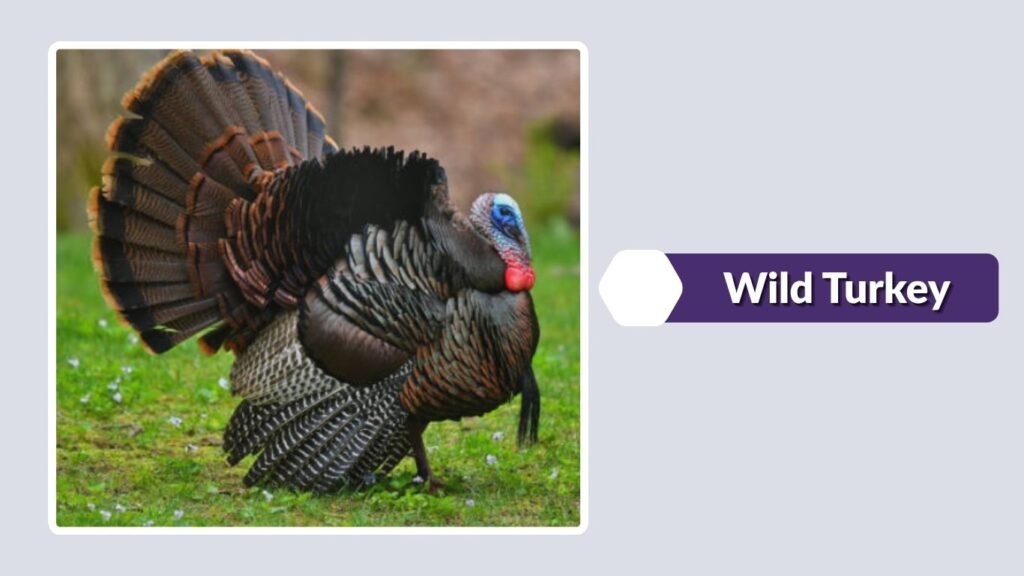
The Wild Turkey is a large, ground-nesting bird known for its size, strength, and distinctive appearance. It is commonly found in forests and open areas and spends much of its time on the ground. Despite its size, it is capable of short, powerful flights.
Identification
- Large, heavy-bodied bird with long legs
- Dark brown to black feathers with an iridescent sheen
- Long neck that is often bare and bluish or reddish
- Males (toms) have a fan-shaped tail and a beard of feathers on the chest
- Females are smaller and less colorful
- Wings are broad and rounded
- Overall appearance is robust and striking
Habitat
Wild Turkeys are found in forests, woodlands, and areas with a mix of open fields and trees. They prefer habitats that provide both cover and open ground for feeding. Their nests are built on the ground, usually hidden in tall grass or dense vegetation to protect eggs from predators.
Behaviors
These birds are mostly ground-dwelling and spend much of their time walking and foraging. Males are known for their display behavior, especially during breeding season, where they fan their tails and puff up their feathers. They are social birds and often move in groups, particularly outside the breeding season.
Diet and Lifespan
Wild Turkeys are omnivorous and eat seeds, nuts, berries, insects, and small animals. They forage on the ground, using their strong legs to scratch for food. Their varied diet helps them adapt to different environments. In the wild, they typically live around 3 to 5 years, though some may live longer.
8. Mallard
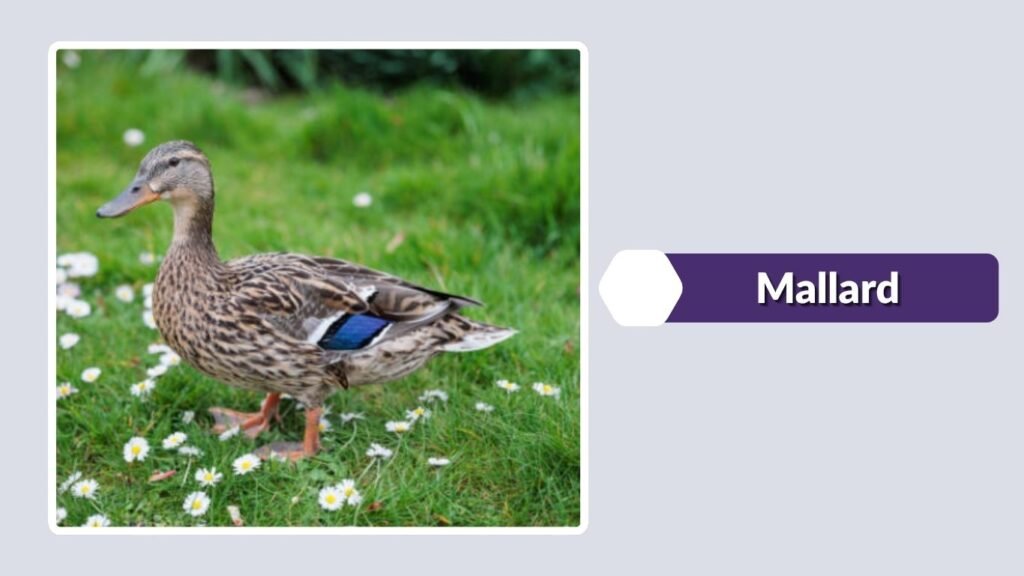
The Mallard is one of the most common and recognizable ducks, known for its adaptability and widespread presence. It is a ground-nesting bird that typically nests close to water but always on land. Its familiar appearance and behavior make it easy to observe in many environments.
Identification
- Medium to large duck with a broad body
- Males have a glossy green head, white neck ring, and chestnut chest
- Females are mottled brown for camouflage
- Both sexes have a blue-purple wing patch (speculum)
- Yellow bill in males, orange-brown in females
- Orange legs and webbed feet
- Overall shape is rounded with a flat bill
Habitat
Mallards are found in a wide range of habitats, including lakes, ponds, rivers, wetlands, and even urban parks. They prefer areas with calm water and nearby vegetation. Their nests are built on the ground, often hidden in grass, reeds, or under shrubs close to water for easy access.
Behaviors
Mallards are social birds and are often seen in pairs or groups. They are strong swimmers and spend much of their time on water but come onto land for nesting and resting. During breeding season, females stay close to the nest while males may guard the area. They are active during the day and are often seen dabbling in water for food.
Diet and Lifespan
Mallards are omnivorous and feed on aquatic plants, seeds, insects, and small invertebrates. They forage by tipping forward in water or grazing on land. Their flexible diet allows them to thrive in many environments. In the wild, Mallards typically live around 5 to 10 years, depending on conditions.
9. Canada Goose
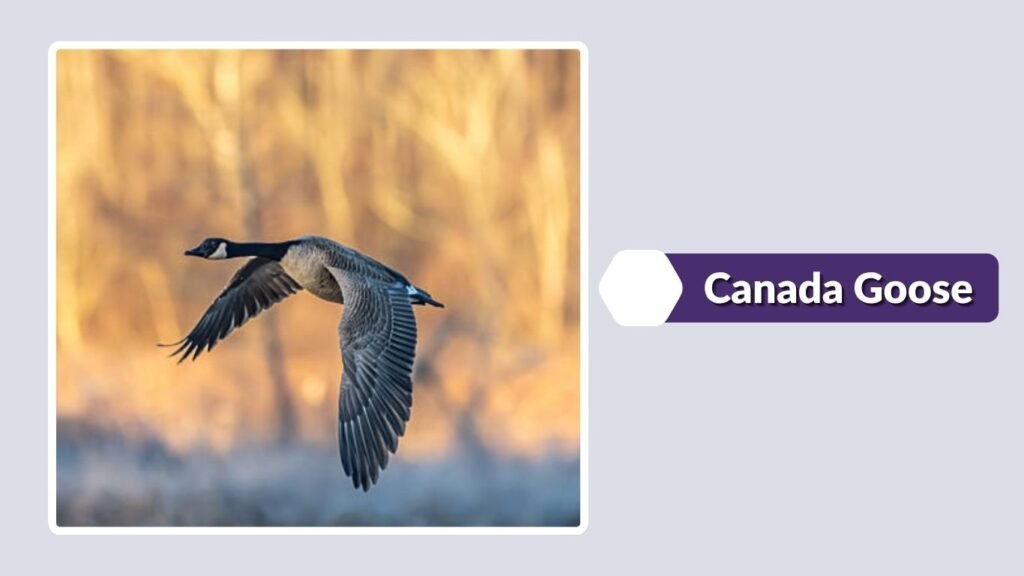
The Canada Goose is a large, well-known waterbird that nests on the ground, usually near water. It is easily recognized by its size and distinctive markings. This species is highly adaptable and is commonly seen in both natural wetlands and urban environments.
Identification
- Large bird with a long black neck
- White cheek patch extending under the chin
- Brown body with lighter underparts
- Broad wings and a strong, heavy body
- Black bill, legs, and feet
- Long neck often held upright
- Overall appearance is bold and easily recognizable
Habitat
Canada Geese are found near lakes, rivers, ponds, wetlands, and grassy areas. They prefer open spaces close to water, which provide safety and easy access to food. Their nests are built on the ground, often hidden in grass or near shorelines, sometimes even on small islands for protection.
Behaviors
These birds are highly social and are often seen in large flocks. They are known for their loud honking calls and strong, V-shaped flight formations. During breeding season, they become very protective of their nests and may act aggressively if approached. They spend much of their time grazing on land or swimming in water.
Diet and Lifespan
Canada Geese mainly feed on grasses, grains, and aquatic plants. They graze on land and also forage in shallow water. Their diet allows them to thrive in both natural and human-modified environments. In the wild, they typically live around 10 to 20 years, depending on environmental conditions.
10. Ostrich
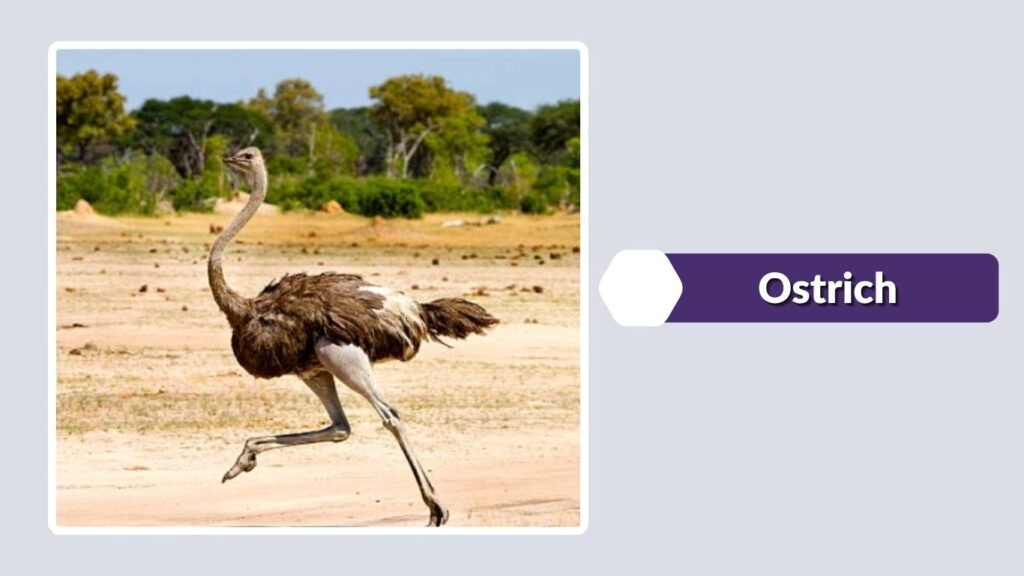
The Ostrich is the largest living bird and a well-known ground-nesting species native to Africa. Although it cannot fly, it is extremely fast on land and well adapted to open environments. Its large size and powerful legs make it one of the most unique birds in the world.
Identification
- Very large bird with a long neck and long legs
- Males have black feathers with white wing and tail feathers
- Females are grayish-brown
- Small head with large eyes
- Flat, broad bill
- Wings are large but not used for flight
- Overall appearance is tall and powerful
Habitat
Ostriches live in open habitats such as savannas, grasslands, and deserts. They prefer wide, open areas where they can see predators from a distance. Their nests are simple scrapes in the ground, often shared by multiple females, with eggs laid directly on bare soil.
Behaviors
Ostriches are social and often live in small groups. They are excellent runners and can reach very high speeds to escape danger. Males perform displays during breeding season, including wing spreading and movement to attract females. They rely on speed and strong legs for defense rather than flight.
Diet and Lifespan
Ostriches are omnivorous and eat plants, seeds, insects, and small animals. They forage on the ground and may swallow small stones to help digest food. Their diet allows them to survive in harsh environments. In the wild, ostriches typically live around 30 to 40 years.
11. Emu
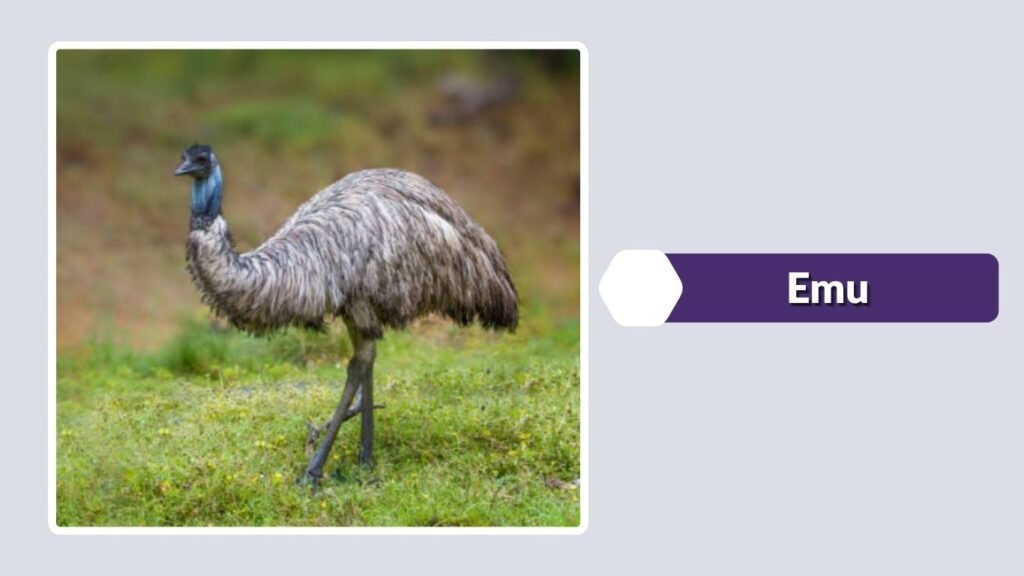
The Emu is a large, flightless bird native to Australia and a well-known ground nester. It is the second-largest bird in the world after the ostrich. Emus are strong runners and are well adapted to life on open land, relying on speed and awareness to avoid danger.
Identification
- Large bird with a long neck and long, powerful legs
- Brown, shaggy feathers with a soft, layered appearance
- Small head with a dark beak
- Wings are very small and not used for flight
- Long legs with three strong toes
- Eyes are large and alert
- Overall appearance is tall, bulky, and slightly rough-feathered
Habitat
Emus are found in a variety of open habitats, including grasslands, savannas, and lightly wooded areas. They avoid dense forests and prefer wide spaces where they can move freely. Their nests are simple ground scrapes lined with grass, usually placed in sheltered but open areas.
Behaviors
Emus are generally solitary or found in small groups. They are excellent runners and can travel long distances in search of food. During breeding season, the male takes on the role of incubating the eggs and caring for the chicks. They are mostly quiet but can produce deep, booming sounds.
Diet and Lifespan
Emus are omnivorous and feed on plants, seeds, fruits, insects, and small animals. They forage on the ground and are known to travel widely to find food. Their varied diet helps them survive in different environments. In the wild, Emus typically live around 10 to 20 years.
12. Lapwing
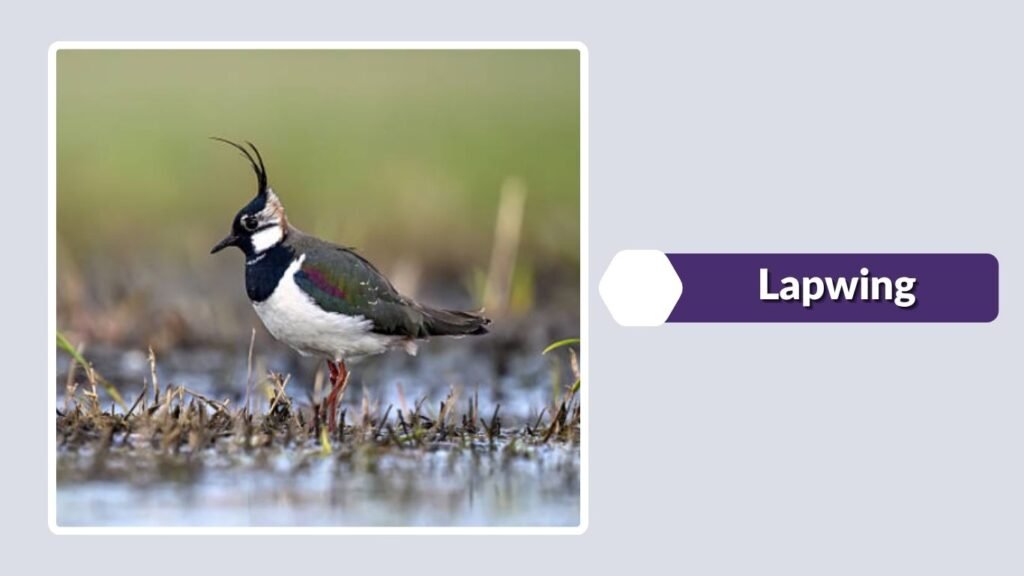
The Lapwing is a distinctive ground-nesting bird known for its striking appearance and dramatic flight displays. Common in open landscapes, it is easily recognized by its bold markings and crest. It often nests directly on the ground, relying on camouflage and distraction tactics to protect its eggs.
Identification
- Medium-sized bird with broad, rounded wings
- Black and white body with a greenish iridescent back
- Long, thin crest on the head
- White face with black crown and chest
- Short, straight bill
- Wings appear wide and floppy in flight
- Overall look is bold and contrasting
Habitat
Lapwings prefer open habitats such as grasslands, farmland, wetlands, and coastal areas. They need wide, open spaces with short vegetation to spot predators easily. Their nests are shallow scrapes on the ground, often placed in fields or near water, where eggs blend in with the surroundings.
Behaviors
Lapwings are known for their dramatic aerial displays, especially during breeding season. They perform twisting and tumbling flights while calling loudly to defend their territory. On the ground, they are alert and may use distraction tactics to lead predators away from their nests.
Diet and Lifespan
Lapwings mainly feed on insects, worms, and other small invertebrates. They forage by walking slowly and picking food from the ground. Their diet makes them important for controlling pests in farmland. In the wild, they typically live around 4 to 7 years, depending on environmental conditions.
13. Plover
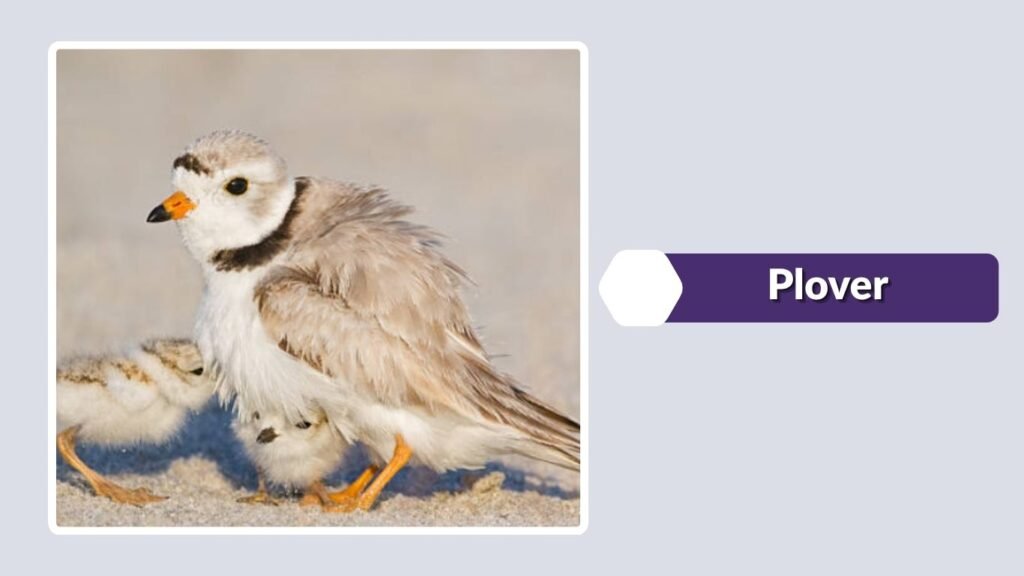
Plovers are small to medium-sized ground-nesting birds commonly found in open areas near water. They are known for their quick movements and excellent camouflage. Many species of plovers nest directly on bare ground, making their eggs difficult to spot.
Identification
- Small to medium-sized bird with a compact body
- Short, straight bill
- Brown or sandy upperparts with lighter underparts
- Often have distinct black bands or markings on the chest or face
- Large, dark eyes
- Long legs suited for running
- Overall appearance is simple and well-camouflaged
Habitat
Plovers are typically found in open habitats such as beaches, shorelines, mudflats, and grasslands. They prefer areas with little vegetation where they can easily see approaching predators. Their nests are shallow scrapes on the ground, often placed on sand, gravel, or dry soil.
Behaviors
These birds are active and alert, often seen running in short bursts and stopping suddenly. They rely heavily on camouflage to protect their nests. Some plovers use distraction displays to draw predators away from eggs. They are usually seen alone or in small groups.
Diet and Lifespan
Plovers mainly feed on insects, worms, and small invertebrates found on the ground or near water. They forage by picking prey from the surface. Their diet helps maintain balance in their ecosystems. In the wild, plovers typically live around 3 to 6 years, depending on species and conditions.
14. Sandpiper
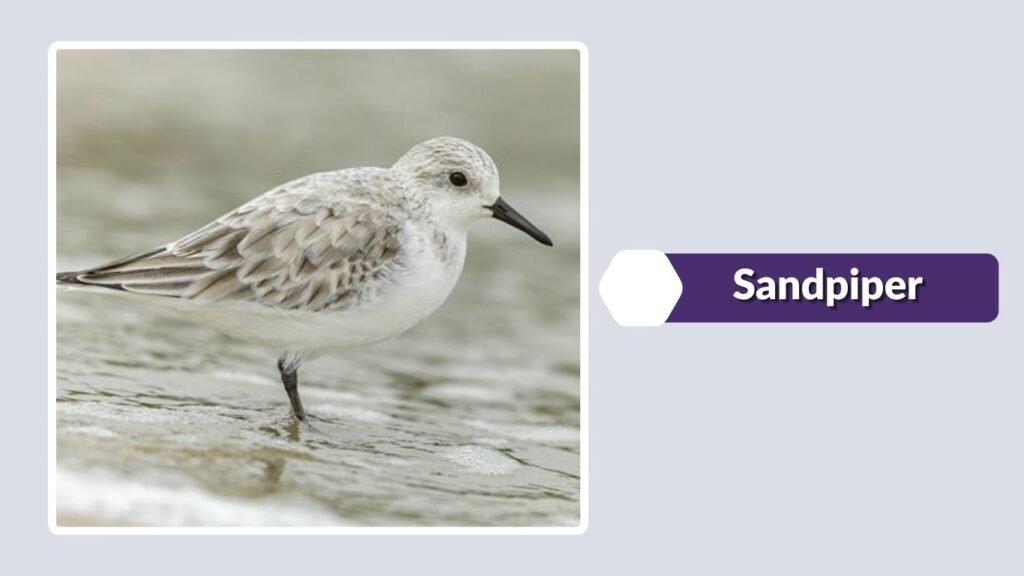
Sandpipers are a diverse group of ground-nesting shorebirds commonly found near water. They are known for their slender bodies and constant movement along shorelines. Many species nest directly on the ground, using simple scrapes that blend perfectly with their surroundings.
Identification
- Small to medium-sized bird with a slender body
- Long, thin legs adapted for wading
- Straight or slightly curved bill
- Brown, gray, or mottled plumage for camouflage
- Light underparts with subtle markings
- Wings are narrow and pointed
- Overall appearance is delicate and streamlined
Habitat
Sandpipers are typically found in coastal areas, wetlands, mudflats, riverbanks, and lakeshores. They prefer open, damp environments where they can easily find food. Their nests are shallow scrapes on the ground, often placed in sandy or grassy areas near water, where eggs are well hidden.
Behaviors
These birds are very active and are often seen running along the shoreline, stopping quickly to pick up food. They may probe the ground with their bills in search of prey. Sandpipers are usually seen alone or in small groups, though larger flocks may gather during migration. They rely on camouflage and alertness to avoid predators.
Diet and Lifespan
Sandpipers mainly feed on insects, worms, crustaceans, and other small invertebrates. They forage in shallow water or along the ground, using their bills to detect prey. Their diet supports healthy wetland ecosystems. In the wild, they typically live around 5 to 10 years, depending on species and environmental conditions.
15. Tern
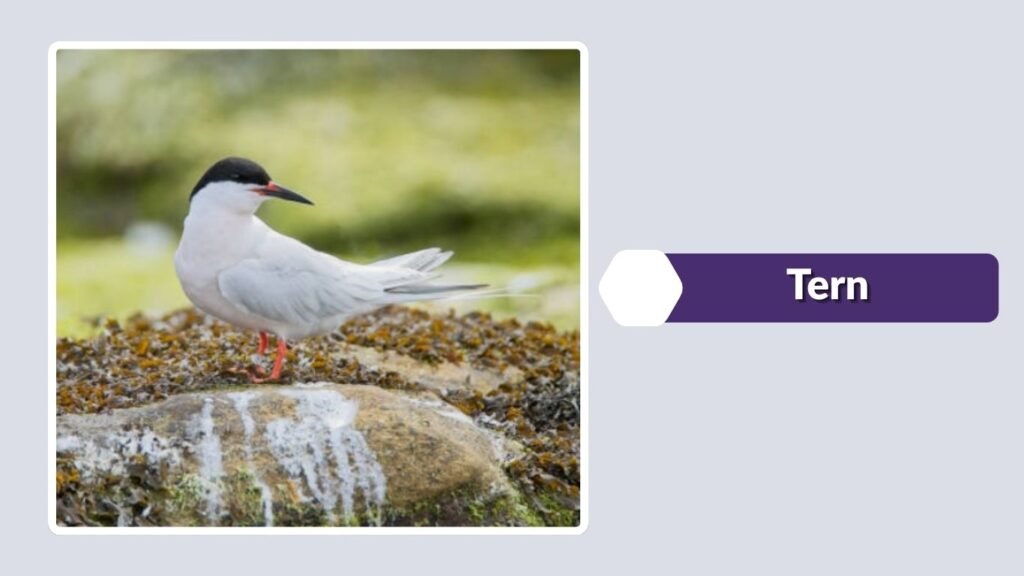
Terns are graceful, ground-nesting seabirds often found along coastlines and near inland waters. Known for their sharp calls and agile flight, they typically nest in colonies on open ground. Their simple nests rely heavily on camouflage and group protection.
Identification
- Medium-sized bird with a slender body
- Long, pointed wings and forked tail
- Mostly white or pale gray plumage
- Black cap on the head during breeding season
- Straight, pointed bill (often red, yellow, or black depending on species)
- Short legs
- Overall appearance is sleek and elegant
Habitat
Terns are commonly found in coastal areas, beaches, islands, lakeshores, and wetlands. They prefer open, sandy or gravelly ground with little vegetation for nesting. Their nests are shallow scrapes on the ground, often placed in colonies where many birds nest close together for protection.
Behaviors
Terns are highly social and usually nest in large groups. They are strong fliers and often seen diving into water to catch fish. During breeding season, they become very protective and may aggressively defend their nests. Their sharp, noisy calls are a common feature of their colonies.
Diet and Lifespan
Terns mainly feed on small fish, which they catch by diving into water. They may also eat insects and small aquatic animals. Their feeding behavior makes them skilled hunters. In the wild, terns typically live around 10 to 20 years, depending on the species and environmental conditions.
16. Gull
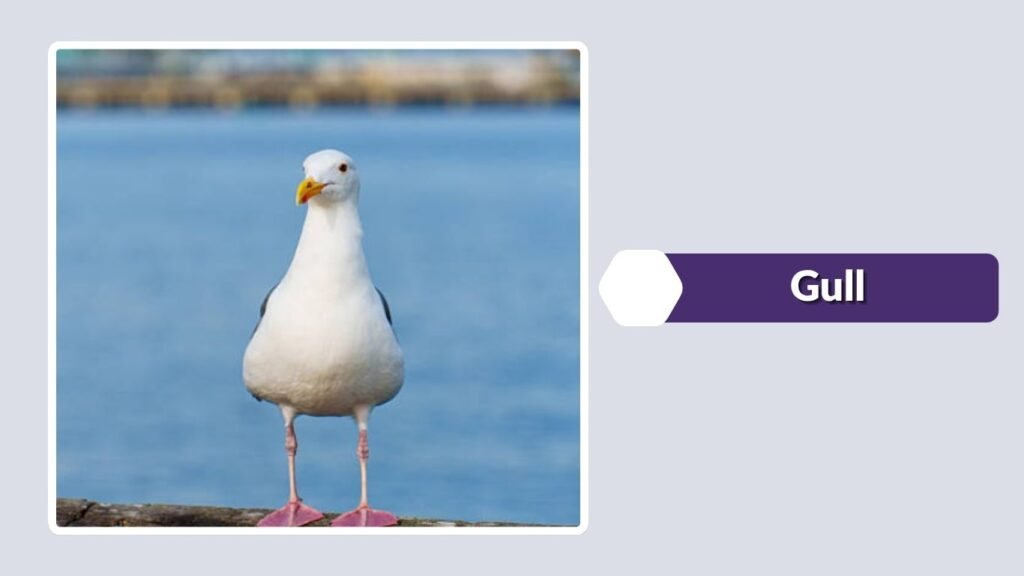
Gulls are common ground-nesting birds often found near water and coastal areas. They are highly adaptable and can also live in urban environments. Known for their loud calls and bold behavior, gulls often nest in open areas where they can easily spot danger.
Identification
- Medium to large bird with a sturdy body
- White or light gray body with darker wings
- Black wing tips often with white spots
- Strong, slightly hooked bill
- Webbed feet
- Long wings and moderate tail
- Overall appearance is robust and adaptable
Habitat
Gulls are typically found along coastlines, beaches, lakes, and rivers. They are also common in cities, especially near landfills and food sources. Their nests are built on the ground, often on cliffs, beaches, rooftops, or open fields where they have a clear view of their surroundings.
Behaviors
Gulls are social birds and are often seen in large groups. They are opportunistic feeders and will scavenge for food in many environments. During breeding season, they become protective of their nests and may act aggressively. They are strong fliers and can travel long distances in search of food.
Diet and Lifespan
Gulls are omnivorous and eat fish, insects, small animals, scraps, and carrion. Their flexible diet allows them to survive in many environments. They often forage both on land and in water. In the wild, gulls typically live around 10 to 20 years, depending on the species.
17. Pheasant
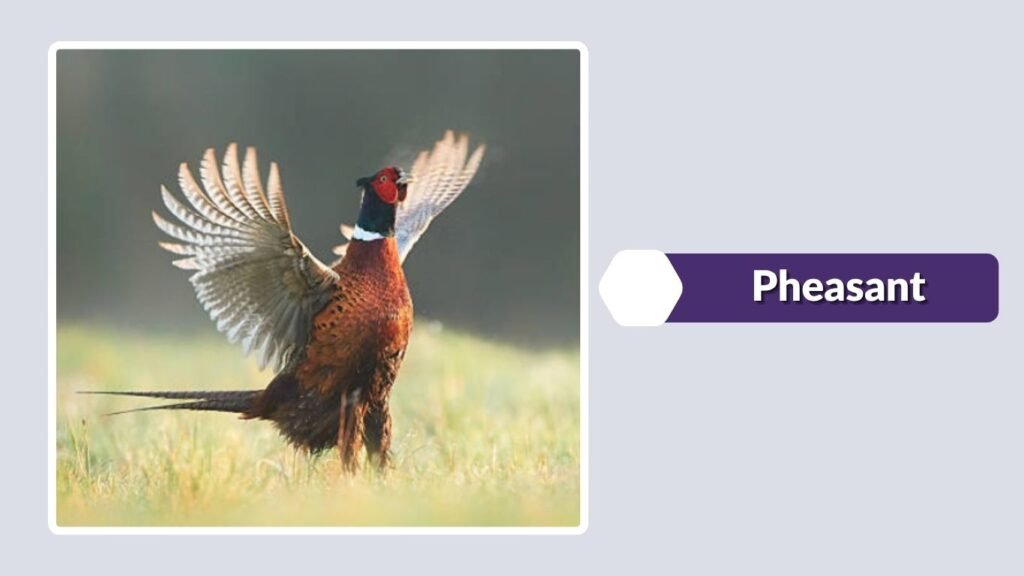
The Pheasant is a large, ground-nesting bird commonly found in open countryside and farmland. Known for its long tail and colorful plumage (especially in males), it spends most of its time on the ground. Its strong legs and cautious behavior help it survive in open habitats.
Identification
- Large bird with a long, pointed tail
- Males are brightly colored with iridescent feathers
- Females are brown and heavily patterned for camouflage
- Small head with a short, curved beak
- Strong legs adapted for running
- Wings are rounded and used for short bursts of flight
- Overall appearance is long-bodied and elegant
Habitat
Pheasants are typically found in farmland, grasslands, woodland edges, and open countryside. They prefer areas with a mix of cover and open ground. Their nests are simple scrapes on the ground, often hidden in tall grass or dense vegetation to protect eggs from predators.
Behaviors
These birds spend most of their time walking and foraging on the ground. They are usually seen alone or in small groups. When threatened, they prefer to run but can fly short distances with a sudden burst of speed. Males are territorial during breeding season and may display to attract females.
Diet and Lifespan
Pheasants are omnivorous and feed on seeds, grains, insects, and small plants. They forage on the ground, picking food from soil and vegetation. Their varied diet helps them adapt to different environments. In the wild, pheasants typically live around 3 to 5 years, depending on conditions.
FAQs
What are ground-nesting birds?
Ground-nesting birds are species that build their nests directly on the ground instead of in trees or cliffs. They usually create simple scrapes or shallow depressions and rely on camouflage or open visibility to protect their eggs from predators.
Why do some birds nest on the ground?
Many birds nest on the ground because their habitats, such as grasslands, beaches, or open fields, lack trees. Ground nesting also allows quick access to food sources and provides better visibility to detect approaching threats.
How do ground-nesting birds protect their eggs?
They use camouflage to blend eggs with surroundings like sand or grass. Some species perform distraction displays, such as pretending to be injured, to lure predators away from the nest.
Are ground nests more vulnerable to predators?
Yes, ground nests are generally more exposed to predators like mammals and other birds. However, many species have evolved strategies like hidden nests, protective behavior, and nesting in groups to reduce risks.
Where can you commonly find ground-nesting birds?
Ground-nesting birds are commonly found in open habitats such as grasslands, wetlands, shorelines, deserts, and farmland. Some species also adapt to urban areas, nesting on flat rooftops or gravel surfaces.