
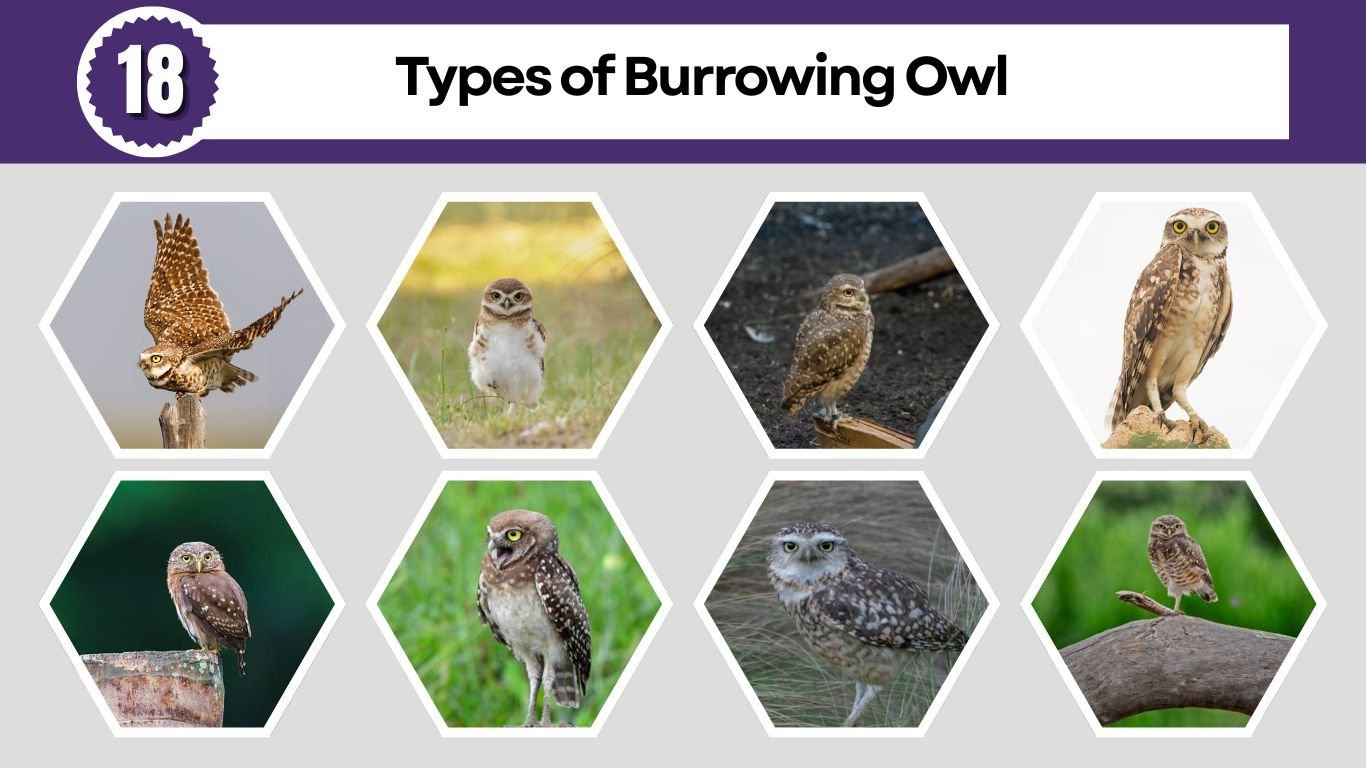
Burrowing owls are unique among owl species because they live and nest underground rather than in trees. These small, long-legged owls are well adapted to open environments such as grasslands, deserts, and prairies, where they rely on burrows for shelter and protection. Unlike most owls, many burrowing species are active during the day, making them easier to observe in the wild.
In this guide, you will explore 18 types of burrowing owls found across different regions, along with key details about their identification, habitat, behavior, and diet. Whether you are a wildlife enthusiast or simply curious, this overview provides a clear look at these fascinating ground-dwelling birds.
1. Western Burrowing Owl
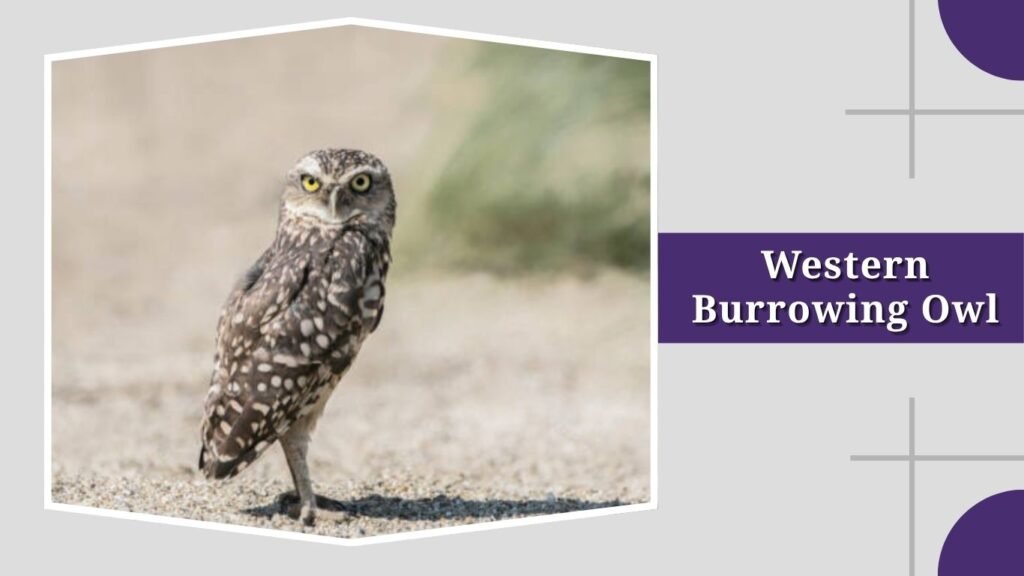
The Western Burrowing Owl is a small, ground-dwelling owl commonly found in North America. It is well known for its habit of living in underground burrows rather than trees. This species is active during the day as well as at night, making it one of the more visible owl species.
Identification
- Small owl with a compact body and long legs
- Brown upperparts with white spotting
- Pale underparts with brown barring
- Bright yellow eyes and a rounded head
- No ear tufts, giving it a smooth appearance
- Often seen standing upright near its burrow
Habitat
The Western Burrowing Owl prefers open landscapes such as grasslands, prairies, deserts, and farmland. It relies heavily on burrows for shelter and nesting, often using abandoned burrows created by animals like prairie dogs or ground squirrels. This species can also adapt to human-modified environments, including golf courses and urban open spaces, as long as suitable burrows are available.
Behaviors
Unlike most owls, the Western Burrowing Owl is often active during the day. It is commonly seen standing near its burrow, watching for predators or prey. When threatened, it may bob its head, give alarm calls, or retreat quickly into its burrow. It is relatively social compared to other owls and may live in loose colonies.
Diet and Lifespan
The Western Burrowing Owl feeds mainly on insects such as beetles and grasshoppers, but it also hunts small mammals, birds, and reptiles. It captures prey both on the ground and during short flights. This owl typically lives around 6 to 10 years in the wild, depending on habitat quality and environmental conditions.
2. Florida Burrowing Owl
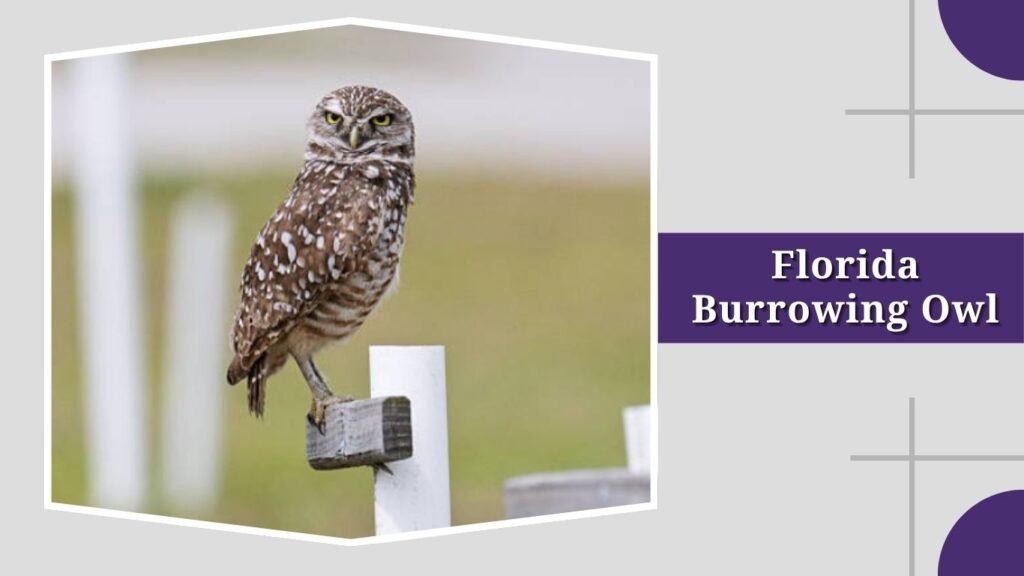
The Florida Burrowing Owl is a small, ground-dwelling owl found mainly in Florida. It is a subspecies of the Burrowing Owl and is well known for living in open, urban, and suburban areas. Its daytime activity and tolerance of humans make it one of the most easily observed owls in the region.
Identification
- Small owl with a compact body and relatively long legs
- Brown upperparts with white spotting
- Pale underparts with light brown barring
- Bright yellow eyes and a rounded head
- No ear tufts, giving it a smooth appearance
- Often seen standing upright near its burrow entrance
Habitat
The Florida Burrowing Owl prefers open, dry habitats such as grasslands, prairies, golf courses, parks, and vacant lots. It often lives in suburban and urban areas where open land is available. This owl depends on underground burrows for nesting and shelter, sometimes digging its own but often using existing burrows. Conservation efforts are important due to habitat loss from development.
Behaviors
This owl is active during the day as well as at dawn and dusk. It is frequently seen standing near its burrow, observing its surroundings. The Florida Burrowing Owl may bob its head or make chattering sounds when alarmed. It is more social than many owl species and may nest in loose colonies, especially in suitable habitats.
Diet and Lifespan
The Florida Burrowing Owl mainly feeds on insects such as beetles and grasshoppers. It also eats small mammals, birds, and reptiles when available. It hunts on the ground or with short flights. The species typically lives around 6 to 10 years in the wild, depending on environmental conditions and habitat quality.
3. Caribbean Burrowing Owl
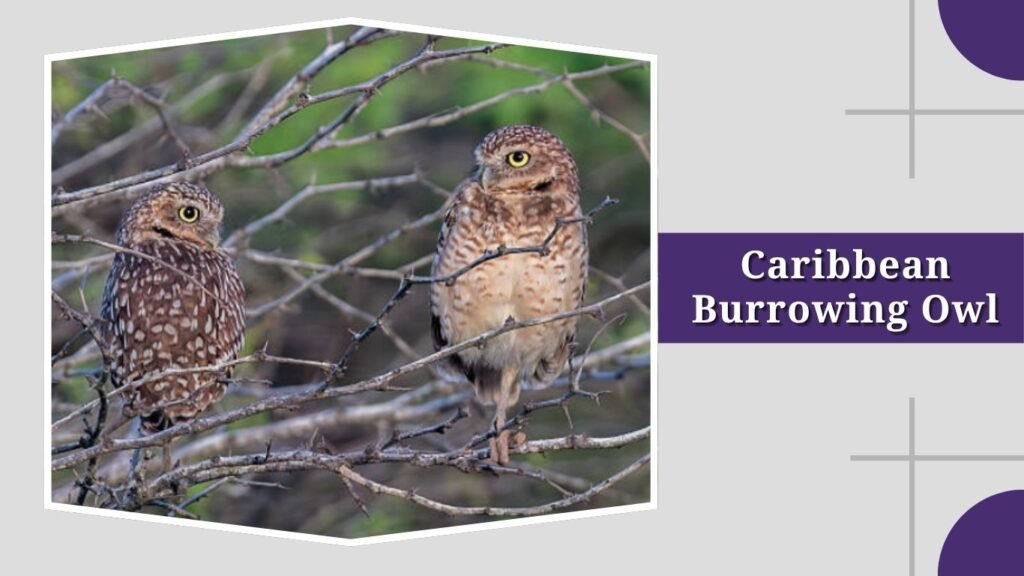
The Caribbean Burrowing Owl is a ground-dwelling owl adapted to warm, open environments across parts of the Caribbean region. Like other burrowing owls, it spends much of its life near underground burrows and is often active during the day, making it easier to observe than many nocturnal species.
Identification
- Small owl with a compact body and long legs
- Brown upperparts with white spotting
- Pale underparts with light barring
- Bright yellow eyes and a rounded head
- No ear tufts, giving it a smooth appearance
- Often seen standing upright near its burrow
Habitat
The Caribbean Burrowing Owl prefers open habitats such as dry grasslands, coastal plains, and scrublands. It thrives in areas with low vegetation where it can easily detect predators and prey. This species depends on underground burrows for nesting and shelter, often using abandoned burrows made by other animals. It may also adapt to human-altered environments if suitable conditions exist.
Behaviors
This owl is active during the day as well as at dawn and dusk. It is frequently seen near its burrow, scanning the surroundings. When threatened, it may bob its head, give warning calls, or quickly retreat underground. It is generally social and may live in small groups or loose colonies in favorable habitats.
Diet and Lifespan
The Caribbean Burrowing Owl feeds mainly on insects such as beetles and grasshoppers. It also hunts small mammals, birds, and reptiles when available. It captures prey both on the ground and during short flights. The species typically lives around 6 to 10 years in the wild, depending on habitat conditions and food availability.
4. Mexican Burrowing Owl
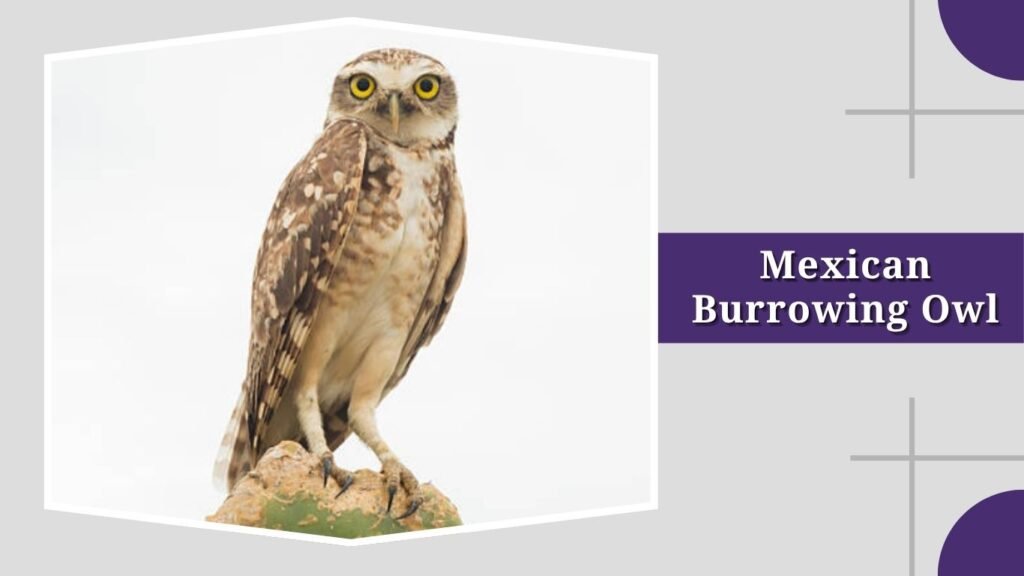
The Mexican Burrowing Owl is a ground-dwelling owl found in parts of Mexico and nearby regions. It shares many traits with other burrowing owls, including its reliance on underground burrows and its ability to remain active during daylight hours. This species is well adapted to warm, open environments.
Identification
- Small owl with a compact body and long legs
- Brown upperparts with white spotting
- Pale underparts with light brown barring
- Bright yellow eyes and a rounded head
- No ear tufts, giving it a smooth appearance
- Often seen standing upright near its burrow
Habitat
The Mexican Burrowing Owl prefers open landscapes such as deserts, grasslands, and scrublands. It thrives in areas with sparse vegetation where it can easily detect movement. This species relies on burrows for shelter and nesting, often using abandoned burrows from mammals. It may also adapt to agricultural land if suitable conditions are present.
Behaviors
This owl is active during the day as well as at dusk and dawn. It is commonly seen near its burrow, observing its surroundings. When disturbed, it may bob its head, produce alarm calls, or retreat quickly underground. It can be social and may form loose colonies in suitable habitats.
Diet and Lifespan
The Mexican Burrowing Owl mainly feeds on insects such as beetles and grasshoppers. It also eats small mammals, birds, and reptiles when available. It hunts both on the ground and in short flights. The species typically lives around 6 to 10 years in the wild, depending on environmental conditions.
5. South American Burrowing Owl
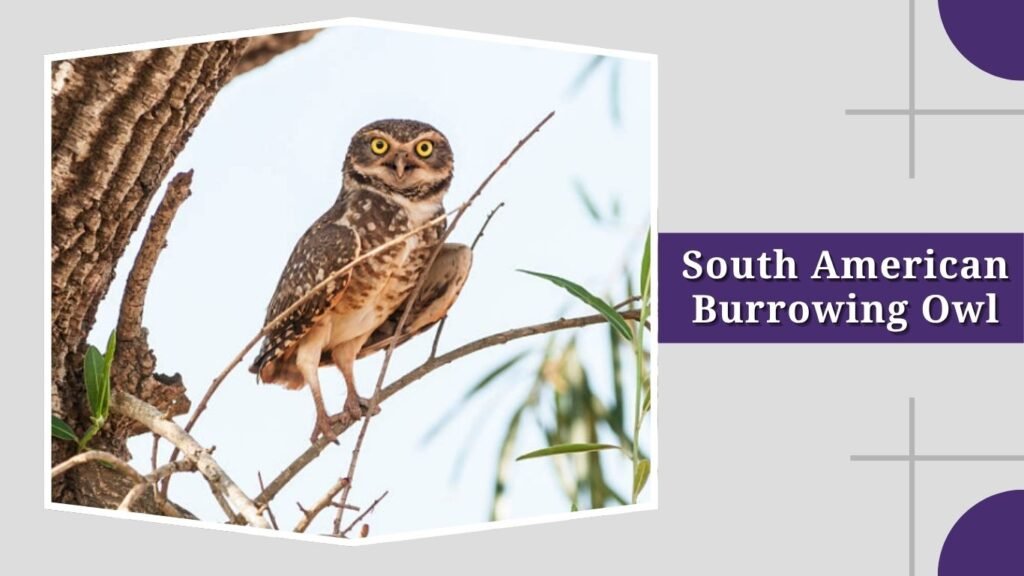
The South American Burrowing Owl is a widely distributed ground-dwelling owl found across many parts of South America. It is well adapted to open environments and is often seen during the day near its burrow. Like other burrowing owls, it relies heavily on underground shelters for protection and nesting.
Identification
- Small owl with a compact body and long legs
- Brown upperparts with white spotting
- Pale underparts with brown barring
- Bright yellow eyes and a rounded head
- No ear tufts, giving it a smooth appearance
- Frequently seen standing upright near its burrow
Habitat
The South American Burrowing Owl inhabits open areas such as grasslands, savannas, farmland, and dry plains. It prefers habitats with low vegetation that allow clear visibility. This species depends on burrows for nesting and shelter, often using those made by other animals. It can also adapt to human-altered environments if suitable open land is available.
Behaviors
This owl is active during the day as well as at dawn and dusk. It is often observed near its burrow, scanning for predators or prey. When threatened, it may bob its head, make warning calls, or quickly retreat underground. It is relatively social and may form small groups or loose colonies.
Diet and Lifespan
The South American Burrowing Owl mainly feeds on insects such as beetles and grasshoppers. It also consumes small mammals, birds, and reptiles when available. It hunts on the ground or with short flights. The species typically lives around 6 to 10 years in the wild, depending on habitat conditions and food availability.
6. Brazilian Burrowing Owl
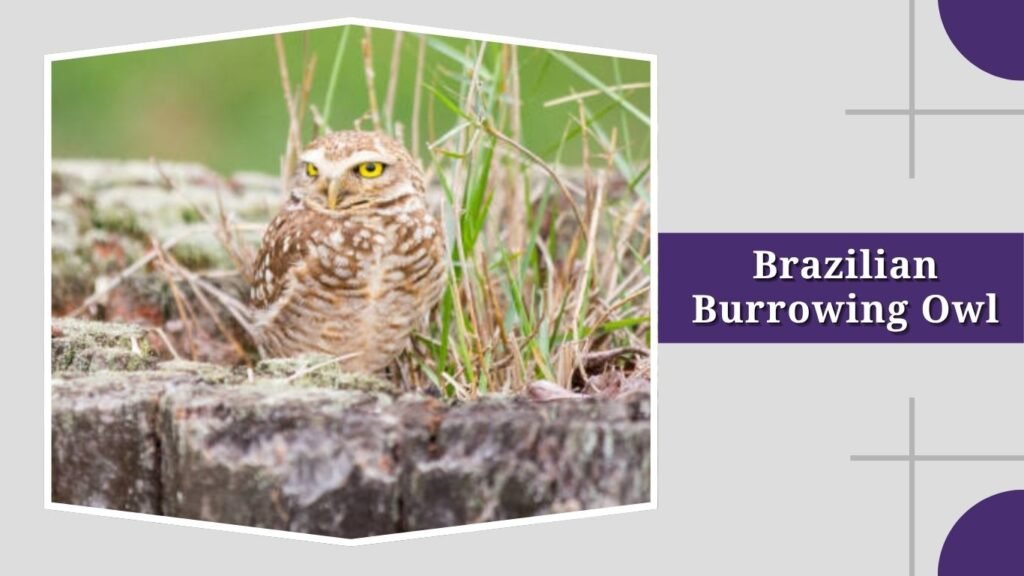
The Brazilian Burrowing Owl is a ground-dwelling owl commonly found in open regions of Brazil. It is active during the day and often seen standing near its burrow. This species is well adapted to warm climates and thrives in open landscapes with minimal vegetation.
Identification
- Small owl with a compact body and long legs
- Brown upperparts with white spotting
- Pale underparts with light barring
- Bright yellow eyes and a rounded head
- No ear tufts, giving it a smooth appearance
- Often seen upright near its burrow entrance
Habitat
The Brazilian Burrowing Owl prefers grasslands, savannas, farmland, and open plains. It relies on underground burrows for shelter and nesting, often using abandoned burrows from other animals. This species can also adapt to rural and semi-urban environments if open spaces are available.
Behaviors
This owl is active during the day, especially in the early morning and late afternoon. It is often seen near its burrow, watching for prey or threats. When disturbed, it may bob its head or retreat quickly underground. It is somewhat social and may live in loose groups where habitat conditions are favorable.
Diet and Lifespan
The Brazilian Burrowing Owl mainly feeds on insects such as beetles and grasshoppers. It also eats small mammals, birds, and reptiles when available. It hunts on the ground or in short flights. The species typically lives around 6 to 10 years in the wild, depending on environmental conditions and habitat quality.
7. Peruvian Burrowing Owl
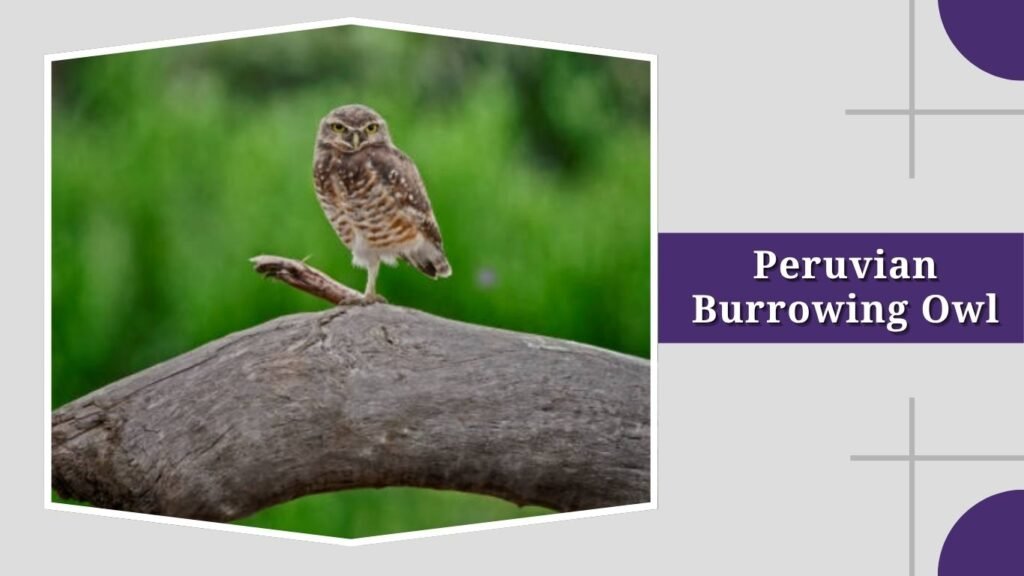
The Peruvian Burrowing Owl is a ground-dwelling owl found in coastal and inland regions of Peru. It is well adapted to dry, open environments and is often seen during the day near its burrow. Like other burrowing owls, it relies on underground shelters for protection and nesting.
Identification
- Small owl with a compact body and long legs
- Brown upperparts with white spotting
- Pale underparts with light barring
- Bright yellow eyes and a rounded head
- No ear tufts, giving it a smooth appearance
- Commonly seen standing upright near its burrow
Habitat
The Peruvian Burrowing Owl prefers arid and semi-arid habitats such as coastal deserts, grasslands, and open plains. It thrives in areas with low vegetation, allowing clear visibility of surroundings. This species depends on burrows for nesting and shelter, often using abandoned burrows from other animals.
Behaviors
This owl is active during the day as well as at dawn and dusk. It is frequently observed near its burrow, scanning for prey or danger. When threatened, it may bob its head, produce alarm calls, or quickly retreat underground. It may live alone or in small groups depending on habitat conditions.
Diet and Lifespan
The Peruvian Burrowing Owl mainly feeds on insects such as beetles and grasshoppers. It also consumes small mammals, birds, and reptiles when available. It hunts on the ground or with short flights. The species typically lives around 6 to 10 years in the wild, depending on environmental conditions.
8. Chilean Burrowing Owl
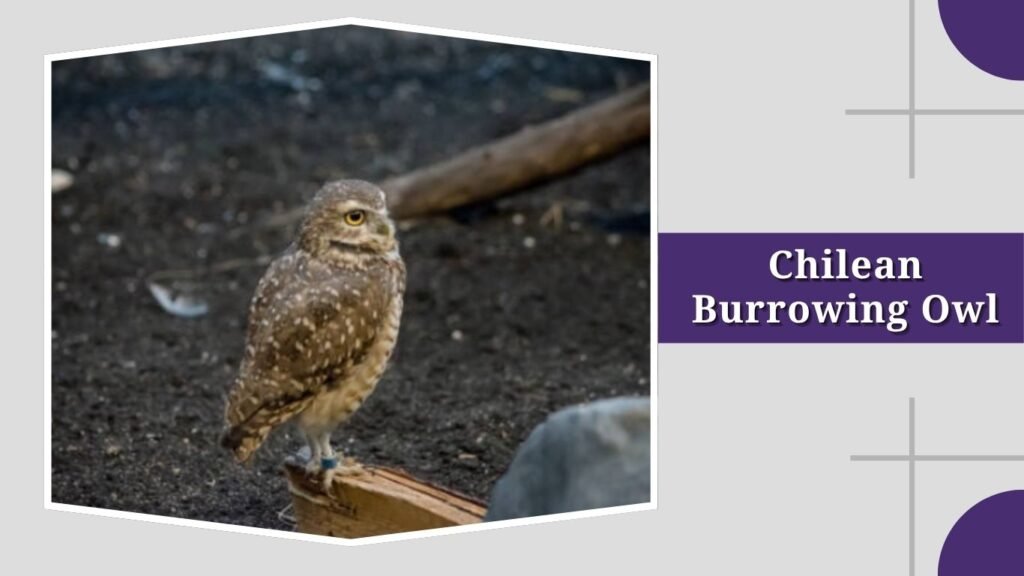
The Chilean Burrowing Owl is a ground-dwelling owl found in parts of Chile, especially in open and dry landscapes. It is active during the day and is often seen near its burrow, displaying alert behavior. This species is well adapted to life in exposed environments.
Identification
- Small owl with a compact body and long legs
- Brown upperparts with white spotting
- Pale underparts with light barring
- Bright yellow eyes and a rounded head
- No ear tufts, giving it a smooth appearance
- Often stands upright near its burrow
Habitat
The Chilean Burrowing Owl prefers open habitats such as grasslands, scrublands, and semi-arid plains. It thrives in areas with low vegetation that allow it to spot predators and prey easily. This species relies on underground burrows for nesting and shelter, often using abandoned burrows made by other animals.
Behaviors
This owl is active during the day as well as at dawn and dusk. It is commonly seen near its burrow, watching its surroundings. When threatened, it may bob its head, make warning calls, or retreat underground. It may live alone or in small groups depending on habitat conditions.
Diet and Lifespan
The Chilean Burrowing Owl mainly feeds on insects such as beetles and grasshoppers. It also eats small mammals, birds, and reptiles when available. It hunts both on the ground and during short flights. The species typically lives around 6 to 10 years in the wild, depending on environmental conditions.
9. Andean Burrowing Owl
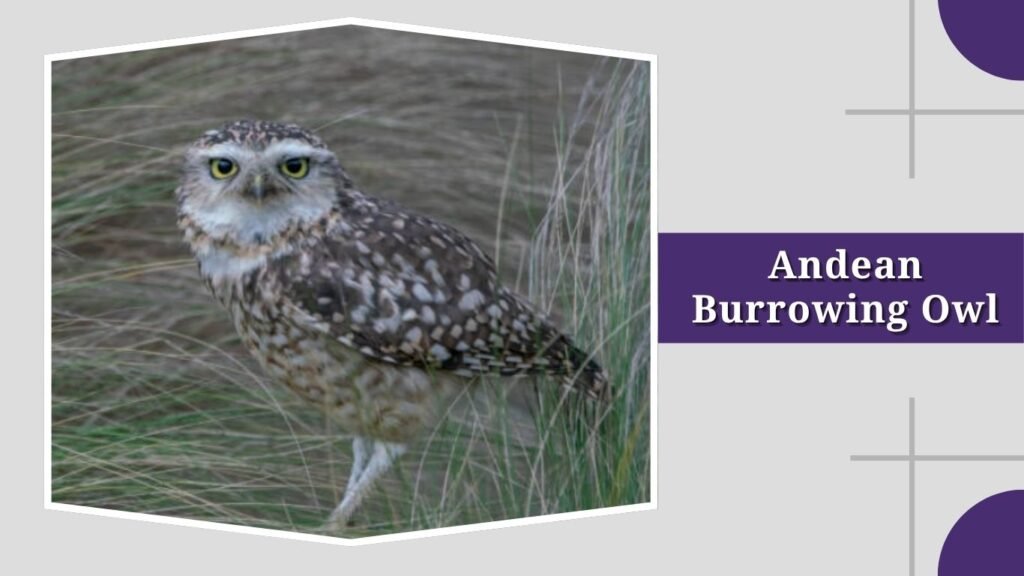
The Andean Burrowing Owl is a ground-dwelling owl adapted to high-altitude regions of the Andes. It is often seen near its burrow during the day and is well suited to open, rugged landscapes. Its ability to survive in cooler, mountainous environments makes it unique among burrowing owls.
Identification
- Small owl with a compact body and relatively long legs
- Brown upperparts with white spotting
- Pale underparts with light barring
- Bright yellow eyes and a rounded head
- No ear tufts, giving it a smooth appearance
- Often stands upright near its burrow
Habitat
The Andean Burrowing Owl is found in high-altitude grasslands, plains, and mountainous regions. It prefers open terrain with sparse vegetation, allowing it to easily detect predators and prey. This species relies on burrows for shelter and nesting, often using those made by other animals adapted to these environments.
Behaviors
This owl is active during the day as well as at dawn and dusk. It is frequently seen near its burrow, scanning the area for food or threats. When disturbed, it may bob its head, give alarm calls, or quickly retreat underground. It may live alone or in small groups depending on local conditions.
Diet and Lifespan
The Andean Burrowing Owl mainly feeds on insects such as beetles and grasshoppers. It also consumes small mammals, birds, and reptiles when available. It hunts on the ground or with short flights. The species typically lives around 6 to 10 years in the wild, depending on environmental conditions.
10. Argentine Burrowing Owl
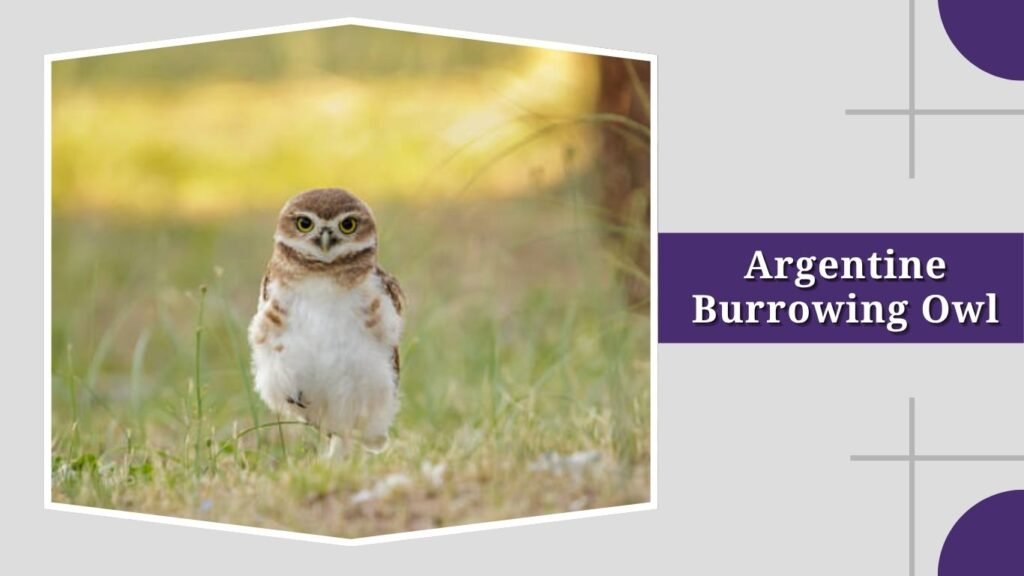
The Argentine Burrowing Owl is a ground-dwelling owl commonly found in open regions of Argentina. It is active during the day and is often seen standing near its burrow. This species is well adapted to grasslands and agricultural areas where it can easily hunt and find shelter.
Identification
- Small owl with a compact body and long legs
- Brown upperparts with white spotting
- Pale underparts with light barring
- Bright yellow eyes and a rounded head
- No ear tufts, giving it a smooth appearance
- Often stands upright near its burrow entrance
Habitat
The Argentine Burrowing Owl prefers open landscapes such as grasslands, pampas, farmland, and scrub areas. It thrives in regions with low vegetation that provide clear visibility. This species depends on underground burrows for nesting and shelter, often using abandoned burrows made by other animals.
Behaviors
This owl is active during the day as well as at dawn and dusk. It is commonly seen near its burrow, watching for prey or danger. When threatened, it may bob its head, produce alarm calls, or retreat quickly underground. It may live alone or in small groups depending on habitat conditions.
Diet and Lifespan
The Argentine Burrowing Owl mainly feeds on insects such as beetles and grasshoppers. It also eats small mammals, birds, and reptiles when available. It hunts on the ground or in short flights. The species typically lives around 6 to 10 years in the wild, depending on environmental conditions and habitat quality.
11. Bolivian Burrowing Owl
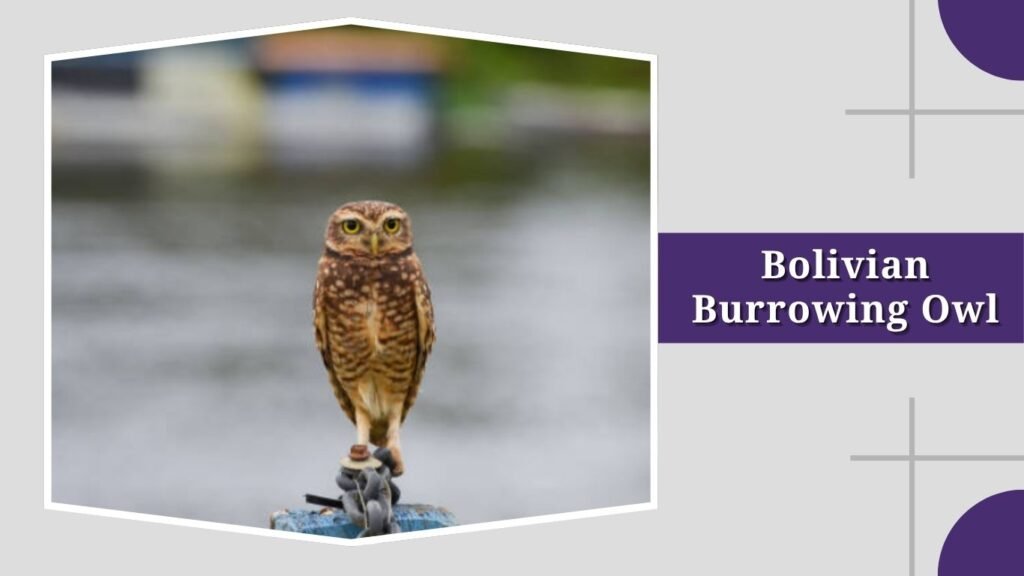
The Bolivian Burrowing Owl is a ground-dwelling owl found in open regions of Bolivia. It is active during the day and is often seen near its burrow, displaying alert and upright posture. This species is well adapted to dry, open environments.
Identification
- Small owl with a compact body and long legs
- Brown upperparts with white spotting
- Pale underparts with light barring
- Bright yellow eyes and a rounded head
- No ear tufts, giving it a smooth appearance
- Often stands upright near its burrow
Habitat
The Bolivian Burrowing Owl prefers open habitats such as grasslands, savannas, and agricultural areas. It thrives in regions with low vegetation where it can easily detect predators and prey. This owl relies on underground burrows for nesting and shelter, often using abandoned burrows from other animals.
Behaviors
This owl is active during the day as well as at dawn and dusk. It is frequently seen near its burrow, scanning its surroundings. When threatened, it may bob its head, make warning calls, or quickly retreat underground. It may live alone or in small groups depending on habitat conditions.
Diet and Lifespan
The Bolivian Burrowing Owl mainly feeds on insects such as beetles and grasshoppers. It also consumes small mammals, birds, and reptiles when available. It hunts on the ground or with short flights. The species typically lives around 6 to 10 years in the wild, depending on environmental conditions.
12. Paraguayan Burrowing Owl
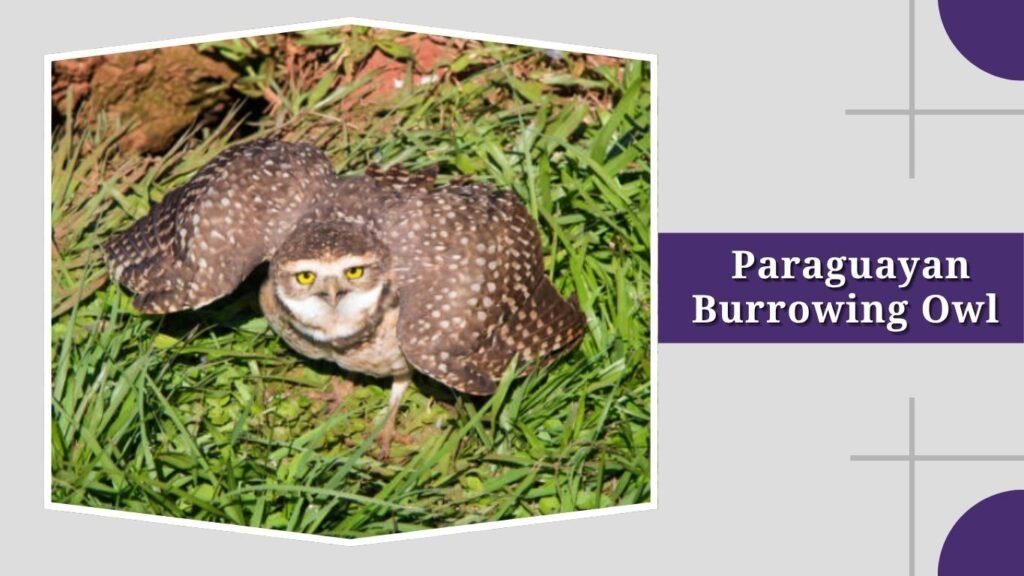
The Paraguayan Burrowing Owl is a ground-dwelling owl found in open regions of Paraguay. It is often active during the day and can be seen near its burrow, maintaining an alert posture. This species is well suited to life in open landscapes with minimal vegetation.
Identification
- Small owl with a compact body and long legs
- Brown upperparts with white spotting
- Pale underparts with light barring
- Bright yellow eyes and a rounded head
- No ear tufts, giving it a smooth appearance
- Commonly seen standing upright near its burrow
Habitat
The Paraguayan Burrowing Owl prefers grasslands, savannas, and farmland. It thrives in open areas where visibility is high, allowing it to detect predators and prey easily. This species depends on underground burrows for shelter and nesting, often using abandoned burrows made by other animals.
Behaviors
This owl is active during the day as well as at dawn and dusk. It is frequently seen near its burrow, scanning the surroundings. When threatened, it may bob its head, give alarm calls, or quickly retreat underground. It may live alone or in small groups depending on habitat conditions.
Diet and Lifespan
The Paraguayan Burrowing Owl mainly feeds on insects such as beetles and grasshoppers. It also eats small mammals, birds, and reptiles when available. It hunts on the ground or in short flights. The species typically lives around 6 to 10 years in the wild, depending on environmental conditions.
13. Uruguayan Burrowing Owl
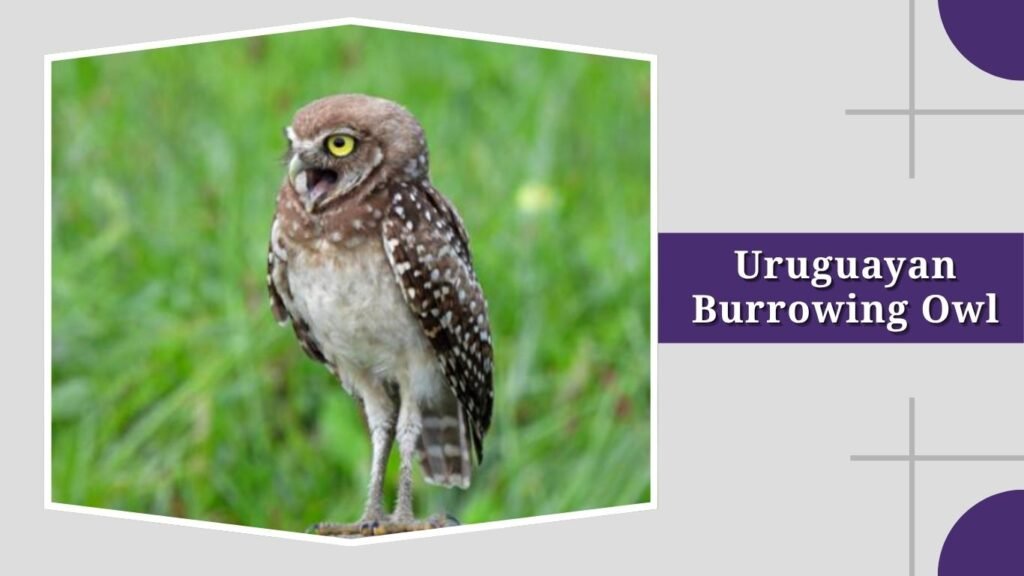
The Uruguayan Burrowing Owl is a ground-dwelling owl found in open landscapes of Uruguay. It is often active during the day and is commonly seen near its burrow. This species is well adapted to grassland environments and relies on underground shelters for protection.
Identification
- Small owl with a compact body and long legs
- Brown upperparts with white spotting
- Pale underparts with light barring
- Bright yellow eyes and a rounded head
- No ear tufts, giving it a smooth appearance
- Often stands upright near its burrow entrance
Habitat
The Uruguayan Burrowing Owl prefers open habitats such as grasslands, farmland, and plains. It thrives in areas with low vegetation where it can easily spot predators and prey. This owl depends on underground burrows for nesting and shelter, often using those made by other animals.
Behaviors
This owl is active during the day as well as at dawn and dusk. It is frequently seen near its burrow, watching its surroundings. When threatened, it may bob its head, make warning calls, or retreat quickly underground. It may live alone or in small groups depending on habitat conditions.
Diet and Lifespan
The Uruguayan Burrowing Owl mainly feeds on insects such as beetles and grasshoppers. It also consumes small mammals, birds, and reptiles when available. It hunts on the ground or with short flights. The species typically lives around 6 to 10 years in the wild, depending on environmental conditions.
14. Ecuadorian Burrowing Owl
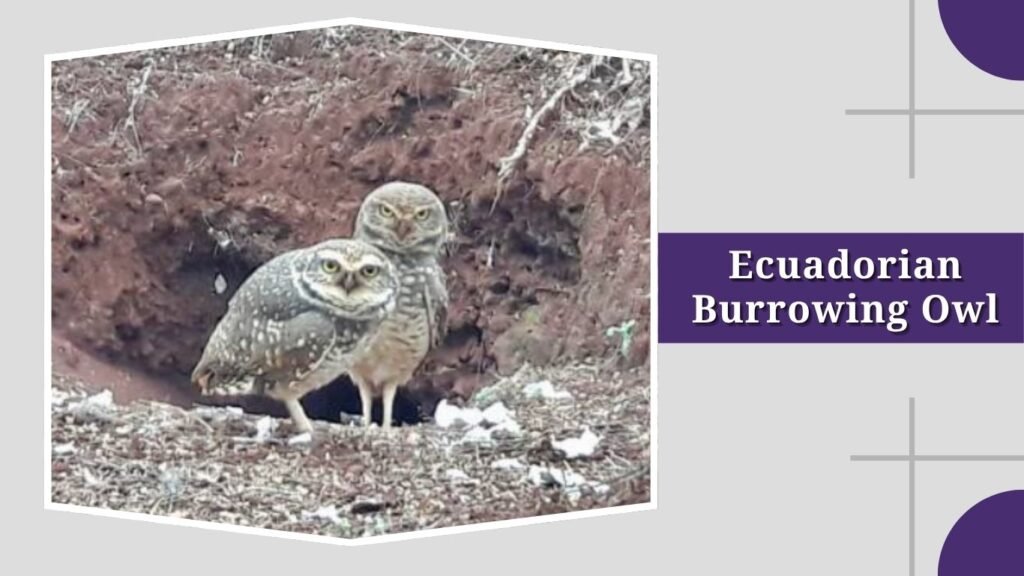
The Ecuadorian Burrowing Owl is a ground-dwelling owl found in open regions of Ecuador. It is often active during the day and is usually seen near its burrow. This species is well adapted to open environments with low vegetation.
Identification
- Small owl with a compact body and long legs
- Brown upperparts with white spotting
- Pale underparts with light barring
- Bright yellow eyes and a rounded head
- No ear tufts, giving it a smooth appearance
- Frequently stands upright near its burrow
Habitat
The Ecuadorian Burrowing Owl prefers grasslands, dry plains, and agricultural areas. It thrives in open habitats where it can easily detect predators and prey. This species relies on underground burrows for nesting and shelter, often using abandoned burrows made by other animals.
Behaviors
This owl is active during the day as well as at dawn and dusk. It is commonly seen near its burrow, scanning its surroundings. When threatened, it may bob its head, produce alarm calls, or quickly retreat underground. It may live alone or in small groups depending on habitat conditions.
Diet and Lifespan
The Ecuadorian Burrowing Owl mainly feeds on insects such as beetles and grasshoppers. It also eats small mammals, birds, and reptiles when available. It hunts on the ground or with short flights. The species typically lives around 6 to 10 years in the wild, depending on environmental conditions.
15. Colombian Burrowing Owl
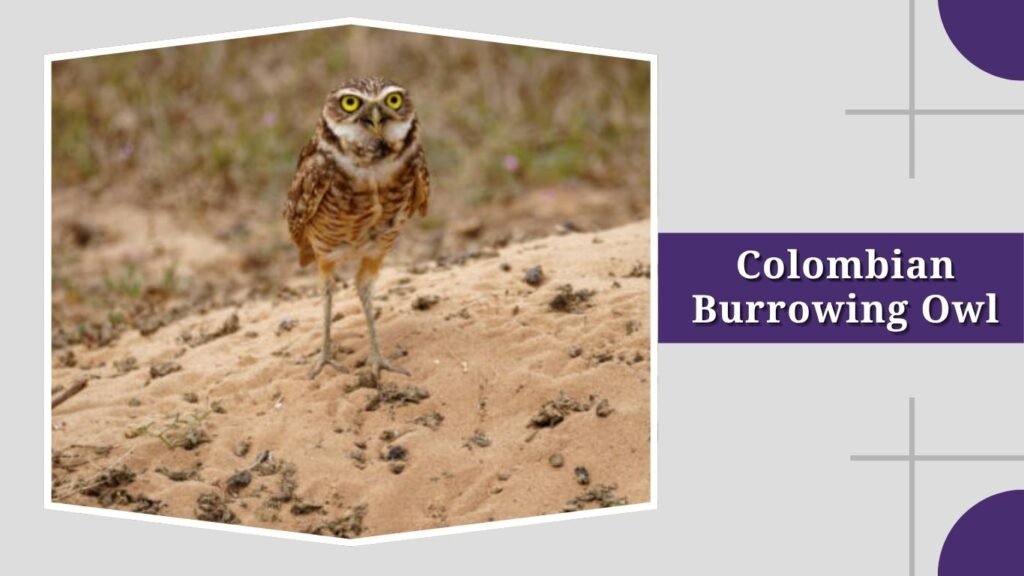
The Colombian Burrowing Owl is a ground-dwelling owl found in open regions of Colombia. It is active during the day and is often observed near its burrow. This species is well adapted to grasslands and open habitats where visibility is important for survival.
Identification
- Small owl with a compact body and long legs
- Brown upperparts with white spotting
- Pale underparts with light barring
- Bright yellow eyes and a rounded head
- No ear tufts, giving it a smooth appearance
- Often seen standing upright near its burrow
Habitat
The Colombian Burrowing Owl prefers open habitats such as grasslands, savannas, and farmland. It thrives in areas with low vegetation, allowing it to easily spot predators and prey. This owl depends on underground burrows for nesting and shelter, often using abandoned burrows made by other animals.
Behaviors
This owl is active during the day as well as at dawn and dusk. It is frequently seen near its burrow, watching its surroundings. When threatened, it may bob its head, give alarm calls, or quickly retreat underground. It may live alone or in small groups depending on habitat conditions.
Diet and Lifespan
The Colombian Burrowing Owl mainly feeds on insects such as beetles and grasshoppers. It also consumes small mammals, birds, and reptiles when available. It hunts on the ground or with short flights. The species typically lives around 6 to 10 years in the wild, depending on environmental conditions.
16. Venezuelan Burrowing Owl
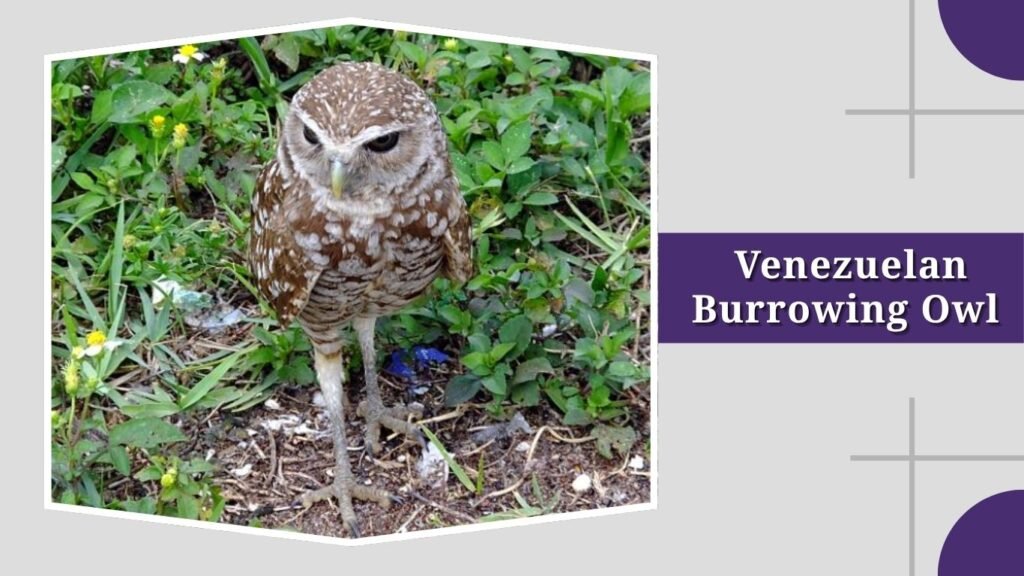
The Venezuelan Burrowing Owl is a ground-dwelling owl found in open regions of Venezuela. It is active during the day and is often seen standing near its burrow. This species is well adapted to warm, open environments with low vegetation.
Identification
- Small owl with a compact body and long legs
- Brown upperparts with white spotting
- Pale underparts with light barring
- Bright yellow eyes and a rounded head
- No ear tufts, giving it a smooth appearance
- Commonly stands upright near its burrow
Habitat
The Venezuelan Burrowing Owl prefers grasslands, savannas, and open plains. It thrives in areas with sparse vegetation where it can easily detect predators and prey. This species depends on underground burrows for nesting and shelter, often using abandoned burrows made by other animals.
Behaviors
This owl is active during the day as well as at dawn and dusk. It is frequently seen near its burrow, scanning the surroundings. When threatened, it may bob its head, produce alarm calls, or quickly retreat underground. It may live alone or in small groups depending on habitat conditions.
Diet and Lifespan
The Venezuelan Burrowing Owl mainly feeds on insects such as beetles and grasshoppers. It also eats small mammals, birds, and reptiles when available. It hunts on the ground or with short flights. The species typically lives around 6 to 10 years in the wild, depending on environmental conditions.
17. Central American Burrowing Owl
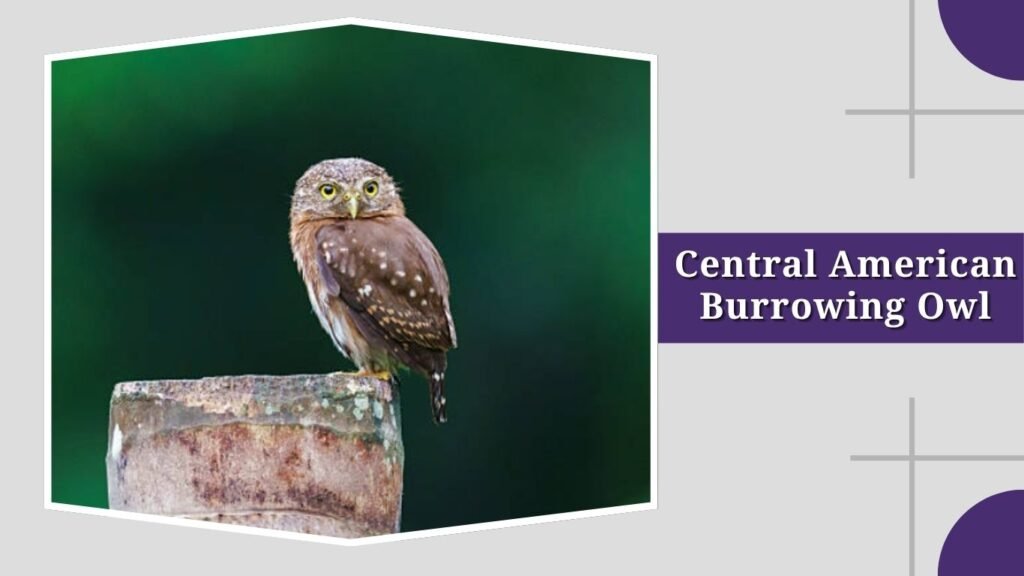
The Central American Burrowing Owl is a ground-dwelling owl found across parts of Central America. It is active during the day and is often seen near its burrow, displaying alert behavior. This species is well adapted to open landscapes with low vegetation.
Identification
- Small owl with a compact body and long legs
- Brown upperparts with white spotting
- Pale underparts with light barring
- Bright yellow eyes and a rounded head
- No ear tufts, giving it a smooth appearance
- Frequently stands upright near its burrow
Habitat
The Central American Burrowing Owl prefers open habitats such as grasslands, savannas, and farmland. It thrives in areas with sparse vegetation where it can easily detect predators and prey. This owl relies on underground burrows for nesting and shelter, often using abandoned burrows made by other animals.
Behaviors
This owl is active during the day as well as at dawn and dusk. It is commonly seen near its burrow, scanning its surroundings. When threatened, it may bob its head, give alarm calls, or quickly retreat underground. It may live alone or in small groups depending on habitat conditions.
Diet and Lifespan
The Central American Burrowing Owl mainly feeds on insects such as beetles and grasshoppers. It also consumes small mammals, birds, and reptiles when available. It hunts on the ground or with short flights. The species typically lives around 6 to 10 years in the wild, depending on environmental conditions.
18. Prairie Burrowing Owl
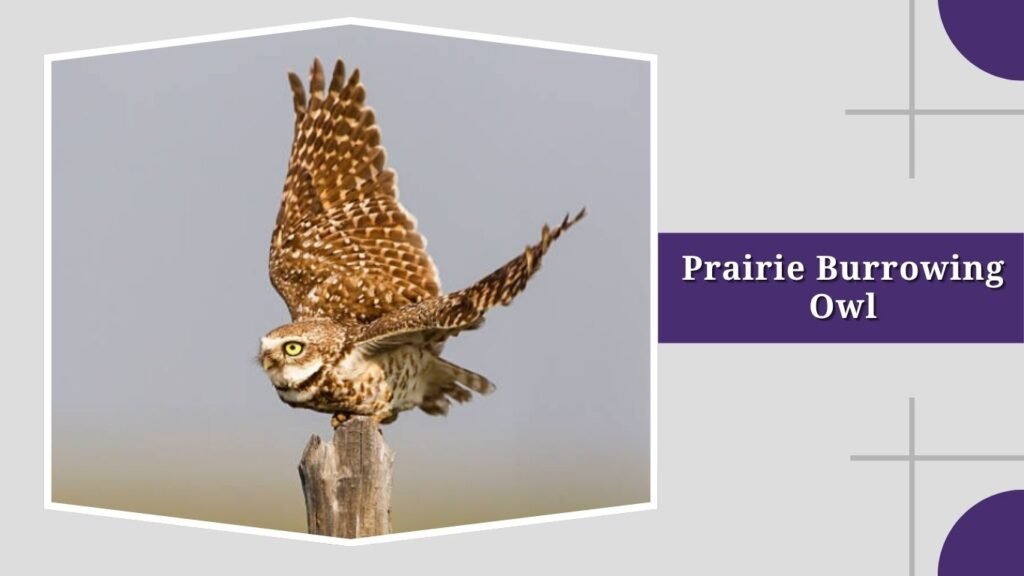
The Prairie Burrowing Owl is a ground-dwelling owl commonly found in open prairie regions. It is active during the day and is often seen standing near its burrow. This species is well adapted to wide, open landscapes with short vegetation.
Identification
- Small owl with a compact body and long legs
- Brown upperparts with white spotting
- Pale underparts with light barring
- Bright yellow eyes and a rounded head
- No ear tufts, giving it a smooth appearance
- Often stands upright near its burrow entrance
Habitat
The Prairie Burrowing Owl prefers grasslands, prairies, and open plains with low vegetation. It relies on underground burrows for nesting and shelter, often using those made by prairie dogs or other burrowing animals. This species thrives in open environments where it has clear visibility of its surroundings.
Behaviors
This owl is active during the day as well as at dawn and dusk. It is commonly seen near its burrow, watching for predators or prey. When threatened, it may bob its head, make warning calls, or quickly retreat underground. It may live alone or in small groups depending on habitat conditions.
Diet and Lifespan
The Prairie Burrowing Owl mainly feeds on insects such as beetles and grasshoppers. It also eats small mammals, birds, and reptiles when available. It hunts on the ground or in short flights. The species typically lives around 6 to 10 years in the wild, depending on environmental conditions.
FAQs
What is a burrowing owl?
A burrowing owl is a type of owl that lives and nests underground instead of in trees. It typically uses burrows made by other animals, such as prairie dogs, and is often active during the day, which makes it easier to observe than most owls.
Where do burrowing owls live?
Burrowing owls are found in open habitats like grasslands, deserts, plains, and farmland. They prefer areas with low vegetation and loose soil where burrows are available. These owls are commonly found in North and South America.
Are burrowing owls active during the day?
Yes, burrowing owls are often active during the day, especially in the early morning and late afternoon. This makes them different from most owl species, which are mainly nocturnal and hunt at night.
What do burrowing owls eat?
Burrowing owls mainly eat insects such as beetles and grasshoppers. They also hunt small mammals, birds, and reptiles when available. Their diet depends on the habitat and food supply in their environment.
Are burrowing owls endangered?
Some populations of burrowing owls are declining due to habitat loss, land development, and reduced availability of burrows. While not all are endangered, many areas have conservation programs to protect their habitats and support population recovery.
