
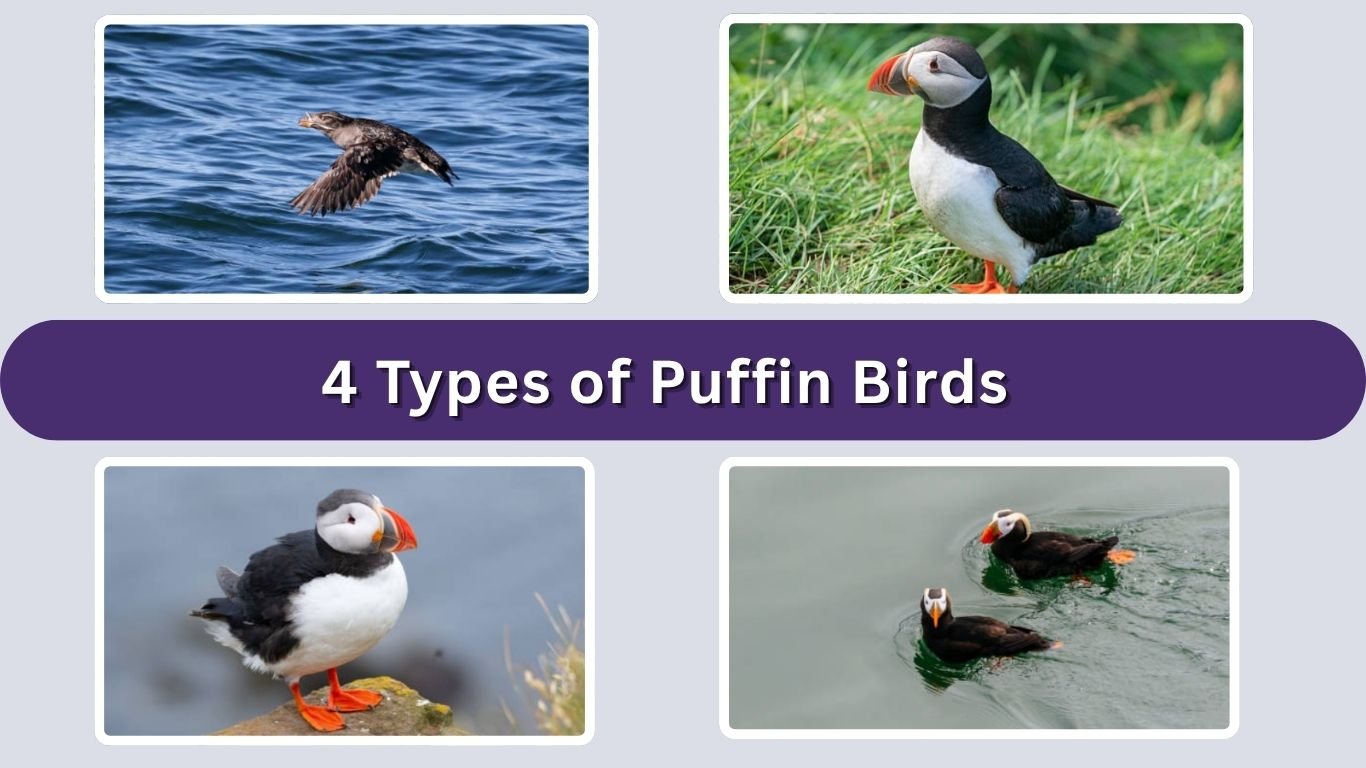
Puffins are small, colorful seabirds known for their bright bills, compact bodies, and excellent diving abilities. Found mainly in the Northern Hemisphere, these birds spend most of their lives at sea and come to land only during the breeding season. Each species has unique features, from facial markings to bill shape and habitat preferences.
This guide covers 4 types of puffin birds, helping you identify each species through key characteristics such as size, habitat, behavior, and diet. Whether you are a bird enthusiast or a curious learner, this collection provides a simple way to recognize and understand these fascinating seabirds.
1. Atlantic Puffin
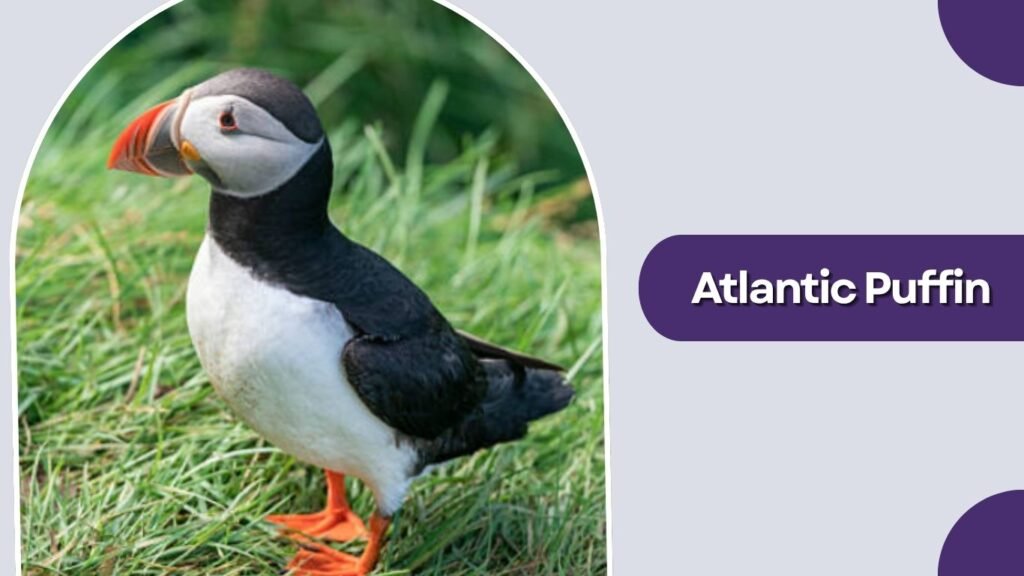
The Atlantic Puffin is one of the most recognizable seabirds in the world, often called the “clown of the sea” due to its colorful beak and expressive appearance. Found across the North Atlantic Ocean, this small seabird is admired for its charming look and remarkable adaptability to life at sea. Despite its cute appearance, it is a strong flier and an excellent swimmer, perfectly suited to harsh marine environments.
Identification
- Small seabird with a wingspan of about 47–63 cm
- Black upperparts and white underparts
- Distinctive large, triangular bill with bright orange, yellow, and blue colors (especially in breeding season)
- Orange legs and webbed feet
- White face with dark eye markings
- Compact body with short wings adapted for diving
Habitat
Atlantic Puffins are primarily found in the North Atlantic, including coasts of Iceland, Norway, Greenland, the United Kingdom, and eastern Canada. They spend most of their lives at sea, coming to land only during the breeding season. They prefer rocky coastal cliffs, offshore islands, and grassy slopes where they can dig burrows for nesting.
Behavior
These birds are highly adapted to marine life. They use their wings to “fly” underwater, propelling themselves in pursuit of fish. On land, they appear somewhat clumsy, but in the air and water, they are agile and efficient. Atlantic Puffins are social birds, often nesting in large colonies. During breeding season, they return to the same nesting sites year after year. They are also known for carrying multiple small fish in their beaks at once, thanks to specialized structures in their mouths.
Diet
Atlantic Puffins mainly feed on small fish such as sand eels, herring, and capelin. They catch prey by diving underwater, sometimes reaching considerable depths. They may also consume crustaceans and other small marine organisms. Their ability to hold several fish crosswise in their bill allows them to efficiently gather food for their chicks, making them highly effective hunters in their ocean environment.
2. Horned Puffin
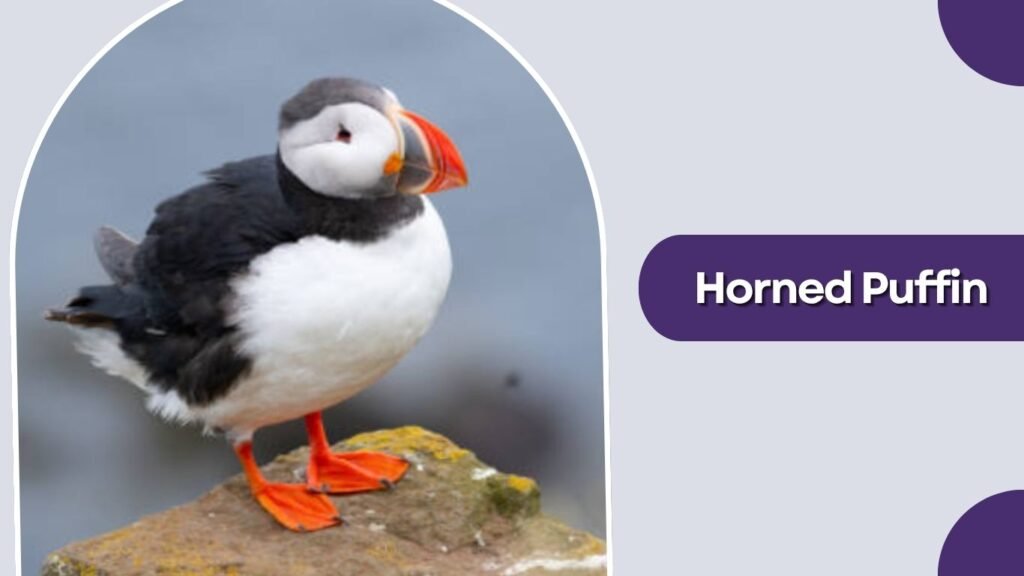
The Horned Puffin is a striking seabird found in the North Pacific Ocean, known for its bold facial markings and unique “horn-like” feature above the eye during the breeding season. It closely resembles the Atlantic Puffin but has distinct characteristics that make it easy to identify. This species thrives in cold marine environments and is well adapted to life both at sea and on rugged coastlines.
Identification
- Medium-sized seabird with a wingspan of about 50–60 cm
- Black upperparts and white underparts
- Thick, triangular bill with orange and yellow coloring
- Small fleshy “horn” above the eye during breeding season
- White face with a dark eye line
- Orange legs and webbed feet
Habitat
Horned Puffins are found along the coasts and offshore islands of Alaska, eastern Siberia, and parts of the North Pacific. They spend most of their lives at sea, coming ashore only during the breeding season. They prefer rocky cliffs, coastal islands, and steep slopes where they can nest in crevices or burrows.
Behavior
These puffins are strong swimmers and skilled divers, using their wings to propel themselves underwater in search of food. In flight, they beat their wings rapidly to stay airborne. Horned Puffins are usually seen in small groups at sea but gather in colonies during breeding. They are generally quieter than some seabirds but can produce low growling sounds near nesting sites.
Diet
Horned Puffins mainly feed on small fish such as sand lance and capelin. They dive underwater to catch prey and can carry multiple fish in their bills at once. They may also eat crustaceans and other small marine organisms. Their efficient hunting ability allows them to thrive in cold ocean environments where food availability can vary.
3. Tufted Puffin
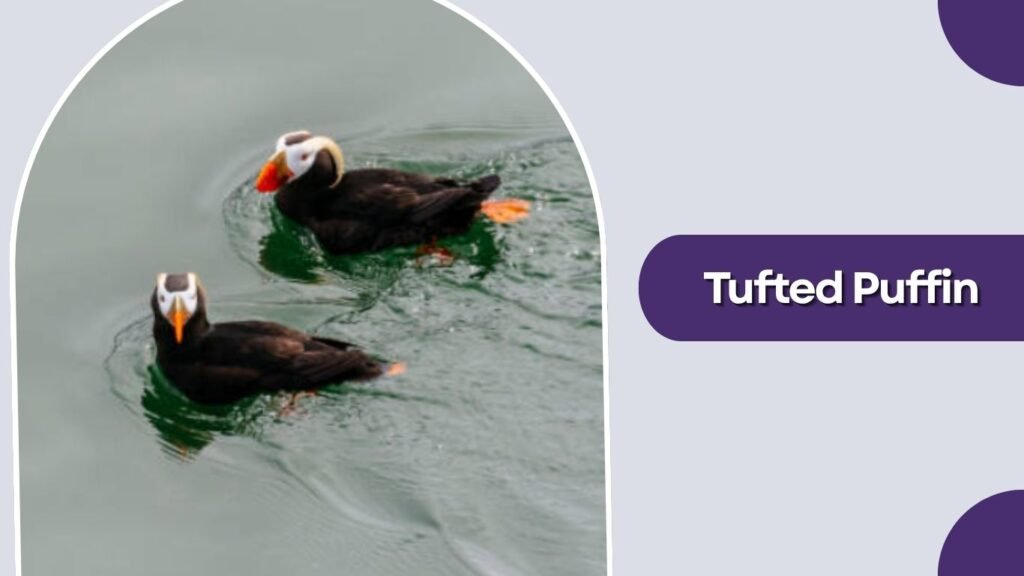
The Tufted Puffin is a distinctive seabird found in the North Pacific, easily recognized by its striking appearance and long golden head plumes during the breeding season. It is larger and darker than other puffin species, giving it a bold and dramatic look. This bird is well adapted to cold ocean environments and spends most of its life at sea.
Identification
- Medium to large seabird with a wingspan of about 60–70 cm
- Mostly black body with a white face patch during breeding season
- Thick orange-red bill
- Long golden tufts extending from behind the eyes (breeding season)
- Bright red legs and webbed feet
- Sturdy body with strong wings for diving
Habitat
Tufted Puffins are found along the North Pacific coasts, including Alaska, Japan, and parts of Russia and North America. They prefer rocky cliffs, offshore islands, and coastal slopes for nesting. Like other puffins, they spend most of their lives at sea and only come to land during breeding season.
Behavior
These puffins are excellent swimmers and divers, using their wings to “fly” underwater in pursuit of prey. They are often seen alone or in small groups at sea but form colonies during breeding. On land, they nest in burrows or rock crevices. Their flight is fast, with rapid wingbeats, and they can cover long distances over open water.
Diet
Tufted Puffins primarily feed on fish such as sand lance, herring, and other small schooling species. They also eat squid and crustaceans. They dive underwater to catch prey and can carry several fish in their bill at once, making them efficient hunters in their marine habitat.
4. Rhinoceros Auklet
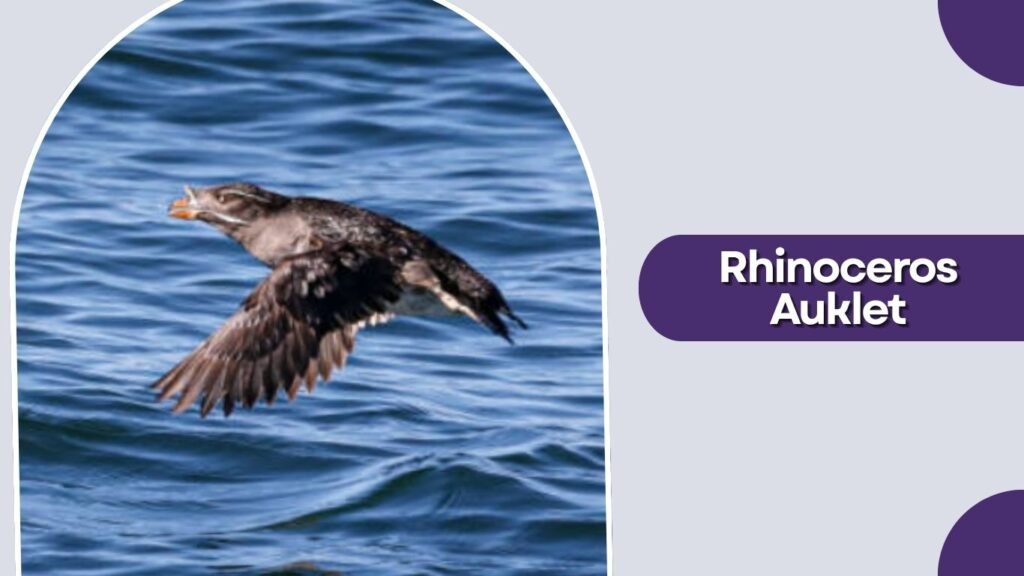
The Rhinoceros Auklet is a seabird closely related to puffins, found in the North Pacific Ocean. Despite not being a true puffin, it is often grouped with them due to its similar behavior and appearance. It gets its name from the distinctive horn-like projection on its bill during the breeding season.
Identification
- Medium-sized seabird with a wingspan of about 55–65 cm
- Dark gray to black upperparts with lighter underparts
- Thick, pointed bill with a pale or yellowish color
- Small horn-like plate on the bill during breeding season
- White facial plume extending backward from the eye
- Dark legs and webbed feet
Habitat
Rhinoceros Auklets are found along the coasts of the North Pacific, including regions of Alaska, Japan, and western North America. They spend most of their time at sea and come to land during breeding season. They prefer coastal islands with grassy slopes or soft soil for burrow nesting.
Behavior
These birds are mostly active at night when visiting their nesting sites, which helps them avoid predators. They are strong swimmers and divers, using their wings to move underwater in search of prey. At sea, they are usually seen alone or in small groups, but they gather in colonies during breeding.
Diet
Rhinoceros Auklets mainly feed on small fish such as sand lance and anchovies. They dive underwater to catch prey and can carry multiple fish in their bills to bring back to their chicks. They may also eat squid and other small marine organisms depending on availability.
FAQs
What is the rarest puffin species?
The Tufted Puffin is considered less common in some parts of its range, but overall, puffin populations vary by region. The Atlantic Puffin has experienced declines in certain areas, making it a conservation concern in parts of Europe despite being widespread.
Where do puffins live?
Puffins are found mainly in the Northern Hemisphere, especially in the North Atlantic and North Pacific oceans. They spend most of their lives at sea and come to coastal cliffs, islands, and rocky shores only during the breeding season.
What do puffins eat?
Puffins primarily eat small fish such as sand eels, herring, and anchovies. They are skilled divers and can catch multiple fish in one trip. They may also consume crustaceans and small marine organisms when fish are less available.
Can puffins fly and swim?
Yes, puffins can both fly and swim very well. They use rapid wingbeats to fly in the air and use the same wings to “fly” underwater while hunting. Their swimming ability is essential for catching prey in the ocean.
Why are puffins called “sea parrots”?
Puffins are often called “sea parrots” because of their colorful, curved bills that resemble a parrot’s beak. Their bright facial features and expressive look also contribute to this nickname.
