
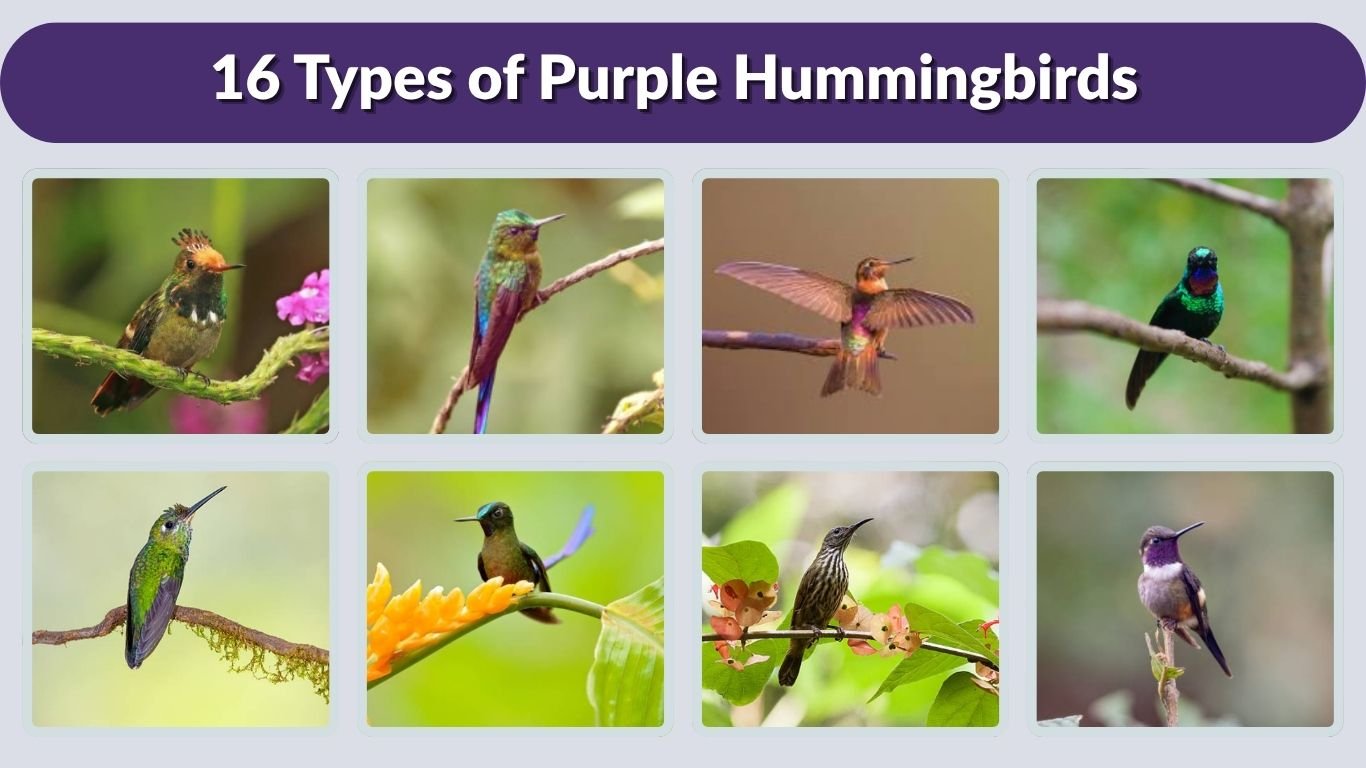
Purple hummingbirds are among the most enchanting and visually stunning birds, known for their rich violet, lavender, and deep purple hues that shimmer brilliantly in sunlight. These tiny birds are often found in tropical and mountainous regions, where they thrive around nectar-rich flowers. Their iridescent feathers can shift in color depending on the light, making them appear almost magical in motion. This list explores 16 types of purple hummingbirds, each with unique markings, habitats, and behaviors that make them fascinating to observe.
1. Purple-throated Mountain-gem
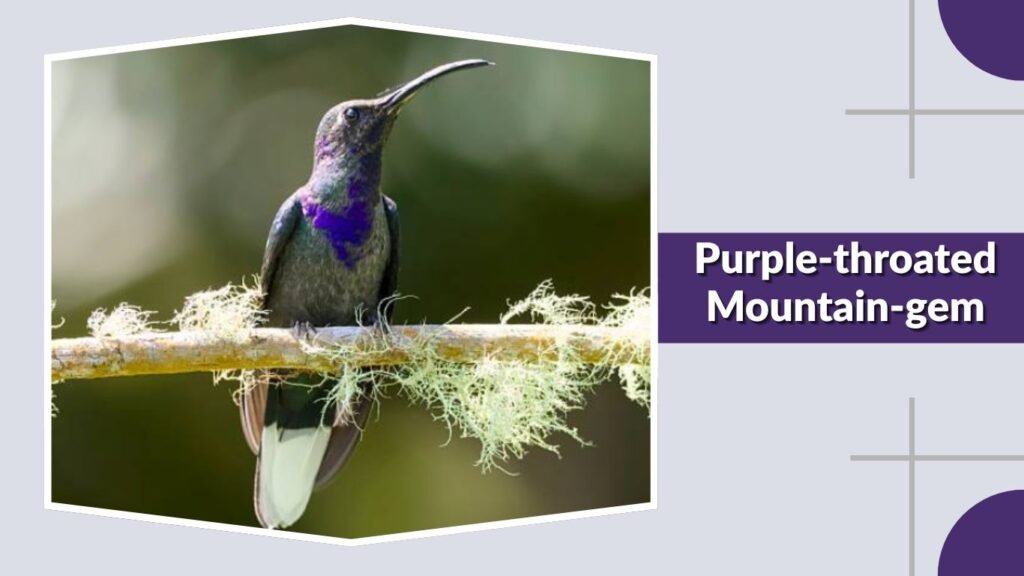
The Purple-throated Mountain-gem is a striking hummingbird known for its shimmering purple throat and relatively large size. Found mainly in mountainous regions, it is admired for its bold coloration and energetic feeding behavior.
Identification
- Medium to large hummingbird with a sturdy build
- Iridescent purple throat (especially in males)
- White stripe behind the eye
- Dark green upperparts with grayish underparts
- Straight, medium-length black bill
Color Pattern
The male displays a vivid purple throat that gleams brilliantly in sunlight, creating a strong contrast with its deep green body. Females are less vibrant, lacking the purple throat and showing softer gray and green tones, yet they still maintain an elegant look.
Habitat
This species prefers montane forests, forest edges, and shaded highland gardens. It is commonly found in cooler elevations where flowering plants are abundant and provide a steady nectar source.
Behavior
The Purple-throated Mountain-gem is active and often territorial. It feeds primarily on nectar while hovering but also consumes small insects. It may defend feeding areas aggressively, chasing away other hummingbirds to maintain control of resources.
2. Purple-chested Hummingbird
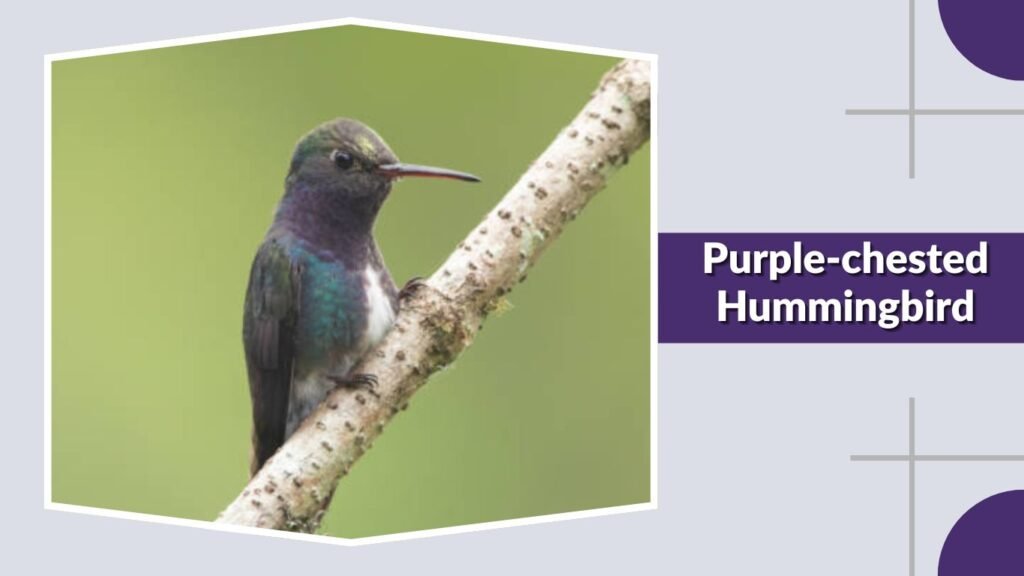
The Purple-chested Hummingbird is a beautiful species known for the rich purple coloring across its chest. Its elegant form and vibrant tones make it a noticeable presence in flower-filled environments.
Identification
- Medium-sized hummingbird with a slender body
- Distinct purple patch across the chest
- Green upperparts with a metallic sheen
- Straight, medium-length black bill
- Dark tail with slight iridescence
Color Pattern
This species features a striking purple chest that contrasts with its green upperparts. The purple can appear more vibrant in direct sunlight, while the rest of the body shows softer green tones, creating a balanced and eye-catching appearance.
Habitat
The Purple-chested Hummingbird is commonly found in tropical forests, forest edges, and open woodlands. It also adapts well to gardens and cultivated areas where flowering plants are abundant.
Behavior
This hummingbird is highly active and spends much of its time feeding on nectar. It hovers skillfully at flowers and occasionally catches small insects. It may display territorial behavior, especially around feeding spots.
3. Purple-crowned Fairy
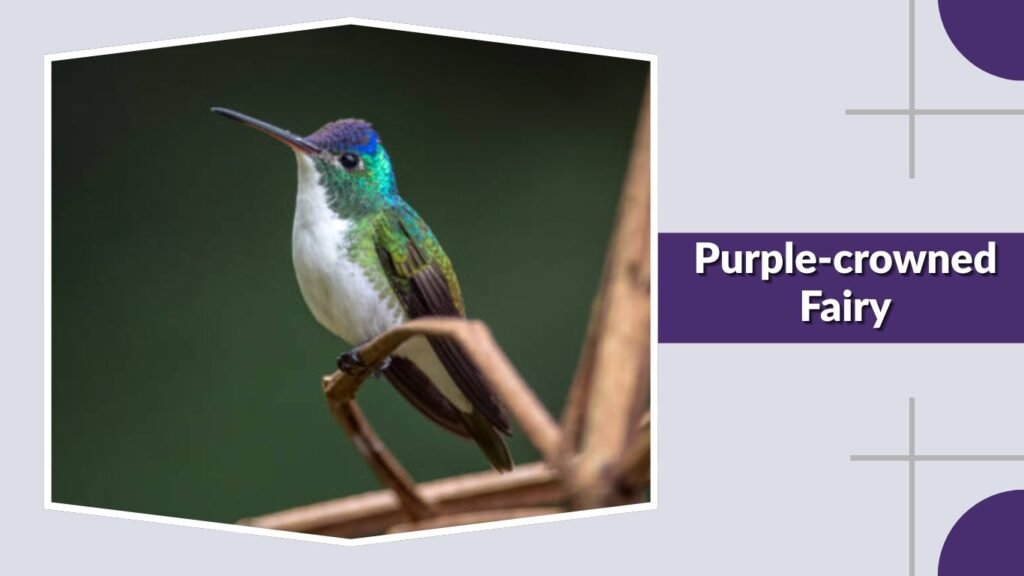
The Purple-crowned Fairy is a delicate and enchanting hummingbird, recognized for the soft purple hues on its crown. Its graceful appearance and gentle movements make it a favorite among bird enthusiasts.
Identification
- Small hummingbird with a slender body
- Distinct purple crown on the head
- Green upperparts with subtle iridescence
- Pale underparts
- Straight, medium-length black bill
Color Pattern
This species features a soft yet noticeable purple crown that contrasts beautifully with its green body. The purple can appear more vivid in good lighting, while the rest of the plumage remains subtle and balanced.
Habitat
The Purple-crowned Fairy is typically found in tropical forests, forest edges, and areas with dense vegetation. It prefers habitats rich in flowering plants and can also be seen in gardens.
Behavior
This hummingbird is active and agile, often hovering while feeding on nectar. It also consumes small insects. It is generally calm but may show mild territorial behavior when defending feeding areas.
4. Purple-bibbed Whitetip
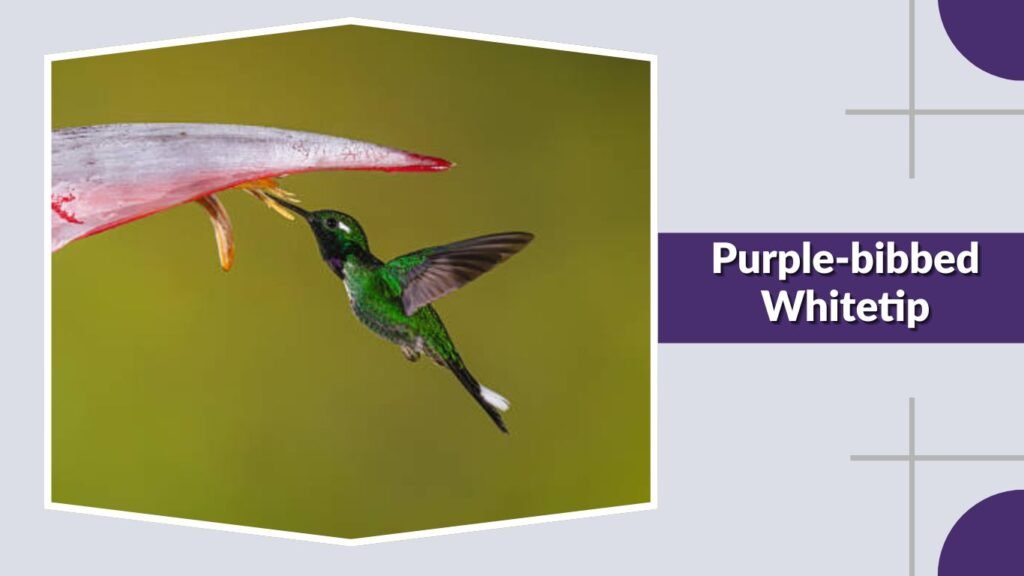
The Purple-bibbed Whitetip is a distinctive hummingbird known for the small but striking purple patch on its chest, often referred to as a “bib.” Its contrasting colors and unique tail features make it easy to recognize.
Identification
- Small hummingbird with a compact body
- Noticeable purple bib on the upper chest
- Green upperparts with a glossy finish
- White tips on the tail feathers
- Straight, short to medium-length black bill
Color Pattern
This species displays a rich green body highlighted by a vivid purple bib that stands out against the lighter underparts. The white tips on the tail add extra contrast, making its overall appearance more distinctive.
Habitat
The Purple-bibbed Whitetip is commonly found in tropical forests, forest edges, and shrubby areas. It prefers locations with dense flowering plants and may also visit gardens with abundant nectar sources.
Behavior
This hummingbird is active and quick, often darting between flowers while feeding on nectar. It also catches small insects. Despite its small size, it may show territorial behavior when competing for feeding spots.
5. Purple-throated Carib
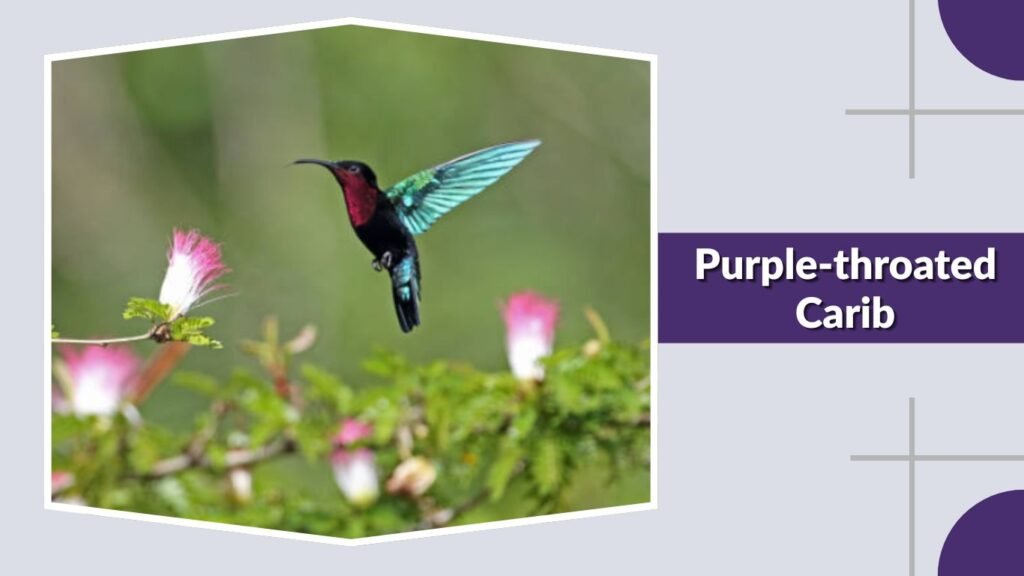
The Purple-throated Carib is a vibrant hummingbird known for its brilliant throat coloration and strong, active presence. It is commonly found in tropical regions, where it plays an important role in pollinating flowering plants.
Identification
- Medium-sized hummingbird with a slightly curved bill
- Iridescent purple throat (more vivid in males)
- Dark green upperparts with a glossy sheen
- Slightly darker underparts
- Forked tail with dark feathers
Color Pattern
This species showcases a striking purple throat that gleams in sunlight, contrasting with its deep green body. The iridescence can shift in intensity depending on the angle of light, giving it a dynamic and eye-catching appearance.
Habitat
The Purple-throated Carib is typically found in tropical forests, coastal regions, and gardens. It prefers areas rich in flowering plants and is often seen visiting a variety of blossoms for nectar.
Behavior
This hummingbird is energetic and often highly territorial. It feeds on nectar while hovering and also consumes small insects. Males are especially aggressive around feeding areas and may chase away other birds to protect their food sources.
6. Purple-collared Woodstar

The Purple-collared Woodstar is a tiny yet dazzling hummingbird, admired for the vivid purple band around its neck and its incredibly agile flight. Despite its small size, it stands out due to its striking coloration and energetic behavior. This species is often seen darting quickly between flowers, making it a delightful sight for bird watchers. Its compact structure and rapid wingbeats allow it to hover with precision while feeding, showcasing the remarkable abilities typical of hummingbirds.
Identification
- Very small hummingbird with a compact, delicate body
- Distinct purple collar encircling the neck area
- Green upperparts with a soft metallic sheen
- Pale underparts that contrast with the collar
- Short, straight black bill
Color Pattern
The Purple-collared Woodstar features a brilliant purple band that wraps around its neck, creating a bold contrast against its otherwise green body. The iridescent purple can shift in brightness depending on the light, sometimes appearing deep violet or lighter lavender. The rest of the plumage is more subdued, with metallic green upperparts and lighter underparts that enhance the visibility of the collar.
Habitat
This species is typically found in open woodlands, forest edges, and shrubby habitats. It prefers areas with a high density of flowering plants, which provide a reliable source of nectar. It can also adapt to gardens and cultivated landscapes where suitable flowers are available.
Behavior
The Purple-collared Woodstar is highly active and constantly in motion. It feeds primarily on nectar, hovering skillfully at flowers, and also consumes tiny insects for protein. Due to its small size, it is less aggressive than larger hummingbirds but may still defend feeding areas when necessary.
7. Purple-backed Thornbill
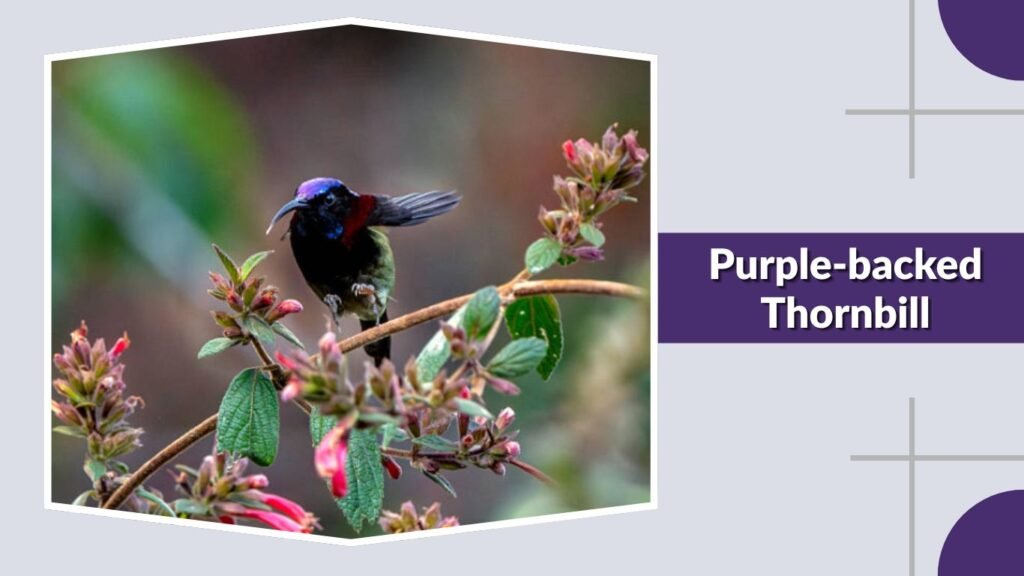
The Purple-backed Thornbill is a small and delicate hummingbird known for the subtle purple sheen across its back. Though not as flashy as some species, its soft coloration and graceful movements give it a unique charm. It is often seen quietly moving through vegetation, making it a rewarding find for attentive observers.
Identification
- Very small hummingbird with a slender body
- Subtle purple tint on the back
- Green upperparts with light iridescence
- Pale underparts
- Short, straight black bill
Color Pattern
This species displays a gentle blend of green and purple, with the back showing a faint purple sheen in good lighting. The rest of the body remains mostly green, while the underside is lighter, creating a soft and balanced appearance.
Habitat
The Purple-backed Thornbill is typically found in montane forests, shrublands, and highland regions. It prefers cooler environments with dense vegetation and an abundance of flowering plants for feeding.
Behavior
This hummingbird is quick and active, often darting between flowers in search of nectar. It also feeds on small insects. Although generally calm, it may defend its feeding spots when necessary, using swift and agile movements.
8. Purple-naped Hummingbird
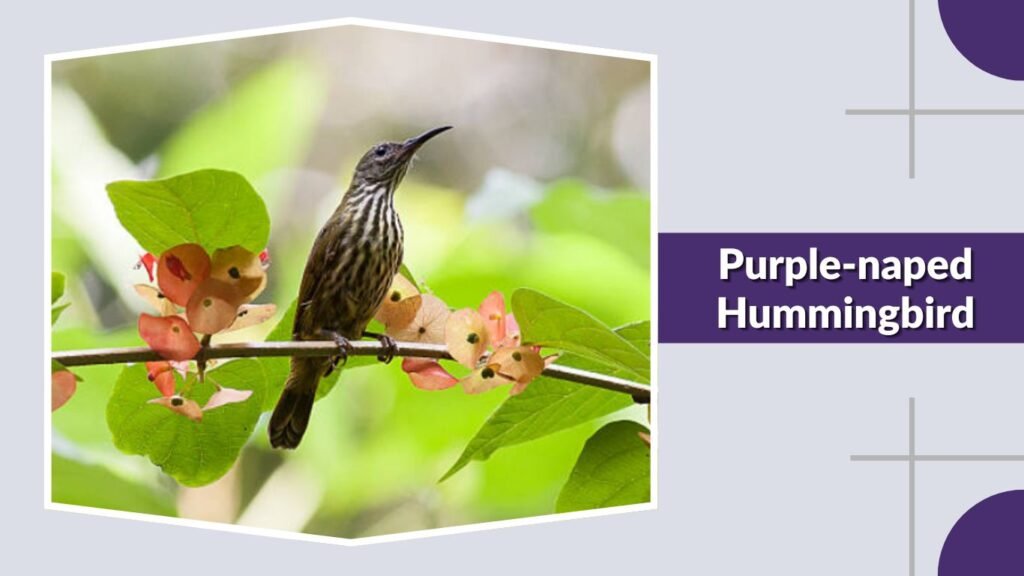
The Purple-naped Hummingbird is a graceful species known for the subtle yet beautiful purple patch on the back of its neck. Its calm presence and refined coloration make it a charming bird in its natural environment.
Identification
- Small to medium-sized hummingbird
- Distinct purple patch on the nape (back of the neck)
- Green upperparts with a glossy sheen
- Pale underparts with soft tones
- Straight, medium-length black bill
Color Pattern
This hummingbird features a rich green body complemented by a noticeable purple patch on the nape. The purple hue may appear more vibrant under direct sunlight, creating a gentle but eye-catching contrast with the rest of its plumage.
Habitat
The Purple-naped Hummingbird is commonly found in tropical forests, forest edges, and areas with dense vegetation. It prefers environments rich in flowering plants and may also be seen in gardens where nectar sources are available.
Behavior
This species is active but generally less aggressive. It spends much of its time feeding on nectar while hovering and occasionally catching small insects. It may show mild territorial behavior, especially when food resources are limited.
9. Purple-tailed Starfrontlet

The Purple-tailed Starfrontlet is a striking hummingbird known for its elegant shape and the subtle purple tones in its tail. Often found in cooler, highland regions, it adds a touch of brilliance to mountainous landscapes with its shimmering colors.
Identification
- Medium-sized hummingbird with a sturdy body
- Noticeable purple tint on the tail feathers
- Metallic green upperparts
- Pale or grayish underparts
- Straight, medium-length black bill
Color Pattern
This species features a glossy green body highlighted by a soft purple sheen on the tail. The purple becomes more visible in sunlight, creating a beautiful contrast with the lighter underparts and darker upper body.
Habitat
The Purple-tailed Starfrontlet is typically found in montane forests, cloud forests, and high-altitude shrublands. It prefers cooler climates with abundant flowering plants that provide a steady nectar supply.
Behavior
This hummingbird is active and agile, often hovering while feeding on nectar. It also consumes small insects for protein. It can be territorial, especially in feeding areas, and may chase away other hummingbirds to protect its resources.
10. Purple-banded Emerald
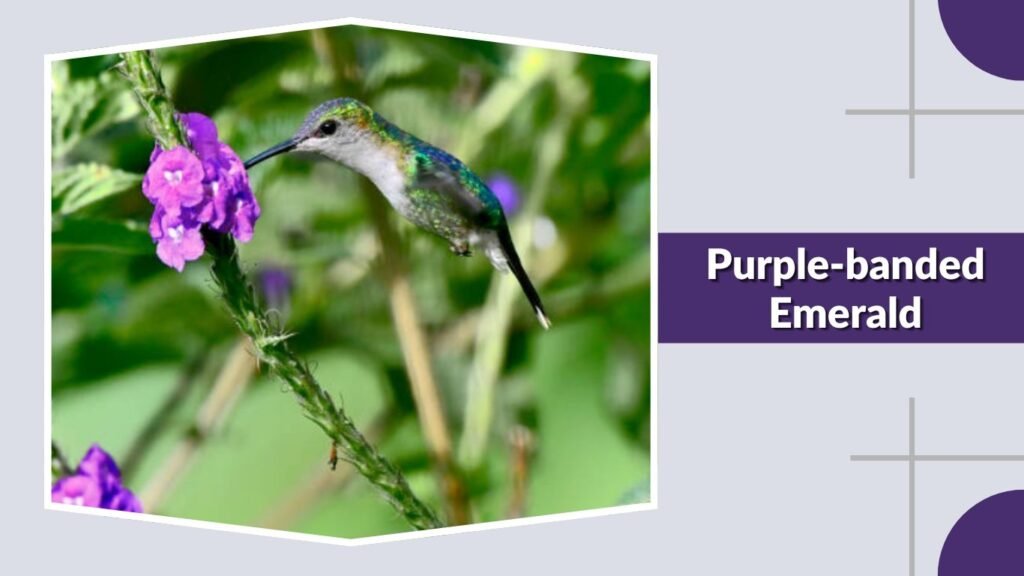
The Purple-banded Emerald is a graceful hummingbird admired for the distinct purple band across its body. Its elegant appearance and shimmering colors make it a captivating species in tropical environments.
Identification
- Medium-sized hummingbird with a slender build
- Distinct purple band across the chest or lower throat
- Bright green upperparts with metallic sheen
- Pale underparts with soft contrast
- Straight, medium-length black bill
Color Pattern
This species features a rich emerald-green body highlighted by a noticeable purple band that adds a unique touch to its appearance. The purple marking stands out clearly in good lighting, while the rest of the plumage remains glossy and vibrant.
Habitat
The Purple-banded Emerald is commonly found in tropical forests, forest edges, and open woodland areas. It also frequents gardens and plantations where nectar-rich flowers are abundant.
Behavior
This hummingbird is active and agile, often hovering while feeding on nectar. It also catches small insects to supplement its diet. It may show territorial behavior, especially when defending feeding areas from other hummingbirds.
11. Purple-throated Sunangel
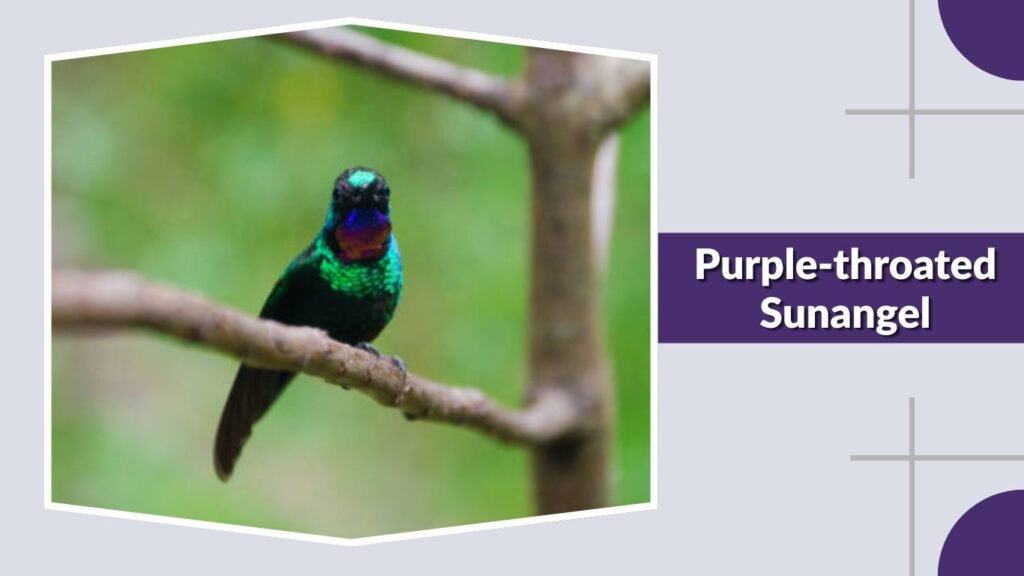
The Purple-throated Sunangel is a stunning highland hummingbird known for its radiant throat and compact form. It is often seen in cooler mountainous regions, where its bright coloration contrasts beautifully with the surrounding greenery.
Identification
- Small to medium-sized hummingbird with a compact body
- Iridescent purple throat patch
- Dark green to bronze upperparts
- Slightly darker underparts
- Straight, medium-length black bill
Color Pattern
This species is best known for its vivid purple throat, which glows brightly in sunlight. The rest of the body is generally darker, with green or bronze tones that enhance the brilliance of the throat. The iridescence shifts depending on the angle of light.
Habitat
The Purple-throated Sunangel is typically found in montane forests, cloud forests, and high-altitude shrublands. It prefers cooler climates and areas with dense flowering plants that provide a steady nectar source.
Behavior
This hummingbird is active and often seen hovering while feeding on nectar. It also consumes small insects. It can be territorial, especially in areas where food is abundant, and may chase away other hummingbirds to defend its feeding spots.
12. Purple-hooded Sunbeam
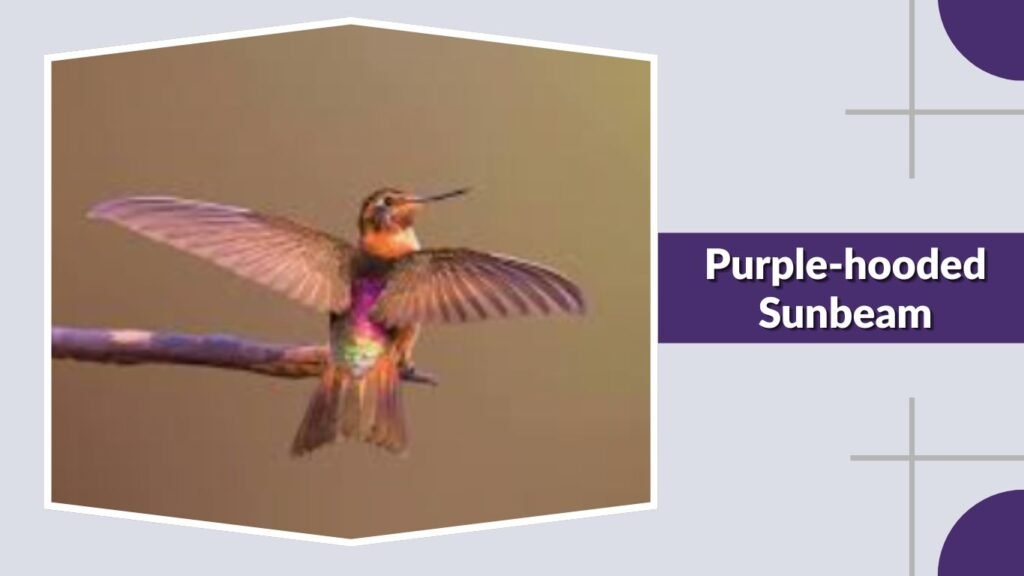
The Purple-hooded Sunbeam is a vibrant hummingbird known for the rich purple coloration covering its head and upper neck. Its bold hues and lively movements make it a standout species in mountainous regions.
Identification
- Medium-sized hummingbird with a slightly elongated body
- Distinct purple hood covering the head
- Green to bronze upperparts with metallic sheen
- Pale underparts
- Straight, medium-length black bill
Color Pattern
This species features a striking purple hood that contrasts beautifully with its green or bronze-toned body. The iridescent feathers can shift in shade depending on the light, creating a dynamic and eye-catching appearance.
Habitat
The Purple-hooded Sunbeam is commonly found in montane forests, forest edges, and shrublands. It prefers cooler, high-altitude environments with abundant flowering plants.
Behavior
This hummingbird is active and energetic, frequently hovering while feeding on nectar. It also catches small insects for protein. It may show territorial behavior, especially when defending feeding areas from other hummingbirds.
13. Purple-fronted Brilliant
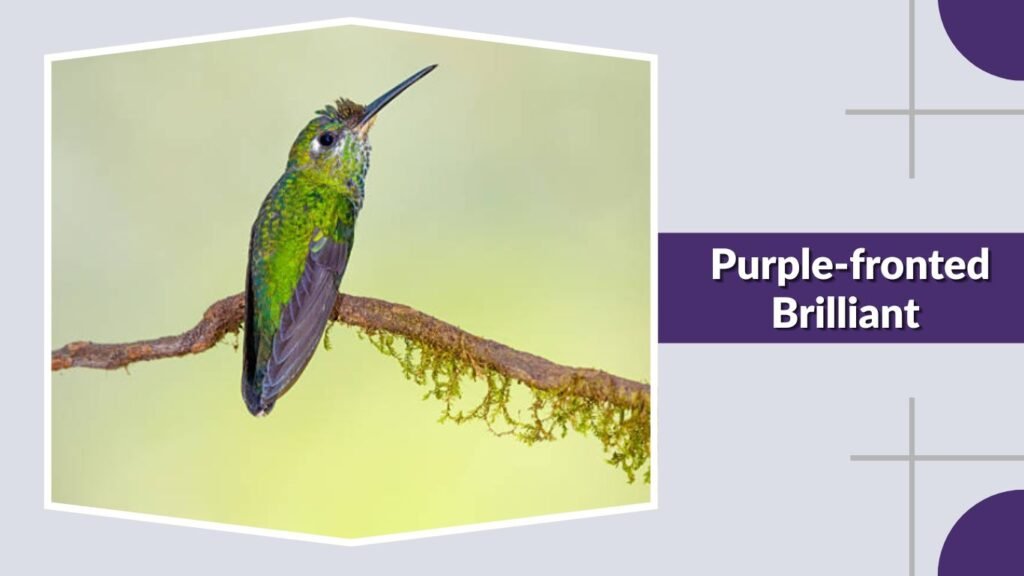
The Purple-fronted Brilliant is a dazzling hummingbird known for the vibrant purple coloration on its forehead and its shimmering green body. Its radiant appearance and active lifestyle make it a captivating species in tropical and montane regions.
Identification
- Medium to large hummingbird with a robust build
- Distinct purple patch on the forehead
- Metallic green upperparts with glossy sheen
- Slightly lighter underparts
- Straight, fairly long black bill
Color Pattern
This species displays a brilliant purple forehead that stands out against its rich green body. The iridescent feathers reflect light beautifully, often shifting between shades of green and purple depending on the angle, creating a jewel-like effect.
Habitat
The Purple-fronted Brilliant is typically found in tropical forests, cloud forests, and forest edges. It prefers humid environments with a high density of flowering plants and may also visit gardens in suitable regions.
Behavior
This hummingbird is energetic and spends much of its time feeding on nectar while hovering. It also consumes small insects for additional nutrition. It can be territorial, especially around feeding areas, and may chase away other hummingbirds to maintain access to food sources.
14. Purple-chinned Sapphire
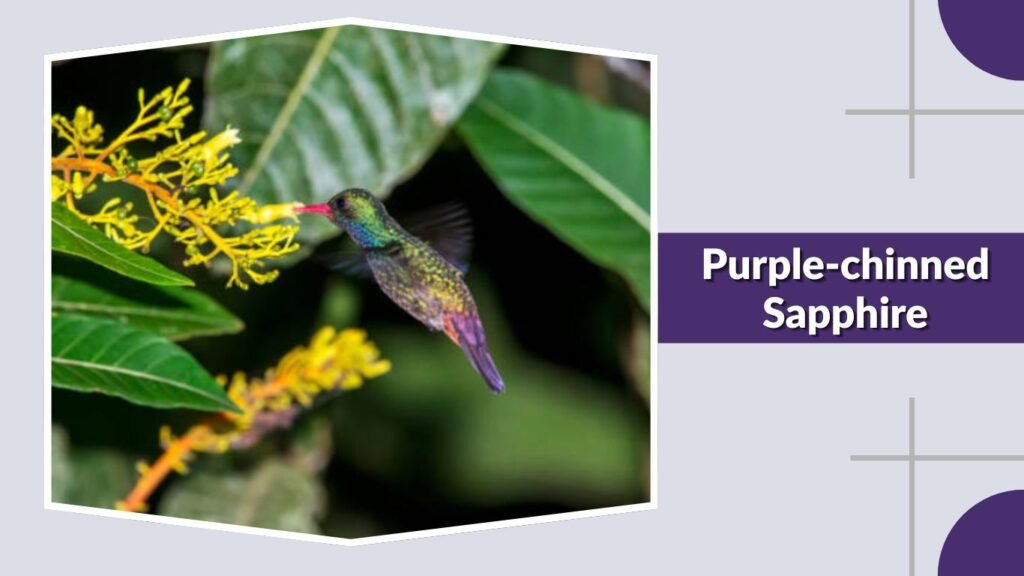
The Purple-chinned Sapphire is a small yet eye-catching hummingbird, known for the vivid purple coloration on its chin. Its compact size and shimmering plumage make it a delightful species to observe in flower-rich environments.
Identification
- Small hummingbird with a slender body
- Distinct purple patch on the chin
- Green upperparts with metallic shine
- Pale grayish or whitish underparts
- Straight, short to medium-length black bill
Color Pattern
This species features a bright purple chin that contrasts beautifully with its glossy green body. The purple can appear more intense in sunlight, while the rest of the plumage remains softer, creating a balanced and attractive look.
Habitat
The Purple-chinned Sapphire is commonly found in tropical forests, open woodlands, and gardens. It prefers areas with abundant flowering plants and adapts well to human-influenced landscapes.
Behavior
This hummingbird is active and agile, frequently hovering while feeding on nectar. It also captures small insects for protein. Despite its small size, it may display territorial behavior, especially around feeding areas.
15. Purple-striped Sylph
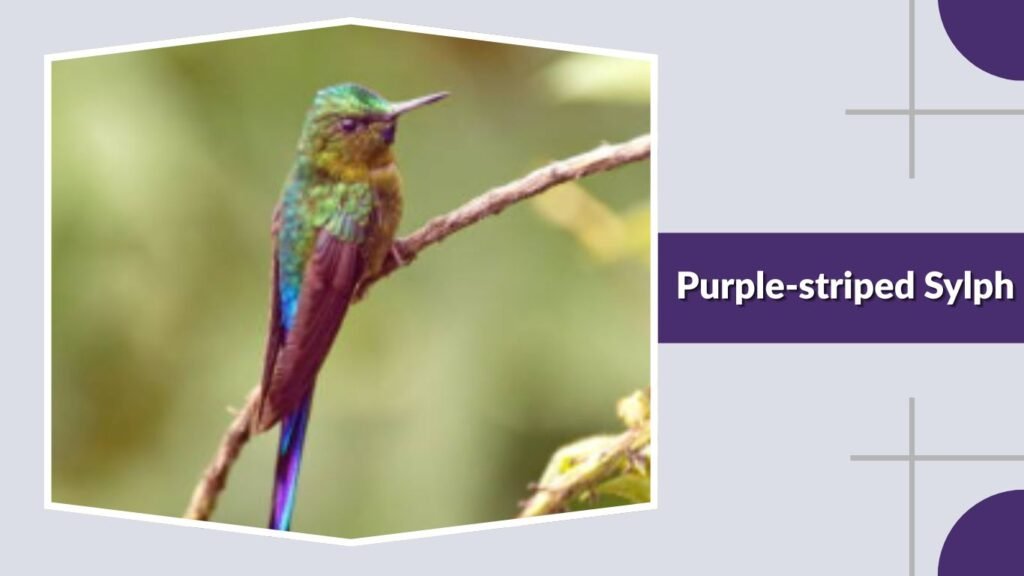
The Purple-striped Sylph is a graceful hummingbird known for its slender body and delicate purple striping. Its elegant flight and subtle yet striking coloration make it a beautiful sight in forested habitats.
Identification
- Small to medium-sized hummingbird with a slender build
- Fine purple stripes along parts of the body
- Metallic green upperparts
- Pale underparts with soft contrast
- Long, slightly curved bill
Color Pattern
This species displays a shimmering green body accented with thin purple stripes that become more visible in good lighting. The contrast between the green and purple gives it a refined and eye-catching appearance without being overly bold.
Habitat
The Purple-striped Sylph is typically found in tropical and montane forests, especially in areas with dense vegetation. It prefers environments rich in flowering plants and may also be seen near forest edges.
Behavior
This hummingbird is active and agile, often hovering while feeding on nectar. It also consumes small insects. It is generally calm but may show territorial behavior when defending feeding areas from other hummingbirds.
16. Purple-crested Coquette
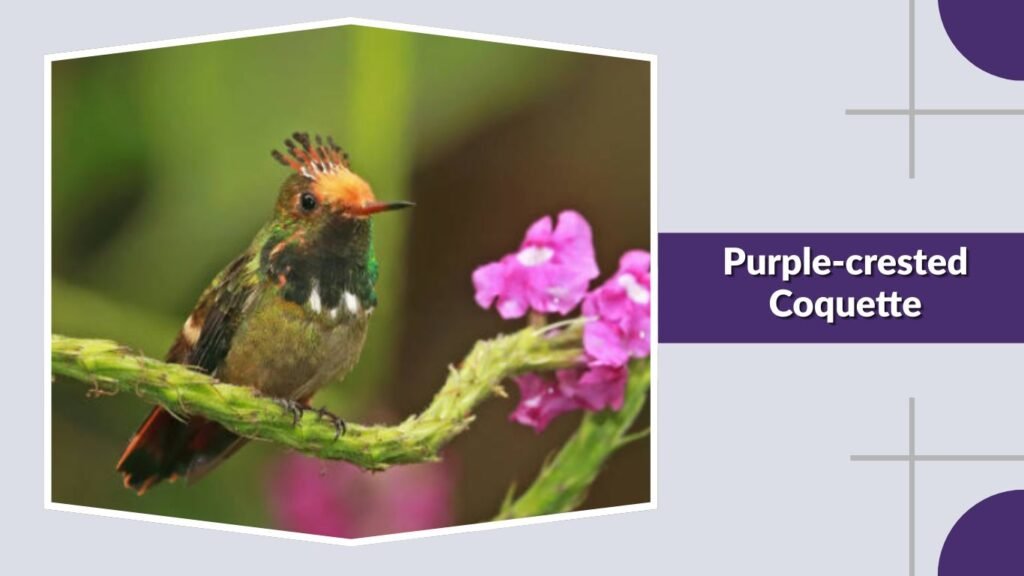
The Purple-crested Coquette is a tiny and ornate hummingbird, admired for its decorative crest and vibrant purple highlights. Its delicate appearance and lively movements make it one of the most visually unique species among hummingbirds.
Identification
- Very small hummingbird with a compact body
- Distinct purple-tinted crest on the head
- Green upperparts with iridescent sheen
- Pale underparts
- Short, straight black bill
Color Pattern
This species features a subtle yet beautiful blend of green and purple. The crest carries a noticeable purple tint, which becomes more vivid in sunlight. The rest of the body remains mostly green with lighter underparts, creating a soft contrast.
Habitat
The Purple-crested Coquette is typically found in tropical forests, forest edges, and areas with dense vegetation. It prefers regions with abundant flowering plants and can occasionally be seen in gardens.
Behavior
This hummingbird is highly active and quick, often darting between flowers while feeding on nectar. It also consumes small insects. Despite its tiny size, it may show territorial behavior, especially when defending feeding areas.