
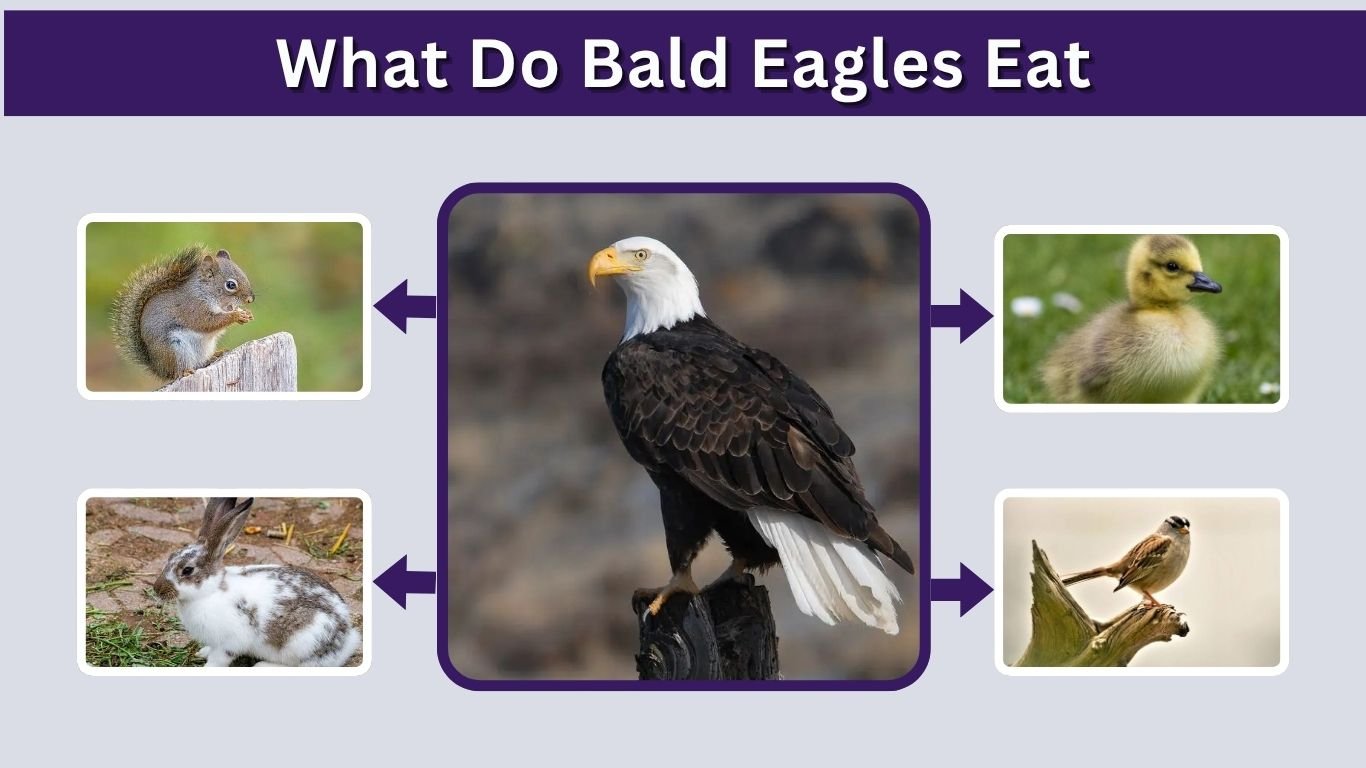
Bald eagles are powerful birds of prey known for their impressive hunting skills and diverse feeding habits. Fish make up most of their natural diet, but these large raptors also eat ducks, geese, rabbits, squirrels, snakes, and dead animals. Their food choices depend on location, season, and prey availability. Although bald eagles are skilled hunters, they frequently scavenge or steal food from other birds. Understanding what bald eagles eat, how they capture prey, and which animals threaten them reveals their important role in North American ecosystems.
What Do Bald Eagles Eat in the Wild?
Bald eagles are carnivorous birds that primarily eat fish but also consume birds, mammals, reptiles, and carrion. They are opportunistic feeders, meaning they take advantage of food sources that are readily available.
Their diet changes depending on their habitat. Eagles living near rivers and lakes primarily catch fish, while those inhabiting coastal regions may consume seabirds, crabs, and other marine animals.
Main Foods in a Bald Eagle’s Diet
- Fish: Salmon, trout, catfish, herring, carp, and shad.
- Waterbirds: Ducks, geese, coots, gulls, and other aquatic birds.
- Small Mammals: Rabbits, squirrels, rodents, and muskrats.
- Reptiles: Snakes and turtles occasionally become prey.
- Dead Animals: Fish carcasses, roadkill, and other carrion.
- Invertebrates: Crabs, shellfish, and other aquatic invertebrates.
Fish generally account for the largest portion of their diet, although the proportions vary considerably between populations and seasons.
What Fish Do Bald Eagles Eat?
Fish are the primary food source for most bald eagle populations. These powerful birds often perch near rivers, lakes, reservoirs, and coastal waters, watching for fish swimming close to the surface.
Their excellent eyesight allows them to detect movement from considerable distances. Once a fish becomes visible, the eagle swoops downward and grabs it using sharp talons.
Common Fish Eaten by Bald Eagles
Bald eagles regularly consume salmon, trout, herring, catfish, carp, shad, and other locally abundant species.
Along the Pacific coast, salmon provides an important seasonal food source. Inland populations often feed on freshwater fish such as carp and catfish.
Eagles prefer fish that are relatively easy to capture, including those swimming near the surface, injured fish, and dead fish floating in water.
Do Bald Eagles Eat Ducks and Other Birds?

Bald eagles frequently hunt other birds, particularly waterfowl and seabirds. Ducks, coots, gulls, and similar species are among their regular alternatives to fish.
They may attack birds resting on water or flying near lakes and wetlands. Injured, exhausted, or inexperienced birds are especially vulnerable.
Do Bald Eagles Eat Ducks and Geese?
Yes, bald eagles eat ducks and occasionally geese. They may capture smaller waterbirds directly or feed on injured and dead individuals.
Large adult Canada geese are challenging prey, so eagles may target goslings, weakened birds, or carcasses instead.
Do Bald Eagles Eat Crows and Chickens?
Bald eagles can prey on crows and domestic chickens, although neither is a primary food source.
Free-ranging chickens and smaller birds may become vulnerable when feeding in exposed areas. Secure poultry enclosures help reduce the risk of attacks from eagles and other predators.
What Mammals and Other Animals Do Bald Eagles Eat?
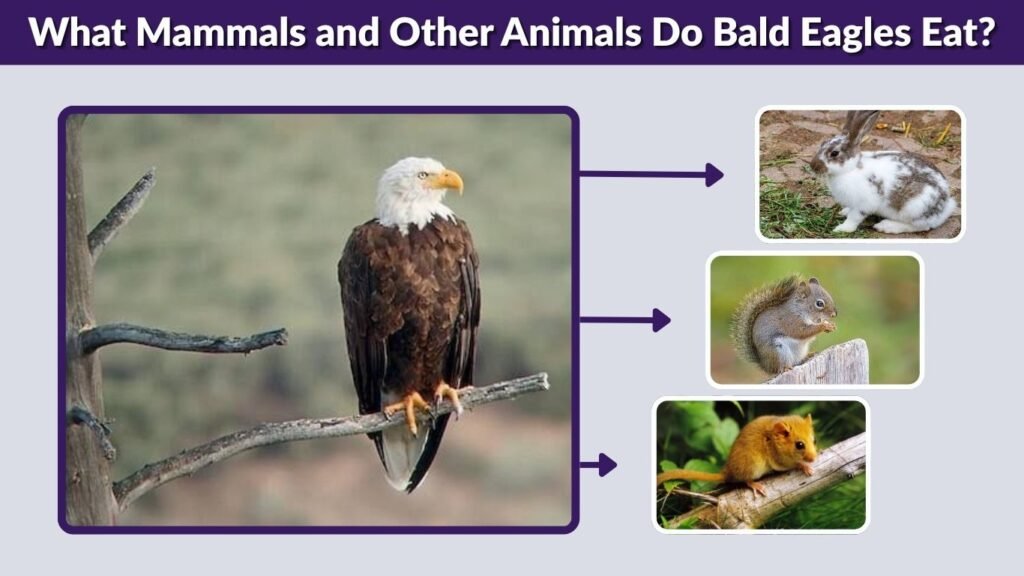
Although bald eagles specialize in catching fish, they also hunt small mammals and occasionally reptiles. Mammals become particularly important when fish are difficult to obtain.
Their large talons and powerful grip help them capture animals on the ground or near shorelines.
Animals Bald Eagles Commonly Eat
- Rabbits: Small rabbits and young individuals are occasional prey.
- Squirrels: Ground squirrels and other small species may be captured.
- Rodents: Rats, mice, and similar mammals provide additional food.
- Muskrats: Frequently taken around wetlands and waterways.
- Snakes: Occasionally captured near water or open habitats.
- Turtles: Small turtles may be eaten when available.
Larger mammals such as deer, foxes, and coyotes are more likely to be consumed as carrion than hunted alive.
Do Bald Eagles Eat Cats and Dogs?
Bald eagles rarely attack domestic pets. Their usual prey consists of fish and wild animals, making cats and dogs uncommon food choices.
However, attacks on very small pets can occur under unusual circumstances, especially when an animal is left unattended in an exposed location.
Will Bald Eagles Eat Cats?
Although rare attacks are possible, domestic cats are not a normal part of the bald eagle’s diet. Stories about eagles routinely carrying away adult cats are often exaggerated.
Keeping small pets supervised outdoors is a sensible precaution in areas where large birds of prey hunt.
Do Bald Eagles Eat Dead Animals and Roadkill?
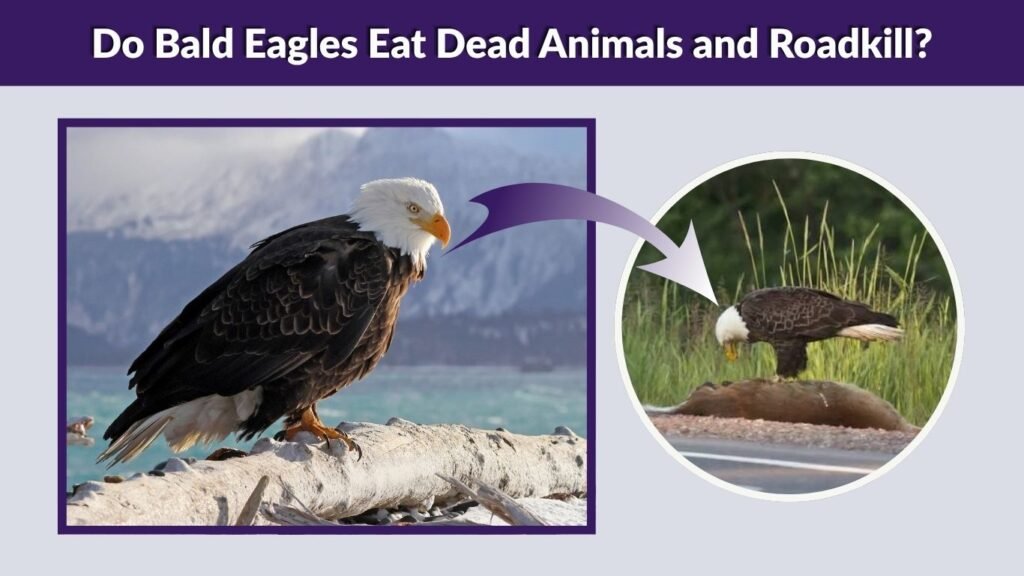
Yes, bald eagles readily eat dead animals, including roadkill. Scavenging allows them to conserve energy by obtaining food without chasing live prey.
They commonly feed on dead fish, deer carcasses, discarded animal remains, and other available meat.
Do Bald Eagles Eat Deer and Other Large Animals?
Bald eagles may feed on deer, foxes, coyotes, or other large mammals when they encounter carcasses.
They are not equipped to routinely hunt healthy adult animals of this size. Instead, they tear pieces of flesh from remains using their sharp, hooked beaks.
Scavenging also exposes eagles to hazards such as vehicle collisions and lead fragments in discarded hunting remains.
What Do Bald Eagles Eat in Winter?
Winter feeding habits depend heavily on local weather and available food. In northern regions, frozen lakes and rivers can make fishing difficult, forcing eagles to seek alternative food sources.
They may gather near unfrozen waterways where fish remain accessible. Waterfowl, dead fish, and mammal carcasses also become important winter foods.
How Do Bald Eagles Find Food During Winter?
Many bald eagles migrate toward regions with open water and reliable food supplies.
Others remain near rivers, reservoirs, or coastal areas throughout winter. Large groups sometimes gather around fish runs or abundant carcasses, demonstrating their ability to adapt to changing food conditions.
How Do Bald Eagles Hunt Their Food?
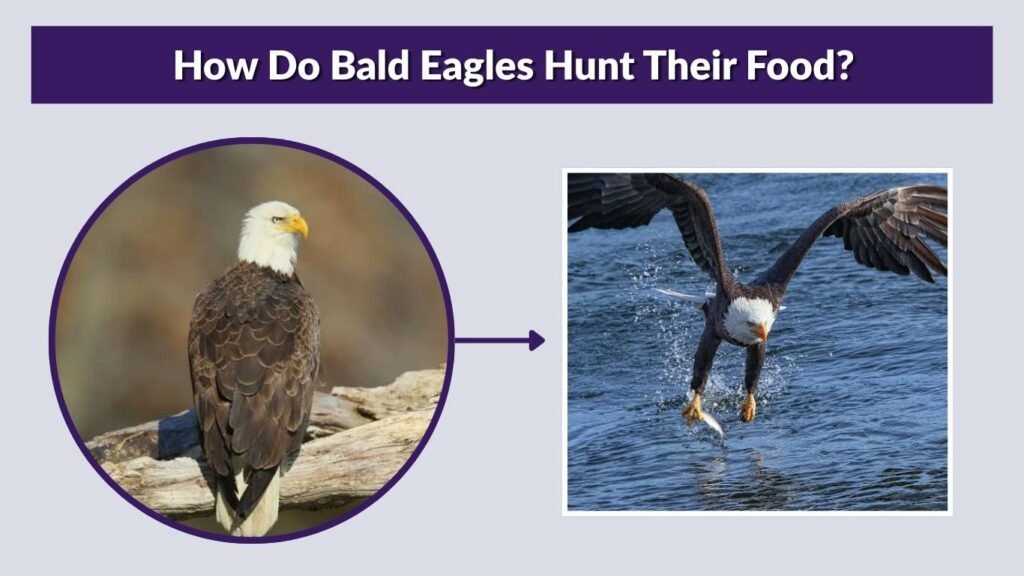
Bald eagles combine excellent vision, powerful flight, and strong talons to capture prey. However, they do not always hunt independently.
They frequently steal fish from other birds, especially ospreys, by chasing them until they release their catches.
Common Bald Eagle Hunting Methods
- Surface Fishing: Swooping down to grab fish near the water’s surface.
- Perch Hunting: Watching from tall trees before attacking nearby prey.
- Aerial Hunting: Pursuing smaller birds during flight.
- Scavenging: Feeding on dead animals found on land or water.
- Food Stealing: Forcing other birds to abandon captured prey.
Bald eagles generally carry smaller prey to a feeding perch. When a fish is too heavy to lift, an eagle may drag it toward shore or remain on the water and swim using its wings.
What Animals Eat Bald Eagles?
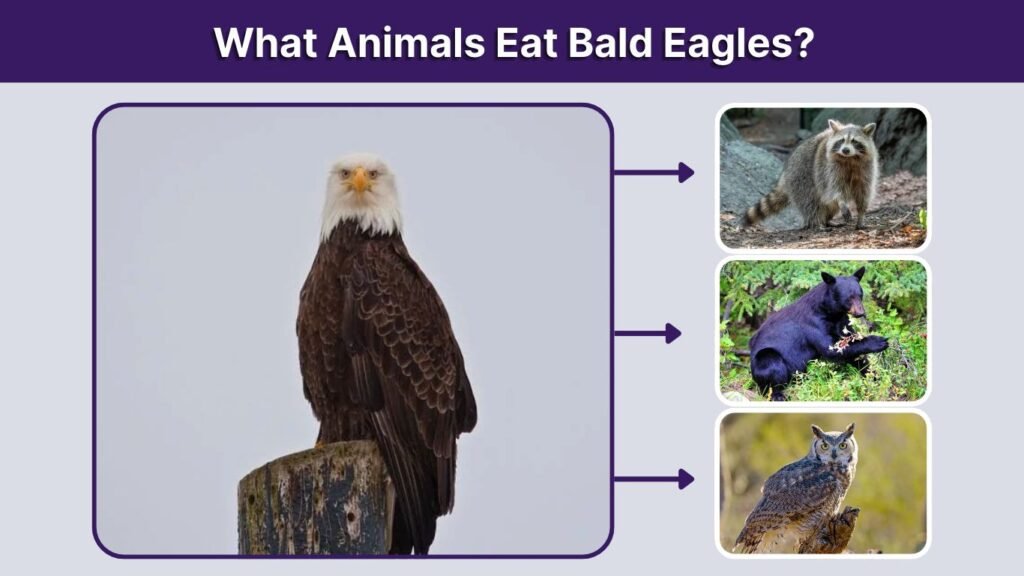
Adult bald eagles have few natural predators because of their size, strength, and defensive abilities. However, their eggs and young chicks are considerably more vulnerable.
Nest predators may climb trees, attack unattended eggs, or capture young eagles before they can fly.
Natural Predators of Bald Eagles
- Raccoons: May climb nests and eat eggs or young chicks.
- Ravens and Crows: Sometimes steal unattended eagle eggs.
- Black Bears: Occasionally raid accessible nests.
- Great Horned Owls: Can threaten eagle nests and young birds.
- Bobcats: May prey on vulnerable young eagles.
- Other Bald Eagles: Territorial conflicts can sometimes injure or kill eagles.
Healthy adult bald eagles rarely become prey, but human-related dangers such as poisoning, collisions, and illegal shooting remain serious threats.
How Much Do Bald Eagles Eat Each Day?
An adult bald eagle may consume approximately half a pound to one pound of food daily on average, although actual intake varies with body size, activity, and food availability.
Eagles can eat substantial meals and survive temporarily without feeding again. During breeding, parents must obtain additional food to support their rapidly growing chicks.
FAQs
1. Do Bald Eagles Eat Snakes?
Yes, bald eagles occasionally eat snakes, especially when they encounter them near waterways or open habitats. However, snakes are not their preferred prey. Fish, waterbirds, and small mammals generally provide more important food sources throughout their natural range.
2. Do Bald Eagles Eat Rabbits and Squirrels?
Bald eagles eat rabbits, squirrels, and other small mammals when opportunities arise. They may capture these animals directly or feed on their carcasses. Such prey becomes particularly useful when fish are scarce or difficult to catch.
3. Do Bald Eagles Eat Fish Every Day?
Bald eagles primarily eat fish, but they do not necessarily catch fish every day. Their feeding habits depend on available prey and environmental conditions. They may consume birds, mammals, or carrion instead, particularly during winter or periods of poor fishing.
4. Can You Legally Eat a Bald Eagle?
In the United States, bald eagles are federally protected under the Bald and Golden Eagle Protection Act. Killing, possessing, or transporting these birds without proper authorization is prohibited. They are not legal game birds and cannot ordinarily be hunted for food.
5. What Is the Bald Eagle’s Favorite Food?
Fish are the bald eagle’s primary and generally preferred food source. Salmon, herring, catfish, trout, and other species are commonly consumed. However, bald eagles are adaptable predators that also hunt birds, small mammals, and scavenged animals when necessary.