
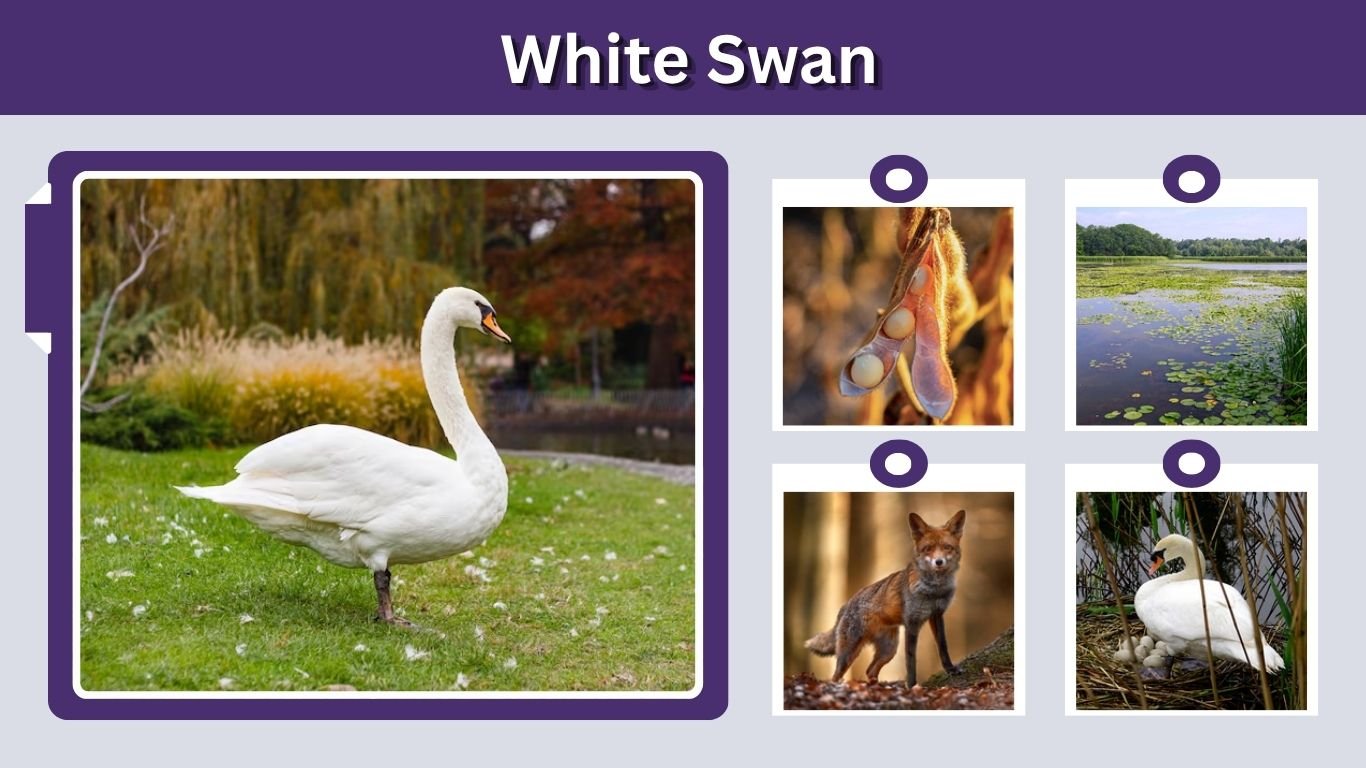
White swans are among the most recognizable waterbirds, admired for their long curved necks, powerful wings, and brilliant pale plumage. However, “white swan” does not refer to just one species. Several swans, including mute, trumpeter, tundra, and whooper swans, are predominantly white as adults. They inhabit lakes, rivers, wetlands, estuaries, and sheltered coastal waters across Europe, Asia, and North America. Their graceful appearance hides surprising strength, territorial behavior, and impressive long-distance flight abilities. The topic also commonly overlaps with comparisons between white and black swans.
What Is a White Swan?
The term white swan generally describes swan species whose adults have mostly white plumage. Swans belong to the family Anatidae, which also includes ducks and geese. They are among the largest members of this family and are specially adapted for swimming, grazing, and feeding in shallow water.
Different white swan species can be separated by bill color, size, range, and vocalizations.
Common Types of White Swans
Several species are predominantly white as adults:
- Mute swan: Cygnus olor
- Trumpeter swan: Cygnus buccinator
- Tundra swan: Cygnus columbianus
- Whooper swan: Cygnus cygnus
Young swans, called cygnets, are usually grayish or brownish before developing their adult plumage.
What Does a White Swan Look Like?
White swans typically have large bodies, exceptionally long necks, broad wings, and webbed feet.
Their bill provides one of the easiest ways to distinguish species. Mute swans have orange bills with a prominent black knob near the base. Trumpeter swans have mostly black bills, while whooper swans show distinctive yellow and black coloration.
Most adults develop almost completely white feathers.
White Swan Habitat and Range
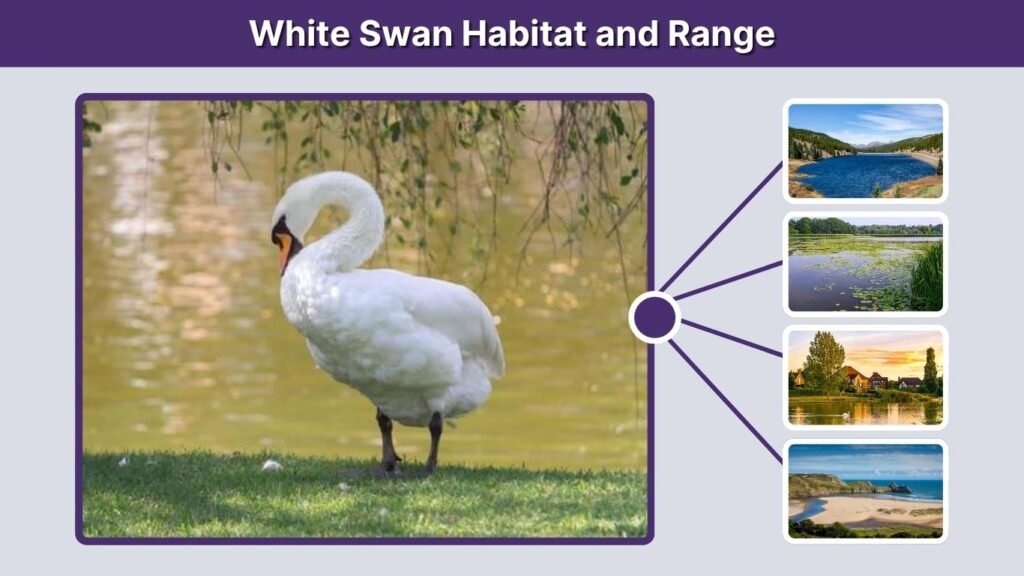
White swans depend heavily on aquatic habitats where they can feed, rest, breed, and escape many land-based predators. Some populations remain in the same general area year-round, while others migrate hundreds or thousands of miles between breeding and wintering grounds.
Their preferred habitat differs somewhat among species.
Where Do White Swans Live?
Typical white swan habitats include:
- Freshwater lakes
- Rivers
- Marshes
- Ponds
- Wetlands
- Coastal bays
- Estuaries
- Slow-moving waterways
- Agricultural fields near water
Mute swans are particularly widespread across Europe and have been introduced into several other regions.
Trumpeter and tundra swans are strongly associated with North America, while whooper swans occur across northern Europe and Asia.
Why Do Swans Need Wetlands?
Wetlands provide aquatic vegetation, nesting locations, shallow feeding areas, and protection for developing cygnets.
Swans frequently feed by extending their long necks below the water while their bodies remain floating at the surface.
Wetland loss can reduce both nesting habitat and food availability, making habitat conservation important for wild swan populations.
What Do White Swans Eat?
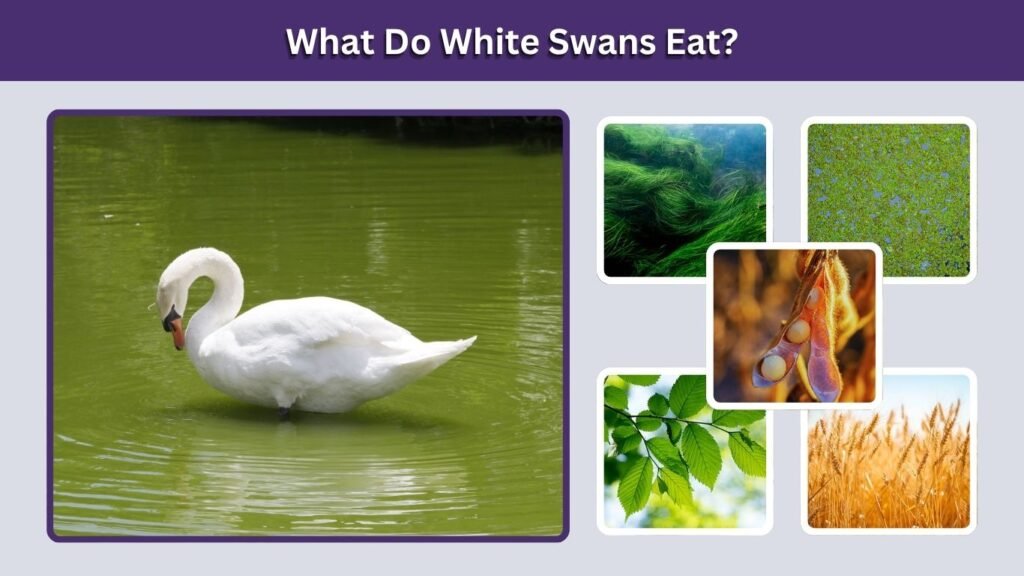
White swans are primarily herbivorous, although their diets can include small aquatic animals. They spend considerable amounts of time feeding in shallow water and along shorelines.
Their long necks help them reach underwater plants that smaller waterbirds may not be able to access.
White Swan Diet
Common foods include:
- Aquatic grasses
- Pondweed
- Algae
- Roots
- Leaves
- Seeds
- Grain
- Small aquatic invertebrates
- Occasional insects and tiny animals
Swans may also graze in fields where grasses and agricultural crops are available.
How Do White Swans Feed?
One familiar feeding technique is called upending.
The swan lowers its head and long neck underwater while tipping the rear part of its body upward. This allows it to reach vegetation growing beneath the surface.
Swans may also graze directly on land or pick vegetation from shallow shorelines.
White Swan Nesting and Reproduction
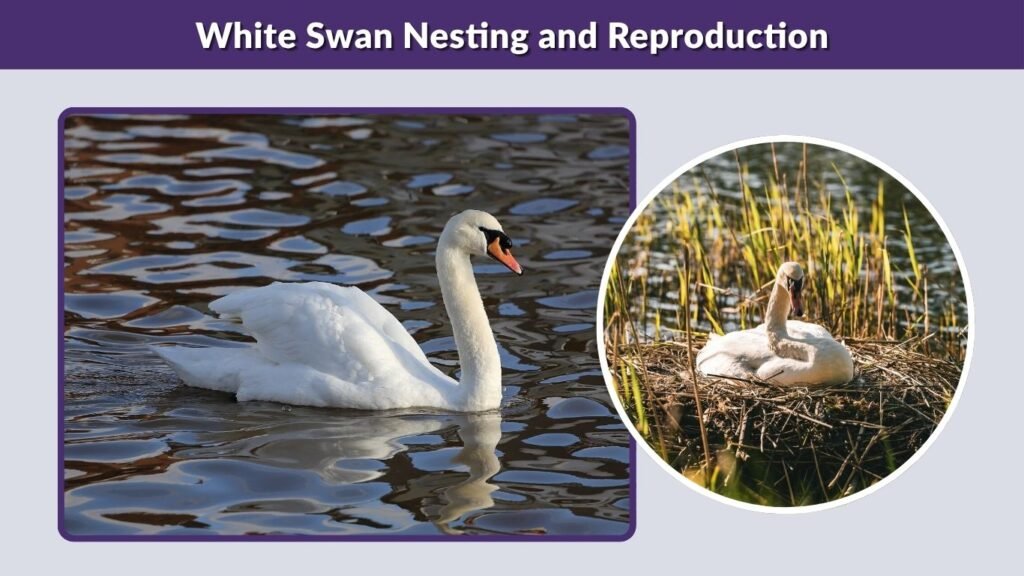
Swans generally form strong pair bonds and can remain associated with the same partner for multiple breeding seasons. During spring, breeding pairs become increasingly territorial around suitable nesting areas.
Their large nests are usually constructed close to water.
Where Do White Swans Nest?
Swans may build nests:
- On small islands
- Along lake shores
- Among reeds
- In marsh vegetation
- On riverbanks
- On floating masses of vegetation
The nest can become a substantial platform made from reeds, grasses, sticks, and other plant material.
White Swan Eggs
Female swans usually lay several large eggs during a breeding attempt.
She performs most of the incubation, while the male commonly remains nearby and helps defend the territory.
Egg numbers vary between species and individual pairs. Incubation takes several weeks before the cygnets begin hatching.
What Do Baby White Swans Look Like?
Baby swans are called cygnets.
They usually hatch covered with soft gray, brownish, or occasionally very pale down rather than brilliant white feathers.
Soon after hatching, cygnets can swim and follow their parents. However, they remain dependent on adults for protection while learning where to feed and rest.
Their white adult plumage develops gradually.
White Swan Behavior
Despite their elegant appearance, swans are strong and sometimes assertive birds. Breeding adults can defend their nest, mate, and young against other swans, waterfowl, mammals, and occasionally people who approach too closely.
Outside the breeding season, many swans become considerably more social.
Are White Swans Aggressive?
Swans are not constantly aggressive, but breeding birds can be highly territorial.
Warning behavior can include:
- Raising the wings
- Hissing
- Stretching the neck
- Swimming directly toward an intruder
- Chasing competing swans
- Striking with the bill
People should give nesting swans plenty of space rather than attempting to touch or feed them at close range.
Can White Swans Fly?
Yes. Swans are powerful flying birds despite their heavy bodies.
They require a running takeoff across water to build sufficient speed. Once airborne, their broad wings allow strong sustained flight.
Migratory species such as tundra and whooper swans can travel impressive distances between seasonal habitats.
White Swan vs Black Swan
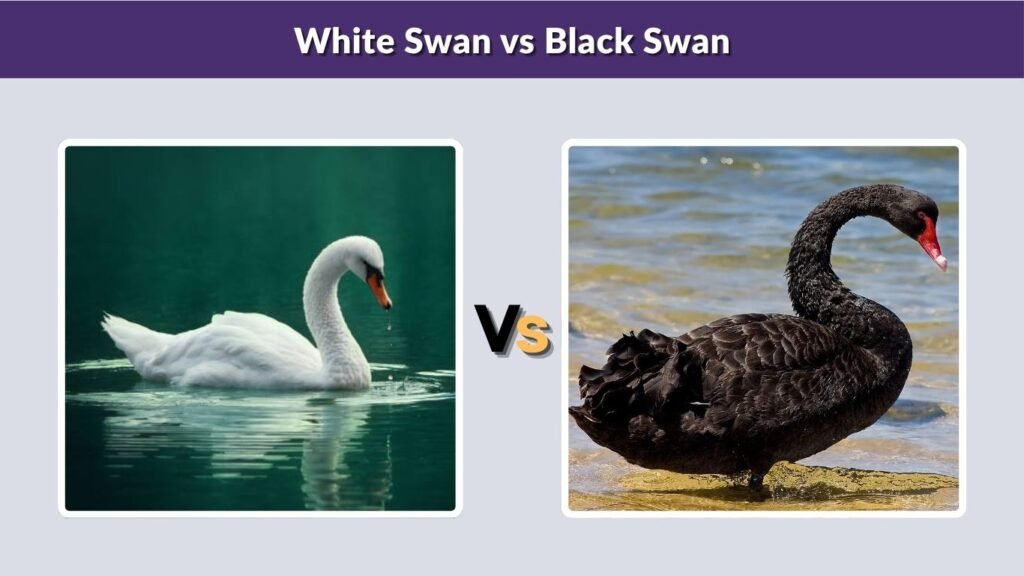
Interest in white swans frequently overlaps with searches comparing black and white swans. The black swan is a distinct species, Cygnus atratus, native primarily to Australia.
Although similar in overall body shape, black and white swans differ dramatically in plumage and natural distribution.
Black Swan and White Swan Differences
- White swans: Several species have predominantly white adult plumage.
- Black swan: Primarily black with contrasting white wing feathers.
- Black swan: Has a bright reddish bill.
- Mute swan: Usually has an orange and black bill.
- Trumpeter swan: Has a mostly black bill.
- Black swan: Native mainly to Australia.
- Many white species: Native to Europe, Asia, or North America.
Both black and white swans belong to the genus Cygnus and share many aquatic adaptations.
White Swan Lifespan
Swans can be relatively long-lived birds compared with many smaller species.
Their actual lifespan depends on species, habitat quality, disease, food availability, predators, collisions, severe weather, and human-related threats.
How Long Do White Swans Live?
Many wild swans can survive well over a decade when conditions are favorable, and some individuals live considerably longer.
Adults generally have higher survival rates than eggs and young cygnets because fully grown swans are large enough to avoid many predators.
Young birds face greater risks during their first year.
White Swan Predators
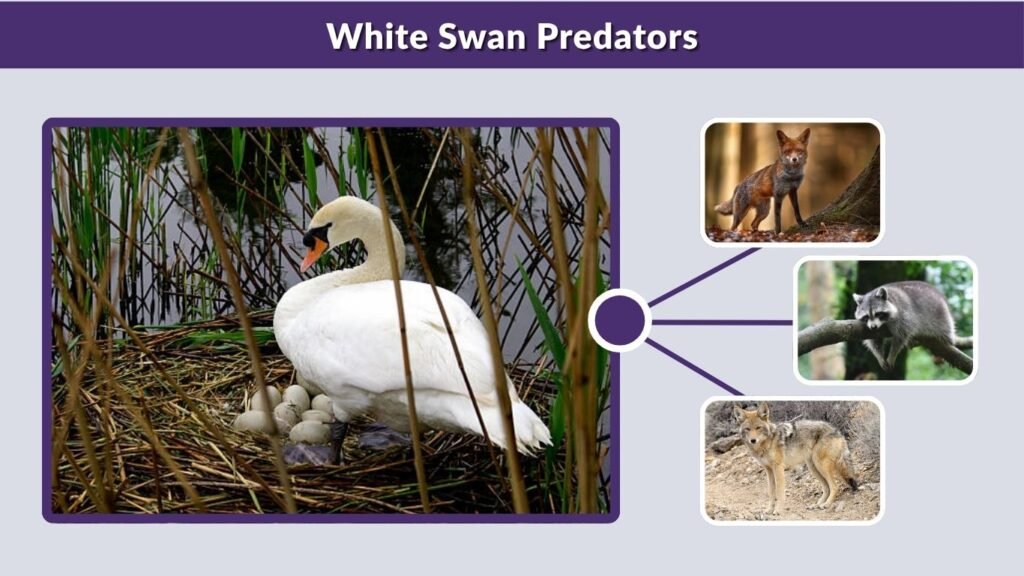
Adult swans have relatively few natural predators because of their large size and defensive abilities. Eggs and young cygnets, however, are much more vulnerable.
Predator communities differ according to geographic location.
Common Threats
Potential threats include:
- Foxes
- Raccoons
- Large birds of prey
- Coyotes
- Large snapping turtles
- Egg-eating mammals
- Habitat loss
- Fishing line
- Lead poisoning in some environments
- Collisions with structures
- Water pollution
Parents actively guard young cygnets, but not every offspring survives to adulthood.
White Swan Adaptations
Swans possess numerous physical adaptations that allow them to live successfully in aquatic habitats.
Their long necks are particularly useful because they dramatically increase the depth at which a bird can reach underwater food.
Important Adaptations
White swans have:
- Webbed feet for efficient swimming
- Dense waterproof feathers
- Long necks for underwater feeding
- Broad wings for sustained flight
- Strong bills for handling vegetation
- Large bodies that retain heat
- Powerful legs for swimming and takeoff
They also maintain their feathers through regular preening, distributing protective oils across their plumage.
Interesting White Swan Facts
White swans have influenced human culture for centuries and are frequently associated with beauty, elegance, loyalty, and romance. Their biology is equally fascinating.
Quick Facts About White Swans
- “White swan” can describe several different species.
- Adult swans are among the largest waterfowl.
- Baby swans are called cygnets.
- Many cygnets are gray before turning white.
- Swans have webbed feet.
- Some species migrate long distances.
- They primarily eat aquatic vegetation.
- Breeding swans can be territorial.
- Swans build large nests near water.
- Black swans are a separate species rather than a dark form of a white swan.
FAQs
Is a white swan a specific species?
Not necessarily. “White swan” can describe several predominantly white species, including mute, trumpeter, tundra, and whooper swans.
What do white swans eat?
They primarily eat aquatic plants, grasses, roots, leaves, algae, and seeds. Small aquatic animals may occasionally supplement their diet.
Where do white swans live?
Depending on the species, white swans inhabit Europe, Asia, and North America. They typically live around lakes, rivers, marshes, ponds, estuaries, and coastal wetlands.
What is the difference between a black swan and a white swan?
The black swan, Cygnus atratus, is a distinct Australian species with mostly black plumage. Several other Cygnus species develop predominantly white adult plumage.
Are baby white swans born white?
Usually not. Most cygnets hatch with grayish or brownish down and gradually develop white feathers as they mature.
