
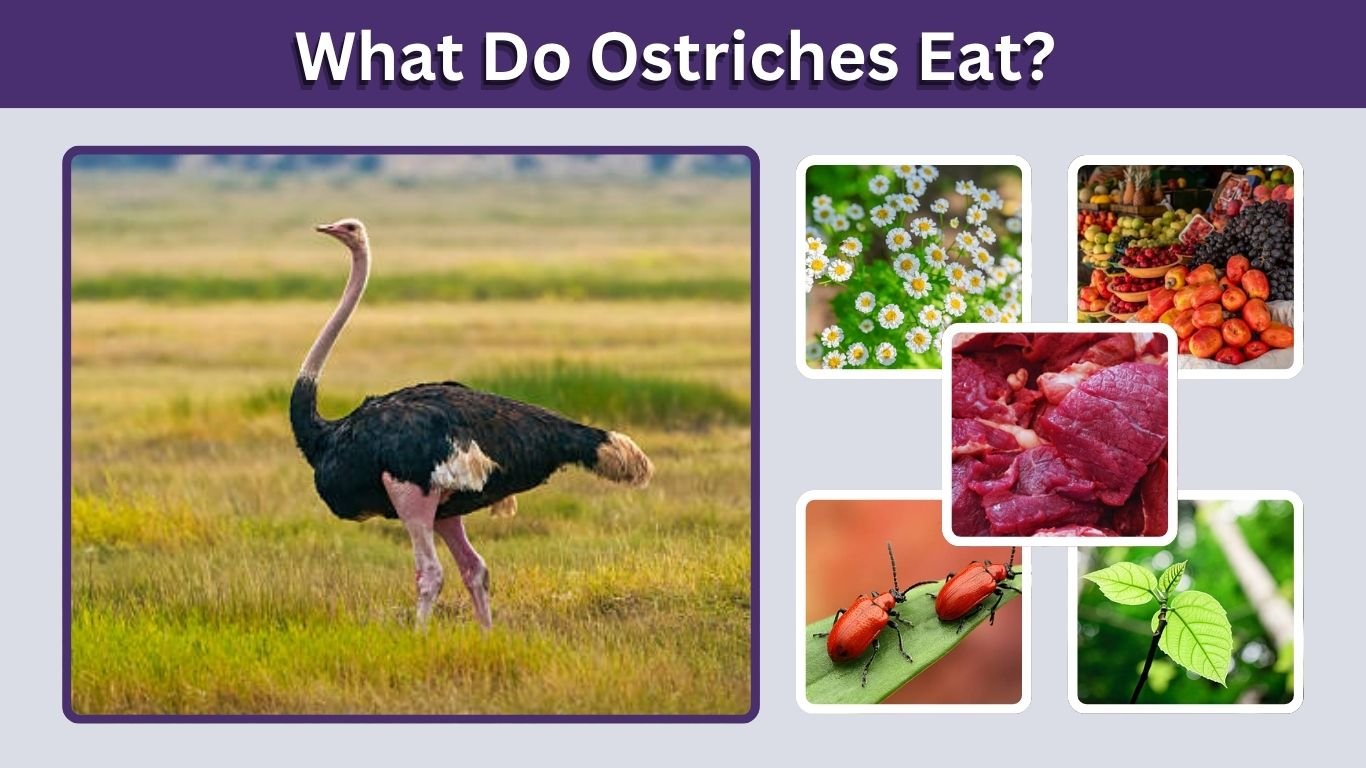
Ostriches may be famous for their size and running speed, but their diet is just as interesting. So, what do ostriches eat? Ostriches are omnivores that eat mostly plant material, including grasses, leaves, seeds, roots, flowers, and fruits. They also consume insects and occasionally small animals when the opportunity arises. Their flexible diet helps them survive in dry African habitats where food and water availability can change throughout the year. Here are 10 common foods that make up an ostrich’s diet.
10 Foods Ostriches Eat
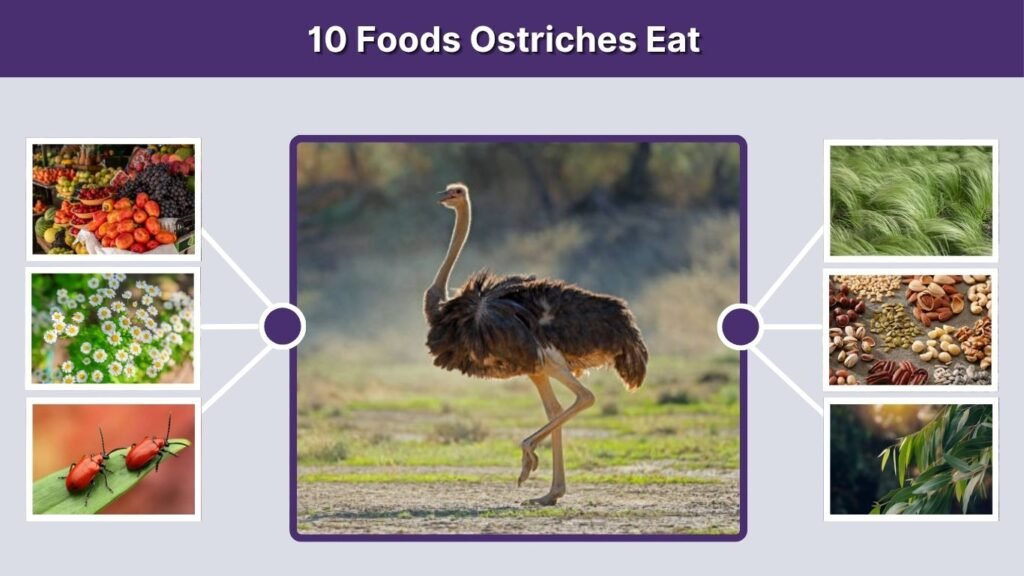
Ostriches are opportunistic feeders and consume whatever suitable foods are available within their habitat. Although plants make up most of their diet, they are not strict herbivores. Insects and small animals can provide valuable protein, particularly when plant food is limited or when growing chicks need additional nutrients.
1. Grass
Grass is one of the most common plant foods eaten by wild ostriches. They graze on tender shoots, blades, and other easily accessible vegetation.
Fresh grasses provide:
- Fiber
- Moisture
- Carbohydrates
- Vitamins
- Important minerals
Ostriches living in savannas and grasslands often encounter several types of grasses throughout the year. They generally prefer softer, younger vegetation but can consume tougher material when other food becomes scarce.
Because grasses contain water, eating fresh vegetation also helps ostriches remain hydrated in dry environments.
2. Seeds
Seeds are another important part of the ostrich diet. Ostriches collect seeds from grasses, shrubs, and other plants while searching for food on the ground.
Seeds are particularly useful because they can contain concentrated amounts of energy, protein, and fats.
An ostrich does not have teeth to grind seeds. Instead, swallowed stones inside its muscular gizzard help crush hard food before it continues through the digestive system.
3. Leaves
Ostriches readily eat leaves from low-growing plants, shrubs, and vegetation they can reach with their long necks.
Young leaves are particularly appealing because they tend to be softer and easier to digest than mature plant material.
Leaves may provide vitamins, minerals, fiber, and moisture. In dry regions, ostriches often adjust their feeding habits according to whatever leafy vegetation remains available.
4. Roots
Roots and underground plant material can become useful food sources, particularly during periods when fresh vegetation is limited.
Ostriches may pull at plants or investigate the ground to reach edible roots.
Roots can provide:
- Stored carbohydrates
- Moisture
- Fiber
- Minerals
Their ability to use different parts of plants helps ostriches survive seasonal changes in their natural environment.
5. Fruits
Ostriches can eat various fruits when they encounter them naturally. Wild fruits provide both energy and moisture, making them especially useful in hot climates.
They may consume soft fruits, berries, and fallen fruit depending on the plants growing in their habitat.
Fruit should not dominate the diet of captive ostriches because many cultivated fruits contain relatively high levels of sugar. A nutritionally balanced feed and appropriate plant material are generally more suitable as everyday foods.
6. Flowers
Flowers and buds are sometimes eaten along with other parts of plants. Ostriches forage extensively, so edible flowers growing within reach may become part of their meals.
Flowers can provide small amounts of nutrients and moisture. Their availability usually changes with the season, meaning they are more of an occasional natural food than a constant dietary staple.
7. Insects
Although much of an ostrich’s diet consists of vegetation, these birds also eat insects.
Common possibilities include:
- Grasshoppers
- Crickets
- Beetles
- Caterpillars
- Locusts
- Other small invertebrates
Insects provide protein and fat that can complement a plant-heavy diet. Ostriches do not need to actively hunt insects in the same way insect-eating birds do; they often consume them opportunistically while foraging.
8. Lizards
An ostrich may occasionally eat a small lizard when it gets the opportunity.
Animal foods represent only a relatively small portion of the normal ostrich diet. However, small reptiles can supply additional protein, fat, and minerals.
Ostriches are opportunistic rather than specialized predators, so they generally do not spend large amounts of time actively chasing lizards.
9. Small Rodents
Small rodents may occasionally be consumed by ostriches, although they are not a major food source.
An ostrich that encounters a very small animal while feeding may swallow it. Such behavior demonstrates why the bird is considered an omnivore rather than a true herbivore.
Plant matter still makes up the majority of the typical wild ostrich diet.
10. Small Stones and Grit
Ostriches swallow stones and grit, but technically they do not eat rocks for nutrition.
They swallow small stones because ostriches have no teeth. The stones collect in a muscular digestive organ called the gizzard and help grind tough plant material and seeds.
This process makes food easier to digest.
The stones eventually wear down or pass through the digestive system, so ostriches periodically swallow replacements.
What Do Ostriches Eat in the Wild?
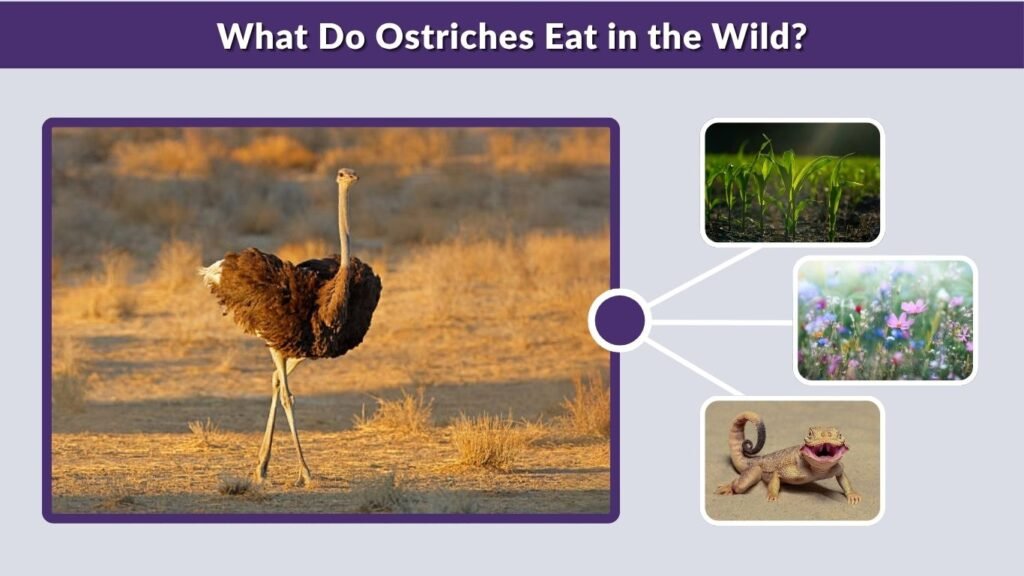
Wild ostriches occupy grasslands, savannas, shrublands, and semi-arid environments across Africa. Food availability can change considerably with rainfall and season, so ostriches have developed a broad diet rather than depending on one specific food source.
Wild Ostrich Diet
A typical wild diet can include:
- Grasses and shoots
- Leaves
- Seeds
- Roots
- Flowers
- Fruits
- Insects
- Small reptiles
- Occasionally other small animals
Plant material generally represents the largest part of the diet.
Their long necks allow them to reach vegetation at different heights, while their strong legs enable them to travel considerable distances when searching for food.
What Do Ostriches Eat in Savanna?
Savannas provide ostriches with grasses, seeds, shrubs, fruits, insects, and other seasonal foods. Their diet changes depending on rainfall and vegetation growth.
Feeding During Wet and Dry Seasons
During wetter periods, fresh grasses and leafy plants become abundant. Ostriches can obtain considerable moisture from this vegetation.
During dry periods, they may depend more heavily on:
- Seeds
- Tougher vegetation
- Roots
- Dry leaves
- Available fruits
- Insects
This ability to change their diet is one reason ostriches can survive in environments where food availability varies throughout the year.
What Do Ostriches Eat in Captivity?
Captive ostriches require more carefully controlled nutrition than wild birds because they cannot simply travel around searching for whichever foods their bodies need. Farms, wildlife facilities, and zoos typically provide nutritionally balanced diets suited to the bird’s age and condition.
Captive Ostrich Food
A managed diet may contain:
- Commercial ratite feed
- Grasses and forage
- Leafy vegetation
- Suitable grains in controlled amounts
- Fresh vegetables
- Limited fruit
- Appropriate mineral supplements
Fresh drinking water should always be available.
The exact feeding program depends on the bird’s age, growth stage, activity level, and breeding status. Owners should avoid feeding a diet based mainly on treats, bread, or sugary fruit because nutritional imbalances can cause health and growth problems.
What Do Baby Ostriches Eat?
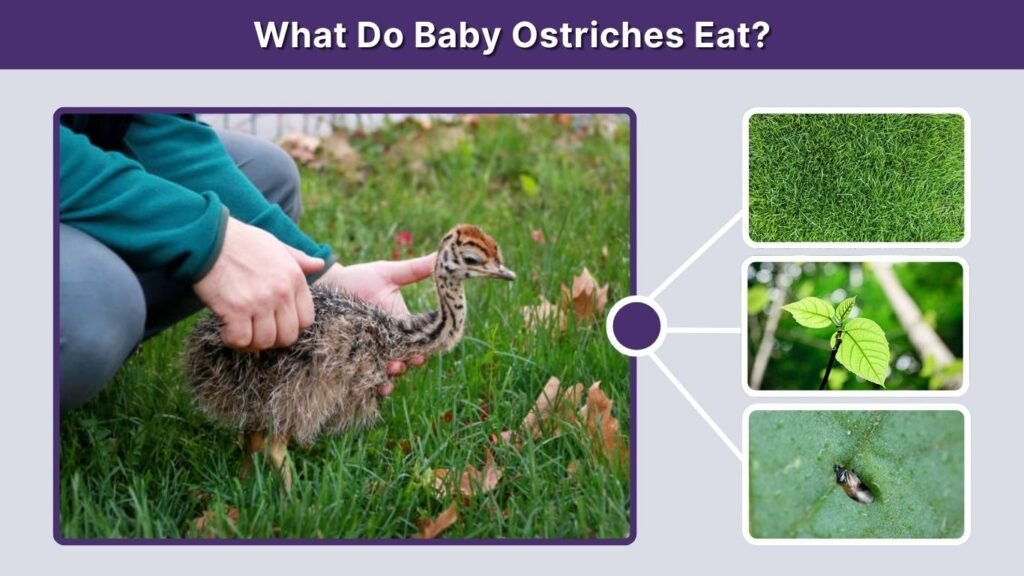
Ostrich chicks grow rapidly and therefore need balanced nutrition containing adequate protein, energy, vitamins, and minerals. Their nutritional requirements differ from those of mature birds.
Diet of Ostrich Chicks
Young ostriches commonly eat:
- Specialized starter feed
- Tender grasses
- Small leaves
- Appropriate vegetation
- Small insects
- Grit suitable for their size
Commercially raised chicks are often provided with specially formulated ratite starter feeds.
Calcium, phosphorus, protein, and overall energy levels need to remain properly balanced because overly rapid or uneven growth may contribute to leg and skeletal problems.
What Do Ostriches Drink?
Ostriches drink water whenever it is available, but wild birds can survive surprisingly well in dry environments.
How Ostriches Get Water
Ostriches obtain moisture through:
- Drinking fresh water
- Eating succulent plants
- Consuming fresh grasses
- Eating leaves
- Eating fruits and other moisture-rich foods
They may go for periods without directly drinking when their food provides enough moisture. However, this does not mean ostriches never need water.
Captive ostriches should always be provided with access to clean, fresh drinking water rather than being expected to obtain all their moisture from food.
Do Ostriches Eat Meat?
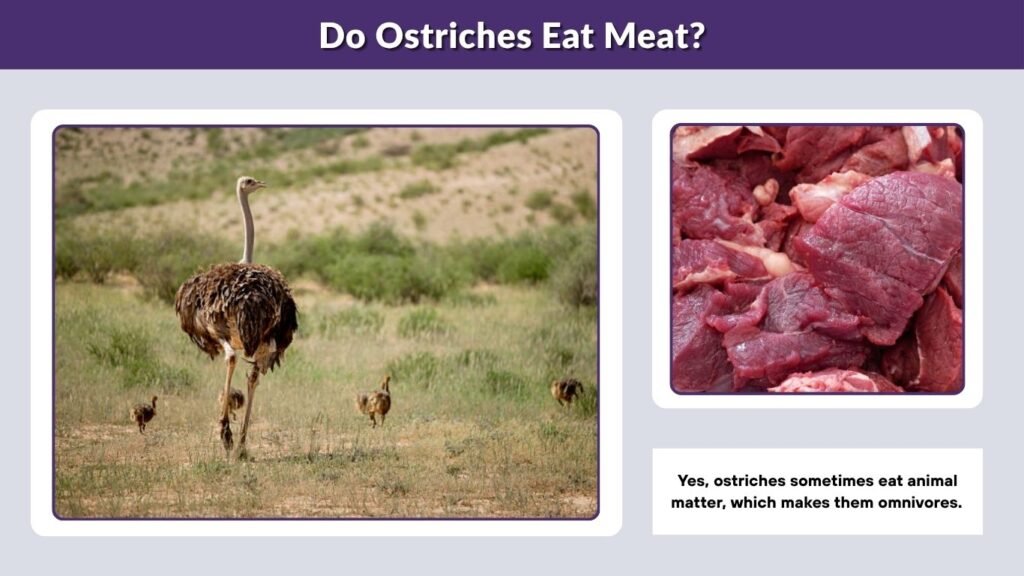
Yes, ostriches sometimes eat animal matter, which makes them omnivores. However, meat does not form the majority of their natural diet.
Animals Ostriches May Eat
Ostriches may occasionally consume insects, small lizards, rodents, and other tiny creatures they encounter while foraging.
Their digestive system and feeding behavior are primarily suited to a diet dominated by vegetation. Therefore, describing an ostrich as an aggressive meat-eating predator would be inaccurate. Animal foods simply supplement the large amount of plant material they consume.
FAQs
What Is an Ostrich’s Favorite Food?
Ostriches do not have one universal favorite food. They commonly eat grasses, leaves, seeds, flowers, roots, and fruits. Food preferences can vary depending on availability, age, habitat, and season. Wild ostriches usually consume whichever nutritious plants are readily available.
What Fruits Do Ostriches Eat?
Ostriches can eat various suitable fruits and berries found in their environment. Captive birds may also consume some fruits as occasional treats. However, fruit should not form the majority of their diet because balanced forage and formulated feed provide more appropriate everyday nutrition.
What Insects Do Ostriches Eat?
Ostriches may eat grasshoppers, locusts, beetles, crickets, caterpillars, and other small invertebrates. Insects provide useful protein and fat, but they usually make up only a small part of the overall diet compared with grasses and other plant foods.
Why Do Ostriches Eat Rocks?
Ostriches swallow small stones because they do not have teeth. Stones remain inside the muscular gizzard, where they help crush and grind seeds and fibrous plant material. The stones are therefore digestive tools rather than a source of nutrition.
Are Ostriches Herbivores or Omnivores?
Ostriches are omnivores, although most of their diet consists of plant material. They eat grasses, leaves, roots, seeds, fruits, and flowers while occasionally consuming insects, lizards, rodents, and other small animals when opportunities arise.