
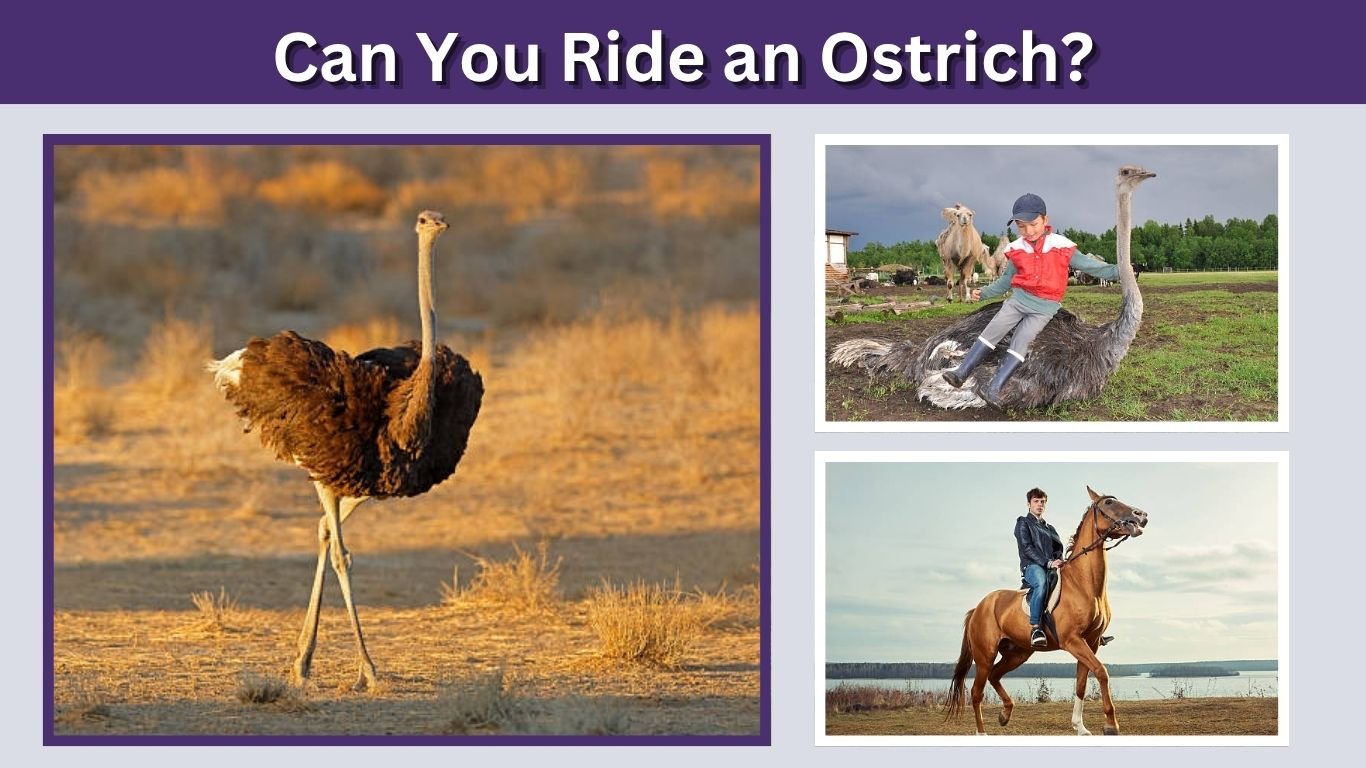
Can you ride an ostrich? Physically, some people have ridden trained adult ostriches, and ostrich riding has historically been offered as a tourist activity in a few places. However, ostriches are not domesticated riding animals like horses, and carrying a person can place stress on both the bird and rider. Their powerful legs, unpredictable movements, and high running speed also create safety concerns. Today, many facilities avoid ostrich riding for animal-welfare reasons and instead offer feeding, viewing, or educational encounters.
Can You Really Ride an Ostrich?
Ostriches are enormous birds with powerful legs and strong bodies, so a healthy adult can physically support a lightweight rider for a short period under controlled conditions. However, being physically capable of carrying someone does not mean an ostrich is naturally suited for riding. Their anatomy, temperament, and behavior differ dramatically from horses and other domesticated riding animals.
Is Ostrich Riding Possible?
Ostrich riding has occurred historically, particularly as entertainment or a tourist attraction. Important points include:
- Only mature, sufficiently large birds could potentially carry a rider.
- Riders historically had to meet strict weight limits.
- Rides were generally very short.
- Handlers often controlled or guided the bird.
- Ostriches were specially accustomed to human contact.
- Riding could still result in falls or injuries.
- Not every ostrich is suitable for close human interaction.
A wild ostrich should never be approached with the intention of riding it.
Can You Ride an Ostrich Like a Horse?
No. An ostrich cannot realistically be ridden like a horse.
Horses have been domesticated for thousands of years and possess backs, behavior, and training traditions suited to carrying riders. Ostriches evolved for high-speed running on two legs.
They do not have a horse-like saddle area, and their behavior can change quickly when frightened. Ostrich riding is therefore better understood as a brief novelty activity rather than ordinary transportation.
How Much Weight Can an Ostrich Carry?
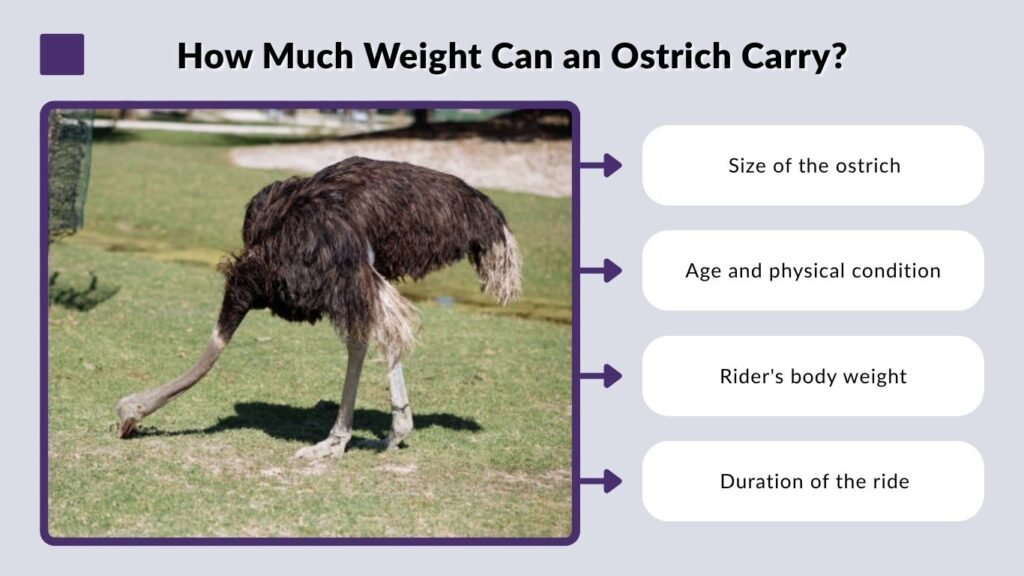
There is no universally accepted rider-weight limit that applies to every ostrich. Size, age, health, condition, and the way the activity is managed all matter. Commercial attractions that historically offered rides typically restricted participation to relatively lightweight riders rather than allowing anyone to climb onto a bird.
Factors That Affect Carrying Ability
Important considerations include:
- Size of the ostrich
- Age and physical condition
- Rider’s body weight
- Duration of the ride
- Running surface
- Bird’s training and temperament
- Handling methods
- Frequency of riding
Even a large bird should not automatically be assumed capable of safely carrying a person.
Why Rider Weight Matters
An ostrich’s back was not specifically adapted to carry people.
Additional weight can affect balance and change the forces placed on the bird’s legs and body. This becomes particularly important if the ostrich starts running rapidly.
For that reason, responsible facilities increasingly favor activities that allow visitors to observe or feed ostriches instead of sitting on them.
Is Riding an Ostrich Safe?
Ostriches are extremely strong animals capable of running around 43 mph. Their legs are designed for speed and can also deliver dangerous defensive kicks. Riding one therefore carries risks that are quite different from sitting on a domesticated pony or horse.
Risks of Ostrich Riding
Potential risks include:
- Falling from the bird
- Sudden acceleration
- Unexpected directional changes
- Loss of balance
- Being kicked
- Injury from hitting the ground
- Stress or injury to the ostrich
- Difficulty controlling a frightened bird
Protective supervision cannot completely eliminate these risks.
Can an Ostrich Hurt a Rider?
Yes. An adult ostrich is powerful enough to cause serious injuries.
Most ostriches would prefer escaping from danger rather than confronting humans, but frightened or cornered birds may kick defensively. Their large feet and strong claws make close interaction potentially hazardous.
Someone falling from an ostrich running at speed could also sustain significant injury even without being kicked.
Where Can You Ride an Ostrich?
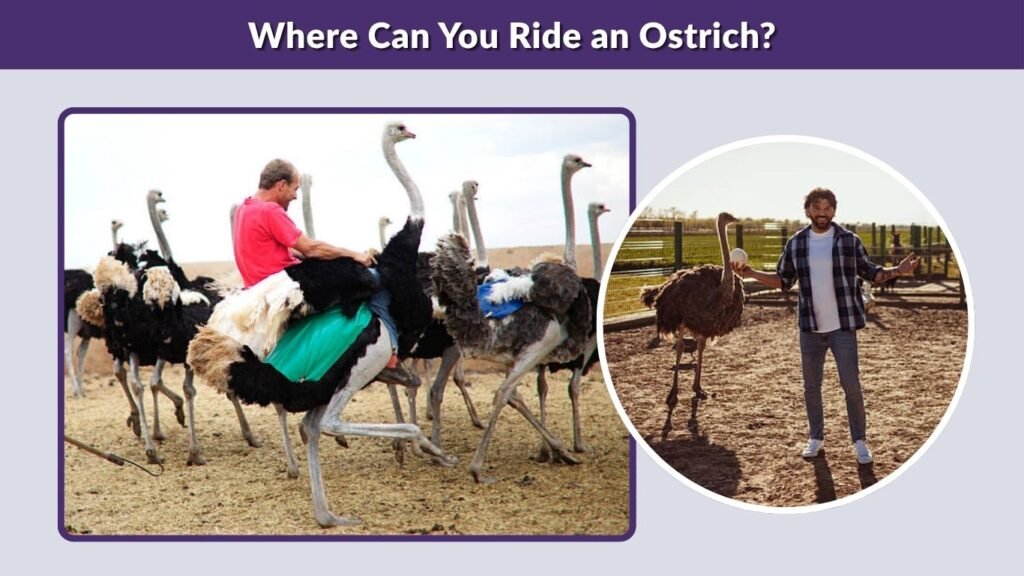
Ostrich riding has historically been associated most strongly with tourist farms in Oudtshoorn, South Africa, an area famous for ostrich farming. However, availability has changed over time as animal-welfare practices have evolved, and many attractions now emphasize guided tours, feeding, observation, and educational experiences instead.
Places Historically Associated With Ostrich Riding
Ostrich-related tourist experiences have been associated with:
- Oudtshoorn, South Africa
- Ostrich farms in southern Africa
- Selected wildlife attractions
- Some tourist facilities in other countries
- Festivals or demonstrations in limited locations
Before visiting specifically for a ride, contact the attraction directly because policies can change.
Ostrich Riding in South Africa
Oudtshoorn is sometimes called an important center of the South African ostrich industry.
Visitors can still find numerous ostrich-focused experiences in the region, including farm tours, opportunities to see adults and chicks, educational demonstrations, feeding sessions, and information about ostrich farming.
Traditional riding was once a particularly famous attraction, but tourists should not assume every farm still offers it.
Can You Ride an Ostrich in the United States?

Ostriches are raised on farms throughout the United States, but public riding experiences are uncommon. Most farms focus on breeding, meat production, educational tours, wildlife encounters, or agricultural activities rather than allowing visitors to ride birds.
Ostrich Riding in the US
If looking for an ostrich experience in the United States:
- Search for reputable ostrich farms.
- Check wildlife parks and educational farms.
- Confirm activities directly with the facility.
- Do not assume a farm permits riding.
- Ask about animal-welfare practices.
- Follow all handler instructions.
- Avoid attractions that encourage unsafe animal interaction.
Feeding or viewing ostriches is much more commonly available than riding them.
Can You Ride an Ostrich in Other Countries?
Ostriches are farmed around the world, so people sometimes search for riding opportunities in countries such as Australia, Vietnam, the UK, or Caribbean destinations. Availability depends entirely on current local facilities, animal-welfare regulations, and individual operator policies.
What to Check Before Visiting
Before traveling for an ostrich experience, confirm:
- Whether riding is actually offered
- Current age requirements
- Rider weight limits
- Safety procedures
- Animal-welfare policies
- Reservation requirements
- Seasonal availability
Online videos may show ostrich riding at locations that have since stopped offering the activity.
Why Are Some Places Stopping Ostrich Rides?
Attitudes toward animal tourism have changed considerably. Attractions increasingly consider whether an activity serves the animal’s welfare rather than simply whether it can physically be performed. Ostriches are not naturally riding animals, so repeated handling and carrying riders can raise concerns.
Animal-Welfare Concerns
Potential concerns include:
- Stress from repeated human contact
- Excessive rider weight
- Strain on the bird’s body
- Forced handling
- Repetitive performances
- Injury during running
- Inappropriate restraint
Modern wildlife tourism increasingly favors observation and natural behavior over direct riding experiences.
Better Ostrich Experiences
You do not need to ride an ostrich to appreciate how impressive these birds are.
A good ostrich farm or wildlife facility may allow visitors to observe feeding, learn about eggs and chicks, see males and females up close, watch natural running behavior, and understand how ostriches survive in African environments.
These activities can be both educational and memorable without placing a rider on the bird.
How Fast Can You Ride an Ostrich?
An ostrich is capable of astonishing running speeds, but a ridden bird should never be expected to reach its natural maximum. Full-speed running while carrying a person would significantly increase the danger of falling and could place additional stress on the animal.
Ostrich Running Facts
Adult ostriches can:
- Reach roughly 43 mph at maximum speed
- Take extremely long running strides
- Accelerate quickly
- Change direction while running
- Use wings for balance
- Run much faster than humans
Their speed is one of the strongest reasons ostrich riding should not be treated casually.
Ostrich Riding vs. Horse Riding

Although both animals can physically move while carrying human weight under certain conditions, the similarity ends there. Horses are domesticated quadrupeds specifically used for riding, while ostriches are flightless birds evolved primarily for running and escaping predators.
Main Differences
Horse riding involves an animal with a long history of domestication, established tack, controlled gaits, and specialized training.
Ostrich riding involves a two-legged bird with different anatomy, balance, temperament, and defensive behavior.
A horse is therefore much better suited to recreational riding. Ostrich encounters are generally more appropriate when focused on observation rather than transportation.
FAQs
Ostrich riding attracts attention because these birds are exceptionally tall, fast, and powerful. However, the fact that people have historically ridden ostriches does not mean the activity is appropriate everywhere or suitable for every bird.
Can you actually ride an ostrich?
Yes, people have historically ridden trained adult ostriches for short periods, particularly at tourist attractions. However, ostriches are not naturally suited to carrying riders, and many facilities now avoid rides because of safety and animal-welfare concerns.
Where can you ride an ostrich?
Oudtshoorn in South Africa has historically been famous for ostrich farms and riding experiences. However, individual farms may change their policies, and many now provide observation, feeding, or educational tours instead. Always confirm current activities directly before visiting.
Can you ride an ostrich in the US?
Ostrich riding is uncommon in the United States. Some farms and wildlife attractions keep ostriches, but most offer viewing, feeding, educational tours, or agricultural experiences rather than rides.
Can an ostrich carry an adult human?
A large adult ostrich may physically support a lightweight person for a short period, but there is no universal safe weight limit. Ostriches are not built or domesticated specifically for carrying humans, so riding can create welfare and safety concerns.
Is riding an ostrich dangerous?
It can be. Ostriches are fast, powerful, and capable of sudden movements and dangerous kicks. A rider could fall or be injured, while inappropriate riding can also stress or injure the bird. Observation-based encounters are generally a safer alternative.