
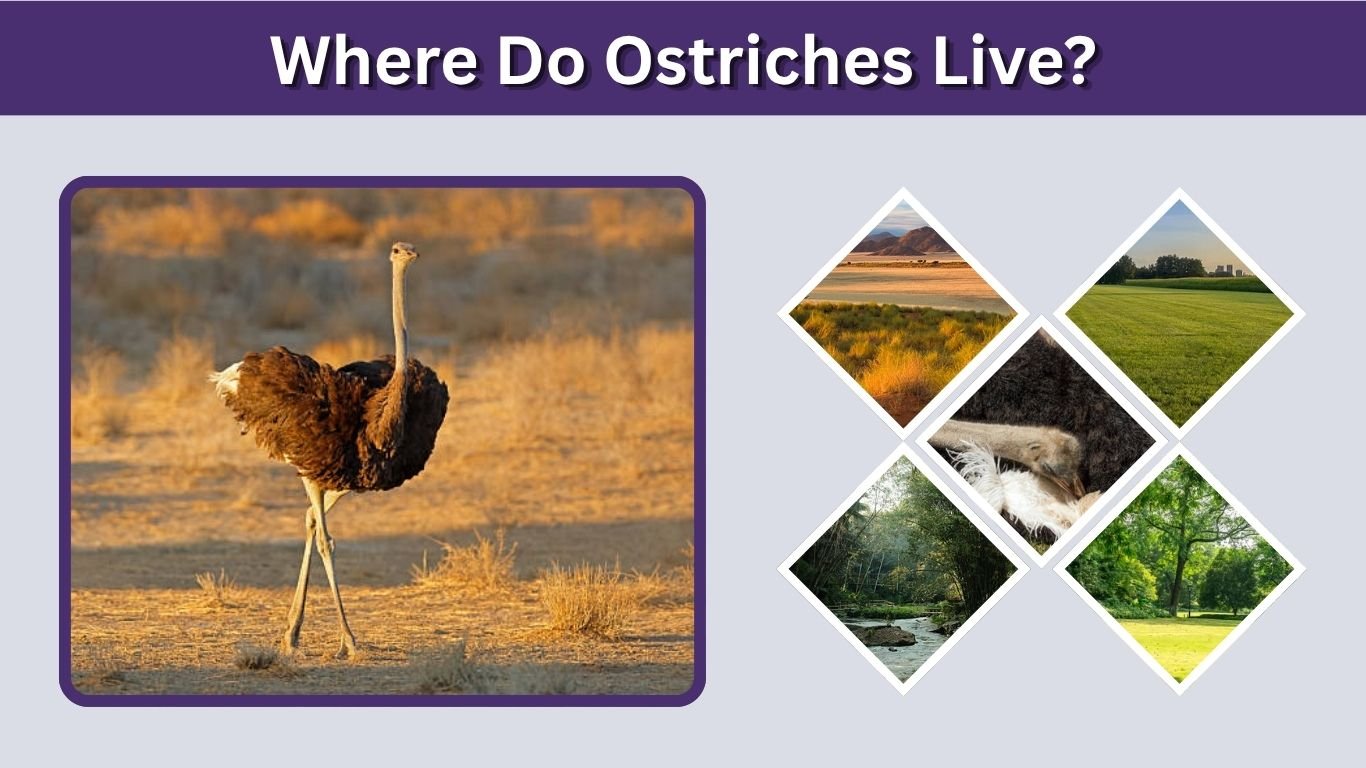
Ostriches are the world’s largest living birds and are specially adapted to life in warm, open environments. So, where do ostriches live? Wild ostriches live naturally in Africa, mainly in savannas, grasslands, semi-deserts, and open shrublands. Their populations are spread across parts of eastern, southern, and northern Africa. Ostriches prefer habitats with open visibility, enough vegetation for feeding, and room to run from predators. Outside Africa, they may also be found on farms, ranches, wildlife parks, and zoos.
Where Do Ostriches Live in the Wild?
Wild ostriches are native to Africa. Their natural distribution once covered a larger portion of the continent and parts of the Middle East, but modern wild populations are more fragmented. They survive best in open landscapes where they can see approaching predators and use their remarkable running speed to escape danger.
Countries Where Wild Ostriches Live
Wild ostriches can be found in several African countries, including:
- Kenya
- Tanzania
- Ethiopia
- Somalia
- Namibia
- Botswana
- South Africa
- Angola
- Mozambique
- Zambia
- Zimbabwe
- Chad and surrounding Sahel regions
Their exact distribution varies by subspecies and local environmental conditions.
Some populations live in relatively dry regions, while others occupy grasslands and savannas with more seasonal rainfall.
Where Do Most Ostriches Live?
Many ostriches are associated with eastern and southern Africa, where extensive areas of suitable open habitat remain.
Countries such as Kenya, Tanzania, Namibia, Botswana, and South Africa contain landscapes that provide the combination of food, space, and visibility ostriches need.
They generally avoid dense forests because thick vegetation restricts visibility and makes high-speed running more difficult.
What Is an Ostrich’s Natural Habitat?
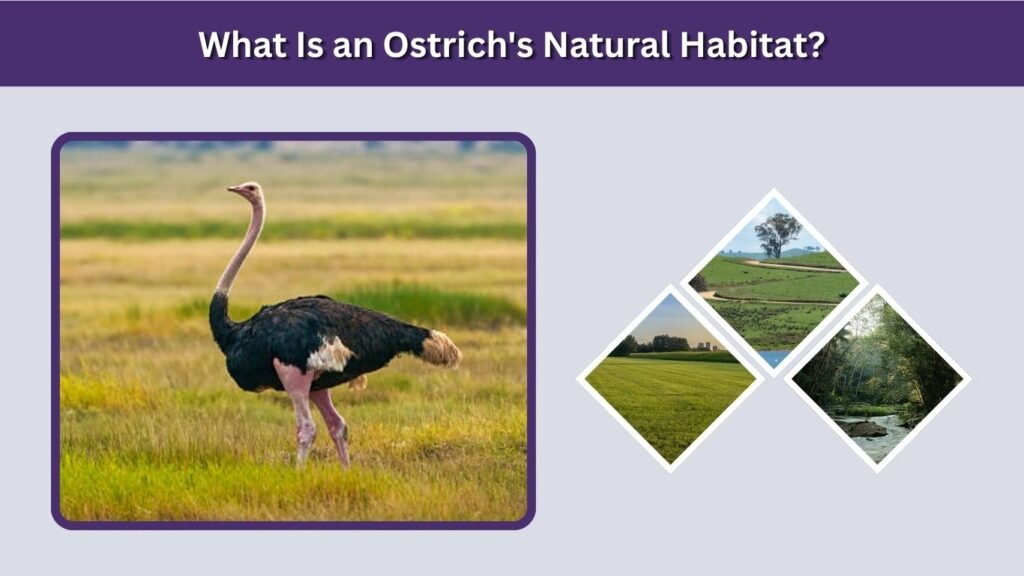
Ostriches are strongly associated with open and relatively dry habitats. Their long legs, excellent eyesight, and running ability are particularly useful in environments where vegetation is low enough to provide long-distance visibility. They can tolerate considerable heat and periods of limited water availability.
Savannas
Savannas are among the best-known ostrich habitats.
These landscapes provide:
- Open grasslands
- Scattered shrubs and trees
- Seeds and vegetation
- Insects and small animals
- Seasonal water sources
The open terrain allows ostriches to detect lions, hyenas, cheetahs, and other potential predators from a distance.
Their ability to run at speeds around 40–45 mph provides an important advantage in this environment.
Grasslands
Ostriches also live in grasslands where grasses and other low vegetation provide food.
They eat grasses, leaves, seeds, roots, flowers, fruits, and occasional insects or small animals.
Grasslands offer plenty of room for running, making them highly suitable for these large flightless birds.
Semi-Deserts and Dry Shrublands
Some ostriches inhabit semi-desert and dry shrubland environments where rainfall is limited.
Important adaptations allow them to survive there, including:
- Ability to tolerate high temperatures
- Flexible feeding habits
- Obtaining moisture from plants
- Ability to travel long distances
- Efficient running
- Strong eyesight
Although ostriches drink when water is available, they can obtain significant moisture from food.
Where Do Ostriches Live in Africa?
Africa is the natural home of modern wild ostriches. However, they are not distributed evenly across the continent. Their range depends largely on suitable climate, vegetation, human activity, and the availability of large open habitats.
Eastern Africa
Eastern Africa contains some of the most recognizable ostrich habitats.
Ostriches occur in countries such as Kenya, Tanzania, Ethiopia, and Somalia. They may inhabit savannas, dry grasslands, and semi-arid regions.
The open landscapes of East Africa provide ideal conditions for spotting predators and moving quickly over long distances.
Southern Africa
Southern Africa also supports important ostrich populations.
They occur in areas of:
- South Africa
- Namibia
- Botswana
- Zimbabwe
- Angola
- Zambia
- Mozambique
Dry grasslands and semi-arid regions are especially suitable.
South Africa is also well known for commercial ostrich farming, although farmed birds are not considered wild populations.
Northern and Sahel Regions
Some ostriches live in drier areas of northern Africa and the Sahel.
The North African ostrich is associated with arid and semi-arid regions south of the Sahara. Its modern distribution is much smaller than its historical range due to hunting, habitat changes, and other pressures.
Where Do Common Ostriches Live?
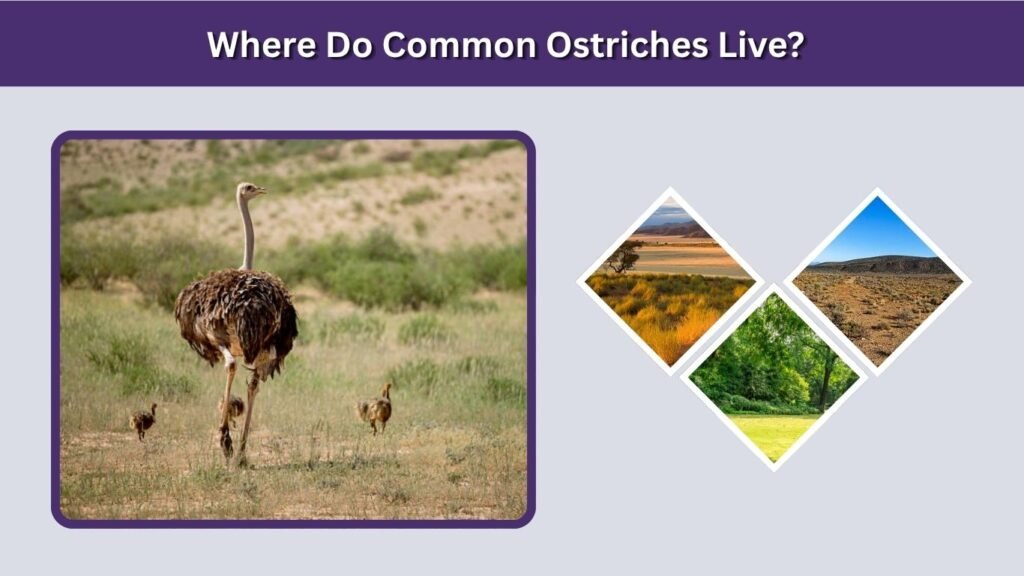
The common ostrich, Struthio camelus, occurs naturally across parts of Africa. Different populations and subspecies occupy somewhat different geographic regions.
Common Ostrich Range
Their habitats can include:
- Savannas
- Open woodland
- Grasslands
- Semi-deserts
- Scrublands
- Dry plains
Ostriches are highly adaptable within open environments, but they generally need enough vegetation to support feeding.
They may move considerable distances when searching for food and water, particularly during dry seasons.
Do Ostriches Live in the Desert?
Ostriches are often described as desert birds, but this can be misleading. They can survive in very dry environments, yet they are more commonly associated with semi-deserts, savannas, and dry grasslands rather than completely barren deserts.
How Ostriches Survive Dry Habitats
Several characteristics help them cope with dry conditions:
- They tolerate high daytime temperatures.
- They obtain moisture from plants.
- They can travel far in search of food.
- Their diet changes with seasonal availability.
- Their long legs keep much of their body away from hot ground.
- They can survive periods when drinking water is scarce.
When water is available, ostriches will readily drink.
Where Do Ostriches Sleep and Nest?
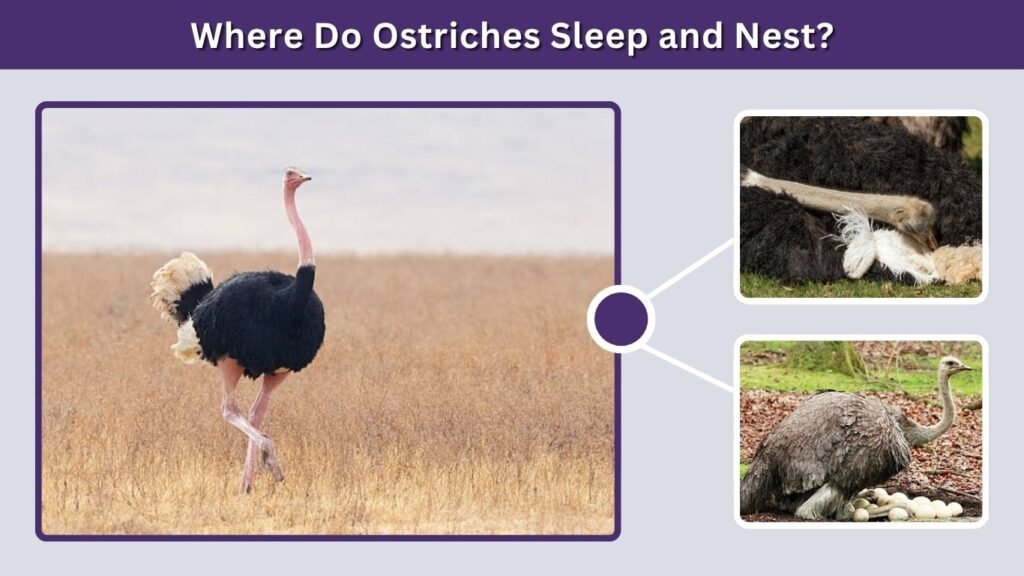
Ostriches spend almost their entire lives on the ground because they cannot fly into trees. They sleep, rest, feed, mate, and nest at ground level.
Where Ostriches Sleep
Ostriches normally sleep in open areas where they can remain alert to potential danger.
They may sleep while sitting with their bodies lowered toward the ground. During short periods of light sleep, they can remain relatively alert.
Open surroundings make it easier to notice approaching predators.
Where Ostriches Build Nests
Ostriches do not build traditional nests made from branches and grass.
Instead, the male creates a shallow depression in the ground. Several females may lay eggs in the same communal nest.
Suitable nesting locations usually offer:
- Dry ground
- Open visibility
- Nearby feeding areas
- Enough space for adults to defend the nest
Both males and females participate in incubating and protecting the eggs.
Do Ostriches Live in Australia?
Ostriches are not native to Australia. Australia’s large native flightless bird is the emu.
However, ostriches have been introduced to Australia for farming and may be kept on private properties, farms, or wildlife facilities.
Ostrich vs. Emu Habitat
Although they look somewhat similar, ostriches and emus come from different regions.
Ostriches are native to Africa, while emus are native to Australia.
Both have evolved strong legs and flightlessness, but they belong to different bird families and developed within separate environments.
Do Ostriches Live in the United States?
Ostriches do not naturally occur as native wild birds in the United States. However, they are raised on farms, ranches, wildlife facilities, and private properties.
Ostriches Outside Africa
Captive ostriches can now be found in many countries, including:
- United States
- Australia
- India
- European countries
- Middle Eastern countries
- Parts of Asia
These populations exist because humans introduced or farmed the birds rather than because ostriches naturally evolved in those regions.
Suitable captive facilities need adequate open space, shelter, secure fencing, and appropriate food and water.
Why Do Ostriches Prefer Open Habitats?
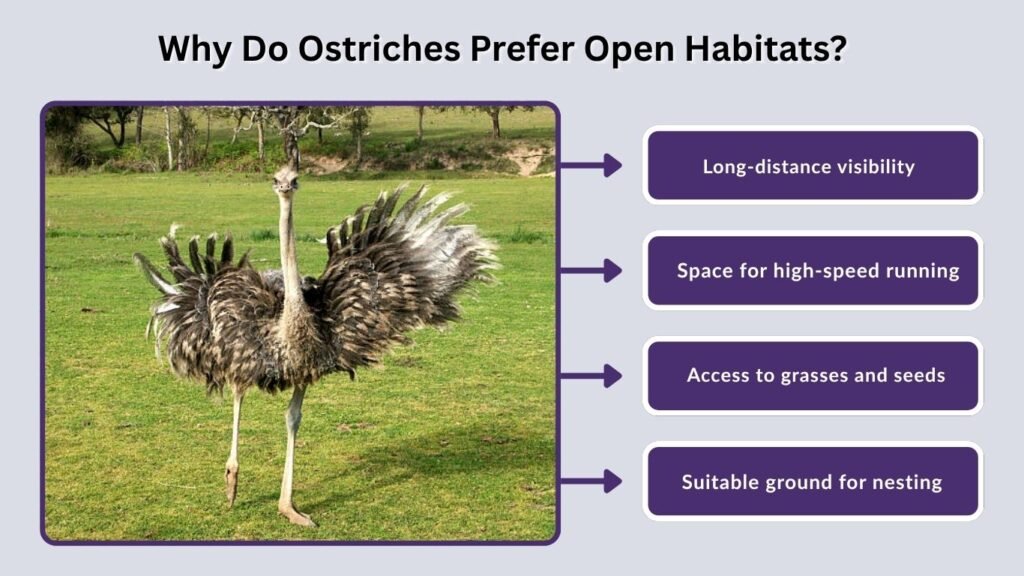
Open habitats are closely connected to the ostrich’s survival strategy. Because these birds cannot fly, they depend on detecting threats early and escaping across the ground.
Advantages of Open Landscapes
Open environments provide ostriches with:
- Long-distance visibility
- Space for high-speed running
- Access to grasses and seeds
- Easier movement between feeding areas
- Better opportunities to detect predators
- Suitable ground for nesting
Their exceptional eyesight works particularly well in these habitats. An ostrich’s height also gives it a wide view across grasslands and savannas.
Dense forests would interfere with both visibility and rapid running, making them much less suitable.
FAQs
Where Do Ostriches Live Naturally?
Ostriches live naturally in Africa. Their preferred habitats include savannas, grasslands, semi-deserts, dry plains, and open shrublands. Wild populations are particularly associated with eastern and southern Africa, although some populations also occur in drier regions farther north.
Where Do Most Ostriches Live Today?
Most wild ostriches occur in suitable regions of Africa, particularly eastern and southern areas. Countries such as Kenya, Tanzania, Namibia, Botswana, and South Africa contain extensive ostrich habitat. Captive and farmed ostriches are also kept in many other countries worldwide.
Do Ostriches Live in the Sahara Desert?
Ostriches can live in very dry areas around the Sahara and Sahel, but they generally prefer semi-arid environments rather than the most barren parts of the desert. They need access to vegetation and other food sources even though they are highly adapted to dry conditions.
Where Do Ostriches Sleep?
Ostriches sleep on the ground, usually in relatively open locations where they can detect approaching danger. They may lower their bodies and necks while resting but can remain alert during lighter sleep. They do not roost in trees because they cannot fly.
Do Ostriches Live in Australia?
Ostriches are not native to Australia. They may occur there on farms or in managed populations after being introduced by humans. The large flightless bird naturally associated with Australia is the emu, while wild ostriches are native to Africa.