
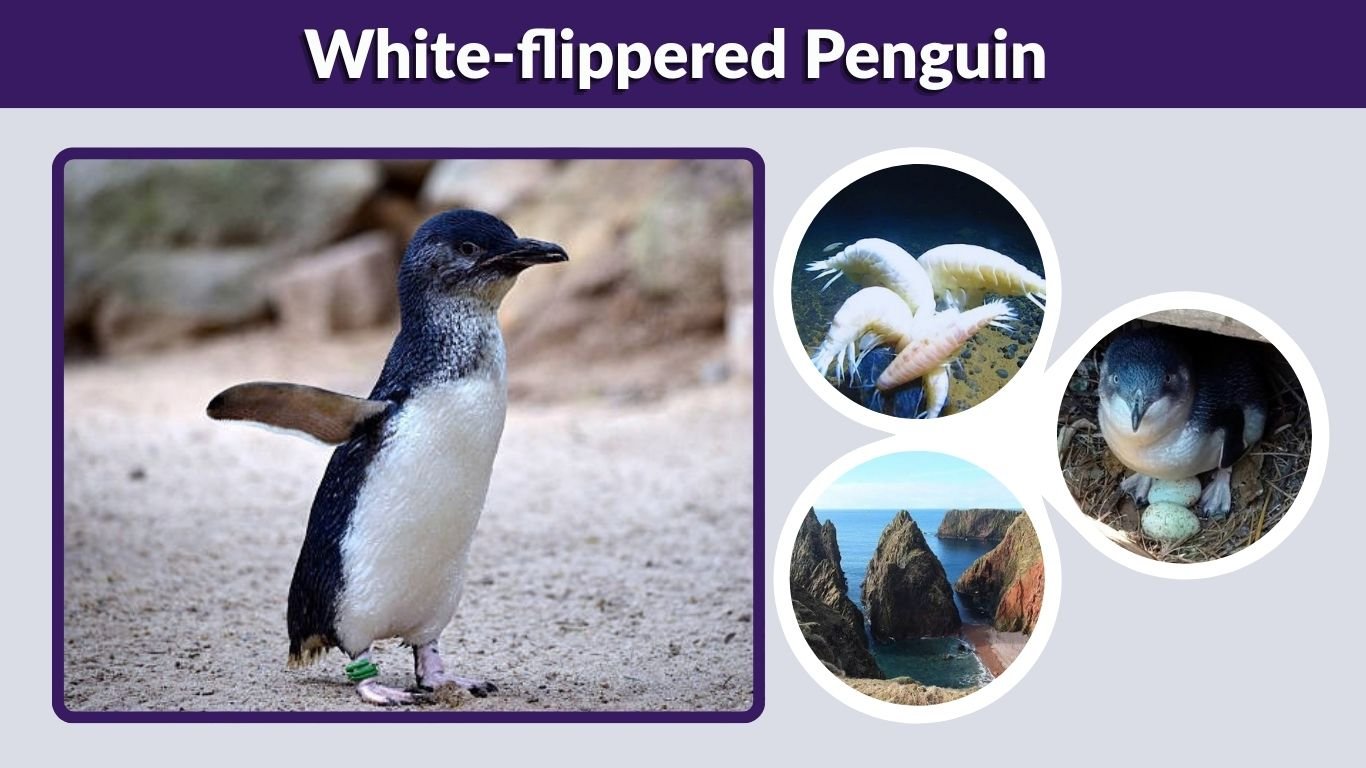
The White-flippered Penguin is a small seabird native to New Zealand, recognized for its blue-gray feathers, white underparts, and distinctive white markings along its flippers. Closely related to the Little Blue Penguin, this tiny bird spends much of its life swimming through coastal waters and hunting small fish. Despite its small size, it is an excellent swimmer with remarkable adaptations for marine life. Understanding the White-flippered Penguin’s size, diet, lifespan, habitat, behavior, and breeding habits reveals what makes this unusual penguin an important part of New Zealand’s coastal ecosystem.
What Is a White-flippered Penguin?
The White-flippered Penguin is a distinctive geographical form of the Little Penguin, belonging to the family Spheniscidae. It is primarily found around Banks Peninsula and Motunau Island in New Zealand. Historically classified as a separate species, it is now generally included within Eudyptula minor. Its broad white flipper markings distinguish it from other Little Penguins.
Scientific Classification
- Common name: White-flippered Penguin
- Scientific name: Eudyptula minor
- Traditional subspecies: Eudyptula minor albosignata
- Historical name: Eudyptula albosignata
- Family: Spheniscidae
- Order: Sphenisciformes
- Native region: Canterbury, New Zealand
- Penguin group: Little Penguins
White-flippered Penguin Size and Appearance
White-flippered Penguins are among the smallest penguins in the world. Their compact bodies are well adapted for swimming through coastal waters and moving between rocky nesting areas. Their blue-gray backs, white bellies, and broad pale flipper markings provide a distinctive appearance. Although males and females look similar, subtle differences in size and bill structure can occur.
How Big Is a White-flippered Penguin?
Adult White-flippered Penguins generally stand approximately 30–35 centimeters (12–14 inches) tall.
Their weight usually ranges from about 1–1.5 kilograms (2.2–3.3 pounds), depending on age, season, and feeding conditions. They belong to the world’s smallest living penguin group.
Physical Identification Features
- Head: Blue-gray to slate-colored with a compact appearance.
- Back: Dark blue-gray feathers that provide camouflage in seawater.
- Chest and belly: White plumage contrasting with the darker upperparts.
- Flippers: Broad white markings along the edges.
- Bill: Short, dark, and slightly hooked.
- Feet: Pinkish with darker soles and claws.
White-flippered Penguin Habitat and Distribution
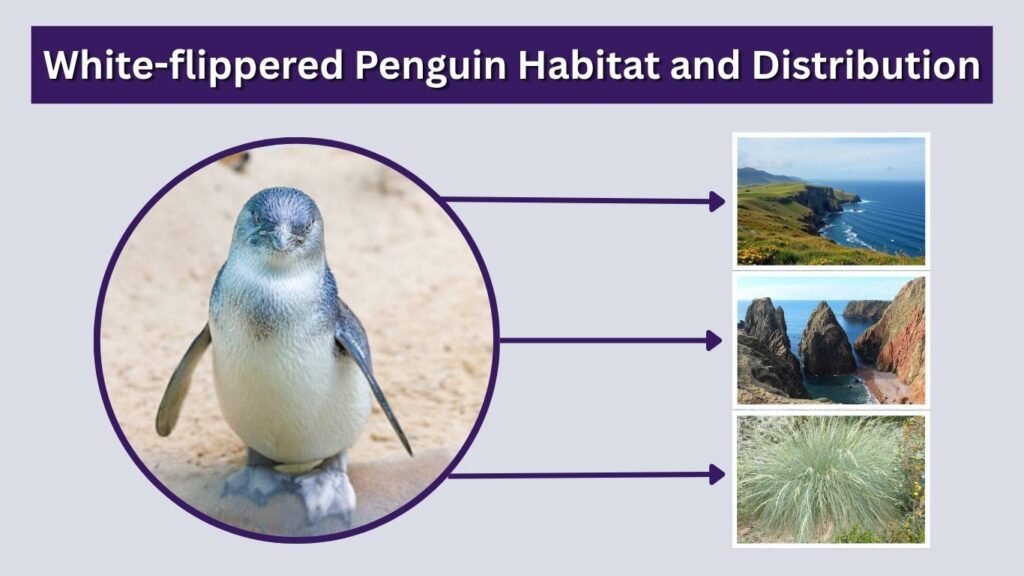
White-flippered Penguins have a restricted breeding distribution along the eastern coast of New Zealand’s South Island. Their colonies occur near coastal waters that provide feeding opportunities and suitable nesting locations. Unlike other Little Penguin populations found across wider areas of Australia and New Zealand, this distinctive form is concentrated in specific locations around Canterbury.
Where Do White-flippered Penguins Live?
White-flippered Penguins breed primarily around Banks Peninsula, near Christchurch, and on Motunau Island.
These coastal environments provide access to marine feeding grounds and protected nesting spaces. Penguins spend substantial time offshore but return to land during breeding and other essential activities.
Preferred Natural Habitat
White-flippered Penguins occupy rocky coastal environments, sheltered vegetation, natural burrows, and crevices.
They may also use artificial nesting boxes installed in protected conservation areas. Suitable nesting habitats help reduce exposure to severe weather and some predators.
What Do White-flippered Penguins Eat?
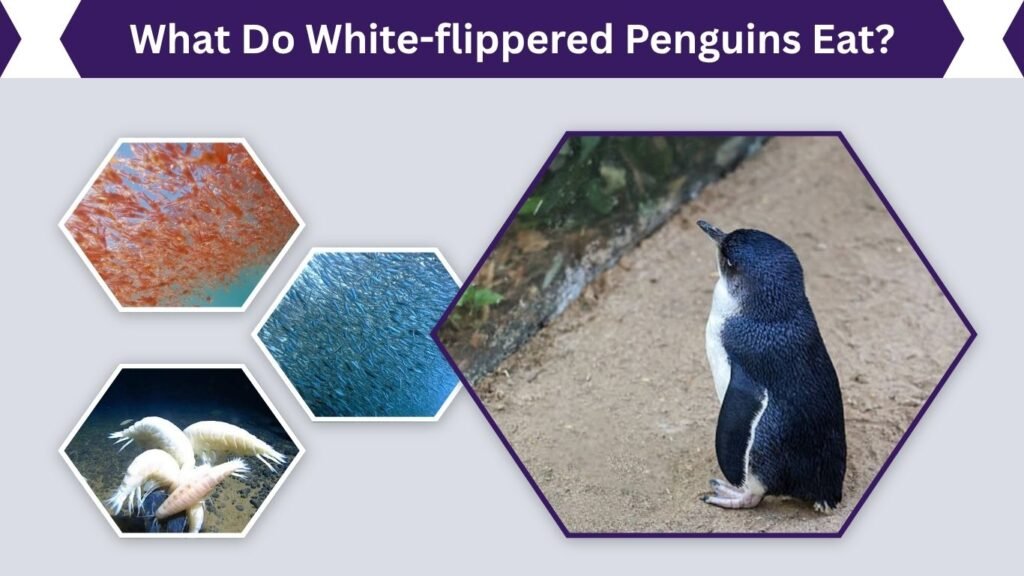
White-flippered Penguins are carnivorous seabirds that feed mainly on small marine animals. Their diet consists primarily of fish captured in coastal waters, although the available prey changes with ocean conditions and location. Their streamlined bodies, powerful flippers, and sharp bills help them hunt underwater. They depend on productive marine environments to support daily energy needs and chick development.
Main Food Sources
- Anchovies: Small schooling fish that provide nutrients and energy.
- Pilchards: Coastal fish that may form part of their diet.
- Other small fish: Various species depending on local availability.
- Small crustaceans: Occasionally consumed when accessible.
How Do White-flippered Penguins Hunt?
White-flippered Penguins use their flippers to propel themselves underwater while pursuing fish.
Their streamlined bodies allow them to move efficiently through seawater. They capture prey using their bills and generally swallow small fish whole.
White-flippered Penguin Lifespan
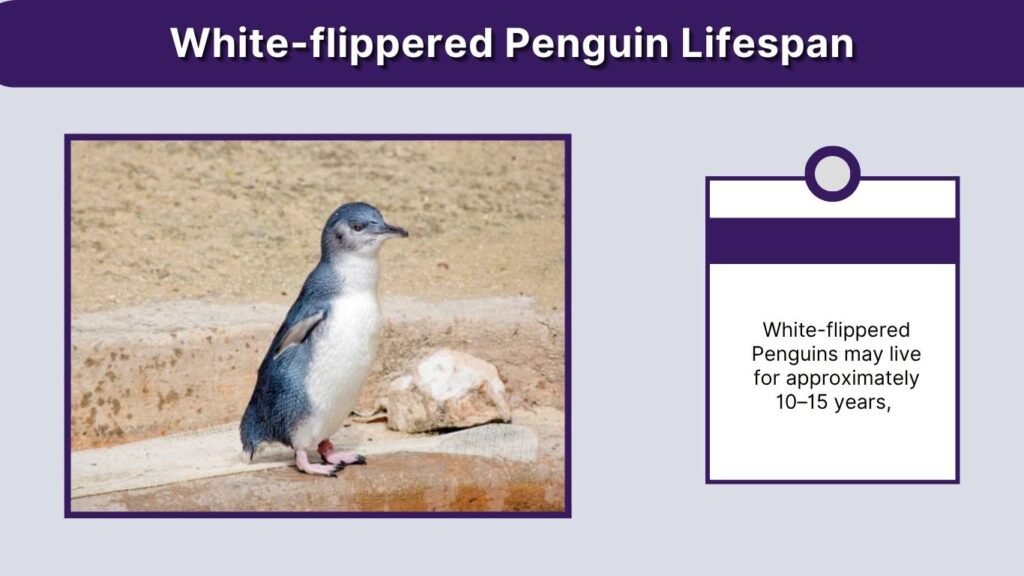
White-flippered Penguins face numerous challenges throughout their lives, including food shortages, predation, disease, and environmental changes. Their survival depends on suitable marine feeding conditions and protected nesting habitats. Although some Little Penguins survive for many years, determining an exact average lifespan specifically for White-flippered Penguins is difficult because long-term population studies remain limited.
How Long Do White-flippered Penguins Live?
White-flippered Penguins may live for approximately 10–15 years, although this is a general reference based on Little Penguins rather than a verified average for this geographical form.
Some Little Penguins survive beyond 20 years. Individual longevity depends on environmental conditions, predator exposure, and food availability.
White-flippered Penguin Behavior
White-flippered Penguins are active marine birds that spend much of their time swimming and searching for food. They generally forage during daylight hours and return to their nesting locations after sunset. Their daily routines vary with breeding responsibilities, weather conditions, and food availability. Social communication also plays an important role in maintaining breeding pairs and nesting territories.
Why Do They Return to Land at Night?
Returning after sunset can reduce exposure to some predators and human disturbances.
Penguins often follow familiar routes between nesting sites and the shoreline. During breeding, adults return with food for their developing chicks.
Social Behavior and Communication
White-flippered Penguins use vocalizations and body movements to communicate with partners and neighboring birds.
They may defend nesting areas through calls and displays. Their social interactions become especially important during courtship and chick-rearing periods.
White-flippered Penguin Adaptations
White-flippered Penguins possess specialized features that help them survive in coastal marine environments. Their compact bodies reduce resistance while swimming, and their waterproof plumage provides insulation against cold seawater. Although they cannot fly through the air, their modified wings function as powerful underwater flippers. These adaptations allow them to hunt efficiently and move between feeding grounds.
Important Survival Adaptations
- Dense feathers: Provide insulation and reduce water penetration.
- Streamlined body: Improves underwater movement.
- Powerful flippers: Generate propulsion during swimming.
- Countershading: Dark backs and pale bellies provide camouflage.
- Strong feet: Support movement across rocky coastal surfaces.
- Salt glands: Help remove excess salt from the body.
White-flippered Penguin Breeding and Life Cycle
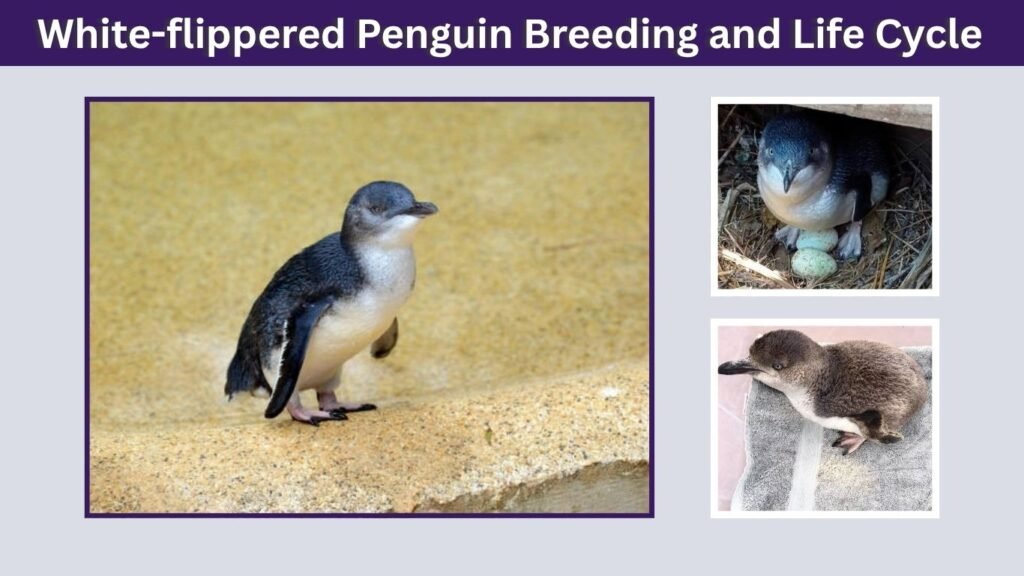
White-flippered Penguins reproduce in coastal nesting colonies where suitable shelter is available. Their breeding cycle includes courtship, egg laying, incubation, and chick development. Both parents share important responsibilities, including keeping eggs warm and bringing food to their offspring. Successful reproduction depends heavily on available marine food resources and protection from predators.
Nesting and Egg Laying
Female White-flippered Penguins commonly lay two eggs in a protected nest.
Both parents participate in incubation, usually lasting approximately five weeks. Nesting sites may include underground burrows, rocky crevices, sheltered vegetation, or artificial nest boxes.
White-flippered Penguin Chicks
Newly hatched chicks depend on their parents for warmth and food.
As they develop, both adults make feeding trips and return to the nest. Young penguins eventually replace their fluffy down with juvenile plumage and begin independent marine life.
White-flippered Penguin vs. Little Blue Penguin
White-flippered Penguins and Little Blue Penguins share many physical and behavioral characteristics. Both are small seabirds with blue-gray upperparts, white bellies, and strong swimming abilities. Their main differences involve geographical distribution and flipper coloration. The White-flippered Penguin is generally treated as a distinctive regional form within the Little Penguin species rather than a universally accepted separate species.
Key Differences
| Feature | White-flippered Penguin | Typical Little Blue Penguin |
|---|---|---|
| Scientific classification | Form of Eudyptula minor | Eudyptula minor |
| Height | 30–35 cm | 30–35 cm |
| Flipper markings | Broad white edges | Usually less prominent pale edges |
| Distribution | Banks Peninsula and Motunau Island | Wider New Zealand and Australian coastal regions |
| Main diet | Small fish | Small fish and other marine prey |
White-flippered Penguin Conservation Status
White-flippered Penguins face conservation challenges because their breeding population is concentrated in a relatively small geographical area. Introduced predators, coastal development, marine pollution, and changes in food availability can affect breeding success. Although the broader Little Penguin species is listed as Least Concern globally, White-flippered Penguin populations require focused local conservation efforts.
Major Threats
- Introduced predators: Stoats, ferrets, cats, and other mammals may attack adults, eggs, and chicks.
- Habitat destruction: Coastal development can reduce nesting opportunities.
- Marine pollution: Oil spills and plastic debris threaten marine wildlife.
- Fishing interactions: Accidental capture may cause injuries or mortality.
- Climate change: Changing ocean conditions can influence prey availability.
Conservation Efforts
Conservation programs around Banks Peninsula focus on predator control, habitat protection, nest boxes, and population monitoring.
Responsible wildlife tourism and protecting coastal breeding habitats can also support these penguins. Avoid disturbing nesting birds or blocking their routes between land and sea.
FAQs
1. How Big Is a White-flippered Penguin?
Adult White-flippered Penguins are approximately 30–35 centimeters tall and generally weigh around 1–1.5 kilograms, depending on the season.
2. What Do White-flippered Penguins Eat?
They mainly eat small fish, including anchovies and pilchards, along with other marine prey available in their coastal habitats.
3. How Long Do White-flippered Penguins Live?
They may live for approximately 10–15 years, with some Little Penguins surviving considerably longer. Reliable lifespan averages specifically for the white-flippered form are limited.
4. Where Are White-flippered Penguins Found?
They breed primarily around Banks Peninsula and Motunau Island in Canterbury, New Zealand.
5. Are White-flippered Penguins Endangered?
The broader Little Penguin species is globally classified as Least Concern, but White-flippered Penguin populations face local threats from introduced predators, habitat disturbance, and changes in marine conditions.
