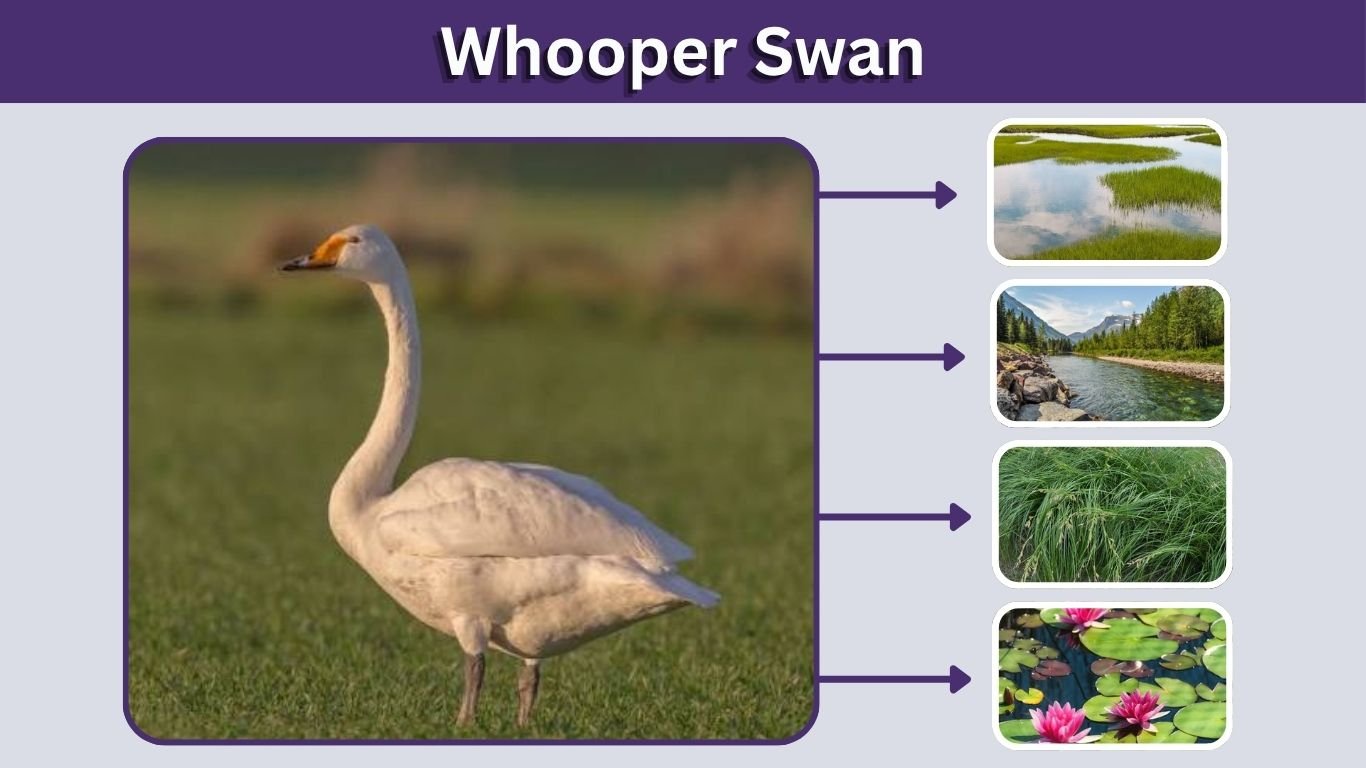
The Whooper Swan (Cygnus cygnus) is a large, white waterbird famous for its powerful flight and loud, musical calls. It breeds across northern Europe and Asia, then travels to milder regions for winter. Among the swans seen in Britain and Ireland, the Whooper stands out for its long, upright neck and striking yellow-and-black bill. Whether you have spotted one on a lake or heard a flock calling overhead, this guide explains how to identify Whooper Swans, where they live, what they eat, and how they raise their young.
What Is a Whooper Swan?
The Whooper Swan belongs to the duck, goose, and swan family, Anatidae. It is sometimes called the Whooping Swan because of its distinctive voice. Unlike the familiar Mute Swan, it regularly gives loud, far-carrying calls.
These strong migrants gather on lakes, rivers, wetlands, and farmland, often in noisy family groups during winter.
How to Identify a Whooper Swan
An adult Whooper Swan has clean white feathers, a long neck that often looks straight when swimming, and a black bill with a large yellow patch extending toward the tip. Its head has a gently sloping profile, without the prominent black knob found on a Mute Swan’s bill.
Whooper Swan Size, Weight, and Wingspan
Whoopers rank among the larger swans. Adults are usually 140–165 cm (4.6–5.4 feet) long and have a wingspan of roughly 205–275 cm (6.7–9 feet). Weight varies by age, sex, and season, but adults commonly weigh around 8–11 kg (18–24 pounds).
In flight, Whoopers extend their necks forward and trail their legs straight behind them. Their calls may be audible before the birds come into view.
What Does a Juvenile Whooper Swan Look Like?
A juvenile Whooper Swan is grayish rather than pure white. Young birds initially have a pinkish bill with darker markings; the yellow-and-black adult pattern develops as they mature. Juveniles are called cygnets, and they often remain with their parents through their first winter.
Their changing bill colors make identification harder, so consider the whole family rather than one feature.
Where Do Whooper Swans Live?
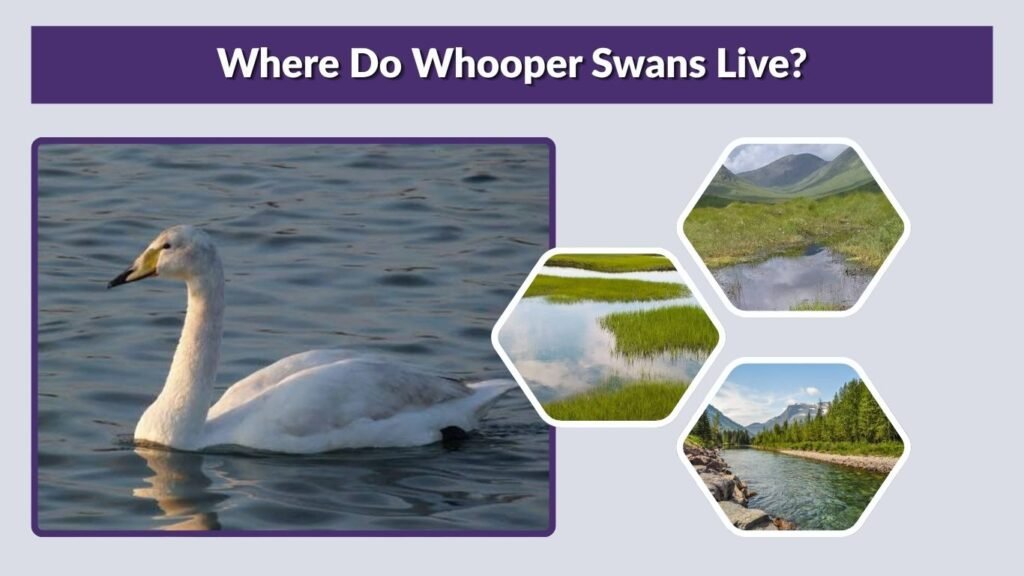
The Whooper Swan’s range extends across northern Europe and much of northern Asia. During the breeding season it favors quiet, shallow freshwater habitats, including lakes, marshes, bog pools, and slow-moving rivers with suitable vegetation.
Whooper Swans in Iceland and Finland
Iceland supports an important breeding population whose birds migrate to Britain and Ireland for winter. Finland, where the Whooper Swan is the national bird, also has breeding Whoopers. Across northern Scandinavia and Russia, the species nests in wetlands with nearby feeding areas and relatively little disturbance.
Farther-east breeding populations may winter in East Asia, including Japan.
Whooper Swans in the UK and Ireland
In Britain and Ireland, Whooper Swans are most familiar as winter visitors. Many arrive from Iceland in autumn and leave again in spring. You may see them on sheltered lakes, estuaries, wet grasslands, or fields where they feed on leftover crops.
A small number breed in northern Britain, particularly Scotland, but most winter sightings involve migrants.
Whooper Swan Migration and Flight
Whooper Swans migrate to find suitable winter feeding grounds and return north to breed. Icelandic birds usually reach Britain and Ireland in autumn, with many departing again around March or April. Weather and food availability influence the timing.
During migration, Whoopers:
- Fly in family groups or larger flocks, sometimes using V-shaped formations.
- Call repeatedly to maintain contact with other birds.
- Rest and feed at wetlands and agricultural landscapes along their routes.
- Travel substantial distances over land and sea using strong, steady wingbeats.
How high do Whooper Swans fly? There is no single standard flight height. Altitude varies with wind, weather, and geography, so a particular height should not be assumed from a sighting.
What Do Whooper Swans Eat?
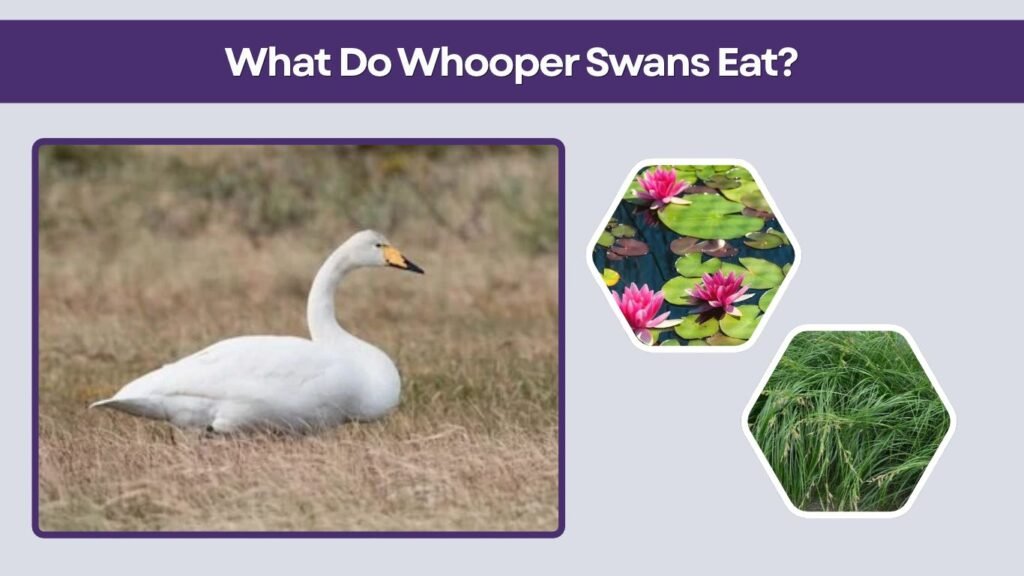
Whooper Swans are primarily herbivorous. They use their long necks to reach plants in shallow water and also graze on land. Their diet changes with the season and the food available nearby.
Typical Whooper Swan foods include:
- Aquatic plants: submerged leaves, stems, and roots.
- Grasses and sedges: especially on wet meadows and pastures.
- Agricultural leftovers: potatoes, sugar beet, and grain remaining after harvest.
- Growing field crops: young cereals and other vegetation where accessible.
Wetlands provide much of their food in summer, while farmland can supply vital energy in winter.
What Does a Whooper Swan Sound Like?
The Whooper Swan call is loud, clear, and trumpet-like. Many listeners describe it as a series of resonant whoop-whoop or hoo-hoo notes. These calls can sound musical when several birds answer one another across a lake.
Whoopers are especially vocal in flight, when overlapping calls help birds stay together. Pairs and family groups also call on the water.
Mute Swans are generally much quieter, though not silent. If you hear white swans giving repeated trumpet calls, check their bills for the Whooper’s yellow wedge.
Whooper Swan Breeding, Eggs, and Cygnets
Whooper Swans usually form lasting pair bonds. In spring, breeding pairs move to freshwater territories where they can nest with some protection from disturbance. A pair may use a large mound of reeds, grasses, and other vegetation near the water’s edge.
The female generally lays about four to five eggs, although clutch size varies. She performs most of the incubation, which lasts roughly 31–42 days. The male helps defend the nest and surrounding territory.
Downy cygnets can swim soon after hatching. Both parents guard and guide them. Youngsters generally become capable of flight after about 11–14 weeks and often remain with their parents into the following winter.
Whooper Swan vs Bewick’s Swan vs Mute Swan
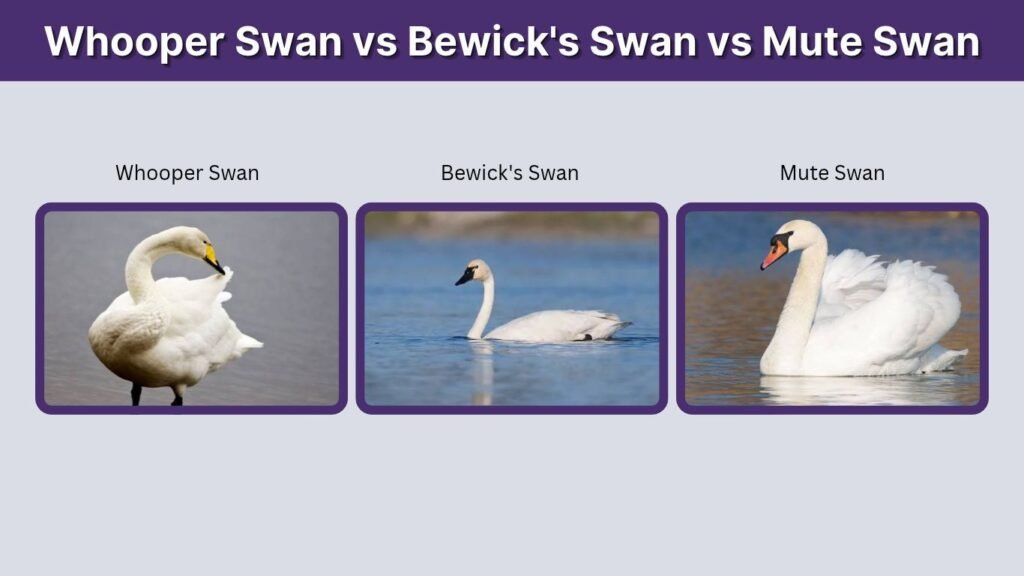
Several white swans look similar from a distance. The easiest way to tell them apart is to consider bill color, bill shape, body size, and neck posture together.
| Swan | Key bill feature | Typical appearance | Main range |
| Whooper Swan | Broad yellow wedge reaching toward the bill tip | Large body, long upright neck | Northern Eurasia; winters farther south |
| Bewick’s Swan | Smaller yellow patch concentrated near bill base | Smaller and shorter-necked than Whooper | Arctic Eurasia; winters in Europe and Asia |
| Mute Swan | Orange bill with black base and noticeable knob | Often holds its neck in an S-curve | Widespread in Europe; introduced elsewhere |
| Trumpeter Swan | Mostly black bill | Very large, long-necked swan | North America |
Whooper vs Bewick’s Swan: Whoopers are generally bigger, and the yellow on their bills extends farther forward. Bewick’s has a more compact shape and a smaller yellow area.
Whooper vs Tundra Swan: The name Tundra Swan is often used for the North American form, while Bewick’s is commonly treated as a related subspecies. Tundra Swans usually have mostly black bills, sometimes with a small yellow spot near the eye.
Predators, Lifespan, and Conservation
Adult Whooper Swans are large, strong birds, so they have relatively few natural predators. Eggs and young cygnets are more vulnerable to foxes, gulls, and other animals that raid nests or take small birds. Protective parents can be aggressive when defending their offspring.
Some ringed whoopers have lived for more than two decades.
The species is currently classified as Least Concern globally by the IUCN, meaning it is not considered globally threatened with extinction. However, that does not mean every regional population is secure. In the UK, Whooper Swan is an Amber-listed bird because of conservation concerns assessed at the national level.
Important risks include:
- Collisions with overhead power lines and other obstacles.
- Loss or disturbance of suitable wetlands and feeding areas.
- Lead poisoning where hazardous fishing or shooting materials persist.
- Disease outbreaks, including avian influenza.
Protecting wetlands, maintaining safe feeding areas, monitoring populations, and reducing collision risks all help support this spectacular species.
FAQs
Are Whooper Swans Rare or Endangered?
Whooper Swans are not globally endangered; their IUCN category is Least Concern. They may be common at favored wintering sites yet scarce elsewhere, and local conservation assessments can differ from their global status.
Can Whooper Swans Fly Long Distances?
Yes. Birds breeding in Iceland regularly cross the sea to winter in Britain and Ireland. They travel in groups, call in flight, and rest and refuel at wetlands and fields.
How Do You Pronounce “Whooper Swan”?
Whooper is pronounced “HOO-per,” with emphasis on the first syllable. The name refers to the bird’s bugling calls. “Whooping Swan” is an alternative, but Whooper Swan is standard.
Is the Whooper Swan Finland’s National Bird?
Yes. The Whooper Swan, known in Finnish as laulujoutsen, is Finland’s national bird. It breeds in the country’s lakes and wetlands, and its spring return is a familiar seasonal sight.
Do Whooper Swans Stay With Their Mates and Young?
Whoopers typically form long-term pair bonds, although pairs can change. Both adults defend the cygnets, and families often stay together through their first winter.