
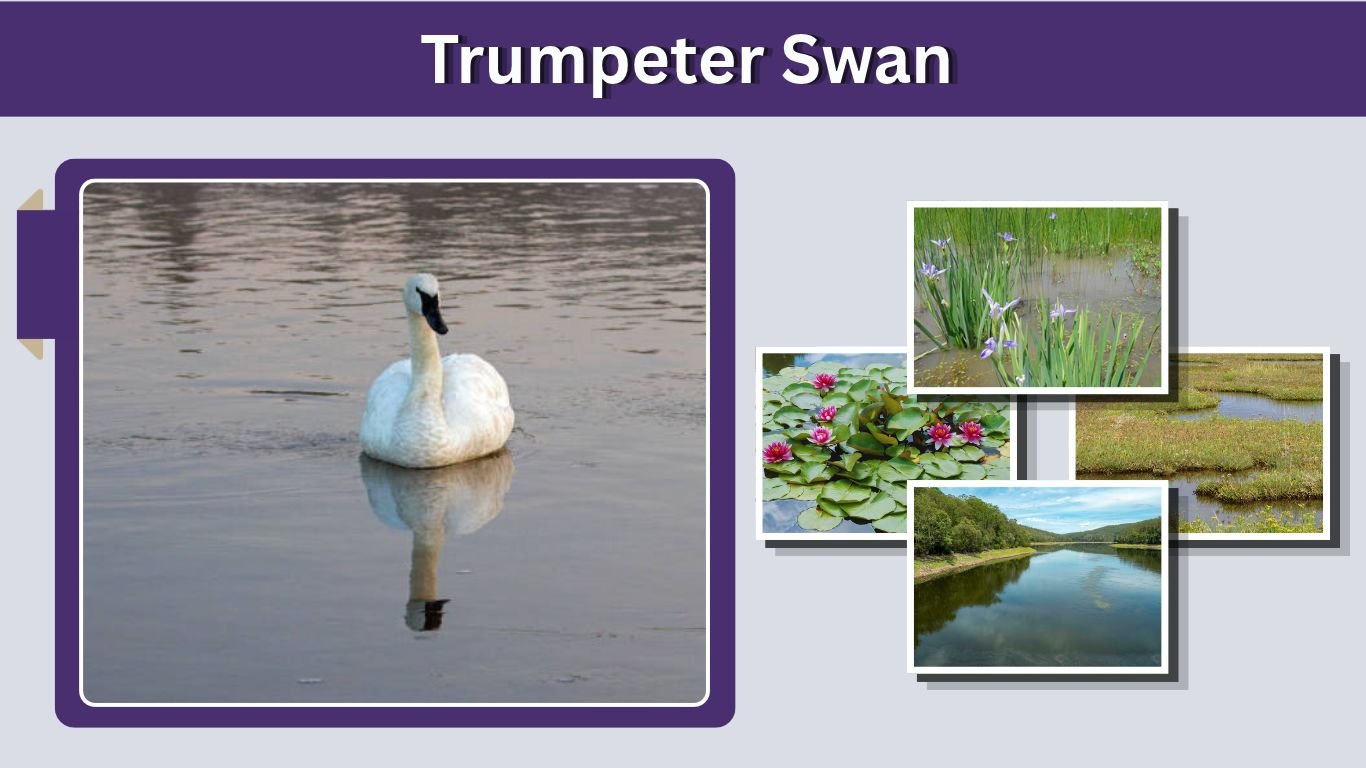
The trumpeter swan (Cygnus buccinator) is North America’s largest native waterfowl, recognized by its snow-white feathers, long neck, black bill, and deep, trumpet-like calls. These impressive birds inhabit lakes, marshes, and wetlands across parts of the United States and Canada. Once pushed toward extinction by hunting and habitat loss, trumpeter swans have made an important recovery through conservation efforts. This guide explains how to identify a trumpeter swan, how large it grows, what it eats, where it lives, and how its nesting and migration behaviors shape its life.
What Is a Trumpeter Swan?
The trumpeter swan belongs to the duck, goose, and swan family, Anatidae. Its scientific name, Cygnus buccinator, refers to the powerful voice that gives the species its common name. Unlike the similarly named children’s book The Trumpet of the Swan, a trumpeter swan is a real wild bird found in North America.
Trumpeter Swan Identification
An adult trumpeter swan appears almost entirely white, with a heavy body, broad wings, and an unusually long neck. The bill is black and slopes smoothly from the forehead. Its black facial skin extends toward the eyes, giving the face a distinctive continuous dark appearance.
Key Physical Features
- Feathers: Adults have predominantly white plumage, sometimes stained rusty orange on the head or neck by iron-rich water.
- Bill: A long, stout black bill, occasionally with a narrow reddish line along the lower edge.
- Legs and feet: Black, with webbed feet adapted for swimming.
- Neck: Long and usually held fairly straight while swimming, unlike the strongly curved neck often shown by mute swans.
- Young birds: Juveniles, called cygnets, begin grayish and gradually become white; their bills also darken with age.
Trumpeter Swan Size and Wingspan
Trumpeter swans can measure roughly 54–62 inches (138–158 cm) long, although measurements vary among individuals. Their wingspan is commonly around 6.5–8 feet, and especially large males can be broader. Mature birds often weigh more than 20 pounds, with males generally heavier than females.
Where Do Trumpeter Swans Live?
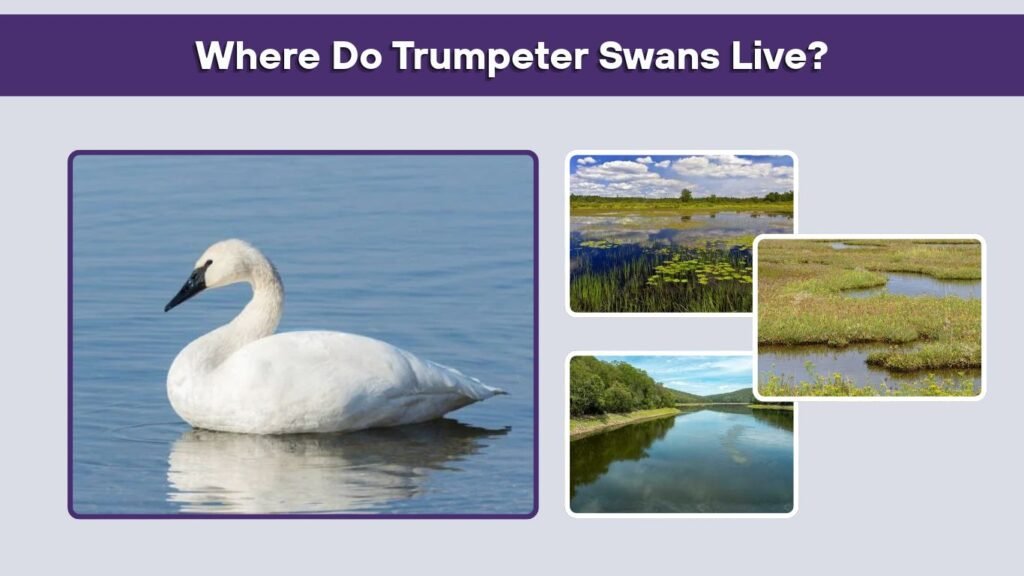
Trumpeter swans need wetlands that provide food, space to take off, and relatively safe nesting sites. They breed in Alaska, Canada, and several areas of the northern United States, including regions where wildlife restoration projects have reestablished populations. Their exact seasonal locations depend on weather, ice, and local breeding traditions.
Preferred Habitat
During warmer months, trumpeter swans use shallow lakes, freshwater ponds, marshes, slow rivers, and wetland complexes. Emergent plants provide nest material and shelter, while submerged vegetation supplies much of their food. Undisturbed shorelines and small islands can be especially valuable for nesting pairs.
In winter, birds often gather wherever water remains unfrozen. Suitable places include spring-fed rivers, sheltered lakes, coastal estuaries, and nearby agricultural fields where food is available.
Trumpeter Swan Range and Migration
Some trumpeter swans migrate long distances, while others move only locally or remain year-round. Birds breeding in coastal Alaska and western Canada may winter farther south in British Columbia and the Pacific Northwest. Interior populations can move toward ice-free waters in the Rocky Mountain region.
What Do Trumpeter Swans Eat?
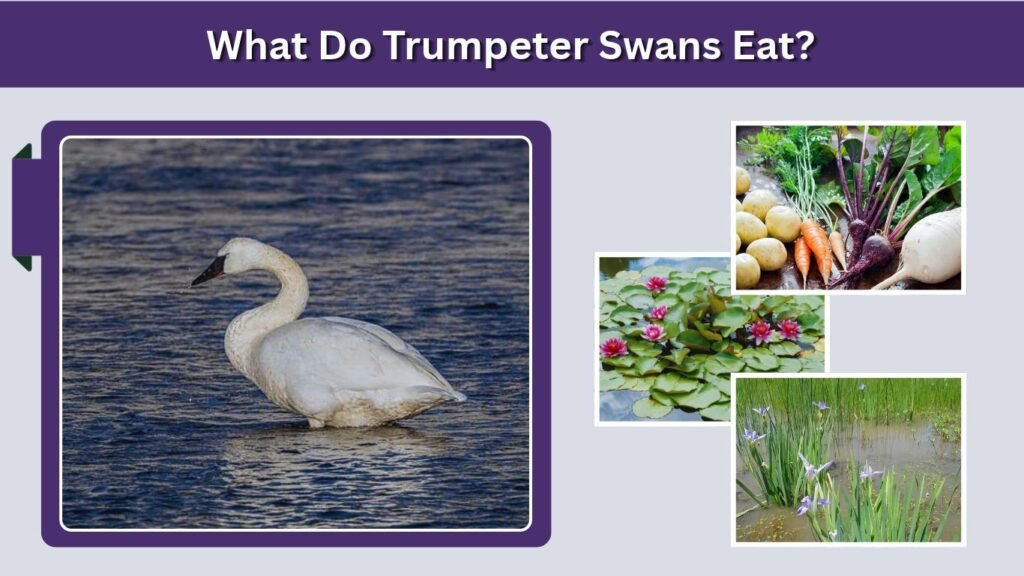
Trumpeter swans are primarily herbivores. Their long necks allow them to reach underwater plants that smaller waterfowl cannot easily access. They frequently feed by lowering their heads beneath the surface or tipping their bodies forward while keeping their tails above water.
Common Foods
- Aquatic vegetation: Pondweeds, duckweed, wild rice, and other submerged or floating plants.
- Wetland plants: Sedges, rushes, and tender shoots growing near the water’s edge.
- Roots and tubers: Nutrient-rich underground plant parts pulled from shallow water or soft sediment.
- Farm-field food: Leftover corn, barley, grains, and grasses, particularly during winter.
Cygnets also eat aquatic insects while growing. Adults occasionally consume animal matter, but plants remain their main food. Avoid feeding wild swans bread.
Trumpeter Swan Sounds and Behavior
The species is named for its loud, resonant calls, which can carry over broad stretches of water. Its voice is lower and more trumpet-like than the higher-pitched calls of a tundra swan. Males and females both vocalize, and calls help family members maintain contact during movement and flight.
How Trumpeter Swans Communicate
Head movements, neck postures, and wing displays also communicate greetings, courtship, alarm, and territorial warnings. Pairs may call together, producing a memorable chorus.
How Trumpeter Swans Fly
Taking off requires effort because these are heavy birds. They typically run across the water while beating their wings until they gain enough lift. In flight, they stretch their necks forward and hold their legs back. They often travel in pairs or small family groups, producing audible wingbeats at close range.
Trumpeter Swan Nesting and Life Cycle
Trumpeter swans form strong pair bonds, often remaining together for many years. Breeding usually begins when the birds are several years old. A pair may return to the same wetland and even reuse or rebuild an earlier nest, provided conditions remain suitable.
Nests, Eggs, and Cygnets
Their nests are substantial mounds of marsh vegetation built near water, on small islands, or among emergent plants. The female generally lays several pale eggs; a typical clutch contains about four to six, although numbers vary. Incubation takes approximately 32–34 days.
Newly hatched cygnets can swim and follow their parents soon after emerging. Both adults guard the young and lead them to feeding areas. The cygnets grow rapidly during summer and begin learning to fly before autumn. Many stay with their parents through the first winter.
How Long Do Trumpeter Swans Live?
Trumpeter swans can survive for two decades or longer, and some reach 20–30 years in the wild. Their actual lifespan depends on food availability, nesting success, severe weather, disease, and human-related hazards. Even experienced breeding adults face risks from collisions with power lines and environmental changes.
Trumpeter Swan vs. Tundra Swan vs. Mute Swan
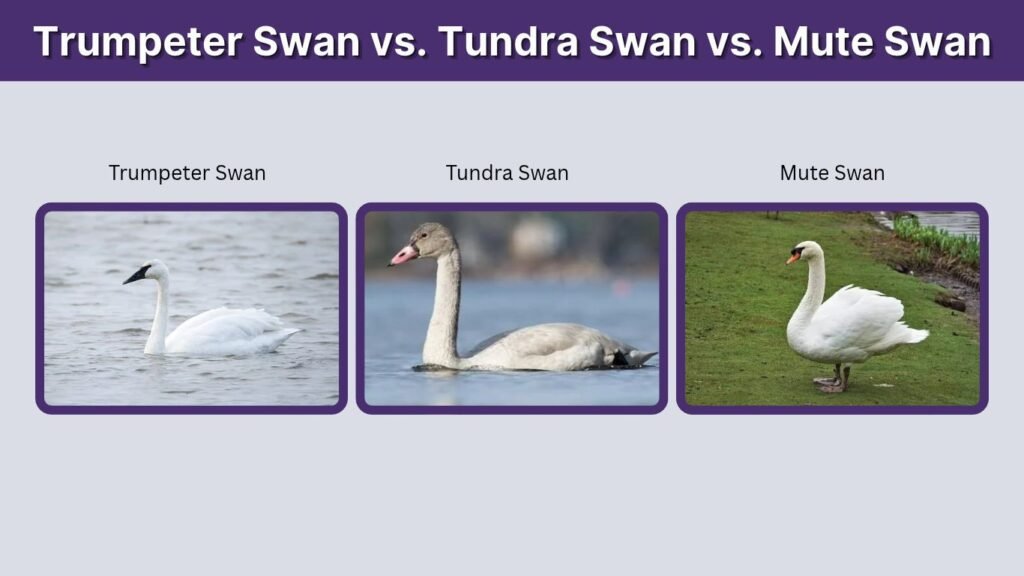
These three large white swans can appear similar at a distance, but their size, bill color, and facial shape provide useful clues. Trumpeter and tundra swans are native to North America, while the mute swan was introduced there from Eurasia. No single field mark is perfect, so birdwatchers should consider several characteristics together.
| Feature | Trumpeter Swan | Tundra Swan | Mute Swan |
| Relative size | Usually the largest | Generally smaller | Large; often slightly smaller than trumpeter |
| Bill | All-black appearance | Black, sometimes with yellow near eye | Orange with black knob at base |
| Neck on water | Often fairly straight | Usually straight | Frequently curved into an S-shape |
| Call | Deep, resonant trumpet | Higher, more wavering notes | Usually quieter; grunts and hisses |
The yellow spot near a tundra swan’s eye is helpful when present, but some tundra swans lack an obvious spot. If the bird is distant, comparing body size, bill profile, voice, and companions is more reliable than relying on one feature alone.
Are Trumpeter Swans Endangered?
Trumpeter swans were once severely reduced by commercial hunting for feathers and skins, along with changes to their wetland habitats. Protection, habitat conservation, and carefully managed reintroduction projects helped them recover. Today, the species is not classified as endangered across its North American range, although some local populations still need active protection.
Threats and Ways to Protect Them
- Wetland destruction: Drainage and development reduce nesting and feeding habitat.
- Lead poisoning: Ingested lead from contaminated habitats can be deadly.
- Power-line collisions: Large flying birds may strike poorly visible wires.
- Human disturbance: Approaching nests or cygnets too closely can disrupt breeding.
Birdwatchers can help by keeping their distance, avoiding nesting areas, and supporting wetland protection.
FAQs
Are trumpeter swans the largest swans?
Trumpeter swans are among the world’s largest swan species and are the largest native waterfowl in North America. Large adults can exceed 25 pounds, and their long necks and broad wings make them especially imposing on the water or in flight.
Do trumpeter swans mate for life?
Trumpeter swans usually form long-lasting pair bonds and often remain with the same partner for life. If one bird dies, the surviving swan may eventually pair with another mate. Both parents help protect their offspring and teach them seasonal movement routes.
Do trumpeter swans migrate every winter?
Not all of them. Northern breeding populations often migrate to areas with open water and dependable food, while some southern or interior groups remain relatively close to their nesting grounds. Their movements vary with temperature, ice cover, and local conditions.
Do trumpeter swans have teeth?
No. Like other birds, trumpeter swans do not have true teeth. Their bills have firm edges and internal ridges that help them grip and handle vegetation. Although a defensive swan may bite or strike with its wings, its bill contains no teeth.
How can you tell a trumpeter swan from a tundra swan?
Look at overall size, bill shape, and sound. Trumpeter swans are generally larger, with a heavier bill and a deep, resonant call. Tundra swans are smaller and may show a yellow spot near the eye, although this marking is not always visible.