

The great white pelican is one of the world’s largest flying waterbirds, recognizable by its broad white wings, enormous bill, and expandable throat pouch. Its scientific name is Pelecanus onocrotalus, and it lives across parts of Africa, southeastern Europe, and Asia. These social birds often gather in large flocks and sometimes cooperate to catch fish. Despite the similar names, the great white pelican and American white pelican are different species. This guide covers its identification, size, feeding habits, migration, breeding, and conservation.
What Is a Great White Pelican?
The great white pelican belongs to the family Pelecanidae and is sometimes called the eastern white or rosy pelican. It generally scoops fish from shallow water rather than plunge-diving. Its long wings support efficient soaring despite its size.
It occurs in freshwater and coastal habitats, often in flocks. Juveniles can look quite different from breeding adults.
How to Identify a Great White Pelican
An adult is a huge, mostly white bird with a long neck, broad wings, and a yellowish throat pouch. Its long bill has a hooked tip. Breeding plumage can look pinkish, while juveniles are browner. When standing with folded wings, the dark flight feathers may be mostly concealed, making the bird look almost entirely white.
Feathers, Bill, and Throat Pouch
Key identification features include:
- A predominantly white body, sometimes flushed pale pink.
- Black flight feathers that show clearly when the wings spread.
- A very long bill and expandable yellowish throat pouch.
- Pinkish legs, with facial colors changing during breeding.
- A distinctive forehead swelling in breeding adults.
The pouch scoops fish and water; the bird drains the water before swallowing.
What Does It Look Like in Flight?
In flight, white wings contrast with black flight feathers. Pelicans retract their necks, unlike storks. Flocks circle in rising warm air and soar with little flapping.
Great White Pelican Size, Weight, and Wingspan
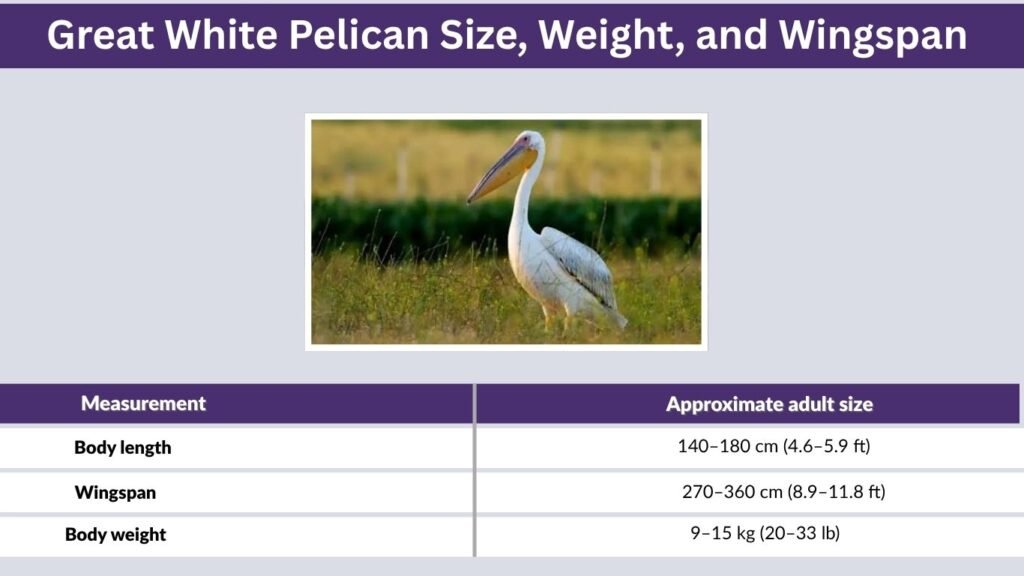
This species is among the largest pelicans. Males are generally heavier than females. Measurements vary among studies, but these ranges are representative. Body length is measured from the bill toward the tail and should not be confused with standing height. Wingspan is often the most impressive measurement when comparing the species with other birds.
| Measurement | Approximate adult size |
| Body length | 140–180 cm (4.6–5.9 ft) |
| Wingspan | 270–360 cm (8.9–11.8 ft) |
| Body weight | 9–15 kg (20–33 lb) |
Great White Pelican Compared With a Human
An upright adult can appear nearly as tall as a person, though body length differs from standing height. Its wingspan greatly exceeds a human’s arm span, enabling efficient soaring.
Where Do Great White Pelicans Live?

Great white pelicans inhabit lakes, lagoons, marshes, reservoirs, estuaries, and sheltered coasts. They prefer plentiful fish and safe resting or breeding areas. Wetlands can attract huge seasonal flocks. Open shorelines and islands provide places to rest between feeding sessions, while water levels influence whether breeding areas remain safe from land predators.
Range in Africa, Europe, and Asia
The species occurs across much of sub-Saharan Africa and parts of North Africa, southeastern Europe, and Asia. It breeds at wetlands and islands. In India, it is mainly a winter visitor.
Do Great White Pelicans Migrate?
Many populations migrate seasonally. Birds breeding in Europe and Asia may travel south toward Africa or South Asia. African birds can move regionally with food and water conditions. Migration distances vary.
What Do Great White Pelicans Eat?
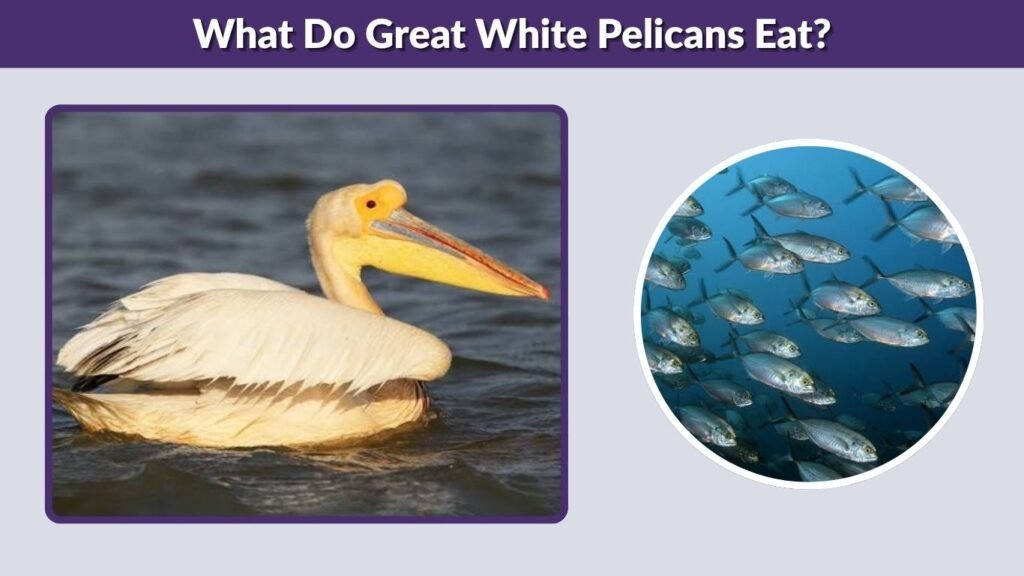
Fish dominate the great white pelican’s diet. Available species depend on water depth and local conditions. Other aquatic animals are occasional prey. The pelican does not normally carry fish around for long periods inside its pouch; after draining the water, it swallows its catch relatively quickly.
How Great White Pelicans Catch Fish
Groups often swim in lines or semicircles, guiding fish into shallow water. Birds scoop prey into their pouches, drain water, and swallow the fish. Unlike brown pelicans, they do not normally plunge-dive.
Do Great White Pelicans Eat Other Birds?
Pelicans occasionally prey on birds and eggs, as documented in some southern African colonies. These unusual cases do not represent their typical diet, which is predominantly fish.
Great White Pelican Breeding and Life Cycle
Great white pelicans nest in colonies, sometimes numbering thousands of pairs on islands or protected wetlands. Breeding seasons vary by region. Pairs build simple nests from vegetation and other materials. Unlike some other waterbirds, they usually nest on the ground rather than high in trees. Nearby water helps separate the colony from predators.
Nests, Eggs, and Incubation
Females lay one to three eggs, often two. Both parents incubate them for about 29–36 days. Colonies can expose chicks to crowding and disturbance, making protected nesting sites important.
Chicks and Parental Care
Hatchlings depend on parents for warmth and regurgitated fish. Chicks gradually feed from adults’ pouches and usually begin fledging around nine or ten weeks. Not all chicks survive.
Great White Pelican vs Other White Pelicans
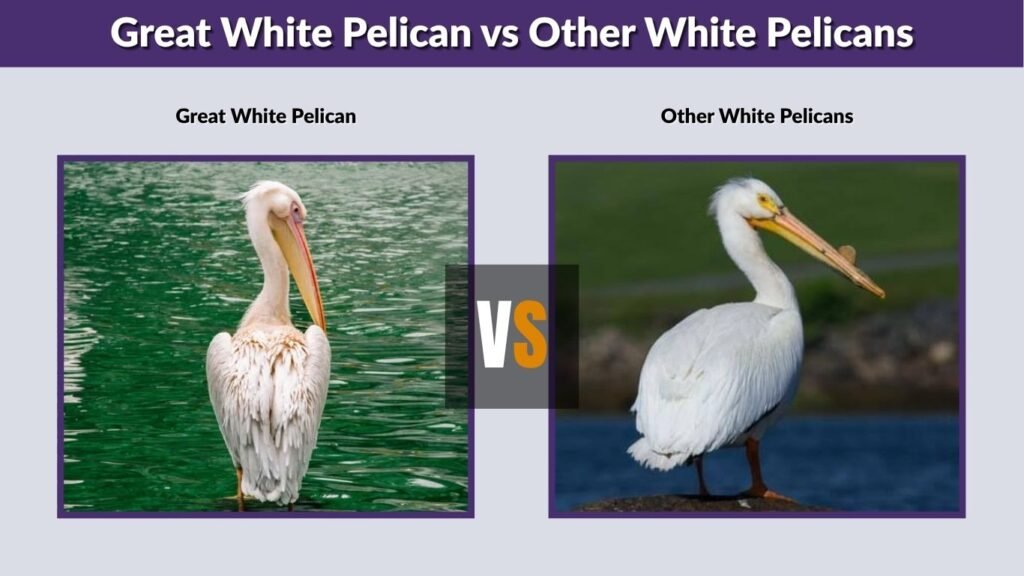
White pelicans can look similar. Geography, head shape, bill features, and breeding colors distinguish species. The American white pelican inhabits North America, while the great white pelican inhabits Africa, Europe, and Asia. Dalmatian pelicans are generally larger and more shaggy-headed, making close-up facial features helpful when their ranges overlap.
| Feature | Great white pelican | American white pelican | Dalmatian pelican |
| Scientific name | P. onocrotalus | P. erythrorhynchos | P. crispus |
| Main range | Africa, Europe, Asia | North America | Europe and Asia |
| Adult appearance | White, often pink-tinged in breeding season | Bright white with black flight feathers | Pale gray-white with shaggy head feathers |
| Notable feature | Breeding forehead swelling | Seasonal horn or plate on upper bill | Curly crest and large orange-red pouch in breeding season |
Is the Great White Pelican Found in Florida?
White pelicans seen in Florida are generally American white pelicans. Great white pelicans are not native to the United States; similar names cause confusion.
Adaptations, Predators, and Conservation
Its throat pouch captures fish, webbed feet support swimming, and broad wings enable soaring. Cooperative feeding helps birds gather fish in shallow water. These physical and social adaptations make the species effective in large, productive wetlands, though it remains dependent on healthy aquatic habitats.
Important challenges include:
- Disturbance and habitat loss at wetland breeding colonies.
- Changes to water levels and the availability of fish.
- Collisions with power lines and other human-made structures.
- Predation on eggs or chicks, particularly at poorly protected colonies.
The great white pelican is classified globally as Least Concern, although local populations and colonies still face conservation pressures. Protecting wetlands and safe breeding sites is important for maintaining healthy populations.
FAQs
These answers clarify the pelican’s lifespan, behavior, and distinctive bill.
How Long Does a Great White Pelican Live?
Great white pelicans can live for many years, with some sources reporting lifespans approaching 30 years in the wild and longer under managed care. Actual survival depends on food availability, disease, habitat conditions, and human-related threats. Individual birds may die much younger.
Is the Great White Pelican Endangered?
No. The great white pelican is currently assessed globally as a species of Least Concern. That does not mean every colony is secure. Wetland degradation, breeding-site disturbance, and changes in food supplies can still threaten populations in particular regions.
What Is the Bump on a Great White Pelican’s Beak?
Breeding great white pelicans may develop a noticeable forehead swelling near the base of the bill. This should not be confused with the seasonal plate or horn farther along the upper bill of a breeding American white pelican. Both features are associated with breeding appearance.
Are Great White Pelicans Dangerous to Humans?
Great white pelicans are not generally aggressive toward people, but they are powerful wild birds with large bills. Any cornered or handled bird may defend itself. Observe from a distance, never attempt to feed one by hand, and avoid approaching nests or chicks.
What Sounds Do Great White Pelicans Make?
Great white pelicans are often relatively quiet away from breeding colonies. At nests, adults and chicks can produce grunts, croaks, and begging noises. Vocal activity varies with age and situation, and these sounds are not usually as familiar as the calls of many smaller waterbirds.