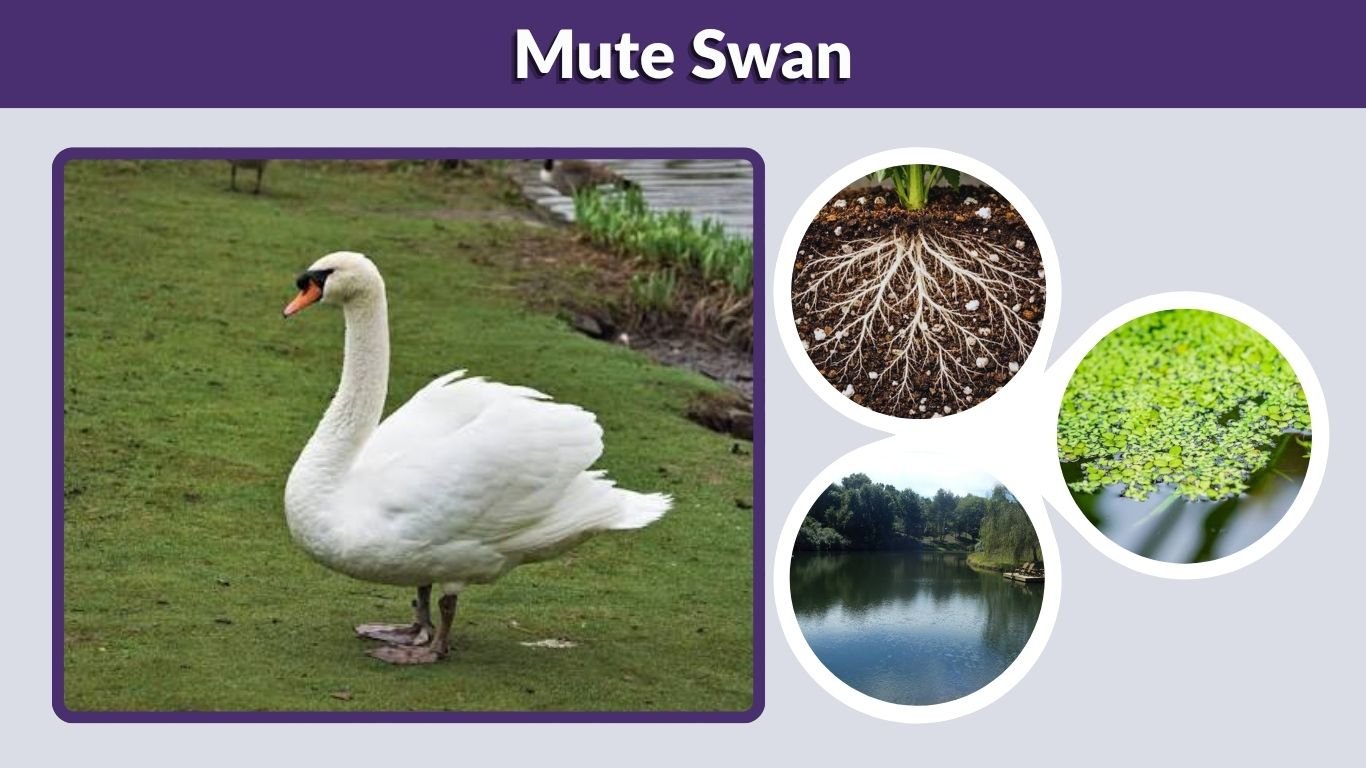
The Mute Swan is an elegant waterbird recognized by white feathers, a curved neck, and a bright orange bill. Often seen gliding across lakes and park ponds, it is a familiar symbol of grace. Yet this beautiful bird can defend nests fiercely and compete with other waterfowl. Native to parts of Eurasia, Mute Swans were introduced to North America and established wild populations. Their appearance, diet, habitat, and ecological effects make them fascinating to study.
What Is a Mute Swan?
The Mute Swan (Cygnus olor) is a large member of the duck, goose, and swan family, Anatidae. Its familiar appearance includes a long S-shaped neck, a heavy white body, and a prominent knob at the base of an orange bill.
Despite its name, the bird is not silent. It makes hisses, grunts, snorts, and muffled trumpet-like calls. The name mainly reflects its quieter voice compared with the loud, carrying calls of other swan species.
Mute Swans form long-lasting pairs and spend much of their time feeding on underwater plants.
How to Identify a Mute Swan
Adult Mute Swans are among the largest waterfowl, and their orange bills make them easy to distinguish from most other white swans.
Key identification features include:
- Body: Large, heavy, and almost entirely white in adults.
- Neck: Very long and usually curved into a graceful S shape.
- Bill: Orange with black at the base and a noticeable fleshy black knob.
- Face: Black skin around the bill and eyes.
- Legs and feet: Usually dark gray to black.
- Wings: Broad, sometimes held partly raised above the back while swimming.
- Young birds: Often grayish-brown or white, with less colorful bills than adults.
The curved neck and orange bill with its black knob are especially useful in photographs.
Male vs. Female Mute Swan
Male Mute Swans are commonly called cobs, while females are pens. Both sexes have similar white plumage, so identifying them by color is difficult.
Males tend to be larger, with a more prominent black knob during breeding season. These traits overlap, however, so they are not definitive.
What Does a Juvenile Mute Swan Look Like?
Young swans, called cygnets, may have gray or white down. Gray cygnets develop mottled juvenile feathers before turning white. Their bills are initially dull rather than bright orange.
How Big Is a Mute Swan?
Adults typically measure about 127–152 cm (50–60 inches) long, with a wingspan of 208–238 cm (6.8–7.8 feet). Weight varies considerably, with adults ranging roughly 5.5–14.3 kg (12–32 pounds).
It is much larger than most ducks and geese, especially noticeable when standing on shore or flying.
Where Do Mute Swans Live?
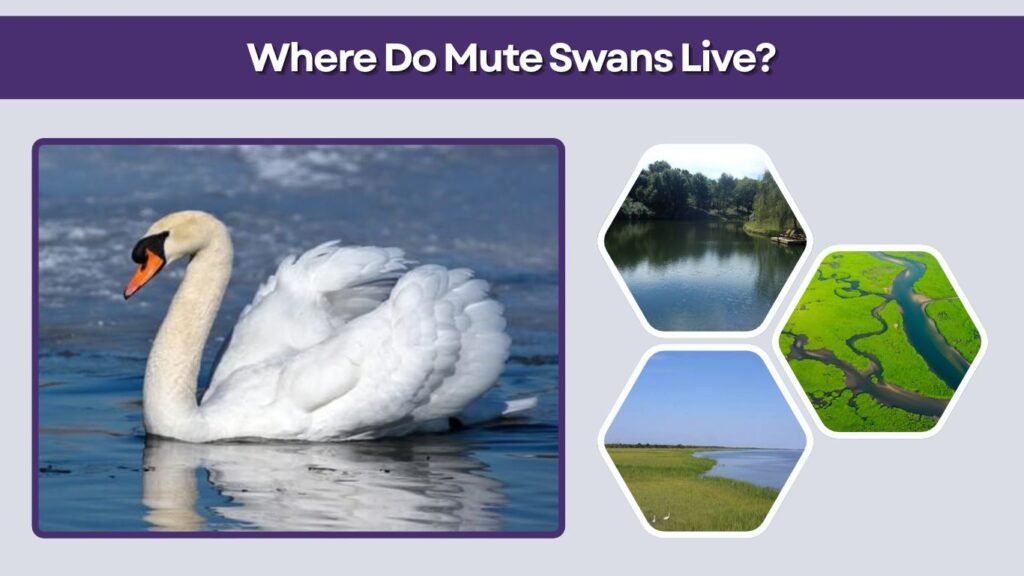
Mute Swans are native to parts of Europe and Asia, where they inhabit lakes, rivers, and coastal wetlands.
Preferred Habitat
They prefer sheltered water with accessible aquatic plants. Suitable places include:
- Freshwater lakes and ponds
- Slow-moving rivers and canals
- Marshes and reservoirs
- Coastal lagoons and sheltered estuaries
- Large urban park ponds
Shallow water makes submerged plants accessible. Nesting pairs also need banks, islands, or dense waterside vegetation.
How Did Mute Swans Reach North America?
People imported Mute Swans from Europe in the nineteenth and early twentieth centuries for ornamental ponds. Escaped or released birds established breeding populations.
Introduced populations occur in the Northeast, Great Lakes, Mid-Atlantic, and scattered western areas, including some California waters.
What Do Mute Swans Eat?
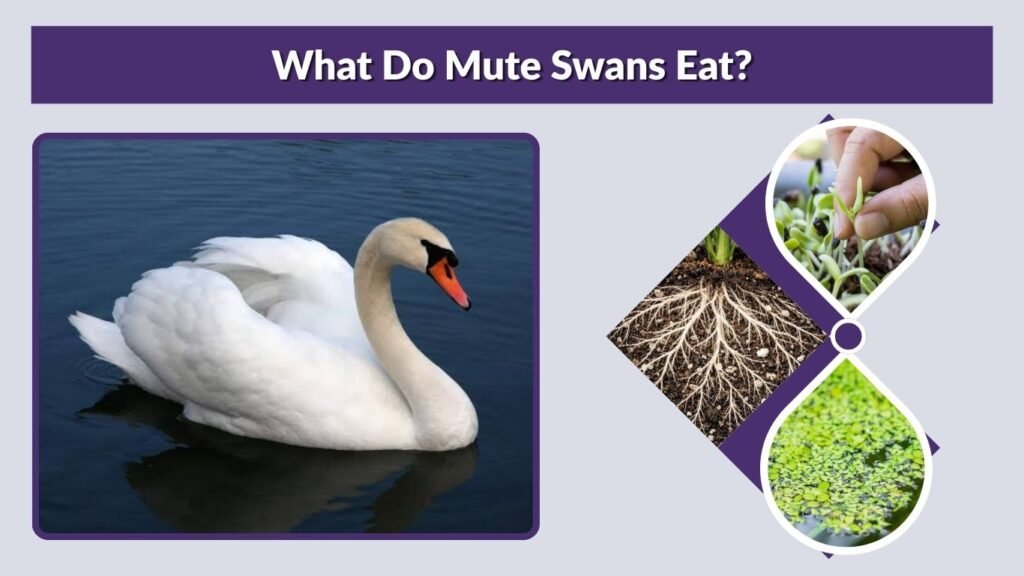
The Mute Swan diet consists primarily of aquatic plants, particularly submerged leaves, shoots, roots, and other vegetation. Common foods include pondweeds, eelgrass, algae, and various water grasses.
They also consume insects, snails, mollusks, tadpoles, and occasional small fish, but plants dominate the diet.
To reach deeper plants, a swan tips forward, raising its tail. Its powerful bill can uproot vegetation, sometimes in large quantities.
Bread and other human handouts are not necessary for wild swans and can encourage crowding. Watching them forage naturally is generally better than feeding them.
What Sounds Do Mute Swans Make?
Mute Swans are quieter than Trumpeter Swans, but they produce several recognizable sounds. They may hiss forcefully when frightened or defending territory, and their calls can resemble muffled trumpeting, grunting, or snorting.
One of their most distinctive sounds happens during flight. As the large wings beat, they produce a rhythmic humming or whistling noise that can carry over a considerable distance.
Cygnets peep softly to maintain contact and more loudly when distressed.
Mute Swan Nesting and Life Cycle
Mute Swans usually breed in spring, although timing depends on the climate and local conditions. Pairs build large nests near the water, often on a sheltered shoreline, small island, or thickly vegetated bank.
Eggs and Incubation
The male gathers reeds, grasses, and rushes, while the female shapes the nest cup.
A typical clutch contains 2–5 eggs, and incubation generally lasts 34–41 days. Fresh eggs may have a blue-green tint before becoming paler and chalkier.
Raising Cygnets
Cygnets hatch covered in down and can move, swim, and begin feeding soon after hatching. Both parents protect the young, and the family often travels together across the water.
Young swans may fly at around 65 days old. Parents can aggressively defend the brood.
Mute Swan vs. Trumpeter Swan vs. Tundra Swan
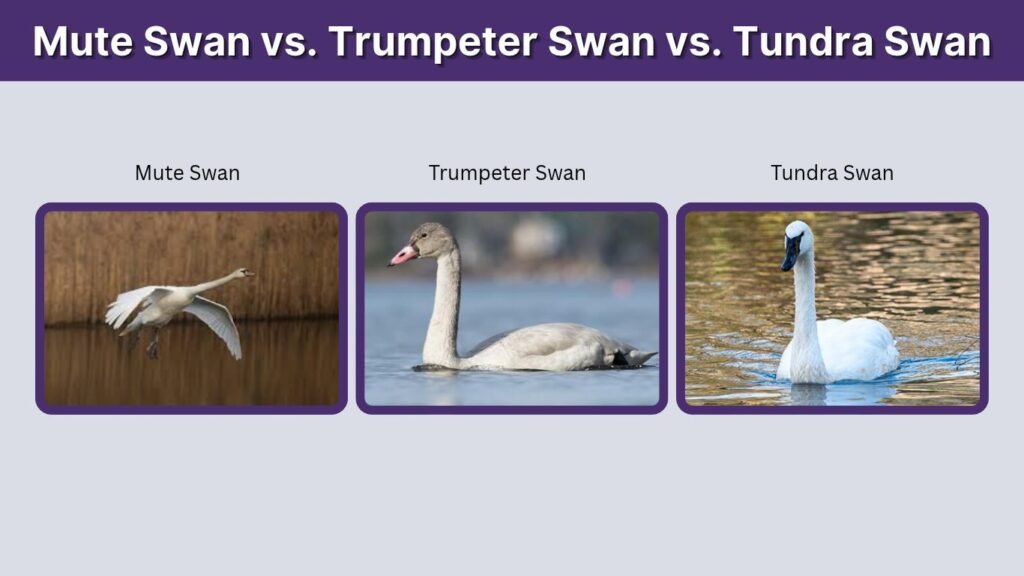
These three white swans can look similar at a distance, but their bills and overall size offer useful clues.
| Feature | Mute Swan | Trumpeter Swan | Tundra Swan |
| Adult bill | Orange with black knob | Black | Mostly black, sometimes yellow near eye |
| Neck posture | Often deeply S-curved | Usually straighter | Usually straighter |
| Relative size | Very large | Typically slightly larger | Smaller |
| Common voice | Hisses and muffled calls | Loud trumpet-like calls | Higher-pitched calls |
Bill color is the easiest starting point: Mute Swans have orange bills with black knobs, unlike the mostly black bills of Trumpeter and Tundra Swans.
Are Mute Swans an Invasive Species?
Mute Swans are native in parts of Eurasia but nonnative in North America. Wildlife agencies in several U.S. states classify or manage them as invasive because established populations can affect native wetlands.
Why Are Mute Swans a Problem in Some Areas?
Their large appetites can reduce submerged aquatic vegetation that fish and native waterbirds need for food and shelter. Territorial pairs may also chase ducks, geese, and other swans away from nesting or feeding areas.
Impacts depend on swan numbers, vegetation, and local conditions; one bird does not automatically mean ecosystem damage.
How Are Invasive Mute Swans Managed?
Management approaches differ by state and can involve population monitoring, restrictions on releases, nest or egg management, and authorized removal. These measures are intended to protect habitats and native wildlife but can be controversial.
Never attempt unauthorized capture, relocation, or nest disturbance; check local wildlife rules.
Can Mute Swans Fly and Do They Migrate?
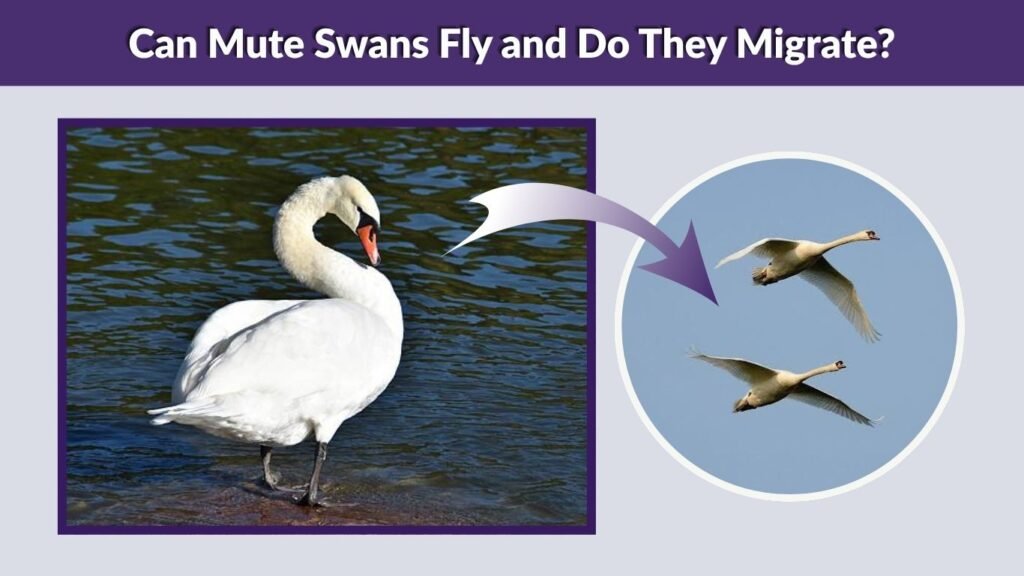
Yes. Mute Swans are strong fliers despite their large bodies. They take off with a running start across water and fly with the neck extended. Their wingbeats produce the characteristic humming sound.
Migration varies across their range. Some populations undertake seasonal movements, while established pairs in milder areas may remain close to their territories year-round. Severe winters or frozen waterways can force birds to seek open water elsewhere.
FAQs
1. Why is it called a Mute Swan if it makes sounds?
The name refers to its quiet voice compared with other swans, especially the loud Trumpeter Swan. Mute Swans still hiss, snort, grunt, and produce muffled calls. Their wings also make a humming sound during flight, so they are not silent.
2. Are Mute Swans dangerous to humans?
Mute Swans are usually peaceful when left undisturbed, but breeding pairs can become highly territorial. Adults may hiss, spread their wings, or chase people who approach nests or cygnets. Give them plenty of space, particularly during spring and early summer.
3. What is the lifespan of a Mute Swan?
Mute Swans can survive for many years when food and habitat are suitable. A bird recorded in North America lived at least 26 years and 9 months. Most individuals do not reach that age because of disease, accidents, or hazards.
4. Are Mute Swans native to Michigan or California?
No. Mute Swans are native to parts of Eurasia and were brought to North America for ornamental ponds and estates. Introduced populations now occur in Michigan and California locations. Their legal status and wildlife management rules differ between those states.
5. Do Mute Swans mate for life?
Mute Swans form pair bonds that last for several breeding seasons, sometimes for life. However, lifelong pairing is not guaranteed. A swan may find another mate if its partner dies, and pairs can occasionally separate even when both birds survive.