
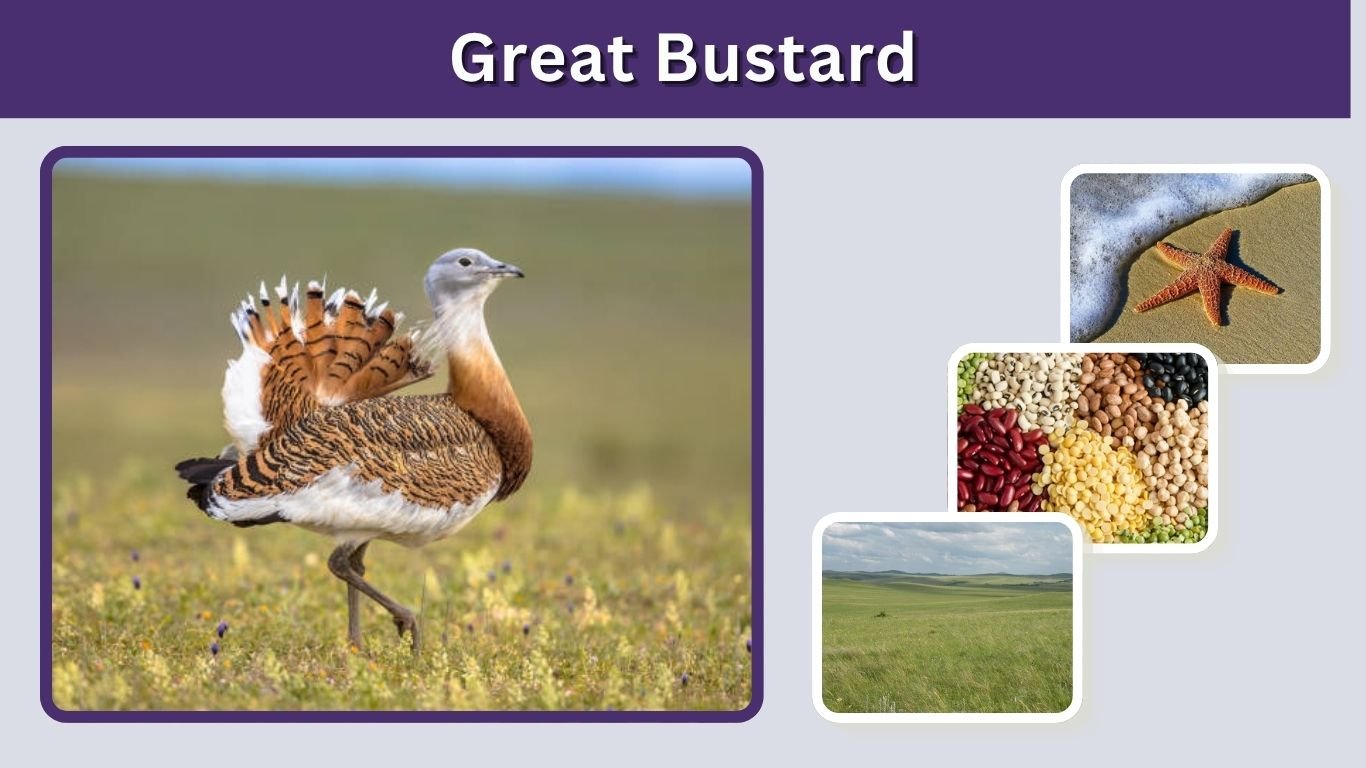
The great bustard (Otis tarda) is a massive ground-dwelling bird famous for its impressive size, powerful flight, and spectacular mating display. Native to open grasslands and farmland across parts of Europe and Asia, it is among the heaviest birds capable of flying. Adult males are far larger than females and become especially striking during the breeding season. Despite its strength and remarkable appearance, the great bustard faces serious conservation challenges. This guide explores its identification, wingspan, habitat, diet, breeding behavior, and the efforts helping protect it.
What Is a Great Bustard?
The great bustard is a bird in the bustard family, Otididae, and the sole living species in the genus Otis. It spends most of its time walking and feeding on the ground. Its heavy body and cautious behavior suit open landscapes where it can spot danger from a distance. Although it resembles an enormous turkey, it is not closely related to turkeys.
Outside the breeding season, great bustards may gather in groups called droves. Males and females often form separate groups.
Great Bustard Identification
The great bustard has a thick neck, broad body, and relatively small head. Its sandy, chestnut, black, gray, and white plumage provides camouflage in grassland.
Key Physical Features
- Head and neck: Mainly pale gray, with a long, sturdy neck.
- Back and wings: Warm brown or chestnut feathers marked with dark bars.
- Underparts: Predominantly white, with a reddish-brown band across the lower neck and upper chest in mature males.
- Male whiskers: Long white ornamental feathers extending beside the bill during the breeding season.
- Legs and feet: Strong gray legs with three forward-facing toes, adapted for walking and running.
Male vs. Female Great Bustard
Males have heavier chests, thicker necks, and much greater body mass. Their breeding plumage includes white whiskers and richer chestnut coloring. Females are smaller and more discreetly patterned, helping camouflage them while nesting.
Great Bustard Size, Weight, and Wingspan
Great bustards rank among the world’s heaviest flying birds. Adult males often weigh about 6–18 kilograms (13–40 pounds), while females usually weigh roughly 3.5–5 kilograms (8–11 pounds). Body size varies with age, season, and population, and exceptionally heavy males have been recorded above these typical figures.
How Big Is a Great Bustard?
Males commonly stand around 90–115 centimeters (35–45 inches) tall. Their wingspan can reach approximately 210–250 centimeters (6.9–8.2 feet). Females are shorter, commonly around 75–85 centimeters tall, with wings spanning roughly 170–190 centimeters.
This dramatic difference is called sexual size dimorphism. A mature male may weigh several times as much as a female.
Where Do Great Bustards Live?

Great bustards favor broad, treeless landscapes where they can forage and spot predators. Their range is fragmented across Europe and Asia. Some populations remain resident, while others move seasonally when snow makes food inaccessible.
Habitat and Global Distribution
Typical habitats include natural steppe, extensive grassland, pasture, and low-intensity agricultural land. In parts of Europe, cereal fields, lucerne, and other crops provide feeding opportunities. However, frequent disturbance, dense development, and loss of suitable nesting cover can make farmland unsuitable.
Spain supports an important European population. Great bustards also occur in central and eastern Europe and eastward toward Mongolia and China. Their distribution is patchy.
Great Bustards in the UK
Great bustards were formerly bred in Britain but disappeared as a native breeding population during the nineteenth century. A reintroduction project began on Salisbury Plain in Wiltshire in 2004. The Great Bustard Group reported approximately 50 birds in the UK population in summer 2026, including birds born and raised in the wild.
Visitors near Salisbury or Stonehenge should use organized viewing opportunities and respect restricted nesting areas.
What Do Great Bustards Eat?

The great bustard is an omnivore, eating both plants and animals. Its diet changes with the seasons and the bird’s age. Adults often consume mostly vegetable matter outside summer, while growing chicks depend heavily on insects for protein. The species feeds by walking slowly and picking food from the ground or nearby plants.
Common Foods
- Green plants: Tender leaves, shoots, flowers, and grasses.
- Seeds and crops: Grain, seeds, and agricultural plants such as lucerne.
- Invertebrates: Grasshoppers, beetles, caterpillars, earthworms, and other small animals.
- Occasional vertebrates: Small lizards, rodents, and similar prey when available.
Great Bustard Mating Display and Reproduction
During spring, males gather at display areas called leks, where females select mates. Males compete mainly through visual performances rather than elaborate songs. Their displays can make a brown bird appear almost white.
The Famous Great Bustard Display
A displaying male inflates its throat pouch, lifts and twists its tail, and turns white feathers outward across its body. Its neck seems to disappear into a mass of pale plumage, creating a rounded, flower-like shape. The bird may repeat the performance while nearby females inspect the competing males.
Great bustards do not typically form lifelong breeding pairs. After mating, males generally take no part in incubating eggs or raising chicks.
Great Bustard Eggs and Chicks
The female makes a shallow nest scrape on the ground, often hidden among grasses or crops. She usually lays two or three mottled eggs. Their camouflage makes them difficult to spot but does not protect them from farm machinery, predators, or disturbance.
Chicks can leave the nest soon after hatching. Their mother guides them to insect-rich feeding areas and protects them from predators and bad weather.
Can Great Bustards Fly?
Yes. Despite their weight, great bustards fly with strong wingbeats. Their wings show white patches contrasting with dark flight feathers, while their neck extends forward and their legs trail behind.
Great Bustard Calls and Behavior
Great bustards are generally quiet. Adults may give low grunts or bark-like alarm calls, while chicks produce higher-pitched contact sounds. Visual signals play a major role during courtship. When disturbed on the ground, birds often walk or run away before taking flight, depending on the situation.
Great Bustard vs. Great Indian Bustard
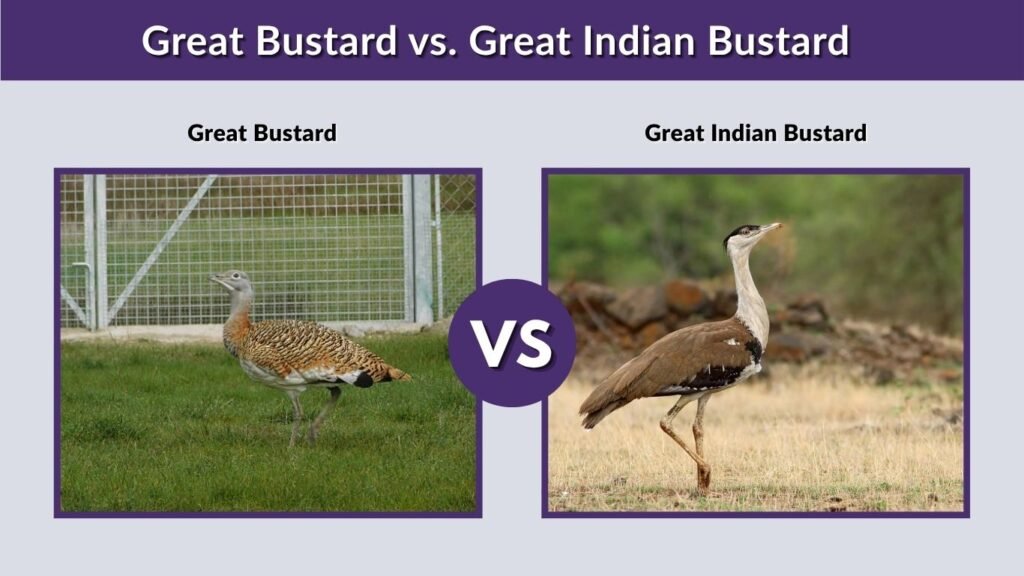
These similarly named birds are different species. The great bustard (Otis tarda) lives across parts of Europe and Asia. The great Indian bustard (Ardeotis nigriceps) is native to the Indian subcontinent and is especially associated with arid grasslands in Rajasthan. They belong to the same family but have different appearances and conservation needs.
| Feature | Great Bustard | Great Indian Bustard |
| Scientific name | Otis tarda | Ardeotis nigriceps |
| Main range | Europe and temperate Asia | Indian subcontinent |
| Appearance | Gray neck, barred brown back, male white whiskers | Distinctive black crown and pale neck |
| IUCN status | Endangered | Critically Endangered |
| Major concerns | Habitat change, disturbance, collisions | Habitat loss, power-line collisions, tiny population |
Great Bustard Conservation Status
The great bustard is classified as Endangered on the IUCN Red List, based on its 2023 assessment. Populations have declined because many traditional grassland landscapes have been altered, fragmented, or disturbed. Protecting breeding sites is particularly important for a bird whose eggs and chicks develop on the ground.
Major Threats
- Intensive agriculture: Early mowing, harvesting, and unsuitable field management can destroy nests.
- Habitat fragmentation: Roads, development, and land-use changes separate suitable feeding and breeding areas.
- Power lines: Large birds may collide with overhead cables during flight.
- Disturbance and illegal killing: Human activity can disrupt breeding or directly reduce survival.
Conservation programs protect grasslands, encourage wildlife-friendly farming, reduce dangerous power-line exposure, and monitor breeding populations.
FAQs
Is the great bustard the heaviest flying bird?
The great bustard is among the heaviest living birds capable of sustained flight. Large males can weigh well over 15 kilograms, although body mass varies considerably. It is often cited alongside the kori bustard when discussing the world’s heaviest flying birds.
Where is the great bustard found?
Great bustards occur in scattered populations across Europe and temperate Asia, including important areas in Spain and farther east. They prefer open grasslands, steppes, and suitable farmland. A small restored population also lives on Salisbury Plain in southern England.
What does a female great bustard look like?
Females are much smaller and lighter than mature males. They have grayish necks, barred brown upperparts, and white underparts but lack the exaggerated white whiskers and bulky breeding appearance of older males. Their subdued coloration helps conceal them while nesting.
How many eggs does a great bustard lay?
A female great bustard usually lays two or three eggs in a shallow ground nest. She incubates them and raises the chicks without help from the male. Nesting success depends on suitable cover, food supply, weather, and protection from disturbance.
Are great bustards endangered?
Yes. The great bustard is globally classified as Endangered under the IUCN’s 2023 assessment. Its numbers are declining in parts of its range because of habitat changes and other threats. The similarly named great Indian bustard is a separate, Critically Endangered species.