
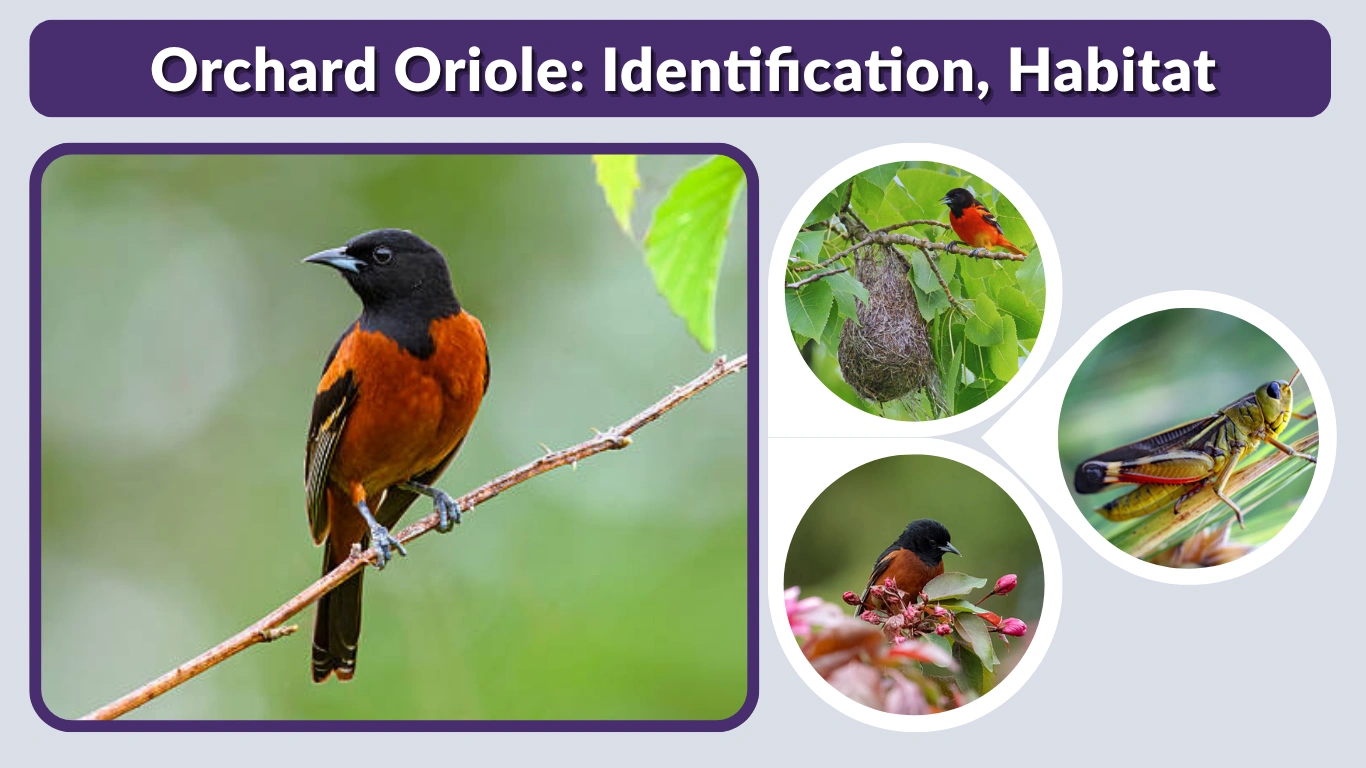
The Orchard Oriole (Icterus spurius) is a small yet beautiful songbird found across North America. Known for its rich chestnut and black coloration in males and yellow-green tones in females, this species is often overlooked compared to its brighter cousin, the Baltimore Oriole. Despite its subtle appearance, the Orchard Oriole is admired for its musical song and graceful behavior. Commonly found in open woodlands, orchards, and farmlands, it is a fascinating bird for both beginners and experienced birdwatchers.
Orchard Oriole Identification
Physical Appearance
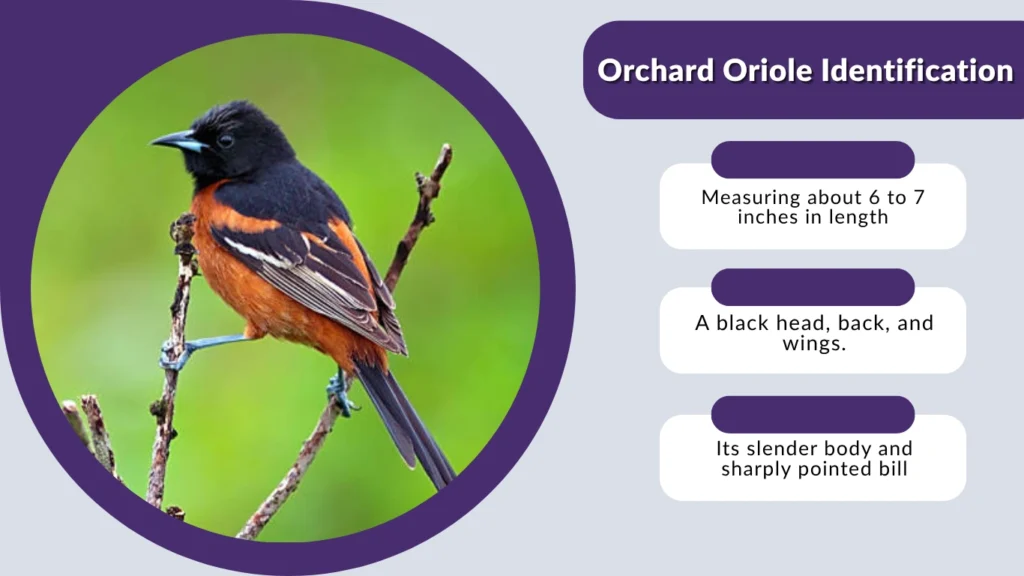
The Orchard Oriole is the smallest of the North American orioles, measuring about 6 to 7 inches in length with a wingspan of around 8 to 10 inches. Adult males are distinctive, displaying deep chestnut (dark orange) underparts paired with a black head, back, and wings. Females and immature birds, however, appear much different, featuring olive-yellow or greenish plumage with subtle wing bars. Young males resemble females during their first year before developing their darker coloration.
Key Identification Features
One of the key features of the Orchard Oriole is its slender body and sharply pointed bill, which is well-suited for feeding on insects and nectar. Unlike the Baltimore Oriole, it lacks bright orange coloring, instead showing a darker, chestnut hue. Its smaller size and more delicate build also help distinguish it from other oriole species. Additionally, the bird often stays hidden in foliage, making careful observation important.
Songs and Calls
The Orchard Oriole produces a fast, musical warbling song that is softer and less flute-like than that of the Baltimore Oriole. Its song often sounds like a series of rapid, flowing notes, sometimes compared to a hurried melody. These birds also make short, sharp calls used for communication. Listening carefully is often the best way to locate them, as they are not always easy to see.
Orchard Oriole vs Baltimore Oriole
Size Differences
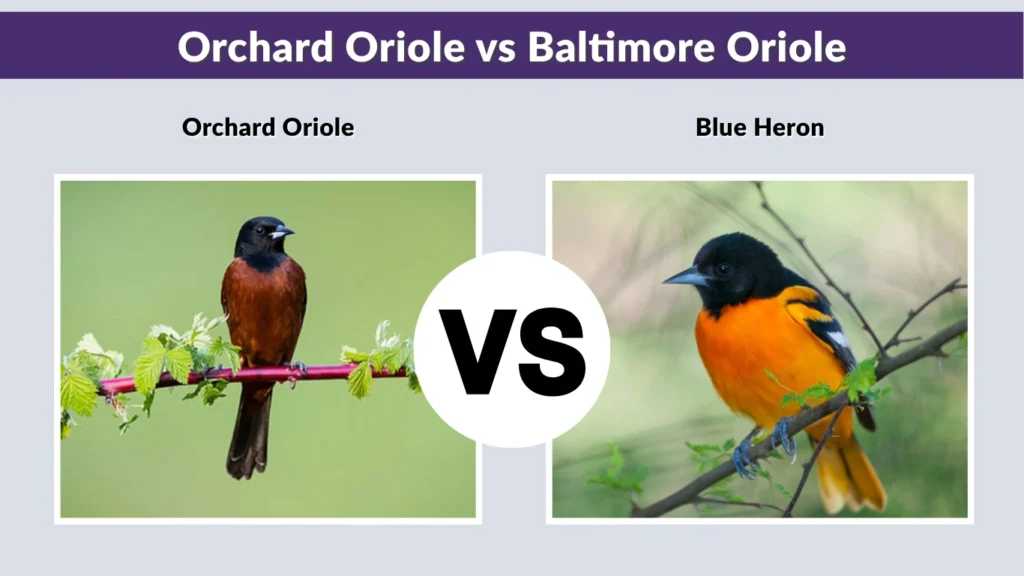
One of the most noticeable differences between the Orchard Oriole and the Baltimore Oriole is size. The Orchard Oriole is significantly smaller and more slender, giving it a more delicate appearance when perched or in flight.
Color Comparison
Color is another important distinguishing factor. While the Baltimore Oriole displays bright orange and black plumage, the Orchard Oriole features a deeper chestnut color combined with black. Females of both species also differ, with Orchard Oriole females appearing more yellow-green and less vibrant.
Behavior Differences
Behaviorally, Orchard Orioles tend to be more discreet and less aggressive than Baltimore Orioles. They are quieter, often staying hidden among leaves and branches, which can make them harder to spot. Their subtle nature adds to their charm but also requires more patience from birdwatchers.
Orchard Oriole Habitat and Distribution
Preferred Habitat
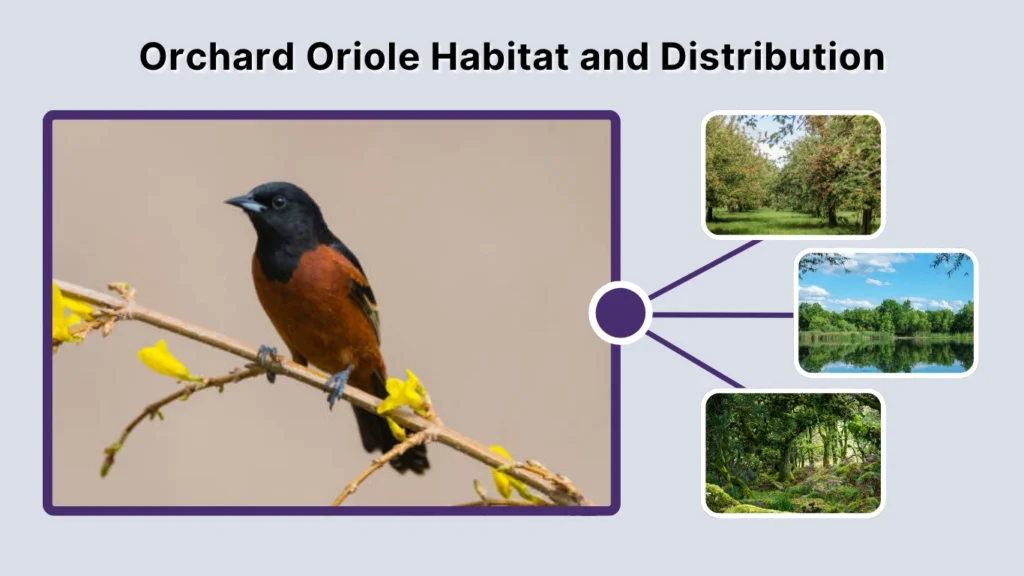
Orchard Orioles prefer open habitats with scattered trees rather than dense forests. They are commonly found in orchards, farmland, river edges, and suburban areas with suitable vegetation. These birds favor areas with a mix of trees and open space, which provide both food sources and nesting sites.
Geographic Range
The Orchard Oriole breeds in eastern and central North America, including much of the United States and parts of southern Canada. During the winter months, it migrates to Central America and northern South America, where warmer climates support its feeding needs.
Seasonal Distribution
This species is a long-distance migrant with clear seasonal patterns. It arrives in breeding areas during spring, often slightly earlier than the Baltimore Oriole. After a relatively short breeding season, it begins migrating south again by late summer, making it one of the earlier departing migratory songbirds.
Orchard Oriole Diet and Feeding Behavior
Natural Diet
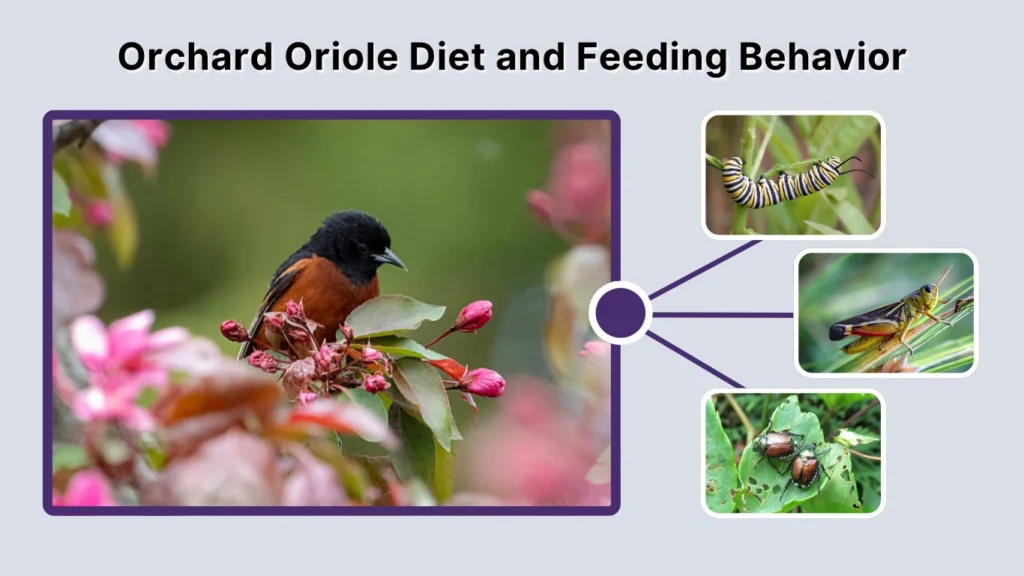
The Orchard Oriole has a diverse diet that changes throughout the year. During the breeding season, it primarily feeds on insects such as caterpillars, grasshoppers, beetles, and ants. These protein-rich foods are essential for raising young. In addition to insects, it also consumes fruits, berries, and nectar from flowers.
Feeding Habits
These birds are active foragers, often moving quickly through trees and shrubs in search of food. They may hang upside down or cling to branches while searching for insects. Compared to other orioles, they tend to feed more quietly and discreetly, blending into their surroundings.
How to Attract Orchard Orioles
Attracting Orchard Orioles to your yard can be rewarding for bird enthusiasts. Offering fresh fruit like orange slices, along with nectar feeders, can help draw them in. Planting native trees and shrubs that produce berries or flowers is another effective way to create a welcoming habitat. Avoiding pesticides is also important, as it helps maintain a healthy insect population for them to feed on.
Orchard Oriole Nesting and Reproduction
Nest Structure
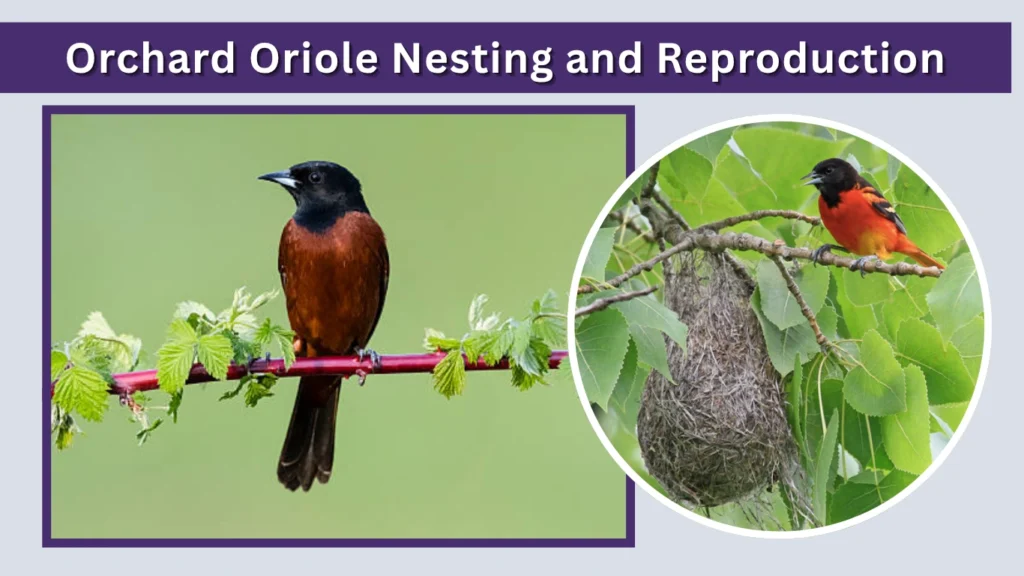
The Orchard Oriole is known for its beautifully crafted hanging nest, similar in style to other orioles but often smaller and more delicate. The nest is shaped like a deep pouch and is suspended from the tips of tree branches. It is carefully woven using grasses, plant fibers, and sometimes fine materials such as hair or string. This intricate design helps protect the eggs from predators and harsh weather.
Breeding Season
The breeding season for Orchard Orioles typically occurs from late spring to early summer. After arriving at their breeding grounds, males establish territories and attract females through song and display. The female lays around 3 to 7 eggs, which are usually pale bluish or grayish with dark markings. These eggs are well-camouflaged within the nest.
Parental Care
The female is mainly responsible for incubating the eggs, which takes about 12 to 14 days. Once the chicks hatch, both parents share the responsibility of feeding them. They provide a steady supply of insects and other nutritious food to support rapid growth. The parents remain highly attentive and protective until the young birds are ready to leave the nest.
Orchard Oriole Migration Patterns
Migration Timing
Orchard Orioles are among the earliest migrating songbirds. They typically arrive in their breeding areas during early spring, often before many other species. Interestingly, they also depart earlier than most orioles, beginning their southward migration as early as late July or August.
Migration Routes
These birds travel between North America and their wintering grounds in Central America and northern South America. Their migration routes often follow areas with abundant food sources, such as forests, gardens, and agricultural land. During migration, they rely heavily on nectar and fruits for energy.
Migration Behavior
One unique aspect of the Orchard Oriole is its relatively short stay in its breeding range. Compared to other migratory birds, it spends less time nesting and raising young before heading south again. This rapid migration cycle makes timing crucial for birdwatchers hoping to observe them.
Orchard Oriole Behavior and Interesting Facts
Unique Behaviors
Orchard Orioles are active and agile birds, constantly moving through trees in search of food. Despite their activity, they are generally quiet and less conspicuous than other orioles. They prefer to stay hidden among leaves, which makes spotting them a rewarding challenge. Their quick movements and subtle presence help them avoid predators.
Fun Facts
The Orchard Oriole is the smallest oriole species found in North America. Young males do not develop their characteristic chestnut coloring until their second year, which can make identification tricky. Unlike some other orioles, they are less likely to visit feeders frequently, relying more on natural food sources. Their early migration schedule also sets them apart from many other songbirds.
Conservation Status
Population Trends
The Orchard Oriole is currently considered a species of low conservation concern, with populations generally stable across much of its range. However, like many migratory birds, it still faces environmental pressures that could affect its long-term survival.
Threats
Habitat loss is one of the main threats to Orchard Orioles. The conversion of open woodlands and farmland into urban or industrial areas reduces suitable nesting and feeding habitats. The use of pesticides also impacts their food supply by reducing insect populations. Climate change may further disrupt their migration patterns and breeding cycles.
Conservation Efforts
Protecting natural habitats is essential for the survival of Orchard Orioles. Efforts such as preserving open woodlands, planting native vegetation, and reducing pesticide use can make a significant difference. Encouraging bird-friendly practices in gardens and public spaces also helps support healthy populations.
Birdwatching Tips
Best Time to See Orchard Orioles
The best time to observe Orchard Orioles is during spring and early summer when they are actively breeding. Early mornings are especially ideal, as the birds are more vocal and easier to detect.
Where to Look
Look for Orchard Orioles in orchards, farmland, open woodlands, and along river edges. They prefer areas with scattered trees rather than dense forests. Suburban areas with suitable vegetation may also attract them.
Observation Tips
To spot an Orchard Oriole, listen for its fast, musical song before searching visually. Use binoculars to scan tree branches and foliage carefully. Patience is key, as these birds often remain hidden. Watching for movement rather than color can increase your chances of success.
FAQs
What do Orchard Orioles eat?
Orchard Orioles eat a mix of insects, fruits, and nectar. Insects are especially important during the breeding season, while fruits and nectar provide energy during migration.
How can I attract them?
You can attract Orchard Orioles by offering fruit such as oranges, setting up nectar feeders, and planting native trees and shrubs. Providing a natural and pesticide-free environment is also important.
Are Orchard Orioles rare?
No, they are not rare, but they can be difficult to spot due to their subtle colors and quiet behavior. Their early migration also means they are present for a shorter time in many areas.
When do they migrate?
They migrate north in early spring and return south as early as late summer, making them one of the earliest migrating songbirds.
Conclusion
The Orchard Oriole may not be as brightly colored as some of its relatives, but it is a fascinating and elegant bird with unique behaviors and habits. From its delicate hanging nests to its early migration patterns, this species offers plenty of interest for birdwatchers. Understanding its habitat, diet, and lifecycle helps deepen appreciation for its role in nature. By supporting conservation efforts and maintaining bird-friendly environments, we can ensure that Orchard Orioles continue to thrive for generations to come.