
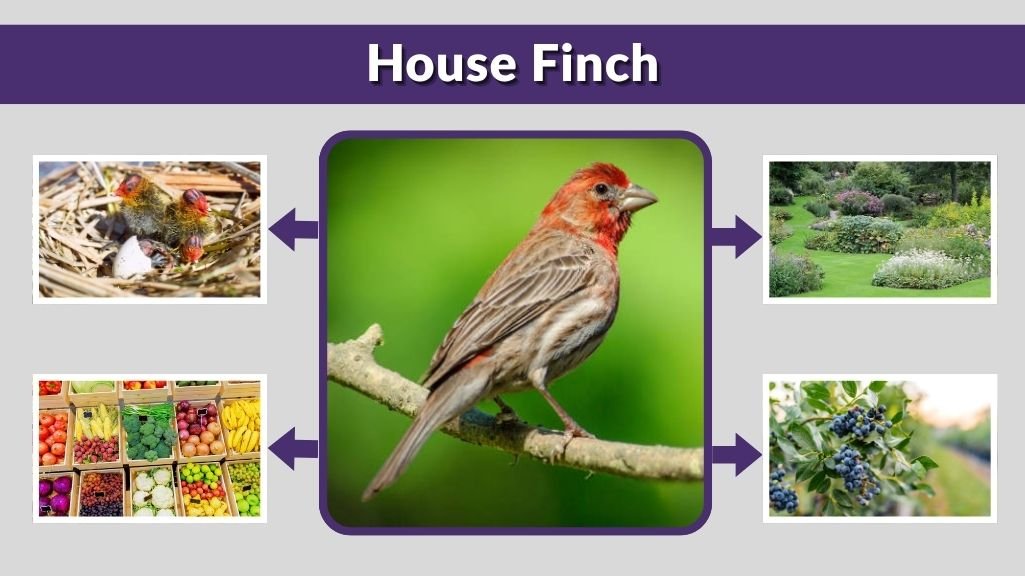
The house finch is one of the most common and recognizable backyard birds in North America. Known for its cheerful songs and colorful appearance, the house finch is a favorite among birdwatchers and nature lovers. Male house finches are famous for their bright red feathers, while females display softer, brown, streaked colors.
People often search for information about house finch nests, eggs, diet, bird calls, and the differences between house finches and purple finches. Their friendly behavior and ability to adapt to urban areas make them fascinating birds to observe year-round.
What Is a House Finch?
The house finch is a small songbird belonging to the finch family. Originally native to western North America, the species expanded across much of the continent and is now commonly found in cities, gardens, farms, and suburban neighborhoods.
These birds are highly social and often gather in small flocks near feeders and nesting areas. Their pleasant songs and colorful feathers make them one of the most popular backyard birds in the United States and Canada.
House Finch Scientific Classification
The house finch belongs to the finch family known as Fringillidae.
- Scientific name: Haemorhous mexicanus
- Bird family: Fringillidae
- Bird type: Songbird
- Native region: North America
- Conservation status: Least concern
Physical Characteristics of the House Finch
The house finch has several distinctive physical features that help birdwatchers identify it easily.
- Small compact body
- Short neck and rounded head
- Thick conical beak
- Brown streaked feathers
- Red coloration on males
- Long slightly notched tail
House Finch Size and Lifespan
House finches are relatively small birds, usually measuring around 12 to 15 centimeters in length. Their wingspan averages between 20 and 25 centimeters, while most adults weigh less than 30 grams.
In the wild, house finches commonly live between 4 and 7 years. However, some birds survive much longer when food sources and environmental conditions remain favorable.
Male vs Female House Finch
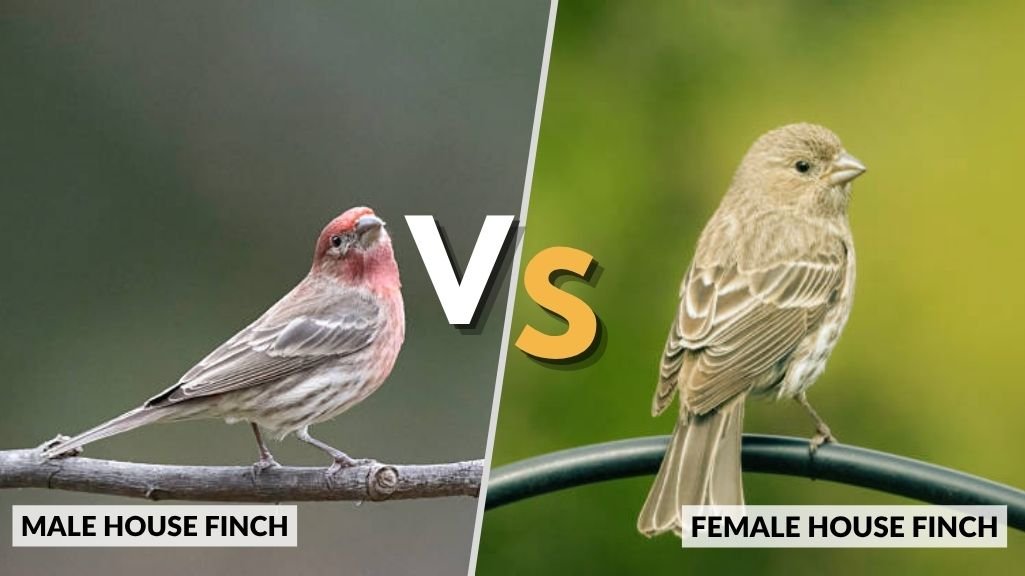
One of the most interesting aspects of the house finch is the difference between males and females. Their feather coloration makes identification easier, especially for beginner birdwatchers. Males display brighter colors to attract mates, while females have more neutral tones for camouflage during nesting.
Although both sexes share similar body shapes and behaviors, their appearance can vary significantly depending on age, diet, and geographic location.
Male House Finch Appearance
Male house finches are easy to recognize because of their colorful feathers.
- Bright red head and chest
- Red-orange throat coloration
- Brown streaked back
- More active singing behavior
- Slightly brighter plumage during breeding season
Female House Finch Appearance
Female house finches have more subtle colors that help protect them while nesting.
- Brown and gray body feathers
- Heavy streaking on the chest
- No bright red coloration
- Better camouflage in shrubs and trees
- Slightly duller appearance overall
Juvenile and Baby House Finch
Young house finches closely resemble adult females during their early growth stages. Juvenile birds have brown streaked feathers and lack the bright red colors seen in adult males. As they mature, young males gradually develop red feathers depending on their diet and health.
Baby house finches remain in the nest for several weeks before becoming fledglings. During this period, both parents help feed and protect the chicks until they are strong enough to fly independently.
House Finch Habitat and Distribution
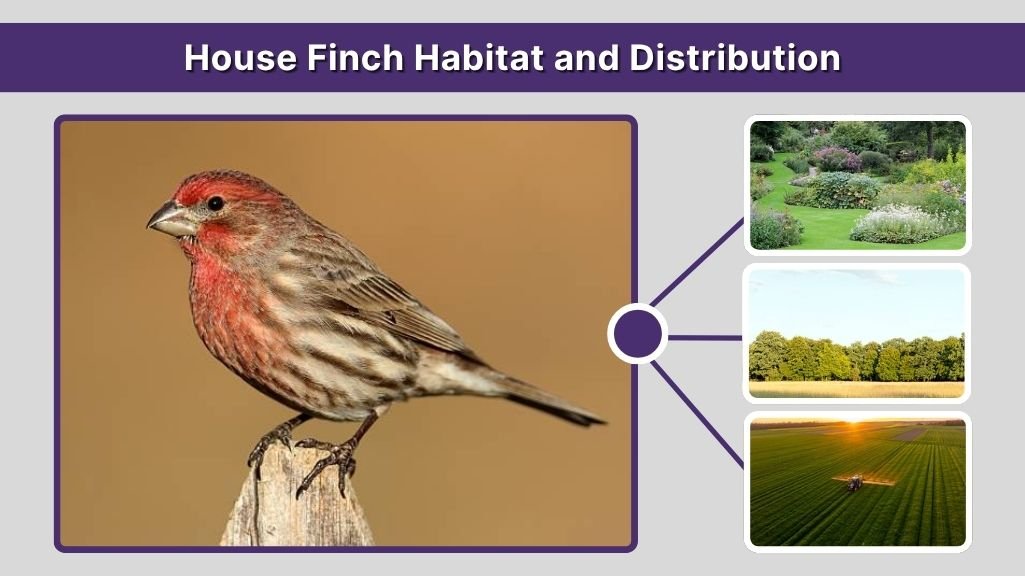
The house finch is highly adaptable and can survive in many different environments. Unlike some bird species that depend on remote forests or wetlands, house finches thrive in areas close to human activity. They are commonly seen near homes, gardens, parks, farms, and bird feeders.
Their adaptability has helped the species expand across large parts of North America. Today, house finches are especially common in suburban neighborhoods where food and nesting spaces are widely available.
Where Do House Finches Live?
House finches can survive in both natural and urban environments.
- Residential neighborhoods
- Gardens and parks
- Forest edges
- Farms and rural areas
- Texas and Colorado regions
- Desert and semi-arid habitats
Do House Finches Migrate?
Most house finches do not migrate long distances. They usually remain close to their breeding territories throughout the year, especially in warmer climates where food is available during winter.
In colder northern areas, some populations may move short distances in search of food and shelter. Their flexible behavior allows them to adapt easily to seasonal environmental changes.
House Finch Diet and Feeding Habits
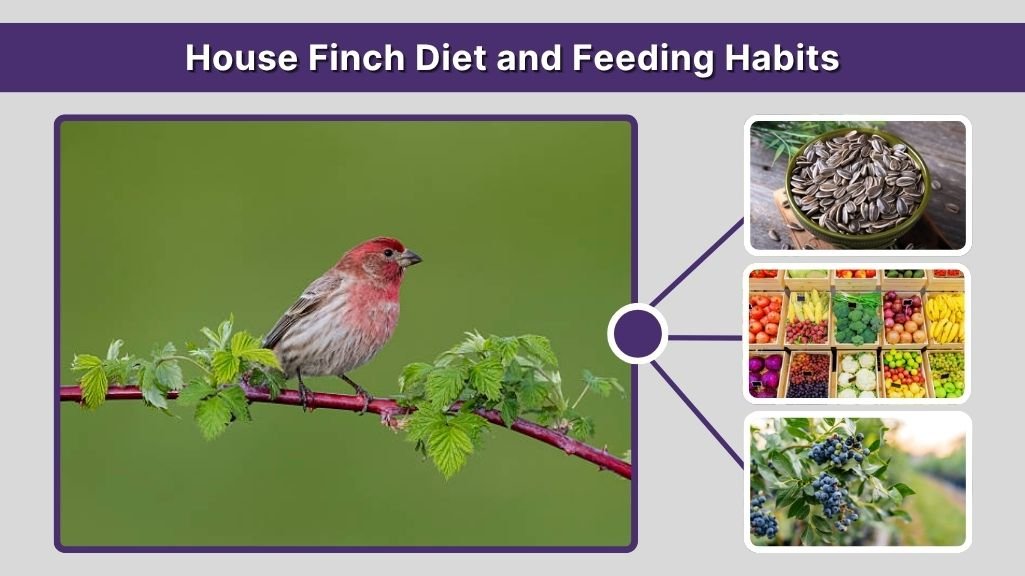
House finches are mainly seed-eating birds, but they also consume fruits and plant materials depending on food availability. Their thick beaks are specially designed for cracking seeds, making them efficient feeders in both wild and urban habitats.
These birds are highly social during feeding and often gather in groups around backyard bird feeders. Their feeding habits also help spread seeds throughout local ecosystems.
What Do House Finches Eat?
House finches enjoy a varied plant-based diet.
- Sunflower seeds
- Millet
- Berries
- Fruits
- Plant buds
- Small seeds from grasses and weeds
Best Bird Feeders for House Finches
House finches are frequent visitors to backyard feeders, especially in suburban and urban neighborhoods. They prefer feeders that provide easy access to seeds and enough space for small flocks to gather safely.
Tube feeders and mesh finch feeders are especially effective because they hold small seeds that house finches enjoy eating. Clean feeding stations are also important because crowded feeders can spread diseases among birds.
House Finch Feeding Behavior
House finches are social birds that often feed together in groups. They usually move actively between trees, shrubs, and feeding stations while searching for seeds and fruits. Their cheerful behavior and constant movement make them entertaining birds for backyard birdwatchers.
During colder seasons, flocks may become larger because birds gather around reliable food sources. Their adaptable feeding habits help them survive in many different environments across North America.
House Finch Nesting and Breeding
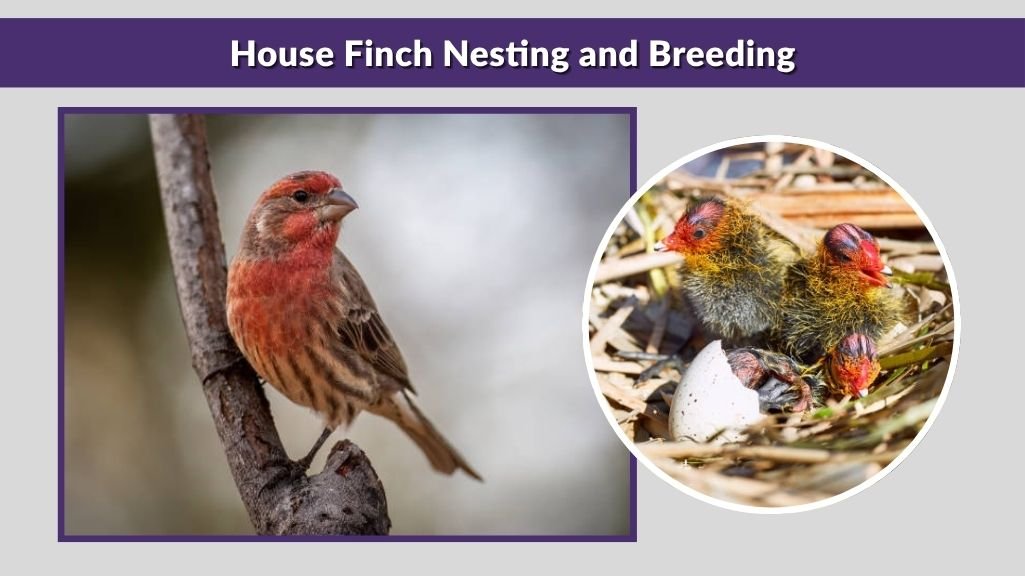
House finches are successful breeders because they can build nests in many different locations. Their nesting habits are highly flexible, allowing them to reproduce in both natural habitats and urban areas close to humans.
Breeding season usually begins in spring and may continue through summer, depending on climate conditions. During this period, males sing frequently to attract mates and defend small nesting territories.
House Finch Nesting Habits
House finches often build nests in protected, elevated areas.
- Tree branches
- Hanging planters
- Building ledges
- Porch decorations
- Shrubs and vines
- Outdoor light fixtures
House Finch Eggs
Female house finches usually lay between two and six eggs per breeding cycle. The eggs are small, pale blue or bluish-white, and often contain tiny dark markings. Incubation generally lasts around two weeks, with the female performing most of the sitting duties.
After hatching, both parents feed the chicks until they become fledglings. Young birds leave the nest within a few weeks but may continue receiving food from their parents for a short time.
Do House Finches Mate for Life?
House finches often form strong seasonal pair bonds, and some pairs may remain together for multiple breeding seasons. Males actively help protect nesting areas and provide food for the female and chicks.
Although not all pairs stay together permanently, their cooperative parenting behavior improves the survival chances of young birds.
House Finch Songs, Calls and Sounds
The house finch is widely known for its cheerful and musical songs. Male birds sing regularly during breeding season, especially in the morning hours. Their pleasant vocalizations are one reason many people enjoy having house finches around their homes and gardens.
Different sounds are used for communication, territory defense, and warning nearby birds about danger. Their songs can vary slightly depending on location and individual birds.
House Finch Song
The song of the house finch is soft, rapid, and highly musical. Males often sing from rooftops, tree branches, or feeders to attract females and establish territory. Their melodies usually contain a mix of short warbles and repeated notes.
Birdwatchers often identify house finches by sound before spotting them visually because their singing is frequent and energetic during warmer months.
House Finch Calls and Sounds
House finches use several simple vocal sounds for communication.
- Contact calls between flock members
- Alarm sounds during danger
- Feeding communication notes
- Short chirping sounds
- Breeding season vocalizations
Why Do House Finches Sing?
Male house finches sing mainly to attract mates and defend breeding territories. Strong singing ability may signal good health and high fitness to females during mating season.
Songs also help birds maintain communication within flocks and warn others about nearby threats. Vocal behavior plays an important role in their social interactions.
House Finch vs Purple Finch
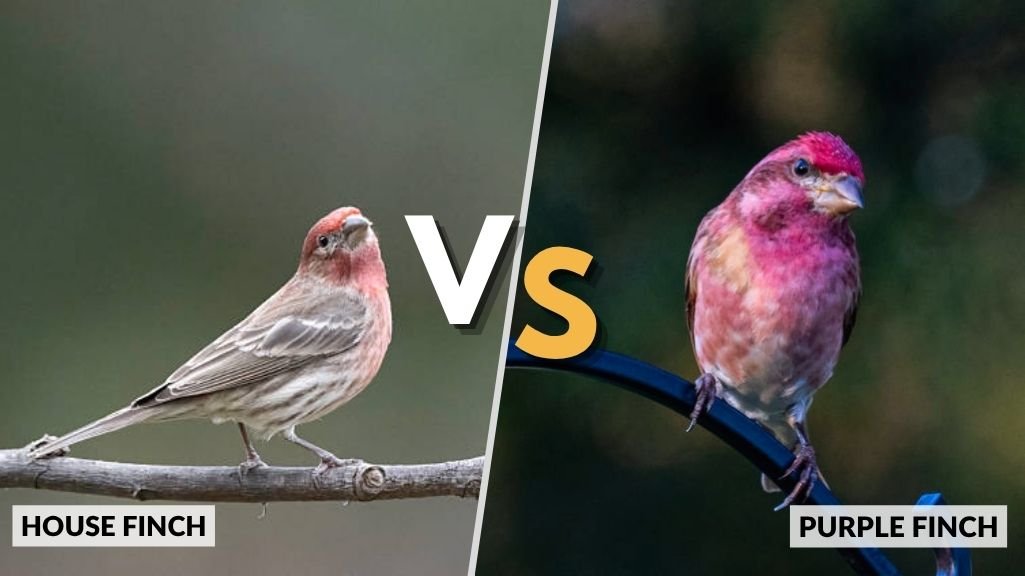
Many birdwatchers confuse house finches with purple finches because both species have reddish coloration and similar body shapes. However, several differences help distinguish the two birds in the wild.
House finches are generally slimmer with heavier streaking on the body, while purple finches appear chunkier with richer raspberry-red coloring. Habitat preferences also differ slightly between the species.
Difference Between House Finch and Purple Finch
| Feature | House Finch | Purple Finch |
| Color | Red-orange | Raspberry red |
| Body Shape | Slim | Chunkier |
| Chest Streaks | Heavy streaking | Less streaking |
| Habitat | Urban areas | Forest habitats |
House Finch vs House Sparrow
| Feature | House Finch | House Sparrow |
| Beak Shape | Curved | Thick and short |
| Male Color | Red tones | Gray and brown |
| Song Type | Musical warbles | Simple chirps |
| Feeding Style | Seed eating | Opportunistic feeding |
FAQs
What do house finches eat?
House finches mainly eat seeds, berries, fruits, and plant buds. Sunflower seeds and millet are especially popular at backyard feeders. They occasionally consume small insects as well.
Do house finches migrate?
Most house finches stay in the same general area year-round. Some northern populations may move short distances during winter in search of food and warmer conditions.
How can you tell male and female house finches apart?
Male house finches have bright red or red-orange feathers on the head and chest, while females are brown and heavily streaked without red coloration.
Are house finches friendly backyard birds?
Yes, house finches are considered friendly and social backyard birds. They adapt well to human environments and frequently visit feeders, gardens, and nesting spaces near homes.
Why do house finches sing so much?
House finches sing to attract mates, communicate with other birds, and defend nesting territories. Male birds are especially vocal during the breeding season.
