
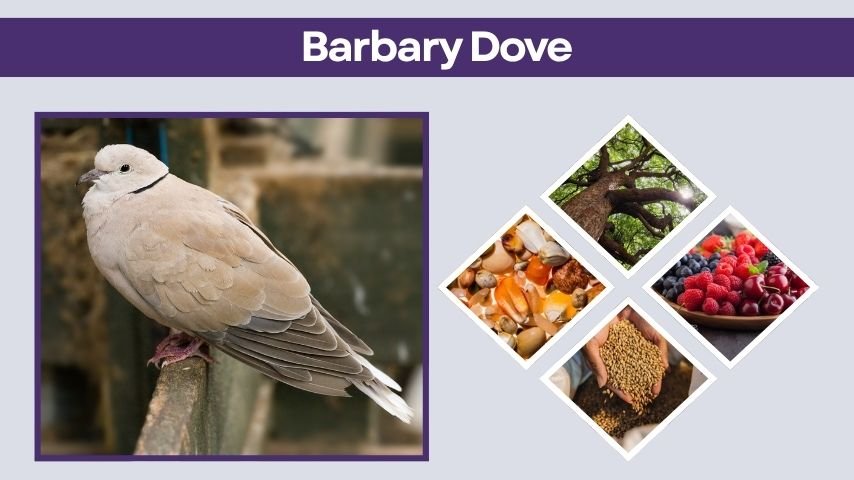
The Barbary Dove is a gentle and social bird known for its soft cooing sounds, pale feathers, and calm personality. Popular as both a pet and aviary bird, this domesticated dove has been kept by humans for centuries. Barbary Doves are easy to care for and are admired for their peaceful behavior and strong pair bonds. Their quiet nature makes them a favorite choice for beginner bird keepers. In this guide, you will learn about Barbary Dove identification, habitat, behavior, diet, lifespan, breeding habits, and helpful care information.
What Is a Barbary Dove?
The Barbary Dove is a domesticated dove closely related to collared doves. It is commonly kept as a pet because of its friendly temperament and soft vocalizations. These birds are social and adaptable, making them suitable for aviaries and indoor bird enclosures. Barbary Doves are also popular in ceremonies and bird exhibitions.
Scientific Classification
- Scientific name: Streptopelia risoria
- Family: Columbidae
- Type: Dove species
- Closely related to collared doves
- Domesticated bird with a long history
Why It Is Called a Barbary Dove
The name “Barbary Dove” is believed to come from the historical Barbary Coast region of North Africa. Over time, the species became widely domesticated and spread around the world. Some people also refer to it as a Ring Dove because of the thin collar marking around the neck.
Barbary Dove Identification
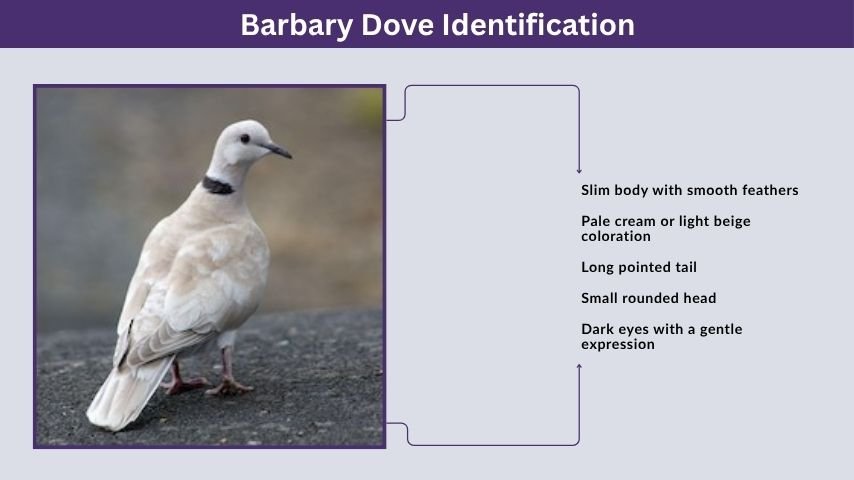
Barbary Doves are medium-sized birds with slim bodies, soft feathers, and long tails. Their calm appearance and pale coloration make them easy to recognize. While many are cream or light beige, some color variations exist because of selective breeding in captivity.
Size and Appearance
- Slim body with smooth feathers
- Pale cream or light beige coloration
- Long pointed tail
- Small rounded head
- Dark eyes with a gentle expression
- Thin dark collar on the neck
Male vs Female Barbary Dove
Male and female Barbary Doves look very similar, but males are usually more vocal and active during courtship. Males may bow, puff their chest, and coo loudly to attract females. Females often appear slightly smaller and quieter.
Common Color Varieties
Selective breeding has produced several Barbary Dove color forms including white, fawn, cream, and pied varieties. Despite color differences, most varieties share the same gentle behavior and body structure.
Barbary Dove Habitat and Distribution
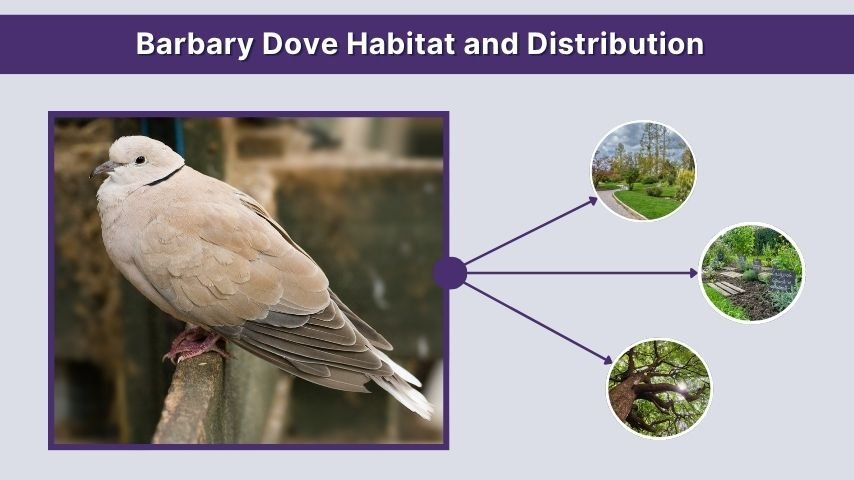
Although Barbary Doves are mainly domesticated birds, they can adapt to different environments when given shelter and food. They are commonly kept in aviaries, homes, and bird collections around the world. Some escaped populations survive in mild climates.
Natural Origins
- Related to African collared doves
- Domesticated for centuries
- Spread through human trade and breeding
- Popular in aviaries worldwide
- Often kept as companion birds
Where Barbary Doves Live Today
Barbary Doves are commonly found in pet homes, aviaries, zoos, and bird breeding facilities. In some areas with warm climates, escaped birds may survive outdoors in parks and gardens. However, most populations depend on human care and protection.
Preferred Habitat
These doves prefer quiet spaces with trees, sheltered nesting areas, and access to food and water. In captivity, they do best in spacious cages or aviaries where they can move freely and perch comfortably.
Barbary Dove Behavior
Barbary Doves are calm and social birds that form strong pair bonds. They are active during the day and spend much of their time feeding, resting, and communicating through soft vocalizations. Their peaceful personality makes them suitable for mixed aviaries with other gentle bird species.
Social Personality
- Gentle and non-aggressive temperament
- Form long-term pair bonds
- Enjoy quiet interaction with humans
- Often groom each other in pairs
- Prefer calm environments
Barbary Dove Calls and Sounds
Barbary Doves are known for their soft cooing sounds that are often repeated throughout the day. Some calls may sound similar to gentle laughter or rhythmic coos. Males are usually more vocal, especially during courtship and territory displays.
Flight and Activity
These birds are capable of strong short-distance flight but usually spend much of their time perched or walking on the ground. They enjoy sunbathing, preening feathers, and exploring safe aviary spaces during daytime hours.
Barbary Dove Diet
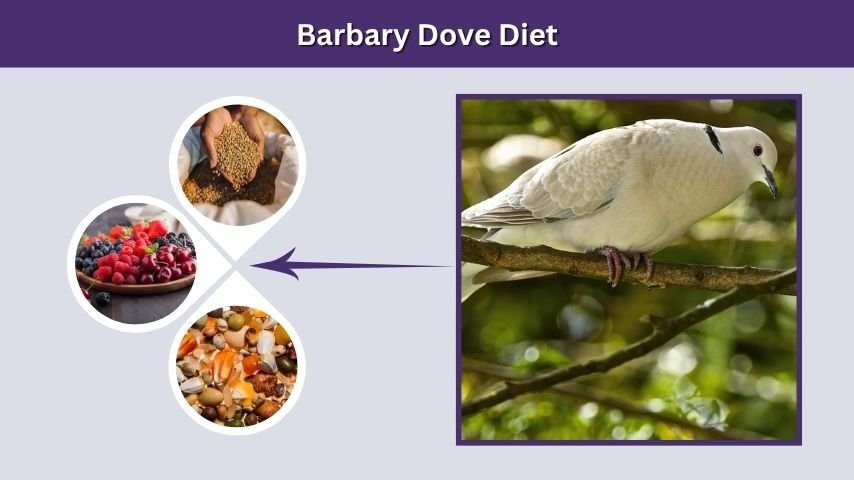
Barbary Doves eat a variety of seeds, grains, and plant materials. A healthy diet is important for maintaining strong feathers, healthy bones, and long lifespan. Fresh water should always be available for drinking and bathing.
Foods They Eat
- Millet and mixed seeds
- Small grains
- Fresh greens
- Soft fruits
- Dove pellets
- Calcium supplements like cuttlebone
Diet in Captivity
Pet Barbary Doves are commonly fed commercial dove seed mixes along with fresh greens and occasional fruit treats. Calcium supplements such as cuttlebone are important, especially during breeding periods. Food and water containers should be cleaned regularly to prevent disease.
Foods to Avoid
- Chocolate
- Avocado
- Salty foods
- Sugary snacks
- Caffeinated drinks
- Processed human foods
Barbary Dove Lifespan
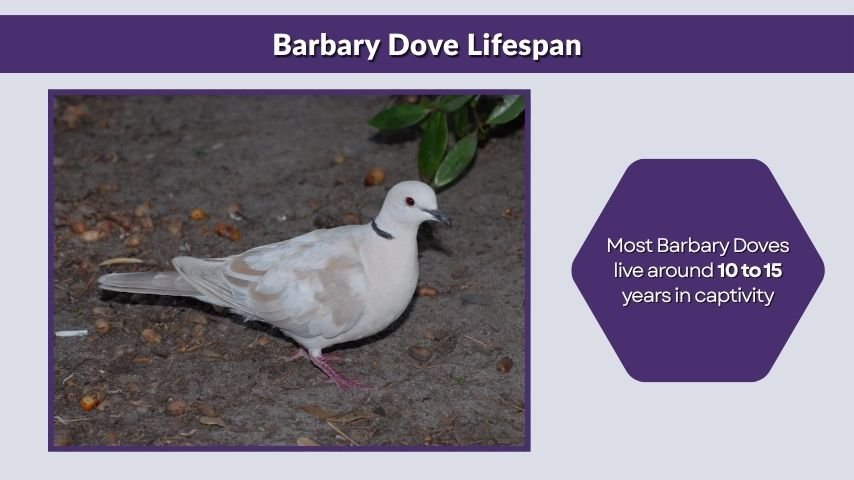
Barbary Doves can live for many years when provided with proper care, shelter, and nutrition. Their lifespan depends on diet quality, living conditions, and protection from illness or predators. Birds kept indoors or in safe aviaries often live longer than those exposed to outdoor dangers.
Average Lifespan
Most Barbary Doves live around 10 to 15 years in captivity, although some may live longer with excellent care. Birds kept in clean and stress-free environments usually remain healthier and more active as they age.
Factors Affecting Lifespan
Healthy food, fresh water, clean housing, and regular observation all improve survival rates. Stress, poor nutrition, overcrowding, and untreated illnesses can shorten lifespan significantly.
Common Health Problems
- Respiratory infections
- Parasites and mites
- Nutritional deficiencies
- Feather damage
- Stress-related illness
Barbary Dove Breeding and Life Cycle
Barbary Doves breed easily in captivity and form strong pair bonds with mates. Their nesting behavior is calm and cooperative, making them popular among bird breeders. Both parents help care for eggs and chicks during development.
Courtship Behavior
Male Barbary Doves perform gentle bowing displays and soft cooing sounds during courtship. They may puff up feathers and circle around females while attempting to strengthen pair bonds.
Nesting and Egg Laying
Females usually lay two small white eggs inside simple nests made of twigs and plant material. Nests are often placed on shelves, platforms, or sheltered corners of aviaries. Both parents share incubation duties.
Chick Development
Newly hatched chicks are featherless and depend fully on their parents for warmth and food. Parents feed chicks with crop milk before introducing softened seeds. Young birds develop feathers within weeks and eventually leave the nest.
Barbary Dove as a Pet
Barbary Doves are popular pets because of their calm personality and relatively simple care needs. They are quieter than parrots and can become comfortable around gentle human interaction. These birds are often recommended for beginner bird keepers.
Are Barbary Doves Good Pets?
Barbary Doves are friendly, peaceful, and easy to manage in home aviaries or indoor cages. They rarely show aggressive behavior and usually adapt well to calm environments. Their soft cooing sounds are also less noisy than many pet parrots.
Cage and Aviary Setup
Barbary Doves need enough space for short flights and comfortable movement. Perches, nesting areas, and clean food containers are important parts of a healthy enclosure. Aviaries should also provide protection from cold weather and predators.
Handling and Taming
- Use calm and gentle movements
- Allow birds time to build trust
- Avoid sudden loud noises
- Hand-feed treats carefully
- Handle young birds gently and briefly
Barbary Dove vs Collared Dove
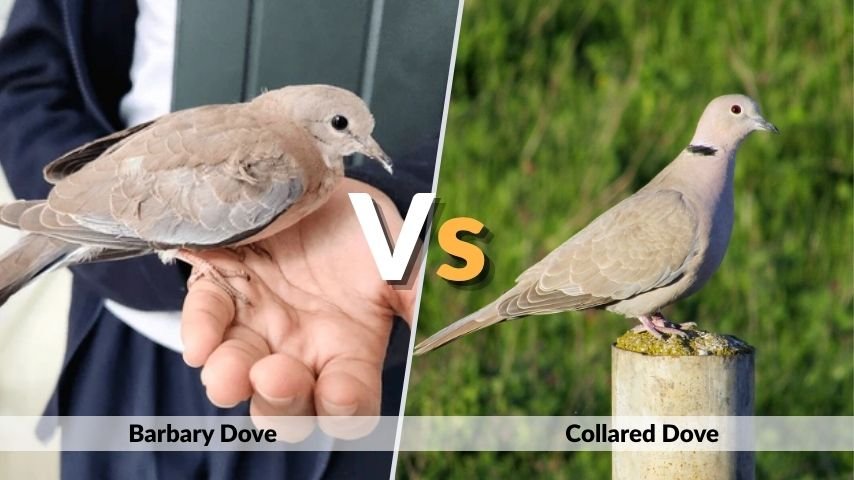
Barbary Doves and Collared Doves look similar because they are closely related species. However, there are several differences in appearance, behavior, and domestication that help distinguish them.
Appearance Differences
| Feature | Barbary Dove | Collared Dove |
| Color | Cream or pale beige | Gray-beige |
| Size | Slightly smaller | Larger |
| Neck Marking | Thin collar | Bold black collar |
Behavior Differences
| Feature | Barbary Dove | Collared Dove |
| Temperament | Gentle and tame | More cautious |
| Vocalization | Soft cooing | Louder calls |
| Lifestyle | Domesticated | Mostly wild |
FAQs
Are Barbary Doves good pets?
Yes, Barbary Doves are considered excellent pets for beginners because they are gentle, quiet, and easy to care for. They usually adapt well to human interaction and calm home environments.
How long do Barbary Doves live?
Barbary Doves commonly live around 10 to 15 years in captivity. With proper nutrition, clean housing, and good care, some individuals may live even longer.
What do Barbary Doves eat?
Barbary Doves mainly eat seeds, grains, millet, fresh greens, and small amounts of fruit. Pet birds also benefit from calcium supplements and constant access to fresh water.
Why do Barbary Doves make laughing sounds?
Their soft rhythmic cooing calls can sometimes sound similar to gentle laughter. These sounds are mainly used for communication, courtship, and maintaining pair bonds.
Can Barbary Doves live alone?
Barbary Doves can live alone if they receive regular human attention, but they are social birds and generally do better with a companion dove for interaction and bonding.
