
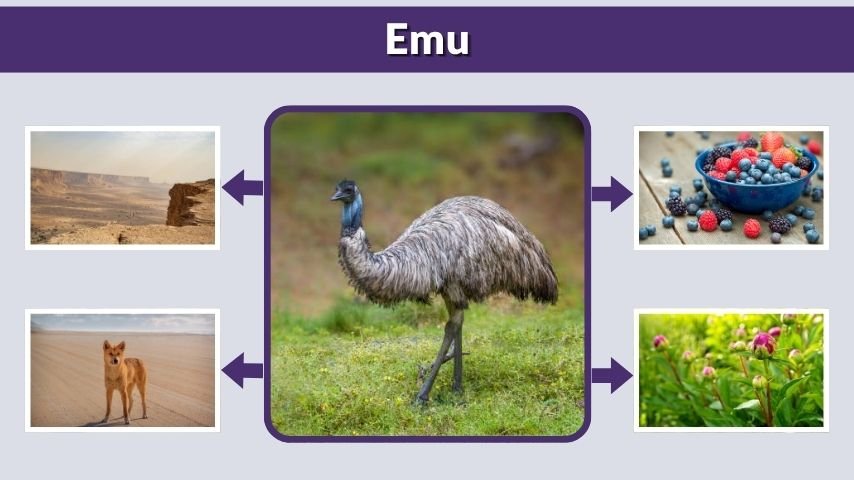
The Emu is a large flightless bird native to Australia and is known for its long legs, shaggy feathers, and incredible running ability. As the second-largest bird in the world after the ostrich, the Emu is well adapted to open grasslands, woodlands, and dry regions. These birds are fast runners, strong swimmers, and highly adaptable to changing environments. Emus are also famous for their unusual breeding behavior, where males incubate the eggs and raise the chicks. In this guide, you will learn about Emu identification, habitat, diet, behavior, life cycle, and fascinating facts.
What Is an Emu?
The Emu is a large ratite bird that cannot fly but is perfectly adapted for life on the ground. It belongs to a group of flightless birds that includes ostriches and cassowaries. Emus are active travelers that can cover long distances while searching for food and water in Australia’s harsh environments.
Scientific Classification
- Scientific name: Dromaius novaehollandiae
- Family: Dromaiidae
- Type: Flightless ratite bird
- Native to Australia
- Closely related to cassowaries
Why Emus Are Flightless Birds
Emus evolved as ground-dwelling birds with strong legs built for running instead of flying. Their wings are small and hidden beneath shaggy feathers. Powerful leg muscles allow them to move quickly across large distances and escape predators.
Emu Identification
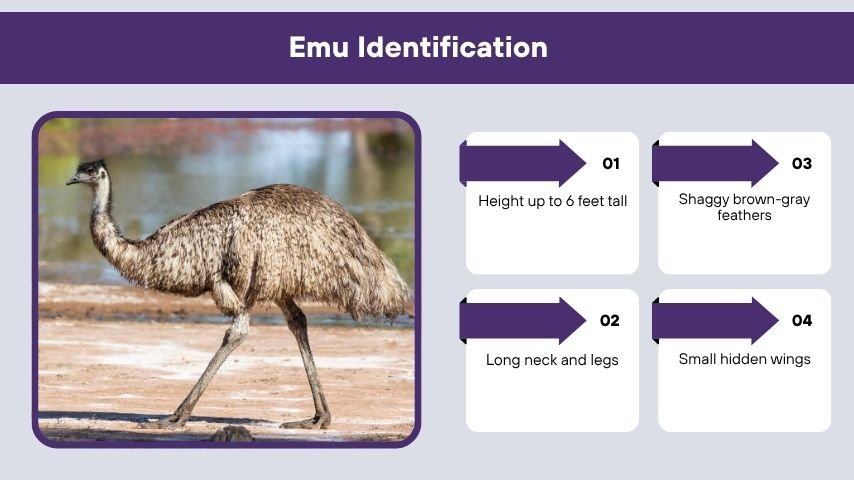
Emus are easy to recognize because of their large size, long necks, and rough feather texture. Their appearance helps them blend into dry grasslands and shrub-covered habitats. Young chicks look very different from adults and have striped camouflage patterns.
Size and Appearance
- Height up to 6 feet tall
- Long neck and legs
- Shaggy brown-gray feathers
- Small hidden wings
- Broad three-toed feet
- Sharp beak with dark eyes
Male vs Female Emu
Female Emus are usually slightly larger and heavier than males. During breeding season, females may become more aggressive while competing for mates. Males are quieter and spend more time caring for eggs and chicks after nesting begins.
Young Emu Chick Appearance
Young Emu chicks have brown and cream stripes across their bodies that provide camouflage in grasslands and shrubs. As they grow, the striped pattern slowly disappears and adult feather coloration develops over time.
Emu Habitat and Distribution
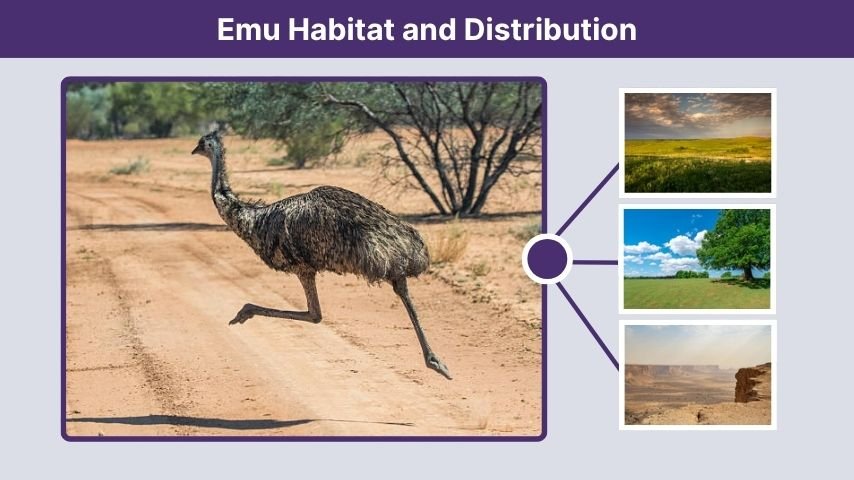
Emus are found across much of mainland Australia and are highly adaptable to different climates and landscapes. They avoid dense forests and extremely dry deserts but thrive in open habitats with access to food and water sources.
Native Range
- Australia
- Grasslands
- Open woodlands
- Shrublands
- Desert edges
Preferred Habitat
Emus prefer savannahs, farmland, scrublands, and semi-arid regions with open space for running and feeding. Areas with scattered trees and seasonal water supplies are especially important for survival.
Seasonal Movement
These birds are nomadic and move long distances depending on rainfall and food availability. During dry periods, Emus may travel across large areas in search of fresh vegetation and water sources.
Emu Behavior
Emus are active and curious birds with strong survival instincts. They spend much of their time walking, feeding, and exploring large territories. Although usually calm, they can defend themselves powerfully with strong kicks when threatened.
Running and Speed
- Can run up to 30 miles per hour
- Powerful long legs for endurance
- Large stride length
- Strong balance while running
- Excellent long-distance movement
Social Behavior
Emus are often seen alone or in small groups, although larger gatherings may form near water or food sources. During breeding season, pairs temporarily bond before males take responsibility for raising the young.
Emu Sounds and Communication
Emus produce deep drumming sounds, grunts, and booming calls for communication. Females usually make louder booming sounds, especially during breeding periods. Vocalizations help birds communicate across long distances in open habitats.
What Do Emus Eat?
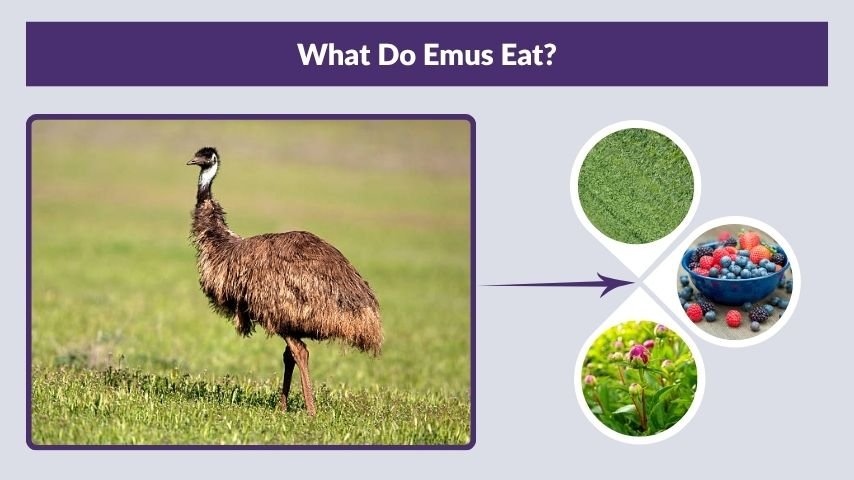
Emus are omnivorous birds that eat a mixture of plants and small animals. Their flexible diet helps them survive in changing environmental conditions throughout Australia.
Plant-Based Foods
- Seeds and grasses
- Fruits and berries
- Flower buds
- Leaves and shoots
- Native plants
- Agricultural crops
Animal-Based Foods
Emus also feed on insects, beetles, caterpillars, grasshoppers, and occasionally small reptiles. Animal protein becomes especially important during breeding seasons and periods of rapid chick growth.
What Do Emus Eat? Continued
Emus use their strong beaks to pick food from the ground and vegetation. They often feed during cooler morning and evening hours to avoid extreme heat. Like many birds, Emus swallow small stones and pebbles that help grind food inside the digestive system.
Feeding Behavior
Emus are opportunistic feeders that eat whatever food is available in their environment. Seasonal rainfall strongly affects plant growth, so Emus may travel long distances to find fresh vegetation. They can survive for periods with limited food but depend on water whenever possible.
Water Consumption Habits
These birds drink large amounts of water when available and may remain near water sources during dry seasons. Emus are also strong swimmers and can cross rivers or lakes if necessary during migration or food searches.
Emu Life Cycle
The Emu life cycle includes courtship, egg laying, incubation, and chick development. One of the most unusual features of Emu reproduction is that the male performs most parental duties after the eggs are laid.
Courtship and Pair Formation
During breeding season, females compete for males and may become more aggressive than usual. Courtship includes vocal sounds, walking displays, and close interaction between paired birds. Temporary pair bonds form before nesting begins.
Nesting and Egg Laying
Female Emus lay large dark green eggs in ground nests made from grass, leaves, and bark. Nests are usually placed in sheltered open areas with good visibility. Several eggs may be laid over multiple days before incubation starts.
Male Emu Parenting
After the eggs are laid, the male Emu takes over incubation duties and may remain on the nest for many weeks with little food or water. Once the chicks hatch, the male protects and raises them until they are old enough to survive independently.
Emu vs Ostrich
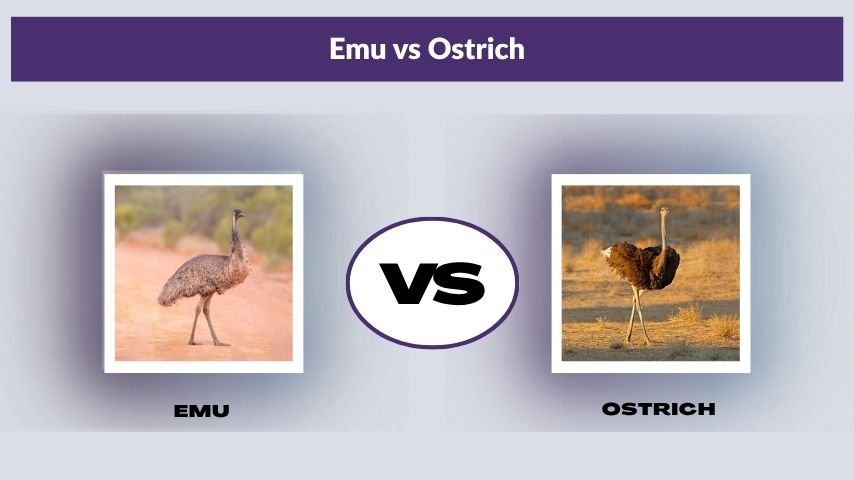
Emus and Ostriches are both giant flightless birds, but they differ in size, habitat, and behavior. Although they share some similarities, each species has unique physical adaptations and survival strategies.
Appearance Differences
| Feature | Emu | Ostrich |
| Size | Smaller | Larger |
| Toes | Three toes | Two toes |
| Feather Texture | Shaggy | Smoother |
| Native Region | Australia | Africa |
Behavior Differences
| Feature | Emu | Ostrich |
| Parenting | Male raises chicks | Shared care |
| Speed | Fast runner | Faster runner |
| Habitat | Grasslands and shrublands | Open savannah |
Emu Predators and Threats
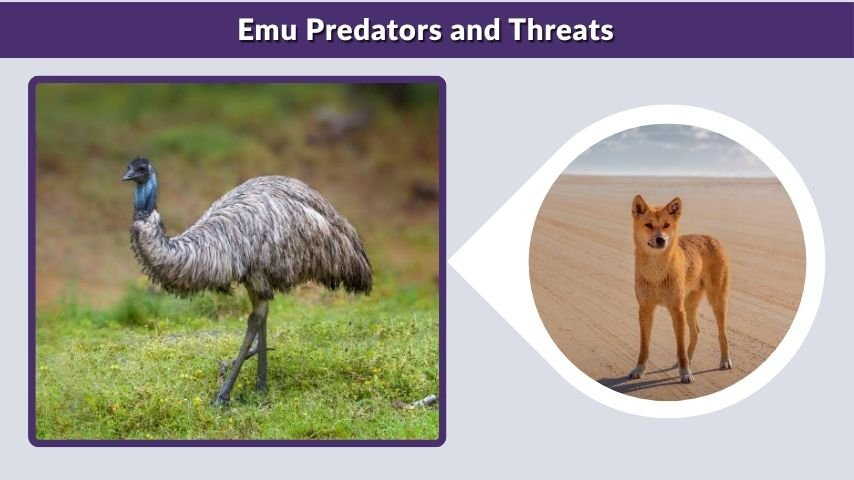
Although adult Emus are powerful birds, they still face threats from predators and environmental changes. Young chicks are especially vulnerable to attack in the wild.
Natural Predators
- Dingoes
- Eagles
- Large reptiles
- Wild dogs
- Foxes attacking chicks
Human-Related Threats
Habitat destruction, road collisions, fencing barriers, and historical hunting have affected Emu populations in some regions. Climate changes and drought can also reduce food and water availability across parts of Australia.
Emu Farming
Emus are farmed in several countries for meat, oil, leather, and feathers. Their products are valued in farming and commercial industries because of their unique qualities and adaptability.
Why Emus Are Farmed
- Lean red meat production
- Emu oil extraction
- Leather and feather products
- Egg collection and breeding
Emu Farming Requirements
Successful Emu farming requires large fenced areas, balanced nutrition, clean water, and protection from stress. Farmers must also provide proper breeding management and enough space for movement and exercise.
Is Emu Farming Profitable?
Emu farming profitability depends on market demand, breeding success, and product sales. While some farms earn income from oil, meat, and eggs, maintaining healthy birds and proper facilities can require significant investment.
FAQs
Can Emus fly?
No, Emus cannot fly. They are flightless birds with very small wings, but they are excellent runners and can move quickly across long distances.
What do Emus eat?
Emus eat seeds, grasses, fruits, flowers, insects, beetles, caterpillars, and other small animals. Their flexible diet helps them survive in different Australian habitats.
How fast can an Emu run?
An Emu can run up to about 30 miles per hour. Their long powerful legs help them travel quickly and escape predators in open landscapes.
Are Emus dangerous?
Emus are generally shy birds, but they can defend themselves if threatened. Their strong legs and sharp claws can cause injury when kicking in self-defense.
What is the difference between an Emu and an Ostrich?
Emus are smaller than Ostriches and have three toes instead of two. Emus are native to Australia, while Ostriches live in Africa and are the largest birds in the world.
