
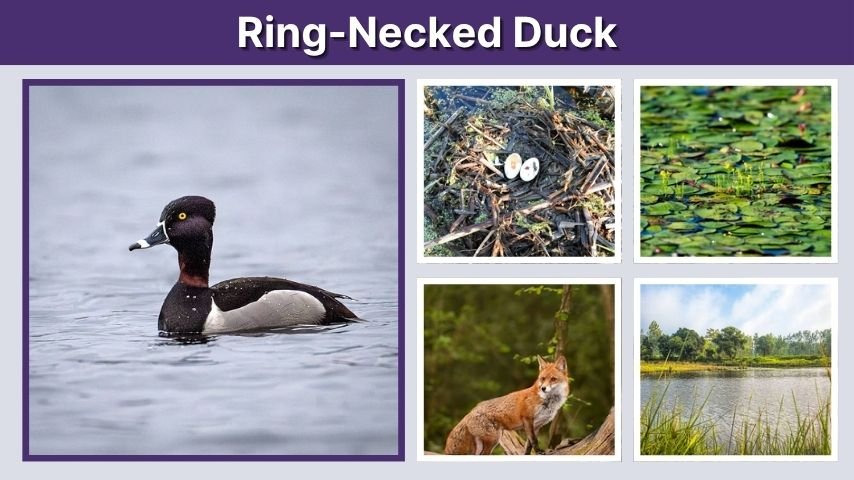
The Ring-Necked Duck is a medium-sized diving duck known for its sharp bill markings, peaked head shape, and excellent underwater feeding skills. Although named for a faint brown ring around the neck, the bird is more easily identified by the white ring near its bill. Ring-Necked Ducks are commonly found in freshwater lakes, marshes, ponds, and wetlands across North America. They are active swimmers and strong migratory birds that travel long distances during seasonal movements. In this guide, you will learn about their identification, habitat, behavior, diet, and life cycle.
What Is a Ring-Necked Duck?
The Ring-Necked Duck is a freshwater diving duck that belongs to the same group as scaups and other diving waterfowl. These ducks spend much of their time swimming and diving underwater in search of food. Birdwatchers often recognize them by their unique head shape and bold bill markings.
Scientific Classification
- Scientific name: Aythya collaris
- Family: Anatidae
- Type: Diving duck species
- Native to North America
- Closely related to scaups and pochards
Why It Is Called a Ring-Necked Duck
The species is named after a faint chestnut-colored ring around the neck of adult males. However, this ring is difficult to see in the field. Most birdwatchers identify the species by the white ring and gray markings on the bill instead.
Ring-Necked Duck Identification
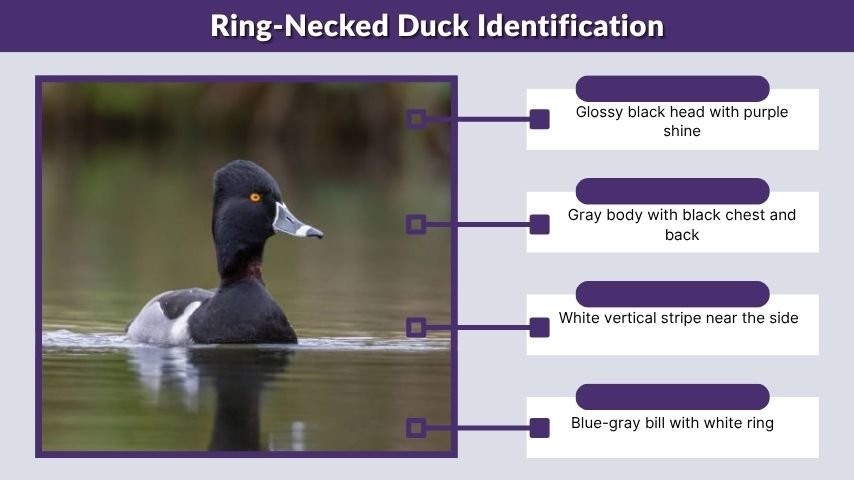
Ring-Necked Ducks have a sleek appearance with a peaked head, compact body, and striking bill pattern. Males and females differ in coloration, especially during breeding season. These ducks are often seen floating quietly on freshwater lakes and ponds.
Male Ring-Necked Duck Appearance
- Glossy black head with purple shine
- Gray body with black chest and back
- White vertical stripe near the side
- Blue-gray bill with white ring
- Peaked rear head shape
- Yellow eyes
Female Ring-Necked Duck Appearance
Female Ring-Necked Ducks are mostly brown with softer markings than males. They often show a pale ring around the eye and lighter coloring near the face. Their bill markings are still visible but less bold compared to adult males.
Ring-Necked Duck in Flight
These ducks fly quickly with rapid wingbeats and often travel in compact flocks. In flight, they show a pale wing stripe that contrasts against darker feathers. Migration groups are commonly seen moving between wetlands during seasonal changes.
Ring-Necked Duck Habitat and Range
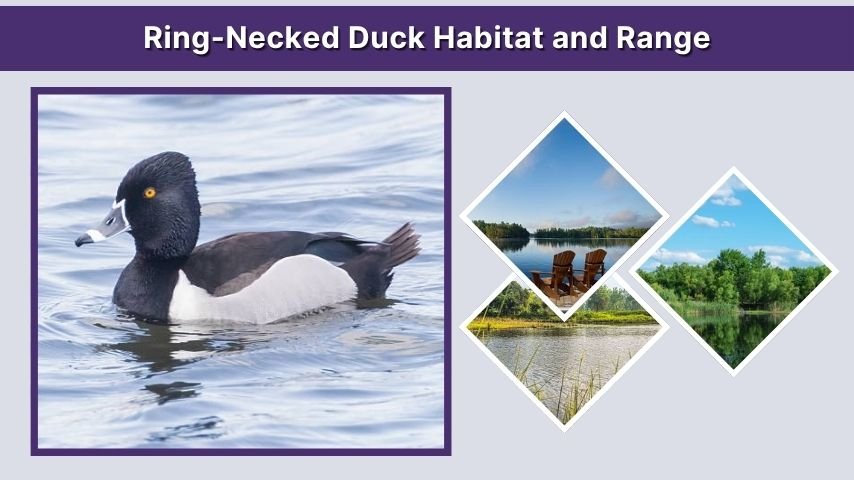
Ring-Necked Ducks depend heavily on freshwater wetlands and shallow lakes for feeding and breeding. They are migratory birds that move between northern breeding grounds and warmer wintering areas. Their range covers large parts of North America throughout the year.
Breeding Range
- Northern United States
- Canada
- Boreal forest wetlands
- Freshwater marshes
- Woodland lakes and ponds
Winter Range
During winter, Ring-Necked Ducks move south toward warmer climates. They can be found in southern parts of the United States, Mexico, and coastal wetlands where food remains available during colder months.
Preferred Habitat
These ducks prefer shallow freshwater lakes, ponds, marshes, and wooded wetlands with plenty of aquatic vegetation. Calm water with submerged plants provides ideal feeding conditions for diving and searching for food.
Ring-Necked Duck Behavior
Ring-Necked Ducks are active diving birds that spend much of their time underwater searching for food. They are social during migration and winter months and are often found in groups mixed with other duck species.
Diving and Feeding Behavior
- Dive underwater for food
- Feed on aquatic plants and seeds
- Search muddy bottoms for insects
- Use quick underwater movements
- Feed mostly in shallow wetlands
Social and Flocking Behavior
Ring-Necked Ducks commonly gather in small or medium-sized flocks during migration and winter. They may mix with scaups, teal, and other diving ducks while feeding or resting on open water.
Migration Patterns
These ducks migrate seasonally between northern breeding grounds and southern wintering habitats. Migration usually occurs during fall and spring when weather conditions and food availability begin changing.
Ring-Necked Duck Diet
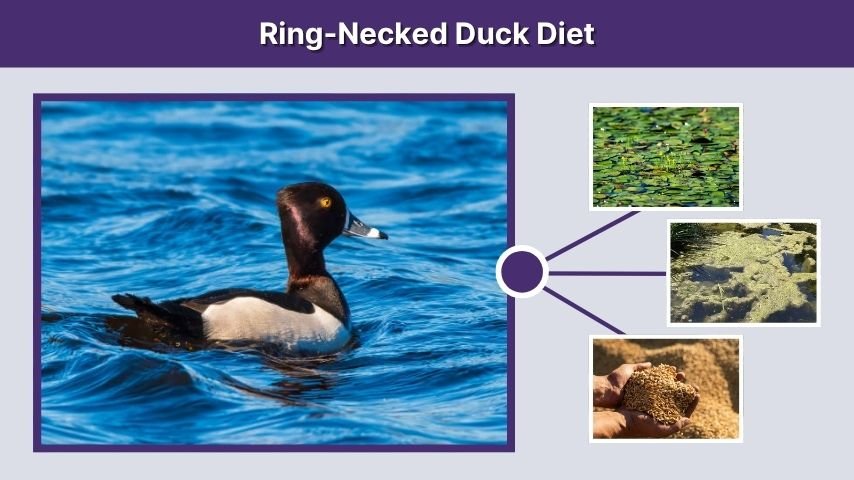
Ring-Necked Ducks eat both plant and animal material depending on season and habitat. Their diving ability allows them to reach underwater vegetation and small aquatic creatures that many surface-feeding ducks cannot access.
Plant-Based Foods
- Aquatic plants
- Pondweed
- Seeds and grains
- Water lilies
- Submerged vegetation
- Wetland grasses
Ring-Necked Duck Diet Continued
The diet of Ring-Necked Ducks changes depending on season, habitat, and food availability. During colder months, they may rely more on seeds and aquatic vegetation, while warmer seasons provide greater access to insects and small aquatic animals.
Animal-Based Foods
Ring-Necked Ducks also eat insects, snails, crustaceans, and other small aquatic animals. Young ducklings especially depend on protein-rich insects during early growth stages. Diving underwater helps these ducks capture food hidden beneath wetland vegetation.
Seasonal Diet Changes
Food choices often shift between breeding and wintering seasons. During breeding periods, ducks consume more insects and protein-rich foods, while winter diets include larger amounts of seeds and aquatic plants found in shallow wetlands.
Ring-Necked Duck Life Cycle
The life cycle of the Ring-Necked Duck includes courtship, nesting, duckling development, and seasonal migration. Breeding usually begins during spring after birds return to northern wetlands. Females take primary responsibility for nesting and caring for young ducklings.
Courtship and Pair Formation
Male Ring-Necked Ducks perform displays involving head movements, swimming patterns, and soft calls to attract females. Pair bonds usually form during winter or early migration before birds reach breeding grounds.
Nesting and Egg Laying
Females build nests near freshwater wetlands using grasses, reeds, and down feathers. Nests are usually hidden among vegetation for protection from predators. A female commonly lays several eggs and incubates them alone.
Duckling Development
Ducklings hatch covered with soft down feathers and can swim shortly after leaving the nest. The mother leads them to feeding areas where they learn to search for insects and aquatic plants. Young ducks grow quickly and develop flight feathers within weeks.
Ring-Necked Duck vs Lesser Scaup
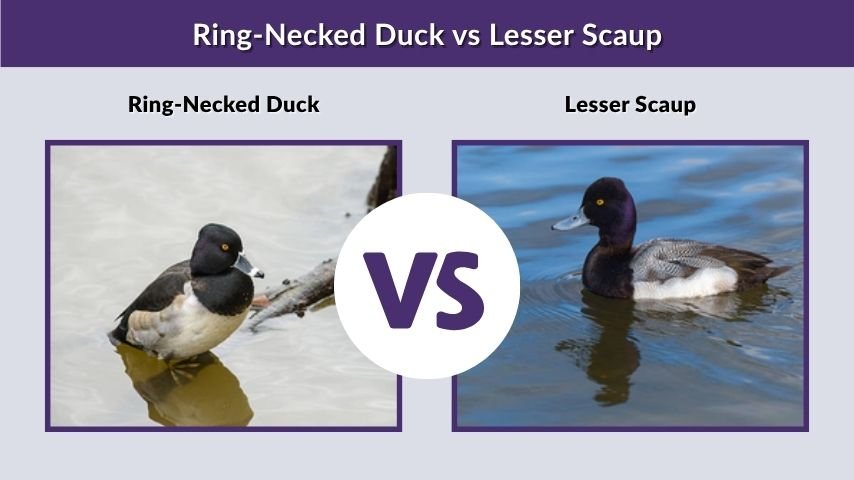
Ring-Necked Ducks are often confused with Lesser Scaups because both species are similar diving ducks. However, several physical differences help birdwatchers separate them in the field.
Appearance Differences
| Feature | Ring-Necked Duck | Lesser Scaup |
| Head Shape | Peaked rear head | Rounded head |
| Bill Marking | White ring on bill | Plain bluish bill |
| Side Stripe | Sharp white stripe | Softer side pattern |
Female Differences
| Feature | Ring-Necked Duck Female | Lesser Scaup Female |
| Eye Ring | Distinct pale ring | Less visible |
| Bill Pattern | Bold markings | Simpler bill |
| Face Shape | Angular | Rounder |
Ring-Necked Duck Sounds and Calls
Ring-Necked Ducks are generally quieter than many dabbling ducks, but they still use sounds for communication during breeding and migration. Vocalizations are most common during courtship and flock interactions.
Male Calls
Male Ring-Necked Ducks produce soft whistles and low calls during courtship displays. These sounds help attract females and maintain pair bonds during the breeding season.
Female Calls
Females make harsher quacks and alarm calls, especially when protecting nests or ducklings. Vocal communication becomes more important when young birds are nearby.
Communication During Migration
- Use calls to stay connected in flocks
- Warn other ducks about danger
- Coordinate movements during flight
- Maintain social contact on water
Predators and Threats
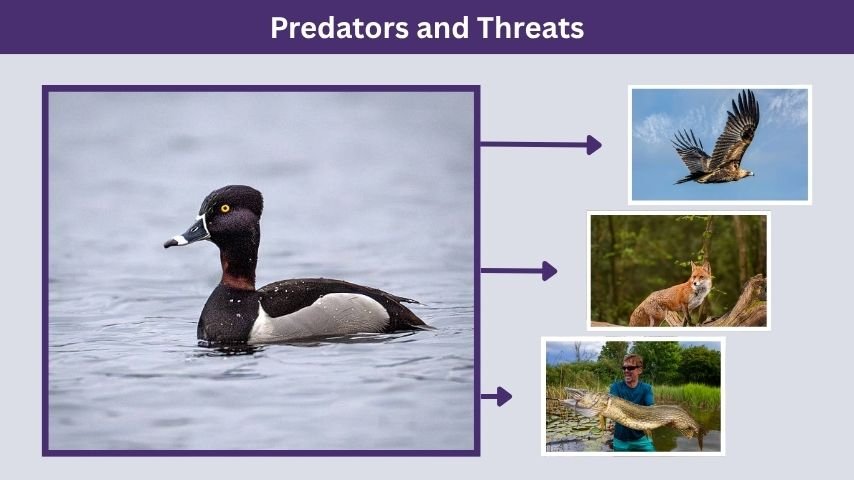
Ring-Necked Ducks face threats from both natural predators and environmental changes. Wetland protection is important for maintaining healthy populations during breeding and migration.
Natural Predators
- Eagles and hawks
- Foxes and raccoons
- Large fish
- Snakes
- Gulls and crows near nests
Human-Related Threats
Wetland destruction, pollution, and hunting pressure can reduce Ring-Necked Duck populations in some regions. Loss of freshwater habitat affects feeding, nesting, and migration stopover areas used throughout the year.
FAQs
Why is it called a Ring-Necked Duck?
The Ring-Necked Duck is named after a faint brown ring around the neck of the male. However, the ring is difficult to see, and most birdwatchers identify the duck by its bill markings instead.
What does a Ring-Necked Duck eat?
Ring-Necked Ducks eat aquatic plants, seeds, insects, snails, and other small aquatic animals. They dive underwater to search for food in shallow wetlands and freshwater lakes.
How can you identify a Ring-Necked Duck?
You can identify a Ring-Necked Duck by its peaked head shape, white ring on the bill, gray body, and white side stripe in males. Females are brown with pale face markings.
Are Ring-Necked Ducks migratory?
Yes, Ring-Necked Ducks are migratory birds. They breed in northern wetlands and travel south during winter to warmer lakes, marshes, and coastal habitats.
What is the difference between a Ring-Necked Duck and a scaup?
Ring-Necked Ducks usually have a peaked head and bold bill markings, while scaups have rounder heads and simpler bill patterns. Ring-Necked Ducks also show a clearer white side stripe.
