
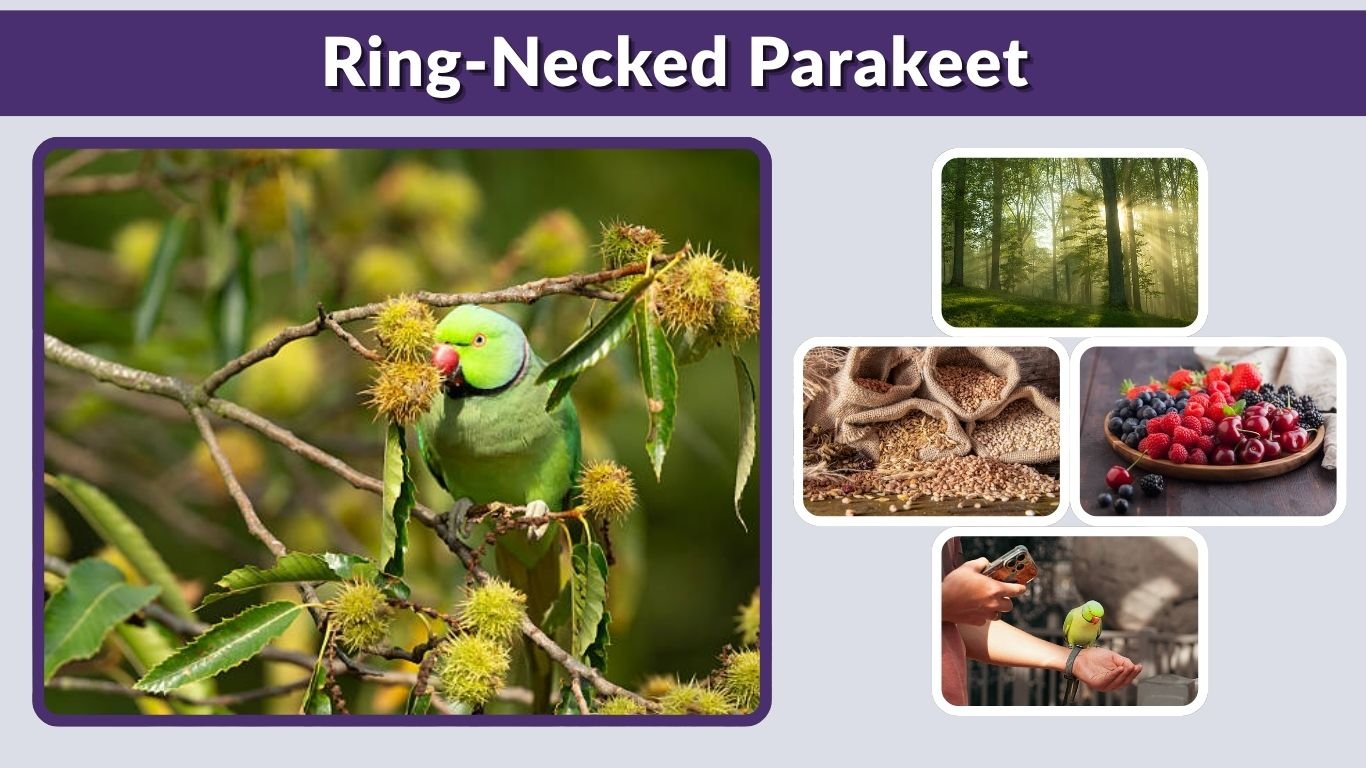
The Ring-Necked Parakeet is a colorful and intelligent bird known for its bright green feathers, long tail, and loud calls. Native to parts of Asia and Africa, this parakeet has also become common in cities like London and other parts of Europe. Its ability to adapt to urban environments and mimic human speech has made it popular as both a wild bird and a pet. Ring-Necked Parakeets are social birds that often travel in noisy flocks. In this guide, you will learn about their identification, habitat, behavior, diet, and life cycle.
What Is a Ring-Necked Parakeet?
The Ring-Necked Parakeet is a medium-sized parrot species famous for its long tail, curved beak, and bright coloration. It is highly adaptable and can survive in forests, parks, and urban environments. This bird is also known for its intelligence and ability to imitate sounds and simple human speech.
Scientific Classification
- Scientific name: Psittacula krameri
- Family: Psittaculidae
- Type: Parakeet and parrot species
- Native to Asia and Africa
- One of the most widespread parakeets in the world
Why It Is Called a Ring-Necked Parakeet
Male Ring-Necked Parakeets develop a dark ring around the neck as they mature, which gives the species its name. Females usually have little or no visible ring. Their slim bodies and long tails are also important identifying features.
Ring-Necked Parakeet Identification
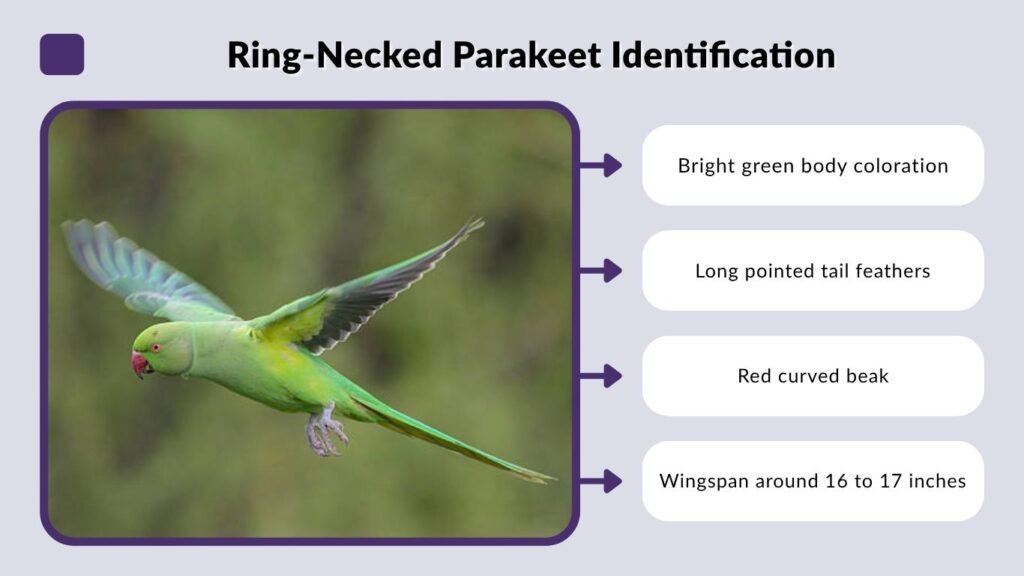
Ring-Necked Parakeets are easy to recognize because of their bright green feathers and long pointed tails. Their appearance can vary slightly depending on age, sex, and color mutation. These birds are fast fliers and are often heard before they are seen because of their loud calls.
Size and Appearance
- Bright green body coloration
- Long pointed tail feathers
- Red curved beak
- Slim body structure
- Wingspan around 16 to 17 inches
- Dark neck ring in adult males
Male vs Female Ring-Necked Parakeet
Male Ring-Necked Parakeets usually develop a visible black and pink neck ring after reaching maturity. Females generally remain plain green without the strong neck markings. Males are often slightly more colorful and vocal during breeding periods.
Common Color Mutations
Although green is the natural color, captive breeding has produced several color variations. Blue, yellow, white, and albino Ring-Necked Parakeets are now commonly seen in the pet trade. These color forms still share the same body shape and behavior as wild green birds.
Ring-Necked Parakeet Habitat and Distribution
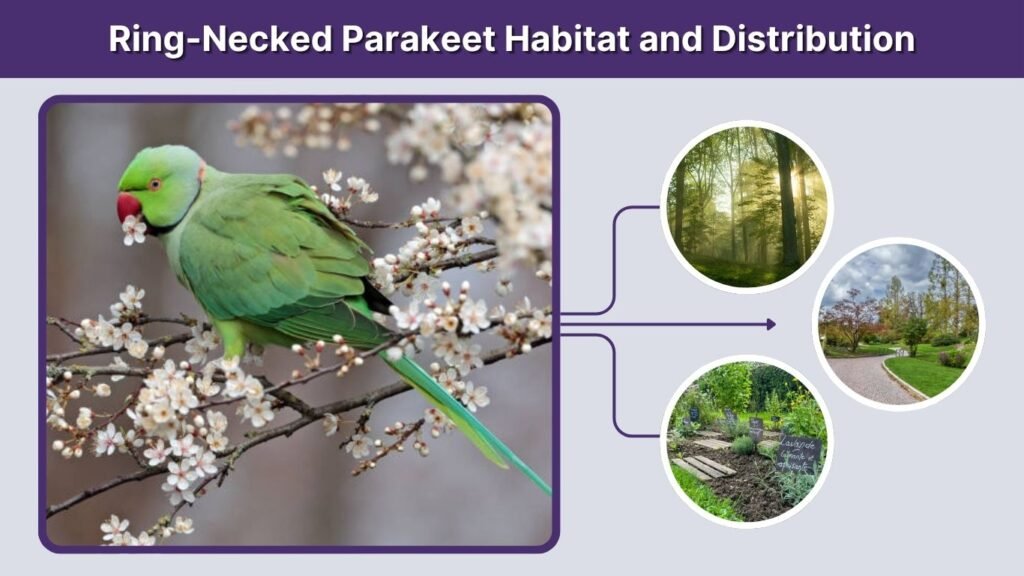
Ring-Necked Parakeets live in many habitats ranging from tropical forests to busy cities. Their adaptability has allowed them to establish populations far beyond their native range. Large flocks are now common in urban parks and suburban gardens in several countries.
Native Range
- India
- Pakistan
- Sri Lanka
- Parts of Africa
- Tropical and subtropical regions
Introduced Populations
Ring-Necked Parakeets have successfully spread into many countries outside their native range. Wild populations are now common in the United Kingdom, especially in London, as well as parts of Europe and the United States. Escaped or released pet birds are believed to have started many of these populations.
Preferred Habitat
These parakeets prefer woodlands, parks, gardens, farmland, and urban green spaces with plenty of trees. Tall trees provide nesting sites and safe places for roosting. Access to food and water is important for supporting large flocks.
Ring-Necked Parakeet Behavior
Ring-Necked Parakeets are social and active birds that spend much of their time flying, feeding, and communicating with flock members. Their intelligence and curiosity help them adapt to changing environments and interact with people in urban settings.
Social and Flocking Behavior
- Travel in noisy flocks
- Roost together in large groups
- Use loud calls for communication
- Feed socially in trees and fields
- Defend nesting sites aggressively
Intelligence and Mimicry
Ring-Necked Parakeets are highly intelligent birds capable of learning sounds, whistles, and words. Pet birds can mimic human speech and recognize routines. Their curiosity and problem-solving skills make them one of the more interactive parakeet species kept in captivity.
Ring-Necked Parakeet Diet
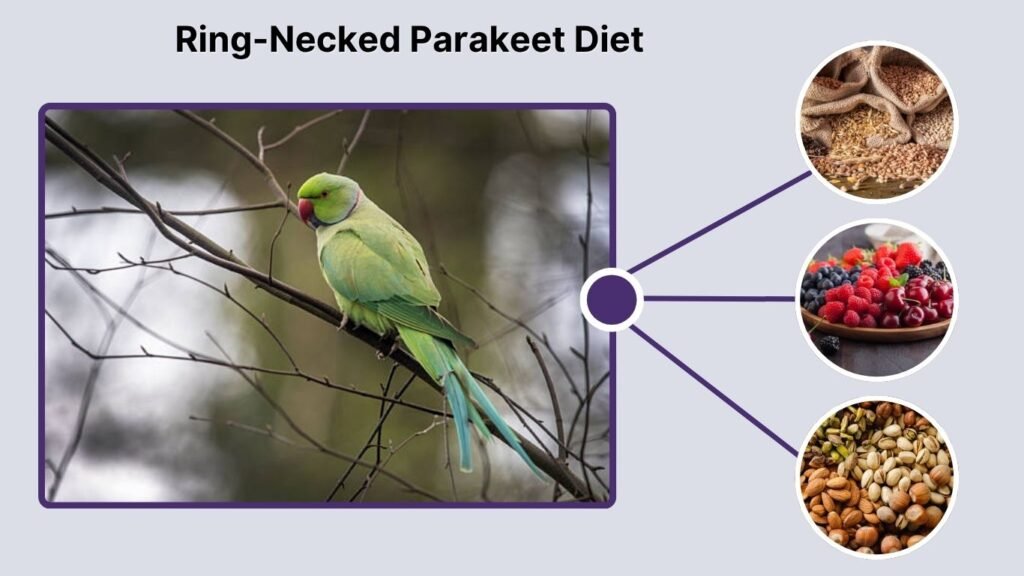
These parakeets eat a wide variety of foods in both wild and urban environments. Their flexible diet helps them survive in different climates and habitats. Feeding often takes place in groups during early morning and evening hours.
Foods Eaten in the Wild
- Seeds and grains
- Fruits and berries
- Nuts
- Flower buds
- Crops and cultivated plants
- Tender leaves and shoots
Ring-Necked Parakeet Diet Continued
A healthy and varied diet is important for both wild and pet Ring-Necked Parakeets. These birds naturally search for food in trees, gardens, and farmland while using their strong curved beaks to crack seeds and fruits. Their feeding habits often change depending on the season and food availability.
Diet in Captivity
Pet Ring-Necked Parakeets need balanced nutrition to stay healthy and active. High-quality pellets, fresh vegetables, fruits, and seeds are commonly provided in captivity. Fresh water should always be available, and treats should only be offered in moderation.
Foods to Avoid
- Chocolate
- Avocado
- Salty foods
- Alcohol
- Caffeine
- Sugary processed foods
Ring-Necked Parakeet Call and Sounds
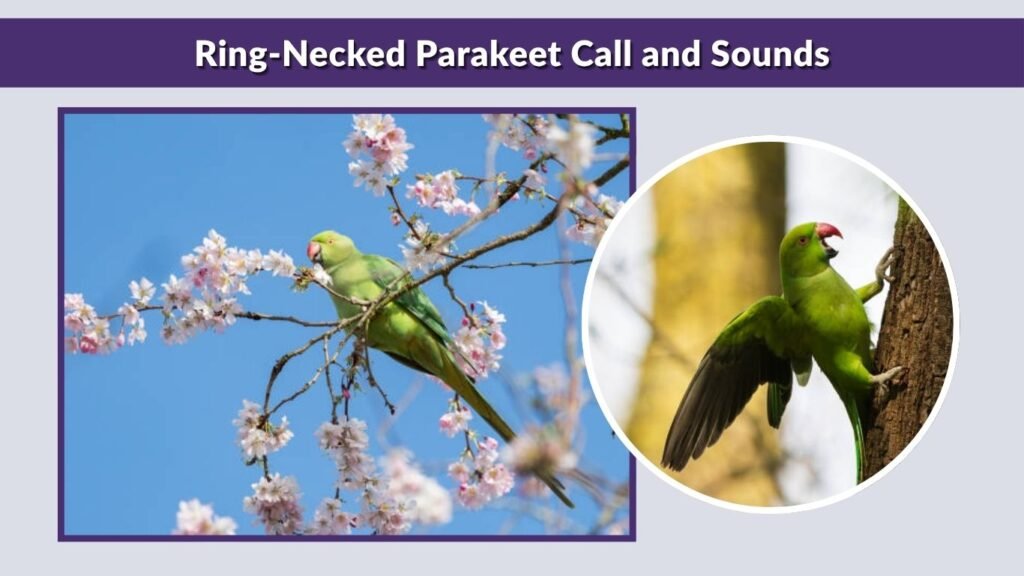
Ring-Necked Parakeets are famous for their loud and sharp vocalizations. Their calls help flock members communicate, warn about danger, and maintain social bonds. In urban areas, their noisy sounds are often one of the easiest ways to locate them in trees or parks.
Common Ring-Necked Parakeet Calls
These parakeets produce high-pitched screeches, whistles, and repeating contact calls. Flocks can become very noisy during feeding, flying, or evening roosting periods. Young birds also use softer begging calls when interacting with parents.
Why They Are So Noisy
Loud vocalizations help Ring-Necked Parakeets stay connected with flock members while flying long distances. Calls are also used to defend territory, attract mates, and warn about predators. Urban flocks may appear especially noisy because large numbers gather together in parks and trees.
Can Ring-Necked Parakeets Talk?
Many pet Ring-Necked Parakeets can learn to mimic words and simple phrases. Young birds trained regularly are often better at learning speech. Their clear voice and ability to imitate sounds make them popular talking pet birds.
Ring-Necked Parakeet Life Cycle
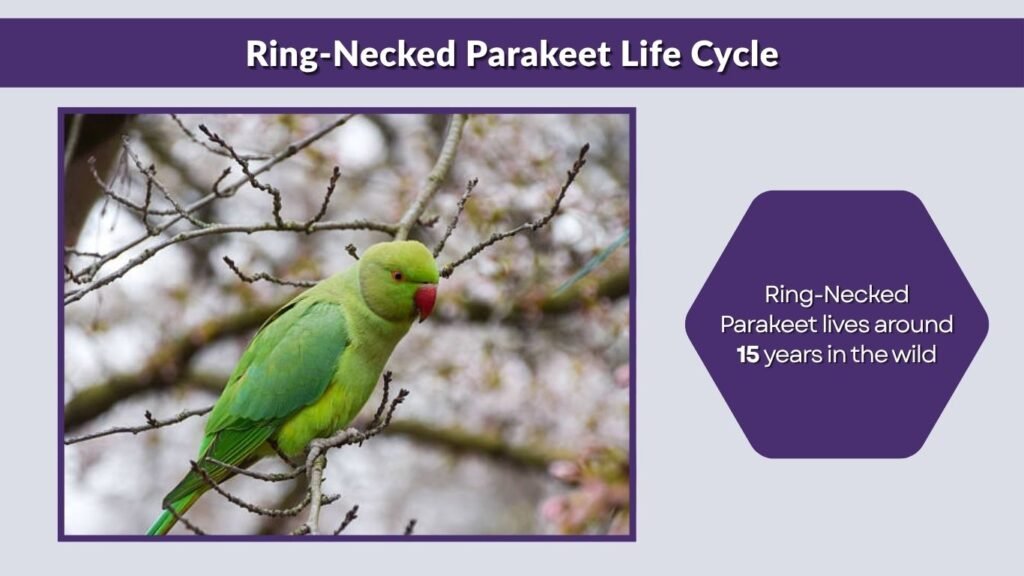
The life cycle of the Ring-Necked Parakeet includes nesting, chick development, and adulthood. These birds usually breed during warmer seasons when food is abundant. Tree cavities provide safe nesting areas for raising young chicks.
Nesting and Egg Laying
Female Ring-Necked Parakeets lay eggs inside holes in trees or other sheltered cavities. Nests are often reused during future breeding seasons. Both parents help protect the nesting site from predators and rival birds.
Chick Development
Newly hatched chicks are blind and featherless and depend completely on their parents for warmth and food. As they grow, feathers develop and the chicks become more active. Young parakeets usually leave the nest after several weeks.
Lifespan
- Around 15 years in the wild
- Up to 25 to 30 years in captivity
- Healthy diet improves lifespan
- Safe environments increase survival
- Veterinary care helps pet birds live longer
Ring-Necked Parakeet as a Pet
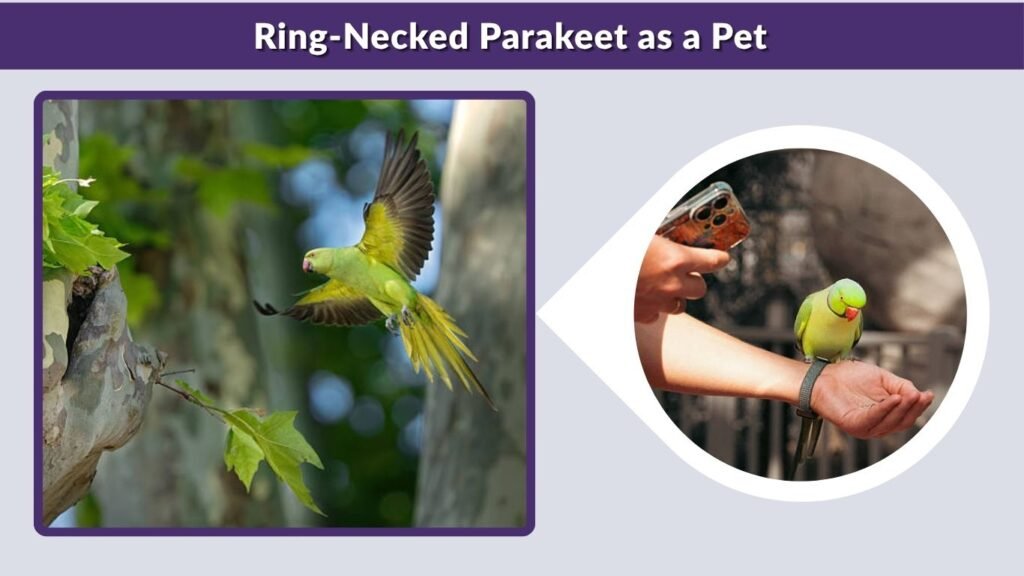
Ring-Necked Parakeets are popular pet birds because of their intelligence, playful nature, and talking ability. However, they require attention, social interaction, and regular mental stimulation to remain healthy and happy.
Temperament and Personality
These parakeets are curious, energetic, and independent birds. Some form strong bonds with owners and enjoy learning tricks or speech. Early socialization is important for reducing fear and aggressive behavior.
Cage and Space Requirements
Ring-Necked Parakeets need large cages with room for climbing and flying. Toys, perches, and daily exercise are essential for preventing boredom. Birds kept in small spaces without stimulation may develop behavioral problems.
Common Challenges
- Loud vocalizations
- Biting during stress or fear
- Need for daily interaction
- Strong chewing behavior
- Messy feeding habits
Ring-Necked Parakeet in the UK and London
Wild Ring-Necked Parakeets have become especially common in London and other parts of the United Kingdom. Large green flocks are now a familiar sight in parks, gardens, and suburban areas where food and nesting sites are plentiful.
Why They Thrive in London
The mild climate, abundant bird feeders, and large city parks help Ring-Necked Parakeets survive successfully in London. Their intelligence and adaptability allow them to compete well in urban environments.
FAQs
Are Ring-Necked Parakeets good pets?
Ring-Necked Parakeets can make excellent pets for experienced bird owners. They are intelligent, playful, and capable of learning speech, but they also require daily attention, social interaction, and mental stimulation.
Can Ring-Necked Parakeets talk?
Yes, many Ring-Necked Parakeets can mimic human speech and sounds. Young birds trained consistently are often better at learning words and short phrases.
What do Ring-Necked Parakeets eat?
Ring-Necked Parakeets eat seeds, fruits, nuts, vegetables, flower buds, and grains. Pet birds should receive a balanced diet with pellets, fresh produce, and clean water.
Why are Ring-Necked Parakeets common in London?
The mild climate, large parks, bird feeders, and abundant trees in London provide excellent conditions for Ring-Necked Parakeets to survive and breed successfully.
How long do Ring-Necked Parakeets live?
Ring-Necked Parakeets usually live around 15 years in the wild. In captivity, with proper care and nutrition, they can live up to 25 to 30 years.
