
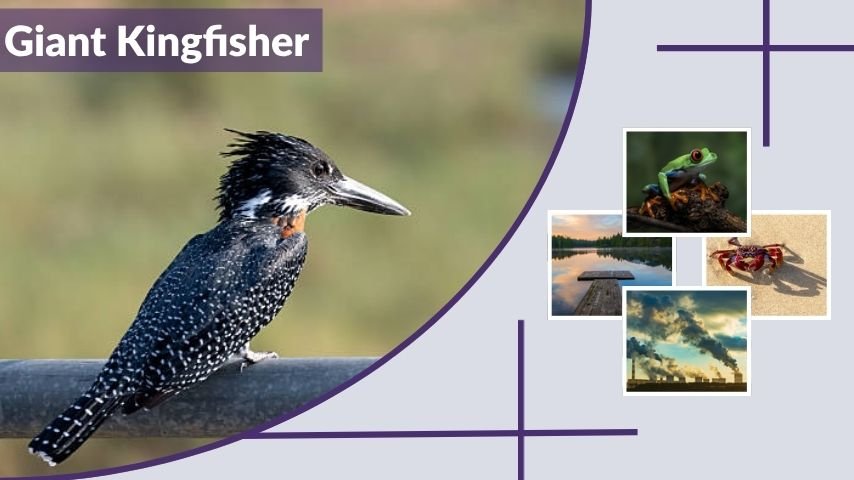
The Giant Kingfisher is Africa’s largest kingfisher and one of the most striking birds found near rivers, lakes, wetlands, and coastal waterways. Known for its powerful bill, black-and-white spotted plumage, rusty chestnut markings, and loud call, this bird is a favorite among birdwatchers and wildlife photographers. Although some searches confuse “giant kingfish” with fish or local business terms, the Giant Kingfisher is a real bird species with a fascinating life around water.
What Is a Giant Kingfisher?
The Giant Kingfisher is a large kingfisher species scientifically known as Megaceryle maxima. It belongs to the family Alcedinidae, which includes many colorful fishing birds found around the world. As its name suggests, this species is especially large compared with most other kingfishers.
The Giant Kingfisher is mainly found in sub-Saharan Africa, where it lives near freshwater and coastal habitats. It is a resident breeding bird across much of the region, especially where rivers, lakes, reservoirs, lagoons, and wooded waterways provide enough food and nesting areas.
Unlike tiny kingfishers that may flash quickly through dense vegetation, the Giant Kingfisher is often easier to notice. It commonly perches on exposed branches, rocks, posts, or banks above water. From there, it watches for fish, crabs, frogs, and other aquatic prey before diving down with speed and force.
Giant Kingfisher Quick Facts
Here are the most useful facts for quick identification and understanding.
| Feature | Details |
|---|---|
| Common name | Giant Kingfisher |
| Scientific name | Megaceryle maxima |
| Family | Alcedinidae |
| Region | Sub-Saharan Africa |
| Common habitats | Rivers, lakes, reservoirs, lagoons, streams, wetlands, and coastal waters |
| Diet | Fish, crabs, frogs, aquatic insects, and small water animals |
| Conservation status | Least Concern |
| Notable trait | Largest kingfisher in Africa |
The species is listed as Least Concern by global conservation references, meaning it is not currently considered globally threatened. However, local populations still depend on healthy rivers, wetlands, banks, and aquatic ecosystems.
Giant Kingfisher Size: How Big Is It?
The Giant Kingfisher is large, heavy-headed, and powerful-looking. It has a long, straight bill, a shaggy crest, broad wings, and a short tail. Many sources describe it as reaching about 44 cm in length, making it a very large member of the kingfisher family.
Its size is one of the best field marks. When perched, it can look bulky and almost hawk-like compared with smaller kingfishers. In flight, it has a strong, direct style, often traveling low along rivers or across water.
Giant Kingfisher Size Comparison
Compared with common smaller kingfishers, the Giant Kingfisher looks massive. It is much larger than colorful species such as the Malachite Kingfisher and also larger than many medium-sized river kingfishers.
A useful comparison is this:
- Malachite Kingfisher: tiny, bright, and delicate
- Pied Kingfisher: medium-sized, black and white, often hovers
- Giant Kingfisher: large, heavy-billed, and powerful
- Kookaburra: also large, but belongs to a different kingfisher group and has different habits
The Giant Kingfisher does not look sleek or delicate. Its large head, thick bill, and sturdy body make it appear built for catching strong aquatic prey.
What Does a Giant Kingfisher Look Like?
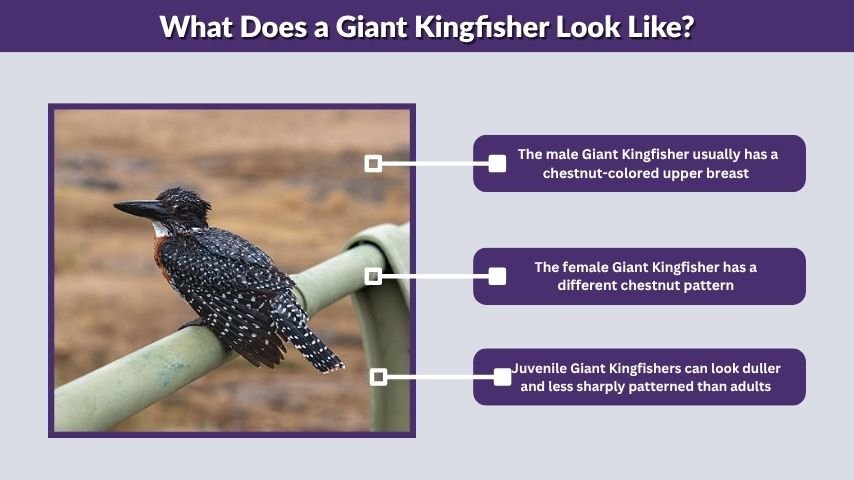
The Giant Kingfisher has bold black, white, and chestnut coloring. Its upperparts are dark with white spotting, while the head has a shaggy crest. The throat and collar areas include white markings, and the underparts show rich rusty or chestnut tones.
The bird’s long bill is one of its most noticeable features. It is straight, strong, and dagger-like, designed for grabbing prey from water. Its legs are short, as is typical for kingfishers, but its feet are strong enough to grip branches, rocks, and banks.
Male Giant Kingfisher
The male Giant Kingfisher usually has a chestnut-colored upper breast. This chestnut patch contrasts with the darker spotted upperparts and lighter markings around the throat and neck. When seen from the front, the male’s chest pattern can help separate it from the female.
Female Giant Kingfisher
The female Giant Kingfisher has a different chestnut pattern. In many descriptions, females show chestnut on the lower belly and underwing areas rather than the same upper-breast pattern shown by males. This difference makes the species sexually dimorphic, meaning males and females have visible plumage differences.
Juvenile Giant Kingfisher
Juvenile Giant Kingfishers can look duller and less sharply patterned than adults. Their markings may appear less clean, and the colors may not be as rich. Still, the large size, powerful bill, shaggy crest, and waterside behavior are strong clues for identification.
Where Do Giant Kingfishers Live?
Giant Kingfishers live across much of sub-Saharan Africa. Their range extends from western Africa through central and eastern Africa and down into southern Africa. They are absent or much less common in the driest desert areas, especially where permanent water is scarce.
They are often associated with lowland and foothill water systems. In suitable areas, they can be found around large rivers, streams, reservoirs, freshwater lakes, coastal lagoons, and wooded waterways.
Giant Kingfisher in South Africa
The Giant Kingfisher is one of the well-known South African kingfishers. It occurs in many aquatic habitats, especially where suitable water, prey, and nesting banks are available. It can be seen in nature reserves, river valleys, wetlands, and coastal areas.
In South Africa, birdwatchers may also search for it along hiking routes or waterways, including places where trail names use “Giant Kingfisher.” However, not every search result for “Giant Kingfisher Trail” is about the bird itself. Some refer to hiking routes, waterfalls, or local tourism attractions.
Giant Kingfisher in Gambia
The Giant Kingfisher also occurs in parts of West Africa, including areas such as Gambia where suitable river and wetland habitats exist. Birders visiting river systems, mangroves, and wetland reserves may look for this species perched above water.
Giant Kingfisher in Australia
The Giant Kingfisher is not an Australian bird. Searches for “giant kingfisher Australia” usually happen because Australia has large kingfisher relatives, especially kookaburras. Kookaburras are members of the kingfisher family, but they are not the same as the African Giant Kingfisher.
Giant Kingfisher Habitat
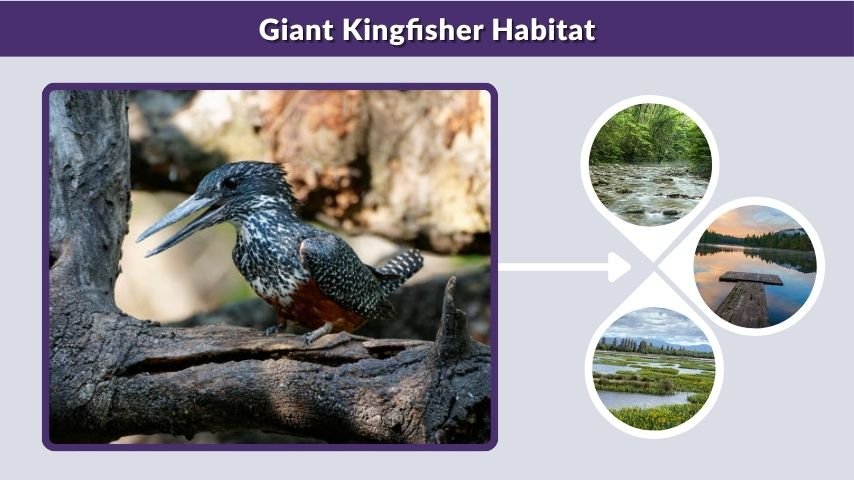
The Giant Kingfisher is strongly connected to water. It needs places where it can watch the surface, dive after prey, and find banks or suitable areas for nesting.
Common habitats include:
- Rivers and streams
- Lakes and reservoirs
- Coastal lagoons
- Estuaries and mangroves
- Wetlands and marshes
- Wooded waterways
- Large ponds and dams
It can use both freshwater and some coastal habitats. The best locations usually have clear hunting perches and enough fish, crabs, or other aquatic prey.
Vertical earth banks are also important during breeding because kingfishers often nest in tunnels dug into banks. Biodiversity Explorer notes that both sexes excavate nest tunnels in vertical sandbanks, which shows why natural banks can be important for breeding habitat.
Giant Kingfisher Call and Sound
The Giant Kingfisher has a loud, harsh call that often carries across water. Like many kingfishers, it may call while flying along rivers or when disturbed from a perch. Birders may hear it before they see it.
The sound is often described as loud, rough, and rattling. It is not a sweet songbird-like call. Instead, it fits the bird’s bold personality and waterside hunting style. In quiet river habitats, the call can be one of the easiest ways to detect the species.
When listening for a Giant Kingfisher, pay attention to:
- Loud rattling notes near water
- Calls coming from exposed branches or riverbanks
- Noisy flight along rivers or lagoons
- Repeated calls from a regular perch
Because calls can vary by situation, location, and individual, birders often compare recordings from reliable bird sound libraries when learning the species.
What Does a Giant Kingfisher Eat?
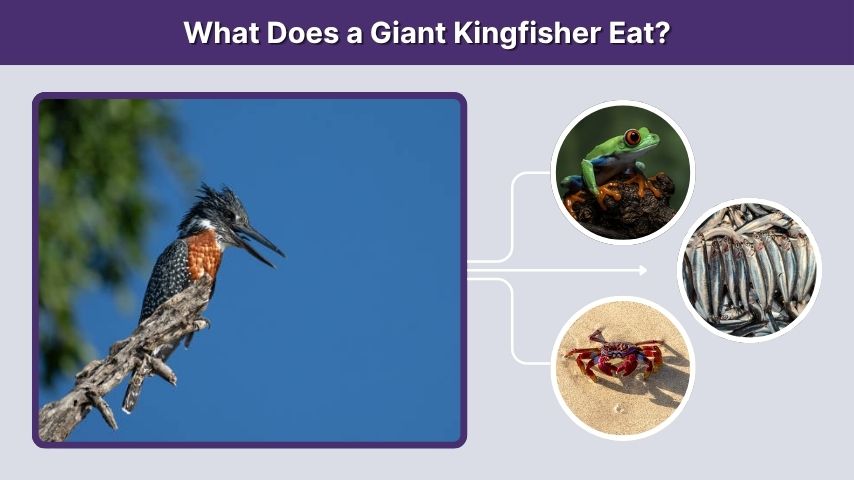
The Giant Kingfisher is a predator of aquatic animals. It feeds mainly on fish and crabs, but its diet can also include frogs, aquatic insects, and other small animals found near water.
In southern Africa, some sources note that crabs can be especially important in its diet, with fish making up much of the rest.
Its hunting method is direct and powerful. The bird sits on a perch, watches carefully, then dives into the water or onto the edge to catch prey. After capturing food, it usually returns to a perch to handle it. Fish may be beaten against a branch or rock before being swallowed.
Hunting Behavior
The Giant Kingfisher usually hunts from a fixed perch. It may sit quietly for long periods, then suddenly drop toward the water. Its large bill helps it grab slippery prey, while its strong body allows it to handle relatively large catches.
Common hunting behaviors include:
- Perching above water and scanning below
- Diving sharply after fish or aquatic prey
- Catching crabs along banks or shallow edges
- Returning to a perch before swallowing food
- Flying low along waterways between hunting spots
This hunting style makes the bird easier to observe than species that stay hidden in dense forest.
Giant Kingfisher Nest and Breeding
Like many kingfishers, the Giant Kingfisher nests in a tunnel. The tunnel is usually dug into a vertical bank near water. Both sexes may help excavate the nesting burrow, and the process can take several days.
A nesting site must be safe enough from flooding, predators, and disturbance. Natural riverbanks, sandbanks, and earth cuttings may provide suitable nesting places. If banks are destroyed or heavily disturbed, breeding opportunities can be reduced.
Because the species is tied to water and banks, changes to river systems can affect local nesting success. Bank erosion, development, pollution, and heavy human disturbance may all create problems in some areas.
Giant Kingfisher vs Kookaburra
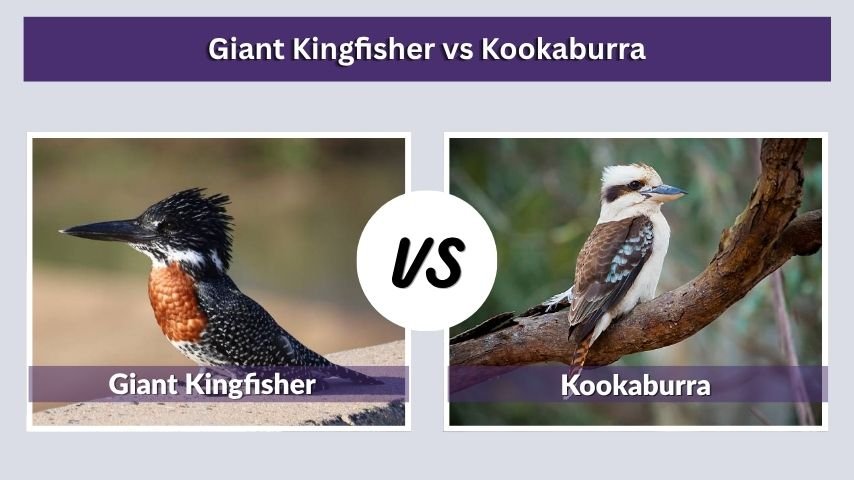
The search “Giant Kingfisher vs Kookaburra” is common because both birds are large members of the kingfisher family. However, they live in different parts of the world and behave differently.
The Giant Kingfisher is African and strongly associated with water. It catches fish, crabs, and other aquatic prey. It has black-and-white spotted plumage with chestnut areas and a long, powerful bill.
Kookaburras are mainly associated with Australia and nearby regions. Although they are kingfishers, many kookaburras hunt more on land than in water. They are famous for loud laughing calls and often eat insects, reptiles, small mammals, and other terrestrial prey.
Main Differences
The easiest way to separate them is by location and lifestyle. A large kingfisher in Africa near rivers may be a Giant Kingfisher. A large laughing kingfisher in Australia is more likely a kookaburra.
Key differences include:
- Region: Giant Kingfisher is African; kookaburras are Australasian.
- Habitat: Giant Kingfisher is closely tied to water; kookaburras are often woodland or open-country birds.
- Diet: Giant Kingfisher eats many aquatic animals; kookaburras often take land-based prey.
- Sound: Giant Kingfisher has a harsh call; kookaburras are famous for laughing calls.
Giant Kingfisher and Similar Birds
Several African kingfishers may be seen in the same general habitats. Some are much smaller, while others share black-and-white patterns.
Similar birds include:
- Pied Kingfisher: Smaller, black and white, often hovers over water.
- Malachite Kingfisher: Tiny, bright blue and orange, found near reeds and still water.
- Half-collared Kingfisher: Smaller, blue-toned, usually along clear streams.
- Grey-headed Kingfisher: More woodland-based and less tied to fishing.
- Kookaburra: Large kingfisher relative, but not African and not the same species.
The Giant Kingfisher’s size, large bill, shaggy crest, and chestnut markings usually make it stand out.
Giant Kingfisher Photos and Birdwatching Tips
The Giant Kingfisher is a rewarding bird for photography because it often perches in the open. Look along riverbanks, quiet lakeshores, wooded streams, bridges, and wetland edges.
For better viewing or photos:
- Scan exposed branches over water.
- Listen for loud, rough calls.
- Watch for a large bird flying low along a river.
- Stay still and keep distance from feeding perches.
- Avoid disturbing nesting banks.
- Visit early morning or late afternoon for better light.
Patience is important. A Giant Kingfisher may return again and again to the same hunting perch if it feels safe.
Conservation Status
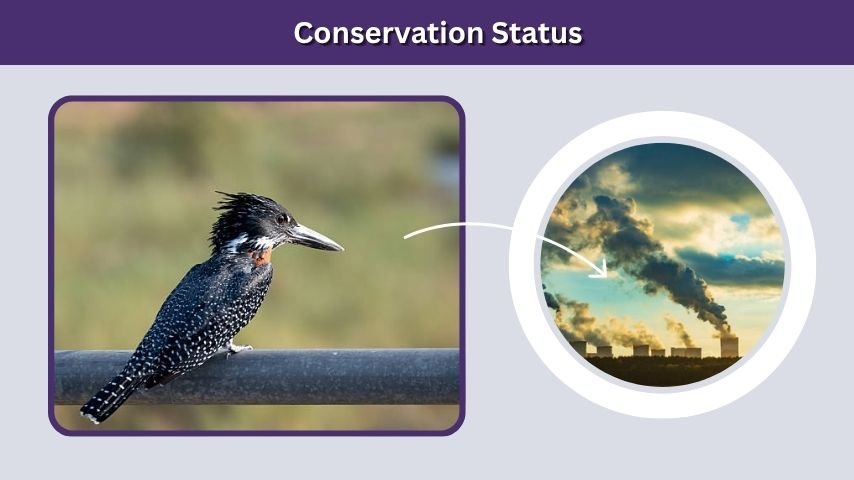
The Giant Kingfisher is not currently considered globally threatened and is generally listed as Least Concern. Still, this does not mean every local population is safe from pressure.
The bird depends on healthy aquatic habitats. Pollution, wetland drainage, riverbank destruction, overdevelopment, and reduced fish or crab populations can all affect local numbers. Protecting rivers, lagoons, wetlands, and natural banks helps the Giant Kingfisher and many other species that share the same ecosystem.
FAQs
How big is the Giant Kingfisher?
The Giant Kingfisher is one of the largest kingfishers in the world and the largest kingfisher in Africa. It is often described as around 44 cm long, with a heavy body, shaggy crest, and a long, powerful bill. Its size makes it much bulkier than smaller African kingfishers.
Where do Giant Kingfishers live?
Giant Kingfishers live across much of sub-Saharan Africa. They are found near rivers, streams, lakes, reservoirs, lagoons, wetlands, mangroves, and coastal waters. They avoid the driest areas where permanent water and aquatic prey are limited.
What does the Giant Kingfisher eat?
The Giant Kingfisher eats fish, crabs, frogs, aquatic insects, and other small water animals. It hunts from a perch above water, dives after prey, and usually returns to a branch, rock, or bank to handle the catch before swallowing it.
Is the Giant Kingfisher found in South Africa?
Yes, the Giant Kingfisher is found in South Africa. It lives in suitable freshwater and coastal habitats, including rivers, dams, wetlands, lagoons, and wooded waterways. South Africa is one of the best places for birders to see this impressive kingfisher.
Is a Giant Kingfisher the same as a kookaburra?
No, a Giant Kingfisher is not the same as a kookaburra. The Giant Kingfisher is an African water-associated kingfisher that catches fish and crabs. Kookaburras are large kingfisher relatives from Australia and nearby areas, famous for their laughing calls and more land-based hunting.
