
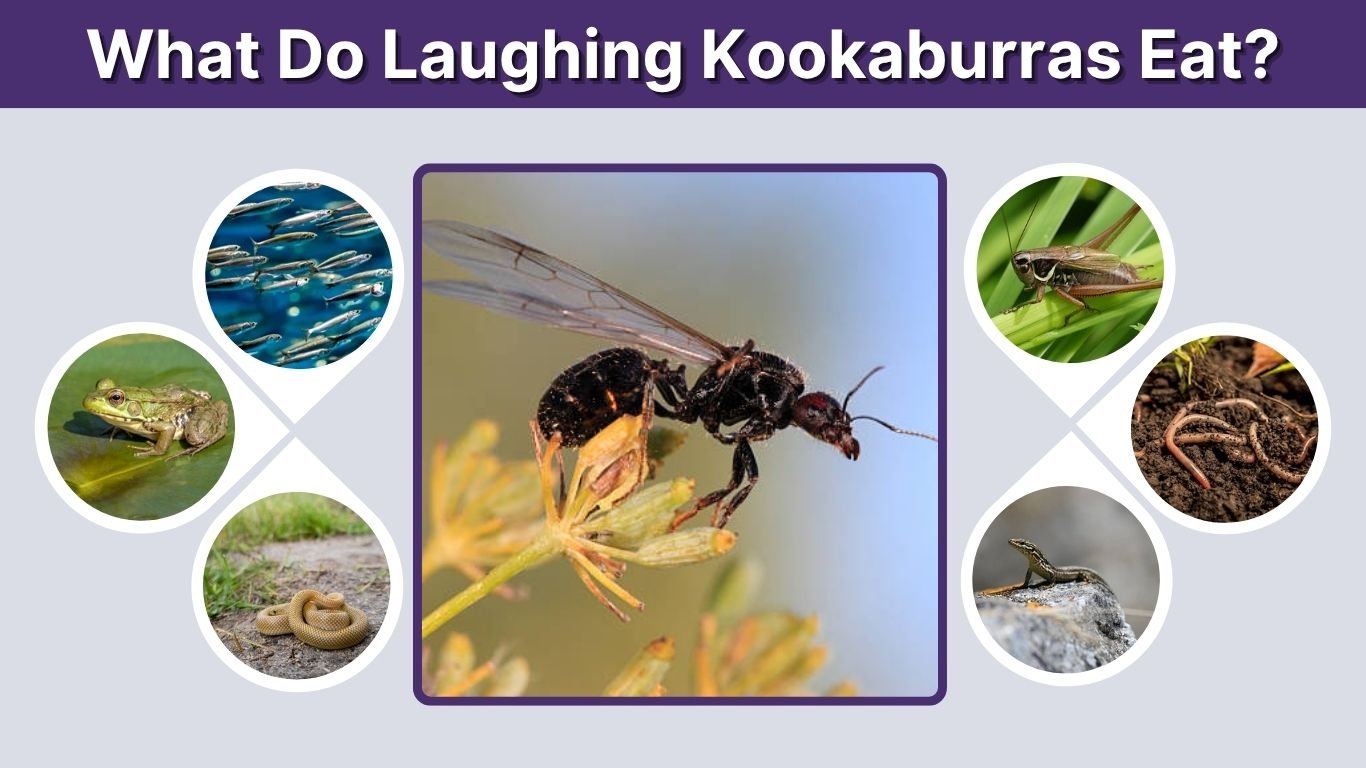
Laughing kookaburras are famous for their loud call that sounds like human laughter, but they are also skilled hunters with a varied diet. These large kingfishers mostly eat small animals, insects, reptiles, and other prey they can catch from the ground. Understanding what laughing kookaburras eat helps explain their behavior, habitat, hunting style, and role in nature.
Laughing Kookaburra Diet Overview
Laughing kookaburras are carnivorous birds, which means they mainly eat animal-based foods. Unlike many smaller backyard birds, they do not depend on seeds, fruit, or leaves. Instead, they watch carefully from a perch, then swoop down to catch prey with their strong beak.
What Food Does a Kookaburra Eat?
A laughing kookaburra eats a wide range of small animals. Its diet depends on what is available in its habitat. In forests and woodlands, it may eat insects, lizards, frogs, and snakes. In gardens or farms, it may catch worms, mice, and other small pests.
Common kookaburra foods include insects, earthworms, lizards, frogs, small snakes, rodents, small birds, fish, crustaceans, spiders, and larvae. This variety helps the bird survive in different environments.
Are Laughing Kookaburras Meat Eaters?
Yes, laughing kookaburras are meat eaters. They are predators that hunt live prey. Their strong beak helps them grab, hold, and kill small animals. When they catch larger prey, they may beat it against a branch or hard surface before swallowing it.
This hunting method is common when kookaburras catch snakes, lizards, or rodents. It helps make the prey easier and safer to eat.
10 Common Foods Laughing Kookaburras Eat
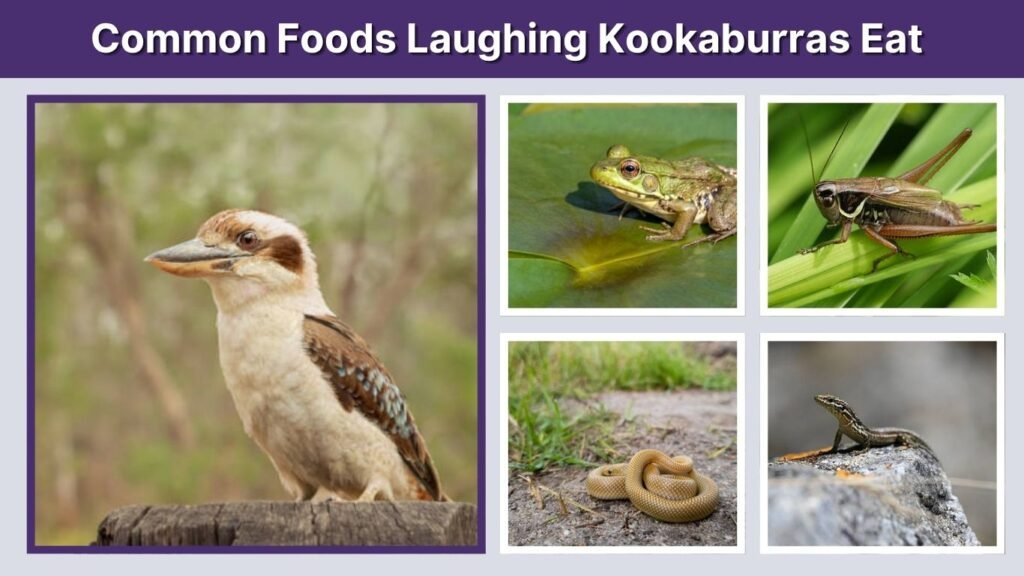
Laughing kookaburras are opportunistic hunters. This means they eat many different foods depending on season, habitat, and prey availability. They are not picky when suitable prey is available.
| Food | Why Kookaburras Eat It |
|---|---|
| Insects | Easy to find and rich in protein |
| Earthworms | Soft, moist, and common after rain |
| Lizards | Common prey in warm habitats |
| Small snakes | High-protein prey caught with strong beaks |
| Frogs | Found near ponds, wetlands, and damp areas |
| Mice | Useful food in farms, grasslands, and gardens |
| Small birds | Taken when available, especially young birds |
| Fish | Eaten occasionally near water |
| Crustaceans | Found near rivers, ponds, or coastal areas |
| Spiders and larvae | Small prey found in bark, soil, and leaf litter |
1. Insects
Insects are one of the most common foods in the laughing kookaburra diet. Kookaburras eat beetles, grasshoppers, crickets, moths, caterpillars, and other insects found in grass, soil, bark, and gardens.
Insects are easy to catch and provide protein. During warmer months, insects may become especially important because they are more active and easier for birds to spot.
2. Earthworms
Earthworms are another common food for kookaburras. They are especially easy to find after rainfall, when worms move closer to the surface. Kookaburras may hunt them in lawns, damp soil, gardens, and open woodland areas.
Earthworms are soft and easy to swallow. They also contain moisture, which can help birds stay hydrated.
3. Lizards
Small lizards and skinks are a favorite food for laughing kookaburras. These reptiles are often found on rocks, logs, fences, and warm ground. Kookaburras watch from a branch or post, then quickly dive down when they see movement.
Their sharp eyesight helps them notice even small movements in grass or leaf litter.
4. Small Snakes
Laughing kookaburras are well known for eating small snakes. They use their powerful beak to grab the snake and may strike it against a branch, log, or rock before eating it.
This behavior helps protect the bird from injury. Although kookaburras are bold hunters, snakes can still be dangerous if not handled carefully.
5. Frogs
Frogs are part of the kookaburra diet, especially in areas near ponds, creeks, wetlands, and damp gardens. Kookaburras may catch frogs from the ground, shallow water edges, or wet vegetation.
Frogs are a good source of protein and moisture. They are more available in wet seasons or after rain.
Do Kookaburras Eat Fish, Worms, and Leaves?
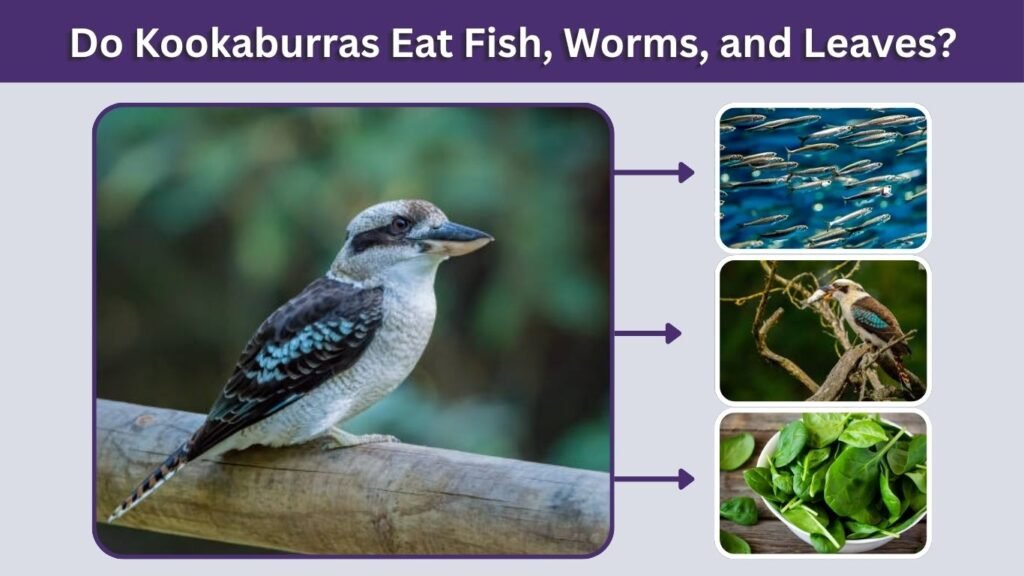
Many people ask whether kookaburras eat fish, worms, or leaves because they belong to the kingfisher family. The answer depends on the food type. Laughing kookaburras eat some foods often, some rarely, and some almost never.
Do Kookaburras Eat Fish?
Yes, kookaburras can eat fish, but fish are not their main food. Unlike many kingfishers, laughing kookaburras usually hunt on land rather than diving into water. They may catch small fish if they are easy to reach in shallow water.
They are more likely to eat insects, reptiles, frogs, and small mammals than fish.
Do Kookaburras Eat Worms?
Yes, kookaburras eat worms. Earthworms are common prey, especially after rain. A kookaburra may spot a worm moving on the ground and quickly swoop down to grab it.
Worms are easy to swallow and provide moisture as well as nutrition. Gardens, lawns, and damp soil are common places where kookaburras may find worms.
Do Kookaburras Eat Leaves?
No, laughing kookaburras do not normally eat leaves as a regular food. They are carnivorous birds, so they mostly eat animal prey. They may accidentally swallow small plant pieces while eating prey, but leaves are not an important part of their diet.
If a kookaburra is seen near trees or plants, it is usually looking for insects, lizards, or other animals.
What Do Kookaburras Eat and Drink?
Laughing kookaburras eat animal prey and drink water from natural or available sources. They may get some moisture from food, but they still need access to water, especially in hot weather.
What Do Kookaburras Drink?
Kookaburras drink fresh water from streams, ponds, puddles, birdbaths, and other shallow water sources. In suburban areas, they may visit gardens where water is available.
They may also get moisture from prey such as frogs, worms, and insects. However, clean water is still important for their survival.
Should You Feed Kookaburras?
It is better not to feed wild kookaburras. Feeding them may seem kind, but it can cause health and behavior problems. Human food does not provide the balanced nutrition they need.
Avoid feeding kookaburras:
- Bread
- Processed meat
- Sausages
- Chips or salty food
- Cooked leftovers
- Pet food as a regular diet
Feeding can make kookaburras dependent on people and may reduce their natural hunting skills. It can also attract pests or cause birds to become bold around humans.
How Laughing Kookaburras Hunt for Food
Laughing kookaburras are patient hunters. They do not usually chase prey for long distances. Instead, they use a sit-and-wait hunting method.
Perch-and-Pounce Hunting
A kookaburra often sits on a branch, fence post, powerline, or tree stump. From there, it watches the ground carefully. When it sees movement, it swoops down quickly and grabs the prey with its beak.
This method helps save energy. Instead of flying constantly, the bird waits for the right moment to strike.
How They Handle Larger Prey
When a kookaburra catches larger prey, such as a lizard, snake, or mouse, it may beat the prey against a hard surface. This helps kill or weaken the prey and makes it easier to swallow.
This behavior may look rough, but it is a natural part of how kookaburras feed.
What Animals Eat Kookaburras?
Although laughing kookaburras are strong hunters, they can still be prey for larger animals. Adult kookaburras are harder to catch, but eggs, chicks, and young birds are more vulnerable.
Common Kookaburra Predators
Predators may vary by region and habitat. Kookaburras face the greatest risk when nesting or when young birds are learning to fly.
Possible predators include:
- Large birds of prey
- Snakes
- Goannas
- Feral cats
- Foxes
- Other nest predators
Tree hollows help protect eggs and chicks, but predators may still reach nests. Human activity can also create risks by removing old trees that kookaburras need for nesting.
How Kookaburras Protect Themselves
Kookaburras use strong calls, sharp beaks, and family group behavior to defend themselves. Their loud call can warn other kookaburras and help mark territory. Family members may also help protect nesting areas.
Adults often stay alert and watch their surroundings carefully while perching.
Laughing Kookaburra Sound and Feeding Behavior
The laughing kookaburra sound is one of the most recognizable bird calls in the world. Although it sounds like laughter, it has a serious purpose.
How Do Kookaburras Laugh?
Kookaburras do not laugh because they are happy or amused. Their “laugh” is a territorial call. It tells other kookaburras that an area is already occupied.
The call often starts with a low chuckle and builds into a loud chorus. Several family members may call together, especially at dawn and dusk.
What Does a Laughing Kookaburra Sound Like?
A laughing kookaburra sounds like loud, rolling human laughter. The call may begin slowly, then become faster and stronger. It can echo through forests, parks, farms, and suburban areas.
This sound is also why kookaburras are sometimes called the “bush alarm clock.”
Kookaburra Diet in Gardens and Backyards
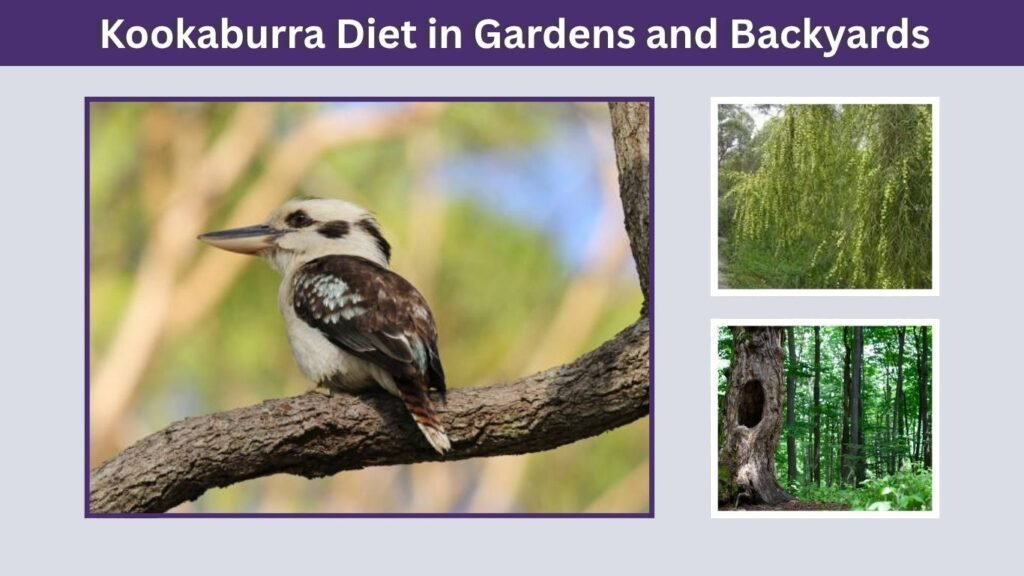
Laughing kookaburras often visit gardens and backyards, especially where there are trees, open lawns, insects, and water. They may help reduce small pests naturally by eating insects, mice, and reptiles.
What Attracts Kookaburras to a Yard?
Kookaburras may visit yards that provide good hunting spots and safe perches. They do not need artificial feeding if the habitat supports natural prey.
A kookaburra-friendly yard may include:
- Native trees
- Open lawn areas
- Leaf litter for insects
- Chemical-free garden spaces
- Safe water sources
- Old trees with hollows
- Perches such as branches or posts
Avoid using harmful pesticides because kookaburras can be affected if they eat poisoned insects or rodents.
Why Natural Food Is Best
Natural food keeps kookaburras healthy and active. Hunting also supports their natural behavior. When humans feed them too often, kookaburras may become less fearful, more dependent, and more likely to approach people for food.
The best way to help kookaburras is to protect their habitat rather than feed them directly.
FAQs
What do laughing kookaburras eat most often?
Laughing kookaburras most often eat insects, worms, lizards, frogs, small snakes, and small mammals. Their diet depends on what is available in their habitat. They are carnivorous birds, so they mainly hunt animal prey instead of eating seeds, fruit, or leaves.
Do kookaburras eat fish?
Yes, kookaburras can eat small fish, but fish are not their main food. Laughing kookaburras belong to the kingfisher family, but they usually hunt on land. They are more likely to eat insects, reptiles, frogs, worms, and small mammals than fish.
Do kookaburras eat leaves?
No, kookaburras do not usually eat leaves. They are meat-eating birds that hunt live prey. Leaves, seeds, and fruit are not important parts of their normal diet. If they are near plants, they are usually searching for insects, lizards, or other small animals.
What should you feed kookaburras?
It is best not to feed wild kookaburras. They should eat natural prey such as insects, worms, lizards, and small animals. Human foods like bread, processed meat, sausages, chips, and leftovers can be unhealthy and may make kookaburras dependent on people.
What animals eat kookaburras?
Adult kookaburras may be hunted by large birds of prey, while eggs and chicks are more vulnerable to snakes, goannas, cats, foxes, and nest predators. Kookaburras defend themselves with strong beaks, loud calls, alert behavior, and support from family groups.
