
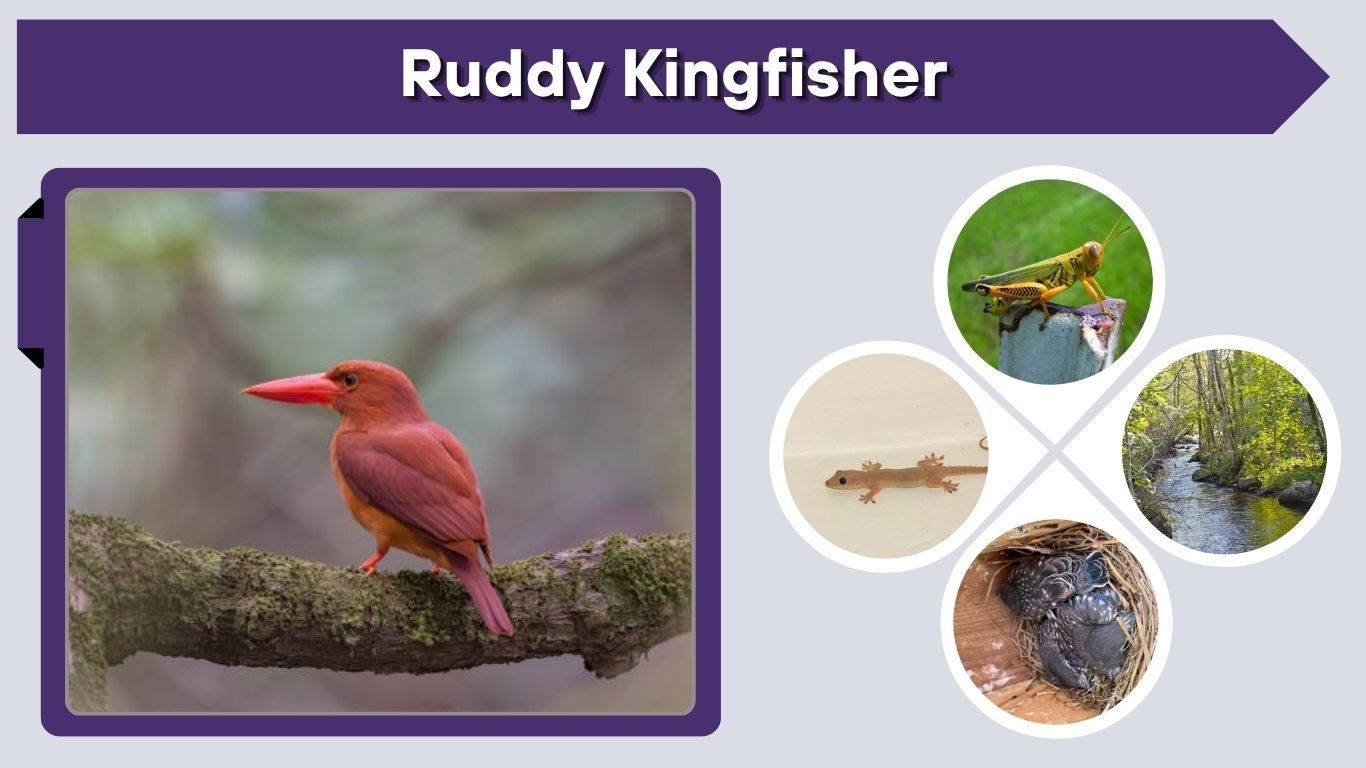
The Ruddy Kingfisher is a striking, medium-sized tree kingfisher known for its rich reddish-brown plumage and deep forest lifestyle. Unlike many bright, river-dwelling kingfishers, this species prefers dense wooded habitats and quiet mangroves. Found across parts of South and Southeast Asia, it is admired for its elusive behavior and distinctive, echoing calls that often reveal its presence before it is seen.
Identification and Key Characteristics
The Ruddy Kingfisher (Halcyon coromanda) is best recognized by its warm, rust-colored body and contrasting darker wings. It is a member of the tree kingfisher group, meaning it does not rely heavily on fishing like its river-dwelling relatives.
Physical Appearance
- Rich rufous or reddish-brown plumage across head, body, and underparts
- Dark bluish-black wings with subtle gloss
- Large, strong, reddish bill adapted for catching insects and small prey
- Short tail and sturdy posture suited for perching in dense forest branches
- Bright red feet, adding to its vivid coloration
Size and Structure
- Average length: 24–28 cm
- Stocky body typical of kingfishers
- Broad head with a slightly flattened crown
- Strong neck muscles for rapid strike feeding behavior
Behavioral Identification Traits
- Often heard before seen due to loud, repetitive calls
- Prefers low-to-mid canopy perches
- Flies in direct, fast bursts between trees
- Solitary outside breeding season
Habitat and Geographic Distribution
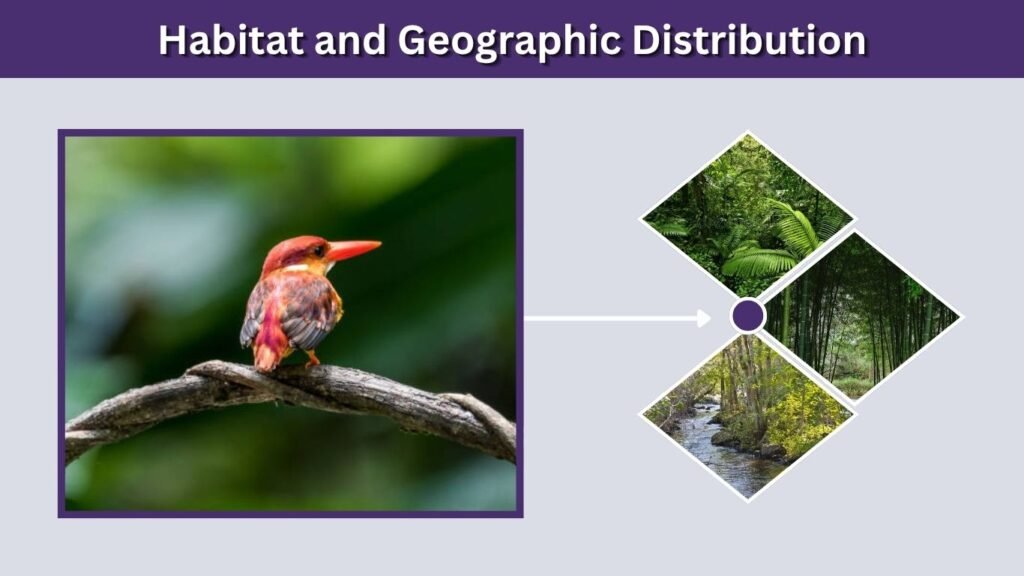
The Ruddy Kingfisher is widely distributed across Asia but remains locally uncommon due to its secretive habits. It thrives in humid, forested environments where cover and food sources are abundant.
Preferred Habitats
- Dense tropical and subtropical forests
- Mangrove swamps and coastal woodlands
- Bamboo thickets near water bodies
- Lowland evergreen forests
- Forest edges near rivers and streams
Geographic Range
The species is migratory in northern populations and resident in southern regions.
| Region | Status | Seasonal Presence | Notes |
| India (Northeast) | Breeding visitor | Summer | Seen in forested hills |
| Southeast Asia | Resident | Year-round | Common in suitable habitats |
| Japan (southern islands) | Migratory breeder | Summer | Moves south in winter |
| China (eastern regions) | Migratory | Seasonal | Breeds in warm months |
| Philippines & Indonesia | Resident | Year-round | Stable populations |
This distribution shows the species’ adaptability to both migratory and resident lifestyles depending on climate conditions.
Behavior and Feeding Ecology
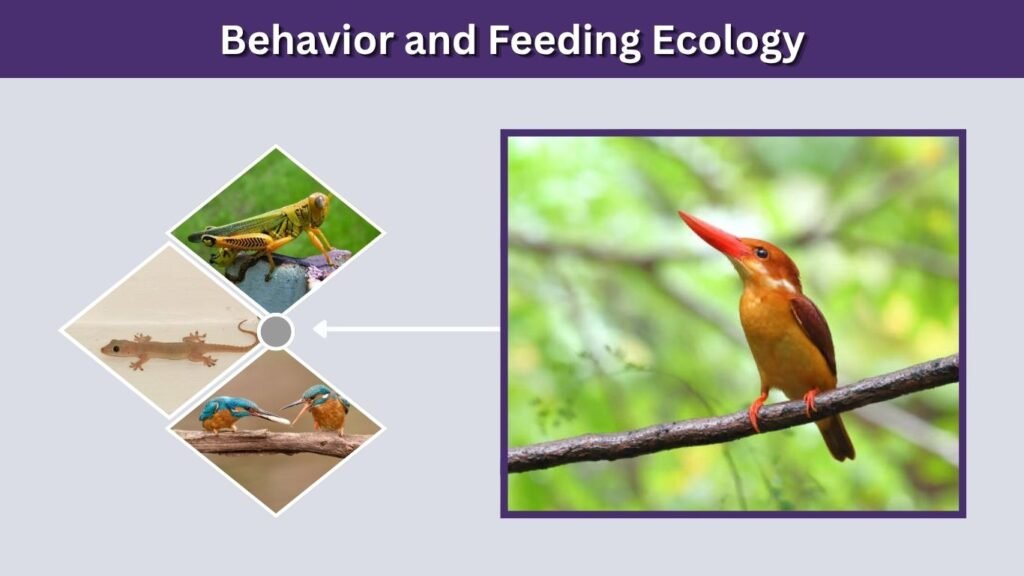
The Ruddy Kingfisher is a quiet but highly territorial bird. Its behavior is shaped by its forest habitat, which demands stealth and precision rather than open-water hunting.
Feeding Habits
- Feeds primarily on large insects such as beetles and grasshoppers
- Hunts small reptiles like lizards and geckos
- Occasionally captures frogs and small amphibians
- Rarely consumes fish compared to river kingfishers
- Uses a “sit-and-wait” hunting strategy from low branches
Daily Activity Patterns
- Most active during early morning and late afternoon
- Spends long periods perched motionless while scanning for prey
- Uses rapid downward swoops to capture prey on the ground or foliage
Communication and Behavior
- Produces loud, rolling calls that echo through forests
- Calls are often used for territory marking
- Generally solitary except during breeding season
- Displays territorial aggression toward other kingfishers
Key Behavioral Traits
- Strong site fidelity (returns to same territory annually)
- Prefers shaded, quiet forest zones
- Avoids open human-disturbed areas
- Highly alert and difficult to approach
Breeding and Life Cycle
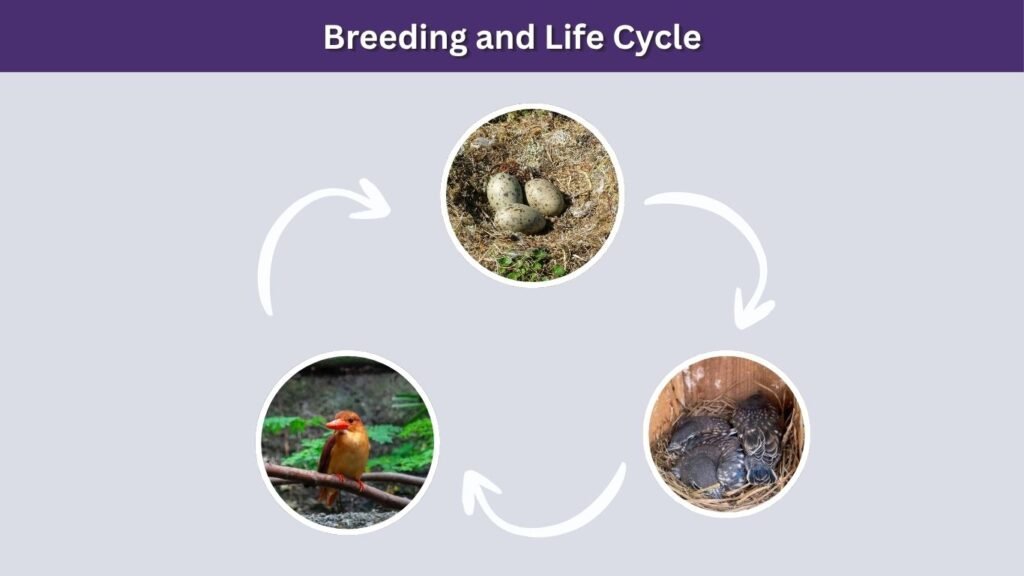
The breeding behavior of the Ruddy Kingfisher is closely tied to forest conditions and nesting availability. It typically breeds during warmer months when food is abundant.
Nesting Habits
- Nests in burrows dug into earthen banks or tree roots
- Sometimes uses abandoned termite mounds or soft soil banks
- Both male and female participate in nest excavation
- Nest tunnels can extend 0.5 to 1 meter
Reproduction Cycle
- Clutch size: 3–5 eggs
- Eggs are white and nearly spherical
- Incubation period: around 18–21 days
- Both parents share incubation duties
- Chicks fledge after approximately 25–30 days
Parental Care
- Both parents actively feed chicks with insects and small prey
- Nest is defended aggressively against predators
- Chicks remain dependent for several weeks after fledging
Survival Factors
- Success depends heavily on forest density
- Nest flooding or predation can reduce breeding success
- Stable habitats significantly improve chick survival rates
Ecological Importance and Adaptations
The Ruddy Kingfisher plays a subtle but important role in maintaining ecological balance in forest ecosystems.
Ecological Contributions
- Controls insect populations in forests
- Acts as a predator of small reptiles and amphibians
- Indicates healthy forest ecosystem conditions
- Contributes to biodiversity stability in mangrove and woodland areas
Adaptations for Survival
- Camouflaged plumage blends with forest shadows
- Strong bill designed for gripping and crushing prey
- Acute vision for detecting movement in low light
- Quiet flight pattern reduces detection by predators and prey
Threats and Conservation Status
While not globally endangered, the species faces localized threats:
- Habitat destruction due to deforestation
- Mangrove clearing for development
- Disturbance from human encroachment
- Declining nesting sites in fragmented forests
Conservation efforts focused on forest preservation and wetland protection indirectly support its populations.
FAQs
1. Where can the Ruddy Kingfisher be commonly seen?
The Ruddy Kingfisher is most commonly found in dense forests and mangrove regions across South and Southeast Asia. It prefers secluded environments, so sightings are often limited to early morning or dusk when it is most active and vocal.
2. What does the Ruddy Kingfisher eat?
Its diet mainly consists of large insects such as beetles and grasshoppers, along with small reptiles, frogs, and occasionally other small forest-dwelling creatures. Unlike many kingfishers, it rarely relies on fish as a food source.
3. Is the Ruddy Kingfisher migratory?
Yes, populations in northern regions such as Japan and parts of China migrate seasonally to warmer southern areas during winter. However, populations in tropical regions like Southeast Asia tend to remain resident year-round.
4. How does the Ruddy Kingfisher build its nest?
It excavates burrows in soft soil banks, tree roots, or sometimes termite mounds. Both male and female participate in digging a tunnel that leads to a nesting chamber where eggs are laid and incubated.
5. Why is the Ruddy Kingfisher hard to spot?
This bird is highly secretive and prefers dense forest cover. Its reddish-brown coloration blends well with shadows and bark, and it often remains still for long periods, making visual detection difficult despite its loud calls.