
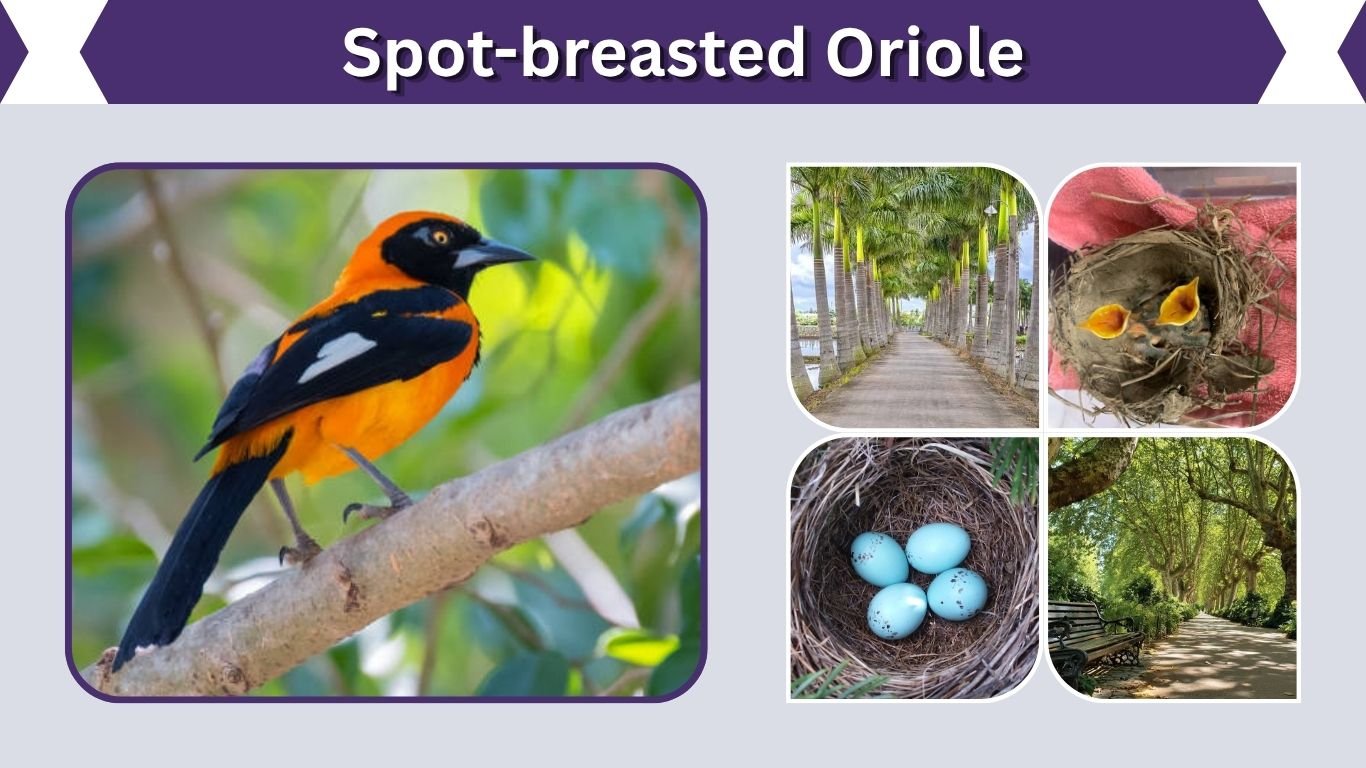
The Spot-breasted Oriole is a bright orange-and-black bird known for its spotted chest, rich calls, and unusual introduced population in South Florida. Native to Mexico and Central America, this oriole has become a special sight for birders in Miami and nearby counties. Its bold color, suburban nesting habits, and relationship with Bronzed Cowbirds make it an interesting species to identify and understand.
What Is a Spot-breasted Oriole?
The Spot-breasted Oriole is a New World oriole in the blackbird family. It is larger and heavier-looking than many familiar orioles, with a strong pointed bill, long tail, and vivid orange body. Its most noticeable feature is the black spotting across the upper breast, which gives the species its common name.
This bird is scientifically known as Icterus pectoralis. In its native range, it lives mainly from southern Mexico through parts of Central America. In the United States, it is best known from South Florida, especially around Miami-Dade and nearby areas, where introduced birds became established.
Identification
- Bright orange to orange-yellow head, body, and underparts
- Black throat, face area, wings, and tail
- Black spots scattered across the upper breast
- White wing patches visible on folded wings
- Long, pointed bill used for insects, fruit, and nectar
- Robin-sized body, often around 8–9 inches long
- Strong, direct flight between trees and feeding areas
Adult males are usually the brightest, with bold orange plumage and a deep black throat. Females can look similar but may appear slightly duller in some views. Juveniles are usually less intense in color, with softer markings and less contrast than adults.
Spot-breasted Oriole vs Similar Orioles
The Spot-breasted Oriole may be confused with other orange-and-black orioles, especially when seen quickly in trees. The black spots across the breast are the easiest clue. Baltimore Orioles, Orchard Orioles, and Hooded Orioles may share orange or yellow tones, but they do not show the same spotted chest pattern.
| Feature | Spot-breasted Oriole | Similar Orioles |
|---|---|---|
| Breast marking | Clear dark spots on upper breast | Usually plain or differently patterned |
| Throat | Black throat patch | Varies by species |
| Body color | Bright orange to orange-yellow | Orange, yellow, chestnut, or black depending on species |
| Florida status | Established mainly in South Florida | Other species may migrate or occur seasonally |
| Best clue | Spotted breast with bold orange body | Lacks the same spotted chest pattern |
Spot-breasted Oriole Range and Habitat
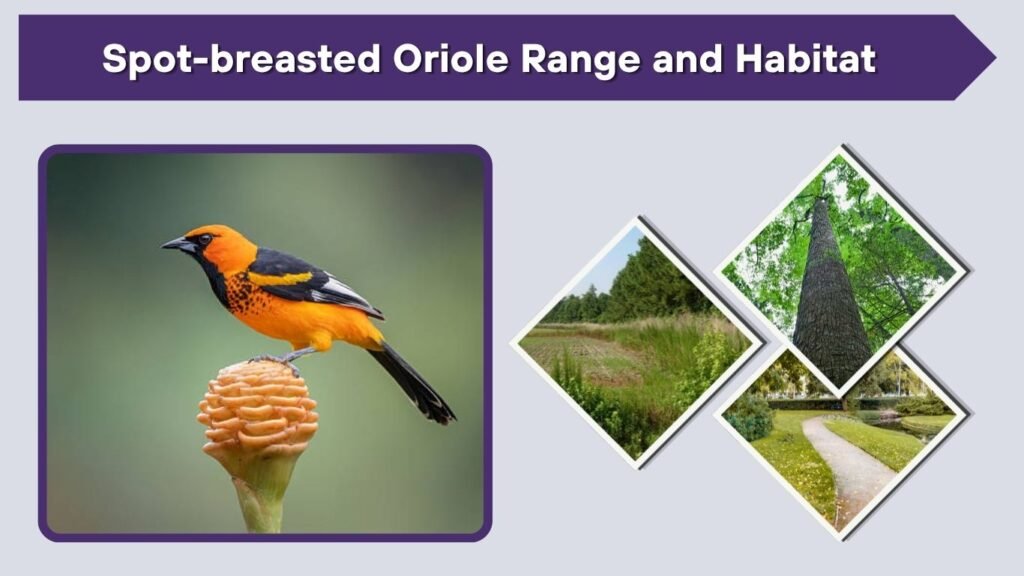
The natural range of the Spot-breasted Oriole extends through parts of southern Mexico and Central America. Outside that native range, South Florida has a well-known introduced population. This makes the bird especially interesting because it is both a tropical species and a local Florida breeder.
In Florida, it is most associated with suburban neighborhoods, parks, gardens, wooded edges, and areas with fruiting or flowering trees. It does not need deep forest to survive. Instead, it often uses human-shaped landscapes where tall trees, palms, ornamental plants, and open feeding areas are available.
Spot-breasted Oriole in Florida
The Florida population began after birds were introduced around the Miami area in the late 1940s. Over time, they established a breeding population in South Florida. They are not abundant everywhere, but they can be locally regular in suitable neighborhoods and parks.
Cold weather affected the population in past decades, especially during harsh winters. However, the species has partly recovered in some areas. Today, South Florida remains the main place in the United States where birders look for this oriole.
Preferred Habitat
Spot-breasted Orioles often choose habitats with scattered trees rather than dense, unbroken forest. They may appear in:
- Suburban yards with tall trees
- Parks and landscaped areas
- Open woodlands and forest edges
- Gardens with fruiting or flowering plants
- Palm-rich neighborhoods
- Tropical and subtropical groves
Because they feed above ground and move through tree canopies, they can be overlooked unless they call, sing, or perch in the open.
Call, Song, and Daily Behavior
The Spot-breasted Oriole is often noticed by sound before it is clearly seen. Its vocalizations include whistles, chatters, and musical phrases. Like many orioles, it may sing from trees, moving between perches while searching for food.
Its daily behavior is active but not always easy to follow. It may forage among leaves, inspect flowers, probe fruit, and move quickly from branch to branch. In suburban areas, it may visit yards with suitable trees and food sources, especially where insects, nectar, or ripe fruit are available.
What Does the Spot-breasted Oriole Eat?
This oriole has a varied diet. It feeds on insects, fruit, and nectar, which helps it survive across different habitats and seasons. Insects provide protein, especially during breeding. Fruit and nectar give energy and make flowering or fruiting trees important feeding sites.
Common food sources include caterpillars, beetles, other small insects, soft fruits, and flower nectar. Its sharp bill helps it pick insects from foliage and probe into food sources.
Behavior Around People
In South Florida, Spot-breasted Orioles can live close to people. They may nest in neighborhoods, feed in gardens, and move through residential trees. They are not usually aggressive toward humans, but during nesting season they may become more alert and vocal near their nest area.
They are best observed quietly from a distance. Sudden movement can cause them to retreat into cover. Their bright body color helps with identification, but tree shade can make the orange look darker or duller.
Nesting, Breeding, and Life Cycle
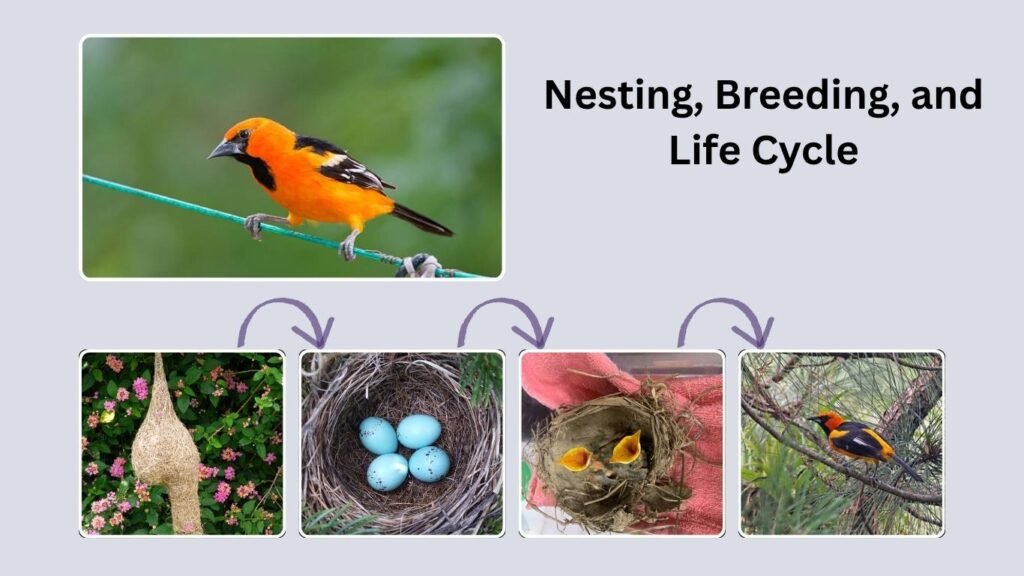
Spot-breasted Orioles build hanging nests, a typical feature of many oriole species. These nests are often woven from plant fibers and placed in trees where the structure can hang safely from branches. The nest helps protect eggs and chicks from some ground predators.
In Florida, the breeding season is mainly during warmer months, often spring through summer. Pairs may raise one brood, and in some cases they may breed more than once in a season. The exact timing can vary by location, weather, and food availability.
Nest and Eggs
The nest is usually a pouch-like structure. It may hang from a branch, palm frond, or suitable tree support. The female does much of the nesting work in many oriole species, although pair behavior can vary.
Eggs are laid inside the hanging nest, and the adults care for the young after hatching. Chicks depend on insects and soft food during early growth. Parents must make frequent feeding trips until the young are strong enough to leave the nest.
Female and Juvenile Spot-breasted Orioles
Female Spot-breasted Orioles can look similar to males, but they may appear slightly less bold in color. Juveniles are usually duller and may show less defined black markings. Young birds can be confusing because they do not always show the same sharp contrast seen in adults.
A fledgling may look short-tailed, softer in feather texture, and less coordinated while moving through branches. During this stage, adults may stay nearby and continue feeding the young.
Spot-breasted Oriole and Bronzed Cowbird Relationship
One of the most interesting parts of Spot-breasted Oriole biology is its relationship with Bronzed Cowbirds. Bronzed Cowbirds are brood parasites. This means they lay eggs in the nests of other birds instead of raising their own chicks.
When a cowbird egg is placed in an oriole nest, the oriole may incubate it and feed the cowbird chick after it hatches. This can reduce the success of the oriole’s own young, especially if the cowbird chick grows quickly and competes strongly for food.
Is It a Symbiotic Relationship?
The relationship is better described as brood parasitism, not mutualism. The Bronzed Cowbird benefits because it avoids the cost of building a nest and feeding chicks. The oriole usually does not benefit. In many cases, the host bird loses energy, food, and nesting success.
Some people may call it a “relationship” between the two species, but it is not a balanced partnership. It is a natural breeding strategy used by cowbirds, and orioles are among the bird groups that can be affected.
Conservation and Birdwatching Notes
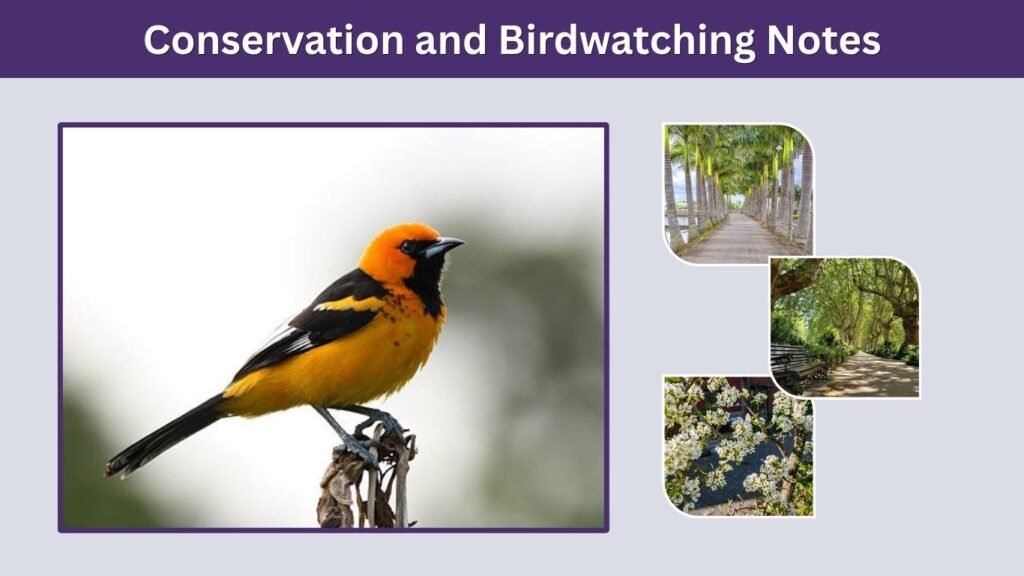
The Spot-breasted Oriole is not one of the most widespread birds in the United States, but it has a stable local presence in parts of South Florida. Its introduced status makes it different from native North American orioles, yet it has become part of the birdlife in some urban and suburban habitats.
In its native range, habitat quality still matters. Trees, nesting sites, insects, and flowering plants all support the species. In Florida, preserving mature trees and varied suburban green spaces can help maintain suitable habitat.
How to Find a Spot-breasted Oriole
- Look in South Florida neighborhoods with mature trees
- Search parks, gardens, and wooded edges
- Listen for whistled calls and musical phrases
- Watch flowering or fruiting trees
- Scan the upper branches for orange-and-black movement
- Check for the spotted breast when the bird faces you
Early morning is often a good time because birds are active and vocal. A quiet approach works best. Instead of chasing movement, wait near trees with food sources and listen carefully.
FAQs
Are Spot-breasted Orioles native to Florida?
No, the Spot-breasted Oriole is not native to Florida. It is native to southern Mexico and Central America. The Florida population came from introduced birds around the Miami area in the late 1940s. Today, it is locally established in parts of South Florida.
Where can I see a Spot-breasted Oriole in Florida?
The best area is South Florida, especially around Miami-Dade and nearby counties. They are often found in suburban neighborhoods, parks, gardens, and areas with mature trees. They are not common throughout the entire state, so location matters when trying to find one.
What does a Spot-breasted Oriole sound like?
It gives musical whistles, chatters, and oriole-like calls. The song can help reveal the bird when it is hidden in foliage. Since it often stays in trees, listening carefully is one of the best ways to detect it before seeing its bright orange body.
What is the difference between a male and female Spot-breasted Oriole?
Males are usually brighter and more strongly marked, with vivid orange plumage, a black throat, and clear breast spotting. Females can look similar but may appear slightly duller. Juveniles are less colorful and may show weaker contrast until they mature.
Do Bronzed Cowbirds harm Spot-breasted Orioles?
Bronzed Cowbirds can reduce nesting success because they lay eggs in oriole nests. The oriole may raise the cowbird chick instead of, or alongside, its own young. This is called brood parasitism, and it usually benefits the cowbird more than the host bird.
