
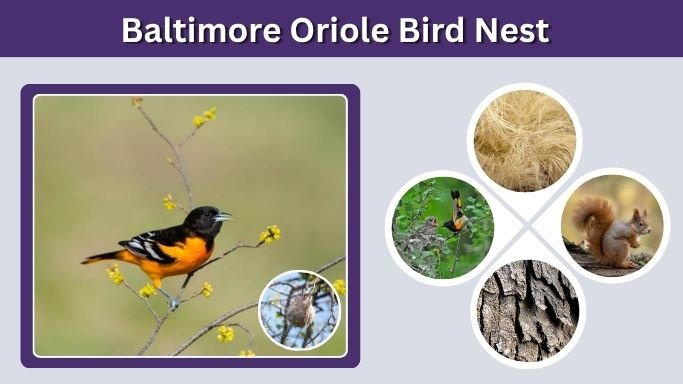
The Baltimore Oriole bird nest is one of the most impressive nests in North America. Instead of making a simple cup, the female weaves a deep hanging pouch from plant fibers, grasses, bark strips, and other thin materials. These nests often hang high in leafy trees, making them hard to see from the ground. Understanding where Baltimore Orioles nest, what the nest looks like, and how they raise young can help bird lovers recognize their breeding behavior.
What Does a Baltimore Oriole Bird Nest Look Like?
A Baltimore Oriole nest looks like a hanging pouch or woven sock. It is usually suspended from the outer branches of a tall tree, where it sways gently with the wind. The nest is deep, flexible, and carefully woven, giving the eggs and chicks a secure place above the ground.
The outside may look messy at first because it is made from many thin fibers. However, the structure is strong and well designed. The female bird ties and loops fibers around small branches, creating a hanging basket that can hold eggs and young birds safely.
Nest Identification
- Deep pouch-shaped nest that hangs below a branch
- Usually woven from plant fibers, grass, bark strips, and hair-like materials
- Often placed high in deciduous trees
- Usually attached near the end of a branch
- May look gray, tan, brown, or pale depending on materials
- Hidden among leaves during the breeding season
- More visible in fall or winter after leaves drop
The nest is different from the open cup nests made by many songbirds. Its hanging design is one of the best clues that it belongs to an oriole.
Where Do Baltimore Orioles Build Their Nests?
Baltimore Orioles usually build their nests high in trees. They prefer tall deciduous trees with flexible outer branches. Common nesting trees include elms, maples, cottonwoods, sycamores, willows, and other broadleaf trees near open areas.
They often choose trees along woodland edges, parks, yards, farms, riverbanks, and suburban streets. This means they can nest near people if the area has enough mature trees and food.
Common Nesting Areas
Baltimore Orioles are most likely to nest in places with tall trees and open feeding space. They do not usually nest deep inside dark forests. Instead, they prefer edges where trees meet lawns, fields, roads, or water.
Good nesting areas include parks, orchards, backyards, streamside trees, open woods, and neighborhoods with older shade trees. In Maryland and much of the eastern United States, they are regular spring and summer breeding birds.
Baltimore Oriole Nesting Habits
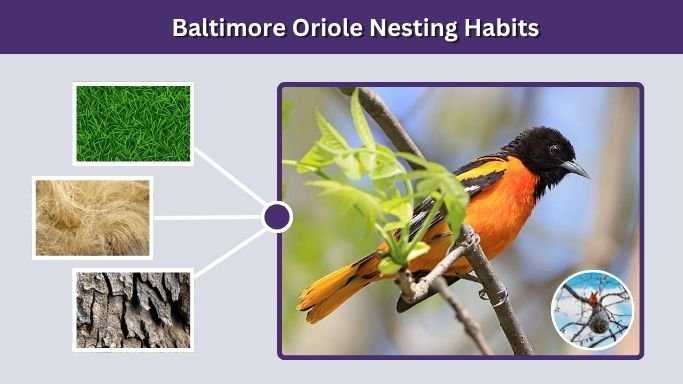
Baltimore Orioles return to breeding areas in spring. Males often arrive first and sing from high branches. Their bright orange and black plumage makes them easier to spot, but they still spend much of their time high in the canopy.
After pairs form, the female begins building the nest. She does most of the weaving, while the male may stay nearby and defend the area. The nest-building process can take several days or longer, depending on weather, material availability, and disturbance.
Nest-Building Materials
Female Baltimore Orioles collect long, thin, flexible materials. These may include grasses, plant fibers, bark strips, grapevine bark, hair, string-like fibers, and soft down. They weave these materials together with careful movements of the bill and feet.
The outer layer gives the nest strength. The inside is softer and more comfortable for eggs and chicks. The female may use softer fibers, fine grasses, and plant down to line the nest.
Why Do Baltimore Orioles Make Hanging Nests?
The hanging nest design helps protect eggs and chicks. A pouch nest placed near the end of a branch is harder for some predators to reach. It also keeps the nest away from the ground, where snakes, raccoons, cats, and other animals may search for eggs.
The flexible design also helps the nest move with the branch instead of breaking easily. Orioles choose branch tips carefully because a thin branch may not support heavier predators. This does not make the nest completely safe, but it improves survival chances.
Benefits of the Hanging Nest
- Keeps eggs and chicks above ground predators
- Uses thin branch tips that may be harder for large animals to reach
- Blends into leaves during spring and summer
- Gives the female control over nest depth and shape
- Allows air movement around the nest
- Holds chicks securely before they fledge
The hanging nest is one reason Baltimore Orioles are admired by birdwatchers. It shows a high level of natural skill and instinct.
Baltimore Oriole Eggs and Baby Birds
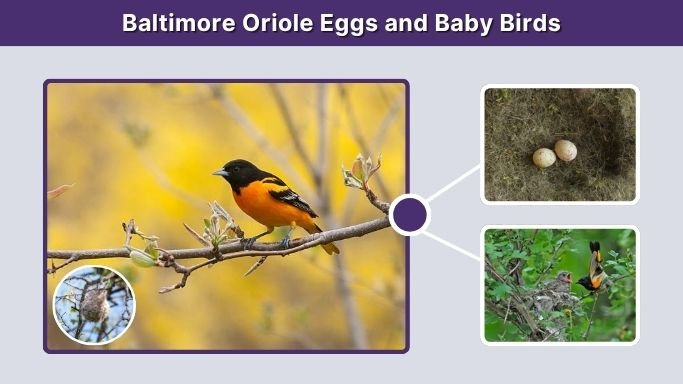
After the nest is finished, the female lays eggs inside the pouch. A typical clutch usually contains several eggs. The eggs are pale with darker markings, though exact appearance can vary.
The female does most of the incubation. The male may bring food or stay near the territory, but the female is strongly involved in keeping the eggs warm. After hatching, the chicks are helpless and need constant care.
Chick Development
Baby Baltimore Orioles grow quickly. At first, they are weak and featherless or lightly covered with down. The parents feed them insects, which provide protein for fast growth. Caterpillars and other soft-bodied insects are especially useful during this stage.
As the chicks grow, they become louder and more active inside the nest. Eventually, they leave the nest as fledglings. Young orioles may still depend on their parents for food after leaving the nest.
Baltimore Oriole Nesting Season
Baltimore Orioles usually nest in late spring and early summer. Timing depends on location and weather. In many eastern states, they arrive in April or May, build nests soon after pairing, and raise young during the warmer months.
In Maryland, nesting activity is often seen from late spring into summer. The birds may be easier to hear than see because they sing from high branches and hide nests among leaves.
| Nesting Stage | What Happens |
|---|---|
| Spring arrival | Males sing and claim territories |
| Pair formation | Male and female stay near nesting area |
| Nest building | Female weaves hanging pouch |
| Egg laying | Eggs are placed deep inside the nest |
| Incubation | Female keeps eggs warm |
| Feeding chicks | Parents bring insects and other food |
| Fledging | Young birds leave the nest but still need care |
Do Baltimore Orioles Reuse Their Nests?
Baltimore Orioles usually do not reuse the same nest year after year. The nest may become damaged by weather, wind, and winter exposure after the breeding season. Even if an old nest remains hanging, the birds usually build a new one for the next nesting attempt.
Old nests are often easier to spot in fall and winter when leaves are gone. A hanging pouch seen in a bare tree may be from the past breeding season. However, old nests should be left alone because they are part of the natural habitat and may still be studied by birds or used as material by other wildlife.
Should You Remove an Old Oriole Nest?
In most cases, you do not need to remove an old Baltimore Oriole nest. If it is in a natural tree location, leave it in place. Removing nests during active nesting season can harm birds and may violate bird protection laws.
If a nest is clearly abandoned after the season, it is still best to avoid disturbing the area unless there is a safety reason. Watching old nests from a distance can help you learn where orioles may return in future years.
How to Support Nesting Baltimore Orioles
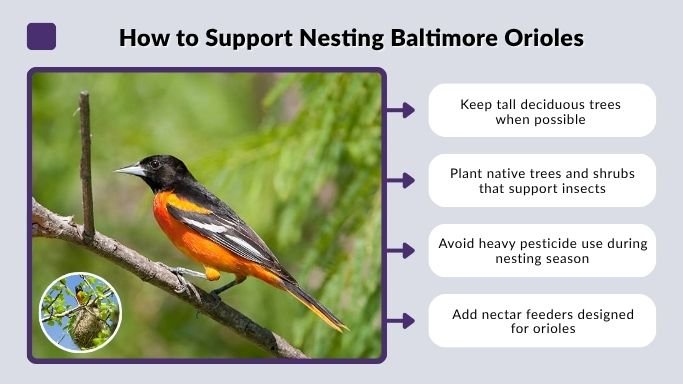
If Baltimore Orioles live in your area, you can make your yard more attractive by providing trees, natural food, and safe space. They are drawn to fruit, nectar, and insects, but nesting success depends strongly on habitat quality.
The most important step is keeping mature trees. Orioles need high branches for nesting. Native trees and shrubs also support caterpillars and other insects that chicks need for growth.
Backyard Tips
- Keep tall deciduous trees when possible
- Plant native trees and shrubs that support insects
- Avoid heavy pesticide use during nesting season
- Offer orange halves or grape jelly in moderation during spring
- Add nectar feeders designed for orioles
- Keep cats indoors to protect fledglings
- Avoid trimming trees during active nesting months
- Provide quiet space near nesting trees
Food can attract orioles, but safe nesting habitat matters more. A yard with mature trees, insects, flowers, and fruiting plants is more useful than feeders alone.
Baltimore Oriole Nest in Maryland
The Baltimore Oriole is strongly connected with Maryland because of its orange and black colors, which resemble the colors of the Calvert family crest. It is also the state bird of Maryland. During the breeding season, Baltimore Orioles may nest in parks, woodland edges, yards, and tree-lined neighborhoods across suitable parts of the state.
In Maryland, look for them in spring and summer. Their hanging nests may be hidden in leafy trees, so the best way to find the birds is often by listening for the male’s clear, whistled song. Once you hear the song, scan the upper branches for orange and black movement.
Predators and Nesting Challenges
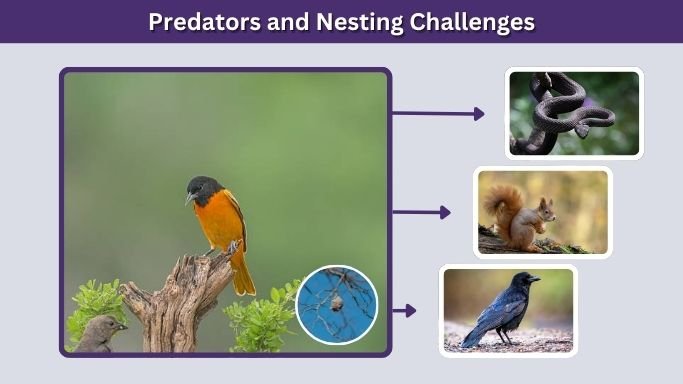
Even with a smart hanging nest design, Baltimore Orioles face nesting risks. Storms, strong winds, predators, and lack of food can affect nesting success. Eggs and chicks may be threatened by snakes, squirrels, crows, jays, raccoons, and domestic cats.
Human activity can also cause problems. Tree trimming during nesting season may destroy active nests. Pesticides can reduce insect food for chicks. Outdoor cats can catch fledglings when young birds first leave the nest.
How to Avoid Disturbing a Nest
If you find a Baltimore Oriole nest, watch from a distance. Do not stand under the nest for long periods, touch branches, or try to look inside. Parent birds may become stressed if people get too close.
Use binoculars if you want to observe nesting behavior. A quiet, respectful distance protects the birds and gives you a better chance to see natural behavior.
FAQs
Where do Baltimore Oriole birds nest?
Baltimore Orioles usually nest high in tall deciduous trees. They often choose trees along woodland edges, parks, yards, riverbanks, and open neighborhoods. Their nests are commonly placed near the outer ends of flexible branches, where the hanging pouch is harder for some predators to reach.
What does a Baltimore Oriole bird nest look like?
A Baltimore Oriole nest looks like a deep hanging pouch or woven sock. It is made from thin plant fibers, grasses, bark strips, and other flexible materials. The nest hangs below a branch and may be hidden by leaves during spring and summer.
Do Baltimore Orioles nest in Maryland?
Yes, Baltimore Orioles nest in Maryland during the breeding season. They can be found in suitable habitats such as parks, wooded edges, backyards, and areas with tall shade trees. Their bright colors and whistled songs make them easier to detect in spring.
What trees do Baltimore Orioles use for nesting?
Baltimore Orioles often nest in elms, maples, cottonwoods, sycamores, willows, and other tall deciduous trees. They prefer trees with high, flexible branches that can support a hanging nest. Mature trees in yards and parks can provide good nesting sites.
Can I attract Baltimore Orioles to nest in my yard?
You can improve your chances by keeping mature trees, planting native shrubs, reducing pesticides, and offering fruit or nectar during spring. However, orioles choose nest sites based on safety, tree structure, and food availability. Feeders may attract them, but habitat is the key factor.
