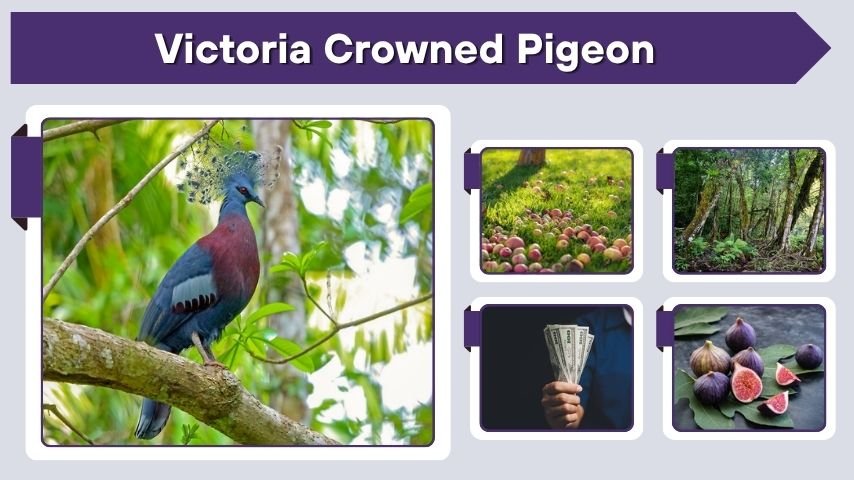
The Victoria crowned pigeon is one of the most beautiful pigeons in the world. With its blue-gray body, red eyes, maroon chest, and elegant lace-like crown, this bird looks more like a royal forest bird than an ordinary pigeon. It is also the largest living pigeon species and lives mainly in the tropical forests of New Guinea. Its calm nature, unusual call, and striking appearance make it a favorite in zoos and aviaries.
What Is a Victoria Crowned Pigeon?
The Victoria crowned pigeon is a large ground-dwelling pigeon known for its fan-shaped crest and deep blue plumage. It belongs to the pigeon and dove family, but its size, behavior, and appearance make it very different from common city pigeons. It was named in honor of Queen Victoria.
Scientific Name and Classification
The scientific name of the Victoria crowned pigeon is Goura victoria. It belongs to the family Columbidae, the same family as pigeons and doves. It is one of the crowned pigeons, a group of large pigeons native to the New Guinea region.
Basic classification:
- Common name: Victoria crowned pigeon
- Scientific name: Goura victoria
- Family: Columbidae
- Order: Columbiformes
- Bird type: Ground-dwelling pigeon
- Native region: New Guinea and nearby islands
- Conservation status: Near Threatened
Although it is called a pigeon, it is much larger and more decorative than the pigeons seen in cities. Its crown, size, color, and slow walking style make it easy to recognize.
Victoria Crowned Pigeon Appearance
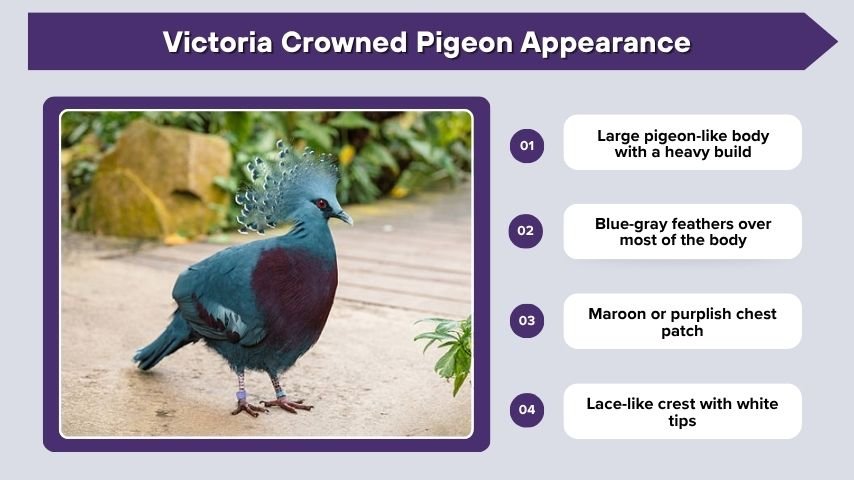
This bird is famous for its royal look. Its body is mostly blue-gray, while the chest often has a rich maroon or purple tone. The most eye-catching feature is the delicate crest on its head, which looks like a lace fan tipped with white.
Identification Features
You can identify a Victoria crowned pigeon by these features:
- Large pigeon-like body with a heavy build
- Blue-gray feathers over most of the body
- Maroon or purplish chest patch
- Lace-like crest with white tips
- Bright red eyes
- Small black mask around the face
- Pale gray or bluish bill
- Long tail compared with common pigeons
- Slow walking movement on the forest floor
- Deep booming or whooping call
Male and female Victoria crowned pigeons look very similar. In many cases, it is difficult to tell them apart only by appearance. Males may appear slightly larger, but reliable sexing often requires expert observation or testing.
Victoria Crowned Pigeon Size and Weight
The Victoria crowned pigeon is often described as the largest living pigeon. Its size is one of the reasons it looks so impressive in person. It is much bigger than a common rock pigeon and can look almost chicken-sized when walking on the ground.
Size Comparison Table
| Feature | Victoria Crowned Pigeon | Common City Pigeon |
| Length | About 28–30 inches | About 11–14 inches |
| Weight | Around 5–7 pounds | Around 0.5–1 pound |
| Body shape | Large and heavy | Compact and light |
| Crest | Large lace-like crown | No crown |
| Main habitat | Tropical forests | Cities, farms, cliffs |
Its large size does not make it a strong long-distance flier. It can fly, but it spends much of its time walking and feeding on the ground. When disturbed, it may fly up into trees to escape danger.
Where Do Victoria Crowned Pigeons Live?
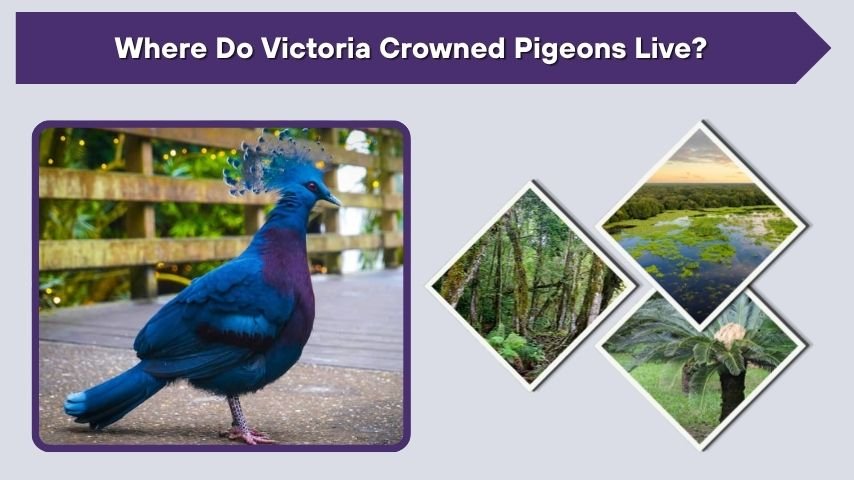
Victoria crowned pigeons live in tropical forest habitats in the New Guinea region. They prefer lowland forests, swamp forests, and areas with dense vegetation. These habitats give them cover, food, nesting places, and protection from predators.
Habitat and Range
Victoria crowned pigeons are mainly found in northern New Guinea and nearby islands. They are associated with humid forests, especially lowland and swampy areas. They often move across the forest floor in pairs or small groups while searching for fallen fruits and seeds.
Their natural habitat includes:
- Tropical lowland rainforest
- Swamp forest
- Sago forest
- Forest edges with dense cover
- Moist woodland areas near food sources
They are not city birds. Unlike common pigeons, they depend on healthy forest ecosystems. When forests are logged, cleared, or disturbed, their feeding and breeding areas become smaller.
Victoria Crowned Pigeon Diet
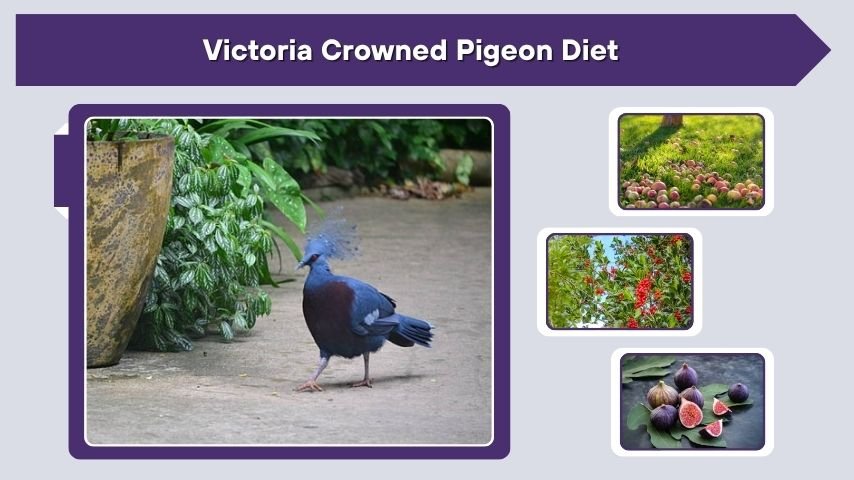
The Victoria crowned pigeon feeds mostly on plant-based foods found on the forest floor. It walks slowly under trees and searches for fallen fruits, berries, and seeds. Sometimes it also eats small invertebrates.
What Do They Eat?
Their diet includes fruits, seeds, berries, and insects. In the wild, fallen fruit is especially important because these birds feed mainly on the ground. In managed care, zoos usually provide a varied diet that may include fruits, grains, greens, and formulated bird food.
Common food items include:
- Fallen fruits
- Berries
- Seeds
- Grains
- Figs
- Small insects
- Other small invertebrates
- Soft plant material
Because they are ground foragers, they play a role in the forest ecosystem. They may help spread seeds after feeding on fruits, although their exact role can vary depending on habitat and food availability.
Behavior and Temperament
Victoria crowned pigeons are generally calm, gentle birds. They often walk slowly and carefully, moving through the forest floor in pairs or small groups. Their behavior is more like a forest game bird than a fast-flying city pigeon.
Calls, Movement, and Social Life
These pigeons are known for deep, booming calls. Their sound can carry through forest habitats and helps them communicate with mates or group members. They may also make display sounds during courtship or territorial behavior.
They are usually social but not crowded flock birds like many city pigeons. In the wild, they are often seen in pairs or small parties. Males may perform dominance displays, especially during breeding periods. These displays can include puffing the chest, spreading wings, bowing, and making short movements toward rivals.
Although they can fly, they prefer walking. If frightened, they may fly into a tree and stay perched until they feel safe. Their calm nature can make them vulnerable to hunting because they may not escape quickly from humans.
Victoria Crowned Pigeon Adaptations
The Victoria crowned pigeon has several adaptations that help it survive in forest habitats. Its body, color, feet, and behavior are suited for life on the ground and in dense tropical vegetation.
Important Adaptations
Some key adaptations include:
- Large body for ground-based movement
- Strong legs for walking on the forest floor
- Blue-gray plumage that blends with shaded forest light
- Crest used in display and recognition
- Deep call for communication in dense forests
- Ability to fly up to branches when threatened
- Ground-foraging behavior for fallen fruits and seeds
- Calm social behavior suited to pairs and small groups
Its beautiful crest is not only decorative. It may also help with communication, courtship, and species recognition. The bird’s deep call is also useful because thick forest vegetation can make visual contact difficult.
Breeding, Nest, and Chicks
Victoria crowned pigeons have a slow breeding style compared with many smaller birds. They usually produce only one egg at a time, and both parents help care for the chick. This slow reproduction makes population recovery harder when wild birds are hunted or habitats are damaged.
Eggs and Nesting Behavior
The nest is usually built above the ground in a tree or strong vegetation. It is made from sticks, stems, and plant materials. The female usually lays one white egg. Both parents help with incubation and chick care, although their roles may differ during the nesting period.
After hatching, the chick is fed by its parents. Like other pigeons and doves, Victoria crowned pigeons can produce crop milk, a special nutrient-rich food for young chicks. This helps the chick grow during its early days.
Because they raise only one chick at a time, losing adults or nests can have a serious effect on local populations. This is one reason conservation is important for the species.
Lifespan of the Victoria Crowned Pigeon
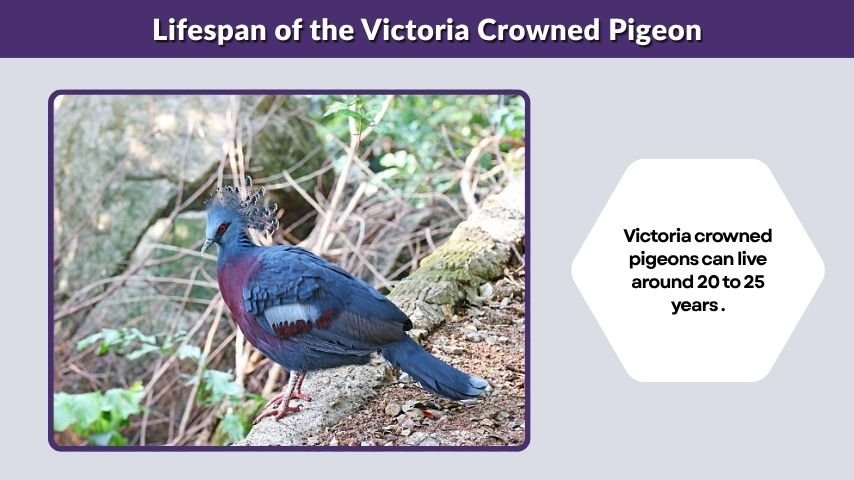
The lifespan of a Victoria crowned pigeon depends on whether it lives in the wild or in managed care. In safe aviary or zoo conditions, it may live for many years when given proper food, space, hygiene, and veterinary care.
How Long Do They Live?
In captivity, Victoria crowned pigeons can live around 20 to 25 years with good care. Wild birds may face more risks, including predators, hunting, food shortages, disease, and habitat loss. Because of these pressures, their average lifespan in the wild may be lower.
Long life also means they need stable habitats for many years. Protecting adult birds is important because mature breeding pairs are valuable for maintaining the population.
Predators and Threats
Victoria crowned pigeons face both natural and human-related threats. In nature, eggs and chicks may be vulnerable to predators. However, the biggest modern threats are linked to people, especially hunting, trapping, and habitat destruction.
Why Is the Victoria Crowned Pigeon Threatened?
The main threats include:
- Hunting for meat
- Hunting for feathers
- Capture for bird trade
- Logging of lowland forests
- Loss of nesting and feeding habitat
- Disturbance near human settlements
- Slow reproduction rate
These birds are often calm and ground-dwelling, which makes them easier to catch or shoot than fast-flying birds. Forest loss also reduces the places where they can feed, nest, and hide.
Are Victoria Crowned Pigeons Endangered?
The Victoria crowned pigeon is currently listed as Near Threatened, not fully endangered. However, its population is decreasing in the wild, and it still needs protection. The species is also protected under international trade controls.
Conservation Status
Near Threatened means the bird is not yet in the highest danger category, but it could become more threatened if current pressures continue. Hunting, illegal capture, and forest loss remain serious concerns.
Conservation actions focus on protecting forests, reducing illegal trade, managing captive breeding responsibly, and educating people about the bird’s value. Zoos and conservation organizations also help by keeping managed populations and teaching visitors about rainforest wildlife.
Can Victoria Crowned Pigeons Fly?
Yes, Victoria crowned pigeons can fly, but they are not strong long-distance flyers. They spend most of their time walking on the ground. When alarmed, they usually fly upward to a branch or tree perch rather than flying far away.
Flying and Ground Movement
Their body is large and heavy compared with many pigeons. This makes walking more natural for daily feeding. Their wings are useful for short escape flights, roosting, and moving between nearby trees.
In forest habitats, this behavior works well. They can search the ground for food, then move upward when danger appears. However, their ground-dwelling lifestyle also makes them more exposed to hunters and snares.
Can You Keep a Victoria Crowned Pigeon as a Pet?
Victoria crowned pigeons are sometimes kept in large aviaries, but they are not suitable pets for most people. They need a large, secure, clean, warm, and quiet enclosure. They are also rare, expensive, and may be protected by wildlife trade laws depending on the country.
Pet Care Challenges
Keeping this bird requires serious experience. It is not like keeping a small cage bird. It needs space to walk, safe perches, a balanced diet, protection from cold weather, and regular health monitoring.
Important care needs include:
- Large aviary or walk-in enclosure
- Clean dry flooring
- Warm climate or heated shelter
- Balanced fruit, seed, grain, and formulated diet
- Quiet environment with low stress
- Protection from predators
- Legal documents if required
- Experienced avian veterinary care
Anyone interested in this bird should check local wildlife laws first. Buying wild-caught birds is harmful and may be illegal. Responsible conservation should always come before private ownership.
Victoria Crowned Pigeon Price and Sale Questions
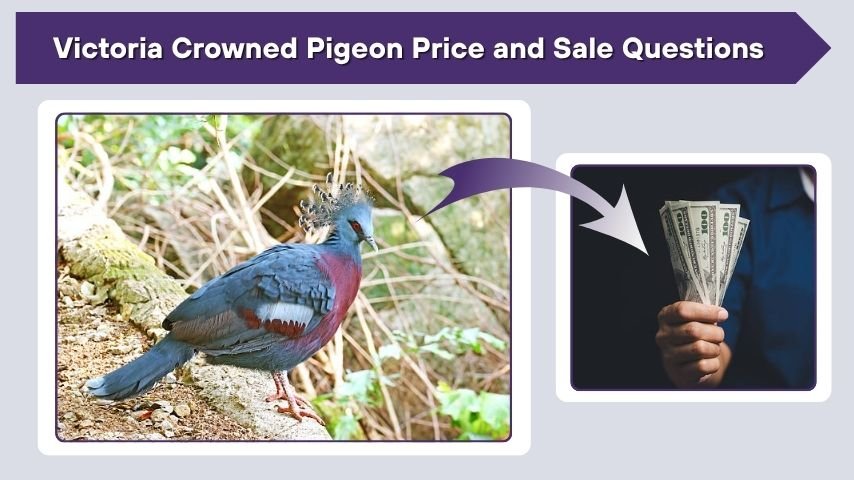
Many people are curious about the price of a Victoria crowned pigeon, but this bird should not be treated like a normal pet purchase. Its rarity, legal status, care needs, and conservation concerns make ownership complicated.
Cost and Legal Concerns
Prices can vary widely depending on country, breeder, legal paperwork, and availability. In many places, legal ownership may require permits or proof that the bird was captive-bred. Import, export, and trade may be restricted.
Before buying any rare bird, a person should ask:
- Is ownership legal in my country or state?
- Is the bird captive-bred?
- Are proper documents available?
- Does the seller follow wildlife trade laws?
- Do I have enough space and experience?
- Can I provide long-term care for 20 years or more?
For most bird lovers, the best way to enjoy Victoria crowned pigeons is by seeing them in accredited zoos, wildlife parks, or conservation aviaries.
Interesting Facts About Victoria Crowned Pigeons
The Victoria crowned pigeon is not only beautiful; it is also biologically interesting. Its size, family history, and behavior make it one of the most remarkable pigeons on Earth.
Quick Facts
Here are some interesting facts:
- It is one of the largest living pigeons in the world.
- It was named after Queen Victoria.
- Its scientific name is Goura victoria.
- It has a lace-like crest with white-tipped feathers.
- Both males and females look very similar.
- It mainly walks instead of flying long distances.
- It eats fruits, seeds, berries, and small invertebrates.
- It usually lays only one egg.
- Both parents help raise the chick.
- It is related to the same broad pigeon family as the extinct dodo.
- Its deep call can sound like a booming or whooping noise.
- It is listed as Near Threatened due to hunting and habitat loss.
These facts explain why the species is so admired by bird keepers, zoo visitors, and wildlife enthusiasts.
FAQs
Why is the Victoria crowned pigeon so beautiful?
The Victoria crowned pigeon looks beautiful because of its blue-gray feathers, maroon chest, red eyes, and lace-like crown. Its crest has delicate white-tipped feathers that spread like a fan. This combination gives the bird a royal appearance that is very different from common pigeons.
Where does the Victoria crowned pigeon live?
The Victoria crowned pigeon lives mainly in the New Guinea region. It prefers tropical lowland forests, swamp forests, and dense moist habitats. It spends much of its time walking on the forest floor, searching for fallen fruits, seeds, berries, and small invertebrates.
Is the Victoria crowned pigeon endangered?
The Victoria crowned pigeon is listed as Near Threatened. It is not currently classified as endangered, but its wild population is decreasing. The main threats are hunting, trapping, illegal trade, and habitat loss caused by logging and forest disturbance.
Can Victoria crowned pigeons be kept as pets?
Victoria crowned pigeons are not good pets for beginners. They need a large aviary, warm conditions, proper diet, clean surroundings, and expert care. In many places, ownership may also be controlled by wildlife laws, so legal permits and captive-bred proof may be required.
How big is a Victoria crowned pigeon?
A Victoria crowned pigeon can reach about 28 to 30 inches in length and may weigh around 5 to 7 pounds. It is much larger than a common city pigeon. Its heavy body, long tail, and tall crest make it look even bigger.