
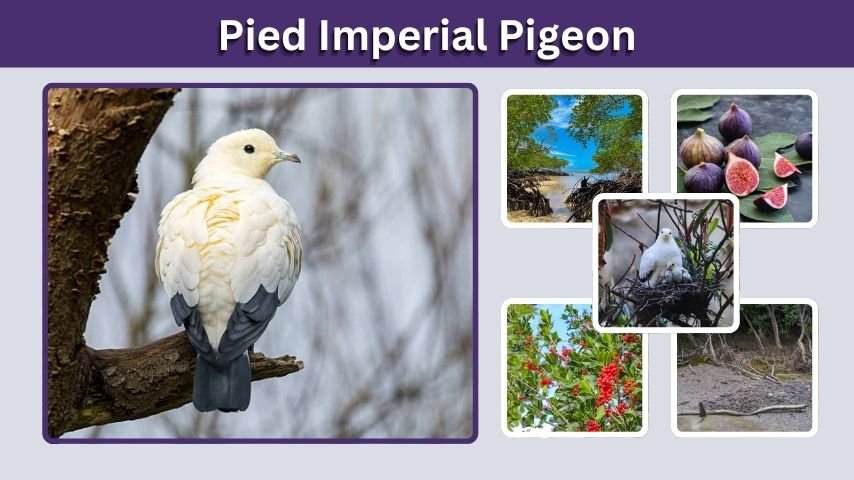
The pied imperial pigeon is a large tropical pigeon known for its clean black-and-white plumage, strong flight, and fruit-rich diet. Unlike city pigeons, this species spends most of its life in forests, mangroves, coastal islands, and tall trees. It belongs to the imperial pigeon group, a genus of fruit-eating birds that play an important role in spreading seeds across tropical habitats.
What Is a Pied Imperial Pigeon?
The pied imperial pigeon is a striking member of the pigeon and dove family. Its scientific name is Ducula bicolor, and the word “pied” refers to its bold two-color appearance. Adults usually have a white body with black flight feathers and tail areas, giving them a clean, elegant look when perched or flying.
This bird is larger and heavier-looking than the common rock pigeon seen in towns and cities. It is built for strong, direct flight and often moves between islands, forest patches, and coastal feeding areas. Because it feeds heavily on fruit, it is also an important seed disperser in tropical ecosystems.
Identification
- Large, heavy-bodied pigeon with a smooth rounded shape.
- Mostly white body with dark black wings and tail markings.
- Pale head, neck, and underparts create a clean “pied” pattern.
- Strong wings help it fly across coastal areas and islands.
- Often seen high in trees rather than walking on open ground.
- Usually appears calm and quiet when perched.
- In flight, the black-and-white contrast is easy to notice.
Scientific Classification
| Category | Pied Imperial Pigeon |
| Common Name | Pied Imperial Pigeon |
| Scientific Name | Ducula bicolor |
| Family | Columbidae |
| Genus | Ducula |
| Main Diet | Fruits, berries, figs, and soft plant material |
| Habitat | Forests, mangroves, coastal woodland, islands |
| Conservation Status | Least Concern |
Pied Imperial Pigeon Habitat and Distribution
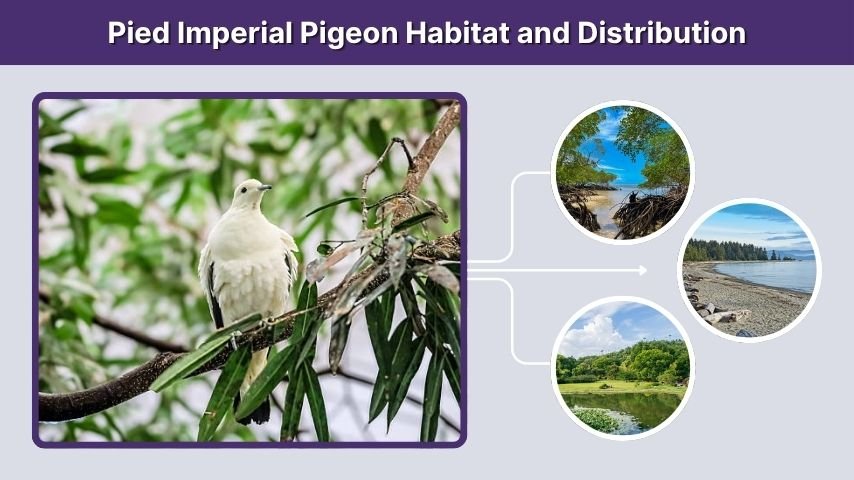
The pied imperial pigeon is mainly found in Southeast Asia and nearby island regions. It occurs in places such as Myanmar, Thailand, Indonesia, the Philippines, and parts of New Guinea. It is especially linked with coastal areas, small islands, mangroves, forest edges, plantations, and wooded habitats.
This bird often prefers areas with tall fruiting trees. It may travel between feeding and roosting sites, especially where fruit availability changes with the season. In some regions, it is seen flying over water between islands, which shows how strong and confident its flight can be.
Coastal Forests and Islands
Pied imperial pigeons are strongly associated with island and coastal environments. Mangroves, beach forests, and lowland woodland give them feeding trees, nesting cover, and safe resting places. Their pale bodies can stand out against dark forest leaves, but when they stay high in the canopy, they may still be hard to spot.
Pied Imperial Pigeon in Singapore and Australia
In Singapore, the pied imperial pigeon can be seen in suitable wooded and coastal habitats, especially where fruiting trees are available. In Australia, the name is often connected with the Torresian imperial pigeon, a closely related bird sometimes called the Australian pied imperial pigeon. These birds are known for seasonal movements and strong links to tropical coastal regions.
Pied Imperial Pigeon Diet and Feeding Behavior
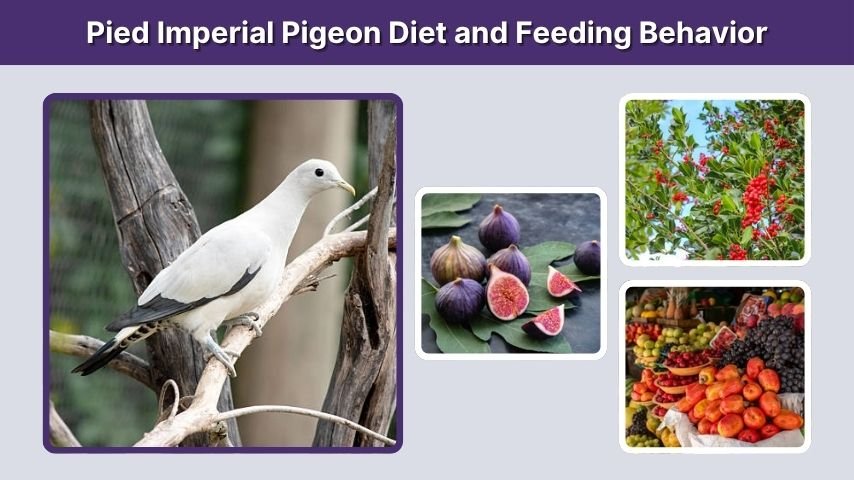
Pied imperial pigeons are mostly fruit eaters. They feed on figs, berries, and other soft fruits found in the forest canopy. Their large gape allows them to swallow many fruits whole. After digestion, seeds may be dropped or passed in new places, helping trees spread naturally.
This feeding habit makes imperial pigeons valuable to forests. Many tropical trees depend on birds and animals to carry their seeds away from the parent plant. When pigeons travel between islands or forest patches, they can move seeds over useful distances.
Main Foods
- Wild figs from forest trees.
- Small berries and soft fruits.
- Fruits from coastal woodland and mangrove edges.
- Seasonal fruit from plantations or secondary forests.
- Occasional soft plant material when fruit is available nearby.
Feeding Style
The pied imperial pigeon usually feeds in the canopy. It may climb along branches, stretch toward fruit clusters, or sit quietly while swallowing fruit whole. It is not as ground-focused as urban pigeons. Instead, it behaves like a true forest fruit pigeon, spending much of its day above eye level.
Pied Imperial Pigeon Call and Sound
The pied imperial pigeon call is usually deep, soft, and resonant. It does not have a bright song like many small songbirds. Instead, its voice is more like a low cooing or booming note that can carry through trees. In dense habitat, the sound may be easier to detect than the bird itself.
Birdwatchers often notice imperial pigeons by listening first. Because these birds stay high in the canopy, their calls help reveal their presence. Calls may be used for contact, territory, pair communication, or breeding activity.
When It Calls
Pied imperial pigeons may call from tall trees during calm parts of the day. Early morning and late afternoon can be good times to hear them. During the breeding season, calls may become more noticeable as pairs communicate around nesting areas.
Pied Imperial Pigeon Breeding and Life Cycle
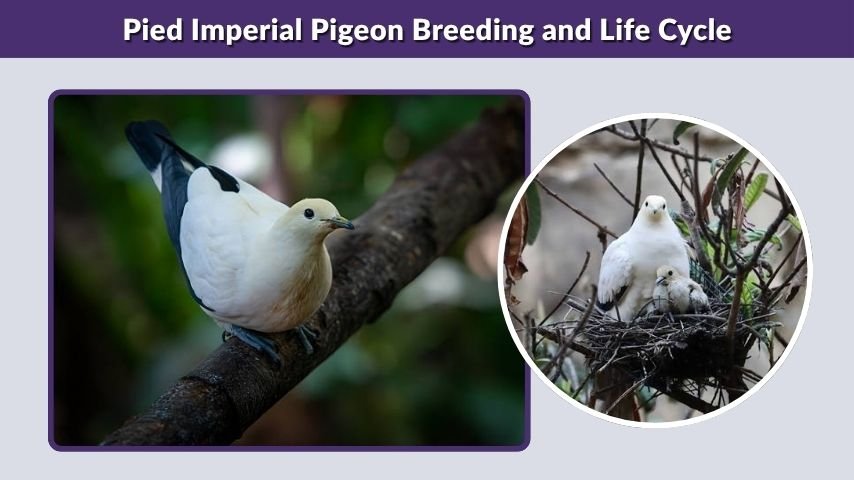
Like many pigeons, the pied imperial pigeon builds a simple stick nest. The nest is usually placed in a tree, where branches provide cover and support. The structure may look loose compared with the nests of many songbirds, but it is enough to hold the egg and young chick.
Imperial pigeons generally invest care in a small number of young rather than producing many eggs at once. The chick depends on its parents for food and warmth during the early stage of life.
Nesting Behavior
The nest is usually made from small twigs and placed above the ground. Both parents may take part in nesting duties. The female typically lays one white egg, which is common among many pigeons and doves. After hatching, the chick grows quickly with parental feeding.
Young Birds
Young pied imperial pigeons are fed by their parents until they are strong enough to leave the nest. Like other pigeons, they may receive a nutritious parent-produced food often called crop milk during the earliest stage. As they grow, fruit becomes more important in their diet.
Pied Imperial Pigeon Flying
The pied imperial pigeon is a strong flier. Its flight is direct, steady, and powerful, with firm wingbeats. When flying over open areas or water, its white body and dark wings create a sharp contrast. This makes flying birds easier to recognize from a distance.
In island habitats, flight is essential. These pigeons may move between roosting islands and feeding areas, following fruit supplies. Their ability to travel helps connect separated patches of habitat and supports seed movement across landscapes.
Flight Features
- Fast, direct movement between trees or islands.
- Strong wingbeats with a stable flight line.
- Bold black-and-white pattern visible in the air.
- Often flies above canopy level or across coastal water.
- May travel in pairs, small groups, or larger flocks depending on season.
Pied Imperial Pigeon vs Other Imperial Pigeons
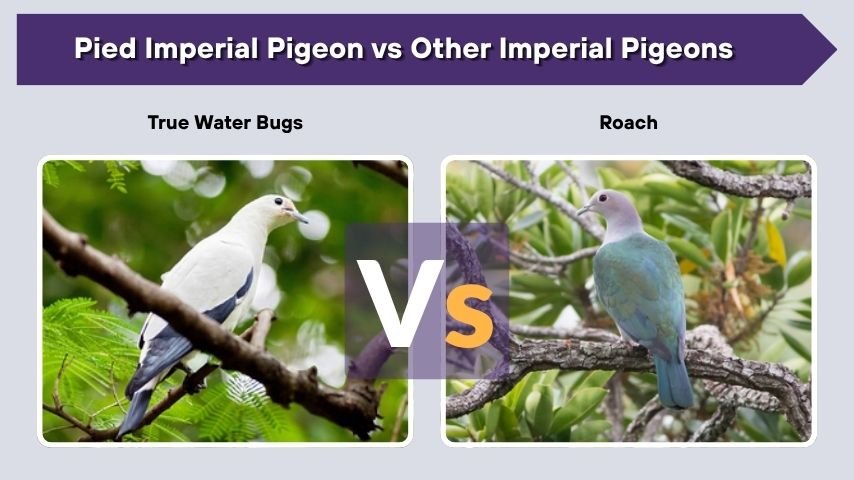
Imperial pigeons belong to the genus Ducula. These birds are usually large, fruit-eating pigeons found across southern Asia, New Guinea, northern Australia, and Pacific islands. Many species look very different from one another, but most share a heavy body, strong flight, and a close connection to forest habitats.
Green Imperial Pigeon
The green imperial pigeon, Ducula aenea, is a large forest pigeon with metallic green upperparts and pale underparts. It occurs across parts of South and Southeast Asia, including India, Sri Lanka, Nepal, southern China, Indonesia, and the Philippines. It is more green-toned than the pied imperial pigeon and is often linked to tropical forest canopies.
Black Imperial Pigeon
The black imperial pigeon, Ducula melanochroa, is also called the Bismarck imperial pigeon. It is found in the Bismarck Archipelago and is associated with forest habitats, including mountain forest and cloud forest. Its darker appearance makes it very different from the clean white-and-black pied imperial pigeon.
Mountain, Island, and Pacific Imperial Pigeons
Other imperial pigeons include mountain imperial pigeon, island imperial pigeon, Pacific imperial pigeon, collared imperial pigeon, spectacled imperial pigeon, and many island-endemic species. Some have small ranges, which can make them more vulnerable to habitat loss, hunting, and introduced predators.
Conservation Status and Threats
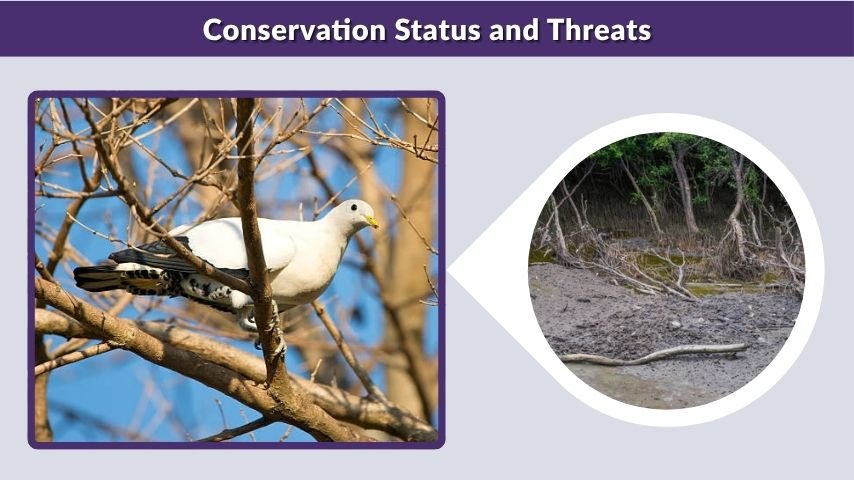
The pied imperial pigeon is currently considered a species of Least Concern, meaning it is not globally threatened at the same level as many rarer island pigeons. However, local populations still depend on healthy forest, mangrove, and coastal habitats. If those habitats disappear, local numbers can decline.
Imperial pigeons as a group face several threats. Forest clearance removes feeding and nesting trees. Hunting and trapping can affect some species. Island species may also suffer from introduced predators, small population size, and limited habitat.
Main Threats
- Loss of forest and coastal woodland.
- Mangrove destruction and island habitat damage.
- Hunting or trapping in some regions.
- Disturbance near nesting and roosting sites.
- Decline of fruiting trees used for feeding.
Why These Birds Matter
Pied imperial pigeons and other fruit pigeons help forests regenerate. By swallowing fruits and spreading seeds, they support the growth of new trees. This role is especially important on islands, where fewer large fruit-eating animals may be present. Protecting these pigeons also helps protect the wider forest system.
Can You Keep or Buy a Pied Imperial Pigeon?
Some people look for pied imperial pigeons for sale, but wild pigeons are not the same as domestic pigeons. Laws vary by country, and many native or wild bird species are protected. Buying, selling, trapping, or keeping wild birds without permission can be illegal and harmful to conservation.
Anyone interested in pigeons should choose legal, captive-bred domestic breeds instead of wild imperial pigeons. Wild birds need specific diets, space, social conditions, and legal protection. They are best appreciated in natural habitats, bird parks, or conservation-focused environments.
Ethical Birdwatching Tips
- Watch from a respectful distance.
- Avoid disturbing nesting or roosting birds.
- Do not feed wild pigeons unsuitable foods.
- Support habitat protection and native tree planting.
- Follow local wildlife laws when photographing or observing birds.
Interesting Facts About Pied Imperial Pigeons
The pied imperial pigeon is more than just a beautiful bird. Its behavior, diet, and island lifestyle make it an important part of tropical nature.
Quick Facts
- It is also known by the scientific name Ducula bicolor.
- Its black-and-white plumage makes it one of the easiest imperial pigeons to recognize.
- It feeds mostly on fruit and helps disperse seeds.
- It is often found in coastal forests, mangroves, and island habitats.
- It has strong flight and may move between islands.
- Its call is low and cooing rather than musical.
- It belongs to the same broad group as green, black, mountain, and Pacific imperial pigeons.
FAQs
What does a pied imperial pigeon eat?
A pied imperial pigeon mainly eats fruits, berries, figs, and other soft plant foods. It usually feeds high in trees rather than on the ground. By swallowing fruit whole and moving between feeding areas, it helps spread seeds across forests, islands, and coastal habitats.
Where does the pied imperial pigeon live?
The pied imperial pigeon lives in Southeast Asia and nearby island regions. It is found in coastal forests, mangroves, plantations, wooded islands, and forest edges. Its range includes areas around Myanmar, Thailand, Indonesia, the Philippines, and parts of New Guinea.
Is the pied imperial pigeon rare?
The pied imperial pigeon is not considered globally rare and is listed as Least Concern. However, local numbers can change depending on habitat quality. Forest loss, mangrove destruction, and hunting pressure can affect populations in certain places, especially on small islands or disturbed coastal areas.
What is the difference between pied and green imperial pigeons?
The pied imperial pigeon is mostly white with black wings and tail markings. The green imperial pigeon has metallic green upperparts, pale underparts, and a more forest-green appearance. Both are large fruit-eating pigeons, but they differ in color, range, and preferred habitat details.
Do pied imperial pigeons make good pets?
Pied imperial pigeons are wild birds, not domestic pets. Keeping or selling them may be restricted or illegal depending on local wildlife laws. They also need specialized care, space, and diet. It is better to observe them in nature or support conservation programs that protect their habitat.
